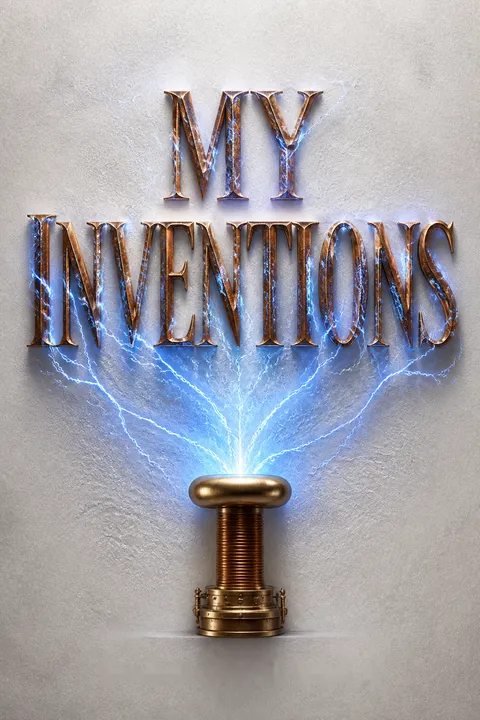


Key Takeaways
Train the mind to prototype before metal meets the workbench
Imagination became a workshop. As a boy, Tesla experienced vivid mental images that he says he learned to control by inventing new scenes and mentally travelling through unfamiliar places. He later used this capacity to build and operate imagined machines, examining their details before making physical models. He claimed this method let him improve designs quickly and that, over twenty years, his devices worked as he had pictured them.
A method, not magic. Tesla believed mental testing could replace much trial and error, especially when a problem could be calculated from established principles. His account presents visualization as a practical tool for holding a whole design in view, not merely as daydreaming. But the claim that his imagined devices reliably worked is his own retrospective account, not a general guarantee that simulation can replace experiments.
What's distinctive is the way visualization serves as engineering notation: Tesla treats a mental image as something that can be inspected, modified, and tested. That approach can help a designer preserve the system-level idea before details take over. It also has a clear boundary. An imagined model inherits the assumptions built into it, so unseen friction, material behavior, or measurement error can survive every mental rehearsal. The strongest version of Tesla's method is therefore not imagination instead of testing, but imagination used to make testing more focused.
Turn a weakness into discipline without mistaking hardship for a virtue
Will was practiced. Tesla describes a childhood marked by fears, intense desires, and repetitive habits. Reading a Serbian novel helped prompt him to train his self-control. When gambling became an absorbing pastime, his mother gave him money to play, convinced that he had to overcome the impulse himself. He says he stopped at once and later used similar resolve to quit excessive smoking and coffee.
His family shaped his tools. His mother made household devices and clothing, while his father trained memory, reasoning, and critical judgment through daily exercises. Tesla credits his inventive drive largely to his mother and his mental training partly to his father. The narrative links invention to both inherited example and deliberate practice, not to a sudden flash of genius. Still, Tesla's account of total self-mastery is his own, and his compulsive habits complicate the picture.
The useful lesson is not that extreme willpower can erase every impulse. Tesla's story instead shows several forms of support working together: a practical model of making things, exercises that sharpen attention, and a parent who expects the young person to take responsibility. His mother's response to gambling is striking because it avoids both denial and endless punishment. Yet self-discipline can become another form of compulsion. The distinction worth keeping is whether a practice expands a person's choices or simply replaces one rigid demand with another.
Let physics correct the ideas that imagination makes irresistible
Mistakes became lessons. Tesla recalls designing a vacuum-driven perpetual motor as a boy. A wooden model seemed to turn, but the motion came from a leak, not inexhaustible power. During a later holiday, he also calculated a submarine mail system with impressive precision while choosing an unrealistic water speed. He eventually abandoned the scheme after considering how resistance inside pipes would limit the flow.
Calculation can mislead. Tesla's examples show that arithmetic only confirms the assumptions fed into it. The same young inventor imagined a floating equatorial ring that could travel faster than trains, and a machine that would draw useful power from Earth's rotation. Those projects failed in principle, despite the appeal of their diagrams. His stories of escaping drowning by noticing water pressure also show a more productive habit: observe what is happening, then adapt to it.
Tesla's self-portrait gains credibility from including failed schemes, not just celebrated inventions. The errors are specific: a leak mistaken for a power source, and a calculation built on an arbitrary input. This is a compact lesson in model checking. A result can be internally consistent and still describe no possible machine. The stories also caution against turning every failure into proof of a hidden gift. What matters is not that intuition is always right, but that observation and physical constraints can expose where intuition has run ahead.
Keep attacking the problem until a new principle replaces the old design
The motor began with a question. As a student, Tesla watched a direct-current machine spark at its brushes and wondered whether a motor could work without that troublesome contact system. His professor dismissed the idea as impossible. Tesla spent years imagining how different electrical currents might move a motor's magnetic effects, first without a solution and then with growing clarity.
A field could rotate. In 1882, while walking in a Budapest park and reciting Goethe, Tesla says the answer came to him: arrange alternating currents so their combined magnetic field turns smoothly. He later built a motor using this rotating magnetic field, and in Strasbourg in 1883 saw it work without a commutator. The rotor follows the moving field, avoiding the brush-and-commutator arrangement that caused sparking in earlier designs.
The breakthrough was not simply persistence against a skeptical teacher. Tesla changed the frame of the problem, from making a current-driven rotor turn by contact to shaping a magnetic field that would pull it around. That shift is what makes the story more than a tale of stubbornness. A useful caution sits beside it: a professor's disbelief does not prove a student is right, any more than a student's confidence proves a principle. The motor mattered because Tesla could turn the new idea into a working device.
A breakthrough needs an industry ready to build around it
Invention needed institutions. Tesla's polyphase alternating-current system was useful because it offered a practical way to generate, transmit, and use electrical power. Westinghouse agreed to manufacture his motors after demonstrations and negotiation, though its engineers initially preferred their own operating standards. The system's adoption depended on technical adjustments, corporate investment, and a market that needed power on a large scale.
Patents shaped the reward. Tesla also recounts redesigning Edison machines, repairing the lighting equipment aboard the Oregon, and leaving Edison's company after a promised payment did not materialize. The editor's introduction adds that Tesla's valuable polyphase royalties were later transferred for $216,000 as part of corporate patent arrangements. His inventions helped transform electrical infrastructure, but commercial control and financial benefit did not automatically remain with their inventor.
This career makes invention look less like a solitary contest and more like a coordination problem. A motor becomes consequential when manufacturers can produce it, utilities can use it, and institutions can settle standards and rights. Tesla's story also separates technical importance from personal wealth: an invention can reshape an industry while its creator remains poorly positioned in business negotiations. The limitation is that his own account gives only one side of those negotiations. It is a vivid record of his experience, not a complete history of every company's motives.
Use resonance to intensify electrical effects, while counting the losses
A circuit can build oscillations. Tesla developed the Tesla coil, a transformer arrangement that uses a charged capacitor and a spark gap to produce rapid electrical oscillations. A second circuit, tuned to resonate with the first, can raise the voltage and generate striking discharges. Tesla presented the device publicly in 1891, showing sparks about five inches long. He later reported much larger voltages and discharges in experimental settings.
Power has a price. The coil made high-frequency, high-voltage experiments possible, and Tesla connected this work to lighting, wireless transmission, and other applications. He also acknowledged that the spark gap wasted energy, though he argued that careful tuning could keep overall efficiency high. The important principle is that resonance can concentrate energy in a system, but it does not create energy from nothing. The design still has to account for resistance, leakage, and other losses.
Resonance gives Tesla's work a memorable physical image: repeated exchanges within a tuned system can produce effects much larger than a single input suggests. That is a powerful design principle, but it can invite exaggerated language about amplification. In a real device, energy moves and concentrates; losses remain part of the accounting. Tesla's willingness to discuss the spark gap's inefficiency helps distinguish technical investigation from spectacle. A dramatic discharge demonstrates a capability, but by itself does not establish a practical power system.
Separate the wireless world system from what the experiments proved
A global ambition. Tesla's Magnifying Transmitter was a resonant transformer that he intended to use for wireless communication and power transmission. He imagined electricity travelling through Earth and the surrounding environment, making distance largely irrelevant. His Long Island project included a tower 187 feet high and a large spherical terminal. The plan promised worldwide messaging, remote control, and energy distribution, but the project was never completed.
The gap matters. Tesla reported impressive laboratory results, including powerful discharges and electrical effects over long distances. Those results do not establish that his proposed global system could deliver practical power as he claimed. The editor's introduction notes that Tesla's theories of wireless transmission differed from the emerging understanding of radio and that his fixation on transmitting power made financing harder. His grand design is part of the story, but its intended performance should not be confused with a demonstrated service.
Tesla's world system is revealing precisely because it mixes engineering, infrastructure, and utopian politics. He imagined communication and power as tools for connecting distant communities, not merely as commercial products. That ambition encouraged him to think beyond the capabilities of the apparatus immediately before him. It also raised the burden of proof: a spectacular local effect cannot validate a planetary transmission scheme. The distinction between a promising experiment and a functioning network is not a dismissal of vision. It is how vision becomes answerable to evidence.
Treat remote control as a major invention, not proof of machine thought
Signals could direct a machine. Tesla's telautomatics describes devices controlled from a distance. In 1898, he demonstrated a radio-controlled boat that could perform actions in response to commands. The boat's steering and mechanisms were automated, and Tesla presented it as an early step toward machines operating beyond the operator's sight. He proposed applications ranging from industrial equipment to military devices.
Control is not judgment. Tesla imagined more capable machines that might behave as though they possessed reason, but the boat did not think for itself. Its actions depended on signals and mechanisms designed by a human operator. This distinction matters because Tesla's language leaps from remote operation to future autonomy. His demonstration established that a machine could be controlled wirelessly, not that it could understand its surroundings or choose goals independently.
Tesla's boat shifts the idea of a machine from a tool that must be touched to one that can act at a distance. That is a genuine conceptual leap, and the demonstration helps explain why he regarded remote control as more than a novelty. The distinction between command-following and independent judgment remains essential, especially when discussing machines that appear intelligent. His account is strongest when it describes what the boat did. Its more expansive predictions describe a direction of possibility, not a capability the demonstration itself established.
Notice the forces shaping behavior before declaring the will completely free
Tesla saw the person as responsive. His unusual sensory experiences led him to examine how outside impressions prompted his thoughts and actions. He came to describe people as automata: organisms whose behavior responds to stimuli, even when they experience their choices as freely made. In his view, shared bodily needs and reactions also help explain why people form social rules and remain connected to one another.
A theory mixed with intuition. Tesla used this framework to interpret his own actions and even claimed that he could sense when someone had acted unjustly toward a person or cause he cared about. He called the resulting distress cosmic, and believed wrongdoers later suffered misfortune. That claim is not supported by evidence in his account. The more grounded insight is that people often overlook how surroundings and physical states influence what they think and do.
Tesla's mechanistic view has two layers that should not be collapsed. The first is a useful challenge to the fantasy that decisions arise in isolation: bodily states and external events shape attention and action. The second is his personal claim that moral injuries produce a special warning and predictable punishment. That leap turns an observation about influence into a private system of cosmic justice. Keeping the layers separate lets readers take his question about agency seriously without treating every personal conviction as a scientific result.
Read an inventor's memories as evidence, not as the final verdict
The story needs checking. Tesla wrote these articles decades after many of the events they describe. The editor's introduction places them in context, noting that press coverage helped create a public image of Tesla as an eccentric visionary. It also challenges later biographical myths. One example is the claim that Tesla foresaw his mother's death: the editor explains that Tesla's own account describes reliving her death during a period of memory loss, not predicting it beforehand.
Admire without mythmaking. The introduction also notes that Tesla's autobiography reflects his own perspective and leaves parts of his life unexplained. His scientific achievements, speculative plans, and personal recollections should not all receive the same kind of trust. Reading closely means asking what he says he built, what he hoped to build, and what later storytellers added. The distinctions protect both the real inventor and the reader from legend.
This book is both a record of engineering and a performance of memory. Tesla offers valuable first-person detail about how problems felt and how ideas developed, while the editor shows how easily recollection can be reshaped into prophecy. That makes the surrounding editorial material more than background: it teaches readers to compare claims with context and later retellings. Skepticism need not flatten admiration. It can preserve the scale of Tesla's documented contributions without forcing every ambition or anecdote into a story of infallibility.
Analysis
My Inventions is most compelling when read as two books at once: a memoir of how Tesla experienced invention, and a portrait of how an inventor constructs a public self. Its technical narrative repeatedly turns on a productive sequence: observation, mental modeling, a long period of uncertainty, and physical demonstration. The rotating magnetic field is the clearest instance because an imagined principle eventually becomes a working motor. By contrast, the world wireless system remains an aspiration whose claimed reach exceeds the evidence presented. That contrast is central, not incidental. It shows the difference between imagination as a source of hypotheses and imagination as a warrant for believing those hypotheses.
Tesla's account also complicates the familiar lone-genius story. Family training, teachers, technical employment, corporate partners, patents, and access to capital all shape what he can make and whether it spreads. His career suggests that technological importance is partly a property of systems around an invention. A motor does not transform society through conceptual elegance alone; it must fit manufacturing, infrastructure, finance, and law. Tesla's personal disappointments are real within his account, but the editor's context warns against treating his recollections as a complete industrial history.
The book's most modern tension lies in Tesla's view of human beings as responsive mechanisms. He uses introspection to challenge the assumption that thought is entirely self-originating, yet sometimes extends that confidence into unsupported personal intuitions. The reader can retain the penetrating question about environmental influence while declining the leap to cosmic certainty. That is a useful model for reading visionary nonfiction: neither credulity nor reflexive debunking, but differentiated trust. Tesla's achievements need no supernatural explanation, and his speculative failures do not erase them. The enduring value is the method at its strongest: imagine boldly, build carefully, and let the world push back.
Review Summary
My Inventions is a fascinating autobiography that offers insight into Tesla's brilliant mind, childhood, and inventions. Readers appreciate Tesla's genius, vision, and contributions to modern technology. Many find his eccentric personality and unique way of thinking captivating. The book provides a glimpse into Tesla's creative process and his ability to visualize inventions in detail. While some reviewers wish for more depth, most find it an inspiring read that showcases Tesla's remarkable life and innovative spirit.
People Also Read
Glossary
rotating magnetic field
A turning magnetic fieldA magnetic field that moves around a motor's interior as the strengths and directions of its electrical currents change. Tesla used alternating currents arranged in different phases to create this motion. The field pulls the rotor around without requiring the brush and commutator arrangement found in earlier motor designs.
polyphase system
Multiple staggered currentsAn electrical system using alternating currents that reach their peaks at different times, or phases. In Tesla's motor design, these currents combine to create a rotating magnetic field. Polyphase generation and motors formed part of the alternating-current power system that could be used for large-scale electrical transmission and machinery.
Tesla Transformer
High-voltage resonant transformerTesla's name for the transformer apparatus he developed to produce high-frequency electrical oscillations and high voltages. In the coil arrangement described in the book, a capacitor charges and discharges through a spark gap, while a tuned secondary circuit responds through resonance. The device made dramatic electrical demonstrations and further experiments possible.
Magnifying Transmitter
Proposed wireless power transmitterTesla's proposed resonant transmitter, designed to produce powerful electrical effects and, in his plan, send signals and energy over great distances through Earth and its surroundings. He associated it with a worldwide communication and power network. The Long Island installation was never completed, so its intended global performance was not demonstrated.
Art of Telautomatics
Remote control of machinesTesla's term for controlling mechanical devices from a distance through transmitted signals. His radio-controlled boat, demonstrated in 1898, could respond to commands without a person physically operating it. Tesla viewed such devices as early steps toward more complex automata, but remote control alone does not demonstrate independent thought or judgment.
Art of Individualization
Distinct signal identificationTesla's proposed method for making wireless signals identifiable and separate from other transmissions. He described it as a way to make messages exclusive and reduce interference between stations. In his World-System proposal, individualization was one of several intended improvements, rather than a separate communication network demonstrated in the autobiography.
terrestrial Stationary Waves
Earth-resonating electrical wavesTesla's proposed electrical oscillations that he believed could resonate with the Earth at particular frequencies. He argued that such resonance could help transmit energy over long distances. The term belongs to his theory of the Magnifying Transmitter and World-System, whose global energy-transmission claims were not established by the unfinished Long Island project.
FAQ
What's "My Inventions" by Nikola Tesla about?
- Autobiographical Account: "My Inventions" is an autobiography by Nikola Tesla, detailing his life, inventions, and the thought processes behind his groundbreaking work.
- Inventions and Discoveries: The book covers Tesla's major inventions, including the alternating current system, the Tesla coil, and his work on wireless transmission.
- Personal Insights: Tesla shares personal anecdotes and insights into his character, upbringing, and the challenges he faced throughout his career.
- Visionary Ideas: The book also explores Tesla's visionary ideas for the future, including wireless energy transmission and the potential for technological advancements to transform society.
Why should I read "My Inventions" by Nikola Tesla?
- Understanding a Genius: Reading this book provides a unique insight into the mind of one of history's greatest inventors and his approach to problem-solving.
- Historical Context: It offers a firsthand account of the technological advancements of the late 19th and early 20th centuries.
- Inspiration for Innovators: Tesla's relentless pursuit of innovation and his visionary ideas can inspire modern-day inventors and entrepreneurs.
- Personal Reflections: The book includes Tesla's reflections on his life, providing a deeper understanding of his motivations and the personal challenges he overcame.
What are the key takeaways of "My Inventions" by Nikola Tesla?
- Innovative Thinking: Tesla emphasizes the importance of imagination and visualization in the invention process, often solving problems entirely in his mind before building prototypes.
- Persistence and Resilience: Despite numerous setbacks and financial difficulties, Tesla's determination and belief in his ideas drove him to continue his work.
- Impact of Inventions: Tesla's inventions, particularly the alternating current system, revolutionized the way electricity is generated and distributed, impacting modern society profoundly.
- Vision for the Future: Tesla foresaw the potential for wireless communication and energy transmission, ideas that continue to influence technological development today.
What are the best quotes from "My Inventions" and what do they mean?
- "The progressive development of man is vitally dependent on invention." This quote underscores Tesla's belief in the power of innovation to drive human progress and improve quality of life.
- "I do not rush into actual work." Tesla highlights his method of thoroughly visualizing inventions in his mind before physical experimentation, emphasizing the power of mental preparation.
- "The greatest good will come from technical improvements tending to unification and harmony." Tesla believed that technology should unify humanity and promote peace, reflecting his humanitarian vision.
- "If you want to find the secrets of the universe, think in terms of energy, frequency, and vibration." This quote encapsulates Tesla's understanding of the fundamental principles of physics and their application to his work.
How did Nikola Tesla's early life influence his inventions?
- Family Background: Tesla was born into a family with a strong intellectual tradition, which fostered his curiosity and love for learning.
- Early Challenges: He faced personal challenges, including the death of his brother, which shaped his resilience and determination.
- Imaginative Play: As a child, Tesla engaged in imaginative play and mental exercises, which later developed into his unique method of visualizing inventions.
- Educational Experiences: His education in Europe exposed him to the latest scientific ideas, fueling his passion for electrical engineering and innovation.
What is Tesla's method of invention as described in "My Inventions"?
- Visualization Technique: Tesla used a method of visualizing his inventions in great detail, allowing him to mentally test and refine ideas before physical construction.
- Avoiding Prototypes: He often avoided building prototypes, relying instead on his mental simulations to perfect designs.
- Efficiency and Precision: This approach allowed Tesla to work efficiently, reducing the time and resources needed to develop new technologies.
- Success Rate: Tesla claimed that his inventions worked as expected on the first attempt, thanks to his thorough mental preparation.
What is the significance of the Tesla Coil and Transformer?
- Revolutionary Design: The Tesla Coil is a type of resonant transformer circuit that produces high-voltage, low-current, high-frequency alternating current electricity.
- Wireless Transmission: It was a key component in Tesla's experiments with wireless transmission of electricity and radio waves.
- Impact on Technology: The Tesla Coil has influenced the development of radio technology, wireless communication, and even modern-day electronics.
- Demonstration of Principles: It demonstrated Tesla's understanding of electrical resonance and his ability to harness it for practical applications.
How did Tesla's inventions impact modern technology?
- Alternating Current System: Tesla's development of the AC system revolutionized electricity distribution, making it more efficient and widespread.
- Wireless Communication: His work laid the groundwork for modern wireless communication technologies, including radio and television.
- Electric Motors: Tesla's induction motor design is still used in many applications today, from household appliances to industrial machinery.
- Visionary Concepts: His ideas about wireless energy transmission continue to inspire research into sustainable and efficient energy solutions.
What challenges did Tesla face in his career?
- Financial Difficulties: Despite his groundbreaking inventions, Tesla often struggled with financial instability and securing funding for his projects.
- Rivalries and Competition: He faced intense competition from other inventors, most notably Thomas Edison, which sometimes hindered his progress.
- Public Skepticism: Many of Tesla's ideas were ahead of their time, leading to skepticism and difficulty in gaining widespread acceptance.
- Health Issues: Tesla experienced health challenges, including a nervous breakdown, which impacted his ability to work at times.
What was Tesla's vision for the future of technology?
- Wireless Energy Transmission: Tesla envisioned a world where energy could be transmitted wirelessly across the globe, eliminating the need for power lines.
- Global Communication Network: He foresaw a global communication network that would allow instant communication between any two points on Earth.
- Sustainable Energy Solutions: Tesla believed in harnessing natural forces, such as solar and wind energy, to provide clean and sustainable power.
- Technological Unification: He hoped that technological advancements would unify humanity and promote peace and understanding.
How does "My Inventions" reflect Tesla's personality and character?
- Passionate and Driven: Tesla's passion for invention and his relentless pursuit of knowledge are evident throughout the book.
- Visionary Thinker: His ability to envision future technologies and their potential impact showcases his forward-thinking nature.
- Resilient and Determined: Despite numerous setbacks, Tesla's determination to realize his ideas is a testament to his resilience.
- Humanitarian Vision: Tesla's desire to use technology for the betterment of humanity reflects his humanitarian values and idealism.
What is the legacy of Nikola Tesla as presented in "My Inventions"?
- Pioneering Inventor: Tesla's contributions to electrical engineering and technology have left a lasting impact on modern society.
- Inspiration for Innovators: His innovative methods and visionary ideas continue to inspire inventors and scientists around the world.
- Cultural Icon: Tesla has become a cultural icon, representing the archetype of the brilliant but misunderstood inventor.
- Ongoing Influence: His work and ideas remain relevant today, influencing fields such as renewable energy, wireless communication, and robotics.
Download PDF
Download EPUB
.epub digital book format is ideal for reading ebooks on phones, tablets, and e-readers.








