

Plot Summary
A Letter Before Death
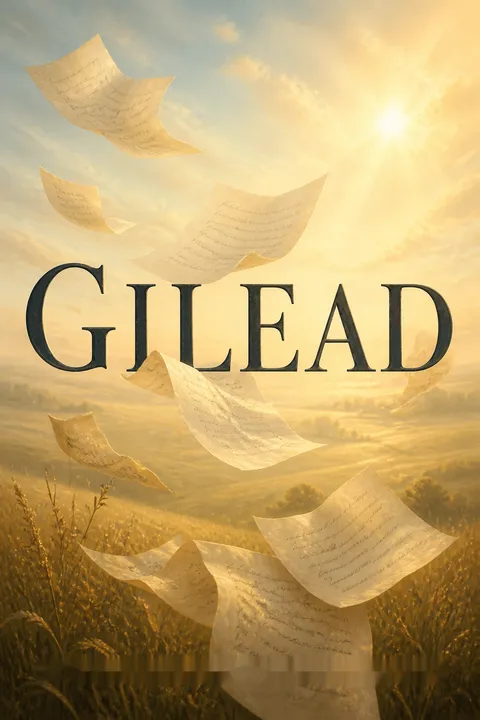
In Gilead, Iowa, the elderly Reverend John Ames learns that his heart is failing. He begins a long letter for the seven-year-old son he expects to leave behind, recording family history, regrets, and the ordinary scenes he wants the boy to remember. Ames worries that he has saved no money for his young wife, Lila, and their child.
Yet their meals, their games with the cat, and the boy’s hand in his make the house feel more like home than it did during Ames’s decades alone. Writing becomes his way to father a son he may not live to see grown, while he tries to understand what his life has meant.
The book begins with a practical crisis, not a theological puzzle: Ames may die before his son can know him. That premise turns memory into an act of care. His writing cannot provide money or presence, so he offers particulars instead, the texture of meals, gestures, and remembered failures. His faith does not erase fear; it gives him a way to address someone beyond the limits of his remaining time. The son is both a real child in the house and the imagined adult reader who may one day judge what his father left.
The Grave in Kansas
When Ames is twelve, his father takes him west to find the grave of Ames’s grandfather, a preacher who died far from home. They run short of food and water, lose their way, and sleep in barns during the search. A solitary farm woman feeds them and points them toward a neglected cemetery, where they find a rough marker bearing the grandfather’s name.
Father and son clear weeds, right fallen markers, and scatter seeds among the graves. As the sun sets and the moon rises, Ames’s father pauses from prayer to look at the light. Their exhausting journey ends with a moment of shared wonder, and Ames carries home a lasting sense of closeness to his father.
The grave search makes remembrance physical labor. Ames and his father do not settle their family history through explanation alone: they walk hungry, repair a neglected cemetery, and plant flowers for people whose names have disappeared. The father’s care extends beyond his own parent to the other forgotten dead, so grief becomes service rather than possession. The boy’s experience of the moon and sun meeting over the grave gives him a vision his father neither claims nor dismisses. Their difference in interpretation does not undo the intimacy of standing together.
The Reverend’s Fire
Ames gradually learns why his grandfather’s past remained painful in the family. The old Reverend Ames had joined the abolitionist struggle in Kansas, aided John Brown’s cause, and shot a Union soldier to protect fugitives. His son, John Ames’s father, could not reconcile that violence with his own conviction that war had nothing to do with Christ.
After the Civil War, the grandfather preached to a congregation devastated by losses, while Ames’s father sometimes withdrew to worship with Quakers rather than witness the old man’s attempts to console it. Their disagreement hardened into silence. The grandfather eventually returned to Kansas and died there, leaving his son to carry both anger at his choices and guilt for their final rupture.
The family’s religious inheritance is not a stable set of answers but a conflict over what moral action requires. The grandfather treats abolition as an urgent command, even when its pursuit involves violence; his son fears that righteous language can sanctify bloodshed. Neither man’s position removes the costs borne by the other. Their estrangement demonstrates how conviction can become both a form of courage and a barrier to listening. Ames inherits their unresolved question: how can one condemn harm without denying the desperate motives, losses, and limited choices that surround it?
A House Kept Empty
As a young man, Ames marries Louisa, the girl he grew up with, and takes his father’s pulpit while his parents travel south for his mother’s health. Louisa dies in childbirth, and their infant daughter, Angeline, survives only briefly. Ames has held the baby, but the loss leaves him without wife or child and sends him back into a long, solitary life as Gilead’s pastor.
He fills the years with sermons, books, baseball broadcasts, and nocturnal walks through town, praying for households whose troubles he can often only guess. His friend Reverend Boughton offers companionship, but the sight of Boughton’s crowded family also sharpens Ames’s private grief.
Ames’s first bereavement shapes his ministry without reducing it to a simple explanation. He continues to attend to other people’s families, yet their abundance can make his own loss more visible. His routines, especially writing and walking the town at night, give loneliness a structure he can survive. The novel resists treating service as a cure: Ames can comfort others and still envy what they possess. His grief also makes him attentive to children as singular lives, not as abstract examples in a sermon.
Lila Enters the Church
One rainy Pentecost, a reserved woman named Lila slips into Ames’s church. Her serious attention unsettles him, and he spends the following weeks hoping she will return. Lila does come back, asking to be baptized because no one had arranged it for her as a child. Ames teaches her the faith while taking care not to exploit her loneliness or his own sudden longing.
She begins helping at the parsonage, tending the neglected gardens and making the house less bare. Eventually Lila tells Ames that they should marry. He accepts, and the late-in-life marriage brings a son into his home. Ames, who had stopped expecting a family, now writes to the boy from inside the happiness he once thought was closed to him.
Lila’s arrival changes Ames’s life through ordinary choices rather than a dramatic conversion scene. She asks for a sacrament, returns to the church, and gradually makes a place for herself in the parsonage before proposing marriage. Ames’s restraint matters: he recognizes the imbalance between his age and her vulnerability and tries to honor her agency. Their relationship complicates his old assumption that a life’s possibilities are settled by loss. The son’s presence becomes both a gift and a source of urgency, because Ames knows he may not remain long enough to raise him.
Jack Comes Home
Reverend Boughton’s son, John Ames Boughton, whom everyone calls Jack, returns to Gilead after years away. He is Ames’s godson and namesake, and Boughton has long held out hope for him despite a history of trouble. Jack is courteous to Lila and calls Ames by the childhood name Papa, while Ames finds himself wary of his charm and unsure what has brought him back.
The little boy quickly admires Jack, who plays catch with him and treats him as a younger brother. Ames watches this new ease in his household with mixed feelings: he wants to protect his family, but he knows his distrust may be shaped by old resentment rather than by anything Jack has yet done.
Jack’s return brings two family systems into the same small town. To Boughton, he is the beloved son whose absence has become a private ache; to Ames, he is a godson tangled with envy, old grievances, and memories of mischief. The child’s uncomplicated delight in Jack exposes the gap between adult suspicion and a relationship not yet burdened by history. Ames’s narration is candid about its own limits, making his mistrust part of the plot rather than a verdict readers should accept without question.
A Sermon Finds Its Target
At a gathering with Ames and the Boughtons, Jack presses the question of whether anyone can be destined beyond salvation. Ames answers cautiously, unwilling to pretend that he understands divine judgment. Lila, though new to religious doctrine, asks whether change and salvation can have meaning if people cannot change.
Soon afterward, Jack attends Ames’s sermon on Hagar and Ishmael, which considers fathers who send children into danger and must entrust them to God. Jack grins as Ames speaks about fathers who fail their children, and Ames suspects he has struck a personal nerve. Lila notices the tension too. The exchange forces Ames to see how a sermon meant to address scripture can also land as an accusation in a listener’s life.
The theological debate is a test of whether religious language can meet a person rather than classify him. Jack’s question about predestination carries an undisclosed personal burden, while Ames’s cautious answer protects him from claiming certainty. Lila’s question brings the debate back to moral consequence: if no one can change, what becomes of redemption? The sermon then makes abstraction painfully concrete. Ames’s words about parental failure have force precisely because he does not know the full story sitting before him, revealing the ethical risk of speaking confidently about suffering from a pulpit.
The Child in the Field
Ames recalls the earlier scandal that shaped his judgment of Jack. While still young, Jack fathered a daughter with a vulnerable girl from an impoverished household, then refused to marry her or provide for the child.
Reverend Boughton, his wife, and their daughter Glory brought food, clothes, and money, but the family resisted their help. The little girl remained in dangerous conditions and died after a cut became infected. Her death left the Boughtons grieving and Ames furious at Jack’s apparent indifference.
Ames also remembers how coldly he felt when he baptized Jack as a baby after Boughton unexpectedly gave the child Ames’s name. Facing that old jealousy, he recognizes that Jack is not merely a source of injury but a person he has never tried to understand fairly.
The dead child is the moral weight behind Ames’s caution, not simply evidence in a case against Jack. The Boughtons’ assistance could not overcome the mother’s family’s hostility or the poverty surrounding the girl, and their helplessness leaves no clean solution to mourn. Ames’s own memory of Jack’s baptism exposes an earlier, less honorable source of resentment: he experienced the naming as a painful reminder of his childlessness. By admitting that history, he begins to distinguish legitimate anger at harm from the envy that has distorted his view of Jack.
Delia’s Hidden Family
In Ames’s church office, Jack shows him a photograph of Delia, a Black schoolteacher, and their young son, Robert. Jack explains that he and Delia consider themselves married, though they lack legal protection, and that racial laws and hostility have repeatedly separated their household.
They first grew close when Jack was lonely and financially unstable; her family opposed the relationship, and Delia has sometimes returned to Tennessee with Robert when life in St. Louis became too difficult.
Jack eventually found steadier work and rented a home for them, but his employer dismissed him after seeing the family together, and Jack’s assault on the man brought police scrutiny. Delia and Robert are now away again. Jack has come to Gilead hoping to find a life they could share, but he fears his father may not survive the shock.
The photograph overturns Ames’s assumption that Jack’s return concerns only his past. Jack has built a family under conditions that make ordinary domestic life legally precarious and socially exposed. His account does not erase his earlier failures, but it shows a capacity for attachment that Ames’s fixed image of him could not accommodate. The barriers are not merely private disapproval: racial laws, employment discrimination, and the disappearance of Gilead’s Black congregation shape what choices are available. Jack’s fear for his father makes disclosure itself an act of risk.
Gilead Cannot Promise Shelter
Jack asks whether he, Delia, and Robert could live safely in Gilead. Ames cannot promise they would be accepted. The town’s Black church had been set on fire years earlier, and its congregation eventually left; the history makes the welcome Jack seeks uncertain. Boughton privately tells Ames that Jack is still troubled, deepening Ames’s fear that the return may end badly.
Yet Lila treats Jack with a plain kindness that eases the distance between them, and Ames begins to see how his own jealousy has colored his judgment. When Ames offers money to help, Jack rejects it, saying he is leaving. A letter from Delia arrives, but its contents remain private; Jack prepares to go without knowing whether his family’s future can be repaired.
Gilead’s small-town intimacy does not guarantee safety. Its remembered abolitionist courage coexists with a burned Black church and the departure of the people who worshipped there. Jack’s question therefore asks Ames to judge not only a person but the moral capacity of a community. Boughton’s warning and Ames’s concern are understandable, yet neither can replace Jack’s own account of his marriage. Lila’s unforced hospitality offers a modest counterexample to the town’s failures. The unresolved letter preserves uncertainty: hope has appeared, but no one can claim that it has become security.
The Bus Stop Blessing
Ames finds Jack waiting for a bus with a small suitcase. He walks beside him, gives him the battered book of Feuerbach that once connected Ames to his brother Edward, and accepts Jack’s agreement to take some money. Jack admits that leaving his frail father is a terrible choice, but he cannot remain in Gilead while his wife and son are elsewhere.
Ames tells him he understands, then asks permission to bless him. Jack removes his hat and bows his head as Ames places a hand on his brow and prays for protection and peace. Ames names him not only as a godson, but as a beloved son, brother, husband, and father. Jack boards the bus; the future of his family remains unknown.
The blessing is the novel’s decisive action because Ames finally offers Jack what their strained exchanges have withheld: recognition without a demand for explanation. The gesture does not settle the theology Jack has questioned or repair the harm surrounding his family. It does, however, name the roles that shame and separation threaten to strip from him. Ames’s hand on Jack’s brow recalls the sacramental touch that has marked his ministry, but here the blessing also corrects Ames’s earlier emotional failure at Jack’s baptism. The bus leaves the practical problem open while making the relationship newly legible.
A House Full of Light
After Jack leaves, Ames goes to Boughton’s house and quietly tells his sleeping friend that he blessed his son. He cannot bring himself to wake Boughton and raise a hope the old man may not be able to bear. At home, Ames returns to Lila and their boy, whose everyday presence now seems more precious because he has watched another father lose time with a child.
He stops trying to resolve Jack’s life or turn his sermons into a final defense of himself. Instead, he asks his wife to keep what she values and imagines his own sermons being burned. His letter closes with prayers that his son will live bravely, notice the world, and find a way to be useful.
The ending refuses the tidy repair that Ames longs to imagine. Jack is gone, Boughton remains too frail to receive the news, and the future of Delia and Robert is unresolved. Ames’s response is not to manufacture closure but to carry the blessing into his own household and accept the limits of what he can know. His decision about the sermons also shifts the measure of legacy away from accumulated words. What he hopes to pass on is a practice of attention: loving particular people, honoring the vulnerable, and acting generously before certainty arrives.
Analysis
Gilead treats memory as an ethical practice, not a private storehouse. Ames’s recollections repeatedly revise his judgments: the Kansas journey complicates his understanding of his father and grandfather; his memories of Jack expose how grief and envy have distorted his view; and the story of Jack’s first daughter forces him to distinguish compassion from excuse. The act of remembering does not produce certainty. It makes moral certainty harder to claim because each person appears within relationships, histories, and constraints that a quick verdict would erase.
The novel’s religious language is most persuasive when it becomes action. Baptism, communion, prayer, and blessing are not presented as techniques for controlling outcomes. They are ways of acknowledging another person’s dignity while admitting one’s limited knowledge. Ames cannot answer Jack’s questions about predestination, guarantee a safe life for Delia and Robert, or reconcile Jack and Boughton. He can listen, reconsider, offer money, and place a hand on Jack’s brow. Grace here is neither a substitute for justice nor proof that harm does not matter. It is a demand to respond without reducing a person to the worst thing known about him.
The setting sharpens that demand. Gilead remembers itself as a refuge shaped by abolitionist courage, yet the vanished Black congregation reveals the distance between inherited ideals and lived welcome. Jack’s family makes that contradiction immediate. Meanwhile, Ames’s late happiness with Lila and their son does not cancel his earlier losses; it teaches him that love can arrive after he has mistaken loneliness for destiny. The letter preserves this unsettled knowledge for the boy who may outlive him. Ames’s final hope is not that his son will inherit a perfect faith or an innocent town, but that he will notice what is precious, act bravely, and make himself useful.
Review Summary
Gilead has received widespread acclaim for its beautiful prose, profound reflections on faith, and exploration of family relationships. Many readers appreciate the novel's quiet wisdom and lyrical style, finding it deeply moving and thought-provoking. Some, however, find the book slow-paced and challenging to engage with, particularly due to its religious themes. The story, told through letters from an elderly pastor to his young son, resonates differently with readers depending on their personal experiences and beliefs.
People Also Read







Characters
John Ames
Pastor writing to his sonAmes is an aging Congregationalist pastor, husband to Lila, and father to a young boy. He is intellectually curious, deeply observant, and more emotionally fallible than his reputation for wisdom suggests. Years of solitude have made him attentive to other people’s private suffering, but grief has also left him vulnerable to envy and guardedness. He understands his vocation as a practice of listening, blessing, and searching his own conscience, not as proof that he has mastered faith. His letter to his son reveals a man trying to pass on tenderness and moral caution while admitting how often he has mistaken fear or resentment for sound judgment.
Jack Boughton
Restless son and godsonJack is the son of Reverend Boughton and Ames’s godson and namesake. Bright, charming, and difficult to read, he often seems to anticipate rejection before anyone has openly rejected him. His manners can appear theatrical, while his questions about faith and moral responsibility reveal a serious mind beneath the deflection. Jack is accustomed to being judged through his history, and he sometimes responds to perceived criticism as if it were an attack. He remains entangled with the family and town he left, even as he longs for a life that might let him be more than their memory of him.
Lila Ames
Ames’s observant second wifeLila enters Ames’s church as a stranger seeking baptism and becomes his wife and the mother of his young son. Reserved and self-reliant, she speaks plainly when she chooses to speak, and her questions often expose what more learned people have made abstract. She has known poverty and instability, though she rarely makes her history available for inspection. Lila does not imitate the habits of a pastor’s wife; she gradually decides which customs matter to her. Her seriousness, loyalty, and unforced kindness give Ames a way to see both his home and other people with fresh attention.
Reverend Boughton
Ames’s oldest friendBoughton is a Presbyterian minister, father of a large family, and Ames’s closest lifelong friend. Warmhearted and generous, he has spent years worrying over Jack while continuing to love him. Age and physical pain have made him more irritable and dependent, but his old humor and affection remain visible. His friendship with Ames rests on shared ministry, remembered youth, and an ease that allows disagreement without destroying loyalty. Boughton’s love for his children is expansive, though his particular concern for Jack often carries anxiety and helplessness.
Reverend Ames’s father
A pastor shaped by warAmes’s father is a minister who tries to reconcile Christian faith with the violence he witnessed around the Civil War. He loves his own father but cannot accept the old man’s use of violence in the abolitionist struggle. His effort to protect his family from inherited conflict sometimes becomes silence, leaving Ames to interpret what he will not explain. He also gives his son an example of tenderness, hard work, and prayer, especially through their journey to the Kansas grave.
Reverend Ames’s grandfather
Abolitionist preacherAmes’s grandfather is a one-eyed, restless preacher whose convictions were formed in the struggle against slavery in Kansas. He gives freely, pursues work wherever he sees need, and treats moral urgency as a demand for immediate action. His courage can become impractical and his certainty painful to those closest to him. To his grandson, he is both a source of awe and a difficult family presence, embodying the cost of making one’s beliefs visible in a violent world.
Edward
Ames’s scholarly older brotherEdward is an academically gifted older brother who studies in Germany and returns home an avowed atheist. His intellectual independence unsettles the religious expectations of his family, especially their father, but he remains generous and affectionate toward Ames. He gives Ames a book by Feuerbach and introduces him to ideas beyond Gilead’s local traditions. Edward’s distance leaves Ames both admiring him and measuring his own life against the possibility of another path.
Glory Boughton
Daughter caring for BoughtonGlory is Boughton’s daughter, returned to her father’s household after her marriage fails. Practical and emotionally direct, she cares for him while carrying her own grief and frustration about Jack. She remembers the family’s painful history clearly and feels the cost of other people’s choices. Her efforts to help Jack’s first child show how compassion can persist even when it has little power to change the circumstances.
Delia
Teacher and Jack’s belovedDelia is a Black schoolteacher who meets Jack while he is lonely and struggling to establish himself. Educated, self-possessed, and connected to a close family and church community, she has her own standards for what respectability and responsibility require. Her judgment is not simply an obstacle to Jack; it reflects the real risks she and her child face. She brings warmth and moral clarity to a relationship shaped by racial prejudice and legal restrictions.
Ames’s son
The letter’s future readerAmes’s young son is quiet, serious, and closely attached to both parents. He plays with his friend Tobias, draws airplanes, and shares small domestic rituals with Ames that the older man treasures. The boy is too young to understand the full meaning of his father’s writing, which is why Ames addresses him as the adult he may become. His presence gives Ames a late chance at fatherhood and a reason to record the details of a life he fears the child will barely remember.
Robert Boughton Miles
Jack and Delia’s young sonRobert is Jack and Delia’s young son, cherished by both parents and welcomed by Delia’s extended family. Jack describes him as bright, respectful, and raised within the church. Robert’s future matters deeply to Jack because his safety and belonging depend on choices adults and institutions make around him.
Louisa
Ames’s first young wifeLouisa is the girl Ames grows up with and marries while they are both young. Ames remembers her energy, stubbornness, and childhood playfulness with lasting tenderness. Their brief family life becomes one of the central absences he carries into his ministry.
Tobias
The boy’s school friendTobias is a Lutheran boy who befriends Ames’s son. Their backyard camping, games, and shared adventures give the child companionship and reassure his parents that he is finding his place among other children.
The Boughtons’ first granddaughter
A child caught in hardshipJack’s first daughter is born to a young woman living in severe poverty. Boughton, his wife, and Glory try to provide practical help, and her circumstances become a source of lasting grief for the family.
Ames’s young daughter
Ames’s brief first childAngeline is the infant daughter Ames holds after Louisa gives birth. Her short life remains present in his memory whenever he baptizes a child and reflects on the sacredness of human vulnerability.
Soapy
The household’s wandering catSoapy is the family cat, pampered and unpredictable. Her antics give Ames, Lila, and their son small occasions for play, laughter, and shared attention.
Plot Devices
The letter to Ames’s son
Memory as inheritanceAmes writes to his young son as if composing a fatherly account the boy will read as an adult. The letter gives the novel its intimate frame and allows present scenes to sit beside memories from childhood, ministry, and family life. It also exposes the difference between the father Ames hopes to be and the fallible man his recollections reveal. The device turns narration into a concrete gift: since Ames cannot guarantee money or time, he can leave the child a record of who loved him and what that love noticed.
The Kansas grave journey
History made physicalAmes’s childhood trek with his father to find the grandfather’s grave gives family memory a landscape and a task. Hunger, bad roads, the isolated farmstead, and the neglected cemetery make remembrance costly rather than ceremonial. Their work at the gravesite also links the family’s private grief to the people whose names have vanished from the record. The moonrise at the end remains a formative image for Ames, showing how an experience can be shared without being interpreted in exactly the same way.
Blessing and baptism
Touch made meaningfulRitual touch recurs throughout Ames’s reflections, from baptizing infants to blessing people and remembering the feel of a child’s brow. The sacrament gives him a language for affirming a person’s dignity without claiming to understand that person’s whole life. The final blessing of Jack draws on this established practice and transforms it into a personal act of recognition. It does not solve Jack’s material problems, but it allows Ames to act with tenderness where judgment and uncertainty had kept him still.
Gilead’s divided past
A town’s memory tests welcomeThe town’s abolitionist origins and its later history of racial exclusion shape the choices available to Jack, Delia, and Robert. Ames remembers the courage of the people who sheltered fugitives, but he also recalls the fire at the Black church and the congregation’s eventual departure. This history prevents Gilead from serving as a simple refuge. The town’s inherited ideals matter only if its present residents can extend safety to people whose lives challenge local custom.
FAQ
Synopsis & Basic Details
What is Gilead about?
- A Dying Pastor's Letter: Reverend John Ames, an elderly Congregationalist minister in the small Iowa town of Gilead, writes a long, reflective letter to his young son, knowing his own life is nearing its end due to heart trouble.
- Legacy and Memory: The letter serves as a spiritual and personal testament, recounting Ames's life, his family history of preachers (including a radical abolitionist grandfather and a more pacifist father), his late-life marriage to a much younger woman, and the unexpected joy of fatherhood.
- Faith and Human Experience: Through Ames's contemplative voice, the novel explores profound themes of faith, grace, forgiveness, loneliness, the beauty of the ordinary world, and the complexities of human relationships, particularly as they are tested by the return of his friend Boughton's troubled godson, Jack.
Why should I read Gilead?
- Profound Spiritual Reflection: The novel offers a deep, moving meditation on Christian faith, not as dogma, but as a lived experience intertwined with human frailty, doubt, and joy, providing rich insights into themes of grace and existence.
- Masterful Prose and Voice: Marilynne Robinson's writing is celebrated for its luminous, contemplative prose and the authentic, deeply human voice of John Ames, drawing readers into his intimate thoughts and observations on life's quiet wonders and sorrows.
- Exploration of American History and Legacy: The story subtly weaves in threads of American history, particularly the legacy of abolitionism and the Civil War, examining how the past shapes the present and how individuals grapple with inherited burdens and ideals.
What is the background of Gilead?
- Post-Civil War Prairie Settlement: The town of Gilead, Iowa, was founded by abolitionists, including Ames's grandfather, as a Free Soil outpost near the volatile Kansas border, reflecting a history of fervent religious and political conviction tied to the fight against slavery.
- Generational Clergy Tradition: The Ames family has served as ministers for generations, deeply embedding John Ames within a specific lineage and tradition of faith and community leadership on the American prairie, shaping his identity and perspective.
- Mid-20th Century Setting: The primary narrative takes place in 1956, placing Ames's reflections against the backdrop of a changing America, where the fervent, sometimes violent, religious and political passions of his ancestors have faded into a quieter, more settled, yet still complex, community life.
What are the most memorable quotes in Gilead?
- "For me writing has always felt like praying": This quote encapsulates Ames's deep connection between his intellectual and spiritual life, suggesting that the act of articulating thought is a form of communion or devotion, blurring the lines between the sacred and the mundane.
- "Love is holy because it is like grace—the worthiness of its object is never really what matters.": This powerful statement defines Ames's understanding of love, mirroring the theological concept of grace as unmerited favor, and becomes central to his struggle to understand and forgive Jack Boughton.
- "This whole town does look like whatever hope becomes after it begins to weary a little, then weary a little more.": This poignant observation reflects Ames's view of Gilead itself, a place built on fervent hope and sacrifice, now showing the quiet weariness of time, yet still holding onto a resilient, if diminished, sense of purpose.
What writing style, narrative choices, and literary techniques does Marilynne Robinson use?
- Epistolary and Meditative Structure: The novel is framed as a long, personal letter from John Ames to his son, creating an intimate, confessional tone and allowing for a non-linear, stream-of-consciousness narrative that prioritizes reflection and memory over strict plot progression.
- Biblical Cadence and Allusion: Robinson's prose is deeply influenced by the King James Bible, incorporating its rhythms, vocabulary, and frequent allusions to scripture, which enriches the thematic exploration of faith and gives Ames's voice an authoritative yet humble resonance.
- Detailed Observation and Symbolism: Ames's narration is filled with meticulous observations of the natural world and everyday objects (light, water, dust, the weather vane, books, gardens), imbuing them with symbolic weight and connecting the physical world to spiritual truths and internal states.
Hidden Details & Subtle Connections
What are some minor details that add significant meaning?
- The Weather Vane's Bullet Hole: The rooster weather vane on the church steeple, brought from Maine by Ames's grandfather, bears a bullet hole, a subtle physical scar hinting at the violent, radical history of abolitionism and the dangers faced by early settlers and preachers in the region.
- The Buried Gun and Shirts: The story of Ames's father burying and later disposing of his own father's pistol and blood-stained shirts symbolizes the family's complex and conflicted relationship with the violent legacy of the Civil War era and the difficulty of burying or escaping the past.
- The Namesake "John Ames Boughton": Jack Boughton sharing John Ames's full name is initially presented as an honorific gesture, but it subtly foreshadows the deep, complex, and sometimes fraught connection Ames feels to Jack, almost as if he were his own son, intensifying the emotional stakes of their interactions.
What are some subtle foreshadowing and callbacks?
- Early Mentions of Loneliness: Ames frequently reflects on his long years of loneliness before his marriage, subtly foreshadowing the deep emotional void that Lila and their son fill and highlighting the transformative impact of their arrival on his life and perspective.
- The Baptism of Cats: The childhood anecdote of baptizing cats, seemingly a simple memory, foreshadows Ames's later, more profound reflections on the nature of blessing, the sacredness of all life, and the mystery of grace extending even to the seemingly insignificant.
- The Ashy Biscuit Communion: Ames's memory of receiving a soot-stained biscuit from his father's hand after the church fire, which he remembers as a form of communion, is a powerful callback that informs his later understanding of sacrament, suffering, and the sacredness found in unexpected, even grim, circumstances.
What are some unexpected character connections?
- Lila's Past and Jack's Struggles: The brief, quiet conversation between Lila and Jack on the porch reveals a surprising commonality in their pasts – both have experienced hardship, poverty ("miserable place to be broke"), and a longing for a settled life, creating an unspoken understanding between them that Ames observes with a mix of relief and anxiety.
- Ames's Grandfather and Jack's Father-in-Law: The parallel between Ames's radical abolitionist grandfather, who used the church for the Underground Railroad and even violence, and Jack's father-in-law, a minister who judges Jack harshly based on his own moral code and societal norms, highlights the complex and sometimes contradictory nature of religious conviction across generations and contexts.
- Edward's Influence on Ames's Reading: Ames's brother Edward, the intellectual atheist, significantly influenced Ames's reading list (Feuerbach, etc.), demonstrating that even figures seemingly opposed to Ames's faith played a crucial role in shaping his theological understanding and intellectual rigor, showing unexpected connections between belief and skepticism.
Who are the most significant supporting characters?
- Reverend Boughton: Ames's lifelong friend, Boughton serves as a foil and confidante, representing a different path in ministry and fatherhood; his deep love for his troubled son Jack is a central emotional anchor and source of conflict that mirrors and contrasts with Ames's own paternal feelings.
- Lila Ames: Ames's much younger wife, Lila is the source of his late-life joy and a grounding presence; her quiet strength, hidden sadness, and unexpected depth of faith challenge Ames's assumptions and reveal new dimensions of grace and human resilience.
- Jack Boughton: The catalyst for much of the novel's dramatic tension and psychological depth, Jack embodies themes of sin, grace, forgiveness, and the burden of legacy; his complex character and troubled history force Ames to confront his own prejudices and the limits of his understanding.
Psychological, Emotional, & Relational Analysis
What are some unspoken motivations of the characters?
- Jack's Need for Acceptance: Beyond seeking practical help or reconciliation with his father, Jack's return and his persistent, sometimes provocative, interactions with Ames seem driven by a deep, unspoken need for acceptance and understanding from figures of moral authority, perhaps seeking validation he hasn't found elsewhere.
- Ames's Desire for a "Good" Legacy: While Ames explicitly writes to leave a testament for his son, an unspoken motivation is the desire to curate his own legacy, to be remembered as a wise and good man, which makes his struggles with judgment and his anxieties about Jack's influence on his family particularly poignant.
- Lila's Protective Instincts: Lila's quiet demeanor and seemingly passive acceptance of Ames's condition and visitors mask a fierce, unspoken protective instinct towards her husband and son, evident in her subtle actions like moving Ames's study or her brief, pointed comments to Jack.
What psychological complexities do the characters exhibit?
- Ames's Internal Conflict and Judgment: Ames, despite his deep faith in grace and forgiveness, struggles intensely with judging Jack Boughton, revealing the psychological complexity of reconciling theological ideals with deeply ingrained personal feelings, anxieties, and prejudices rooted in his own past and family history.
- Jack's Defensiveness and Self-Sabotage: Jack exhibits a pattern of defensiveness and subtle self-sabotage, often anticipating judgment and reacting with cynicism or provocation, suggesting deep-seated guilt and a possible belief in his own inherent unworthiness, perhaps a form of internalized "predestination" to trouble.
- Boughton's Paternal Blindness and Idealization: Boughton's unwavering, almost idealized love for Jack, despite years of disappointment, reveals the psychological complexity of parental love, which can sometimes involve a form of selective blindness or an inability to reconcile the beloved child with their actual actions.
What are the major emotional turning points?
- Ames's Late-Life Marriage and Fatherhood: The arrival of Lila and their son fundamentally transforms Ames's emotional landscape, shifting him from years of quiet loneliness and intellectual contemplation to a state of profound joy, vulnerability, and a renewed appreciation for the tangible world and human connection.
- Jack's Revelation of His Family: Jack's confession about his wife and child is a major emotional turning point, shifting Ames's perception of him from merely a troubled prodigal to a man carrying significant burdens and capable of deep, if complicated, love, forcing Ames to re-evaluate his judgments.
- Ames's Blessing of Jack: The final blessing Ames bestows upon Jack is a culmination of Ames's internal struggle, representing a moment of grace, acceptance, and emotional release, where theological belief in forgiveness transcends personal reservations and anxieties, offering a poignant farewell.
How do relationship dynamics evolve?
- Ames and Boughton's Shifting Friendship: The lifelong friendship between Ames and Boughton evolves from shared ministry and mutual support to a dynamic complicated by Boughton's decline, his anxieties about Jack, and Ames's own changing perspective on life and legacy, though their deep bond endures.
- Ames's Relationship with Jack: Initially marked by Ames's paternal concern and later by suspicion and judgment due to Jack's past, their relationship evolves through difficult conversations and shared vulnerability, culminating in a moment of unexpected intimacy and blessing that transcends their history of conflict.
- Lila's Influence on Ames: Lila's presence introduces a new dynamic into Ames's life, bringing him out of his intellectual solitude and teaching him about a different kind of strength and resilience rooted in lived experience and quiet devotion, profoundly shaping his final reflections.
Interpretation & Debate
Which parts of the story remain ambiguous or open-ended?
- Jack Boughton's True Intentions: Despite his confessions and vulnerability, Jack's ultimate motivations for returning to Gilead and his future plans remain ambiguous; readers are left to interpret whether his struggles are genuine attempts at redemption or a continuation of his pattern of causing trouble and seeking attention.
- The Extent of Lila's Past Sorrows: Ames hints at Lila's significant past sorrows ("settled, habitual sadness"), but the specific details are never revealed, leaving the reader to ponder the depth of her resilience and the unspoken burdens she carries, adding a layer of mystery to her character.
- The Impact of Ames's Letter on His Son: The novel is framed as a letter to Ames's son, but the reader never knows if the son receives or reads it, or what impact it might have on his life, leaving the ultimate legacy of Ames's words open to interpretation and highlighting the inherent uncertainty of leaving a mark on the future.
What are some debatable, controversial scenes or moments in Gilead?
- Ames's Judgment of Jack's Character: Ames's internal struggle to reconcile his theological belief in grace with his deep-seated suspicion and judgment of Jack Boughton's character is a central tension, prompting debate about the nature of judgment, forgiveness, and whether some people are truly beyond redemption or simply misunderstood.
- The Story of Jack's Child in Tennessee: The tragic story of Jack's child with a Black woman in Tennessee, and the community's complex, sometimes inadequate, response (including the idea of kidnapping the child), raises controversial questions about race, class, morality, and the limits of well-intentioned intervention in the face of systemic hardship and personal failure.
- The Significance of Ames's "Covetise": Ames confesses to the sin of covetise, particularly regarding Boughton's large family and later his own anxieties about Jack's potential relationship with Lila and their son, prompting debate about the nature of this sin and how it intersects with love, jealousy, and the human struggle for contentment.
Gilead Ending Explained: How It Ends & What It Means
- Ames's Final Reflections and Acceptance: The novel ends not with Ames's death, but with his continued reflections, culminating in a moment of peace and acceptance. He blesses Jack Boughton, finds solace in the ordinary beauty of his family life, and contemplates the enduring nature of grace and hope despite life's hardships and ambiguities.
- Legacy as Love, Not Just Words: While the letter is Ames's intended legacy, the ending suggests his true legacy lies in the love he shared, the grace he extended (especially to Jack), and the simple, profound moments of connection with his wife and son, implying that lived experience and relationship are the most powerful forms of testament.
- Hope in the Ordinary and the Divine: The final pages emphasize finding the sacred in the ordinary ("Wherever you turn your eyes the world can shine like transfiguration") and placing ultimate hope not in human efforts or understanding, but in divine providence ("hope deferred is still hope," "the good Lord will surely someday breathe it into flame again"), offering a hopeful, albeit quiet, conclusion to Ames's life and reflections.
Gilead Series

About the Author
Other books by Marilynne Robinson


Download PDF
Download EPUB
.epub digital book format is ideal for reading ebooks on phones, tablets, and e-readers.








