

Key Takeaways
Set goals that excite you because they reflect your values, not borrowed ambition
Choose the reason beneath the goal. A worthwhile goal reflects what matters to you, feels energizing, and makes the journey meaningful, not just the finish line. Meurisse contrasts intrinsic motivation, the drive that comes from autonomy, learning, or purpose, with external rewards such as money, praise, and status. A person entering a lucrative field they dislike may be chasing a life other people value. Someone building a business around work they care about may find the effort itself rewarding.
Test what is pulling you. Ask whether the goal is mainly about proving your worth or gaining approval, or about doing work that feels valuable and contributes to others. The book's example of a friend who wanted to change the world shows how a large ambition can reveal a real desire, once it is no longer dismissed as unrealistic.
What's useful here is the shift from asking whether a goal looks impressive to asking what need it serves. This resembles self-determination theory, which emphasizes autonomy, competence, and connection as sources of durable motivation. The distinction between inner purpose and external reward deserves nuance, though. Money can buy independence, and recognition can help a useful project reach people. Neither is automatically shallow. The better test is whether external rewards support a chosen value or have become substitutes for self-respect. That distinction keeps the advice from treating ambition itself as suspect.
Treat goals as routes to fulfillment, not as fulfillment itself
Separate the destination from the meaning. A specific goal is one possible way to express a deeper purpose, not the purpose itself. Meurisse uses the example of seeking a certain level of blog traffic: the number matters only insofar as it could provide freedom, a sense of contribution, or a satisfying career. Other routes, such as building a smaller but loyal readership, might meet the same needs.
Make room to change direction. A goal can become less relevant as circumstances and values shift. If its process has become joyless and its original reason no longer matters, reconsider it rather than treating persistence as a virtue by itself. This also guards against postponing all happiness until a distant achievement. The author argues that a goal should improve present life, not merely promise a better future.
This distinction is a practical antidote to goal fixation. In decision science, it resembles focusing on the underlying preference rather than the chosen proxy: a target number is useful only if it tracks something genuinely valued. Proxies can quietly take over, however. Traffic, income, or credentials are easy to count, while freedom and contribution are harder to define. Revisiting the underlying reason helps prevent that substitution. The book's emphasis on present enjoyment is also a valuable corrective, although some meaningful goals involve seasons of discomfort that cannot be made enjoyable every day.
Write a precise destination so attention can spot useful opportunities
Turn wishes into instructions. A vague desire such as learning Japanese gives little guidance about what to do next. A clearer goal might specify a regular study period and a practical result, such as holding a conversation about travel. Writing the goal down makes it easier to picture, assess, and act on.
Give attention a target. The book compares a clear goal to entering a destination into a navigation system. Its point is that specificity helps the mind notice relevant information and opportunities. An exercise asks readers to name white objects, then white objects in their refrigerator. The narrow prompt typically produces more concrete answers because it focuses attention. This is a useful model for goal setting, not evidence that the subconscious mind can deliver outcomes without planning or effort.
The strongest version of this idea is attentional, not magical. A clearly defined aim gives people a filter for noticing relevant information, much as a research question helps an investigator distinguish signal from background. Writing also externalizes intention, reducing the mental work required to remember it. But clarity can create tunnel vision if the target is a poor proxy for the real aim. A language learner who counts study minutes but never practices conversation may satisfy the metric without gaining fluency. A precise destination should therefore include a meaningful test of progress.
Dream beyond current limits, then shrink the first move to today's size
Let ambition create direction. The book recommends first listing the goals a person would pursue if success were assured. This imaginative exercise is meant to expose desires that fear or social expectations might suppress. Then comes a more practical question: what could make the most important goal possible? The aim is not to pretend constraints do not exist, but to avoid mistaking today's limits for the full range of future options.
Make the beginning small. After brainstorming how to reach a large goal, identify one action that can be taken today. It might be contacting someone, researching a field, or opening a first task. The author argues that manageable steps reduce overwhelm, create momentum, and help ambitious goals become actionable. A big vision can stay intact while the next move remains modest.
This sequence pairs divergent and convergent thinking: first generate possibilities without prematurely judging them, then choose a feasible experiment. That pairing is useful because excessive realism at the outset can screen out unconventional paths, while unbounded dreaming can become a satisfying substitute for action. A tiny first move also creates information. Contacting a practitioner or testing a small project can reveal whether the imagined goal fits reality. The key nuance is that small steps should build toward learning or progress, rather than becoming ritual activity that feels productive but leaves the central uncertainty untouched.
Track progress with clear measures and deadlines, but leave room to adjust
Decide what counts as progress. A measurable goal gives a person a way to know whether efforts are working. Some outcomes are straightforward, such as earning a certain amount or completing a book. Others need practical criteria: a language learner could assess progress by being able to discuss a familiar topic. The book calls these indicators key performance indicators, or KPIs. For a writing goal, a daily word count can make a large project easier to monitor.
Use time limits as guides. Deadlines make intentions concrete, and smaller milestones reveal whether the plan is on track. The author warns against treating a missed date as proof of failure. Unexpected difficulty, including research and revision, can lengthen a project. A deadline is a planning tool, not a verdict on personal ability, so revise it when evidence calls for a better estimate.
Measurement creates feedback, which is essential for learning whether an approach works. It also introduces a familiar risk: people optimize what is counted, even when the metric only partially represents success. A daily word target may support a book, but the work also needs thinking, research, and editing. Pairing output measures with quality checks makes the system more robust. Flexible deadlines matter for the same reason. They preserve commitment to the underlying project while allowing the plan to respond to new information, rather than turning an estimate into a needless source of shame.
Plan for setbacks before motivation disappears
Expect friction in advance. Before pursuing a goal, list likely obstacles and decide how to respond. Someone trying to eat differently might anticipate social meals, stress-related snacking, or tempting food at home, then plan support or change the environment. The exercise makes barriers less surprising and turns vague determination into preparation.
Treat setbacks as information. Meurisse argues that mistakes can reveal where actions and strategy are misaligned. He cites Jack Ma's repeated academic and job rejections as an example of setbacks that did not end a person's attempts. He also recommends answering self-criticism with compassion rather than using it as punishment. The book suggests examining what happened, what can be learned, and what adjustment would help. Persistence is not blind repetition; it is continued effort informed by experience.
This advice connects goal pursuit to implementation planning: anticipating a barrier and deciding on a response makes action less dependent on improvisation in a difficult moment. It is especially helpful when obstacles are predictable, such as a recurring schedule conflict. The book's positive framing of failure is strongest when failure supplies usable feedback, not when every setback is automatically romanticized. Some attempts fail because the goal is poorly chosen or the available resources are inadequate. Self-compassion can help people examine that evidence without collapsing into self-blame, making it easier to persist selectively rather than stubbornly.
Spend effort on the few skills and actions that move the goal
Find the high-impact work. The book applies the 80/20 rule, a rough principle that a minority of efforts may produce a large share of results. It recommends listing possible tasks, then identifying the few that would make the most progress. For someone building a blog, those might include creating useful articles and learning how to reach readers, rather than polishing low-impact details.
Practice the skill deliberately. Deliberate practice means focused work on a specific ability, with repetition and feedback. Benjamin Franklin's writing exercises illustrate the idea: he studied strong articles, recreated their structure and wording, then compared his work with the original. The book also urges readers to make high-value actions part of daily routines and schedule important work ahead of time. Consistency makes progress less dependent on momentary enthusiasm.
The emphasis on leverage is more powerful than simply asking people to work harder. It directs scarce time toward tasks that change capability or outcomes. Franklin's exercises show that practice becomes more informative when it isolates a skill and includes comparison or feedback. Still, the 80/20 ratio is a heuristic, not a law, and high-impact tasks are not always obvious before experimentation. A useful strategy alternates prioritization with review: decide what seems consequential, do it, and then check whether the expected result appeared. Routine helps protect this work from daily distraction.
Replace limiting beliefs with evidence gathered from real behavior
Notice the story behind hesitation. The book defines limiting beliefs as repeated assumptions that shape what seems possible. A thought such as not being good enough can encourage delay, quitting, or setting unrealistic plans that confirm the fear. Meurisse recommends treating such thoughts as interpretations rather than established facts.
Test the belief instead of obeying it. First identify the belief and consider what protective purpose it may serve. Then ask whether it is true in every situation and search for counterexamples, including past accomplishments. Record small successes as evidence and develop a more useful replacement belief. The book's example of someone who doubts their ability might start by noting ordinary tasks they handle well. The purpose is not to recite empty affirmations, but to train attention toward evidence that a harsh generalization leaves out.
This approach resembles cognitive restructuring: identify an automatic thought, examine its evidence, and develop a more balanced interpretation. The method is more credible than simply insisting on a positive opposite, because it asks the person to test a claim against experience. Its protective-intention step can also reduce inner conflict by treating avoidance as an attempted defense rather than a character flaw. Care is needed not to turn every belief into a self-improvement project. Some limits are real, including time, health, and access to resources. A useful replacement belief acknowledges constraints while preserving room for agency.
Rehearse success to prime attention, but pair imagination with work
Use imagery as preparation. The book recommends visualizing a desired outcome and the feelings associated with it, arguing that mental rehearsal can strengthen focus and confidence. It describes a basketball experiment in which students either practiced free throws, imagined practicing, or did neither. The groups that practiced physically and mentally improved by similar amounts in the reported study, while the group that did neither did not improve.
Keep rehearsal connected to action. A vision board, a display of images representing goals, can make aims easier to remember, but it does not produce results by itself. The author repeatedly couples visualization with planning and effort. Imagining a goal may make it feel more familiar and help direct attention toward it; it cannot replace the skills, practice, and decisions required to make progress.
Mental rehearsal has a plausible role in preparation because it lets people simulate a sequence before performing it. The useful distinction is between rehearsing a process and merely enjoying an imagined victory. The source's basketball example supports the possibility of mental practice, but a single reported experiment cannot establish that visualization works equally well for every task or person. A strong routine therefore uses imagery to clarify the next action, then checks reality through actual practice. The vision board is most defensible as an attention aid, not as a causal force that makes desired outcomes arrive.
Use accountability for momentum, while keeping permission to change course
Choose support deliberately. Sharing a goal can create accountability, bring useful advice, and connect someone with people who can help. An accountability partner or mastermind group can provide regular check-ins and constructive feedback. The book cautions that these relationships should be supportive and honest, not driven by humiliation or guilt.
Keep ownership of the goal. Public commitment can also create pressure to pursue an outdated aim, or tempt people to talk about a goal instead of working on it. Meurisse recommends sharing selectively and considering what benefit is expected. If a goal stops reflecting a person's values, it can be revised or abandoned. The author recounts postponing projects when other work became more important, and regretting an overly aggressive language exam schedule undertaken largely to prove a point.
Accountability adds a social structure to an otherwise private intention. Regular check-ins can make progress visible and provide feedback that solitary goal setting lacks. Yet social pressure is a blunt instrument: it can encourage follow-through, but it can also reward appearances and make revision feel like public failure. The most useful accountability relationship therefore asks about learning and next steps, not just whether the target was hit. This takeaway's deeper principle is agency. Support should help someone pursue a chosen direction, not hand the choice of direction to the people watching.
Analysis
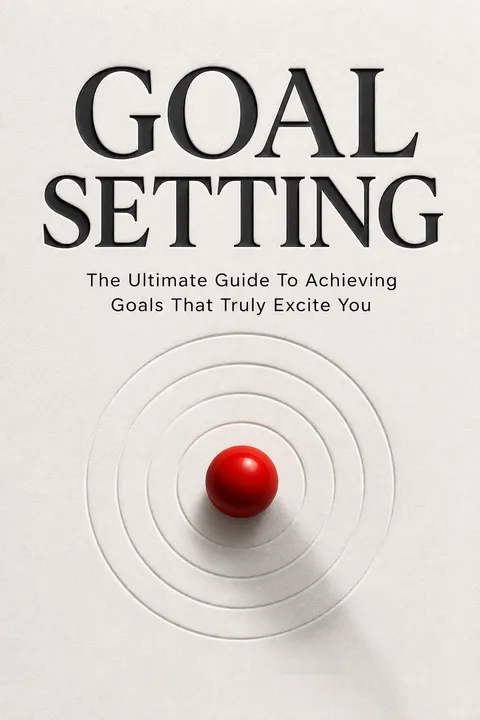
Goal Setting: The Ultimate Guide to Achieving Goals That Truly Excite You is a practical self-help book organized around a central tension: goals can create direction and agency, but they can also become borrowed ambitions, rigid scorecards, or excuses to defer happiness. Its most valuable contribution is not simply a checklist for making objectives measurable. It insists that a goal's emotional and ethical fit matters alongside its technical design. Values and purpose supply the reason to persist; specificity, feedback, practice, and planning translate that reason into behavior.
The book's SMARTEST method broadens conventional goal setting by including psychological readiness, strategy, and entrenched beliefs. That is a useful corrective to the idea that clear targets alone guarantee action. Its best practical recommendations are concrete: write the goal down, identify obstacles, break the work into manageable steps, choose a few high-impact activities, and review progress. The examples, from Franklin's deliberate writing exercises to the author's reconsideration of personal projects, make the advice less abstract.
The framework also contains tensions worth keeping visible. It urges ambitious goals while warning against excessive attachment to outcomes; encourages precise measures while cautioning that missed targets do not define failure; and promotes persistence while allowing goals to be discarded. These are not flaws so much as trade-offs that require judgment. A metric can focus effort but distort priorities. A long-term aim can motivate while narrowing attention. The appropriate response is not to abandon goals, but to keep checking whether the measure and method still serve the underlying value.
Some claims about the subconscious mind and visualization are presented with more certainty than the summary evidence warrants. They are most useful as metaphors for attention and rehearsal, not as guarantees of achievement. Likewise, self-worth should not depend on successful goal completion. The book's strongest message is that goals are instruments for deliberate living: choose them consciously, give them structure, learn from friction, and retain the freedom to revise them.
Review Summary
Readers generally found Goal Setting: The Ultimate Guide to Achieving Goals That Truly Excite You helpful and practical. Many appreciated its concise nature and clear advice on setting SMART goals. The book's emphasis on emotional sustainability and addressing limiting beliefs was praised. Some found the content familiar but well-organized. The included workbook and actionable steps were highlighted as valuable. A few critics noted an overreliance on quotes and a mechanical narration in the audiobook version. Overall, reviewers found the book a useful guide for goal-setting and achievement.
People Also Read










Glossary
SMARTEST Goals Method
Comprehensive goal-setting methodThe book's expanded approach to setting goals. It combines a clearly described and measurable outcome with feasibility, personal relevance, and a timeline, then adds preparation for emotional difficulty, strategic planning, and attention to beliefs that may interfere with action. Its purpose is to address both the mechanics of a goal and the psychological and practical conditions needed to pursue it.
Key Performance Indicators (KPI)
Measures of progressIndicators used to assess movement toward a goal. In business, KPIs can measure company or employee performance; the book applies the idea to personal aims as well. A writer might track words produced each day, while a language learner might monitor study time or demonstrate progress through a defined conversation. The indicator should help reveal whether effort is producing useful progress.
limiting beliefs
Assumptions that constrain actionRepeated thoughts or assumptions that shape what a person believes is possible. The book argues that these beliefs may come from past experiences or messages absorbed from family, peers, or media, rather than from deliberate choice. They can encourage avoidance, premature quitting, or self-sabotage. The recommended response is to identify them, examine their evidence, and build a more balanced belief.
deliberate practice
Focused skill-building with feedbackPurposeful practice aimed at improving a specific skill, rather than simply repeating an activity casually. It involves concentration, repetition, and feedback that reveals what needs adjustment. The book uses Benjamin Franklin's study of newspaper essays to illustrate how a learner can isolate writing skills, recreate examples, and compare the result with a strong model. The approach can be demanding and is not always enjoyable.
80/20 rule
Prioritize high-impact effortA rough principle that a smaller portion of effort may account for a larger share of results. The book uses it to encourage goal setters to distinguish consequential tasks from low-value activity, then devote more attention to the former. The ratio is a guide rather than a precise law. Its practical value lies in asking which few actions are likely to move a goal forward most.
if ... then triggers
Cues linked to planned actionsA planning technique that attaches a desired behavior to a familiar event or situation. The book suggests using an existing routine as the cue for a new action, making the response easier to remember and repeat. For example, a person might decide to begin a goal-related task after returning home. Repetition can help make the action more automatic, reducing reliance on deciding from scratch each time.
FAQ
What's "Goal Setting: The Ultimate Guide To Achieving Goals That Truly Excite You" about?
- Comprehensive Goal Setting: The book introduces the SMARTEST Goal Method, a comprehensive approach to setting and achieving goals that genuinely excite you.
- Overcoming Limitations: It focuses on overcoming personal limitations and leveraging the subconscious mind to achieve more than you thought possible.
- Avoiding Mistakes: The book highlights common mistakes in goal setting and provides strategies to avoid them.
- Actionable Steps: It includes a step-by-step workbook to guide readers through the goal-setting process, ensuring they take concrete actions toward their ambitions.
Why should I read "Goal Setting: The Ultimate Guide To Achieving Goals That Truly Excite You"?
- Holistic Approach: Unlike many other goal-setting books, this one covers all aspects necessary for effective goal setting.
- Personal Fulfillment: It helps you set goals that reflect your true values and purpose, leading to a more fulfilling life.
- Practical Tools: The book provides practical tools and exercises to help you craft a clear plan of action.
- Empowerment: It empowers you to take control of your life and stop being influenced by external circumstances.
What are the key takeaways of "Goal Setting: The Ultimate Guide To Achieving Goals That Truly Excite You"?
- SMARTEST Goals Method: This method includes setting Specific, Measurable, Achievable, Relevant, Time-bound, Emotionally Sustainable, Strategized, and Transferred goals.
- Intrinsic Motivation: The book emphasizes the importance of internal motivators like autonomy, mastery, and purpose over external ones.
- Overcoming Fear and Failure: It teaches how to reframe failure and overcome self-criticism to persist in achieving your goals.
- Daily Habits and Mindset: Establishing daily habits and a positive mindset are crucial for long-term success.
What is the SMARTEST Goal Method?
- Specific Goals: Clearly define what you want to achieve to tap into the focusing power of your mind.
- Measurable Goals: Ensure your goals can be tracked and assessed for progress.
- Achievable Goals: Set realistic goals that challenge you but are within reach.
- Emotionally Sustainable: Prepare mentally for obstacles and develop perseverance to achieve your goals.
How does the book suggest overcoming limiting beliefs?
- Identify Limiting Beliefs: Recognize the beliefs that hold you back and understand they are subjective truths.
- Befriend Your Subconscious: Understand the positive intentions behind your limiting beliefs and work with your subconscious mind.
- Challenge Beliefs: Argue with your subconscious by gathering evidence that disproves your limiting beliefs.
- Replace Beliefs: Create new, empowering beliefs and reinforce them through daily affirmations.
What role does the subconscious mind play in achieving goals according to the book?
- Automatic Guidance System: The subconscious mind operates in terms of goals and end results, guiding you towards them.
- Priming and Focus: Setting clear goals sends a strong signal to your subconscious, allowing it to focus on opportunities to achieve them.
- Overcoming Limiting Beliefs: The book emphasizes the importance of aligning your subconscious with your goals to avoid self-sabotage.
- Daily Conditioning: Regular visualization and affirmations help reprogram the subconscious for success.
What are some common pitfalls in goal setting mentioned in the book?
- Vague Goals: Setting unclear goals leads to vague results and lack of direction.
- Excessive Focus: Over-focusing on a goal can lead to neglecting other important life areas.
- Unrealistic Timeframes: Setting goals with unrealistic deadlines can lead to discouragement and failure.
- Neglecting the Present: Focusing too much on future goals can cause dissatisfaction with the present.
How does the book recommend using daily habits to achieve goals?
- Building Momentum: Daily actions build momentum and make goals part of your reality.
- Automating Success: Turning tasks into daily habits automates the achievement process.
- Starting Small: Begin with manageable tasks to avoid negative feelings and gradually increase commitment.
- Setting Triggers: Use "if...then" triggers to create automatic habits and conserve willpower.
What are the best quotes from "Goal Setting: The Ultimate Guide To Achieving Goals That Truly Excite You" and what do they mean?
- "People without goals are doomed to work forever for people who do have goals." - Brian Tracy: This quote emphasizes the importance of setting personal goals to take control of your life.
- "A goal is a dream with a deadline." - Napoleon Hill: It highlights the necessity of setting deadlines to turn dreams into actionable goals.
- "We are what we repeatedly do. Excellence, then, is not an act, but a habit." - William Durant: This quote underscores the power of daily habits in achieving excellence.
How does the book address the fear of failure?
- Reframing Failure: Failure is seen as a necessary step towards success and a learning opportunity.
- Inoculating Against Failure: Mentally prepare for setbacks by imagining worst-case scenarios and planning responses.
- Learning from Setbacks: Use failures to adjust strategies and realign actions with goals.
- Persistence: Emphasizes the importance of persisting through failures to ultimately achieve success.
What is the role of visualization in achieving goals according to the book?
- Imagination as a Tool: Visualization allows you to create desired experiences in your mind, influencing your subconscious.
- Building Confidence: Regular visualization increases confidence in your ability to achieve goals.
- Emotional State: Visualizing success puts you in a positive emotional state, enhancing creativity and motivation.
- Vision Boards: Creating a vision board helps focus on goals and makes them more concrete in your mind.
How does the book suggest dealing with self-criticism?
- Self-Compassion Over Criticism: Research shows self-compassion is more effective than self-criticism for performance and perseverance.
- Judging Competence Accurately: People with healthy self-esteem judge their competence accurately without harsh self-criticism.
- Building Self-Esteem: Discipline and achieving small goals consistently boost self-esteem.
- Accepting Imperfection: Recognize that everyone is imperfect and practice treating yourself with kindness and understanding.
About the Author
Other books by Thibaut Meurisse










Download PDF
Download EPUB
.epub digital book format is ideal for reading ebooks on phones, tablets, and e-readers.








