

Key Takeaways
Treat God as a living relationship, not a supernatural object.
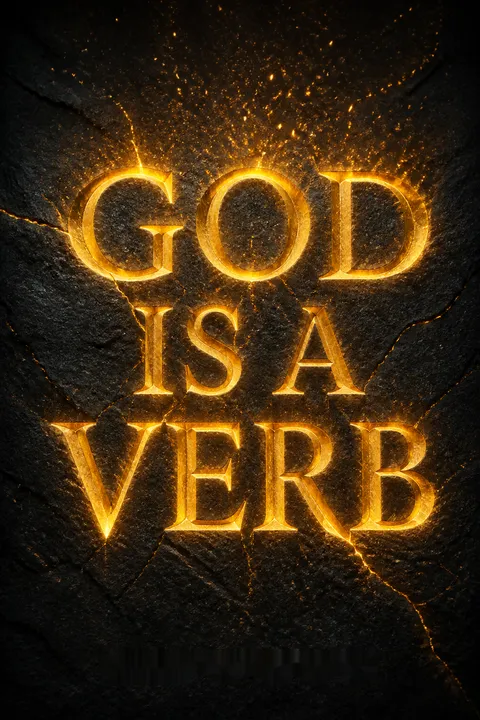
A source beyond labels. Kabbalah distinguishes Ein Sof, the limitless source beyond human understanding, from the names and images people use to approach it. God is not a male ruler, a thing, or a bundle of fixed traits. Cooper instead develops the idea of God-ing: an active relationship in which divine presence and creation unfold together. The term describes a way of relating to God, not a definition of Ein Sof itself.
Practice makes the idea real. Cooper traces this perspective through Rabbi Zalman Schachter-Shalomi's language of partnership and through his own return to Jewish practice after exploring Sufi and Buddhist meditation. The point is not to settle what God is, but to notice the sacred in each moment and respond to it through how one lives.
What's striking is how this view relocates spirituality from assent to relationship. In process philosophy, reality is understood as ongoing change rather than a collection of finished things, a useful parallel to Cooper's insistence that the divine is encountered in action. This can make religious language more accessible to people wary of a humanlike deity. The tradeoff is conceptual: calling God a process may clarify experience while leaving the ultimate source as mysterious as before. That is not necessarily a flaw. It marks the boundary between a practical spiritual metaphor and a claim that could be demonstrated as fact.
Read sacred stories on several levels, then test them in experience.
A text has layers. The Jewish interpretive approach called Pardes treats Torah as an orchard with four kinds of reading: the straightforward account, hints and metaphors, investigation through related teachings, and hidden mystical meaning. Cooper uses the Garden of Eden story to show why no single reading need exhaust a text. Its familiar account raises questions about gender, punishment, and God's knowledge; a mystical reading sees Adam and Eve as complementary forces and the serpent as part of the conditions that make physical creation possible.
Learning is experiential. Cooper argues that Kabbalah is not a closed system to master intellectually. Study, daily practice, and contemplation work together. His own meditative experience helped him return to Jewish texts with new questions, while the text itself supplied a tradition and discipline for interpreting those experiences.
Layered reading resembles a core practice in literary studies: a text can be examined for plot, metaphor, historical context, and the assumptions it carries. That flexibility keeps inherited stories alive and lets readers test what a literal reading would imply. It also has a risk. If every inconsistency can be rescued by a hidden meaning, interpretation becomes hard to challenge. Cooper's strongest safeguard is the pairing of interpretation with practice. A mystical reading should deepen ethical attention and lived understanding, not merely protect a belief from scrutiny.
Turn ordinary choices into opportunities to release hidden holiness.
Small acts carry weight. Isaac Luria's teaching of nitzotzot, or holy sparks, imagines traces of divine awareness hidden throughout creation. Tikkun is the work of repairing or elevating what has become concealed. In this view, ordinary choices can contribute to a larger restoration: how people speak, treat one another, use resources, and meet strangers.
A pinch matters. In a story Cooper recounts, a wealthy man refuses to walk across a synagogue to offer a poor worshipper a pinch of snuff. The man later loses his wealth, while the person he slighted becomes prosperous. The Baal Shem Tov explains the reversal through that small failure of generosity. The tale does not offer a formula for predicting fate. It makes a sharper moral point: an apparently trivial choice can reveal what someone values and shape the relationships around it.
The sparks image gives moral attention a cosmic scale: nothing is too ordinary to matter. Even without adopting its metaphysics, the idea resembles systems thinking, in which small actions can reinforce patterns across a community. A single generous response may encourage trust; repeated dismissals can normalize disregard. The caution is that a story linking one slight to later poverty can sound like a claim that hardship is deserved. Read more carefully, it is a teaching tale about responsibility, not reliable evidence that every misfortune has a moral cause.
Train attention until daily life stops running on autopilot.
Awareness can be practiced. Cooper treats attention as the human capacity that lets anything become precious. A simple exercise is to notice breathing, sounds, peripheral vision, and bodily sensations, returning to them whenever the mind wanders. An hourly timer can serve as a reminder to pause and become present. The purpose is not to eliminate thoughts, but to recognize them and re-enter the moment.
A path, not a trick. The book presents a twelve-stage route from spiritual learning through careful conduct, generosity, kindness, moderation, joy, selflessness, awe, and equanimity toward expanded awareness. Each quality prepares the next. The sequence makes enlightenment a practice woven into speech, habits, and relationships, rather than a dramatic experience reserved for a few exceptional people.
This emphasis on noticing rather than suppressing thought aligns with contemporary mindfulness practices, which train attention to return to present sensation without treating distraction as failure. The book's ethical sequence adds an important dimension: attention is not only an inward skill, but a way to become more careful with other people. Still, constant self-monitoring can become another performance goal. A reminder to pause is useful when it restores contact with life, not when it turns every moment into a test of spiritual achievement.
Meet each moment as a fresh act of creation.
Existence is sustained now. In Cooper's Kabbalistic account, creation is not simply an event completed in the distant past. The source of life continually sustains everything, like a light that appears whenever its power is flowing. What seems solid and continuous depends on this ongoing creative relationship. The book does not deny that the physical universe has a history; it shifts attention from when creation began to how existence is renewed in every moment.
Free will enters the process. Human beings are not merely passive parts of a finished design. Their choices can alter the course of events and affect others, while divine providence brings the wider conditions of the world to each moment. This perspective asks readers to treat each action as consequential without pretending they can predict every result.
The distinction between a universe with a history and a world sustained in the present is useful: scientific accounts describe physical development, while Cooper's claim concerns dependence and meaning. Those are different kinds of explanation, and mystical language should not be mistaken for a competing physics. As a mental model, continual creation encourages humility about what seems permanent and attention to present responsibility. Its limit is equally important: not every event can be attributed to a divine intention that humans can read. The book's own emphasis on uncertainty helps restrain that temptation.
Give in ways that loosen ownership and strengthen another person.
Charity changes the giver. Cooper distinguishes tzeddakah, righteous giving, from a simple transfer of money. Giving can interrupt the belief that wealth is entirely personal property and can connect a donor to the needs of others. He also describes lovingkindness as broader than charity: it may involve time, care, hospitality, or help for someone who is not poor.
A hidden donor. A hasidic story tells of Yosele, a man widely dismissed as a miser because he reacts angrily when asked for money. After his death, townspeople discover that he had quietly left weekly support for poor families. The story turns reputation inside out. Cooper also invokes Maimonides' preference for giving discreetly and helping people become self-supporting, so assistance preserves dignity rather than dependence.
The story challenges the assumption that generosity must be visible to be real. Research on prosocial behavior often finds that helping can strengthen social connection and personal well-being, though motives vary and need not be perfectly selfless. The book's ideal of anonymous giving can protect recipients from embarrassment, but anonymity is not always best: direct aid can make needs clearer and allow recipients to shape the help. Nor can private generosity replace fair institutions. The durable insight is to give in a way that respects the other person's agency.
Let the soul's layered nature widen your view of death.
The soul has dimensions. Cooper describes five levels: nefesh, tied most closely to bodily life; ruach, associated with emotion and spirit; neshama, linked to higher awareness; and the subtler chayah and yehidah, which approach a sense of unity. These are not five separate objects inside the body, but a map of different relationships between human life and awareness.
Death is a passage in this tradition. The book presents Jewish mystical teachings in which some soul dimensions return to their source while others need purification and may be aided by the prayers of the living. Reincarnation offers another account of unfinished spiritual work. Cooper also recounts his father's final hours as an experience of reconciliation and sensed presence, a personal story that expresses the book's openness to mystery rather than proof of an afterlife.
This layered model gives grief a language for distinctions that ordinary talk about a single soul often misses: bodily vitality, emotional character, and a sense of spiritual depth are related but not identical. Continuing bonds with the dead can also help mourners preserve love while adapting to loss. The claims about post-death realms and reincarnation remain matters of religious belief, not conclusions established by the stories in the book. Holding both facts together allows the practices of remembrance and prayer to matter without requiring certainty about what lies beyond death.
Transform evil's hidden spark without excusing the harm it causes.
Opposing forces shape life. Kabbalah describes creation through tensions such as expansion and restraint, generosity and judgment. Cooper argues that what people call evil is not a separate substance outside the divine order; it can contain a spark that has become obscured. The spiritual task is to seek transformation, not to assume that destruction is the only response.
Compassion is not approval. In a story told by Rabbi Zalman Schachter-Shalomi, a boy confronts a monstrous figure carrying an evil heart. He could destroy it, but sees its suffering and releases it, allowing the heart to disappear into the earth. The story presents compassion as a way to avoid becoming defined by hatred. It does not require denying the damage done by harmful people or abandoning protection and justice.
The story offers a challenging alternative to moral purity narratives: recognizing the conditions behind harm may make transformation more possible than treating wrongdoers as a different species. That connects with restorative approaches to justice, which seek accountability and repair alongside punishment. Yet compassion can become dangerous if it asks victims to absorb further harm or treats every offense as redeemable on demand. A workable ethic needs both insight into causes and firm protection for those at risk. The book's strongest version of mercy is therefore active, not permissive.
Analysis
God Is a Verb is part spiritual guide, part interpretive introduction to Jewish mysticism, and part memoir of a seeker who travels through Eastern meditation before finding new depth in Jewish practice. Its organizing movement is from the origins of creation, through the structure of the present world, toward disciplines of awareness and teachings about death. This structure lets metaphysical claims lead into practical questions: how to speak, give, pay attention, face suffering, and accompany the dying.
The book's distinctive move is to make mysticism participatory. Kabbalah is not presented as a chart of cosmic forces to memorize, but as a way to perceive ordinary life as spiritually consequential. Stories carry much of this teaching. A forgotten charitable gesture, an anonymous donor, or a deathbed encounter makes abstract claims about sparks, soul, and providence emotionally legible. The exercises then ask readers to test those ideas in their own attention and conduct.
That accessibility also creates a tension. Cooper freely interprets inherited texts, draws connections across religious traditions, and presents stories of angels, reincarnation, and other realms in an intimate modern voice. This invites readers into material often kept obscure, but can blur the difference between established doctrine, one mystic's interpretation, and personal experience. His account works best when read as a practical spiritual vision rather than as a neutral survey of Jewish belief or a scientific description of the universe.
The book's most durable contribution is ethical: attention is a form of responsibility. If actions ripple through a shared creation, carelessness is not private, and generosity is not merely sentimental. The cosmology cannot be independently verified, but its behavioral demand is concrete. Live as though each encounter matters, remain humble about what cannot be known, and cultivate enough awareness to choose compassion without confusing it with passivity. That combination of wonder and obligation gives the book its lasting force.
Review Summary
God Is a Verb is highly praised for its accessible introduction to Kabbalah and Jewish mysticism. Readers appreciate Cooper's clear writing, thought-provoking ideas, and practical spiritual exercises. Many find the book life-changing, offering new perspectives on God, Judaism, and personal growth. The mix of traditional Jewish wisdom with elements of Eastern philosophy resonates with diverse readers. While some criticize the title as misleading or find certain sections less engaging, most reviewers consider it a profound, inspiring work that bears rereading and ongoing contemplation.
People Also Read






Glossary
Ein Sof
limitless divine sourceEin Sof means the boundless or endless source that precedes every name and attribute assigned to God. In Cooper's account, it cannot be grasped by ordinary thought or described as a being with human characteristics. Names such as God, Creator, or the One refer to ways people relate to the divine, not complete definitions of Ein Sof.
God-ing
divine relational processGod-ing is Cooper's way of describing the divine as an ongoing, interactive process rather than a fixed object or person. Creation and divine presence unfold in relation to one another, with human beings participating through their choices. The term offers a practical language for experience, but it does not claim to define Ein Sof, which remains beyond description.
Nitzotzot
sparks of holinessNitzotzot are holy sparks understood in Lurianic Kabbalah as traces of divine light concealed throughout creation. The sparks are imagined as hidden within physical things and living beings. Through awareness, lovingkindness, and ethical action, people help raise or release them, contributing to the repair of the world and the return of creation toward its source.
Tikkun
repair or restorationTikkun means fixing, mending, or restoring. In Cooper's account, it can refer to spiritual work that repairs a person's soul, helps another being, or raises concealed sparks in the world. The idea links private conduct with the condition of creation: actions that increase awareness and lovingkindness participate in a wider process of restoration.
Pardes
four-layer Torah readingPardes means orchard or garden and names a traditional four-level approach to Torah interpretation. Readings move from the straightforward sense of a passage, through hints and metaphor, to investigation using related teachings, and finally to hidden or mystical meaning. The method treats a scriptural text as capable of yielding more than one valid insight.
Sefirot
divine creative qualitiesThe sefirot are ten foundational emanations or qualities through which Kabbalah describes creation and divine activity. Common names include wisdom, understanding, lovingkindness, strength, beauty, and sovereignty. They are often drawn as a Tree of Life. The sefirot are not simply separate beings; together they provide a symbolic map for relationships among cosmic, human, and spiritual qualities.
Five Worlds, Five Soul Dimensions
layers of reality and soulThis framework pairs five levels of reality with five dimensions of soul. The worlds range from physical existence to increasingly subtle spiritual awareness. The soul levels are nefesh, ruach, neshama, chayah, and yehidah, associated respectively with bodily vitality, emotional spirit, higher awareness, subtle life, and unity. They describe overlapping dimensions, not separate places or objects inside a person.
Devekut
attachment to the divineDevekut means cleaving or attachment to God. In Cooper's usage, it is a sustained awareness of divine presence and a sense of intimacy with the source of life. The term describes an experiential aim of Jewish spiritual practice, not simply agreement with a doctrine. It is associated with diminishing the sense of separation between the self and the divine.
Hitbodedut
intentional spiritual solitudeHitbodedut is the practice of deliberately isolating or secluding oneself for spiritual work. It can involve physical solitude, quiet contemplation, or speaking privately to God in one's own words. Jewish mystics used it alongside study and observance. The practice is intended to make inner experience more audible, not to reject community or ordinary responsibilities.
Kavvanah
focused spiritual attentionKavvanah means intention, direction, or attunement. In Jewish practice it can refer to the attention brought to prayer or religious action. Cooper broadens the term to include awareness of how one's actions, words, and thoughts affect other people and the wider creation. It is a discipline of purposeful presence, not merely a private feeling.
Reincarnation
return for spiritual repairReincarnation, discussed in Jewish mysticism as the return of souls, is presented by Cooper as a possible continuation of spiritual work across lifetimes. In the Lurianic account, a soul may return to address unfinished tasks and help restore fallen sparks. Jewish sources differ on this teaching, and the book presents it as mystical doctrine rather than an empirically established account.
FAQ
1. What is [God Is a Verb: Kabbalah and the Practice of Mystical Judaism] by David A. Cooper about?
- Exploration of Jewish Mysticism: The book delves into Kabbalah and mystical Judaism, presenting these traditions as dynamic, living practices rather than static doctrines.
- God as a Process: It introduces the idea of “God-ing” and “creation-ing,” emphasizing God as an ongoing, relational process rather than a fixed entity.
- Holistic Spiritual Path: Structured in four parts, the book covers creation, present reality, higher awareness, and the world to come, offering a comprehensive view of Jewish mystical teachings.
- Practical Integration: Through stories, exercises, and meditations, Cooper guides readers to integrate mystical insights into daily life.
2. Why should I read [God Is a Verb] by David A. Cooper?
- Accessible Spiritual Guidance: The book makes complex Kabbalistic concepts understandable and relevant, even for those without prior religious study.
- Bridges Ancient and Modern: It connects ancient Jewish wisdom with contemporary spiritual questions about meaning, suffering, and connection.
- Practical Exercises: Readers receive concrete spiritual practices—meditation, prayer, ethical living—to nurture the soul and deepen awareness.
- Respected Teacher’s Perspective: Cooper, influenced by renowned spiritual leaders, offers a gentle, inclusive approach to spiritual awakening.
3. What are the key takeaways from [God Is a Verb] by David A. Cooper?
- Kabbalah as a Way of Life: Mystical Judaism is presented as a practical path involving meditation, ethical action, and spiritual awareness.
- God as Infinite Process: The Divine is described as endless (Ein Sof) and interactive, inviting partnership and co-creation with humanity.
- Soul’s Multi-Level Journey: The soul is multi-dimensional, with each level connected to different realms of consciousness and purpose.
- Continuous Creation and Repair: Creation is ongoing, and humans play a vital role in raising “holy sparks” and repairing the universe (tikkun).
4. What are the most important quotes from [God Is a Verb] and what do they mean?
- “Offer me an opening no bigger than the eye of a needle, and I will widen it into openings through which wagons and carriages can pass.” Even a small willingness to open to higher consciousness can lead to profound spiritual growth.
- “The yearning itself holds a secret; its own existence is an answer rather than a question.” Spiritual longing is itself a manifestation of the Divine within us.
- “The ability to forgive is the most excellent gift in human experience.” Forgiveness is essential for personal and cosmic harmony, sustaining creation.
- “Death has never existed.” This mystical insight suggests that death is an illusion, and true life is eternal consciousness in God.
5. How does [God Is a Verb] by David A. Cooper explain the nature of God and the Divine?
- God as Endlessness (Ein Sof): God is portrayed as the infinite, unknowable source beyond all attributes, gender, or form.
- God as a Verb: Inspired by Rabbi Zalman Schachter-Shalomi, God is described as a process—“God-ing”—an ongoing, interactive relationship with creation.
- Awe and Relationship: True wisdom begins with awe of the Divine, experienced as an intimate, moment-to-moment partnership in life.
- Neutral Language: The book uses neutral pronouns for God to avoid limiting the Divine to human categories.
6. What are the key concepts of Kabbalah explained in [God Is a Verb]?
- Kabbalah as an Outlook: It is presented as a flexible way of perceiving reality, not a rigid system.
- Tree of Life and Sefirot: The Tree of Life, with its ten sefirot, serves as a blueprint for creation and a map of divine attributes.
- Raising Holy Sparks: Based on Lurianic Kabbalah, humans are tasked with elevating divine sparks trapped in the material world through acts of kindness and awareness.
- Interconnected Traditions: The book highlights parallels between Kabbalah and other spiritual traditions, fostering cross-cultural dialogue.
7. How does [God Is a Verb] by David A. Cooper describe the soul and its dimensions?
- Five Levels of Soul: The soul consists of nefesh (physical), ruach (emotional), neshama (intellectual/spiritual), chayah (living essence), and yehidah (unity with God).
- Purity and Connection: Higher levels remain pure and always connected to the Divine, while lower levels are affected by worldly experiences and require purification.
- Soul Mates and Cosmic Family: Souls are interconnected, with multiple roots and sparks, and soul mates are those who help elevate consciousness and fulfill creation’s purpose.
- Journey After Death: The soul undergoes purification and ascends through realms, with reincarnation and resurrection as part of its journey.
8. What is the “work of the chariot” in [God Is a Verb] and why is it significant?
- Mystical Ascent: The “work of the chariot” (ma’asey merkevah) refers to ancient Jewish mystical practices for ascending to higher spiritual realms.
- Historical Roots: These teachings were secret and considered dangerous, as illustrated by the story of the four scholars who entered the Pardes.
- Modern Application: Cooper adapts these practices for today, using stories and exercises to help readers expand awareness and approach messianic consciousness.
- Path to Enlightenment: The chariot symbolizes the journey toward higher awareness and integration of the soul’s dimensions.
9. What practical spiritual exercises and methods does [God Is a Verb] by David A. Cooper offer?
- Counting the Omer: A 49-day practice of daily contemplation on the sefirot, fostering self-examination and ethical refinement.
- Angel Meditation: Guided visualizations invoking archangels and the Shekhina for protection, healing, and connection with higher realms.
- Awareness Expansion: Exercises to broaden sensory perception and cultivate present-moment awareness, counteracting modern distractions.
- Kavvanah (Intention): Emphasizes focused intention in every thought, word, and action, extending mindfulness beyond formal prayer.
10. How does [God Is a Verb] by David A. Cooper address the problem of good and evil?
- Interconnected Forces: Good and evil are seen as part of a continuum, not absolute opposites, with each containing a spark of the other.
- Evil as Transformable: Evil is a force that dims divine light but also contains holiness yearning for redemption; the task is to raise and transform it.
- Role of Free Will: The existence of both good and evil is necessary for free will and the ongoing process of creation.
- Purim as a Model: The holiday of Purim illustrates the blurred line between good and evil, teaching that understanding their relationship leads to higher awareness.
11. How does [God Is a Verb] by David A. Cooper interpret death, the afterlife, and the world to come?
- Death as Transition: Death is a multi-level transition where the soul journeys through various realms, aided by spiritual practices and the living.
- Heaven and Hell as States: Heaven and hell are described as states of consciousness, often existing side by side, with the ultimate goal being their integration.
- Gehinnom as Purification: Hell is a temporary realm for soul purification, not eternal damnation, with most souls ascending after up to twelve months.
- World to Come: The world to come is a realm of messianic consciousness, where suffering and death vanish, and the soul is united with the Divine.
12. What does [God Is a Verb] by David A. Cooper teach about angels, demons, and spiritual energies?
- Angels and Demons as Energies: They are described as spiritual forces or packets of energy, not personal beings, influencing consciousness and events.
- Angelic Hierarchies: The book details the roles of archangels like Michael, Gabriel, Uriel, and Raphael, and how humans can connect with them for healing and protection.
- Demons as Challenges: Demons represent forces of fragmentation and challenge, which can be overcome or harnessed for good.
- Dynamic Tension: The interplay between angelic and demonic forces illustrates the dynamic tension between good and evil in creation.
Download PDF
Download EPUB
.epub digital book format is ideal for reading ebooks on phones, tablets, and e-readers.








