

Key Takeaways
Trump fit the warrior faith white evangelicals had spent decades building
A familiar candidate. In January 2016, Donald Trump told students at Dordt College that Christians were under siege and needed a forceful defender. He was vulgar, thrice married, and famous for bragging about sexual misconduct, yet his appeal was not simply a reluctant bargain over Supreme Court seats. By election day, 81 percent of white evangelical voters supported him. Du Mez argues that many recognized in Trump a political expression of values cultivated over decades: patriarchal authority, nationalism, and aggressive displays of power.
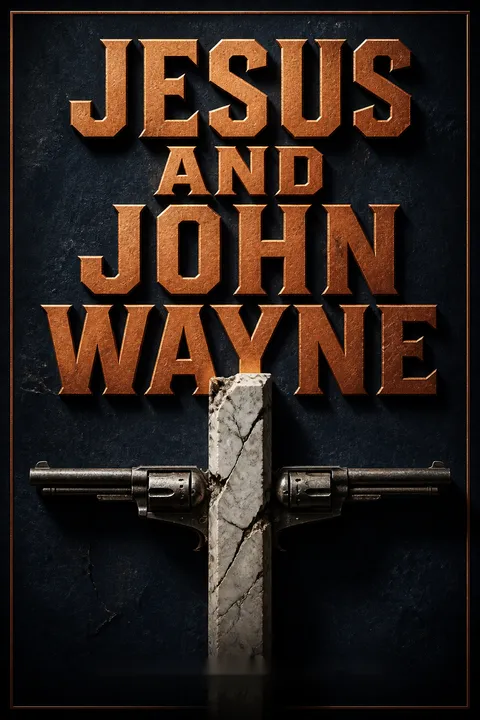
A rehearsed ideal. Militant masculinity is a model of manhood that treats toughness, command, and readiness to use force as virtues. John Wayne, though not an evangelical, had long embodied that ideal for conservative Christians. Trump did not create this outlook. He fit its established hero story.
What's striking is how political identity can make apparent inconsistency feel like consistency. A voter may condemn personal behavior in private life yet admire public aggression when it signals protection of the in-group. This resembles brand loyalty: people buy into a bundle of meanings, not a checklist of traits. The book's historical account is persuasive without implying that every white evangelical voted alike, or that theology alone explains the result. Black Christians and evangelical critics of Trump offer visible counterexamples to any claim that evangelical belief mechanically produces one politics.
Treat Christian manhood as a historical construction, not a biblical constant
A changing ideal. In the late nineteenth century, urban jobs and a corporate economy unsettled older definitions of manhood. Theodore Roosevelt answered that anxiety with a rugged frontier persona, then carried its promise of masculine renewal into imperial politics. Christian leaders also recast the faith. In the 1910s, evangelist Billy Sunday preached an energetic, combative Christianity; after World War I discredited martial heroism for many, advertising executive Bruce Barton presented Jesus as a successful leader and organizer.
A useful hero. During World War II and the Cold War, Billy Graham described Christian life through military imagery, while John Wayne's cowboy and soldier roles supplied a popular model of decisive force. These changing portraits show that Christian masculinity was repeatedly fashioned to answer social fears, not simply recovered intact from scripture.
The history makes masculinity legible as cultural work. When economic roles change, symbols can preserve a sense of status even when the old material basis, such as physical labor or sole-breadwinner income, weakens. Religious figures and movie heroes become portable scripts for what authority should look like. That does not make faith merely a disguise for politics. It shows how interpretation selects certain biblical images and gives them contemporary force. A useful question is not whether a tradition has ever praised strength, but why one version of strength becomes urgent at a particular moment.
Follow the Christian marketplace to see how belief becomes culture
A shared media diet. After World War II, evangelical leaders built radio programs, publishing networks, colleges, and parachurch organizations to reach people beyond individual congregations. The Christian Booksellers Association helped turn local bookstores into a national distribution system. It grew from about 270 affiliated stores in 1950 to roughly 3,000 by the end of the 1970s. Publishers increasingly sold broadly accessible books on Christian living rather than material tied to one denomination.
Culture beyond church. Cultural evangelicalism means a shared religious identity formed through the products people consume, including music, books, films, and radio. Readers could absorb the same family ideals and heroes without sharing a church or even articulating evangelical doctrine. The marketplace did not just reflect belief. It helped establish which voices seemed authoritative and which perspectives were harder to find.
This is a sharp account of how institutions shape common sense without issuing formal commands. Repeated stories and products can create a sense of normality more effectively than a single sermon, because they travel through leisure, family life, and shopping. The same mechanism operates in politics, where news ecosystems build trust through repetition and shared reference points. Yet markets are not perfectly controlled by their owners. Audiences interpret, adapt, and sometimes reject what they buy. The crucial insight is that distribution affects which interpretations get repeated often enough to feel like the tradition itself.
Read family values as a fight over sex, labor, and authority
Marriage as a model. Marabel Morgan's 1973 bestseller, The Total Woman, sold more than 500,000 copies in its first year by urging wives to submit, praise their husbands, and meet their sexual expectations. Elisabeth Elliot offered a more theological defense of male authority. James Dobson extended the same assumptions into child discipline and distinct gender roles. These were not only private instructions. Advocates linked fathers' authority at home to social order and national strength.
Domestic politics. Phyllis Schlafly turned opposition to the Equal Rights Amendment into a mass campaign, arguing that women's protection depended on traditional family roles. Conservative women could find status and purpose within that model, even as it constrained their choices. Du Mez shows how struggles over sexuality, work, childcare, and gender became part of a broader political coalition, rather than separate personal concerns.
The family is both an intimate relationship and a political metaphor. When a household is imagined as requiring a strict leader, that template can make centralized authority seem natural elsewhere too. The bargain also deserves careful attention: some women embraced traditional roles from conviction, community, or limited economic options, not simply because they were deceived. Taking those motivations seriously strengthens the analysis. It also leaves a hard question: when care is exchanged for obedience, who gets to define care, and what recourse exists when the promised protection fails?
Look for racial power beneath calls to defend Christian America
A white-centered identity. Du Mez describes Christian nationalism as the belief that the United States is a Christian nation with a special identity to defend. In practice, this political identity often merged religion with white racial belonging. White evangelicals' responses to civil rights ranged widely, but many withdrew support when demands for racial justice required federal action. Some defended segregated Christian schools as parental choice, while later appeals to states' rights and law and order offered less explicit ways to resist change.
Not a universal label. Black Christians often rejected the evangelical label despite sharing standard evangelical beliefs. Only about 25 percent of African Americans who affirmed the movement's four commonly cited theological distinctives identified as evangelical. Their different political experiences expose the racial specificity of a label sometimes presented as purely theological.
The distinction between stated doctrine and lived identity matters here. Social categories are not neutral containers; their meaning is shaped by history, institutions, and whose experiences count as typical. The book's account helps explain why a movement can invoke universal religious language while operating through a narrower national and racial story. Still, the category should not be treated as uniform. White evangelicals who supported civil rights, Black evangelicals who adopted the label, and multiracial churches complicate any simple equation. Those variations clarify the argument: racial power can structure a movement without describing every participant.
Connect the patriarchal home to the militarized nation
Protection scales up. Evangelical leaders connected a father's authority in the home to a strong military defending the nation. During Vietnam, many conservative evangelicals supported the war and praised soldiers even as evidence of American atrocities emerged. The military increasingly appeared as a guardian of discipline and traditional values. In the 1980s, Jerry Falwell and other leaders backed Ronald Reagan's military buildup; Oliver North became a Christian Right hero despite admitting to lying to Congress and destroying documents in the Iran-Contra affair.
A recurring logic. By the Iraq invasion in 2003, 87 percent of white evangelical Christians supported the decision to go to war. The political pattern joined male authority at home with force abroad: threats to family order and threats to national security could be treated as parts of one struggle, with strength presented as the answer to both.
The connection is more than metaphor. A shared protector ideal can make household leadership and national force feel like expressions of the same moral duty. That helps explain why domestic gender debates can shape views on war, and why military service gains religious significance. At the same time, the language of protection can conceal costs borne by those supposedly protected, including women, civilians, and dissenters. Support for military action also varies by conflict and over time. The useful question is whether a policy actually reduces danger, not merely whether it performs confidence and resolve.
When one enemy fades, fear can recruit another
Threat as fuel. During the Cold War, evangelical leaders warned that communism endangered both faith and family. When the Soviet Union collapsed, militant politics did not disappear. The feared threat shifted toward the United Nations, secularism, and eventually Islam. After September 11, prominent evangelical figures described Islam as inherently violent, while Christian publishers circulated books warning of an imminent religious takeover.
Stories sold as expertise. Self-described former Muslim terrorists became popular speakers, even though major elements of some accounts were challenged as false. A 2009 survey found that 62 percent of white evangelical Protestants believed torture could be justified often or sometimes, compared with 46 percent of mainline Protestants and 40 percent of unaffiliated respondents. Du Mez argues that fear was not only a response to events. It also helped leaders sustain authority and support for aggressive policies.
Fear changes how information is evaluated. In a perceived emergency, vivid anecdotes can outrank slow verification, and a speaker who claims privileged knowledge may seem more trustworthy precisely because the danger feels urgent. That is a familiar dynamic in propaganda and crisis communication. The book's examples show why fact-checking alone may not be enough: a false story can satisfy an existing need for certainty and protection. A limitation is that genuine threats do exist. The distinction that matters is between assessing a specific danger and treating an entire religious population as a single enemy.
Gentler male leadership can preserve the hierarchy it appears to soften
A softer presentation. Promise Keepers drew hundreds of thousands of Christian men into stadium rallies during the 1990s, urging them to become better husbands and fathers. Its language of servant leadership asked men to serve their families rather than rule them harshly, but it generally retained male authority. Complementarianism, a theological position that treats women and men as equal in worth but assigns them different roles, gave that hierarchy a formal scriptural defense. Purity teachings likewise emphasized women's responsibility to guard sexual virtue and men's responsibility to lead.
The harder turn. After 9/11, popular books and ministries increasingly celebrated men as warriors and described family and culture as battlefields. Networks of churches, publishers, conferences, and online media brought moderate and extreme versions of patriarchal teaching into closer contact.
A kinder style can produce genuine improvements in daily relationships while leaving the distribution of decision-making power unchanged. That distinction helps explain why a message can feel humane to participants and still frustrate critics. Organizationally, networks amplify ideas through association: endorsements and shared platforms can normalize positions without requiring full agreement on every doctrine. The account also warns against flattening all complementarian households into one experience. The analytical test is concrete: can a wife or child refuse, disagree, or seek outside help without punishment? Benevolent intent cannot answer that question by itself.
Demand accountability where spiritual authority claims the right to protect
Protection turned inward. Du Mez links patriarchal authority, sexual purity teaching, and weak institutional oversight to settings where abuse could be hidden or blamed on victims. The scandals she recounts include allegations against prominent pastors and ministries, alongside failures to report abuse to civil authorities. A 2019 investigation identified about 380 alleged perpetrators associated with more than 700 victims in the Southern Baptist Convention since 1998. Reporting on Independent Fundamental Baptist institutions found hundreds of allegations across churches and affiliated organizations.
Power without appeal. In these cases, victims could be urged to forgive, remain silent, or preserve a leader's standing. The book does not claim that all churches or believers behave this way. It argues that a system emphasizing obedience to male leaders, while treating outside scrutiny as hostile, can make abuse harder to expose and survivors less safe.
The institutional issue is not simply that powerful people sometimes behave badly. It is that procedures can make reporting costly and protect leaders from independent review. This is a classic accountability problem: authority is most dangerous when the same people define the rules, investigate complaints, and decide consequences. A community's stated commitment to morality is not a substitute for transparent safeguarding, mandated reporting, and survivor support. The strongest version of the critique leaves room for sincere faith and pastoral care while insisting that spiritual status must never grant immunity from ordinary standards of evidence and law.
Recover Christian alternatives the culture-war story pushed to the margins
Paths not taken. The book stresses that aggressive nationalism was never the only Christian option. Black Protestant traditions often joined faith to prophetic criticism of the nation. In 1973, progressive evangelicals issued the Chicago Declaration of Evangelical Social Concern, condemning racism, domination, and excessive trust in military power. Other evangelical voices supported racial justice, peace, and more egalitarian relationships, though they remained less powerful in the movement's media and political networks.
A made history. White evangelicalism became influential through particular leaders, organizations, alliances, and consumer products, not through an unavoidable reading of Christianity. The conclusion applies this lens to present-day symbols and habits, from gun culture to border politics and gendered religious merchandise. Changing the movement therefore requires more than arguing over Bible verses. It also requires asking which institutions and stories shape everyday religious identity.
The emphasis on alternatives prevents historical explanation from becoming fatalism. If an identity was built through organizations, media, and alliances, it can be contested through those same channels. The book's focus on culture is especially useful because political commitments often feel like common sense before they become explicit doctrine. A constructive next step is to compare a community's public symbols with its treatment of vulnerable people: the gap can reveal which values are actually being rewarded. Historical countertraditions do not guarantee reform, but they show that a different religious politics is possible.
Analysis
Du Mez's central contribution is to treat evangelical politics as a cultural formation rather than as a direct output of doctrine. Her history follows a chain of transmission: changing ideals of manhood become religiously meaningful, popular heroes make those ideals emotionally legible, media markets circulate them, and organizations connect them to party politics and state power. This approach explains why a movie star who was neither an evangelical nor a model of conventional Christian virtue could nonetheless become a religious icon. He represented a recognizable style of authority.
The account is strongest when it shows how apparently separate arenas reinforce one another. Marriage advice, child discipline, military policy, racial politics, and foreign affairs all become legible through a recurring protector story. That is a valuable corrective to explanations that isolate abortion or partisan strategy as the sole cause of evangelical political behavior. It also makes the book's account of Trump more historically persuasive: political allegiance can express a long-built cultural identity rather than a sudden abandonment of belief.
The argument requires careful boundaries. White conservative evangelical networks are the principal subject, not all evangelicals, all Christians, or a global movement with varied histories. The book documents mechanisms and patterns through influential leaders and institutions, but those examples do not establish that every follower absorbed the same message or acted for the same reason. Nor does a cultural explanation settle theological disputes. It instead shows that claims about biblical authority are interpreted through institutions and power relations.
A further implication is that reform depends on more than better arguments. If consumers learn a faith through books, entertainment, friendships, and trusted organizations, then counterinterpretations need durable communities and distribution systems too. At the same time, historical analysis should distinguish persuasion from coercion and symbolic influence from direct causation. The book's most durable insight is that religious identity is built in ordinary settings, and therefore political change requires attention to the everyday stories that teach people whom to trust, fear, and follow.
Review Summary
Jesus and John Wayne explores how white evangelicals embraced militant masculinity and patriarchal authority, leading to their support of Trump. Du Mez argues this is not an aberration but the culmination of decades-long trends in evangelical culture. While some reviewers found the book insightful and thought-provoking, others criticized it for painting with too broad a brush and lacking nuance. The book sparked discussions about evangelicalism's relationship with politics, gender roles, and power structures, resonating strongly with some readers while others felt it misrepresented their faith.
People Also Read








Glossary
Militant masculinity
Manhood defined by forceA model of masculinity that treats toughness, command, aggression, and willingness to use force as signs of virtue. In the book, it links idealized Christian manhood to patriarchal authority at home, military power abroad, and heroic figures such as John Wayne. It is not presented as the only Christian understanding of manhood.
Christian nationalism
America as Christian nationA political and religious outlook that regards the United States as a Christian nation with a special identity that must be defended. In Du Mez's account, this outlook often connects national strength and cultural dominance with family hierarchy, military power, and white Christian identity.
Cultural evangelicalism
Faith shaped through consumptionAn evangelical identity formed through participation in shared media and consumer culture, including Christian books, music, radio, films, and household products. It can extend beyond church membership or clear theological knowledge, because common products and heroes help create a shared religious and political outlook.
Soft patriarchy
Gentler male-led hierarchyA form of male authority presented through service, emotional attentiveness, and responsibility rather than overt domination. Promise Keepers and the language of servant leadership offered examples. The style could encourage more involved husbands and fathers while retaining men's primary authority in family and church life.
Servant leadership
Authority framed as serviceA model of leadership in which a man is expected to serve and care for his family while retaining a position of authority. In evangelical men's movements, it offered a less abrasive way to defend male leadership, especially as the traditional male-breadwinner role became harder for many families to sustain.
Complementarianism
Equal worth, distinct rolesA theological position holding that women and men have equal value before God but different, God-given roles. In the movement described by Du Mez, it generally reserves primary leadership in the family and church for men and calls for women's submission, while rejecting harsh or selfish male leadership in principle.
Purity culture
Sexual virtue through gender rulesA religious culture emphasizing sexual restraint before marriage, modesty, and the protection of women's sexual purity. The book describes teachings that placed particular responsibility on girls and women to prevent male temptation, while promising boys and men sexual fulfillment within marriage. It often reinforced paternal authority and gender hierarchy.
Christian Reconstructionism
Society governed by biblical lawA conservative theological and political movement associated with Rousas John Rushdoony that advocates applying biblical law throughout society. It emphasizes divinely ordered authority in family, church, and government, opposes state interference in the family, and influenced some homeschooling and patriarchal movements described in the book.
Download PDF
Download EPUB
.epub digital book format is ideal for reading ebooks on phones, tablets, and e-readers.








