

Key Takeaways
Read Christian nationalism as a campaign for governing power, not a culture war
The political project. Katherine Stewart uses Christian nationalism to describe a political ideology, not a Christian creed. It claims the United States was founded as a Christian nation, and argues that government should privilege a particular version of Christianity. The movement seeks influence over courts, elections, schools, public funding, and law, not merely victories in disputes over abortion or same-sex marriage.
A room reveals the system. At a 2018 pastors’ meeting in North Carolina, Family Research Council leader Tony Perkins urged clergy to direct congregants to vote according to biblical values. Guides, sermon materials, and local volunteer teams made the appeal practical. The event showed how religious language and political organizing could operate together, despite claims of neutrality.
The distinction between religion and religious nationalism matters: millions of Christians do not share this political project, and some actively oppose it. That distinction also clarifies the author’s argument. The concern is not that faith enters public life, but that one faction presents its own interpretation as the nation’s rightful identity. A pluralistic democracy can accommodate religious arguments; it becomes less pluralistic when political legitimacy is made conditional on accepting one faith’s authority.
Look beyond voters to the organizers and funders shaping their political choices
A distributed network. Stewart describes no single command center. Instead, connected nonprofits, churches, media outlets, legal groups, data firms, politicians, and wealthy donors coordinate around shared objectives. Leaders move among organizations, while churches provide access to congregations and local volunteers. Large donors and foundations finance policy work; small donors and direct-mail operations help sustain it.
People want different things. Many ordinary supporters seek faith, belonging, moral certainty, or community amid economic and social change. Those motives are real, but they do not necessarily determine the movement’s priorities. At a North Carolina briefing, pastors received voter guides and ready-made political materials, while the leadership set the political message. The distinction is between the concerns that draw people in and the interests that direct the machinery.
This account avoids a common mistake in political analysis: treating a movement’s supporters as either dupes or a unified bloc. People can find genuine meaning in a community while its leaders use that community for purposes members did not choose. The network model also explains why influence can persist without one dominant organization. Still, evidence of coordination does not prove every participant shares every aim. The strongest analysis keeps the network visible without flattening its members.
Trace the abortion coalition to the fight over segregated schools
A different origin story. The book challenges the familiar account that the modern religious right formed spontaneously after Roe v. Wade. In the late 1970s, conservative political organizers sought a broad coalition against liberalism, feminism, civil rights gains, and government power. A pressing concern for some religious leaders was the IRS effort to deny tax advantages to racially discriminatory schools.
A more unifying issue. Abortion became a powerful rallying point after Roe, in part because it could unite people across religious traditions and political factions. Before this shift, many Protestants, Republicans, and Southern Baptists accepted some abortion rights. The emerging movement increasingly treated opposition to abortion as a defining test of religious and political belonging, changing both its public message and the religious identity it promoted.
The historical account is valuable because it separates a movement’s moral language from the circumstances that organize its politics. It does not establish that every later antiabortion believer is insincere; genuine moral conviction can coexist with strategic political use. Nor does a movement’s origin explain every position it adopts decades afterward. The key insight is narrower and more durable: political coalitions can reshape which moral questions feel central, and can recast a recent alliance as an ancient tradition.
Connect today’s biblical politics to older defenses of hierarchy and wealth
Ideas have ancestors. Stewart follows Christian Reconstructionism, a theological and political program associated with R. J. Rushdoony that calls for society to be ordered by a particular interpretation of biblical law. Rushdoony drew on earlier proslavery theologians, including Robert Lewis Dabney, who defended racial hierarchy and opposed public education and women’s equality.
A modern alliance. This inheritance blends religious authority with opposition to public services, regulation, and redistribution. The book traces a line from James Fifield’s anti-New Deal organizing, backed by business donors, through Rushdoony’s fusion of conservative theology and libertarian economics. The resulting politics can condemn government intervention in markets while seeking state power to impose religious rules and protect favored institutions.
The historical connection is not a claim that every contemporary conservative consciously endorses slavery or Reconstructionist theology. It is a genealogy of recurring political ideas: hierarchy presented as divinely ordained, social equality dismissed as disorder, and public institutions treated as threats. Genealogies are most persuasive when they show transmission and adaptation rather than imply guilt by association. Here the useful question is how old arguments survive after their most explicit forms become unacceptable.
Test religious-liberty claims by asking who gains rights and who bears costs
A change in legal framing. The book argues that religious-right lawyers increasingly recast disputes about government support for religion as free-speech or free-exercise claims. In cases involving school clubs, public prayers, and playground funding, this reasoning can treat exclusion of a religious group as discrimination against its viewpoint, even when the group seeks access to public facilities or money.
A practical test. The Supreme Court’s 2014 Town of Greece decision allowed sectarian prayers at municipal meetings. In Winter Garden, Florida, a freethinker repeatedly sought a chance to give an invocation but was not selected, while Protestant speakers dominated the practice. For Stewart, the question is not simply whether a rule sounds neutral, but whether people of different beliefs can actually participate on equal terms.
Religious liberty protects people from government coercion, but a claimed exemption can also shift burdens onto coworkers, patients, or citizens who do not share the claimant’s faith. That tension deserves attention rather than automatic suspicion or automatic deference. The Winter Garden example makes formal neutrality measurable: who gets access, who is left out, and what public authority signals about belonging? Those questions apply well beyond religion, wherever a legal right has unequal effects.
Watch symbolic bills turn opposition into fuel for a larger legislative campaign
A coordinated playbook. Project Blitz is a campaign manual for introducing similar religiously framed bills across state legislatures. Its proposals were organized in phases: familiar symbolic measures first, more direct religious messaging in schools next, and legal protections for discriminatory conduct as a later goal. In 2018, more than seventy bills based on its models had been introduced.
Controversy can be useful. Bills promoting displays of In God We Trust could provoke objections that organizers then used to portray Christians as persecuted. The dispute over a Minnesota school-display bill supplied a clip for conservative media and a story of anti-faith hostility. The strategy, as Stewart presents it, is not only to pass bills, but to create political narratives that strengthen the coalition and make opponents spend time and resources responding.
The episode illustrates how political conflict can be an output, not merely a side effect, of legislative strategy. A modest proposal can serve as a test of messaging, a signal to supporters, and a way to define opponents as hostile. That does not make every sponsor’s motive identical, and symbolic laws can matter to citizens for sincere reasons. But the campaign’s coordinated sequencing makes it essential to evaluate a bill in context, not just by its surface wording.
Notice how church networks, voter guides, and data become campaign infrastructure
Politics at congregational scale. At the Unionville pastors’ briefing, the Family Research Council promoted Culture Impact Teams, church-based groups that organized political communication and voter outreach while keeping formal candidate endorsements away from the pulpit. The organization also circulated personalized voter guides and coordinated buses through competitive districts. Similar programs trained pastors to register voters and mobilize congregations.
The data layer. United in Purpose, a political initiative described in the book, used church and voter information to identify likely conservative Christian supporters and contact those not registered. Its director claimed the database contained about 200 million files. Tools offered pastors congregation-level voting reports, while volunteers received contact details and scripts. The combination of trusted relationships, targeted information, and organized volunteers made the operation more sophisticated than a spontaneous grassroots campaign.
The political significance lies in the combination of social trust and technical targeting. A familiar pastor can make a message feel personal; data systems can decide who receives it and when. Together, those tools create a form of political capacity that is hard to see from outside the institution. Claims about data reach should still be treated cautiously, especially when they come from an organization describing its own operation. The broader lesson is that civic influence depends on infrastructure, not just persuasive speeches.
Ask who controls public education when choice weakens public accountability
Two agendas converge. Christian activists opposed public schools as secular, while free-market advocates sought to replace government provision with privately managed education. Vouchers gained support partly through their history as a way to subsidize segregated private schools after Brown v. Board of Education. When voters rejected a Michigan voucher measure in 2000, Betsy DeVos and allies increasingly backed charter schools and the broader language of school choice.
Public money, uneven oversight. The book describes charter schools accused of promoting sectarian or ideological material, along with cases of financial mismanagement and weak regulation. In Detroit, many charter schools were for-profit, and closures disrupted thousands of students. Stewart also stresses that charter schools vary widely, and that many advocates seek better public education. The issue is whether public funds follow enforceable standards, transparency, and equal access.
The core issue is not whether every charter school is a vehicle for religious influence. It is whether a system can call itself public while allowing private operators to avoid public obligations. Choice may help families when schools are genuinely accessible and accountable, but a market analogy can hide unequal information, uneven resources, and the loss of shared institutions. The book’s strongest challenge is to judge reform by outcomes and governance, not by the attractive word choice.
Measure conscience exemptions by what happens to patients in real emergencies
Doctrine reaches the bedside. Catholic hospitals follow Ethical and Religious Directives that restrict services including contraception, abortion, sterilization, and some end-of-life care. The book recounts patients with pregnancy complications who were sent home or left waiting for treatment. In one case, a woman with a nonviable pregnancy developed a severe infection before receiving care. In another, Katherine Stewart describes hemorrhaging at a Catholic hospital and receiving a needed procedure only after losing a dangerous amount of blood.
Rights have material consequences. The author reports that roughly one in six U.S. hospital beds was in a Catholic facility at the time of writing, and that the directives can affect affiliated providers. A pharmacist’s refusal to fill miscarriage medication also left a patient humiliated in public. These stories shift the debate from abstract religious freedom to who controls access to timely, medically indicated care.
A conscience rule is not cost-free simply because it protects a provider’s beliefs. When a patient is vulnerable, delay, travel, secrecy, and uncertainty become part of the burden. At the same time, policy must distinguish between a provider’s personal beliefs and an institution’s control over an essential service. The practical standard is whether patients receive clear information and timely care without being forced to absorb avoidable risks created by someone else’s doctrine.
Follow the movement across borders, where family politics links religious nationalists
A shared political language. At the 2019 World Congress of Families in Verona, American activists met political and religious figures from Europe and elsewhere. Speakers defined feminism, abortion rights, LGBT equality, migration, and secularism as threats to the family and nation. Stewart describes these groups as connected through conferences, advocacy organizations, legal networks, and funding.
Allies with different interests. Some activists praised the fusion of church and state in Russia and the nationalist governments of Hungary and Poland. The book also traces American organizations’ work abroad, including legal advocacy and church networks. These relationships do not make every participant an agent of a foreign government. Stewart’s point is that shared opposition to liberal democracy can create alliances across national borders, even among groups with different histories and religious traditions.
Transnational networks matter because political ideas and tactics travel more easily than national institutions do. A slogan about family can connect constituencies that otherwise have little in common, while shared enemies supply a sense of unity. The analysis should not collapse all international cooperation into a single conspiracy or treat every conservative religious group as interchangeable. The more precise concern is how organized alliances normalize authoritarian models and weaken commitments to pluralism.
Defend pluralism by strengthening voting rights and public institutions
A democratic response. Stewart closes by arguing that the movement’s power depends partly on systems that can be changed: voter suppression, gerrymandering, and disproportionate influence in primaries and state politics. She points to legal advocacy, civic organizations, reproductive-health groups, and Christians who reject religious domination as sources of resistance. Their work defends equal participation and the separation of religious authority from state power.
Shared institutions matter. Public education, courts, elections, and constitutional protections are not neutral background scenery. They give people with different beliefs a way to live together without requiring one group to rule the rest. The book’s response is not to create a new national creed, but to make existing democratic institutions more representative and protect the pluralistic principles that allow both religious practice and disagreement.
The conclusion is strongest when it treats democracy as a set of institutions and habits, not merely a reassuring national identity. Voting access and fair representation matter, but they cannot by themselves resolve economic insecurity or the desire for community that makes authoritarian certainty appealing. A durable response therefore needs both procedural safeguards and credible public goods. The book’s account also reminds readers that religious dissent can be a democratic resource, especially when believers contest claims made in their faith’s name.
Analysis
The book’s central achievement is to change the scale of the reader’s question. Instead of asking why religious conservatives care so intensely about a handful of social issues, it asks how a political network converts religious identity into institutional power. The answer moves across several layers: emotionally resonant messages for ordinary believers, church-based mobilization, donor and policy networks, data-driven voter targeting, state legislation, courts, education, and transnational alliances. The pieces are easier to understand together than separately. A voter guide, a judicial nomination, a school voucher, and a religious exemption can look like unrelated disputes; the book argues that they become mutually reinforcing when they serve a shared project of privileging one religious vision.
The historical chapters complicate the movement’s self-description as a defense of ancient tradition. Stewart traces modern alliances to political strategy in the 1970s and intellectual traditions that defended hierarchy, resisted public education, and joined religious authority to economic libertarianism. This does not mean every present-day participant consciously embraces those antecedents. The more important argument is that political ideas can travel after their origins are forgotten, especially when they remain useful to people with money and institutional access.
The reporting is forceful, and its vivid scenes make abstract networks legible. Its polemical clarity also creates a demand for careful reading. The movement is diverse, not every conservative Christian supports it, and the evidence for organizational coordination should not be mistaken for proof of uniform intent. Those qualifications strengthen rather than weaken the book’s thesis: democratic institutions are vulnerable not only to a single unified organization, but to coalitions that converge on common goals while retaining different motives. The practical test is therefore institutional. Who writes the rules, who receives public resources, who can participate, and whose rights become expendable?
Review Summary
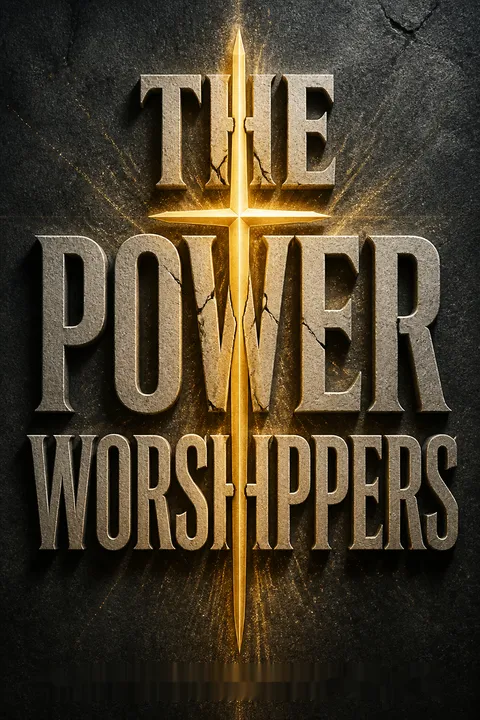
The Power Worshippers is a well-researched, eye-opening examination of Christian nationalism's rise and threat to American democracy. Stewart exposes the organizations, leaders, and tactics behind this movement, which seeks political power rather than religious freedom. The book reveals how Christian nationalists manipulate politics, education, healthcare, and the legal system to impose their ideology. While some readers found the content disturbing and anger-inducing, many praised Stewart's thorough investigation and engaging writing style. Critics noted the book's potential bias against Christians and difficulty following the numerous organizations involved.
People Also Read


Glossary
Christian nationalism
Religious national identity politicsStewart’s term for a political ideology that presents the United States as founded on a particular form of Christianity and seeks exceptional status for that tradition in law and government. It is not a synonym for Christianity or evangelical belief. The book uses it to describe a movement that contests pluralistic democracy and promotes religious identity as a basis for political legitimacy.
Christian Reconstruction
Society governed by biblical lawA theological and political movement associated with R. J. Rushdoony. It advocates reorganizing social and political life around a particular interpretation of biblical law, opposing secular public institutions and democratic equality. Stewart traces its influence through homeschooling, religious approaches to education, dominionist activism, and arguments that government should reflect a conservative Christian worldview.
7 Mountain Mandate
Christian influence over cultural sectorsA dominionist idea, associated in the book with C. Peter Wagner, that Christians should seek influence or control over seven areas of society: government, business, education, media, arts and entertainment, family, and religion. Supporters describe this as taking responsibility for culture. Stewart presents it as a strategy for extending a particular religious authority across public and private institutions.
Project Blitz
Coordinated state religious legislationA legislative campaign that supplied model bills and messaging to sympathetic state lawmakers. Its proposals included public displays of religious mottos, religious content in schools, and protections for conduct justified by specific religious beliefs. The playbook organized proposals in phases, using familiar symbolic measures to build momentum and prepare the ground for more consequential changes.
Culture Impact Teams
Church-based political action groupsTeams promoted by the Family Research Council for organizing political activity among church members. Their tasks could include research, communication, voter outreach, and participation in local civic affairs. The structure allowed political organizing to be described as cultural engagement rather than direct candidate endorsement by a church, a distinction relevant to restrictions on tax-exempt organizations.
Johnson Amendment
Limits on charitable electioneeringA provision of U.S. tax law that bars tax-exempt organizations, including churches, from intervening in political campaigns for or against candidates. It does not prohibit pastors from discussing political issues or expressing personal views. Stewart describes efforts to repeal or weaken it as part of a broader campaign to permit churches to operate more directly as partisan political organizations while retaining tax advantages.
Ethical and Religious Directives
Catholic health-care restrictionsGuidelines issued by the United States Conference of Catholic Bishops for Catholic health-care institutions. They govern which treatments facilities may provide, including restrictions concerning contraception, abortion, sterilization, and some end-of-life care. When Catholic systems acquire or affiliate with other providers, the directives can affect services beyond church-owned hospitals, including the care available to patients.
SAGE Cons
Politically engaged religious conservativesA category used by evangelical pollster George Barna for spiritually active, governance-engaged conservatives. In the book, Barna characterizes this group as a relatively small but highly motivated segment of the population that votes and persuades others to vote. The term expresses a political analysis of organized religious conservatism, not a formal religious denomination.
FAQ
What's The Power Worshippers about?
- Focus on Christian Nationalism: The Power Worshippers by Katherine Stewart examines the rise of Christian nationalism in the U.S., highlighting its influence on politics and society.
- Political Strategy: The book details how Christian nationalists use grassroots mobilization and legislative initiatives to gain political power.
- Historical Context: Stewart traces the movement's roots to earlier conservative religious movements, identifying key figures and organizations that have shaped its development.
- Impact on Democracy: The book argues that this movement poses a significant threat to democratic values and pluralism in America.
Why should I read The Power Worshippers?
- Understanding Politics: It provides insights into the influence of religious ideologies on U.S. policy and governance.
- Informed Citizenship: The book equips readers with knowledge about Christian nationalists' motivations and tactics, enhancing civic engagement.
- Comprehensive Research: Stewart's extensive research and firsthand accounts offer a well-rounded perspective, valuable for both scholars and general readers.
- Call to Action: The author encourages readers to engage in the democratic process and resist authoritarian tendencies.
What are the key takeaways of The Power Worshippers?
- Political Movement: Christian nationalism is portrayed as a political movement aiming to reshape American democracy.
- Manipulation of Religion: Leaders manipulate religious sentiments to mobilize support and influence legislation, often under the guise of "religious liberty."
- Historical Revisionism: The movement promotes the idea that America was founded as a Christian nation, legitimizing their political goals.
- Consequences for Society: The rise of religious nationalism could lead to societal changes, including the erosion of civil rights.
What are the best quotes from The Power Worshippers and what do they mean?
- “Not a ‘culture war’”: This quote emphasizes that the conflict is about power and governance, not just social issues.
- “Device for mobilizing”: It highlights the strategic use of religious identity to rally support for political objectives.
- “Creature of present circumstances”: This points to the irony that while the movement claims to uphold traditional values, it responds to contemporary changes.
- “Cause for alarm”: This serves as a warning about the potential dangers posed by the movement to democratic principles.
How does Katherine Stewart define Christian nationalism in The Power Worshippers?
- Political Ideology: Christian nationalism is defined as a political ideology asserting that the U.S. was founded as a Christian nation.
- Myth of Founding: The movement promotes the myth that America’s founding principles are inherently Christian, justifying its political ambitions.
- Mobilization Tool: It is described as a tool for mobilizing and manipulating large segments of the population.
- Threat to Pluralism: The movement poses a significant threat to the pluralistic nature of American democracy.
What is the significance of Project Blitz in The Power Worshippers?
- Coordinated Legislative Strategy: Project Blitz aims to flood state legislatures with bills promoting Christian nationalist values.
- Phased Approach: It starts with symbolic legislation and moves towards more substantive laws embedding Christian values into public policy.
- Impact on Democracy: Stewart argues it represents a threat to democratic principles by imposing a specific religious ideology.
- Focus on Religious Freedom: The project frames its agenda as protecting religious freedom, often leading to discrimination.
How does The Power Worshippers address the relationship between money and Christian nationalism?
- Funding Sources: Wealthy donors and organizations fund the movement, shaping political agendas and influencing elections.
- Economic Interests: The movement aligns with economic elites who benefit from policies favoring deregulation and tax cuts.
- Grassroots Mobilization: Despite the influence of money, grassroots mobilization remains crucial, engaging ordinary citizens.
- Data-Driven Strategies: Organizations use data to identify and mobilize conservative Christian voters, maximizing electoral impact.
What role does education play in The Power Worshippers?
- Hostility to Public Education: The movement opposes public education, viewing it as a vehicle for secularism and liberal values.
- Promotion of Christian Education: There is a push for school vouchers and charter schools that align with Christian values.
- Curriculum Control: The movement seeks to influence curricula to reflect a Christian nationalist perspective.
- Impact on Students: These efforts could lead to a generation educated in a manner prioritizing religious doctrine over critical thinking.
Who are the key figures in The Power Worshippers?
- Katherine Stewart: The author, a journalist, provides a critical lens on the Christian nationalist movement.
- Rousas John Rushdoony: A foundational figure whose ideas about theocracy have influenced contemporary Christian nationalism.
- David Barton: Known for revisionist interpretations of American history, promoting the idea of a Christian nation.
- Bill Dallas and Ralph Drollinger: Key players involved in voter mobilization and influencing lawmakers through religious study groups.
How does The Power Worshippers illustrate the movement's grassroots efforts?
- Local Engagement: Local pastors and congregations mobilize communities for political activism.
- Training and Resources: Programs and resources help pastors influence congregations and encourage political participation.
- Community Impact: Grassroots efforts impact local and state elections and public policy decisions.
- Voter Mobilization: Data-driven strategies are used to identify and mobilize conservative Christian voters.
What are the implications of the Christian nationalist movement for American democracy according to The Power Worshippers?
- Threat to Pluralism: The movement seeks to impose a singular religious identity on the nation.
- Erosion of Democratic Norms: It undermines democratic norms, including the separation of church and state.
- Future of Governance: The movement’s goals could lead to a theocratic system prioritizing religious doctrine over democratic principles.
- Global Influence: The movement forms alliances with like-minded groups worldwide, posing a threat to liberal democracies.
How does The Power Worshippers connect Christian nationalism to global movements?
- International Collaboration: American Christian nationalists form alliances with global groups, creating a worldwide movement.
- Shared Ideological Goals: They oppose global liberalism, targeting issues like abortion and LGBTQ rights.
- Threat to Democracy: The global movement poses a threat to democratic values and pluralism.
- Impact on Policy: This collaboration seeks to promote conservative values and undermine liberal democracies.
About the Author
Other books by Katherine Stewart
Download PDF
Download EPUB
.epub digital book format is ideal for reading ebooks on phones, tablets, and e-readers.








