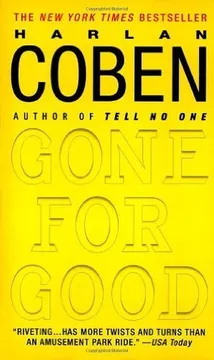


Plot Summary
A Mother’s Last Warning
Three days before cancer takes Sunny Klein, she tells her younger son, Will, that his older brother Ken is alive. Will has spent eleven years believing Ken died after being accused of raping and strangling their neighbor Julie Miller, then vanishing. At the family home after Sunny’s funeral, grief and old anger sit awkwardly beside the mourners.
Will walks to the Miller house, where Julie’s parents still see him as part of the wound, then returns to sort through his mother’s belongings with Sheila, his girlfriend. A photograph slips from behind a frame: Ken, older and bearded, standing in snow less than two years earlier. The picture turns Sunny’s final claim into evidence, and Will’s supposedly settled past opens again.
Sheila Disappears
Will asks his father whether Sunny had said more. His father admits she believed Ken innocent and thought he would return after finishing some unnamed task, but offers no explanation. Sheila leaves Will’s apartment before dawn, leaving only a brief note of affection.
At Covenant House, where Will and his friend Squares work with runaway teenagers, FBI agents Claudia Fisher and Darryl Wilcox demand Sheila’s whereabouts. Their investigation connects her fingerprints to a double murder in Albuquerque.
Will resists their pressure, especially when they threaten his career and imply he is protecting another fugitive. Squares, who has always believed Ken survived, joins Will in searching for Sheila. The fingerprints do not prove she killed anyone, but they make her disappearance look less like an ordinary breakup.
The Street Remembers Sheila
Squares takes Will through the New York streets where he once helped runaway Sheila survive. Raquel, a longtime street worker, recognizes her from Covenant House and recalls the pimp Louis Castman, who vanished after a client shot him.
At Castman’s apartment, Will and Squares find Tanya, a former prostitute whose face Castman mutilated, still caring for the paralyzed man she once feared. Castman describes recruiting Sheila as a teenager, drugging and exploiting her, then losing control when she found powerful new allies.
He names a mob lawyer and hints that Sheila entered the orbit of major dealers. Castman knows nothing of her present whereabouts, but his account gives Will a painful new picture of the woman he loved and points the search toward organized crime.
Katy Sees Ken
Katy Miller, Julie’s younger sister, asks Will to meet her away from her parents’ house. She says she saw Ken beside Julie’s grave and believes him when he denied killing her. Ken promised to find Julie’s killer, then disappeared before Katy could tell anyone. Katy has spent years trapped in a home where the murder scene remains untouched, and she wants the case to end rather than keep governing her family’s life.
Will agrees to investigate with her, though her account makes his brother’s survival harder to dismiss. Their meeting also stirs the old question of Will’s own attachment to Julie. The two begin looking beyond the official accusation, aware that proving Ken innocent would still leave them with an unknown killer.
The Ghost Comes Home
Will returns to his apartment to find the Ghost, John Asselta, a terrifying figure from his and Ken’s school years, waiting inside. Asselta overpowers Will, demands Ken’s location, and warns that Will’s family will be hurt if his brother keeps hiding. Soon afterward, FBI chief Joe Pistillo tells Will that Sheila’s body has been found in Nebraska and identified by her parents.
She was tortured before she died. Will’s shock hardens into grief; he has bought an engagement ring and now understands that the future he imagined with her has vanished. Squares stays close, but neither friendship nor work can blunt the loss. Sheila’s death turns Will’s search from a plea for explanation into a hunt for whoever found and silenced her.
A Granddaughter Named Carly
At a memorial service at Covenant House, the teenagers Sheila helped describe how she made them feel worth saving. Her mother, Edna Rogers, listens to the tributes, then privately tells Will that Sheila had a daughter named Carly, now about twelve, whom Edna has never met. Sheila last contacted her mother years earlier, and Edna has no idea where the child is.
Will had not known Sheila was a parent. He and Squares decide to search for Carly, believing she may explain why Sheila returned to New York and why someone pursued her. Katy also begins examining Julie’s last years instead of accepting the family’s silence. The search now carries a new responsibility: finding a child who may be alone, as the adults who loved her disappear.
Chi Gamma’s Buried Pattern
Squares brings Will to Abraham and Sadie Goldberg, who arrange false identities for people trying to disappear. They say Sheila recently bought the identity of Donna White, giving the search a name to trace. Katy, meanwhile, uncovers that Sheila and Julie were college roommates at Haverton.
Their former housemother, Rose Baker, recalls both women withdrawing from college and links them to Laura Emerson, another Chi Gamma sister found strangled months before Julie. The FBI had warned Rose not to discuss Laura’s death.
Katy recognizes that the same college circle connects three dead women, while Will realizes the authorities may have concealed a pattern. Rose’s memories do not identify a killer, but they undermine the claim that Julie’s murder was an isolated crime committed by Ken.
A Bedside Frame-Up
After Will confronts Pistillo about Laura Emerson, a masked attacker enters Will’s apartment, cuffs him to his bed, and goes after Katy. Will tears himself free, shoots at the fleeing assailant, and saves her from being strangled.
Katy cannot identify her attacker, so police suspect Will and arrest him; she tells the court she does not believe he attacked her, helping secure his release on bail. Pistillo then admits that Ken once worked for mobster Philip McGuane and became an FBI informant after McGuane killed Pistillo’s brother-in-law, an undercover agent.
Ken was captured in Sweden, returned under a secret deal, and placed in witness protection. Pistillo says McGuane found him in New Mexico. The revelation explains why Ken was hiding, but not what happened to Julie.
Ken Behind the Alias
Will and Squares trace the Albuquerque murders through reporter Yvonne Sterno and a Quick Go store’s security tape. A man using the name Owen Enfield appears on the recording, and Will recognizes his brother Ken.
Ken had been living in a witness-protection house with Sheila Rogers and a young girl. Will tells his father, who admits Ken had been involved with McGuane but knows little more. The FBI confirms that Ken killed two men who came to the New Mexico house, then fled again, and asks Will to help bring him in.
Will agrees only to buy time; he does not trust Pistillo’s motives after years of lies about Julie’s case. The proof that Ken is alive offers hope, while his involvement with McGuane makes him more dangerous than Will wanted to believe.
The Wrong Woman Buried
At Sheila Rogers’s funeral in Idaho, Will sees that the dead woman is not the girlfriend he knew. He finds her at a Manhattan hotel, where she reveals her real name is Nora Spring. Years earlier, she fled an abusive husband and met the real Sheila Rogers in Sweden, where Sheila was hiding with Ken and Carly.
The two women exchanged identities to protect themselves: Nora became Sheila Rogers, while the dead woman used Nora’s name. Nora had come to New York hoping to meet Will after hearing Ken speak of him; their love was genuine, though her identity and history were concealed.
She explains that Ken and Carly were back in New Mexico, where Sheila’s fingerprints could expose them. Will understands why Nora fled, but their reunion is interrupted by the Ghost’s threat.
The Shack in the Woods
The Ghost kidnaps Will and Katy, then uses Ken’s coded messages on an Elvis fan newsgroup to lure his brother toward a meeting. He threatens Katy with a strangulation rope while Will types, but Ken refuses to come. When the Ghost leaves, Will cuts Katy loose with broken glass.
They escape the raised shack, and Will injures the driver badly enough to stop him pursuing them. Meanwhile, the Ghost sends the FBI evidence linking McGuane to the murders of undercover agent Raymond Cromwell and lawyer Joshua Ford, along with Ken’s old recordings.
McGuane is arrested. The evidence ends the criminal operation Pistillo had pursued for years, but the Ghost remains free. Will has survived another trap, though the truth about Julie and Ken is still waiting at the family reunion.
The Reunion Turns to Judgment
Will, his father, and Melissa meet Ken at the old summer camp Squares turned into a retreat. Ken embraces them, then admits Julie helped him gather evidence against McGuane. Katy emerges with a gun and says she fabricated the graveyard encounter to earn Will’s trust.
She witnessed the murder as a child: Ken strangled Julie after she refused to help him frame Asselta, and Katy believes Ken also killed Laura Emerson. Their father lunges to stop Katy and is shot in the leg. Ken draws his own weapon, but Will tackles him and refuses to abandon him.
Ken finally lowers the gun and asks Will to raise Carly with Nora, away from the prison where he expects to spend his life. Police take Ken into custody. The family’s reunion becomes a reckoning rather than a restoration.
Carly’s True Inheritance
At Newark Airport, as Carly arrives, Asselta tells Will he returned to protect her, not avenge himself. He shows Will autopsy evidence that Sheila Rogers had never given birth and Julie had recently delivered a baby. Carly is Julie’s daughter, and Will is her biological father.
Ken and the two women had raised her under a false family story, while Will remained unaware that he had a child. Asselta also admits that Will’s father once paid to protect Ken after Ken killed Daniel Skinner as a boy, a secret that helped shape Asselta’s lifelong hatred.
He leaves proof of the murders that will protect Will and Nora from McGuane, then urges Will to let the Millers know Carly. Will turns toward Nora and his daughter, accepting a family formed by grief, secrecy, and the chance to care for one another.
Epilogue
Later that night, after Carly is asleep, Will finds the newspaper clipping the Ghost slipped into his pocket. It reports that Cray Spring, Nora’s abusive former husband and a police officer, was found strangled in his car.
The local police have no suspect. The clipping makes clear that the danger Nora feared has ended, though the means are as brutal as the threats that shaped her escape.
The closing clipping resolves Nora’s immediate fear without offering a clean moral victory. Asselta removes the threat by killing Cray, repeating the intimate violence that has run through the story. Will receives safety, but not through institutions he can trust or justice he can control. The ending therefore leaves protection ethically unsettled: the Ghost acts as rescuer and executioner at once. Carly’s arrival gives Will a future to build, while the report in his pocket reminds him that this future rests partly on an unseen act of violence.
Analysis
Gone for Good builds its suspense around a painful distinction: loving someone is not the same as knowing them. Will’s devotion to Ken preserves a version of his brother as protector, while his relationship with Sheila rests on intimacy that cannot overcome the histories she withholds. Each new fact appears to promise clarity, then exposes how much the characters have mistaken loyalty for evidence. The novel makes that mistake emotionally understandable. Will has endured a family’s public disgrace and private grief, so believing Ken innocent is also a way to keep his childhood intact.
The book’s institutions offer no stable counterweight. The FBI pursues a legitimate criminal case while suppressing information, manipulating the public narrative, and treating a family’s suffering as an acceptable cost. Organized crime adopts the language and tools of business, turning people into assets and violence into procedure. Against both systems, Covenant House offers a different practice: attention without immediate judgment. Squares and Will help runaway teenagers by showing up repeatedly, not by demanding that a painful past vanish. Their work provides the story’s clearest alternative to secrecy and punishment.
The final revelations refuse easy redemption. Ken is both the brother Will loves and a man responsible for terrible acts; the Ghost is both a killer and a protector; a father’s loyalty can shelter one child while distorting another person’s life. Will’s maturity comes not from deciding that love was foolish, but from allowing love to survive the truth without erasing it. His future with Nora and Carly does not repair the dead or undo the betrayal. It gives care a new direction. The novel’s most demanding lesson is that closure cannot mean recovering an innocent past. It means accepting what happened and choosing what responsibility requires now.
Review Summary
Most readers praise Gone for Good for its relentless pace, numerous plot twists, and memorable characters like Squares and the Ghost. Many highlight Coben's ability to keep readers hooked through short, revelation-filled chapters. Common criticisms include an overabundance of twists toward the end, too many characters to track, and comparisons to his other works. The villain, the Ghost, is frequently cited as particularly compelling. Overall, most readers found it an entertaining, fast-paced thriller despite some feeling the ending was either too convoluted or surprisingly satisfying.
People Also Read








Characters
Will Klein
The brother who keeps searchingWill is a New York social-services director whose work with runaway teenagers gives him patience, empathy, and a habit of believing people can recover. His bond with Ken has always included admiration and dependence: Will sees his older brother as brave where he feels himself timid. He also carries the unresolved loss of Julie, his first love, and later builds a devoted relationship with the woman he knows as Sheila. When both women become entangled with murder and secrecy, Will’s loyalty repeatedly conflicts with evidence. His instinct is to protect loved ones, sometimes by refusing to see what they have done. The investigation forces him to act without the certainty he craves and to distinguish love from absolution.
Ken Klein
Will’s admired older brotherKen is a gifted tennis player and forceful presence who protected Will as they grew up. His confidence and appetite for confrontation made him seem invulnerable to his younger brother, though his choices drew him into dangerous company. Ken’s family loyalty is real, but it exists alongside ambition, secrecy, and a willingness to use force. His relationship with Will is shaped by an unequal history: Ken acted as guardian, while Will accepted protection and struggled to return it. The family’s memory of Ken is therefore complicated even before the mystery begins. He is loved as a brother, but the story asks whether the people closest to him can separate that love from the harm he may have caused.
Sheila Rogers
Will’s guarded partnerThe woman Will knows as Sheila is warm, playful, and deeply attentive to the young people at Covenant House. She loves dancing, books, and small domestic rituals, and her ease with vulnerable teenagers reflects a hard-won understanding of how shame isolates people. At the same time, she keeps her history and family at a distance, drawing a firm boundary around the life she had before Will. Her tenderness is not naivety; it is a deliberate way of treating people whose pasts have made them expect rejection. Will’s attraction to her grows into trust, but her silences leave him unable to tell where privacy ends and danger begins.
Katy Miller
Julie’s determined younger sisterKaty grew up in the shadow of Julie’s murder, in a house where the basement remained a physical reminder of the crime and her parents rarely spoke openly about their grief. She is perceptive, stubborn, and hungry for an ending that her family has never been able to reach. Her youth does not make her feelings simple: she can resent the adults who managed the truth and still understand why they wanted to protect her. Katy approaches Will because she believes her knowledge matters, not because she has stopped grieving. Her insistence on participating puts her in danger, but it also reflects a refusal to let other people decide that her sister’s story is finished.
John Asselta
Ken’s dangerous old friendKnown as the Ghost, Asselta was a violent boy whose unpredictability made classmates fear him. He grew up amid abuse and neglect, yet neither circumstance fully explains his pleasure in domination or his practiced capacity for killing. He is linked to Ken and Philip McGuane from childhood, and his relationships contain flashes of loyalty buried beneath brutality. Asselta’s eerie composure unsettles people because it makes violence seem less like an eruption than a skill he can choose to use. His presence forces Will to confront how a person can be shaped by trauma without being excused by it, and how protection can come from someone no one would call safe.
Squares
Will’s loyal streetwise friendSquares is Will’s closest friend and a respected yoga teacher who still works nights in Covenant House’s outreach van. His humor is abrasive, but his practical compassion is exact: he knows when to offer food, when to step back, and when persistence matters more than persuasion. A tattoo covering an old extremist symbol reminds him of what he once was and what he remains capable of becoming. Squares understands that a person’s past can endure without dictating every future choice. His loyalty to Will is steady, though he has his own private grief and fear of responsibility. He helps Will investigate while continuing to show up for teenagers who are easy for the rest of the city to overlook.
Nora Spring
A woman rebuilding her lifeNora is a survivor of domestic abuse who seeks distance from a husband she fears can find her anywhere. She is affectionate and generous with Carly, yet vigilant about the risks that secrecy imposes on everyone close to her. Before meeting Will, she hears Ken describe him as unusually kind, and that image helps her imagine a life beyond fear. Nora’s ability to love does not erase her caution; she has learned that trust must be offered with attention to consequences. Her relationship with Will is rooted in real tenderness, but the name and history she presents to him are shaped by the need to stay alive.
Carly
The child at the centerCarly is a bright, active girl who loves reading, cartwheels, and racing down hills. Years of secrecy have limited her contact with other people, making the patient attention she receives from Nora especially important. Adults describe her as funny and spirited, but she is also a child whose life has been arranged around dangers she cannot fully understand. Her place in Will’s search gives the investigation a human urgency beyond solving old crimes: someone must find her and offer her a stable home.
Julie Miller
Will’s first great loveJulie is the neighbor Will dated through high school and the first person whose absence he never fully learned to live with. Their breakup happened while they were away at college, but Will’s memories preserve her as both beloved and unreachable. As a student at Haverton, she changes in ways the people around her fail to understand. Her younger sister Katy remembers the cost of that silence, while Will must confront how much of Julie’s later life he never knew.
Sunny Klein
The family’s vanished sparkSunny, Will’s mother, was exuberant, theatrical, and beloved by her children’s friends. She turned ordinary family life into an occasion, whether through a costume, a school event, or an impulsive gesture. After Julie’s murder, the brightness that defined her receded, leaving a grief her family could see but could not repair. Her final words to Will reopen the family’s most painful uncertainty and show how long she has carried knowledge she could not safely share.
Mr. Klein
A father anchored by familyWill’s father is gruff, dependable, and intensely devoted to his family. He treats loyalty as an action, not an abstraction, and remains in the house associated with Julie’s murder rather than allow neighbors to interpret moving as an admission of guilt. His grief appears as anger and stubbornness more often than speech. Beneath that resistance is a man who has watched his children suffer and believes his duty is to stand between them and danger, even when his choices have consequences he cannot undo.
Melissa Klein
Will’s distant older sisterMelissa is the oldest Klein sibling, now living in Seattle with her husband and children. She left Livingston after Julie’s murder and has built a life at a distance from the family’s old grief. Will sees her departure as abandonment, while Melissa sees Ken’s choices as something the family cannot keep excusing. Their disagreement reveals different ways of surviving: Will keeps the possibility of innocence alive, and Melissa tries to protect herself by refusing to let the past define her present.
Joe Pistillo
The driven FBI chiefPistillo is a senior FBI official whose investigation of organized crime is bound up with the murder of his brother-in-law, an undercover agent. He is formidable, calculating, and convinced that bringing down Philip McGuane justifies hard choices. His family life remains visible in the photographs at his home, but his work has consumed his judgment as well as his grief. Pistillo is not indifferent to the cost of his methods; he simply believes the pursuit is too important to stop.
Philip McGuane
The polished crime bossMcGuane is a sophisticated criminal who has adapted organized crime to business offices, shell companies, and modern security systems. He is charming when it serves him and ruthless when charm fails. His old friendship with Ken and Asselta ties their childhoods to the adult criminal world they enter. McGuane treats people as assets or liabilities, a view that allows him to make violence feel procedural. His intelligence makes him more than a brute, while his confidence in control leaves him vulnerable to the people he assumes he can manage.
Tanya
Castman’s scarred keeperTanya is a former street worker whose face bears the damage inflicted by Louis Castman. She now cares for him in a sealed, bleak apartment, a choice that confounds Will and Squares. She has survived by defining her own terms, even when those terms keep her close to the person who harmed her. Her guarded presence reflects the cost of violence without making her a simple emblem of victimhood.
Raquel
A streetwise guideRaquel is a longtime figure on the streets who knows both the people who prey on runaway teenagers and those trying to help them. His flamboyant appearance and teasing manner disguise a keen awareness of danger. He recognizes Sheila’s photograph and directs Will and Squares toward people from her past, providing information that more formal channels cannot reach.
Abraham and Sadie Goldberg
Keepers of false identitiesThe Goldbergs run a discreet business that supplies identities to people trying to vanish. They are careful because their clients’ safety and their own depend on silence, but their affection for Squares and concern over Sheila’s fate lead them to make an exception. Their practical knowledge turns an abstract search into a traceable trail.
Edna Rogers
Sheila’s estranged motherEdna has lived for years with the belief that her daughter chose to leave the family behind. She is proud, defensive, and slow to acknowledge what she never understood about Sheila’s life. Learning that Will loved her daughter cracks that certainty, and her search for Carly gives her a reason to ask for help rather than simply preserve the estrangement.
Plot Devices
The Hidden Photograph
Proof of a living brotherA recent photograph concealed behind a family portrait transforms Sunny’s deathbed claim into a fact Will cannot dismiss. It establishes that Ken was alive during the years when Will believed him dead, while raising new questions about who helped him, where he lived, and why he stayed away. The image is not a full explanation; it is a fragment that starts the investigation and gives Will a reason to revisit evidence he had spent years explaining away.
Borrowed Identities
A disguise made from real namesPeople in the story use identities obtained through the Goldbergs to evade abusive partners, criminals, and law enforcement. The system relies on real personal records, not elaborate invented biographies, which makes it useful but imperfect. Sheila’s fingerprints, aliases, and sparse personal history lead investigators and Will toward the wrong conclusions. The exchange of names between two women also hides the person Will loves in plain sight, showing how an identity can be both a shield and a trap.
The Old Case File
A pattern buried by investigatorsThe killings of Laura Emerson and Julie Miller appear to be separate crimes until Katy and Will discover their connection to Chi Gamma at Haverton. Their former housemother recalls that the FBI already knew about Laura but discouraged discussion. The overlooked history shifts suspicion away from a lone fugitive and toward a larger criminal operation. It also shows how official narratives can harden around one convenient suspect when investigators prioritize a different case.
Coded Elvis Messages
A fugitive’s hidden meeting lineKen communicates through a music newsgroup, using coded posts and instant messages to arrange contact without exposing his location. The Ghost learns how to reach him and forces Will to act as a trusted intermediary. Their childhood memories provide security questions that confirm who is on the other side. The channel gives the fugitives a way to stay connected, but it also creates a vulnerability when someone else learns the code and can threaten the family through it.
The Bloodied Evidence
Proof that changes handsKen’s recordings and documents against McGuane are valuable enough to keep him moving between the FBI, the mob, and the Ghost. For years, the evidence remains hidden, leaving each side uncertain about what Ken can prove. The Ghost eventually sends the material to the authorities alongside recordings that expose McGuane’s murders. Evidence therefore works not just as forensic proof but as leverage, a reason people protect Ken, hunt him, and try to control the moment when the truth becomes public.
Download PDF
Download EPUB
.epub digital book format is ideal for reading ebooks on phones, tablets, and e-readers.








