

Plot Summary
Prologue
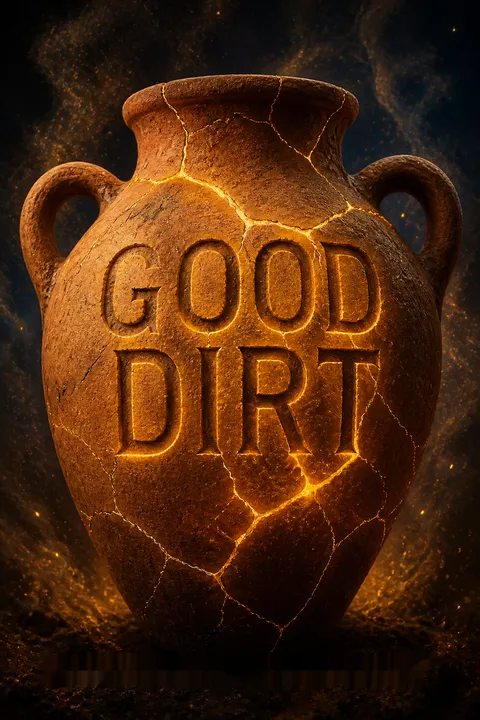
A month before the Freeman siblings’ first day of school, ten-year-old Ebby helps her older brother, Baz, dress their family’s ancient stoneware jar in a baseball cap and paper mustache. Their parents laugh, then gather the children around the jar for a photograph.
The playful image preserves a family at ease with its history: the jar is not a relic behind glass but a familiar presence in the home. The snapshot will become precious because the ordinary happiness it records is about to be broken.
The opening photograph makes the jar more than a historical object before the plot gives it a history. Baz’s joke turns inheritance into a living family relationship, while the parents’ laughter places cultural memory inside daily affection rather than solemn display. The future tense of remembrance casts a shadow over the scene, but it also establishes what the book will keep returning to: the value of an ordinary moment becomes visible only after it is lost. The jar will carry both the family’s past and the intimacy of this particular morning.
The Study Goes Silent
In 2000, Ebby and fifteen-year-old Baz are home late, playing hide-and-seek before their lessons. Two masked men force their way inside and demand an object they do not name. Baz tries to stop them from taking Old Mo, the Freeman family’s stoneware jar, and one intruder shoots him. Ebby hears the gunshots, reaches the study after the men flee, and finds her brother beside the shattered jar.
Neighbor Adelaide Pitts arrives, takes charge of the emergency call, and stays with the child until help comes. The murder remains unsolved. The Freemans leave their coastal home, and Ebby grows up carrying grief alongside the knowledge that strangers have made her family’s worst moment public property.
The assault links two kinds of dispossession. The intruders violate the family’s home and attempt to take an artifact made through enslavement, while their violence turns a child’s private grief into a lasting public image. The jar’s breakage sharpens the injury because it makes history seem vulnerable to the same force that killed Baz. Ebby’s survival is not presented as uncomplicated resilience: she must live with the crime, the loss, and the burden of being watched as its witness. The scene plants the central question of what an inherited object can preserve when the people who cherish it cannot be protected.
The Empty Wedding Garden
Eighteen years later, Ebby prepares to marry Henry Pepper, a banker from a wealthy white family. She plans to carry Baz’s photograph into the garden ceremony, where her parents wait beside the Sound. Henry never arrives. Ebby, shocked but determined to face the guests herself, announces that the wedding is canceled; afterward, a blank stretch of memory carries her through the day.
Public attention soon turns her abandonment into another chapter in the story people tell about her. She retreats to Maine, changes her hair, and tries to keep working, but the humiliation revives the old exposure. When her friend Hannah offers her a place in France, Ebby accepts the chance to disappear for a while.
Henry’s absence repeats the structure of Ebby’s earlier trauma without being equivalent to it: once again, someone else’s action leaves her to manage the aftermath in public. Her decision to announce the cancellation herself shows agency, but it is agency exercised under shock, not a sign that she is unaffected. The media’s fascination collapses distinct experiences into one identity, making her brother’s murder and her failed engagement appear to confirm a single story of misfortune. France promises anonymity, yet her flight also reveals how easily self-protection can become withdrawal from the relationships that might help her recover.
A River Reunion
Ebby has spent three peaceful weeks tending Hannah’s garden and managing the guest cottage when a car arrives with Henry and his new girlfriend, Avery Williams. Expecting strangers, Ebby rounds the house and recognizes her former fiancé too late to retreat. She slips on the muddy bank and falls into the river. Henry pulls her out, and the familiar touch unsettles her more than the cold water.
Avery recognizes Ebby from the news and from Henry’s past, while Henry tries to behave as if their shared history can be set aside. Ebby shows them into the cottage because she is responsible for Hannah’s guests, then retreats inside, furious that even across an ocean she cannot escape being seen through other people’s stories.
The encounter strips Ebby’s refuge of its defining promise: distance cannot control who arrives or what they know about her. Her fall is an accident, but it makes visible the bodily disorientation that follows Henry’s return. Avery’s recognition adds a second form of exposure, because Ebby is not meeting only an ex-partner but also the woman who has studied her image from afar. The hospitality Ebby offers is both professional competence and emotional self-restraint. She continues to do the work expected of her even as the private past she crossed an ocean to quiet suddenly occupies the guesthouse next door.
Kandia’s Clay
The family’s history reaches back to Kandia, a West African woman born into a community of potters. In 1803, slave traders seize her, kill her husband, and carry her toward the coast while she is pregnant. Aboard the ship, she holds on to memories of her family and the clay work that shaped her life. Her son is born in captivity and named Moses by the people who enslave them.
As a child in South Carolina, Moses is raised among enslaved workers and learns gardening, carpentry, and letters from an older couple who risk punishment to teach him. At the pottery, he recognizes in the clay a connection to his mother’s hands and becomes a skilled craftsman, though the law forbids men like him from claiming their own words.
Kandia and Moses inherit a relationship to clay that is both cultural knowledge and forced labor. The same material that once expressed a community’s skill becomes the basis of production controlled by enslavers. Moses’s literacy introduces another contested craft: reading and writing are not simply useful abilities but forms of self-possession that the law tries to deny. The historical chapters refuse to treat the family’s later prosperity as proof that slavery’s damage has been overcome. Instead, they trace how creative knowledge survives through people whose freedom, family bonds, and names are repeatedly subjected to someone else’s authority.
Five Words, One Escape
Moses marries Flora, Willis’s sister, but loses her after a snakebite. Later, Betsey, a young worker at the pottery, draws close to him; the enslaver’s nephew abuses her, and she is found dead after a final act of resistance. Grieving, Moses writes a private declaration of mental freedom on a clay disk and hides it beneath a jar.
Willis discovers the inscription and, years later, uses a counterfeit work badge to reach a ship with the jar as cover for his provisions. Black sailors find him aboard but let him work rather than return him to bondage. In Massachusetts, Willis takes the Freeman name, builds a life with Aquinnah, and keeps the jar as a vessel for family messages, objects, and memory.
The jar’s concealed underside makes authorship possible under conditions designed to erase it. Moses cannot openly claim his writing, so he places it where only a future reader might find it; Willis turns that hidden language into practical courage. Their linked choices show freedom as neither solitary nor complete. Willis survives because sailors shelter him, and his later family depends on the help of Black, white, and Indigenous people. The jar changes function across generations, from storage vessel to secret mailbox to heirloom. Its meaning comes not from untouched preservation but from the people who risk themselves to carry its story forward.
The Missing Photographer
On the first full day of Henry and Avery’s stay, Ebby meets Robert, a local translator, at the village café and goes home with him. Their brief intimacy gives her a few hours away from Henry’s presence, though she leaves before she can mistake the encounter for a promise. The next morning Henry sets out with his camera and does not return.
Avery asks Ebby to help search, but Ebby initially refuses to become involved with the man who abandoned her. When Avery mentions that police have found a murdered woman near a vineyard, Ebby remembers seeing a white SUV turn toward the fields the previous evening. She and Avery drive to the scene, where the discovery of the body makes Henry’s absence feel dangerous.
Robert’s brief appearance matters less as a romantic solution than as evidence that Ebby can still choose pleasure and curiosity for herself. Yet the freedom she seeks is unstable: Henry’s disappearance converts private resentment into practical concern, and the nearby murder makes an ordinary delay difficult to interpret. Avery and Ebby begin as rivals, but the crisis gives them a shared task that neither can resolve alone. The white SUV becomes a fragment of observation rather than proof. The novel asks how trauma trains people to read danger while acknowledging that fear can make coincidence and evidence look alike.
The River Clears Him
Ebby and Avery follow the river and report Henry missing. The police question them because a white vehicle was seen near the vineyard where the victim was found.
Henry’s rental SUV is located, and officers eventually discover Henry injured on a riverbank, his ankle twisted and his phone lost in the water after a fall while photographing the landscape. He is taken to hospital, not arrested. Surveillance footage and the victim’s connection to the man later arrested establish that Henry was not involved in her murder.
During the search, Ebby and Avery speak more honestly than either expected. Avery admits her fear, Ebby recognizes how easily violence can unsettle anyone, and the two women cooperate to help Henry without pretending their pasts are simple.
The false suspicion draws on the book’s larger concern with how people fill gaps in knowledge. Henry’s history of disappearing and his treatment of Ebby make distrust reasonable, but neither fact makes him guilty of this crime. The investigation distinguishes emotional credibility from forensic evidence: a person may have behaved cruelly without being capable of murder. At the same time, Avery and Ebby’s reluctant alliance complicates the easy roles of ex-fiancée and new girlfriend. Each woman recognizes that safety is never guaranteed by status, good planning, or a polished appearance, and that recognition briefly makes cooperation possible.
The Jar Behind His Flight
Once Henry is recovering, he asks Ebby to hear why he fled before their wedding. Weeks earlier, he had overheard one of his father’s bridge companions refer to Old Mo’s destruction, a detail never reported publicly. Henry suspected the man might know something about the robbery, but feared accusing someone close to his father and feared Ebby’s reaction.
He also worried that marrying Ebby meant accepting her continuing trauma, and his mother’s racist reservations strengthened his unease. Instead of asking questions or speaking honestly, Henry let his doubts harden into resentment and drove away. He apologizes, but Ebby sees that his silence protected his comfort at the cost of her dignity and her family’s chance to seek answers.
Henry’s explanation reveals that his disappearance came from several motives, not one noble concern. A genuine question about the crime becomes a convenient shelter for his fear of confrontation and his reluctance to live with the demands of Ebby’s trauma. His family’s racism gives that reluctance a social context, but does not excuse his choice. The contrast between Henry’s silence and Ebby’s need for truth is especially sharp because he once presented himself as a listener. The betrayal lies not simply in changing his mind, but in withholding the decision until Ebby had no opportunity to respond or protect herself.
Love Without Trust
Henry presses for another chance and tells Ebby that he never stopped loving her. During their confrontation, Ebby accidentally reveals that she was pregnant when he left. She had planned to tell him after the wedding, but miscarried alone during the weeks that followed, keeping the loss from her parents as well. Henry weeps when she explains what happened.
They sleep together, briefly recovering the tenderness they once shared, but Ebby refuses to treat desire as proof that trust has returned. She tells him that his absence left her to face the wedding, the pregnancy, and its loss without him, then asks him to leave. The intimacy confirms that love remains; it also makes clear that love cannot undo his choices.
The pregnancy gives bodily form to the future Henry abandoned, while the miscarriage shows how Ebby’s habit of shielding her parents from pain can become isolation. Her disclosure is not a plea for reconciliation; it is the truth she had been carrying without witness. Their sex is emotionally consequential because it separates remembered intimacy from present reliability. Ebby can still desire Henry and still refuse him. The distinction between forgiveness and trust is central here: she need not deny affection to recognize that a partner’s capacity for tenderness does not guarantee his capacity for accountability.
The Apology Reaches Home
Back in Connecticut, Henry finally asks his father’s friend Harris about the jar. Harris explains that Ed had told him about its destruction while seeking insurance advice, clearing him of suspicion but confirming Henry should have asked earlier.
Harris sends Henry to the Freemans. Soh slaps him when he arrives, then she and Ed listen as he admits both his fear about the robbery and his doubts about marrying Ebby. His apology does not repair the harm, but it forces the family to confront what has remained unsaid.
Ed and Soh argue afterward: Ed had also withheld information, including an insurance payment connected to the jar. Believing his wife blames him for Baz’s death, Ed leaves for his parents’ home rather than continue the conversation.
Henry’s return to the Freemans turns private remorse into an encounter with the people who bore the consequences of his silence. Harris’s answer removes the criminal suspicion but not Henry’s responsibility; indeed, the harmless explanation makes his failure to ask more consequential. The scene also exposes how grief has produced separate silences within the Freeman marriage. Ed’s departure is not a simple rejection of Soh, but a repetition of the family’s pattern of retreat when pain becomes difficult to name. The past is no longer contained in Ebby’s trauma alone; it has shaped the parents’ intimacy and their competing ways of surviving.
The Girl Upstairs
After two months in France, Ebby returns to the United States and finds Ed at his parents’ home. She tells him she saw the masked intruders from the upstairs landing before they took Baz into the study. She had been too frightened to call for help, and afterward concealed what she had seen because she feared the men might return for her parents.
Ed is shaken that she carried this alone, but he tells her that a terrified ten-year-old cannot be held responsible for armed adults’ decisions. He also rejects her belief that asking Baz to play one more game caused the murder. Naming the memory aloud loosens Ebby’s self-blame and gives father and daughter a new way to speak about Baz’s final day.
Ebby’s disclosure changes the family’s understanding of the crime without granting them control over its outcome. Her childhood silence was a survival response, shaped by fear of the intruders and by the impossibility of imagining how adults might react. The guilt that followed turned an ordinary request to play into a causal explanation for murder. Ed’s response matters because he does not dismiss the memory; he separates what Ebby witnessed from what she could have controlled. Their conversation also shifts grief from a story about a single fatal moment toward a recognition of the many people who made choices before and after it.
The Collector’s Shadow
A later account from the burglars reconstructs the home invasion: they were hired to take Old Mo for a wealthy collector involved in commissioned art thefts. They expected an empty house, but found Baz and shot him when he lunged to stop them.
The client was close to the insurance business and died in the September 11 attacks before the crime could be exposed. The novel strongly suggests this was Tucker, the Freemans’ former neighbor, who had shown interest in the jar and was rumored to keep a private art collection.
After Tucker’s death, his widow left with his possessions and a new companion. No arrest or definitive public proof resolves the case, so the explanation clarifies the motive without giving the family the justice they were denied.
The revelation transforms the robbery from random intrusion into a transaction built on the same habit of treating Black history as an extractable commodity. The burglars’ account explains how the jar became a target, but their claim that the shooting was accidental cannot restore Baz or erase their responsibility. Tucker’s likely role remains inferential, and that uncertainty is important: the truth emerges in fragments, not as a clean legal verdict. The story refuses the comforting equation between knowing what happened and repairing its consequences. For the Freemans, understanding the crime matters, but it cannot substitute for justice or bring back the life it destroyed.
Old Mo Reassembled
Ed shows Soh and Ebby the jar he secretly recovered from the crime scene and later had repaired by a South Carolina potter. He also kept the small wooden marker bearing an X, an ancestral signal once used to guide fugitives toward safety.
Ed admits he collected insurance money for the damaged heirloom and concealed both the payout and the jar because he could not bear to show his family the object from the study. The revelation angers Soh, but the repaired vessel also gives them something tangible they had believed was lost.
Together, the Freemans decide to share the jar’s history through a museum exhibit. Granny Freeman insists that the family and their community lead the project, with Henry helping as a photographer rather than its sole narrator.
Ed’s secrecy began as an attempt to spare his family another encounter with the scene of Baz’s death, but protection gradually became a private burden that isolated him from Soh. The restored jar exposes the limits of that strategy: hiding a painful object cannot prevent grief from shaping a household. The wooden marker extends the jar’s history beyond the Freeman line, connecting the family heirloom to an earlier network of escape and assistance. Their decision to exhibit it is not a simple act of letting go. It is a negotiated change in stewardship, one that allows public access while insisting that the people whose history is displayed retain authority over its telling.
A History Held Open
The Freemans open a museum exhibit around Old Mo, its hidden inscription, Willis’s sketches, family documents, and the wooden marker. Visitors can approach the repaired jar, trace its painted leaves, and add photographs to a public display.
Ebby contributes the family’s stories and, for the first time, posts publicly about the object’s place in American history. Robert, the French widower she has grown close to, joins her in Connecticut, while Avery leaves her law career on hold to study psychology in Paris.
Henry’s photographs support the exhibit, but Ebby does not resume their romance. On Baz’s birthday, she recognizes that wanting a life of her own does not betray her brother. The jar’s story now belongs to a wider circle without ceasing to be the Freemans’ inheritance.
The exhibit resolves the opening image by returning the jar to public view, but on changed terms. It is neither hidden in a family room nor sealed away as an untouchable artifact; visitors are invited into contact, while the family’s account guides interpretation. Ebby’s public post reverses the unwanted circulation of her childhood photograph: she chooses what image and history to share. Her future with Robert remains open, and Henry’s contribution does not erase the boundary she set. The ending makes remembrance compatible with forward motion. Ebby can honor Baz without organizing every choice around the moment she lost him.
Epilogue
In 1867, Moses is free and running a pottery with a white business partner. He has taken Willis’s surname, trains younger workers, and teaches two girls the craft that once gave him a way to work through grief. Memories of Kandia and Betsey remain with him, as does uncertainty about the dangers freed people still face.
Yet the young potter’s growing skill gives him reason to imagine a future beyond his own lifetime. Moses cannot recover what slavery took from him, but he can pass knowledge to the next generation. The jar’s legacy continues through both the words hidden in its clay and the hands learning to shape new vessels.
The epilogue carries the book’s argument about inheritance into a future that is neither secure nor hopeless. Moses’s freedom does not erase the violence that formed his life, and his new business exists amid continuing danger for Black communities. His choice to teach girls, however, turns remembered loss into material practice: he gives younger people skills that can widen their possibilities. The final image of clay taking shape echoes the novel’s concern with identity without suggesting that people can simply remake themselves at will. Change depends on knowledge, community, and the conditions that allow a person to work freely.
Analysis
Good Dirt asks what inheritance means when the inherited object has been made through coerced labor, carried through escape, cherished by a family, and later targeted by a thief. Old Mo is not a simple emblem of resilience. It is at once the product of enslavement, evidence of artistic skill, a practical tool, a family companion, and a commodity someone believes he can claim. Its changing uses prevent the novel from treating history as a finished lesson. Each generation must decide what to preserve, what to reveal, and who should have authority over the story.
Ebby’s emotional struggle extends this question from objects to people. Her childhood image circulates publicly without her consent, while her adult habit of withholding pain is partly an effort to regain privacy. Yet silence also separates her from those who could help. Her eventual disclosures do not undo trauma or establish complete control over the past; they redistribute its burden. Ed, Soh, and Henry each discover that protection can become another form of concealment when it is used to avoid difficult truth.
The book is especially alert to unequal social interpretation. The Freemans’ wealth and education do not exempt them from racial scrutiny, and their history is repeatedly treated as less legible than the prestige of white institutions and fortunes. Henry’s family gives him comfort, but that comfort can shelter avoidance. The museum project responds not by claiming history belongs only to one group, but by insisting that inclusion must not erase the people whose labor and memory made the object meaningful.
The ending offers no promise that grief will conclude neatly or that love will guarantee safety. Instead, it presents responsible remembrance as a practice: tell the story with its violence intact, allow others to encounter it, and refuse to make the survivor’s life a memorial to loss alone. Ebby’s future remains uncertain, but uncertainty is no longer the same as paralysis.
Review Summary
Good Dirt receives mixed reviews averaging 3.98/5 stars. Many praise Wilkerson's elegant prose, emotional depth, and exploration of generational trauma, racism, and family legacy centered around a historic stoneware jar. Fans appreciate the multiple POVs, timeline shifts, and rich historical research. Critics cite excessive POVs causing confusion, underwhelming "secrets," reliance on miscommunication, and dragging historical sections. The contemporary storyline following Ebby Freeman resonates more strongly than the jar's history for some readers. Comparisons to Black Cake are frequent, with divided opinions on whether this sophomore effort surpasses or falls short of the debut.
People Also Read







Characters
Ebby Freeman
The family storytellerEbby, short for Ebony, is the surviving child of Ed and Soh Freeman and the central consciousness of the contemporary story. A thoughtful editor and ghostwriter, she notices language, images, and the assumptions people attach to both. Her reserve protects her from unwanted attention, but it can also keep friends and family from understanding how much she carries. She is proud of her family’s history and wary of being reduced to its most painful public chapter. Her relationship to the jar changes how she understands memory: remembering need not mean remaining trapped in the worst moment. Ebby’s careful attention to others is a strength, though she must learn that protecting people by withholding her own truth can deepen isolation.
Ed Freeman
The guarded fatherEd is Ebby and Baz’s father, an engineer and inventor whose work centers on structures that can withstand pressure. He is practical, affectionate, and often uses humor to make difficult truths easier to approach. His love of the coast reflects a deeply felt sense of home, while his experience as a successful Black man in predominantly white spaces has taught him how much others misread achievement and belonging. Ed tends to act when problems arise, yet grief can make him retreat into solitary work and private decisions. The family jar connects his engineering mind to generations of craft and care. He wants his daughter to live fully, even as fear tempts him to protect her by keeping her close.
Soh Freeman
The watchful motherSoh, born Isabella Bliss, is Ebby and Baz’s mother, a lawyer, devoted parent, and daughter of a prominent New England Black family. Her poise is not effortless; it is a practiced response to a world quick to judge her family and to interpret Black distress as evidence against them. Soh values education, self-command, and the ability to choose one’s own life, but motherhood makes her alert to dangers she cannot control. She and Ed share a strong partnership, though their different habits of grieving can leave each feeling shut out. Her tenderness is often expressed through practical care, while her legal precision helps her name injustices that others prefer to leave unspoken.
Henry Pepper
The conflict-averse fiancéHenry is a banker from an influential white family and Ebby’s former fiancé. He is charming, observant, and deeply drawn to photography, an art that lets him look closely without having to explain himself. His pleasant manner can conceal a strong preference for ease, especially when honesty risks conflict with family or loved ones. Henry is not immune to the racial assumptions around him, including those voiced by his mother, and his privilege has often softened the consequences of his choices. He recognizes Ebby’s intelligence and humor, but understanding her in moments of tenderness is not the same as being prepared to share the difficult parts of her life. His central struggle is whether he can replace avoidance with accountability.
Moses Freeman
The enslaved potterMoses is a gifted South Carolina potter whose relationship to clay begins with memories of his mother, Kandia. Enslaved from childhood, he learns to read and write in secret and uses his skill to create work that carries meaning beyond its commercial purpose. He is attentive to other people’s suffering and finds sustenance in affection, humor, and the act of making. Moses’s craft gives him a rare space for concentration and self-expression, but it cannot shield him or those he loves from the power of enslavers. His concealed marks on the family jar connect artistic labor with authorship, memory, and resistance, allowing later generations to encounter a voice that the law tried to silence.
Willis Freeman
The resourceful young craftsmanWillis, who later uses the public name Edward Freeman, is the brother of Flora and a young craftsman whose curiosity extends from drawing to ships and the wider world. He grows up under slavery, where his skills are valuable to others but his independence is restricted. Stories from sailors and the hidden writing on Moses’s jar broaden his sense of what may be possible. Willis is practical as well as imaginative: he studies routes, badges, tools, and the people who might help him. His family history makes clear that survival depends not only on courage but also on cooperation, timing, and the willingness of strangers to take risks for one another.
Avery Williams
The ambitious observerAvery is Henry’s girlfriend, a young corporate lawyer with a habit of researching people, places, and properties. Her interest in psychology reflects a genuine curiosity about how people make choices, though she sometimes uses observation to manage uncertainty rather than risk vulnerability. Avery is disciplined and socially adept, often smoothing over discomfort so that plans can continue. Meeting Ebby unsettles the future she has imagined with Henry and forces her to see that a polished relationship may still be built on unequal expectations. Beneath her composure is a person who wants approval but is capable of making difficult decisions when she recognizes that she is not being fully chosen.
Robert
The widowed translatorRobert is a French translator who lives near Hannah’s cottage and helps care for his elderly grandfather. He is attentive, playful, and more comfortable with emotional honesty than Ebby initially expects. The loss of his wife has made him cautious about attachment, but it has not extinguished his capacity for affection or humor. His life is rooted in family responsibilities as well as work, giving him a different relationship to staying and leaving than Ebby has. Robert does not offer an instant cure for her loneliness; his importance lies in meeting her as a person in the present and allowing their connection to develop without demanding certainty too soon.
Baz Freeman
The irreverent older brotherBaz is Ed and Soh’s son and Ebby’s older brother. Five years older than his sister, he is funny, protective, and generous with his attention, even when her games and questions test his patience. He enjoys drawing, stories, and debating what language and history mean, and he treats Old Mo as a character in the family rather than a museum object. The memories of Baz that shape Ebby are vivid and specific: shared games, a morning alarm, jokes, and the confidence of being understood by an older sibling. His presence gives the family history its warmth as well as its grief.
Kandia
The ancestral potterKandia is a West African potter whose skill and cultural knowledge form one of the deepest roots of the Freeman family story. She is connected to a community in which pottery is a respected inheritance, practiced through intimate knowledge of earth, water, and fire. Her memories of home remain important to her even after captivity tries to sever her from family and place. Kandia’s presence in the historical narrative shows that the jar’s story begins before its manufacture in South Carolina. It reaches back to a world of craft and belonging that slavery could disrupt but not wholly erase from the knowledge passed to her child.
Betsey
The determined pottery workerBetsey works between the plantation house and pottery, where she learns about clay and assists Moses at the wheel. She is literate in secret and understands that the law’s definition of her does not determine her personhood. Her interest in craft and her growing bond with Moses offer her a glimpse of choice in a life structured by other people’s power. Betsey’s story makes visible the gendered violence that accompanies enslavement, particularly the danger faced by women who resist the demands of white men. Her intelligence and inner clarity endure even when she has few safe ways to express them.
Aquinnah
The family’s rooted matriarchAquinnah is the daughter of an Indigenous community leader and Willis’s partner in building a family in Massachusetts. She is practical, skilled at sewing and sailmaking, and shaped by a family history of land, displacement, and refuge. Her choice to make a life with Willis requires her to leave the community where she grew up, while her knowledge and labor help the couple establish a home among people from different backgrounds. Aquinnah’s connection to the small wooden marker gives the Freeman family history another strand beyond the jar. She represents the women whose work and decisions make a family’s survival possible, even when their names are not always centered in its public story.
Ashleigh
Ebby’s candid old friendAshleigh is Ebby’s childhood friend and granddaughter of the Pitts family, who live next door to the Freemans. She has grown up around Baz and understands how the family’s tragedy affected more than one household. Ashleigh is independent and direct, willing to challenge Ebby when she believes her friend is withdrawing from life. That candor can hurt, especially when Ebby needs quiet companionship rather than advice, but Ashleigh’s loyalty is not dependent on saying everything perfectly. Their friendship offers Ebby a relationship with someone who knew her before public attention defined her and who can remain present even after periods of distance.
Hannah
The generous friend abroadHannah is Ebby’s colleague and friend, a London-based professional who owns the French cottage where Ebby stays. She offers Ebby practical refuge without making her explain every reason she needs it. Their friendship gives Ebby a rare experience of being known first through her work and personality rather than through the story of her brother. Hannah is generous but not controlling, allowing Ebby space while encouraging her to imagine a life beyond hiding. She also understands that companionship can be a form of support even when it does not solve another person’s pain.
Granny Freeman
The keeper of family memoryGranny Freeman is Ed’s mother and a former librarian who treasures the family’s records, books, and stories. She teaches through memory and through the objects her family has kept, while maintaining a sharp sense of who should control the telling of their history. Her affection for Ebby is warm, but she is also willing to challenge her granddaughter when she believes Ebby is sacrificing her own needs. Granny understands that sharing history with the public does not require surrendering authority over it, and she insists that the Freeman family and their community remain central to the jar’s interpretation.
Gramps Freeman
The family’s history teacherGramps Freeman is Ed’s father and the storyteller who teaches Ebby and Baz about the jar’s origins and the history of the family’s Massachusetts home. He uses concrete details about land, escape, craft, and community to help children understand that prosperity has a history. His stories emphasize that a person’s worth can be overlooked by those in power, and that underestimated people can sometimes use that misjudgment to survive. For Ebby, his storytelling makes the past intimate and memorable rather than abstract, shaping the way she later approaches the jar stories in her own writing.
Grandma Bliss
The precise maternal guideGrandma Bliss is Soh’s mother, an accomplished woman with a strong interest in history, design, and language. She expects Ebby and Baz to use their words carefully, not because she dismisses informal speech but because she wants them to command every register available to them. She also teaches them to notice and preserve small moments, giving them a modest practice for holding on to daily life. Her guidance blends discipline with affection, and her family history gives Soh a living example of Black achievement and self-determination.
Adelaide Pitts
The neighbor who staysAdelaide is the Pitts family matriarch and Ashleigh’s grandmother. She and her husband Bob build a close relationship with the Freemans as neighbors, sharing ordinary family life and helping their children grow up together. Adelaide is observant, composed, and able to respond practically when a crisis demands it. Her care for Ebby is important precisely because she does not treat the girl as a public symbol or a fragile object; she stays beside her and gives her concrete tasks. The Pitts family’s friendship shows how community can become part of a family’s history through repeated acts of trust and care.
Harris
The uneasy family friendHarris is Ed’s college friend and a longtime acquaintance of Henry’s father, working in the insurance business. His knowledge of the jar becomes significant because Henry misreads a private conversation as evidence of criminal involvement. Harris is blunt about the damage Henry caused by refusing to ask a direct question. He serves as a corrective to Henry’s habit of retreating from discomfort, urging him to accept responsibility rather than protect his own ease.
Tucker
The status-conscious neighborTucker is a wealthy neighbor who knows Ed and has a particular interest in the Freeman family’s old stoneware jar. He is sociable enough to join community events, but his assumptions about the jar reveal how readily he views history through market value. His interest in art and artifacts places him near the novel’s question of who gets to possess cultural objects, and what happens when admiration becomes entitlement.
Flora
Moses’s chosen partnerFlora is Willis’s sister and Moses’s wife. She is a field worker who values companionship, humor, and the small freedom of walking with Moses beyond the fields. Her relationship with him offers a glimpse of family life shaped by mutual choice, even under a system that refuses to recognize enslaved marriages as lawful.
Plot Devices
Old Mo
The family’s portable archiveThe large stoneware jar made by Moses travels from South Carolina to Massachusetts with Willis and remains in the Freeman family for generations. It begins as a practical storage vessel, then becomes a place for hidden messages and a focus for family stories. Its painted leaves, initials, repaired break, and underside inscription each carry a different layer of history. Because the jar is both an artwork and an object used in daily life, it resists the divide between museum heritage and living memory. The family’s eventual decision to exhibit it turns preservation into a question of shared stewardship rather than private ownership.
The hidden inscription
A message passed forwardMoses secretly writes a declaration of mental freedom on a clay disk attached to the jar’s underside. The placement protects his writing from casual discovery and allows the message to outlive the conditions that made it dangerous to create. Willis finds it and draws courage from its meaning as he plans an escape. Later generations inherit the jar without knowing every detail of the inscription, so its discovery reconnects the contemporary family to the choices of its ancestors. The words turn literacy, craft, and memory into a chain of communication across time.
Family stories and objects
Memory made tangibleThe novel braids the present-day Freeman family with the lives of Kandia, Moses, Willis, and Aquinnah through heirlooms, oral history, letters, drawings, and remembered details. The objects do not function as neutral proof: each has been carried, hidden, damaged, or interpreted by people with particular needs. Ebby’s writing project becomes a way to connect the fragments without pretending the family knows everything. This structure makes ancestry active in the present, shaping how characters understand identity, responsibility, and belonging.
The white SUV and murder
A false trail into dangerHenry’s disappearance coincides with the discovery of a murdered woman near a vineyard, and a white SUV seen nearby links the events in Ebby and Avery’s minds. The vehicle is a clue but not proof, encouraging both women and the police to test what they know against what they fear. The investigation briefly shifts the story toward a crime mystery while exposing how Henry’s earlier abandonment has damaged Ebby’s trust in her own judgment. Surveillance footage and an arrest eventually separate his accident from the murder.
The Freeman photographs
Image versus selfhoodA photograph of Ebby as a child becomes a widely circulated image associated with the shooting, shaping how strangers approach her long afterward. The novel contrasts that imposed image with the family’s own photographs, including the playful snapshot of the children beside Old Mo. Henry’s camera later contributes to the museum project, while Ebby’s chosen social media post lets her decide what image and history to present. Photography is therefore not simply documentation. It can turn a person into a public symbol, but it can also help a family choose how its story is seen.
Download PDF
Download EPUB
.epub digital book format is ideal for reading ebooks on phones, tablets, and e-readers.








