

Plot Summary
Prologue
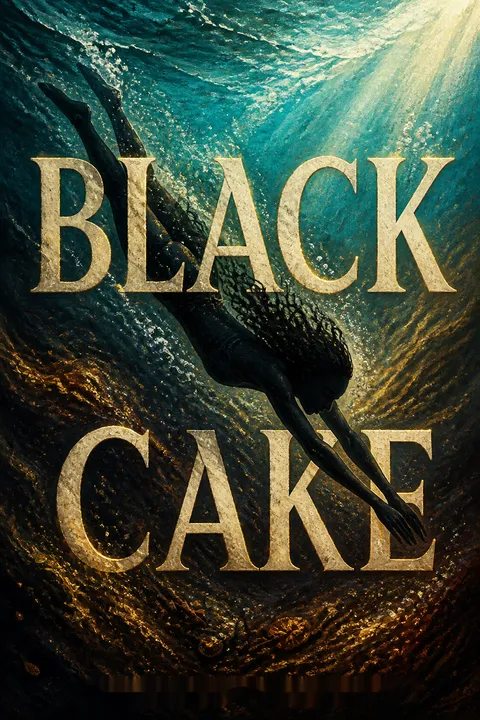
At the water's edge, Lin waits for his daughter to return from the sea. The wedding reception has ended in broken dishes, spilled cake, and a missing bride. A police officer brings him Covey's wedding dress, marked with icing and black cake.
Lin cannot know whether Covey is dead or has found another way to disappear. He watches the waves and confronts the awful possibility that the child he hoped to protect has been taken from him by the choices he made.
The opening gives the reader the aftermath before the causes, turning a family story into a question of survival. Lin's vigil is both literal and moral: he waits for the sea to return Covey while facing the damage caused by his gambling and his surrender to a powerful man. The wedding cake, normally a sign of union and continuity, is already mixed with disorder. By withholding what happened to Covey, the prologue makes disappearance the novel's governing condition: people vanish, names change, and those left behind build their lives around unanswered questions.
The Sea Keeps Its Witness
Eight years after Benny last saw her brother, Byron pushes her away when she arrives at their mother's lawyer's office. Their mother, Eleanor Bennett, has died, and Byron has spent years resenting Benny for withdrawing from the family.
Lawyer Charles Mitch presents their mother's final instructions: the siblings must listen together to a long recording, and a small black cake in the freezer must not be discarded. Benny and Byron have not yet begun to understand why their mother insisted on their presence.
The recording's first startling revelation is that they have a sister. Eleanor says the story begins decades earlier, on a Caribbean island, with a girl named Covey. The siblings must now hear their mother's past before they can make sense of their own.
The message makes listening a condition of inheritance. Eleanor does not leave her children money alone or a simple account of her wishes; she leaves them a task that requires cooperation, exactly where their relationship is weakest. Byron's anger and Benny's grief are both genuine, but each has mistaken distance for a complete explanation of the other. The recording interrupts that certainty. Its claim of another sister also shifts the siblings' idea of family from a stable unit to a history with missing members, hidden choices, and consequences that have reached into the present.
A Girl Called Covey
Covey grows up beside the sea, learning to swim in dangerous water from her mother, Mathilda, who runs a black-cake business with their household helper, Pearl. Then Mathilda disappears, leaving Covey with her father, Johnny Lin Lyncook, and no explanation.
Lin's shops and household depend on risky gambling, and his financial losses deepen as Covey becomes a powerful swimmer. Covey finds companionship in Bunny, a girl whose endurance and steady navigation complement her own speed. She also falls for Gibbs Grant, a young man determined to study law abroad.
When a hurricane catches Covey, Bunny, Gibbs, and their friends in the bay, Lin sees how little control he has over his daughter. His debts and his fear for her future make him vulnerable to Clarence Henry, known as Little Man.
Covey's sea is not simply an escape from family life; it is the place where she discovers competence and chooses her own measure of risk. Lin, by contrast, believes financial control can secure a future, even as gambling steadily removes his choices. Their opposing forms of courage create the trap ahead: Covey trusts her strength to open a path outward, while Lin tries to bargain his way out of danger. Mathilda's absence gives that conflict its emotional pressure. Covey wants freedom, but she has learned early that people can leave without explaining why.
The Wedding Bought with Debt
Little Man uses Lin's debts to press for Covey's hand, and Lin cannot protect his daughter from a marriage she does not want. Covey plans to flee with Gibbs, but he leaves for England before she can escape the island.
At the wedding, Pearl makes the black cake and decorates it with lilac flowers, a private signal because Covey has always hated that color. Pearl considers poisoning Little Man herself, then abandons the plan and loses track of the bottle. During the reception, Little Man collapses after drinking champagne.
Covey sees Bunny watching her rather than the dying groom and understands that something has happened which must remain hidden. She slips away toward the coast. Bunny later finds her alive in a cave and gives her money, clothes, and a contact who can help her leave.
The wedding turns the customs meant to protect a young woman into instruments of coercion: a father's debt is converted into a daughter's obligation. Pearl's cake offers a fragile counter-language, a message made legible through shared memory rather than public speech. Covey's flight is not a straightforward act of defiance, because she must also protect the people who help her. Her decision to keep silent begins a second life founded on loyalty and concealment. The scene asks whether survival can be separated from complicity when every available choice has been arranged by someone more powerful.
Elly's Name After the Crash
In England, Covey travels under her mother's surname and works as a nanny while avoiding anyone who might connect her to the island. She meets Eleanor Douglas, called Elly, another Caribbean woman with plans beyond the limited nursing work offered to immigrants.
Elly dreams of studying geology; Covey, still unable to tell her the full truth, finds in her the first close friend she has made since Bunny. The two women move toward Edinburgh for better prospects. A train crash kills Elly and badly injures Covey.
At the hospital, officials mistake the surviving woman for Eleanor Douglas, while documents identify the dead woman as Coventina Brown. Covey realizes that the confusion offers a way to escape her past. She accepts Elly's name and takes the job waiting for her in Edinburgh.
The accident makes identity materially unstable: a purse, a passport, and a name can determine which life the authorities believe has ended. Covey's choice is born from grief as much as calculation. Taking Elly's identity lets her continue, but it also binds her future to the memory of a friend whose ambitions gave Covey a model for self-invention. The novel treats this transformation neither as simple fraud nor as clean rebirth. Covey gains safety by carrying another person's name, while losing the possibility of being known without fear.
A Daughter Lost in London
As Eleanor Douglas, Covey finds work in Edinburgh and begins to imagine a future beyond hiding. Her supervisor sexually assaults her, then acts as if nothing happened. Eleanor leaves the job and discovers she is pregnant. Back in London, an institution for unmarried mothers persuades her that her baby will have a better life with another family.
She gives birth to a girl, Mathilda, nurses her for six weeks, then signs the papers that take the child away. Eleanor searches afterward but cannot locate the adoption office or learn where her daughter has gone. Her grief follows her into every new room. Years later, she sees Gibbs on a London street. He has believed her dead, but recognizes her, and the two find each other again.
Eleanor's surrender is shaped by overlapping forms of coercion: sexual violence, racialized limits on employment, and an institution that frames separation as responsible motherhood. Her decision is not an absence of love; it is a response to a world that offers her no secure way to raise a child. Yet the language of a better future turns structural failure into private blame. Reuniting with Gibbs gives Eleanor a life she can build, but it cannot restore the child she lost. The novel refuses to treat later happiness as a repayment that cancels earlier harm.
Two Children, One Hidden Past
Gibbs, who has changed his name to Bert Bennett, and Eleanor marry and begin again in the United States. They settle in California, where Bert studies law and Eleanor builds a career in government administration.
They raise Byron and Benny with high expectations, believing education and respectability will give their children protection they lacked. Eleanor carries her past through the black-cake recipe and keeps its details from the family; Bert knows part of her history but not the child she surrendered.
Their home is warm, ambitious, and carefully separated from the Caribbean people who might recognize them. Eleanor teaches both children to surf and uses the sea to steady them. The life they make is real, but its safety depends on names, histories, and grief that remain largely unspoken.
The Bennetts' family is not false because its love is false. It is vulnerable because the parents mistake secrecy for a durable form of protection. Bert and Eleanor have learned that visibility can invite danger, so they build a private world where achievement promises control. Their children inherit both the benefits and the pressure of that strategy. Benny's creative uncertainty and Byron's drive for public recognition will eventually expose different limits in the same family ideal. The black cake becomes Eleanor's portable connection to a home she cannot safely revisit.
Benny Leaves the Family Table
Benny leaves her prestigious university after classmates assault and ostracize her over her shifting relationships with men and women. She pursues cooking and art instead, but her parents see those choices as a threat to the stability they worked to provide.
At Thanksgiving in 2010, Benny tells them she is bisexual. Bert responds with anger, Eleanor follows him rather than reaching Benny, and Benny walks out. Byron says little, and the separation hardens.
Years later, Benny is trapped in an on-and-off relationship with Steve, whose violence leaves her injured on the day of Bert's funeral. She travels to California but cannot face her family or explain why she stays in the car. Byron sees only another abandonment. Their silence becomes a shared wound neither knows how to name.
Benny's departure begins as self-protection, but it becomes a family pattern because no one repairs the first rupture. Her parents confuse concern about economic security with authority over her identity; Benny, already hurt by violence and exclusion, experiences their hesitation as rejection. Byron mistakes visible achievement for emotional invulnerability and judges his sister by her absence. The funeral scene crystallizes how trauma can look like indifference from the outside. The siblings' estrangement is therefore not a simple clash of personalities. It is a failure of interpretation, sustained by shame and by the family's habit of waiting for the injured person to return first.
Her Mother Finds Marble
After Bert's death, Eleanor's grief becomes so severe that she takes her surfboard into dangerous winter waves hoping not to return. She survives with serious injuries. Follow-up medical tests reveal advanced illness, giving her little time to settle the truths she has concealed.
While watching a food program online, she recognizes her firstborn in Marble Martin, a British food writer whose face and voice resemble her own. Eleanor asks Charles Mitch to identify and contact Marble, then makes a silent call when she cannot bring herself to speak.
Around the same period, Eleanor sees Bunny again at a public event and briefly reconnects with the friend who helped her escape the island. Knowing that her time is short, she records her history for Byron and Benny and leaves instructions for Marble.
Eleanor's near-fatal surf outing is both a crisis and an unintended opening: medical care exposes the illness that makes delay impossible, while the internet returns a face from the life she thought had been sealed away. Her choices now involve competing loyalties. Contacting Marble may give her daughter truth, but it may also disrupt the family that raised her. The recording is Eleanor's attempt to leave a map rather than another silence. Yet she cannot control how her children will receive it, only ensure that they inherit the chance to know one another.
Listening Reopens the Family
As Mitch plays the recording, Benny and Byron repeatedly stop and retreat into separate rooms, overwhelmed by the scale of their mother's hidden life. Their arguments expose the old assumptions each has carried: Byron believes Benny chose absence, while Benny believes he has never tried to understand her.
After Eleanor's memorial, Benny tells him that Steve assaulted her, leaving her unable to attend their father's funeral. She also admits how long she kept hoping he would change.
Byron listens without defending himself and recognizes that he had mistaken silence for proof that she did not care. He apologizes for his part in their estrangement. Benny accepts the apology without pretending the lost years can be restored. They begin to speak as siblings again, not as prosecutor and accused.
The recording's most immediate effect is not reconciliation but a change in what the siblings can plausibly believe about each other. Benny's account gives her absence a cause, not an excuse, and allows Byron to see how little of her life he had actually known. His apology matters because it is not conditional on Benny absolving him or returning to the old family role. Their repair begins with a modest act of listening. The novel presents intimacy as a practice of revising one's account of another person, rather than a feeling that survives untouched by time.
Black Cake Holds the Evidence
Marble comes to California after Mitch tells her that Eleanor was her birth mother. Her adoptive parents, Wanda and Ronald, had raised her lovingly but concealed that she was adopted through an informal arrangement.
Marble meets Byron and Benny, then returns to Britain, unsure what to do with the family that has appeared too late. After hearing Eleanor's letter, she begins to understand that her birth mother never stopped wanting to find her. When Marble comes back, the siblings finally open the black cake Eleanor left in the freezer.
Hidden inside are a photograph of their parents as young swimmers with Etta Pringle, their parents' original initials on their wedding rings, and Elly's shells. The cake turns a family recipe into physical evidence of the names and relationships the Bennetts kept buried.
The cake's contents do not solve the family's history so much as make it touchable. A photograph, rings, and shells link separate lives without erasing their contradictions: Marble's adoptive parents loved her, Eleanor longed for her, and Byron and Benny were raised inside a story that omitted both. The object also carries cultural complexity. Black cake belongs to the family precisely because it has crossed histories and ingredients, not because it can be assigned a pure origin. Its hidden center literalizes the novel's claim that inheritance often arrives as something preserved, altered, and only partly understood.
Lin Faces the Children
The siblings travel with Etta to meet Lin, now an old man living in Florida. Byron confronts him over the debts and choices that forced Covey from the island, and his anger overwhelms the meeting. Lin suffers a stroke, leaving the family with no easy reconciliation.
Charles's investigation also uncovers Mathilda's fate: Covey's mother had left the Caribbean to earn money and return for her daughter, but she died after falling near Niagara Falls. She never knowingly abandoned Covey.
Etta helps the three children find Pearl, who is now living in Florida. Pearl welcomes the grandchildren of the girl she once cared for and fills in details that had been lost to time. Their search has shifted from accusation toward a fuller, more difficult history.
Lin's meeting with the grandchildren resists a tidy redemption. He can acknowledge loss, but he cannot undo the bargain that placed Covey in danger, and Byron's refusal to soften the past is morally intelligible. The discovery about Mathilda offers a different correction: what Covey experienced as abandonment was also shaped by an accident no one could explain. These revelations distinguish culpability from misfortune without making either harmless. Etta and Pearl serve as living archives, showing that family knowledge survives outside official records and can be restored through relationships rather than documents alone.
The Last Secrets Surface
The wedding mystery finally becomes clear. Pearl had considered poisoning Little Man but abandoned the plan; Bunny took the missing bottle and poisoned his champagne to prevent Covey from being trapped in the marriage. Covey saw Bunny's look and fled without exposing her, preserving her friend's freedom at the cost of carrying suspicion for decades.
The family still cannot return openly to the island without risking trouble for those who helped Covey. In the years after Eleanor's death, Byron challenges his institute over a denied promotion, leaves, and starts an independent consultancy and scholarship.
He becomes a father with Lynette. Benny continues seeking a loan for her café and gains recognition for her art. Marble makes room for her siblings and her son. Together, they scatter their parents' ashes at sea and crumble the remaining cake into the waves.
The murder revelation reframes Covey's flight as an act of protection, not merely an escape from suspicion. Bunny's choice is loving and violent at once, while Covey's silence honors that love by preserving it. The family never obtains a clean public resolution; its members must decide what truths to carry forward and what risks not to reopen. Their final act with the ashes and cake joins mourning to nourishment and release. The children do not recover an untouched past. They create a shared future from partial truths, earned trust, and the recognition that survival alone is not the same as belonging.
Epilogue
A year after Eleanor's death, her children, their partners, and their friends gather for a meal before taking Bert and Eleanor's ashes out to sea. Etta swims ahead of the boat.
The family scatters the ashes, then crumbles the last of Eleanor's black cake into the water. Byron, Benny, and Marble cannot undo the losses that shaped their family, but they can be together without hiding who they are from one another.
The ending returns the family to the sea that has repeatedly carried danger, escape, work, and memory. This time, the water is not asked to return a missing person or conceal a fugitive. The siblings choose what to release, and they do it together. The cake has served as food, code, evidence, and inheritance; crumbling it does not discard its meaning but allows it to leave the house and enter a shared ritual. Their gathering is not a cure for history. It is a decision to stop letting secrecy be the only structure that holds them together.
Analysis
Black Cake treats family history as something neither fully inherited nor fully chosen. The Bennetts' secrecy begins as a survival strategy: Covey must escape a forced marriage, then keep a new identity, a lost child, and an unresolved crime out of reach of people who could punish her. Later, that protective silence shapes how Bert and Eleanor raise their children. Their insistence on achievement comes from genuine fear about a racist world, but it also narrows Benny's freedom and teaches the family to mistake disagreement for danger. The novel therefore resists easy judgments about concealment. A lie can shield someone from violence and still wound the people who live inside its consequences.
Food offers a different model of continuity. Black cake is not a pure relic handed unchanged through time; its ingredients carry histories of trade, migration, and exploitation. The recipe survives because people adapt it and teach it by doing. That makes it an apt counterpoint to the family's fixed public story. Where the story of the Bennetts depends on borders between identities, the cake records mixture. Its meanings accumulate as Benny, Byron, and Marble learn who has touched it and what it has carried.
The sea extends this argument from family to environment. Covey, Bunny, Byron, and Etta meet it through different kinds of knowledge: trained bodies, scientific mapping, memory, and risk. Byron's work can reveal the ocean's hidden geography, but information may also enable extraction. The novel asks whether knowing a place is enough to care for it, just as the siblings must ask whether knowing a relative's history is enough to repair a relationship.
The answer is not complete resolution. The siblings do not recover the years they lost or erase the harm behind their parents' choices. They do something smaller and more credible: they listen, revise their assumptions, and choose contact. In this novel, belonging is not proof of a flawless past. It is a willingness to share the difficult parts of one.
Review Summary
Black Cake is a multi-generational family saga that explores themes of identity, secrets, and cultural heritage. Many reviewers praised Wilkerson's lyrical writing and complex characters, while some felt the novel tried to cover too many social issues. The dual-timeline narrative, centered around a Caribbean black cake recipe, resonated with readers. Some found the numerous characters and plot twists overwhelming, but most appreciated the emotional depth and exploration of family relationships. Overall, the book received positive reviews for its engaging storytelling and thought-provoking themes.
People Also Read









Characters
Eleanor Bennett
The family storytellerEleanor is a devoted mother whose warmth coexists with a guardedness she rarely explains. She loves the sea, follows the feats of swimmers and explorers, and treats food as a way of keeping memory alive. Her black cake is more than a holiday ritual: it gives her a connection to a home and a history she cannot easily discuss. Eleanor believes in discipline, effort, and family loyalty, but her instinct to protect loved ones through silence has consequences. She is resourceful and resilient, yet she is not free of fear or regret. Her story centers on the tension between the self a person knows inwardly and the version of that self a family can safely show the world.
Benny Bennett
The searching younger sisterBenny is a gifted artist and baker who wants to build a café where food can bring people together. Her parents' emphasis on education and professional security makes her feel that the life she wants is being judged as a failure before it begins. She is bisexual, independent, and hungry for a safe place where she does not have to defend her identity. Benny's tenderness often appears in practical gestures, especially cooking, drawing, and caring for small things others overlook. She can retreat when hurt, then blame herself for the distance that follows. Her story explores the cost of seeking acceptance from people who love her but do not immediately understand how she needs to live.
Byron Bennett
The ambitious ocean scientistByron is an accomplished ocean scientist and public communicator who has made seafloor research understandable to audiences far beyond his field. He is disciplined, proud of his work, and alert to the racial pressures that shape his professional and personal life. His success gives him influence but also teaches him to equate recognition with security. Byron loves his family deeply, yet he can mistake control and achievement for care, especially when he feels rejected. His connection to surfing offers a more embodied way of finding balance than his career does. He is a man learning that listening to the ocean is easier than listening to people whose pain he has not witnessed.
Marble Martin
The food and culture writerMarble is a British food writer and presenter whose work traces the movement of ingredients, recipes, and cultural traditions. She is confident on camera and intellectually curious, but her polished public identity does not answer every private question she has about belonging. She studies food as a record of migration and history, resisting claims that cultures can be neatly separated. Marble is also a mother who worries about the distance between herself and her son. She approaches family with caution, aware that affection cannot be demanded simply because people share a history. Her character brings the novel's questions about inheritance into conversation with adoption, motherhood, and the identities people create for themselves.
Gibbs Grant
Covey's first loveGibbs is a thoughtful young man whose ambitions are shaped by witnessing his family lose land to a powerful company. He wants to study law and defend people whose choices have been narrowed by wealth and authority. His love for Covey is grounded in admiration for her courage and ability, not merely in romance. Gibbs believes education and leaving the island can make a different future possible, though he cannot control what happens to the people he leaves behind. He represents both the promise of a life chosen freely and the ache of separation. His quiet persistence contrasts with Covey's more immediate, physical way of meeting danger.
Etta Pringle
The distance-swimming championEtta, known to Covey as Bunny, is a gifted open-water swimmer with remarkable endurance and a steady sense of direction. She is affectionate, loyal, and often physically clumsy outside the water, a contrast that makes her warmth memorable. Etta is less driven by victory than by the sustained challenge of moving through the sea, though she grows into a public advocate for protecting it. Her friendship with Covey gives her a place where she can be fully known, including the feelings she cannot easily name. She carries a quiet reserve beneath her bright public presence and understands that love can take forms that do not fit conventional expectations.
Johnny Lin Lyncook
Covey's complicated fatherLin is a Chinese-Jamaican shopkeeper who has spent his life trying to establish security for himself and his family. He is sharp with numbers, proud of his work, and deeply shaped by the precarious place his immigrant family occupies on the island. His loyalty to kin is real, but so are his weaknesses, especially his attraction to gambling and drink. Lin struggles to understand Covey's independence and often reaches for authority when he feels his position slipping. He is neither a simple villain nor an innocent bystander; his pride and fear can make him both protective and harmful.
Pearl
The keeper of cake and memoryPearl is a skilled cook and baker who works with Mathilda and helps raise Covey. She is perceptive about the ways money and status shape women's choices, and she knows how to use the fact that others underestimate her. Her care is practical: food, physical comfort, and the quiet exchange of information. Pearl's friendship with Mathilda gives her a place in the family that employment alone cannot explain. She is loyal without being naïve, and her sense of responsibility sometimes conflicts with Covey's need to make her own decisions.
Eleanor Douglas
Covey's determined friendElly is a fellow Caribbean immigrant in England, serious-minded but capable of making others laugh. Raised in a children's home, she finds comfort in shells and an enduring fascination with the earth beneath her feet. Elly wants to study geology and is unwilling to accept the narrow professional path offered to her. Her friendship with Covey grows from shared homesickness and a recognition of each other's ambition. She gives Covey a rare experience of being understood without having to explain every silence.
Charles Mitch
The family's trusted lawyerCharles is an experienced attorney and a longtime friend of the Bennett family. He approaches difficult matters with professional care, but his composure cannot hide his compassion for Eleanor and her children. Charles understands how identity is shaped by both private history and public perception, partly from his own experience as a Black lawyer. He becomes a custodian of Eleanor's final requests, balancing legal responsibilities with personal grief. His willingness to listen helps the family hear truths that might otherwise have remained locked away.
Mathilda Brown
Covey's missing motherMathilda is a lively, capable woman who loves music, baking, and the sea. She and Pearl make black cakes for weddings, work that gives them both income and a bond shaped by shared skill. Mathilda is affectionate with Covey and willing to defy the caution others urge on her around the water. Her relationship with Lin is complicated by his habits and expectations, and her choices are shaped by a desire for a life beyond them. She remains a powerful presence in Covey's memory even when absent.
Clarence Henry
The feared local moneylenderKnown as Little Man, Clarence Henry is a dangerous figure whose money and influence reach into local businesses and private lives. He presents his demands as ordinary transactions, but those around him understand that refusal can carry serious consequences. His attention to Covey turns Lin's financial troubles into a threat against her future.
Lynette
Byron's colleague and partnerLynette works with Byron on documentary projects and shares his interest in science, but she is less impressed by status and public attention than he is. She wants a relationship built on time, honesty, and a shared sense of the future. Her directness challenges Byron's habit of treating professional ambition as the highest form of responsibility. She is also closely involved in caring for her nephew, Jackson.
Steve
Benny's on-and-off partnerSteve is a music-loving, charismatic man who draws Benny back into a relationship she repeatedly means to leave. Their connection offers laughter and desire, but also exposes how difficult it can be to distinguish affection from safety when a person is lonely and longing to be accepted.
Wanda and Ronald Martin
Marble's devoted parentsWanda and Ronald are the London couple who raise Marble. They give her a stable, loving home and invest in her education and future. Their desire to protect the family they have made also leads them to avoid difficult questions about her origins. They are neither indifferent nor uncomplicated; their love is sincere, and so is the fear that honesty might cost them their daughter.
Patsy
Etta's steadfast companionPatsy is a police officer whose practical loyalty and sense of responsibility shape her relationships. She is committed to caring for her family and is not easily distracted from obligations she has accepted. Her bond with Etta rests on trust and a shared ability to make a life beyond the expectations of their community.
Cable
Byron's steady friendCable is Byron's longtime friend and informal adviser. He believes people can change and that decency matters even when circumstances are bleak. His humor gives Byron relief, while his willingness to ask uncomfortable questions helps expose the places where Byron's confidence has become a defense.
Plot Devices
The black cake
A recipe that carries historyEleanor's black cake connects the California home she built with the Caribbean childhood she left behind. The recipe is transmitted through practice, taste, and memory rather than exact measurements, so making it becomes a form of family knowledge. Its ingredients record migration and cultural exchange, complicating any claim that a tradition belongs to only one place. The cake also links generations: Benny learns it from her mother, while the cake Eleanor stores for her children becomes an invitation to gather. Its hidden contents turn it into evidence, but its deeper function is to make an inheritance tangible without reducing it to a single story.
Eleanor's recording
A voice from the pastEleanor's long audio message is the frame through which Byron and Benny learn what their mother could not tell them in ordinary family life. It reveals the history in fragments, following the children's shock and pauses rather than delivering a detached chronology. Because Eleanor is no longer present to answer questions, her account creates both intimacy and uncertainty. The siblings must decide how to interpret it and how much of their mother's version can be trusted. The recording also makes listening an ethical act: the children can either preserve their inherited assumptions or allow the voice they remember to alter them.
Borrowed identities
Names used as shelterAcross the family history, names are both protection and loss. Covey must disappear from the island, and later her life becomes entangled with Elly's identity; Gibbs also changes the name by which he is known. These transformations make survival possible in environments where race, gender, class, and legal status restrict movement. They also leave descendants with gaps in their family history and make ordinary records unreliable. The device is not treated as a clever disguise alone. Each borrowed or altered name preserves a life while separating that person from relationships and memories that cannot safely follow.
The open sea
A measure of chosen riskThe sea tests characters differently according to their bodies, fears, and ambitions. Covey and Etta use distance swimming to discover what they can do beyond social expectations; Byron studies the ocean scientifically and makes it his profession. For Lin, the coast becomes the boundary of what he cannot control. The water is never merely a symbol of freedom: storms, currents, and cold can kill, and a person's courage does not cancel physical limits. Its changing meanings let the novel connect private survival to environmental stewardship and to the question of how much risk a person must accept to live on their own terms.
The heirloom box
Objects preserve hidden kinshipA carved wooden box holds keepsakes that Eleanor and her children know before they know their origins. The shells, comb, and old coins seem at first to be small remnants of a childhood, but they link Elly's life, the island's history, and the family's movements across generations. The objects survive where official records and spoken accounts fail. Their meaning changes as the children learn more, showing that inheritance can be present long before anyone understands what has been inherited. The box also gives Marble a material connection to the family she did not grow up in, without requiring her to abandon the parents and home she already loves.
FAQ
Synopsis & Basic Details
What is Black Cake about?
- Family secrets revealed: After their mother's death, estranged siblings Byron and Benny discover a hidden recording that unveils their mother's secret past as a runaway bride from the Caribbean, forcing them to confront long-held family secrets.
- A journey of self-discovery: The siblings embark on a journey to understand their mother's life, their family history, and their own identities, grappling with themes of heritage, love, loss, and the complexities of family relationships.
- Intertwined lives and legacies: The story explores the interconnected lives of multiple characters across generations, revealing how their choices and actions shape their destinies and the legacies they leave behind.
Why should I read Black Cake?
- Intriguing family mystery: The novel offers a compelling mystery that unfolds through a series of revelations, keeping readers engaged as they piece together the puzzle of Eleanor's past and its impact on her children.
- Rich character development: The characters are complex and multifaceted, each with their own unique struggles and motivations, allowing readers to connect with their emotional journeys and personal growth.
- Exploration of universal themes: The story delves into universal themes of identity, heritage, love, loss, and the search for belonging, making it a thought-provoking and emotionally resonant read for a wide audience.
What is the background of Black Cake?
- Caribbean cultural influences: The story is deeply rooted in Caribbean culture, exploring themes of immigration, family traditions, and the impact of colonialism on personal identity, with specific references to Jamaica.
- Historical context of the 1960s: The narrative is set against the backdrop of the 1960s, a time of social and political change, particularly for women and people of color, which influences the characters' experiences and choices.
- Exploration of diaspora: The novel examines the complexities of the Caribbean diaspora, highlighting the challenges and triumphs of immigrants as they navigate new cultures and grapple with their sense of belonging.
What are the most memorable quotes in Black Cake?
- "This is island food. This is your heritage.": This quote, spoken by Eleanor to Benny, encapsulates the importance of cultural legacy and the passing down of traditions, particularly through food.
- "What are you willing to do? Who are you willing to let go of?": This quote, spoken by Eleanor to Byron, highlights the difficult choices people must make to achieve their goals and the sacrifices they must make along the way.
- "You can't afford to lose each other.": This quote, from Eleanor's recording, emphasizes the importance of family bonds and the need for reconciliation, even in the face of past grievances and misunderstandings.
What writing style, narrative choices, and literary techniques does Charmaine Wilkerson use?
- Multiple perspectives and timelines: Wilkerson employs a non-linear narrative structure, shifting between different characters' perspectives and timelines, which gradually reveals the full scope of the story and its interconnectedness.
- Rich sensory details and imagery: The author uses vivid descriptions of food, landscapes, and cultural practices to create a rich and immersive reading experience, drawing readers into the world of the characters.
- Symbolism and motifs: Wilkerson uses recurring symbols and motifs, such as the black cake and the sea, to explore deeper themes and connect seemingly disparate elements of the story, adding layers of meaning and complexity.
Hidden Details & Subtle Connections
What are some minor details that add significant meaning?
- The old measuring cup: The old plastic measuring cup that Eleanor gives to Benny symbolizes their shared heritage and the passing down of traditions, as well as the emotional connection between mother and daughter.
- The color lilac: The color lilac, which Covey dislikes, becomes a subtle symbol of Pearl's attempt to communicate with her, revealing a hidden message in the icing flowers on Covey's wedding cake.
- The driftwood on the beach: The driftwood on the beach where Covey disappeared serves as a recurring image, symbolizing the passage of time, the enduring power of nature, and the lingering presence of the past.
What are some subtle foreshadowing and callbacks?
- The mention of a sister: Eleanor's early mention of a sister in her recording foreshadows the major plot twist, creating suspense and prompting readers to question the family's history.
- The recurring image of the sea: The sea, a constant presence in the characters' lives, foreshadows both the dangers and the opportunities that await them, as well as the cyclical nature of their journeys.
- The description of the black cake: The detailed descriptions of the black cake's preparation and ingredients foreshadow the importance of this tradition in connecting the characters to their heritage and to each other.
What are some unexpected character connections?
- Pearl and Miss Eunice: The connection between Pearl and Miss Eunice, who helps Covey escape, reveals a hidden network of women who support each other, highlighting the importance of female solidarity.
- Etta Pringle and Eleanor: The connection between Etta Pringle and Eleanor, both from the same island, reveals a shared history and a sense of community that transcends time and distance.
- Charles Mitch and Eleanor: The relationship between Charles Mitch and Eleanor, which goes beyond a professional one, adds a layer of emotional complexity to the story and reveals the depth of Eleanor's hidden life.
Who are the most significant supporting characters?
- Pearl: Pearl's role as a loyal friend and protector to Covey, and later to her children, highlights the importance of female relationships and the enduring power of loyalty.
- Etta Pringle: Etta's character serves as a symbol of resilience and achievement, as well as a reminder of the importance of environmental advocacy and the need to protect the world's oceans.
- Mr. Mitch: Mr. Mitch's role as the family lawyer and confidant provides a crucial link between the past and the present, helping Byron and Benny navigate their mother's secrets and their own emotional journeys.
Psychological, Emotional, & Relational Analysis
What are some unspoken motivations of the characters?
- Eleanor's desire for control: Eleanor's decision to conceal her past and create a new identity stems from a desire to control her narrative and protect her children from the pain and danger she experienced.
- Byron's need for validation: Byron's drive for success and recognition is fueled by a need for validation, stemming from his desire to live up to his parents' expectations and to prove his worth in a world that often marginalizes people of color.
- Benny's search for acceptance: Benny's rebellious choices and her search for a place where she truly belongs are driven by a deep-seated need for acceptance and understanding, both from her family and from herself.
What psychological complexities do the characters exhibit?
- Eleanor's internal conflict: Eleanor's struggle to reconcile her past with her present reveals the psychological toll of living a dual identity and the emotional burden of keeping secrets from her loved ones.
- Byron's resentment and insecurity: Byron's resentment toward Benny and his need for external validation highlight his insecurities and his struggle to reconcile his personal identity with his professional achievements.
- Benny's self-doubt and vulnerability: Benny's journey is marked by self-doubt and vulnerability, as she grapples with her parents' disapproval and her own sense of not fitting in, revealing the psychological impact of societal expectations.
What are the major emotional turning points?
- The discovery of the recording: The discovery of Eleanor's recording is a major emotional turning point, shattering Byron and Benny's understanding of their family history and forcing them to confront their mother's hidden past.
- Covey's reunion with Gibbs: Covey's reunion with Gibbs in London is a bittersweet emotional turning point, as they rekindle their love amidst the backdrop of her tumultuous past and the loss of her daughter.
- Byron's conversation with Lynette: Byron's conversation with Lynette about her pregnancy is a major emotional turning point, forcing him to confront his own fears and insecurities about fatherhood and his past relationships.
How do relationship dynamics evolve?
- Byron and Benny's reconciliation: The relationship between Byron and Benny evolves from estrangement and reconciliation and resentment to a tentative reconciliation, as they learn to understand each other's perspectives and find common ground in their shared heritage.
- Eleanor and Bert's love: The relationship between Eleanor and Bert, though built on a foundation of secrets, is characterized by deep love and loyalty, highlighting the complexities of long-term relationships and the sacrifices people make for each other.
- Covey and Pearl's bond: The bond between Covey and Pearl evolves from a professional relationship to a deep friendship, highlighting the importance of female solidarity and the enduring power of love and support.
Interpretation & Debate
Which parts of the story remain ambiguous or open-ended?
- The circumstances of Little Man's death: The exact circumstances of Little Man Henry's death remain ambiguous, leaving readers to question whether Covey was directly responsible or if it was the result of another's actions.
- The full extent of Mathilda's life: The details of Mathilda's life after leaving the island remain largely unknown, leaving readers to wonder about her experiences and her reasons for not returning for Covey.
- The future of Byron and Lynette's relationship: The future of Byron and Lynette's relationship remains open-ended, leaving readers to speculate about whether they will reconcile and how they will navigate their shared parenthood.
What are some debatable, controversial scenes or moments in Black Cake?
- Eleanor's decision to give up her first child: Eleanor's decision to give up her first child for adoption is a controversial moment, raising questions about the choices women make under duress and the long-term consequences of those decisions.
- Covey's escape and reinvention: Covey's decision to assume a new identity and leave her past behind is a debatable moment, prompting readers to consider the ethics of self-preservation and the impact of such choices on others.
- Byron's initial reaction to Benny's identity: Byron's initial reaction to Benny's identity and his resistance to accepting her choices is a controversial moment, highlighting the challenges of understanding and accepting people who are different from ourselves.
Black Cake Ending Explained: How It Ends & What It Means
- Reconciliation and acceptance: The ending of Black Cake emphasizes the importance of reconciliation and acceptance, as Byron, Benny, and Marble come together to honor their mother's legacy and embrace their shared heritage.
- The power of truth and storytelling: The story underscores the power of truth and storytelling in shaping our understanding of the past and our own identities, as the characters learn to navigate the complexities of their family history.
- A legacy of love and resilience: The ending of Black Cake leaves readers with a sense of hope and resilience, as the characters find strength in their family bonds and the enduring power of love to overcome adversity.

Download PDF
Download EPUB
.epub digital book format is ideal for reading ebooks on phones, tablets, and e-readers.








