

Key Takeaways
Rank pages by their references, not their self-promotion.
The web became a graph. Larry Page saw web pages as points connected by links. His thesis asked a useful new question: instead of counting links a page sends out, what if you count the links pointing in? Those incoming links, or backlinks, could act like citations in academic research. A page referenced by many other pages might be more credible or important. Sergey Brin helped turn the idea into PageRank, an algorithm that weighed links and other clues about a page's relevance.
A thesis found its users. Their crawler, first called BackRub, began collecting links across a web of roughly ten million pages. The results proved so much better than those from popular search engines that the project became a service people wanted, not just a dissertation topic.
What's striking is the translation of a scholarly habit into a tool for navigating the web: citations help readers judge which work has influenced a field, while links offered a rough map of online attention. This is a powerful solution to information overload because it evaluates relationships among pages, not just the words on them. But a citation is not the same as truth, and popularity can compound itself. A widely linked page may be visible because it is already prominent, not because it is accurate. PageRank made relevance measurable, while leaving the harder question of what relevance should mean.
Strip away clutter so the answer, not the interface, wins.
Less page, less friction. Before Google, search sites often tried to be all-purpose portals, crowding one screen with news, horoscopes, shopping, and flashing banner ads. Google offered a nearly empty page with a search box. Its founders believed the service should help users find an answer quickly, rather than keep them clicking around the site.
A small design choice mattered. The uncluttered interface made the central task obvious and helped pages load without unnecessary graphics. Users valued the restraint so much that Google's Marissa Mayer investigated emails containing only numbers. The sender was counting the words on the home page as it changed. Google responded by keeping the word count low. The design made the company's priority visible before a search even began.
This is a practical lesson in cognitive load: every competing element asks for a portion of a user's limited attention. A simple interface can lower the effort needed to begin and make the intended action unmistakable. The choice also reveals a business philosophy. Many web portals treated time spent on the site as the product; Google treated a quick, successful exit as evidence of success. Simplicity is not automatically virtuous, however. A sparse screen can conceal complex ranking decisions or leave important context out. The strongest version of minimalism removes distraction without making the system itself opaque.
Don't confuse a crowded portal with a useful destination.
Search was the neglected product. In the late 1990s, major web companies wanted visitors to linger on portals filled with content and ads. Page and Brin wanted search to work well, even if a good result sent users elsewhere. When the founders offered to sell Google, AltaVista declined, and negotiations with Excite did not produce a deal. Those refusals helped reveal that the big companies were focused on a different business.
Users supplied the momentum. Google spread by word of mouth, without a marketing budget. In early 1999 it handled about 100,000 searches a day; by year's end it handled more than 500,000. The web was growing rapidly, and Google's results improved as its index expanded. Rather than compete to hold attention, the company built a reputation for helping people get where they wanted to go.
The founders' advantage was not simply a better algorithm. It was a different definition of the job. In product strategy, that distinction matters: optimizing a proxy, such as time on site, can undermine the outcome users actually value. Google's early growth suggests that trust can function as distribution, since satisfied users tell others. Still, a useful product can later inherit incentives that pull it away from its original purpose. The story is most persuasive as a warning against confusing engagement with value, not as proof that word of mouth alone can sustain a company.
Match advertising to intent, then charge for evidence of interest.
Ads followed the question. Google initially resisted banner advertising because it slowed pages and often had nothing to do with a search. Its alternative was text ads tied to the words a user entered, clearly marked apart from ordinary results. In 2000, AdWords let advertisers create campaigns themselves, making it possible for small businesses to reach people searching for specialized products.
Clicks created a feedback loop. Google shifted toward pay-per-click pricing, so advertisers paid when a user actually clicked rather than simply seeing an ad. The system also ranked ads partly by how useful users seemed to find them. AdSense extended advertising to other websites and shared revenue with publishers. The model helped turn Google's popular but expensive search service into a profitable business.
This model links three parties: users seeking something, advertisers offering it, and a platform matching the two. Compared with untargeted display ads, relevance can reduce wasted attention and give small sellers access to a market they could not easily reach alone. The click is still an imperfect measure. It records a response, not whether a purchase helped the customer or whether the ad was trustworthy. As advertising becomes essential to a platform's finances, the boundary between useful recommendation and commercial influence needs to remain clear. The book's account shows alignment as a design aim, not a guarantee.
Give engineers room to follow problems beyond their job descriptions.
Unscheduled time produced products. Google's 20 percent time allowed employees to spend part of their workweek on projects they chose, even when the payoff was uncertain. Gmail, Google News, and Froogle, later renamed Google Shopping, are presented as results of that freedom. The approach gave employees permission to notice problems that did not fit neatly into an existing product plan.
A crisis sharpened one idea. After the September 11 attacks, users searched for breaking news, but Google's index was a month old. Engineers put links to news organizations on the home page, and Krishna Bharat began developing a way to gather and group stories from many publishers. The resulting Google News used StoryRank, an algorithm for organizing related reporting. A product emerged from a real failure in the service users needed.
The strongest case for protected exploration is that people close to a system often see needs that formal planning misses. Autonomy can support intrinsic motivation, while a safe route from a small experiment to a staffed product gives ideas a chance to mature. The September 11 example also shows that experimentation is not detached play: a service gap exposed a problem worth solving. Such programs can be uneven in practice, since not every role has equal control over time or access to resources. Freedom works best when it is backed by a fair process for testing and adopting ideas.
Expand only when a product solves a problem people repeatedly face.
Use the toothbrush test. Larry Page used this phrase for a question about whether a new product solves a frequent, practical need. A toothbrush is useful because people need it regularly. The test helped Google distinguish durable user problems from projects that were merely novel. Search, email, maps, and calendars fit the idea of recurring utility in different ways.
Organize experiments without losing focus. Google developed products beyond search, acquired YouTube and mapping company Keyhole, and incubated projects ranging from Google Docs to Android. In 2015, it became part of Alphabet, a parent company designed to separate Google's internet products from more distant ventures. That structure allowed the search business to remain distinct while other teams pursued health, transportation, and other challenges.
The toothbrush test is a memorable check against novelty bias: a clever demonstration is not the same as sustained usefulness. It also highlights frequency, a useful product-design question because repeated needs can create repeated value. Yet frequency alone is not enough. A product can be used often and still be intrusive, harmful, or poorly designed. The test works best alongside questions about who benefits, what costs are imposed, and whether the product addresses a meaningful need rather than manufacturing dependence. Alphabet's structure acknowledges a related management truth: exploratory work and a mature core business may need different forms of oversight.
A mission to share information needs limits, not just noble intentions.
Good intentions met hard choices. Google's motto, "Don't be evil," was meant to help employees judge difficult decisions. But Gmail's ads, matched to words in users' messages, prompted a privacy backlash. The founders had considered relevance and utility, but had not anticipated how surveillance-like the practice could feel. Google added a delete button and eventually stopped scanning free Gmail accounts for personalized ads.
China tested the principle. To keep its service available, Google launched a censored search product in China in 2006. Critics argued that cooperating with censorship contradicted the company's mission. After a cyberattack and reports that human-rights activists' accounts had been targeted, Google shut down the mainland search service in 2010 and redirected users to Hong Kong. The company could no longer treat access and freedom as the same thing.
This history surfaces a classic problem in ethics: a principle is easy to endorse in the abstract and difficult to apply when values conflict. Access can benefit users even under restrictions, while participation can also legitimize those restrictions. Privacy creates a parallel tension: a feature that feels helpful to its designers may violate users' expectations about where personal information should go. These cases show why ethical commitments need explicit decision rules, independent scrutiny, and meaningful user choice. A short motto can prompt reflection, but it cannot resolve competing rights by itself.
Build access tools for people and places ordinary networks overlook.
Information needs more than a search box. Google Maps and Earth made geographic information easier to use. During Hurricane Katrina, Google's mapping team supplied rescuers with thousands of satellite images to help navigate damaged areas. Google Translate addressed language barriers; the book describes a young Spanish-speaking soccer player using it to communicate with a coach in Northern Ireland.
Sometimes the missing link is physical. Project Loon used high-altitude balloons to beam internet access to remote areas without conventional infrastructure. The book reports that roughly half the world's population lacked internet access at the time. Waymo's self-driving cars also suggested a different kind of access: a blind passenger completed a ride alone. These projects extended Google's idea of organizing information into tools for reaching, interpreting, and acting on it.
The examples broaden access from finding information to being able to use it: maps help people navigate, translation supports communication, and connectivity can bring a remote community online. This is a valuable distinction because information is not equally useful when language, geography, or disability creates barriers. The technology alone cannot settle who can afford a device, whether service is reliable, or how local communities shape its use. Access should therefore be assessed by practical agency, not just by the existence of a platform or signal. The book's stories make that human dimension concrete.
Treat moonshots as disciplined experiments, not permission to ignore costs.
Start with a huge problem. Google's X division described a moonshot as an effort to tackle a major challenge by combining an ambitious goal with new technology. Its projects included self-driving cars, wind-energy kites, and balloons intended to extend internet access. Google Brain's machine-learning work also found applications in products such as translation and medical-image analysis.
A bold target can still miss. The Google Lunar X Prize offered a major reward for a privately funded team that could land a robot on the moon and complete specified tasks. In 2018, the prize went unclaimed because no team met the deadline. The organizers pointed to progress in private space exploration, but the result remains a reminder that ambition does not guarantee delivery. Google's book also raises concerns about automation, AI safety, and the consequences of machines acting beyond human expectations.
Moonshot thinking can widen the range of problems considered solvable, and a portfolio of experiments can produce useful learning even when a flagship target fails. The key is disciplined uncertainty: clear milestones, honest reporting, and attention to who bears the downside. Self-driving systems raise questions about jobs and public safety; medical algorithms raise questions about whose cases they handle well. Calling a project ambitious does not make those questions secondary. The strongest defense of moonshots is not that every bet succeeds, but that risk is made visible, governed, and proportionate to the public value sought.
Analysis
This history is most useful as an account of how a technical insight became an institution. Page and Brin began with a model of the web as a network of citations. That model improved search, but the lasting advantage came from coupling it to a clear user experience, a distinct view of what search should optimize, and an advertising system capable of financing growth. The narrative therefore resists a simple genius-origin story: the garage server, the faculty guidance, early employees, investors, and users all mattered.
The book's central arc is also a study in how a mission changes under scale. Google's early promise was to make information easier to find. As the company expanded into advertising, email, mapping, video, mobile systems, health, and AI, it gained new ways to serve users and new forms of power over attention, data, and infrastructure. The motto "Don't be evil" could focus internal debate, but Gmail and China show that ethical judgment cannot be reduced to good intentions. A mission needs procedures that help identify harms before users, governments, or critics force the issue.
The book's celebratory tone fits its young-adult biography format and makes complex technology approachable through vivid origin stories. Its limitation is that successful products receive more narrative attention than the people and systems that shape their consequences. The broader lesson is not simply to imitate Google's appetite for ambition. It is to connect technical ideas to genuine user needs, build feedback into the product, and treat market success as a source of responsibility as well as proof of demand. Google's story makes innovation look like an ongoing argument among usefulness, scale, and control.
Review Summary
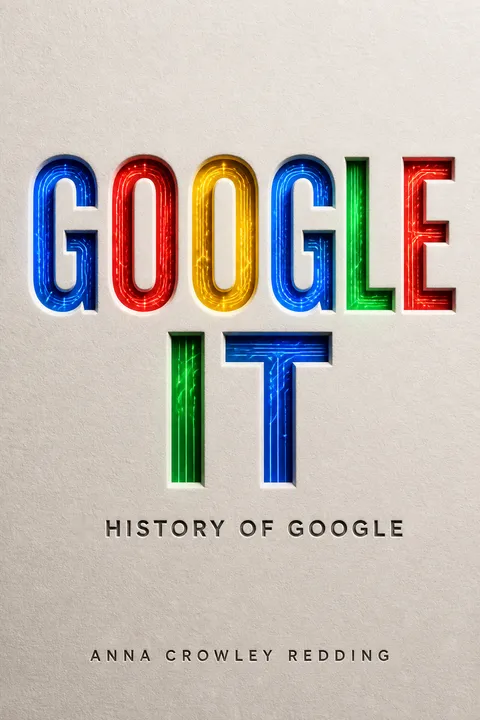
Google It: A History of Google is praised for its engaging writing style, accessible explanations, and comprehensive overview of Google's history and future projects. Readers appreciate the book's humor, informative sidebars, and inspirational message about innovation. While some criticize the overly positive portrayal of Google, many recommend it for young adults and adults alike. The book is lauded for its ability to spark interest in technology and entrepreneurship, making it an excellent choice for classrooms and personal reading.



Glossary
BackRub
Google's first web crawlerThe early Stanford project created by Larry Page and Sergey Brin to crawl web pages and collect their links. It enabled them to study which pages linked to other pages. The project was initially called BackRub before its search technology and company took the name Google.
PageRank
A link-based page ranking systemAn algorithm developed by Larry Page and Sergey Brin to estimate the importance of web pages. It treated incoming links as signs of relevance, while also accounting for the importance of the pages supplying those links. Google combined this link analysis with other signals to rank search results.
AdWords
Self-service search advertisingGoogle's advertising service, introduced in 2000, allowed businesses to place text ads related to users' search terms. Advertisers could set up campaigns themselves rather than relying solely on Google's sales staff. The service helped smaller businesses reach people already looking for relevant products or services.
AdSense
Ads on partner websitesGoogle's system for placing advertising on websites beyond Google's own services. Website publishers could display relevant ads and receive a share of the revenue generated when users clicked them. AdSense extended Google's advertising business across a wider part of the web.
StoryRank
Google News story rankingAn algorithm developed by Krishna Bharat to help organize news stories in Google News. It grouped articles covering similar topics and assigned stories scores using factors such as their source. The goal was to make reporting from multiple publishers easier to find together.
20 percent time
Time for employee projectsA Google practice that allowed employees to devote part of their work time to projects of their own choosing. The projects did not need to promise immediate commercial value. The book identifies Gmail, Google News, and Froogle, later called Google Shopping, among products associated with this approach.
Googlettes
Small ventures inside GoogleGoogle's name for ideas and projects developed inside the company as possible new products or businesses. The term reflects Google's effort to incubate initiatives while still allowing them to draw on the larger company's people, technology, and resources.
Toothbrush test
A test for frequent usefulnessLarry Page's informal way of judging whether a product addresses a recurring, practical need. The image is a toothbrush: an object is valuable partly because people use it regularly. The test helped Google consider whether a proposed product could meaningfully improve users' everyday lives.
moonshot
A high-risk, large-scale goalA project aimed at a major problem through an ambitious target and technology that may not yet exist. Google's X division used this approach for projects such as self-driving cars and internet-providing balloons. The term signals a willingness to attempt difficult work, while not guaranteeing success.
FAQ
What's "Google It: A History of Google" about?
- Overview: "Google It: A History of Google" by Anna Crowley Redding is a comprehensive exploration of the origins, development, and impact of Google, one of the most influential tech companies in the world.
- Founders' Journey: The book delves into the lives of Google's founders, Larry Page and Sergey Brin, detailing their backgrounds, education, and the serendipitous meeting that led to the creation of Google.
- Innovation and Growth: It covers Google's innovative approach to search technology, its rapid growth, and how it transformed from a college project into a global tech giant.
- Cultural Impact: The book also examines Google's cultural impact, its business strategies, and the challenges it faced, including issues of privacy and censorship.
Why should I read "Google It: A History of Google"?
- Inspiration: The book provides an inspiring story of innovation and entrepreneurship, showcasing how two students with a vision changed the world.
- Understanding Technology: It offers insights into the development of search technology and the internet, helping readers understand the digital landscape.
- Business Lessons: Readers can learn valuable business lessons from Google's strategies, including its approach to innovation, risk-taking, and corporate culture.
- Cultural Relevance: Understanding Google's history is crucial for anyone interested in technology, business, or modern culture, as the company has significantly shaped the digital age.
What are the key takeaways of "Google It: A History of Google"?
- Innovation is Key: Google's success is rooted in its innovative approach to solving problems, particularly in organizing the world's information.
- Risk and Reward: The book highlights the importance of taking risks and embracing failure as a part of the journey to success.
- Corporate Culture: Google's unique corporate culture, which encourages creativity and employee satisfaction, is a significant factor in its success.
- Global Impact: Google's influence extends beyond technology, affecting global communication, information access, and even social issues like privacy and censorship.
How did Larry Page and Sergey Brin meet and start Google?
- First Meeting: Larry Page and Sergey Brin met at Stanford University in 1995, initially disliking each other but eventually bonding over their shared interests in technology and innovation.
- Collaborative Project: They collaborated on a research project that analyzed the structure of the web, which laid the groundwork for Google's search algorithm.
- BackRub to Google: Their project, initially called BackRub, evolved into Google, focusing on ranking web pages based on backlinks, a revolutionary approach at the time.
- Growth and Development: With a clear vision and innovative technology, they transformed Google from a university project into a global tech leader.
What is the significance of Google's PageRank algorithm?
- Core Technology: PageRank is the algorithm that underpins Google's search engine, determining the importance of web pages based on the number and quality of links to them.
- Revolutionary Approach: Unlike previous search engines that relied on keywords, PageRank provided more relevant and accurate search results by evaluating the credibility of web pages.
- Impact on Search: This algorithm was a game-changer, setting Google apart from competitors and establishing it as the leading search engine.
- Foundation for Growth: PageRank's success laid the foundation for Google's rapid growth and expansion into other areas of technology and business.
How did Google transition from a college project to a global company?
- Initial Funding: Google received its first significant investment from Andy Bechtolsheim, who wrote a $100,000 check to "Google Inc." before the company was officially incorporated.
- Business Model: Google developed a successful business model based on targeted advertising, which became a major revenue source and fueled its growth.
- Corporate Culture: The company fostered a unique corporate culture that emphasized innovation, employee satisfaction, and a flat organizational structure.
- Expansion and Diversification: Google expanded beyond search, acquiring companies like YouTube and developing products like Android, further solidifying its global presence.
What challenges did Google face regarding privacy and censorship?
- Privacy Concerns: Google's targeted advertising and data collection practices raised privacy concerns, leading to public scrutiny and regulatory challenges.
- Censorship in China: Google faced significant challenges in China, where it had to navigate government censorship and eventually decided to withdraw its search services from the mainland.
- Balancing Act: The company had to balance its mission to provide open access to information with the need to comply with local laws and protect user privacy.
- Ongoing Debate: These issues continue to be a point of contention, influencing Google's policies and its relationship with users and governments worldwide.
What role did Google's corporate culture play in its success?
- Innovation Encouragement: Google's culture encourages innovation through initiatives like "20% time," allowing employees to work on personal projects that could benefit the company.
- Employee Satisfaction: The company prioritizes employee well-being with perks like free meals, on-site services, and a flexible work environment.
- Open Communication: Google fosters open communication and collaboration, with regular meetings and a flat organizational structure that empowers employees.
- Cultural Impact: This culture has been instrumental in attracting top talent and driving the company's continuous growth and innovation.
How did Google handle its rapid growth and expansion?
- Strategic Acquisitions: Google strategically acquired companies like YouTube and Android to expand its product offerings and enter new markets.
- Diversification: The company diversified its services beyond search, developing products like Google Maps, Google Earth, and Google Books.
- Global Reach: Google expanded internationally, establishing offices and data centers worldwide to support its growing user base.
- Adaptation and Innovation: The company continuously adapted to technological changes and user needs, maintaining its position as a leader in the tech industry.
What are some of the most significant innovations introduced by Google?
- Search Engine: Google's search engine, powered by the PageRank algorithm, revolutionized how people access information online.
- AdWords and AdSense: These advertising platforms transformed online advertising, allowing businesses to reach targeted audiences effectively.
- Google Maps and Earth: These tools provided users with detailed geographic information and satellite imagery, changing how people navigate and explore the world.
- YouTube Acquisition: By acquiring YouTube, Google became a major player in online video content, influencing media consumption and creation.
What are the best quotes from "Google It: A History of Google" and what do they mean?
- "Don't be evil": This motto encapsulates Google's commitment to ethical business practices and its mission to make information accessible without causing harm.
- "Having a healthy disregard for the impossible": This phrase reflects Google's culture of innovation and risk-taking, encouraging employees to pursue ambitious goals.
- "The user is always right": This principle emphasizes Google's focus on user experience, driving its product development and business strategies.
- "Organize the world's information": This mission statement highlights Google's core objective of making information universally accessible and useful.
How has Google impacted modern culture and society?
- Information Access: Google has democratized access to information, making it easier for people worldwide to find and share knowledge.
- Digital Communication: The company's products, like Gmail and Google Hangouts, have transformed how people communicate and collaborate.
- Media Consumption: Through platforms like YouTube, Google has changed how people consume and create media, influencing entertainment and news.
- Social Issues: Google's policies and practices have sparked debates on privacy, censorship, and the ethical use of technology, shaping public discourse and policy.
Download PDF
Download EPUB
.epub digital book format is ideal for reading ebooks on phones, tablets, and e-readers.








