

Plot Summary
Camden Comes Back Armed
After nine years in the Army, Camden Daniels returns to Alba for good when his older brother, Xander, says their father’s Alzheimer’s has overwhelmed the family. Before Camden reaches home, a search for their missing father leads him into the woods with Xander.
There, Arthur has a loaded shotgun trained on Willow Bradley, the childhood neighbor Camden has avoided for years. Camden steps between them. The shot strikes the body armor beneath his coat, but Arthur recognizes him only long enough to blame him for Sullivan’s death.
At the house, Arthur repeats the accusation and throws Camden out. Xander gives him the keys to their late Uncle Cal’s mountain home instead. Camden has come to care for his father, but Alba greets him as the man it already condemned.
Camden’s return begins as an act of duty, but the first rescue exposes the emotional cost of coming home: the person he wants to protect is also tied to the guilt that has kept him away. Arthur’s confusion makes danger unpredictable, yet his accusation is painfully coherent with the town’s fixed story about Sullivan. Camden accepts the role of shield even while refusing tenderness, a useful distinction between care as action and care as intimacy. His exile to Cal’s house gives him physical shelter without restoring belonging, leaving him close to family but still outside its emotional center.
The Voicemail’s Demand
Living alone in Cal’s neglected house, Camden plays Xander the voicemail that prompted his return. Arthur had asked for help securing a do-not-resuscitate order, explaining that he does not want extraordinary treatment to prolong a life in which Alzheimer’s has erased his identity.
Xander, who holds their father’s medical power of attorney, refuses, believing the request comes from depression or confusion. Camden visits Arthur on a lucid day and asks him directly. Though Arthur cannot remember recording the message, he confirms that he wants the order and asks Camden to fight for it.
Camden agrees, but demands a truce with his father and a promise that Arthur will hear the truth about Sullivan’s death. Arthur points him toward Alba’s Historical Society as the place to begin changing the town’s view of him.
The voicemail converts a private family crisis into a dispute about who gets to define a person when memory becomes unreliable. Xander treats protection as preserving life; Camden treats it as honoring Arthur’s expressed wishes. Neither position is free of fear. The brothers are also negotiating their own histories: Xander has carried the daily burden of care, while Camden returns carrying guilt and a desire to repair what distance left undone. Arthur’s lucidity does not settle the legal question, but it gives Camden a concrete obligation. The truce is fragile by design, acknowledging that Alzheimer’s can make even a sincere promise impossible to keep.
Boxes Saved from Exile
Willow brings Camden boots and homemade food from her mother, Hope, then quietly carries in boxes she has kept for years. They contain his childhood belongings, which Arthur had thrown out after Sullivan died. Willow retrieved them from the roadside rather than let Camden’s past be erased.
Camden learns she did it because Sullivan would have helped him, though her loyalty is older and more complicated than that explanation. The boxes restore a piece of the home Camden lost, and the two share memories of Cal’s library and the stonework Willow once helped create.
Their reunion remains awkward: Camden is guarded, while Willow tries to make ordinary conversation carry everything they cannot yet say. Her practical kindness gives him proof that someone kept faith with him even when he was gone.
The rescued boxes make memory material. Camden’s father had tried to remove the son he blamed from the household’s visible history; Willow’s quiet intervention preserved evidence that Camden had once belonged there. Her act is not a grand declaration, which suits the relationship’s long habit of communicating through gestures, objects, and shared routines. Camden’s gratitude unsettles his self-sufficiency because it shows that someone cared for him without asking for anything in return. Willow, meanwhile, disguises her own attachment as loyalty to Sullivan. The scene begins restoring intimacy by allowing care to precede explanation.
The Mine Becomes Leverage
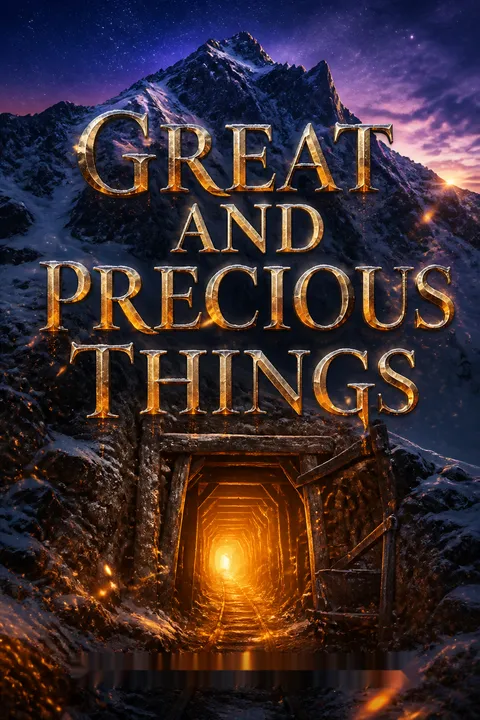
At the Historical Society meeting, Camden asserts the membership and property rights inherited from Uncle Cal. The council resists his bid to reopen the Rose Rowan Mine, a dangerous, long-sealed attraction that could draw thousands of visitors to Alba.
Willow reveals her degree in art restoration and conservation and volunteers to oversee the historic building Camden owns, despite her father’s disapproval. Camden then produces company records showing that Cal left him a controlling share of the mining company, giving him authority to proceed.
The council agrees to consider the project if he supplies detailed plans. Later, Xander challenges Camden for bypassing him, then learns the mine’s proceeds could fund Arthur’s in-home care. Xander admits he will support the project, though he still fears its risks and questions Camden’s motives.
The mine turns Camden’s technical expertise into a public test of whether Alba can revise its judgment of him. Willow’s support matters because she risks her standing with her father and the town, rather than merely offering private sympathy. Their work also unsettles the local economy’s dependence on preserving the past: opening the mine requires renovation, safety planning, and new income, not nostalgia alone. Xander’s eventual backing does not resolve their disagreement about Arthur, but it replaces assumption with information. Their sibling conflict becomes more honest once Camden explains that the project serves their father’s care, not Camden’s ambitions.
A Storm Brings Them Close
A spring storm traps Willow after deer send her vehicle off the mountain road. She calls Camden, who rides a snowmobile through poor visibility to reach her, then takes her to his solar-powered house. Over hot chocolate and a fire, their childhood memories soften the distance between them.
Willow tells Camden that Sullivan’s death was not his fault, but Camden reveals the choices and blood-soaked minutes he has replayed since the firefight. Before either can make sense of the closeness between them, a call reports that Arthur has been found unconscious in his garage with the car running.
Camden rushes to his father. At the hospital, Xander has Arthur placed on a ventilator despite the DNR request. When Arthur wakes in terror and struggles against restraints, Camden helps hold him down, then recognizes the cruelty of the treatment.
The storm makes dependence unavoidable: Willow cannot reach safety without Camden, and Camden cannot maintain his emotional distance while caring for her in the shelter of his home. Their first kiss is interrupted not by a romantic misunderstanding but by the family crisis that defines the novel. The hospital then turns the DNR debate from abstraction into bodily experience. Arthur’s panic gives Camden evidence of the harm he feared, while also implicating him because he helped save Arthur before the paramedics arrived. The scene complicates moral certainty: love can make a person preserve life, even when that person has asked for limits.
The Case Splits the Family
After Arthur returns home with round-the-clock caregivers, Camden files to replace Xander as his guardian so he can pursue the DNR. Xander sees the lawsuit as an attack on the years he has spent caring for their father.
Arthur, lucid and determined, asks his longtime friend Walter to take him for a tattoo reading do not resuscitate. Xander is furious; Camden respects Arthur’s decision without pretending the tattoo settles the law. Meanwhile, Camden and Willow meet at the hot springs.
She tells him she was relieved he survived the war, and reveals that her relationship with Sullivan began after she believed Camden did not want her. They admit their long love for each other. Camden still fears being a substitute for his brother, but Willow insists she chooses him, and he agrees to build a relationship slowly.
The tattoo is a bodily claim of authorship, visible precisely because Arthur’s mind can no longer be trusted by others to represent his wishes consistently. It cannot solve the legal problem, but it makes the family’s conflict impossible to keep politely hidden. Camden and Willow’s confession follows the same logic: they stop letting Alba’s public story determine what their private history means. Willow does not deny that she loved Sullivan; she refuses to let that love cancel her love for Camden. His hesitation shows how guilt can masquerade as ethical restraint, protecting the dead brother’s memory while denying the living woman’s agency.
Love Meets the Town
As Camden and Willow begin dating, they try to keep their relationship outside Alba’s scrutiny. At the town’s season opening, Oscar Hudgens taunts Camden about Willow and Sullivan. Camden beats him before Gideon can pull him away, then pushes Willow off, convinced his violence proves he will hurt her.
Willow refuses to let him decide her future for her. She returns the onyx chess piece that has linked them since childhood and makes him face the fear beneath his self-loathing. Camden finally accepts her choice, and they make love.
He later confronts Willow’s father, Judge Noah Bradley, at the barbershop, explaining that he loves Willow and will not ask her father’s permission to be with her. Noah warns him that the relationship may damage his case, but Camden refuses to treat Willow as a bargaining chip.
Camden’s violence is not excused by the narrative, but the aftermath reveals its function: when shame becomes unbearable, he tries to abandon the person whose opinion matters most. Willow’s refusal is not passive forgiveness. She names his fear and insists that his self-protection cannot override her consent. The chess piece serves as a small, deliberate invitation back into their shared history. Camden’s confrontation with Noah extends the same principle into public life: love does not make Willow her father’s property, nor does it require Camden to hide her to improve his legal standing. Intimacy begins when both stop making choices for the other.
A Judge Steps Aside
Willow learns that her father believes her relationship with Camden weakens his case, then tells Camden instead of ending things to protect him. She also persuades Sullivan’s best friend, Pat, to consider Camden beyond the town’s rumors.
At the hearing, Judge Noah Bradley recuses himself because Willow is involved, and Judge Deborah Wilson takes the case. Camden’s testimony establishes his military service, engineering work, and return to Alba; his old negligence in the bunkhouse fire is used against him.
Xander’s attorney reveals that Arthur’s current will leaves the estate to Xander alone, undermining any claim that Camden seeks inheritance. Arthur testifies that he wants control over his body, but his memory falters under questioning. The judge keeps Xander as guardian because he has a proven record of care, while urging him to honor Arthur’s wishes.
The hearing separates legal competence from moral seriousness. Arthur can express a clear preference on a lucid day, yet the court must evaluate a pattern of fluctuating capacity, leaving his autonomy vulnerable to timing. Camden’s lack of financial gain is established by the will, but his good intentions cannot overcome Xander’s history as caregiver. Noah’s recusal is a meaningful act of restraint: he sacrifices authority rather than risk using it against his daughter’s partner. The ruling is neither a simple victory nor a villain’s defeat. It preserves the legal status quo while making the emotional cost of that status quo visible to the family and town.
Rose Enters the Lost Shaft
At the Fourth of July opening of the Rose Rowan Mine, nine-year-old Rose slips away to search for the unicorn pin Willow lost as a child. Her absence is discovered when her mother, Charity, asks Willow where she is. Camden recognizes that Rose’s hard hat is missing and realizes she may have followed Arthur’s directions toward the old ventilation shaft.
He leads Willow, Arthur, and Gideon into the uncharted passages. Arthur, lucid enough to remember a hidden route, guides them beyond the restored tourist tunnel. Willow recognizes the barred chambers where she once fell, and she and Camden find Rose trapped behind an iron door beside the shaft.
As they bring her out, a ledge collapses beneath Arthur. Camden and Gideon pull him to safety after Camden gives him the choice to reach for help himself. Arthur has found Willow’s pin, but blood on the door triggers a darker memory.
The mine’s reopening converts Camden’s public project into a place where private history resurfaces. Rose’s search is an act of affection, but her childlike trust in the past puts her in real danger. Arthur’s knowledge remains valuable despite his illness, showing that cognitive loss does not erase every form of expertise or attachment. Willow returns to the site of her childhood trauma by choice, rather than as a helpless child, and helps locate Rose. The rescue also echoes the family’s DNR conflict: Camden refuses to decide for Arthur when his father can still choose. The blood on the old door turns a recovered memory into evidence.
The Golden Son Falls
Back at the mine entrance, Camden confronts Xander in front of the crowd and accuses him of trapping nine-year-old Willow underground years earlier. The bloodstained door has brought Willow’s memory back: Xander killed his headlamp, pushed her through the hidden doorway, and shut it, intending to return later as her rescuer.
Camden then reveals that Xander also started the bunkhouse fire and let Camden take the blame, even though Camden had rushed inside to save Willow. Xander admits he wanted one heroic moment of his own, and the public microphones broadcast the confession to Alba.
Noah punches Xander, who is arrested for arson; Noah is arrested for assault. Camden does not strike his brother. Instead, he takes Willow home as the town finally hears the truth behind two stories that defined Camden as dangerous.
The climax dismantles the town’s moral shorthand. Camden’s reputation rested on the fire and Willow’s rescue, while Xander’s rested on being the dependable son. Their actual histories are more compromised: Camden accepted blame to protect his brother, and Xander’s desire to be seen as good led him to endanger Willow. The public setting matters because Alba’s gossip helped preserve the false account for years; the same audience now hears the correction. Camden’s restraint marks a genuine change, not a claim that his anger has disappeared. Noah’s impulsive punch complicates the victory, showing how even justified outrage can carry legal consequences.
The Choice Returns
After the rescue, Camden visits Sullivan’s grave with Arthur and finally explains the battlefield decision that preceded Sullivan’s death. Camden chose one squad leader without knowing Sullivan was in that squad; he reached his brother after he was wounded and stayed with him until the end.
Arthur acknowledges that Camden bears a part in the chain of events but gives him the forgiveness he had withheld. Camden then tells Xander that their father’s Alzheimer’s is genetic. Tests from stored baby teeth show that Sullivan carried the mutation, while Camden did not.
Camden leaves Xander to decide whether to learn his own result, refusing to control him in retaliation. A week later, Xander transfers guardianship to Camden and signs Arthur’s DNR. Camden and Willow remain together, facing the future as a choice they make, not a debt they owe.
Arthur’s forgiveness does not erase causality; it gives Camden a way to stop confusing responsibility with a wish for punishment. By explaining the battlefield choice, Camden replaces the family’s simplified accusation with a painful account of uncertainty and care. The genetic test extends the question of autonomy across generations: Xander is invited to confront his own possible future, but Camden leaves the decision to him. That restraint contrasts with the control at the heart of their dispute over Arthur. The signed DNR is not framed as choosing death over life. It restores the possibility that Arthur’s life belongs to him, even as his memory recedes.
Analysis
The novel’s central conflict is not simply whether a father should receive a DNR. It asks who gets to author a life when memory becomes intermittent, and what kinds of evidence count as a person’s will. Arthur’s lucid requests matter morally, but his diagnosis makes them difficult to enforce legally. Xander’s devotion is real, yet his authority can turn care into control; Camden’s insistence on autonomy is principled, yet his own guilt makes him vulnerable to treating suffering as deserved.
That struggle echoes through the romance. Camden repeatedly decides that Willow would be safer without him, turning self-loathing into a form of paternalism. Willow’s answer is not to deny his anger or his history, but to claim the right to choose him with knowledge of both. Their relationship becomes possible when Camden stops treating love as something he must earn through sacrifice and starts accepting it as a mutual decision.
Alba’s preservation culture gives these private conflicts a public shape. The town protects historical buildings and inherited stories, often confusing continuity with truth. Camden’s restoration of the mine shows that preservation can require change: new supports, safer routes, and investment in a future rather than a shrine to the past. The hidden passage makes the metaphor literal, as a place sealed away by family history contains both a child’s trauma and evidence that the town’s moral story was wrong.
The ending does not erase consequence. Camden remains responsible for choices made in war, Xander faces the consequences of his own choices, and Arthur’s illness continues. What changes is the family’s willingness to distinguish responsibility from total blame, protection from possession, and love from obedience. The novel’s most durable claim is that dignity depends on preserving the power to choose, even when the choice frightens the people who love you.
Review Summary
People Also Read









Characters
Camden Daniels
The returning protectorCamden, called Cam, is the middle Daniels brother, a former Army Special Forces soldier and civil engineer who returns to Alba after years away. He is physically capable, quick to anger, and skilled at hiding vulnerability behind a reputation he often lets others define. His deepest wound is the belief that his battlefield decision caused Sullivan’s death, a belief reinforced by his father and the town. Camden shows care through action: he protects Willow, takes responsibility for his father, and rebuilds the mine. His challenge is not learning to love, but accepting that love does not have to be earned through punishment. He must let others choose him rather than deciding that his past makes him unworthy.
Willow Bradley
The artist who choosesWillow is a graphic designer and art conservator who grew up beside the Daniels family. Thoughtful and observant, she often retreats into her imagination, but her gentleness should not be mistaken for passivity. She has rebuilt a life after Sullivan’s death, studied art, and returned to Alba on her own terms. Her bond with Camden combines childhood trust, desire, and a long history of things left unsaid. Willow’s central strength is her ability to see the person beneath a public reputation without denying his flaws. She learns to speak plainly, support Camden publicly, and resist both her father’s expectations and Camden’s attempts to make decisions for her.
Alexander Daniels
The polished caretakerXander is Camden’s older brother, Alba’s mayor, and the son who stayed home to manage their father’s care. He is orderly, diplomatic, and accustomed to earning approval by anticipating what others need. His polished public manner can conceal strain, especially when family duty becomes a test he believes he must pass alone. Xander and Camden love each other, but their different responses to crisis sharpen into conflict: one tries to preserve stability, while the other challenges decisions that seem to deny Arthur’s wishes. Xander’s relationship with his brothers is shaped by both affection and comparison, leaving him sensitive to being overlooked beside Camden’s more dramatic acts.
Arthur Daniels
The father losing memoryArthur is Camden, Xander, and Sullivan’s father, a former Forest Service worker and an expert on the Rose Rowan Mine. His early-onset Alzheimer’s makes his identity and judgment inconsistent, but lucid periods reveal a proud, stubborn man who wants to retain control over his body and his home. Arthur’s love for his sons is entangled with grief, old grievances, and a rigid moral scheme that makes him judge Camden harshly. He is not simply a symbol of decline: his mining knowledge, humor, and flashes of tenderness continue to shape events. His illness forces his family to distinguish protecting him from protecting themselves from the pain of losing him.
Sullivan Daniels
The absent youngest brotherSullivan is the youngest Daniels brother, loved by his family and by Willow, who was his girlfriend before his death in military service. Kind, easygoing, and reluctant to create conflict, he became the family’s golden boy. His memory shapes Camden’s guilt and complicates Willow’s feelings, but the story also makes room for Sullivan as a person rather than a symbol of perfect goodness. He admired Camden and followed his example, while Camden tried to protect him. The lasting emotional force of Sullivan comes from the relationships he left behind and from the different meanings each survivor gives to his absence.
Noah Bradley
The principled judgeNoah is Willow and Charity’s father, Alba’s judge, and a man who relies heavily on rules and moral certainty. He loves his daughters but often expresses that love as control, believing strict expectations will protect them from painful choices. His hostility toward Camden reflects years of suspicion and grief, including the belief that Camden is responsible for Sullivan’s death. Noah’s public authority makes his personal judgments especially consequential, both for Willow’s relationship and for Camden’s legal case. His character is defined by the tension between impartiality as an ideal and the family loyalties that make impartiality difficult.
Charity Maylard
Willow’s boundary-breaking sisterCharity is Willow’s older sister, Rose’s mother, and the independent owner of Alba’s bar. She raised Rose largely on her own after conflict with their father and learned to defend her boundaries without giving up on family. Her frankness helps Willow question assumptions about Camden and her own feelings. Charity is protective but not controlling; she offers support, then leaves her sister to make the choice herself.
Rose Maylard
The curious nieceRose is Charity’s daughter and Willow’s niece, a bright, imaginative child who loves unicorns, experiments, and the mine named after her. She quickly warms to Camden and treats him with the unguarded trust adults struggle to offer. Her curiosity leads her toward danger, but it also brings the family back to a buried piece of its past. Rose’s childhood perspective exposes how adults pass their fears and stories to the next generation.
Gideon Hall
Camden’s steadfast friendGideon is Camden’s childhood best friend and an Alba police lieutenant. His easy humor softens Camden’s return, while his loyalty remains steady through family emergencies and public conflict. Gideon understands the town’s routines but does not let them dictate his private judgment. He also serves as a bridge between Camden and the community, offering practical help without pretending the past never happened.
Dorothy Powers
Arthur’s capable caregiverDorothy is Arthur’s longtime caregiver and a blunt, observant ally to the Daniels family. She understands his daily needs and recognizes how much strain Xander carries. Dorothy pushes Camden toward practical action, including the Historical Society, and helps him navigate care arrangements. Her humor and firmness keep the family’s crisis grounded in everyday responsibilities.
Walter Robinson
The town’s quiet advocateWalter is Arthur’s longtime friend and a respected figure in Alba’s Historical Society. He offers Camden emotional support without excusing the damage of the past, and he helps the family carry out Arthur’s wishes. Walter’s steadiness gives the brothers a model of care based on listening rather than control.
Hope Bradley
The welcoming motherHope is Willow and Charity’s mother and a close friend of the late Lillian Daniels. Warm and generous, she continues to care about Camden despite his years away and his difficult relationship with Arthur. Her kindness provides a softer counterweight to Noah’s judgment and reflects the old closeness between the families.
Thea Lambert
Willow’s outspoken confidanteThea is Willow’s best friend, a yoga studio owner, and a mother. She is playful and direct, quick to notice the feelings Willow tries to bury. Thea offers support without taking over, reminding Willow that avoidance has costs and that friendship can hold difficult truths.
Patrick Lambert
Sullivan’s loyal friendPatrick is Thea’s husband and was Sullivan’s close friend. His protectiveness toward Willow and grief for Sullivan initially make him wary of Camden. He is capable of revising his view when Willow challenges him with the facts of her own experience.
Simon Robinson
Camden’s careful lawyerSimon is Walter’s son and an attorney who represents Camden in the guardianship case. He is measured and strategic, presenting Camden’s intentions clearly while recognizing the emotional strain on both sides. His professional role gives the family conflict a legal structure without making the court’s decision simple.
Deborah Wilson
The visiting judgeDeborah Wilson is the judge who hears the guardianship dispute after Noah Bradley recuses himself. She approaches the case with care, balancing Arthur’s expressed wishes against the evidence of fluctuating capacity and Xander’s history as caregiver. Her ruling underscores the limits of what the court can do.
Tim Hall
The wary police captainTim is Gideon’s father and Alba’s police captain. He remembers Camden’s youthful record and watches him with suspicion, embodying the town’s tendency to hold old behavior against him. His position puts him at the intersection of law, local politics, and family loyalty.
Oscar Hudgens
The habitual provocateurOscar is a local man whose taunts repeatedly target Camden and Willow’s vulnerabilities. His behavior tests Camden’s hard-won self-control and gives the town an excuse to revive Camden’s reputation for violence. Oscar is less a mastermind than a petty antagonist who knows which old wounds will draw blood.
Lillian Daniels
The remembered motherLillian was Camden, Xander, and Sullivan’s mother, and her death remains central to the family’s grief. Her warmth and love of books shaped Camden’s inner life, while her absence left Arthur and the boys struggling to hold the household together. Camden carries her memory through his childhood home and his connection to Willow.
Uncle Cal
Camden’s independent mentorCal was Arthur’s brother and Camden’s uncle, a self-reliant man who built an unconventional home in the mountains. He encouraged Camden’s patience and independence and left him property that becomes crucial to his return. Cal’s library and practical wisdom provide Camden with a refuge outside his father’s house.
Milton Sanders
Xander’s courtroom counselMilton is Alba’s attorney and represents Xander in the guardianship hearing. He probes Camden’s history and Arthur’s cognitive limitations, pressing the legal case even when his questions cause visible distress.
May
Arthur’s daily caregiverMay is one of the caregivers hired to support Arthur at home. She manages medication and daily routines, offering practical continuity as the family struggles with his changing memory.
Plot Devices
Arthur’s DNR request
A choice over careArthur’s voicemail asks Camden to help secure a do-not-resuscitate order, setting the brothers against each other before Camden arrives home. The request forces them to distinguish a wish to avoid unwanted medical intervention from a wish to die. Arthur’s lucid confirmation and later tattoo make his preference unmistakable, while the guardianship hearing shows why the legal system may not treat that preference as binding. The DNR also exposes the brothers’ different fears: Camden fears his father’s wishes will be ignored, and Xander fears losing him. The device carries the family plot from the first call through the final transfer of guardianship.
The Rose Rowan Mine
A town-changing projectThe abandoned mine is both Camden’s inherited property and a dangerous piece of Alba’s history. Reopening it gives Camden a way to demonstrate his engineering skill, create tourism revenue, and potentially pay for Arthur’s care at home. Willow’s conservation expertise makes her a partner in the restoration rather than a spectator. The mine’s uncharted passages also connect the present to Willow’s childhood accident, making the project’s physical risks inseparable from the family’s buried history. Its opening brings the town together for a public celebration, then becomes the setting for the novel’s central rescue and revelations.
The onyx chess pieces
A private languageCamden and Willow exchange small chess pieces across years when they cannot say directly what they feel. The pieces preserve their childhood bond through separation, grief, and misunderstanding. Their symbolic value becomes especially clear when Willow returns a piece to Camden after he pushes her away: she is not forcing him to accept her, but giving him a choice to reenter the relationship. Later, another piece steadies him during the guardianship hearing. The chess motif reflects the characters’ competing habits: Camden thinks in emotional loyalties, while family members often treat decisions as moves with winners and losers.
The hidden mine route
A buried past resurfacesAn unmapped passage and its heavy iron door connect Willow’s childhood disappearance to the mine’s present-day rescue. Arthur remembers the route despite his illness, guiding the search party toward Rose. When the group discovers blood on the door, Willow recovers the memory she had lost: she was pushed through it and left behind. The mine’s hidden architecture therefore functions as both practical danger and physical evidence. A map kept among the family’s papers helps Camden understand the mine, while the door reveals that the family’s accepted account of Willow’s accident was incomplete.
The genetic test
A future left openCamden arranges anonymous testing from stored baby teeth after learning that Arthur’s Alzheimer’s can be inherited. The results connect Sullivan’s death and Arthur’s illness to a genetic mutation, while confirming that Camden does not carry it. Camden gives Xander the chance to learn his own result but refuses to force the knowledge on him. The test expands the novel’s concern with autonomy beyond Arthur’s immediate care: each brother may face the disease differently, and each deserves a say in what to know and how to plan. Its use near the end also gives Camden a chance to respond to Xander without revenge.
About the Author
Other books by Rebecca Yarros


Download PDF
Download EPUB
.epub digital book format is ideal for reading ebooks on phones, tablets, and e-readers.








