

Plot Summary
Mudslide to Cakes and Ale
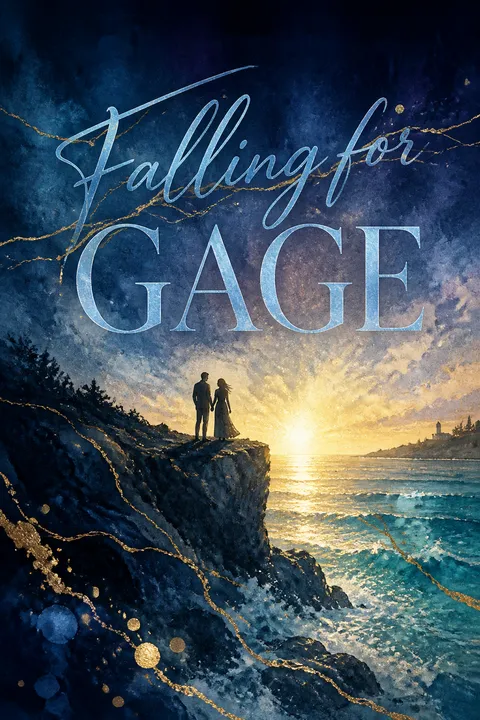
Gage Buchanan has the career, money, and London promotion he was raised to want, yet he feels trapped inside his own success. In Mud Gulch, Rory Casteel is nursing a different restlessness: her family bar is home, but she cannot name what she longs to find elsewhere.
When Gage and three friends take a wrong turn on a rainy trip, their car loses a tire and a mudslide carries them down toward the harbor. Their phones are ruined, so they enter Cakes and Ale, where Rory, stung by Gage’s dismissive description of the bar, serves them anyway. Her teasing and his awkward fascination turn a miserable detour into an encounter neither can dismiss.
Crab Cakes at Dawn
Gage prolongs the night by paying for drinks and letting Rory steer him through a string of increasingly dubious arrangements for a tow, a car repair, and a place to sleep. After he leaves, he returns to retrieve a credit card he deliberately left behind. Rory’s cakes are burning in the oven, so Gage uses a fire extinguisher, then teaches her to make crab cakes instead.
Their shared cooking gives way to a night of attraction and sex on the pool table. At dawn, Rory’s enormous uncle Cassius arrives, interrupting them as Gage’s friends call from outside. The two part without promises, but Gage leaves knowing that this brief encounter has made his carefully ordered life feel strangely incomplete.
The Napkin in the Diary
Back in Calliope, Gage’s longtime friend Blakely proposes they consider marrying if they both remain single, a practical arrangement that would please their families and fit his London plans. In Mud Gulch, Rory searches her late mother Ophelia’s belongings for answers about the father she never knew.
A sketch of Ophelia, dated to the spring she conceived Rory, is hidden in her baby book; its cocktail napkin bears the Metropolitan Club’s logo. Rory asks her friend Faith, an art-gallery owner, to pose as her employer while Rory pretends to be an appraiser and seeks access to the homes of the club’s founders. The plan collapses when Gage recognizes her at his parents’ house, where she has arrived in disguise.
The Possible Brother
Rory dodges Gage through Calliope’s estates, using an invented blight to slip past one homeowner and a fabricated art professor to escape another. Gage keeps pursuing her, partly because he suspects a fraud and partly because he cannot let her go. Cornered at Faith’s gallery, Rory admits her real name and explains that she is searching for the artist who drew her mother.
The club’s five founders are the likeliest candidates, and Gage’s father is among them. Since Gage resembles his father and remembers his artistic sketches, the search raises an alarming possibility: he and Rory may share a parent. They agree to a DNA test, making the mystery personal for both of them.
M.S. Beneath the Frames
While they wait for the DNA results, Gage helps Rory examine paintings borrowed from Calliope families. Haven Hale, a nursery owner who knows the region’s flea markets, directs them to two local shops. They find matching watercolors signed M.S., including a view of Pelion Lake.
Gage locates a diary page hidden behind one frame, where Ophelia recalls a tender lakeside evening with a talented man she calls M.S. Another damaged entry mentions his frightening visions, suggesting a troubled past. The paintings belong to a former housekeeper, not the family that lent them, so the signature does not yet identify the artist. Still, Rory now has proof that her mother’s sketch was part of a larger story.
Raccoons Need a Mother
Gage’s parents’ friend Mrs. Bellamy recognizes Rory’s resemblance to Ophelia and grows suspicious of her credentials. Soon afterward, Rory’s dogs chase a raccoon into the road, where a car kills it and leaves two newborns behind. Rory grieves over the helpless babies. Gage carries them to Easton Torres, a paramedic and Haven’s brother, but Easton cannot revive their mother.
Gage then persuades Travis Hale to let the raccoons nurse from his cat, Clawdia, who has recently had kittens. When Rory sees the babies alive beside the cat, she understands that Gage went to extraordinary lengths because her grief mattered to him. His increasingly impulsive care for her unsettles the polished persona he usually maintains.
Bridge Night in Hiding
Gage invites Rory to a bridge gathering at Maynard Siggins’s house, hoping to inspect his art without alarming him. Rory is a poor card player, and Gage’s improvised poem about cymbals distracts the hosts long enough for them to search the rooms. They find no obvious work by the artist, but discover a watercolor hidden in a closet.
Its owner, Timothy Irwin, bought it recently and helps remove its backing, revealing another page from Ophelia’s diary. The entry describes her friend Lys, who fled an abusive childhood and settled in Pelion, then refers to a boy and a painful family tangle. Siggins has been Timothy’s partner for decades, ruling him out as Rory’s father. The name Lys gives Rory a new lead.
Canary Blue, No Relation
At the old bank building Gage’s family plans to demolish, he and Rory watch the sunset while waiting for the DNA results. The laboratory confirms they are not siblings, and relief sends them into a passionate reunion at Gage’s condo.
They stop treating their attraction as an accident, though Gage still feels bound by expectations he cannot yet name. Before long, he finds Rory at a country bar, where she has been riding a mechanical bull with Faith. They dance, then have sex in an alley.
Gage’s parents unexpectedly witness their return to the street, and Rory’s false identity leaves them both unable to explain their relationship honestly. The embarrassment sharpens the divide between their private intimacy and the world Gage is expected to inhabit.
Fireworks and Farewell
At Haven’s Fourth of July gathering, Rory admits to Haven and Bree Hale that she is not an art appraiser and explains her search for her father. The women accept her, but the same night Rory learns that Cassius’s repaired boat is ready, making her return to Mud Gulch imminent. Gage attends the Metropolitan Club’s holiday party with his family and London colleagues, then goes to Rory’s room because he cannot stay away.
They spend the night together, but Rory says she is leaving and refuses to complicate his future. Gage does not ask her to stay. He invites her to his farewell party, then watches her leave with the understanding that duty, distance, and their unfinished questions have separated them again.
The Father in Pelion
Before Rory can leave, Mrs. Bellamy and Mrs. Ramsbottom confront her at lunch, expose her false credentials, and take back the dogs she has been walking. Humiliated, Rory prepares to go home, but Bree calls with a clue from the napkin sketch. At the Hales’ house, paintings signed M.S. line the walls.
Bree explains that the artist was Nathan Hale, her husband Archer’s uncle, a veteran who worked as a dishwasher at the Metropolitan Club. Nathan had returned from war with severe trauma and had taken responsibility for young Archer after a family tragedy.
Ophelia’s recovered diary pages reveal that she loved Nathan but left without telling him about her pregnancy, believing he needed to care for Archer and heal. A photograph of Nathan and Ophelia confirms their love, while the Hale family welcomes Rory as kin.
An Engagement Announced
Rory attends Gage’s farewell party to tell him she has found her father, but Blakely’s mother announces that Blakely and Gage are engaged. The announcement is false; Gage never agreed to marry her. Yet Rory, already feeling that she does not belong in Calliope, tells him their relationship was only a fling and tries to leave before his family and business associates can make the moment worse.
Gage insists he wants to hear about Nathan, while Blakely attempts to draw him aside. Rory’s uncles, Cassius and Romeo, arrive from Mud Gulch and gather her up before she can be swallowed by the crowd’s attention. Gage watches her go, unable to tell whether she is protecting herself or closing the door for good.
The Mud Was Home
Back at Cakes and Ale, Rory assumes Romeo sacrificed his own ambitions to raise her after Ophelia died. Romeo tells her that Mud Gulch was the life he chose, and that the travel brochures she found in his desk were saved for her, not himself. His honesty frees Rory from the belief that she ruined his future.
Archer and Bree then bring Nathan’s paintings and offer Rory land near Pelion Lake, along with his accumulated army payments, so she can build a dog-centered business in his name. The gift gives her a way to honor her father without abandoning her love of animals. Rory accepts the chance to create Nathan’s Legacy, recognizing that her next home may be the place that gave Nathan peace.
Gage Chooses His Own Table
As Gage prepares to leave for London, his sister Lexi confronts him about the false engagement and the life he has been accepting to satisfy other people. She urges him to name what he wants, not merely what would please their father. Gage admits he loves Rory and has spent years burying his own dream of cooking.
He tells his father he cannot take the London post, then buys the old bank building and begins turning it into a restaurant, a choice he makes without asking his father to finance it. Rory, meanwhile, moves to Pelion to build her dog business. Gage waits for her in the bank, now the place where he first let himself imagine a different future. They reunite and choose a life shaped by both love and work they believe in.
Epilogue
One year later, Gage’s restaurant, Canary Blue, is thriving, while Rory’s Nathan’s Legacy has grown into a busy dog park, daycare, and training center. Gage has also helped Romeo bring new crab-cake dishes to Cakes and Ale, so the two family businesses now support each other.
At a crowded dinner celebrating Bree’s birthday, Gage proposes to Rory in the restaurant he built from his own dream. Their families gather around them as Rory accepts, joining Mud Gulch, Pelion, and Calliope in a celebration that makes room for every branch of their lives.
The epilogue completes the book’s argument through work as much as romance. Gage does not simply win Rory; he builds a vocation that lets him live without translating every desire into family duty. Rory’s dog business turns inherited history into a practical future, while Gage’s support for Cakes and Ale shows that choosing change need not mean rejecting home. The proposal takes place in a restaurant, a public expression of the private talent he once hid. Their joined families make belonging expansive rather than exclusive: the lovers do not have to choose between their origins to create a life together.
Analysis
The romance is structured around a contrast between inherited scripts and chosen work. Gage inherits an empire and interprets gratitude as a permanent obligation to reproduce his father’s ambitions. Rory inherits a bar, family loyalty, and an unanswered question, then initially mistakes love for a debt she must repay by staying small. Their attraction matters because each recognizes the other’s suppressed capacity: Rory sees Gage’s culinary talent as more than a hobby, while Gage treats Rory’s search for her father as a legitimate claim to self-knowledge rather than a shameful disruption.
The story’s mysteries are emotional as well as genealogical. Ophelia’s missing journal pages, the initials on the paintings, and the uncertain identity of Lys make family history something assembled from damaged evidence. The eventual account of Nathan does not erase the pain of his absence; it changes its meaning. Rory was not unwanted, but her parents’ love was constrained by trauma, grief, and competing responsibilities. That distinction offers recognition without pretending that recognition repairs lost time.
The repeated language of being pulled toward a place is also tested against agency. Mud Gulch and Pelion both offer forms of belonging, but neither town can dictate what Rory or Gage must become. Rory’s new business grows from family inheritance without replicating the old bar, and Gage’s restaurant honors his skill without extending his father’s hotel chain. Their resolution is therefore not a simple escape from duty. It is a negotiation in which love makes room for obligation, but no longer allows obligation to erase the self. The final family gathering gives that choice a social form: belonging becomes something people build together, not a status granted by wealth or blood alone.
People Also Read







Characters
Rory Casteel
Restless dockside seekerRory works at her family’s Mud Gulch bar and cares instinctively for animals, but a persistent sense of longing keeps her asking where she belongs. Her mother’s death left her with unanswered questions about her father and a deep reliance on her uncles, who raised her. Rory is compassionate, funny, and capable of taking bold risks, yet she often assumes that her needs burden the people she loves. Her search for family forces her to distinguish genuine loyalty from guilt, and to consider what kind of work might be hers rather than simply inherited.
Gage Buchanan
Restless heir and cookGage is a successful hotel executive raised to carry his father’s business into the future. He is disciplined, considerate, and accustomed to measuring himself by competence and approval. His private pleasure in cooking has long been treated as a hobby rather than a possible vocation, and he has learned to keep desire subordinate to duty. Rory’s blunt curiosity disrupts that arrangement. His attraction to her exposes a man more playful and emotionally hungry than his polished manner suggests, while his capacity for care becomes visible in what he does when someone else is hurting.
Romeo Casteel
Warm-hearted barkeeperRory’s younger uncle helps run Cakes and Ale and has a theatrical charm that draws customers. He is one of the people who helped raise Rory after her mother died, offering affection and frank counsel beneath his flirtatious public manner. Romeo understands how easily Rory mistakes sacrifice for love, and he challenges her assumptions about what makes a life valuable. His loyalty to Mud Gulch is not resignation; it is a considered attachment to the people, work, and landscape that make the town home.
Cassius Casteel
Protective seafaring uncleCassius is Rory’s older uncle, a fisherman and boat captain whose gruffness disguises steadfast affection. He stepped into a parental role when Rory was young and remains quick to intimidate anyone he thinks might hurt her. His life on the water gives him a blunt, practical view of family duty, though he is not immune to the pull of the unknown. Rory trusts his rough humor and his silent gestures of support, even when he is wary of her plans.
Ophelia Casteel
Absent mother, lasting guideOphelia is Rory’s late mother, remembered through her diaries, photographs, and the family bar she once helped run. Her writing reveals a spirited young woman drawn to beauty, adventure, and people who live beyond her small town. She loved Rory deeply but left important parts of her own history unspoken. Her diaries give Rory a voice across time, though they offer fragments rather than easy answers. Ophelia’s choices are shaped by affection, fear, and a belief that protecting someone may require leaving them.
Blakely Wingate
Familiar, well-placed friendBlakely has known Gage since childhood and is close to his sister Lexi. After a long engagement ends, she begins reconsidering the future she expected and proposes that she and Gage might make a suitable couple. She is socially assured and professionally ambitious, with a strong instinct for how their families and networks could work together. Her feelings for Gage are real, but familiarity and practical compatibility complicate her judgment of what he wants.
Faith Lorenz
Rory’s art-world accompliceFaith owns a Calliope art gallery and has remained Rory’s friend since their mothers knew each other. She agrees to help Rory gain access to local collections, even though the plan requires a false professional identity. Faith’s curiosity makes the search an adventure as well as a favor, and her loyalty persists when the deception becomes public. She is practical about her business and generous with her trust, while still recognizing that helping a friend can carry real reputational risks.
Haven Hale
Grounded nursery ownerHaven runs a thriving plant nursery and landscape business near Pelion Lake. She is Gage’s friend and Travis Hale’s wife, building a family and a vocation with evident joy. Her knowledge of regional flea markets helps Rory’s search, while her openhearted welcome gives Rory a place among people who do not demand that she perform a role. Haven’s life offers a concrete example of work, care, and personal purpose growing together.
Travis Hale
Protective police chiefTravis is Pelion’s chief of police, Haven’s husband, and a friend of Gage. His relationship with Haven has softened the guarded, competitive manner he once showed the world. He is devoted to his young family and takes responsibility for the community around him. When Gage asks for help with the orphaned animals, Travis is initially reluctant but allows his cat to care for them, revealing the tenderness beneath his gruffness.
Lexi Buchanan
Gage’s candid sisterLexi is Gage’s adopted sister and a singer who has chosen an independent life rather than joining the family business. She knows Gage’s habits and the cost of his constant effort to please their father. Her directness can be disruptive, but it comes from affection and a refusal to let him confuse obedience with happiness. She pushes him to identify his own desires and take responsibility for pursuing them.
Archer Hale
Quiet keeper of family historyArcher is Travis’s brother, Bree’s husband, and a devoted father. He is mute and communicates through sign, with Bree often voicing his words for others. His childhood was shaped by loss and by the care of an uncle who stepped in when he needed protection. Archer carries his family history with deep feeling and treats inherited love as something to extend, not hoard.
Bree Hale
Perceptive family connectorBree is Archer’s wife and a close friend to Haven. Attentive to both people and family histories, she recognizes the style of the artwork Rory is searching for and helps connect the clues to the Hale family. She approaches difficult discoveries with care, giving Rory space to absorb them rather than demanding an immediate response. Her warmth makes her an important bridge between Rory and a family she has never known.
Nathan Hale
Troubled veteran and artistNathan is a Hale family member whose paintings and wartime history shape the mystery at the center of Rory’s search. He served in the army and returned to Pelion carrying trauma he rarely discussed. He is remembered as a quiet, compassionate man, especially in his care for animals and for a child who needed him. The surviving art offers glimpses of a person who could express affection on paper even when his life was difficult to explain.
Jonathan Buchanan
Ambitious hotel founderJonathan built the Buchanan hotel business after growing up with little security. His ambition comes from hard work and a desire to leave his family a lasting foundation. He loves Gage and takes pride in his son’s abilities, but he has treated Gage’s future as the natural continuation of his own achievement. His good intentions do not erase the pressure this inheritance places on Gage.
Lana Buchanan
Gage’s attentive motherLana is Gage and Lexi’s mother, a gracious presence in the Buchanan household and a close partner to Jonathan. She notices when Gage’s behavior shifts, even when she cannot identify the cause. Her investment in family tradition is sincere, but she is capable of reconsidering her assumptions when she sees how they affect her son.
Plot Devices
Ophelia’s diaries and hidden pages
Fragments that open the pastRory inherits diaries from her mother, but the journal covering the spring of her conception is missing most of its pages. A sketch on a club napkin gives her a starting point, and recovered diary sheets hidden behind paintings gradually expose Ophelia’s relationship, her friend Lys, and the circumstances that shaped her departure. The fragmented format makes the investigation feel emotionally incomplete: each discovery advances the facts while leaving Rory to imagine the silences between them. The pages turn private memory into evidence without making the past fully recoverable.
The M.S. signature
A trail through local artThe initials on a watercolor link the napkin sketch to other works scattered among family attics and secondhand shops. Each painting gives Rory and Gage a new reason to visit someone, ask a question, or examine a frame. The initials initially suggest several possible artists, so the search resists a simple answer. Their meaning becomes clear only when the diary pages and the Hale family’s knowledge are considered together. Art serves as both clue and emotional record, preserving affection that the people involved could not openly explain.
The DNA test
A feared boundary checkOnce Rory realizes that Gage’s father may be one of her candidates, their attraction becomes ethically and emotionally frightening. Rather than secretly testing someone else, Gage and Rory provide their own blood samples. The result rules out a sibling relationship and allows them to pursue their feelings without that specific barrier. The test cannot answer Rory’s larger question about her father, so it clears one path while leaving the central mystery unresolved.
The pull toward elsewhere
An inner compass without a mapBoth Rory and Gage experience a persistent restlessness, but they interpret it differently. Rory wonders whether her longing points toward the unknown side of her family; Gage has mistaken his discontent for nerves about work and travel. The book gives the feeling emotional force without confirming a supernatural cause. It becomes a way to discuss intuition: a bodily signal that may be obscured by habit, duty, or fear, and that can only become useful when the character risks asking what it is asking them to do.






Download PDF
Download EPUB
.epub digital book format is ideal for reading ebooks on phones, tablets, and e-readers.








