


Plot Summary
Foster Care's Junk Drawer
At ten, Evie is taken from a home where her mother’s drug use exposed her to neglect and sexual danger. In foster care, she befriends Willow, a younger girl whose nightmares make Evie feel protective. Leo arrives next, eleven, bruised and angry, carrying injuries from a home no child should endure.
At school, bully Denny trips Evie and leaves her covered in lunch while classmates laugh. Leo walks her to the restroom, gives her his own food, then fights Denny after school. His defense does not erase their troubles, but it gives Evie a first glimpse of someone who sees her humiliation and refuses to leave her alone with it.
The first bond forms through practical care rather than a grand rescue. Evie comforts Willow because she recognizes vulnerability, while Leo’s intervention gives Evie a kind of public protection she has rarely received. Their foster home is not merely a setting for hardship: it places children with incompatible histories beside one another, making chosen loyalty an alternative to the families that failed them. Evie’s silence in the cafeteria shows how abuse teaches a child to minimize herself; Leo disrupts that learned withdrawal by acting before she can ask for help.
The Brother He Couldn't Save
On a summer night, Leo tells Evie why he entered foster care. His father abused him and his younger brother Seth, who has severe autism and needs constant support. When Leo tried to stop his father from sending Seth to a state institution, the violence at home escalated; Leo was removed, while Seth remained vulnerable to his parents’ decisions.
Hearing that Seth has been placed in a state-run home, Leo blames himself for failing to protect him. Evie moves close and tells him a story about a boy born with a lion’s heart. The story does not change Seth’s situation, but it gives Leo a different account of himself, one shaped by loyalty rather than the blame his father taught him.
Leo’s self-condemnation is not a neutral judgment of his choices. It is the language of a child who has been made responsible for an adult’s cruelty and for the safety of a disabled sibling he cannot control. Evie’s story offers symbolic recognition, not a cure: she names courage where Leo sees only failure. This exchange establishes their emotional method. She turns unbearable facts into narratives that preserve the person inside them, while Leo allows himself to be seen by someone who does not treat his anger as proof that he is bad.
A Lion Takes Shape
As they grow older, Evie and Leo keep finding each other despite changing foster homes and schools. When Willow arrives at Leo’s house intoxicated after being abandoned by cruel acquaintances, he helps bring her to Evie, who cares for her until she is safe to return home.
Leo’s protectiveness also changes: he warns Evie away from a boy at school, then admits his jealousy comes from imagining himself in the same position as other boys. At a school dance Evie cannot afford to attend, Leo proposes they make their own evening beneath the stars. Their closeness is no longer simply the shelter of childhood friendship. Neither has the language or security to manage that change, but both begin to recognize it.
The shift toward romance grows out of an already established pattern of mutual refuge. Leo’s jealousy is clumsy, but it exposes a new vulnerability: he can no longer pretend that protecting Evie is only a brotherly duty. Evie, meanwhile, has learned to mistrust attention, so their private dance matters more than the formal event she cannot attend. It gives them intimacy without requiring money, adult approval, or a performance for peers. Their attachment develops inside scarcity, where small acts of choosing one another carry unusual weight.
A Promise Under Snow
At fourteen, Evie learns that Leo, fifteen, has been adopted by Phil and Lauren, a couple who hope to give him a permanent home. Their happiness at his chance is quickly complicated by the news that the family will move from Ohio to San Diego. On the roof outside Evie’s room, the two teenagers share their first kiss and promise to remain faithful until she turns eighteen, when Leo plans to return for her.
He says he will write as soon as he arrives and gives her reason to imagine a future beyond foster care. Then he leaves. No letter comes, and Evie’s attempts to find him through libraries and old newspaper records lead nowhere. At eighteen, she stops waiting outwardly, though not in her heart.
The roof is both refuge and threshold. There, two teenagers make an intimate promise in response to a separation neither can prevent, giving their future a shape when nearly every other decision belongs to adults. Evie’s waiting is not simply youthful idealism; Leo has become evidence that someone can know her and stay. His silence therefore threatens more than romance. It reactivates the abandonment she has survived since childhood, while her decision to preserve the memory of him lets her keep hope without continually searching for proof.
The Stalker Knows Leo
Eight years later, twenty-two-year-old Evie works as a hotel housekeeper and caterer, runs to feel strong, and guards the modest independence she built after aging out of foster care. Willow has died from a drug overdose, and Evie gives her a fairy-tale eulogy that honors the friend she could not save.
A handsome stranger who has been following Evie watches from the cemetery, then disappears. When she catches him trailing her again, he says he knew Leo and was asked to check that Evie was safe. He identifies himself as Jake Madsen and tells her Leo died in a car accident the previous year. Evie goes home and grieves both the boy she loved and the man she believes chose to abandon her.
Willow’s funeral brings Evie’s old survival role back into view: she still turns pain into a story for someone she loves, even when she cannot control the ending. Jake’s news then collapses two versions of loss into one. Evie had spent years making Leo’s silence bearable by imagining that he had deliberately left her behind; his reported death removes the possibility of explanation as well as reunion. Jake’s awkward surveillance is invasive, yet it arrives bearing the one piece of information capable of reopening her sealed past.
Dinner With Jake
Jake keeps returning, first accompanying Evie to buy ice cream and then asking her to dinner. His attraction is unmistakable, but he listens closely when she describes running, work, and the small routines that keep her afloat. Evie admits she has little dating experience and draws a boundary against being treated as a casual fling.
Jake responds with an intensity that unsettles her, yet he also praises the discipline it took to build a life without family support. After dinner, she asks about Leo, hoping to understand why he never wrote. Jake says he knew little of Leo’s private life. Evie leaves the evening feeling seen by a stranger, and uneasy that her connection to him runs through the boy she has buried.
Jake’s attention challenges Evie’s assumption that her life is too ordinary to merit notice. His admiration lands deeply because it recognizes labor she has treated as mere necessity. Yet the same intensity that makes her feel valued also tests her defenses: she has little experience distinguishing care from possession or desire from commitment. Leo’s absence sits between them as both the reason for their meeting and a source of unresolved grief. Evie’s attraction does not cancel her caution; it makes caution more consequential.
Caviar on Gwen's Shoe
At a charity event where Evie is serving food, she discovers Jake with Gwen Parker, a wealthy, polished woman who clings to his arm. Evie assumes the worst, and Gwen makes the suspicion sharper by presenting herself as Jake’s sexual partner and belittling Evie’s work. A tray tips, dropping caviar onto Gwen’s expensive shoe.
Evie cleans it rather than retaliating, while her friend and coworker Landon quietly checks on her. Jake watches, visibly distressed, but Evie retreats to the kitchen rather than hear him out. Later, Landon passes along a mint wrapper bearing the same boastful slogan Evie had joked about in the grocery aisle. The small, private gesture confuses her more than it comforts her.
The humiliation is specifically classed: Gwen uses money, clothing, and sexual confidence to make Evie feel that she has mistaken attention for belonging. Evie’s instinct to clean the shoe, even while wounded, reveals how deeply service has become both her work and her strategy for surviving conflict. Landon offers a counterweight by treating her dignity as non-negotiable. Jake’s mint suggests he remembers their private humor, but it cannot yet repair the public uncertainty he allowed to grow.
The Bus Stop Apology
Jake catches Evie after work and refuses to let her dismiss him before he can explain. He says Gwen is the daughter of a company executive, that their past involvement was casual, and that Gwen used the event to drive Evie away. He also points to the kindnesses he has watched Evie offer strangers, including long bus rides to visit a lonely former neighbor.
His attention persuades her that he sees more than her appearance, though she remains wary. Jake invites her to spend the night, promising she can choose the pace. At his condo, Evie tells him about childhood neglect, foster homes that exploited her labor, and the night she had nowhere safe to sleep. His respect helps her trust him enough to become intimate with him.
Jake’s apology works because he names specific evidence of Evie’s character rather than offering a generic reassurance. Still, his refusal to accept her first attempt to leave raises a real question about whose boundaries govern their courtship. Evie chooses closeness, but she does so after describing a life in which dependence was dangerous. Her decision is an exercise of agency, not proof that the risk has vanished. The scene’s emotional turning point is her willingness to let someone hear her history without editing it into a more acceptable story.
A Laptop and a Zoo
The next day, Jake takes Evie to the zoo, where she delights in the animals and a peacock’s display, while Jake pretends to be jealous of the bird. Their playful ease gives her an experience of leisure she never had as a child. Over dinner, Evie admits she wants to write but cannot afford a computer.
Jake offers to fund classes, and she resists because she has worked hard to support herself; he accepts the argument but later gives her a laptop, explaining that he believes in her work. Evie begins exploring it and searches his name online. The gift opens a door to her ambition, but the search also exposes details of Jake’s life that he has not yet explained.
The zoo matters because it lets Evie be delighted without earning the pleasure through service. Jake’s gifts carry tenderness, but they also touch the exact fault line of her independence: accepting help has often meant becoming indebted or controlled. The laptop is more carefully chosen than a luxury for its own sake, since it gives material form to a dream she has postponed. Yet it brings private information within reach. Care and exposure become linked: the same gesture that empowers Evie makes it harder for Jake to keep his past separate.
A Phone Answered in San Diego
While Jake is on a business trip to San Diego, Evie calls and a woman answers his phone, saying he is in the shower. Jake later explains that a colleague’s wife picked up during drinks at his hotel, but Evie remains unsettled. Searching online on the laptop he gave her, she finds a photograph of Jake beside Gwen at a company benefit on the same night.
Jake says Gwen attended with her father and that the image caught a brief exchange, not an affair. Evie decides to trust him, though the explanations accumulate. Soon Jake rents the hotel penthouse where Evie works so he can surprise her during her shift. Their joyful reunion deepens the relationship before she has resolved every doubt.
The episode stages trust as a decision made under incomplete information, not as a feeling that arrives fully formed. Evie has good reason to question what she sees, especially after Gwen’s earlier lie, while Jake’s explanation fits details she cannot independently verify. His surprise at work intensifies their bond but also demonstrates how readily he can arrange circumstances around her. The novel keeps tenderness and control uncomfortably close. Evie’s choice to trust him is emotionally real, yet the unresolved discrepancies remain available to return as evidence.
The Mother at the Door
Jake takes Evie dancing for the first time, invites Landon and Landon’s new friend Jeff, and steps in when a drunken stranger tries to pull Evie away. The evening lets Evie feel playful and protected, but the next day she arrives early at Jake’s condo and overhears him ordering a woman to leave. The woman is Lauren, his adoptive mother, who sneers that Evie is only one among many.
Jake tells Evie that he and Lauren are estranged and that she helped make his adolescence miserable, but he cannot yet explain how. He is furious that Lauren encountered Evie, not that Evie came over. Evie forgives his sharp reaction and comforts him, while recognizing that his past remains largely hidden.
The sequence moves from public confidence to private instability. Jake’s intervention at the club reassures Evie that he will defend her, but his mother’s insult repeats Gwen’s tactic of making Evie feel temporary and replaceable. Jake’s anger is protective, yet his refusal to explain leaves Evie carrying the emotional consequences without the context. Her response reflects a familiar skill: she can empathize with damaged people quickly, sometimes before deciding what their secrecy costs her. The scene asks whether compassion can remain mutual when one partner controls the facts.
The Tattoo Names Her
At a spa Jake arranged for her, Evie runs into Gwen, who claims Jake has always been in love with another woman and has a tattoo of that woman on his back. Alarmed, Evie goes straight to Jake and asks to see it. The tattoo depicts a circus ring, a girl resembling Evie holding a fiery hoop, and a roaring lion-man facing her.
When Evie asks why he watches her, Jake answers with the familiar phrase from their first meeting as children. The recognition is immediate: Jake is Leo, the boy who promised to return and never wrote. Evie runs from his condo before he can explain, carrying fresh betrayal alongside the shock of having her first love returned in another form.
The tattoo turns private history into visible evidence. Its circus imagery gathers the story’s recurring figures of danger, performance, and the person who holds steady while another struggles to act. The recognition depends not only on resemblance but on a shared phrase and the image Jake has carried for years. Evie’s flight is therefore not simple rejection. It is a protective reflex responding to two incompatible realities: the beloved boy who promised her a future and the adult who entered her life through a lie.
The Lost Years Confessed
The next day, Jake stops Evie as she tries to flee again, and she finally breaks down over the years she spent waiting. After they reconnect physically, he tells her the truth.
Lauren sexually abused him soon after his adoption, and shame convinced him that he had betrayed Evie, so he stopped the letter he had begun and buried himself in drinking, drugs, and casual sex. Years later, Lauren told him that Seth had died, and Jake crashed his car in a reckless attempt to escape the grief.
During his long hospitalization, Phil learned the truth about Lauren, suffered a fatal heart attack, and left Jake control of the family company. Jake adopted his middle name and new surname, then approached Evie as a stranger because he feared she would reject him.
Leo’s account complicates the moral meaning of his disappearance without erasing its damage. As a fifteen-year-old, he interpreted adult sexual exploitation through the self-blame already cultivated by his abusive childhood. That shame helped Lauren maintain secrecy and drove him toward self-destruction, but his later decision to lie to Evie remains his responsibility. The distinction matters: understanding trauma should widen judgment, not abolish it. Evie must hold compassion for the boy who was harmed alongside anger at the adult who chose deception, rather than allowing either truth to cancel the other.
Two Letters, Eight Years
Leo explains that a hospital psychologist helped him face the past instead of numbing it, and that he moved to Evie’s city hoping to find her after inheriting the company. He admits he followed her before approaching, then lied about being Leo because he wanted to be close without risking immediate rejection.
Evie asks for time, and he leaves. She considers the difference between his abuse as a child and his deliberate deception as an adult; Landon, drawing on his own experience of abuse, helps her understand why shame can distort a survivor’s choices.
Then an envelope arrives with Leo’s unfinished teenage letters and a new one. The old pages show that he began writing as promised before his silence began, giving Evie evidence of the love he could not sustain.
The letters function as evidence, but not as an acquittal. They confirm that Leo’s promise was sincere before his abuse, while the later letter asks Evie to decide whether sincerity can matter after years of concealment. Landon’s perspective provides a crucial distinction between bodily response, coercion, and responsibility, helping Evie avoid both simplistic blame and unearned absolution. Her request for time is not indecision for its own sake. It is a boundary that lets her interpret the past without allowing Leo’s urgency to dictate the pace of her forgiveness.
She Chooses the Lion
After reading the letters, Evie understands that she still loves Leo, but now loves the man as well as the boy she preserved in memory. She takes a cab to his company and spots him riding an elevator through the glass lobby. When he sees her, she signals that she is choosing him. Leo races down the escalator, ignoring its direction and the startled crowd, and they meet in the lobby.
Evie tells him, through gesture and embrace, that belief in him has survived what happened; he accepts that she is not promising to forget, but deciding to begin again. They leave together, their childhood vow no longer a substitute for the present, but a future they have both freely chosen.
The ending converts the old promise from a demand into a choice. As teenagers, Evie and Leo used forever to defend themselves against separation they could not control; as adults, Evie can now decide whether the promise deserves renewal. Leo’s hurried descent echoes his old instinct to cross distance for her, but the decisive movement is hers. She has listened, judged, and taken time before returning. Their reunion therefore does not claim that love repairs trauma automatically. It shows intimacy becoming possible when trust is offered with knowledge rather than innocence.
Epilogue
Seven years later, Evie and Leo have two sons, Seth and Cole, and share a home filled with noise, play, and affection. Leo watches Evie play with the boys while her first book nears completion on her laptop. Their family includes the care Leo once feared he could never give his brother, whose name they have given their firstborn.
Leo reflects on the tattoo he designed during the years apart: its shadowed ringmaster once represented his uncertainty about whether life was governed by kindness or cruelty. Watching Evie and their children, he can now imagine that the answer may be kind.
The epilogue measures repair through ordinary life rather than a grand declaration. Evie’s unfinished book shows that her ambition survived the relationship’s upheaval and that support has not replaced her agency. Naming their first son Seth gives Leo’s grief a place in the family without pretending that the original loss can be undone. The tattoo’s hidden ringmaster also gains a new meaning: the couple cannot control what was assigned to them, but they can shape the care they offer their children. The ending makes hope credible by grounding it in daily acts of parenting, writing, and shared attention.
Analysis
Leo is built around the difference between being harmed and being harmless. His adoptive mother exploits his youth and confusion, yet years later he makes a separate, conscious choice to deceive Evie. The novel asks readers to distinguish those acts rather than compress them into a single verdict. Evie’s compassion is powerful, but the story does not make it virtuous only when it excuses him: she needs time, receives counsel, and weighs the evidence before choosing what to do.
Evie and Leo’s bond begins in foster care, where adults have made both children feel disposable. Their stories and promises create a private language of recognition, but the novel also examines the danger of turning first love into an unquestioned destiny. Evie’s adult independence matters because she can return to Leo without needing him to rescue her. Her final choice has meaning precisely because she could refuse.
The book’s recurring images make that development concrete. The roof offers a brief refuge from decisions made by adults; the letters preserve the intentions that trauma interrupted; the tattoo turns memory into an image that can be confronted rather than merely idealized. Evie’s fairy tales help Leo imagine himself as more than his shame, while his support for her writing helps her convert a coping skill into chosen work. Neither character heals the other by love alone. Their reunion becomes possible when Leo tells the truth, Evie sets the pace, and affection is joined to accountability.
The epilogue extends this repair into family life without claiming that the past disappears. Their son’s name honors Seth, and Evie’s unfinished book keeps her own ambition in view. What changes is not the history they carry, but the care they build around it.
People Also Read





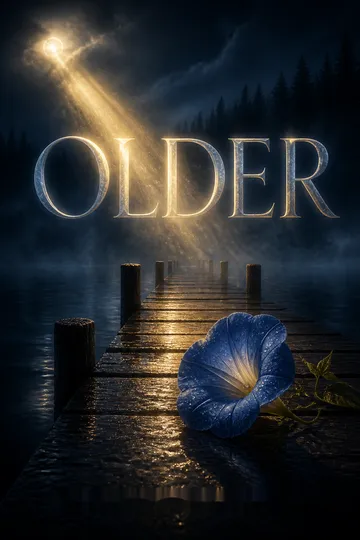




Characters
Evie Cruise
Guarded foster-care survivorEvie grows up without dependable parents and learns to protect herself through observation, hard work, and retreat into stories. As an adult, she supports herself through hotel housekeeping and catering, runs to feel capable, and gives spare food or time to people who need it. Her kindness is not naïveté; it is a deliberate refusal to repeat the cruelty she experienced. Yet her independence also makes receiving help difficult, and old abandonment leaves her vulnerable to believing she is easy to discard. Evie’s imagination is both a coping skill and a form of attention: she creates stories that let injured people remain more than the worst thing that has happened to them.
Leo McKenna
The fiercely loyal first loveLeo is a bright, volatile boy shaped by abuse at home and by his fierce attachment to his younger brother, Seth. He responds to helplessness with anger and protectiveness, often taking responsibility for harms no child could control. Evie’s steady presence gives him a rare experience of being valued for himself rather than for what he can do for others. His loyalty is both his strength and a source of painful self-judgment: he expects himself to save everyone he loves. As he grows older, the challenge for Leo is to accept that love requires honesty and accountability, not only devotion.
Jake Madsen
The polished new suitorJake enters Evie’s adult life as a wealthy, confident executive with an awkward habit of watching before he approaches. He is attentive to small details, generous with practical support, and quick to act when he believes someone he cares about is unsafe. That decisiveness can feel reassuring, but it also risks becoming controlling when he moves faster than Evie’s trust. Beneath his polished appearance lies a history he has difficulty naming, along with a strong desire to be seen as more than his worst choices. His relationship with Evie presses him to replace performance and concealment with candor.
Willow
The fragile childhood friendWillow is a foster-care friend who carries deep wounds and struggles to believe she can be loved. Evie watches over her from childhood into adulthood, offering stories and practical help, while Leo also intervenes when Willow is in danger. Willow’s vulnerability draws out Evie’s instinct to protect, but their friendship also teaches Evie the limits of care when someone cannot accept help. She remains an important part of Evie’s inner life and the stories Evie tells.
Nicole
Evie's chosen-family anchorNicole is Evie’s housekeeping coworker and close friend, married to Mike and mother to Kaylee. Her open, affectionate household gives Evie a glimpse of the dependable family life she has missed. Nicole encourages Evie to take emotional risks, listens when the past becomes difficult to share, and helps her stay connected to practical judgment. Her warmth does not make her sentimental about danger; she wants Evie to trust her instincts while protecting herself.
Mike
The steady family friendMike is Nicole’s husband, a hardworking electrician and affectionate father to Kaylee. He welcomes Evie into family dinners without demanding that she explain her past. His calm presence helps make Nicole’s home a refuge where Evie can experience ordinary domestic affection. Mike also offers a model of reliable care that is quiet and consistent rather than dramatic.
Landon
The candid loyal confidantLandon works with Evie in catering and is one of her closest friends. Funny, theatrical, and emotionally perceptive, he can puncture a humiliating moment without minimizing it. He urges Evie to take a chance on love while remaining firmly on her side when she is hurt. Landon’s own experience with abuse gives him a compassionate understanding of the shame and confusion survivors can carry, making his counsel especially valuable.
Gwen Parker
The status-conscious rivalGwen is the daughter of a powerful company executive and is accustomed to using money, beauty, and social position to command attention. She treats Evie as a threat rather than a person and uses insinuation to unsettle her. Gwen’s polished confidence masks a possessive streak, especially when someone she wants turns his attention elsewhere. Her role exposes the class difference Evie already fears and tests whether Evie can trust her own worth.
Lauren
The controlling adoptive motherLauren is a wealthy, image-conscious woman whose role in Jake’s family history is marked by control and manipulation. She is practiced at presenting herself as reasonable when doing so benefits her, and she reacts badly when she loses influence. Her presence complicates Jake’s attempts to build a stable adult life and helps explain why he is guarded about his past.
Phil
The grieving adoptive fatherPhil is a hospital professional and businessman who adopts Leo with the hope of offering him a permanent family and preparing him to inherit the company. Reserved but capable of genuine care, he wants a closer relationship with his son, though he does not initially understand the forces shaping Leo’s behavior. Phil represents the possibility of care that is imperfect and sincere.
Seth
Leo's younger brotherSeth is Leo’s younger half-brother, a boy with severe autism and significant support needs. He depends on Leo for affection and daily care, and Leo’s fierce loyalty to him shapes many of his choices. Seth’s vulnerability reveals the cruelty of the adults around him and the tenderness Leo struggles to believe he possesses.
Mr. Cooper
The gentle neighborhood elderMr. Cooper is an elderly neighbor from one of Evie’s former foster homes. Evie visits him with homemade cookies, and he responds with affection and respect. His attention helps her see the dignity in her own kindness, even when she is reluctant to claim it. He offers the steady, grandfatherly regard that Evie rarely received as a child.
Maurice
The watchful neighborMaurice lives across the hall from Evie and keeps an eye on her building. Big and intimidating in appearance, he is gentle with Evie and protective of her safety. Their neighborly exchange of baked goods gives their bond an easy, practical warmth.
Sherry
Willow's funeral friendSherry is Willow’s roommate and one of the few people who tries to remain a friend to her. Rough around the edges but kindhearted, she gives Evie a ride after the funeral and acknowledges the effort Evie made to honor Willow.
Plot Devices
Evie's fairy tales
Stories that shelterEvie invents fairy tales for Willow, Leo, and later the children in her life. The stories let her give shape to experiences that a child cannot control or explain, while offering their listeners a different identity from the one imposed by neglect or abuse. They also reveal Evie’s attentiveness: she adapts each tale to the person who needs it. As an adult, her storytelling becomes a path toward writing, linking an early survival skill to a future ambition.
The roof promise
A vow against distanceThe roof outside Evie’s room is where she and Leo share private conversations, recognize their changing feelings, and make a promise before his move to California. It represents a temporary space beyond the foster homes and adult decisions that govern their lives. The vow gives Evie a way to imagine permanence, but its long silence also becomes the wound that shapes her adult caution. When they meet again, the meaning of the promise must be chosen anew rather than simply obeyed.
The lion tattoo
An identity hidden in plain sightThe tattoo on Jake’s back depicts a girl holding a fiery hoop as a lion-man approaches her in a circus ring. Its figures draw on the stories Evie once told Leo and preserve an image of the girl he remembers. Gwen’s reference to the tattoo sends Evie looking for it, and seeing the image helps her connect Jake to the boy she lost. The tattoo transforms their shared childhood symbols into physical evidence of a concealed identity.
The unfinished letters
Proof of interrupted devotionLeo begins writing to Evie soon after arriving in San Diego, intending to send regular updates, but stops after his adoptive mother abuses him. Years later, he gives Evie the preserved pages alongside a new letter. The teenage writing proves that his initial silence did not begin as a rejection, while the adult letter explains how he understands the damage he caused. The letters do not erase his choices, but they let Evie assess them with evidence rather than years of imagined explanations.
The borrowed name
A refuge that becomes a lieAfter moving to California, Leo begins using his middle name and adoptive surname in an effort to separate himself from a past he cannot bear. The new identity becomes habitual and eventually helps him approach Evie without immediately exposing their history. It gives him temporary access to a fresh start, but it also allows him to control what Evie knows and when she knows it. The device therefore carries both psychological meaning and ethical cost.
Sign of Love Series











Download PDF
Download EPUB
.epub digital book format is ideal for reading ebooks on phones, tablets, and e-readers.








