


Plot Summary
Blackleaf’s Locked Road
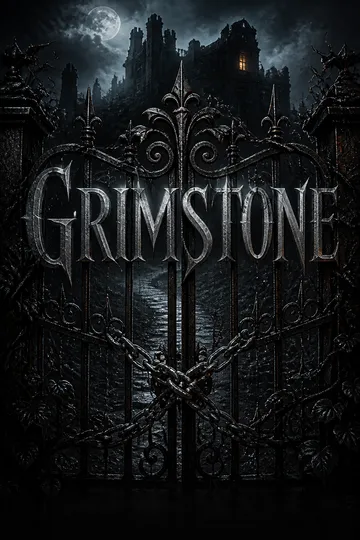
Remi Hayes arrives in Grimstone with her younger brother, Jude, to renovate Blackleaf, the decaying mansion left to her by their great-uncle Ernie. She means to repair it on a tight budget, sell it, and give Jude a chance to attend college. Before she can get their supplies home, her neighbor Dane Covett confronts her at a new iron gate.
He owns the road to Blackleaf and refuses to grant an easement unless Remi works for him. With their savings committed to the house and no alternative route, she swallows her anger and accepts. Dane watches her leave with a bargain that gives him access to her labor, while Remi has no idea what he intends to ask of her.
The road makes Remi’s economic precarity physical: she can inherit a home and still be unable to reach it without another person’s permission. Her practical competence is real, but it cannot erase unequal power. Dane’s bargain is coercive, yet it also gives him a reason to keep seeing the woman whose stubbornness has already caught his attention. Remi’s acceptance reflects her deepest habit, treating her own discomfort as a negotiable cost when Jude’s future is at stake. The novel begins by making care both her strength and the leverage others can use against her.
The Piano Plays Alone
On their first night, Remi hears footsteps and piano notes in the boarded-up house, though every entrance is locked. She checks the doors, then drives into the woods and sees a light burning at Dane’s home. When she confronts him the next morning, he denies entering Blackleaf and challenges her assumption that he had a key.
At the hardware store, Rhonda warns Remi that locals call Dane the Night Doctor and accuse him of killing his wife and infant son. The gossip makes his invitation to work at his house feel newly dangerous. Still, Remi cannot dismiss the mismatch between his reputation and his calm refusal to confess to anything. The unexplained music remains, along with the question of who else can enter Blackleaf.
The piano turns a neglected building into an unreliable witness. Remi hears something that the daylight explanation cannot quite contain, but she is already vulnerable to second-guessing herself, especially when the town supplies a ready-made story about Dane. Rumor becomes a social instrument: it isolates him, yet offers Remi an apparent shortcut to understanding him. Her uncertainty is not simple gullibility. She has learned to distrust her own perceptions after years of carrying responsibility and, more recently, a failing engagement. The house’s locked doors set up the novel’s central puzzle: what happens when the evidence of one’s senses and the stories one tells about it do not agree?
Blood on the Fence
Dane assigns Remi a stretch of broken fencing on his property. After hours of furious work, she cuts her thigh with a hammer, and he carries her inside, cleans the wound, and stitches it himself. The intimate treatment unsettles both of them. Remi has heard that Dane may be a murderer, yet she is drawn to the precision of his hands; Dane finds himself wanting her in a way he has not felt for years.
Their attraction sharpens when he kisses and handles her roughly, then sends her away as if nothing has happened. Back at Blackleaf, Remi hides the encounter from Jude. She also blocks Gideon, her former fiancé, whose insistent messages keep threatening the fresh start she came to Grimstone to make.
Care and control become difficult to separate in Remi and Dane’s first intimate encounter. Dane’s medical skill genuinely protects her, but he uses the moment’s vulnerability to test and provoke her. Remi’s attraction does not cancel the imbalance; instead, the book makes her response part of a larger question about agency, desire, and the stories people tell themselves about what they want. Her decision to conceal the encounter from Jude signals that she is beginning to claim a private self, even as her secrecy risks deepening their dependence on one another. Blocking Gideon is a quieter but important act: Remi tries to end a relationship whose reality she has not yet faced honestly.
A Mind Left Open
Exhausted and plagued by nightmares, Remi asks Dane to hypnotize her. His first session leaves her calm but unable to account for several hours, and she arrives late at a beach bonfire where Emma Turner introduces her to Grimstone’s wary local circle. Dane appears and watches Remi closely, while Emma warns her that Lila, Dane’s late wife, was her friend and that she believes Dane killed her.
After Dane turns down Remi’s invitation to dance, he leaves; Emma draws Remi away from him and explains that Lila once confided she was frightened. Remi cannot reconcile the accusation with her own instinct that Dane is not a killer. Her new relationship with the town begins amid competing versions of the same man.
Hypnosis offers Remi a felt experience of relief, not proof that she has mastered her distress. The missing hours make that relief ethically and emotionally ambiguous, especially because Dane is both the person guiding her and the person she desires. The bonfire then widens the story from a private romance into a community dispute over memory and credibility. Emma’s loyalty to Lila gives her accusation genuine weight, while Remi’s attraction gives her an incentive to discount it. The dance rejection punctures their growing intimacy at the exact moment Remi wants public recognition. Grimstone’s social world therefore mirrors her inner conflict: neither feeling nor testimony can yet settle what is true.
The Bone in the Sink
During another recorded hypnosis session, Remi speaks freely about Gideon’s cheating and the signs she had refused to acknowledge. When Dane later tries to show her the footage, panic drives her from his house before she can watch. That night, the piano crashes through Blackleaf again, dishes shatter, and water floods the kitchen despite the locked doors.
Remi and Jude find a piece of bone lodged in the sink drain. Sheriff Shane dismisses the disturbance and throws the bone away, leaving Remi with no useful investigation. Emma adds that Lila had disappeared for a month before her death and later sent a frightened message about Dane. Remi now faces both a possible intruder and a growing pile of reasons to doubt her own judgment.
The recorded session turns Remi’s private self-deception into something potentially observable, but she cannot yet bear to see herself from outside. That refusal is understandable: the footage threatens her belief that conscious intention is the only reliable measure of her actions. Meanwhile, the bone gives the haunting material stakes, yet the sheriff’s indifference prevents evidence from becoming protection. The town’s institutions are not neutral arbiters; they can choose which disturbances deserve attention. Emma’s account of Lila complicates Remi’s preferred interpretation of Dane without resolving it. The sequence steadily narrows Remi’s refuge: she cannot trust the house, the authorities, or her own reading of events.
The Redwater Sandbar
As electrician Tom Turner works at Blackleaf, Dane grows jealous of his easy access to Remi. He comes into town, fights Tom after accusing him of pursuing her, then joins Remi beneath an umbrella. Together they walk the Grimstone shops and descend to the black-sand beach. Dane leads her across a submerged sandbar that leaves them seemingly walking through the bay.
At sunset, the water turns crimson around them, and they kiss before the rising tide forces them back to shore. Their encounter becomes their first full sexual intimacy, and Dane admits he wants her for himself. Remi, who once expected to sell Blackleaf and leave, realizes that her attachment to Dane is becoming as powerful as her plans for a new life.
The sandbar is a literal route through unstable ground, a fitting counterpoint to Remi’s effort to build a future from uncertain materials. Dane’s willingness to enter town and tolerate scrutiny marks a change in his self-protective routine; Remi’s hand in his gives him a reason to risk daylight, however briefly. Their attraction is framed as mutual intensity rather than a cure: the scene makes them feel closer without answering the questions that make closeness dangerous. The red water gives desire an ominous color, but the tide also enforces limits. They cannot remain in a private, heightened moment forever; ordinary choices and unresolved histories wait on shore.
Lila’s Empty Garden
After a week of silence, Dane interrupts Remi’s dinner with Tom and brings her to the Midnight Manor. Their renewed intimacy leads into Dane’s night garden, where he explains why he refused to dance with her: he had promised Lila he would never dance again. He describes their volatile marriage, Lila’s worsening depression, and the death of their infant son, James, whom he had previously claimed died of meningitis.
Dane admits that he falsified the death record after James drowned in the bathtub, then blamed Lila in his own mind. A month later, Lila drowned in the river. The town’s murder story is false, but Dane’s grief is entangled with guilt and a truth he has concealed. Remi listens, recognizing his shame without excusing his lies.
Dane’s account replaces a simple innocence-or-guilt question with the morally harder reality of fear, concealment, and failed care. He did not kill Lila, but he distorted the record of James’s death and let suspicion poison the last stretch of their marriage. Remi’s compassion matters because it does not require her to pretend that his choices were harmless. Her own history of overlooking evidence makes this disclosure especially charged: she understands how a lie can protect someone briefly while making intimacy impossible. The garden, cultivated in darkness, becomes a space where Dane can expose pain he has kept private. His willingness to tell the truth is a beginning, not a complete absolution.
The Cut Beam
While helping Remi replace windows at Blackleaf, Tom falls through the ballroom ceiling and suffers serious injuries. Remi climbs into the crawlspace afterward and finds the beam appears to have been sawn, not simply broken.
Convinced Dane may have sabotaged the job, she confronts him and discovers that he has kept a key Ernie gave him years earlier. His earlier denials now look like calculated concealment, and Remi accuses him of entering her house and manipulating her. Dane, hurt and angry, tells her to stay away.
Their separation leaves Remi alone with the renovation and the unexplained disturbances. She also keeps quiet about the evidence she found, unsure whether it proves sabotage or merely confirms how little she knows about the people around her.
The cut beam is a turning point because it converts suspicion into a plausible physical mechanism. Remi’s accusation is not merely a romantic misunderstanding: Dane really did hide the key, so her distrust has evidence behind it. Yet the leap from secrecy to sabotage reveals how accumulated fear can make one explanation feel inevitable. Dane’s hurt does not make him right, and Remi’s suspicion does not make her irrational. Their rupture exposes the cost of partial honesty: affection has grown faster than the habits of accountability needed to sustain it. The house remains a construction project, but its damaged structure now echoes the relationship, where concealed weaknesses have become dangerous.
The Bone Masked Men
Before Halloween, Remi learns from coroner’s-office worker Annie that James’s report was altered, confirming Dane’s account that the baby drowned. Gideon arrives in Grimstone looking for Remi, then disappears; Sheriff Shane finds his abandoned truck and treats Remi as a suspect.
At the Reaper’s Revenge festival, masked Mr. Bones figures lead Remi away from the crowd. Sheriff Shane and two deputies attack her in the park. Dane, disguised as a plague doctor, intervenes, beating the men as Remi fights back.
In the struggle, the sheriff is fatally stabbed, though neither Remi nor Dane remembers delivering the blows. Afterward, Dane admits he watched Remi through her window, installed a camera, and directed Gideon toward Blackleaf. Remi demands the truth about James, and Dane finally gives it.
The festival’s costumes make concealment communal: the danger does not arrive from a supernatural outsider but from men protected by local authority and anonymity. Remi’s rescue by Dane is emotionally powerful, yet it does not erase his invasive surveillance or his role in bringing Gideon to her door. The scene refuses to make protection synonymous with virtue. Annie’s evidence has already corrected one of the town’s stories, while the sheriff’s attack exposes the institution that controlled which stories could be heard. The unexplained stabbing leaves responsibility uncertain, preserving the novel’s concern with gaps in memory. Trust can begin only after Dane stops asking Remi to accept his intentions and submits to her questions.
The Brother in the Shed
After the festival, Grimstone’s powerful families hush up the sheriff’s death, while Dane and Remi begin repairing their relationship through painful honesty. Dane shows Remi the hypnosis recording, revealing how openly she expressed desires she could not admit while awake.
At Blackleaf, Jude erupts when Remi secretly submits college applications for him. That night, Remi’s camera records someone moving it before the piano plays. She finds Gideon’s severed finger in the flooded sink, then enters Ernie’s workshop and discovers traps, bloody animal remains, and pages of her designs and writing.
Jude appears and tells her she has mistaken his work for her own. Remi recognizes that his handwriting, behavior, and the supposed hauntings fit together. He admits to drugging their parents during the shipwreck and killing Gideon, then points a gun at her.
The final revelation does not arrive as a single clue but as a revision of Remi’s entire method of knowing. The camera, handwriting, buried remains, and childhood memories force her to see that what felt like haunting may have been organized by someone close enough to exploit her blind spots. The college applications sharpen the emotional stakes: Remi has treated Jude’s future as hers to manage, while Jude treats her devotion as a claim over her. His confession retroactively contaminates memories of tenderness without making those memories unreal. The most painful discovery is relational, not forensic: Remi’s love made her vulnerable to a person she never thought she needed to question.
A Grave Without Lies
Using the camera feed, Dane sees Jude follow Remi and races to the woods. Remi is reopening Gideon’s grave while Jude holds her at gunpoint, insisting she belongs only with him. Dane attacks, knocks the weapon away, and fights Jude until Remi retrieves the gun.
Jude tries to turn Remi against Dane, but she refuses to trust the brother who drugged her and killed their parents. When Jude lunges at Dane with a scalpel, Remi shoots him. Afterward, she is acquitted of killing Gideon and Jude, though Grimstone continues to whisper.
Remi and Dane choose to stay together, and she prepares to sell Blackleaf. They bury Lila’s perfume and a photograph of Remi and Jude, making room for grief without preserving the lies that once held their lives together.
The confrontation reverses the relationship that began at the road gate. Remi is no longer bargaining away her boundaries to protect Jude; she names what he did and decides whom she can trust. Yet the act is not emotionally clean. She still loves her brother, and her grief survives the recognition that he manipulated and harmed her. Dane’s arrival matters, but he does not make the choice for her: Remi retrieves the gun and acts when Jude attacks. The burial scene offers no absolution from the past. Instead, it gives grief a deliberate form, separating remembrance from denial and allowing love to continue without requiring false innocence.
Epilogue
Remi stays in Grimstone with Dane and accepts that the town may always cast her as dangerous. They bury Lila’s perfume and Remi’s photograph of Jude, acknowledging the losses without disguising what happened. Remi keeps Blackleaf long enough to finish its renovation, then plans to move in with Dane.
Their intimacy continues through the trust they have built, while Remi’s care for others becomes less entangled with self-erasure. The final visit to Dane’s clinic turns his doctor’s authority into a consensual game between them. Even in a town that keeps producing strange accidents and ghost stories, Remi can now distinguish uncertainty from a reason to abandon her own judgment.
The ending treats recovery as a practice of truthful attachment rather than a return to uncomplicated safety. Remi does not stop loving Jude or erase the years she spent caring for him; she stops using that love to deny the harm he caused. Dane’s apology to Lila and the burial of the perfume similarly mark accountability without pretending that the dead can grant forgiveness. The clinic scene then reclaims a setting associated with medical power: Remi chooses the encounter and trusts Dane to honor her boundaries. The lingering town gossip matters because social judgment is not magically corrected by private truth. Remi’s change lies in being able to live amid that judgment without surrendering her own perception.
Analysis
Grimstone makes the act of interpretation its central source of danger. Remi is not simply a woman who trusts too easily; she has been trained by grief to preserve the people she loves by finding explanations that allow her to keep caring for them. That strategy once helped her raise Jude and survive financial collapse. In the present, it also makes her vulnerable to anyone who can exploit her devotion. The novel’s repeated insistence on perception, memory, and the mind’s capacity for self-deception gives its mystery a psychological structure: the question is not only who caused each event, but why Remi cannot bear to identify the cause.
Dane and Remi mirror one another without becoming interchangeable. Both are burdened by guilt, but Dane’s secrecy concerns the truth of a past tragedy, while Remi’s evasions concern what she is willing to recognize in the people around her. Their relationship becomes more credible when attraction stops serving as evidence of goodness. Dane must admit to surveillance, concealment, and the falsified report; Remi must distinguish compassion from automatic forgiveness. Their trust grows through specific disclosures and changed behavior, not through the intensity of their sexual bond alone.
The Gothic setting reinforces that ethical problem. Blackleaf’s hidden rooms and Midnight Manor’s cultivated darkness make private histories architectural, while Grimstone’s festivals and gossip turn public life into theater. Masks can conceal predators, but respectable institutions can be masks too. The sheriff’s violence and the town’s coverup show that danger is not confined to a solitary, supposedly monstrous doctor. The book’s most unsettling revelation is familial: the person Remi believes she has spent her life protecting has shaped the very reality she trusted.
The ending does not offer a clean cure for grief or a perfect return to safety. Remi loses Jude and still mourns him; Dane cannot undo Lila’s death or secure her forgiveness. What changes is their willingness to stop using love as a reason to conceal harm. The novel’s moral distinction is not between good people and monsters, but between people who justify their damage and people willing to face it. Truth hurts, yet it gives Remi a chance to make different choices rather than repeat the same protective blindness.
Review Summary
Grimstone received mixed reviews, with some praising its spooky atmosphere and plot twists, while others criticized the writing style, character development, and handling of sensitive topics. Positive reviews highlighted the book's gothic elements and steamy romance. Negative reviews cited issues with consent, mental health representation, and overuse of similes. Many readers found the story entertaining despite its flaws, but others were disappointed by the lack of trigger warnings and problematic content. Overall, the book polarized readers, with ratings ranging from 1 to 5 stars.
People Also Read







Characters
Remi Hayes
The stubborn caretakerRemi is a practical, resourceful young renovator who arrives in Grimstone determined to turn Blackleaf into financial security for herself and her younger brother, Jude. Since their parents died, she has treated responsibility as a promise she must keep, even when it leaves little room for her own needs. She works with tools, solves immediate problems, and often mistakes endurance for control. Her generosity makes her attentive to other people’s potential, but it can also keep her from seeing what their behavior costs her. Remi’s humor and bluntness protect a more anxious interior, especially around failure, grief, and the possibility of being left alone. She wants change, yet must learn that change begins with looking directly at what she would rather explain away.
Dane Covett
The nocturnal doctorDane is a physician who lives in the shadowed Midnight Manor and works at night because sunlight aggravates his condition. His cultivated calm and intimidating presence keep most people at a distance, while the town’s rumors make him seem more dangerous than knowable. He is intensely curious about the mind and drawn to questions of self-control, memory, and desire. Beneath his precise habits lies a man shaped by grief and a punishing sense of responsibility. Dane’s attraction to Remi revives feelings he has tried to suppress, but wanting her does not automatically make him trustworthy. His development depends on becoming candid about the harm he has caused and accepting that intimacy requires evidence, not just intensity.
Jude Hayes
The gifted younger brotherJude is Remi’s younger brother, a brilliant but restless young man whose talent appears in bursts rather than steady effort. He dislikes being managed and resists Remi’s insistence that he attend college, even as he depends on her plans and labor. His humor can be sharp, his habits exacting, and his affection for Remi is woven into a relationship where she has often taken the role of parent as well as sibling. Jude’s intelligence makes him quick to notice others’ weaknesses, but it also allows him to evade uncomfortable questions about his own future. He wants autonomy without always accepting the responsibilities that come with it, creating a persistent tension between his needs and Remi’s protective instincts.
Emma Turner
The fiercely loyal hostEmma owns the diner and becomes one of Remi’s first friends in Grimstone. She is sociable, funny, and capable of making a newcomer feel welcome, but her loyalty to her late friend Lila shapes her suspicion of Dane. Emma is also protective of her cousin Tom, even when his drinking and impulsiveness exhaust her. Her warmth does not make her neutral: she has her own history with the town and her own reasons for believing its darkest rumors.
Tom Turner
The reckless electricianTom is Emma’s cousin and Grimstone’s electrician, a good-natured, flirtatious worker whose drinking and casual approach to safety repeatedly create trouble. He helps Remi restore Blackleaf’s power and offers her an uncomplicated kind of attention, though she does not share his romantic expectations. His usefulness to the renovation makes him part of Remi’s new life, while his rivalry with Dane exposes how quickly attraction can become possessiveness.
Gideon Price
Remi’s former fiancéGideon is Remi’s former fiancé, a successful commercial real-estate professional who seemed dependable and conventional. Their relationship is complicated by his expectations about money, work, and Jude’s place in Remi’s life. Remi’s difficulty leaving him reflects her longing for stability and her habit of accepting explanations that keep a relationship intact. His return to Grimstone brings the unfinished history of their engagement into the present.
Lila Covett
Dane’s vivid first loveLila was Dane’s wife and Emma’s close friend, remembered in Grimstone as beautiful, magnetic, and difficult to contain. Her relationship with Dane was passionate but troubled, and the town’s competing accounts of her life and death shape how Remi first understands him. Lila remains present through memories, a perfume bottle, and Dane’s guilt. She is not merely a romantic rival from the past; her history reveals what secrecy and untreated distress can do to a relationship.
Atlas Covett
Dane’s imposing brotherAtlas is Dane’s broad-shouldered younger brother and owner of the Monarch hotel. He is practical, blunt, and protective of his business, with little patience for trouble spilling onto his property. His intervention in a street confrontation reveals a familial loyalty that contrasts with Dane’s isolation, even as the brothers differ sharply in temperament.
Sheriff Shane
The town’s hostile lawmanSheriff Shane is the dismissive lawman who treats Remi’s concerns as nuisances rather than problems worth investigating. He uses his authority to intimidate her and reflects the local power structure’s contempt for outsiders. His casual handling of evidence makes the town’s official version of events suspect long before Remi understands the full danger.
Ernie
The eccentric benefactorErnie is Remi’s great-uncle, an inventive, unconventional man who left her Blackleaf. He taught her practical skills and gave her and Jude freedom to explore his property as children. Though he died before the story begins, his house, workshop, and old connections continue to shape the siblings’ life in Grimstone.
Rhonda
The hardware-store gossipRhonda runs Grimstone’s hardware store and supplies Remi with both renovation materials and the town’s most dramatic version of Dane’s past. She is outspoken and suspicious, though her claims are not always reliable.
Annie
The coroner’s clerkAnnie works at the coroner’s office and is Rhonda’s sister. Her access to a death file gives Remi a crucial correction to the town’s story, though Annie’s account is filtered through what she remembers and is willing to share.
Corbin
The resentful gas-station clerkCorbin works at the gas station outside town and resents the resort’s influence over Grimstone. His strained history with Helena and his place among the locals make him part of the town’s web of loyalties.
Helena
The wary tarot readerHelena runs the tarot shop and has a tense connection with Corbin. She offers Remi a reading during the Halloween festival, giving visual form to Remi’s fear that she is trapped between separation, love, and an uncertain future.
Selina
The tattoo-shop ownerSelina owns Grimstone’s tattoo parlor and is Helena’s sister. She is observant, self-possessed, and part of the local circle that gradually makes room for Remi.
Amy and Aldous Archer
The resort-working twinsAmy and Aldous are twins from a founding Grimstone family who work at the Onyx resort, she as a maid and he as a concierge. Their different views of that employment reflect the town’s class divisions and the limited choices available to locals.
Remi and Jude’s parents
The lost sailing parentsRemi and Jude’s parents raised their children amid travel, affection, and a belief that life should be enjoyed. Their deaths at sea force Remi into adulthood early and leave Jude’s childhood grief largely in her hands. The family’s cheerful memories exist alongside financial instability and the unanswered questions surrounding the shipwreck.
James Covett
Dane and Lila’s infant sonJames is Dane and Lila’s infant son, whose brief life becomes the center of Dane’s deepest grief. His death shapes the couple’s final months together and the story Dane tells himself about responsibility, blame, and what he failed to protect.
Plot Devices
The Blackleaf easement
A road into entanglementDane controls the only road to Blackleaf, so Remi must bargain with him to reach the house she has inherited. Their arrangement provides the practical reason for repeated contact and gives Dane leverage over a woman whose finances are already stretched. As the relationship changes, the road’s meaning changes too: what begins as an obstacle and a form of coercion becomes a route Remi can choose to travel. The easement links property, class, dependence, and consent without making those forces interchangeable.
The piano and flooded sink
A haunting with human consequencesPiano notes, smashed dishes, flooded rooms, and objects hidden in the sink make Blackleaf appear haunted. The disturbances first intensify Remi’s exhaustion and doubt, then encourage her and the reader to consider intrusion, trauma, and unreliable memory. Their eventual explanation recasts the mansion’s apparent supernatural activity as part of a deliberate pattern. The clues are not interchangeable scares: each brings a physical trace that Remi must decide whether to dismiss or investigate.
Hypnosis and recorded sessions
Desire made visibleDane’s hypnosis sessions promise Remi relief from the anxiety and nightmares she cannot control. The missing time initially makes the sessions frightening, while a recording later lets Remi witness desires she had not acknowledged while fully conscious. The device complicates any easy distinction between an authentic self and an altered state. It also exposes the limits of Dane’s power: a suggestion can reveal or shape experience, but it cannot replace Remi’s judgment or establish that she is safe.
Rumors and altered records
Truth distorted by griefGrimstone’s rumors label Dane a murderer, while the official record of James’s death has been falsified. These distortions make Remi’s investigation difficult because neither community consensus nor documentation can be accepted without question. Emma’s loyalty to Lila, Rhonda’s gossip, Annie’s professional access, and Dane’s own shame each provide different fragments. The plot uses those fragments to distinguish deliberate concealment from honest uncertainty, and to show how a false account can continue harming people even when its original purpose was to hide pain.
Cameras and buried evidence
Watching becomes proofDane and Remi each turn to a hidden camera after strange incidents at Blackleaf. Surveillance begins as a violation and a desperate attempt at protection, then becomes a practical means of tracking movement when Remi is in danger. The camera does not reveal everything at once; its partial images must be interpreted alongside the piano, the sink, the grave, and Remi’s memories. The buried evidence makes that interpretive work literal, forcing her to uncover facts she would rather leave beneath the surface.
Grimstone Series
About the Author
Other books by Sophie Lark







Download PDF
Download EPUB
.epub digital book format is ideal for reading ebooks on phones, tablets, and e-readers.








