

Plot Summary
Anna's Bloodied Exam Day
At sixteen, Mikolaj Wilk expects to celebrate his twin Anna's university exam, but comes home to find her beaten and sexually assaulted by three Braterstwo gangsters. He leaves to buy a gun, and returns to discover that Anna has died by suicide. Certain that his absence made him responsible, Mikolaj shuts away his grief and stalks the attackers.
He kills Abel and Bartek, then follows their leader, Iwan, into a trap. The gang's true boss, Tymon Zajac, hears why Mikolaj sought revenge and shoots Iwan himself. Instead of killing the boy for murdering two of his soldiers, Tymon recruits him, but first cuts off part of Mikolaj's pinky as payment for the dead men.
The opening makes grief the source of Mikolaj's competence and the wound beneath it. He converts guilt into a mission because mourning would leave him helpless before a loss he cannot reverse. Tymon's recruitment gives that rage a structure, but the severed pinky makes the structure unmistakably punitive: belonging is granted through injury. Mikolaj learns that power can protect him only by making him useful to people more powerful. His later pursuit of revenge therefore grows from a double inheritance, Anna's absence and the violence that taught him how to survive it.
The Jungle's Brightest Target
Ten years later, Nessa Griffin, youngest daughter of Chicago's Irish crime family, hopes to see her choreography credited in Lake City Ballet's program. Director Jackson Wright dismisses her work and leaves her name off the credits, turning her excitement into humiliation.
Her friends Serena and Marnie persuade her to join them at Jungle, a new nightclub. There, club owner Mikolaj, now known as Miko, recognizes her as the sheltered Griffin heiress.
He has been searching for a vulnerability in her family's alliance with the Gallos, whose patriarch killed Tymon. Nessa's shyness and unguarded dancing catch his attention. He slips a tracker into her purse, then follows her movements for a week, deciding that taking her could wound both families at once.
Nessa's first injury is not physical. Jackson's denial of credit attacks her confidence in her own perception: she knows what she made, yet an authority figure tells her it does not count. Miko's interest begins in a radically different register. He sees her less as a person than as leverage, and his covert tracking turns observation into control. Their meeting therefore joins two forms of dispossession: Nessa's creative labor is appropriated in public, while her freedom is about to be taken in private. Her apparent innocence is not a lack of inner life, though Miko initially mistakes it for weakness.
A Mansion Without Exits
Miko sabotages Nessa's Jeep by draining its oil, then sends his lieutenant Jonas to pose as a helpful passerby. When Nessa steps out to inspect the smoking engine, Jonas injects her with a sedative and carries her away. Miko has prepared the Baron’s House, a secluded old mansion ringed by walls and security systems.
He locks Nessa in an upstairs room and fastens a tracking monitor around her ankle. When she wakes, she tries to escape through the dark house, only to find Miko waiting in the conservatory. He tells her that his adoptive father, Tymon, was killed by her family and that she will be used to make them suffer. Nessa insists she did not kill him, but Miko dismisses her innocence as irrelevant.
The abduction makes the novel's power imbalance concrete: a broken car, a concealed syringe, a prepared room, and a monitor that translates confinement into data. Miko's language of family debt erases individual responsibility, allowing him to punish Nessa for an act she did not commit. Yet his elaborate preparation also reveals how much of his revenge depends on controlling uncertainty. The mansion is less a home than a system built to prevent escape. Nessa's first instinct is movement, while Miko's strategy is to make every path lead back to him.
The Waltz and the Leash
Nessa spends days refusing meals, hoping that starvation will deny Miko control over her. When he orders her dressed for dinner, she refuses to cooperate with Jonas until the housekeeper, Klara, can help instead. At the table, Miko warns that he will force-feed her if she continues refusing food, so Nessa bargains: she will eat and wash if he lets her explore the house and garden.
He agrees, excluding only his own wing. After the meal, he takes her to the ballroom and waltzes with her. The music briefly absorbs Nessa so completely that she forgets her captivity, but Miko touches her without permission and she pulls away. He sends her back to her room, pleased that her family's distress is worsening.
Nessa's bargain is a small act of agency made inside conditions she did not choose. Eating is not surrender so much as a practical decision to preserve strength and secure room to move. Miko understands that limited kindness can be a more effective instrument of control than constant punishment, and he deliberately grants freedom that remains surveilled. The waltz exposes a separate vulnerability: dance lets Nessa escape psychologically, while Miko interprets her absorption as something he can command. Her refusal when he crosses a boundary restores the difference between shared movement and consent.
A Cemetery's False Daughter
While Nessa remains hidden, Miko sends a ransom demand to the Griffins and Gallos, demanding fourteen million dollars and enclosing a lock of her hair as proof. He has already arranged an alliance with Kolya Kristoff, leader of Chicago's Bratva, who needs money and soldiers.
At Graceland Cemetery, the families bring gold bars to the exchange, but the hostage waiting in a small stone temple is not Nessa. Miko and the Russians have dressed and dyed Serena, Nessa's friend, to resemble her from a distance.
Callum realizes the deception too late. The Russians escape with the ransom, which will fund their alliance, while Miko's men kill Callum's driver, Jack Du Pont. The failed exchange deepens the families' panic and leaves Nessa's location unknown.
The cemetery operation makes deception do several jobs at once. Miko turns the families' love for Nessa into money, uses the money to recruit another criminal power, and exploits their urgency to keep them reacting rather than planning. Serena's substitution reveals how easily a person's identity can be reduced to hair, clothes, and distance when she is treated as a prop. The cost is not merely financial: Jack's death makes the families' fear tangible and personal. Miko's methods are efficient, but each success further binds him to the very violence he believes he can direct without consequence.
The Dance in the Attic
Once Miko lets her leave her room, Nessa explores the mansion and grows closer to Klara, who cooks for her and teaches her Polish in fragments. In the attic, Klara finds an old record player and a box of records; Nessa clears an unused art room and begins composing a dark, fairytale ballet.
She also discovers that the house holds a black-and-silver gown, which she gives to Klara rather than keeping for herself. Miko catches Nessa dancing and is struck by the force of her work. Their first kiss follows, initiated by Miko and returned by Nessa in the moment, leaving her shaken by the desire it awakens. The next morning, Miko has new dancewear delivered, and Nessa resumes creating.
Art gives Nessa a form of action that captivity cannot entirely confiscate. The records and cleared studio convert an imposed enclosure into a place where she can make choices, arrange space, and give shape to fear. Her gift of the gown to Klara shows that this creativity remains relational rather than purely self-protective. Miko's response to the dance unsettles his own idea of Nessa as a passive pawn, but the kiss is still initiated within captivity, where refusal carries risk. The scene's emotional complexity depends on holding attraction and coercion together instead of treating one as proof that the other has disappeared.
Dante's Borrowed Pistol
Miko steals Dante Gallo's registered Beretta, then uses corrupt police officers to stage a killing that makes Dante appear responsible for the death of a city licensing official. Dante is arrested, and Riona Griffin's efforts to secure his release fail.
The apparent attack on the Gallos provokes retaliation: Griffin men seize a Russian drug shipment, and Nero Gallo burns one of Miko's strip clubs. Meanwhile, Nessa's exploration takes her into Miko's forbidden west wing.
She recognizes tiny images in his tattoos as references to children's books, then finds the same books marked with the name Anna. Miko catches her in his bedroom and reacts with rare, uncontrolled fury when she damages a book, exposing how deeply the sister he lost remains present in his private life.
Miko's frame-up shows his preference for engineered consequences over open battle. By making institutions carry out a lie, he turns Dante's reputation and Riona's legal skill into weapons against the family alliance. Nessa's discovery of Anna shifts the conflict from abstract vengeance toward its buried human source. The books and tattoos are not evidence of innocence; they are evidence that Miko has preserved a private attachment beneath the identity he built after loss. His anger at Nessa's intrusion reveals that the past is not sealed away as completely as he claims, and that being seen can feel more threatening to him than being attacked.
Polish Behind Closed Doors
Nessa studies Polish by comparing two editions of a novel, slowly turning the language around her into something she can understand. When she overhears Miko and his men discussing a plan to kill Callum, she confronts Miko and reveals what she has learned. She begs him to spare her brother, invoking his lost bond with Anna.
Miko demands that she persuade him, and Nessa dances for him, using the only language in which she feels fully capable. He is aroused but stops her before she can use sex as the price of Callum's life. Later, Nessa returns to Miko's room by her own choice, and they begin a sexual relationship. Miko then decides to take her to meet Kristoff and bring her out of the mansion.
Language learning turns Nessa from an object of surveillance into a listener who can interpret the plans made around her. Her plea is strategically weak but emotionally exact: she understands that Anna is the point where Miko's revenge began. Dance lets her act without pretending she has equal power, while Miko's refusal to accept sex as payment marks a limit within his own coercive design. Nessa's later return is a meaningful choice, but not a simple erasure of captivity's pressure. The story asks readers to see how desire can become real inside a situation that remains ethically compromised.
A Ballet Behind Glass
At Kristoff's mansion, Miko keeps Nessa beside him as the Russian boss appraises and insults her. Miko blocks Kristoff from touching her, then takes her to Lake City Ballet, where Nessa sees her choreography performed in the show Bliss. She is thrilled to watch the dancers, costumes, and sets she helped create, even though Jackson denied her credit.
The sight convinces Miko that her work deserves recognition. After returning her to the mansion, he finds Jackson at a pub and breaks his arm, forcing him to make amends. Miko then offers Nessa a marriage pact and, the next morning, removes her ankle monitor and arranges to return her home. He wants her to decide freely rather than accept marriage as the only escape.
Miko's protection of Nessa at Kristoff's house reveals how possessiveness has begun to compete with his strategic ambitions. The theater visit matters because it gives her back a piece of the public life that abduction interrupted. Miko sees the beauty of work Jackson concealed, but answers artistic theft with physical violence, repeating the logic of coercion even while claiming to defend her. His decision to release Nessa is a more consequential change: he recognizes that a yes extracted from a captive cannot tell him whether he is loved. The gesture does not undo his kidnapping, but it creates the possibility of a less constrained choice.
The Garden's Knife Vote
Miko sends Nessa toward her family with Marcel, while he stays behind to face the anger of his men. On the road, Nessa notices signs that Jonas may be preparing something and persuades Marcel to turn back. They arrive as Jonas, Andrei, and other Braterstwo soldiers stab Miko in the garden, trying to remove him as their boss.
Klara intervenes with a pistol, and Marcel fights the attackers. The mutineers flee, leaving Miko badly wounded. Nessa refuses to leave him; on the drive to a safehouse, Marcel connects her blood to Miko's in a direct transfusion. After surgery, Miko wakes and warns Nessa that Jonas and Kristoff still intend to attack Callum. Nessa calls her brother, and Miko decides they must free Dante.
The return to the garden reverses the scene's original power arrangement. Miko had controlled Nessa's movement; now she chooses to abandon the safety of the road and return to danger for him. Klara and Marcel also act on loyalties that the Braterstwo hierarchy cannot fully command. The transfusion gives the romance a startling physical image of mutual dependence, but its emotional meaning rests on Nessa's decision, not the blood itself. Miko's priorities have changed enough that he now works to protect the family he once meant to destroy. The threat has not vanished; it has moved inside his own organization.
The Enemy's Kitchen Table
Miko and Nessa reach a safehouse, where he is treated, then enlist Officer Hernandez to get Dante out of custody. Miko shoots Hernandez in the leg to make the escape look less like a willing favor. Nessa calls Callum to warn him that Jonas and Kristoff are coming for him. At her parents' house, her family is overwhelmed to see her alive, and furious to find Miko beside her.
He explains the danger without defending his kidnapping. The Griffins and Gallos debate whether to attack or wait, while Nessa makes clear that Miko has changed sides against Jonas. They decide to let the planned attack draw their enemies out. Marcel proposes a way to use Dante as bait, setting up a confrontation with Jonas at Jungle.
The return home does not restore the old order. Nessa's family welcomes her, but she now speaks as someone whose loyalties and experience no longer fit the protected role they assigned her. Miko enters their house without demanding forgiveness, which allows the threat to become the focus before reconciliation is possible. The strategy meeting also redistributes authority: Callum weighs risk, Dante favors action, Aida reads the political opening, and Marcel contributes a plan. Nessa's presence makes cooperation possible without making the families' history disappear. The alliance is practical first, emotional later.
Jungle's New Boss
Marcel tricks Jonas into expecting Dante as a captive, while Miko, Nero, and Sebastian enter Jungle through a back door. Jonas has already taken over the club and is preparing to torture Dante. Miko steps into the light, forcing his wavering soldiers to choose between their old boss and the usurper.
Though still weak from his wounds, Miko fights Jonas with knives, cuts the tendons in his hand, and pins him down. Dante knocks Franciszek aside, and Sebastian shoots Andrei before he can attack Miko. Miko kills Jonas, then orders his men to accept peace with the Gallos and Griffins. He calls Kristoff to end their agreement, but Kristoff refuses to accept the break and remains a threat.
The club becomes a test of legitimacy rather than simply a battlefield. Jonas claims authority through bloodline and force, while Miko claims it through the capacity to lead without sacrificing everyone to revenge. The knife duel makes that argument bodily: Miko wins while injured, but the decisive shift comes when allies act independently to protect him. Sebastian's shot and Dante's intervention turn former enemies into participants in a new political arrangement. Miko's victory resolves the coup, not the larger conflict. Kristoff's refusal keeps the consequences of Miko's earlier alliance alive beyond the room where Jonas falls.
The Ballet's Bullet
Weeks later, Nessa's original ballet opens at the Harris Theater, with her family and Miko in the audience. Her choreography reshapes Beauty and the Beast into a stage story that carries traces of her captivity and attraction to Miko. During the reception afterward, Miko spots Kristoff moving through the crowd with a gun.
He charges toward Nessa, using a silver serving tray to deflect the shot and covering her with his body. Fergus Griffin shoots Kristoff before he can fire again. Nessa is unharmed, and Miko survives; her father thanks him for acting quickly. The performance has already shown the family the depth of Nessa's art and feelings, and Kristoff's attack makes Miko's devotion impossible to dismiss as a passing fixation.
Nessa's ballet transforms private experience into a form she controls. She can depict the Beast without pretending the danger was harmless, and can choreograph attraction without surrendering authorship of its meaning. The attack interrupts that artistic revelation with the literal violence of the world she and Miko inhabit. Miko's use of the tray is an improvised act of protection, while Fergus's shot shows that Nessa's father remains capable of lethal force beneath his polished public manner. The family begins to accept Miko not because violence has vanished, but because his actions now align with Nessa's safety.
A Ring in Winter
After the shooting, Nessa continues living with her family while Miko visits and earns a cautious place in their lives. She finishes her ballet, rebuilds a relationship with her sister Riona, and watches Klara and Marcel grow closer.
Miko gives up his strip clubs and considers a future no longer organized solely around expansion and revenge. On Christmas Eve, Nessa returns to the mansion, where Miko has lit the entry with candles. He gives her a first edition of a book tied to Anna's memory, then proposes with Nessa's grandmother's ring, which her mother has entrusted to him.
Nessa accepts. In February, surrounded by family and Braterstwo men in the garden, they exchange vows and marry. Nessa chooses the dangerous man and the life they will build together, while Miko promises not to hold her back.
The ending makes commitment meaningful by placing it after separation, danger, and a return to family, rather than treating captivity as sufficient proof of devotion. The ring connects Nessa's choice to the history of her own family, whose marriages also crossed boundaries of class and expectation. Miko's changes are practical as well as romantic: selling the strip clubs signals a limit to the business he is willing to profit from, while his promise to support Nessa's work addresses the freedom he once denied her. Their wedding does not purify the criminal world around them. It establishes a shared life within it, chosen by both.
Analysis
Stolen Heir builds its romance inside a criminal war, so affection never arrives in a space free of power. Miko's original motive is revenge for Anna, but his methods reproduce the same logic of domination that shaped his own life: a person is made useful, punished, or protected according to the needs of the stronger party. Nessa begins with a different kind of vulnerability. Her family shields her from its violence, while the ballet director dismisses her work; both forms of protection and authority leave her uncertain whether her own perceptions deserve trust. The novel's central transformation is not that Nessa becomes hard or Miko becomes harmless. Nessa develops means of agency suited to her strengths: she learns Polish, reads the emotional history hidden in Miko's books and tattoos, negotiates for space, and makes a ballet from experience she can now interpret. Miko's change is measured by decisions that cost him strategic advantage. He releases her before asking for marriage, turns against his own faction to protect her family, and gives up part of his business. Those acts matter because they replace possession with risk: he cannot know whether Nessa will return.
The recurring artistic motifs complicate the novel's violence. Dance is first a private refuge, then a language shared between captor and captive, and finally a public work that Nessa authors and performs. Her ballet neither excuses the abduction nor erases its coercive conditions. Instead, it gives her control over the story's image of the Beast. The ending's wedding offers a chosen bond, but leaves the protagonists inside a world of criminal power. Its resolution is therefore relational rather than moral: the violence is not cured, but Miko and Nessa begin to negotiate a life in which neither must be reduced to a weapon or a protected object.
Review Summary
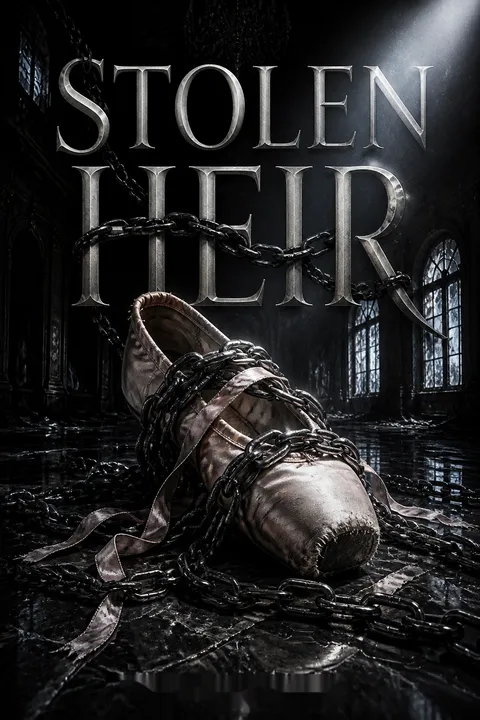
Stolen Heir by Sophie Lark is a mafia romance retelling of Beauty and the Beast. Reviews are mixed, with some praising the character development and engaging plot, while others criticize the stereotypical portrayal of Slavic characters and unrealistic relationship progression. The book features Nessa, a naive ballerina, and Miko, a Polish mafia boss. Many readers enjoyed the dark romance elements, but some found the Stockholm syndrome aspect problematic. Overall, it's a polarizing read with fans appreciating the gothic atmosphere and enemies-to-lovers trope.
People Also Read










Characters
Nessa Griffin
Sheltered dancer turned creatorThe youngest Griffin sibling is a ballet dancer and emerging choreographer, raised within a powerful criminal family but kept outside its daily operations. Nessa is observant, affectionate, and conflict-averse; she often doubts her own judgment when authority figures dismiss her. Her love of dance gives her a language for experiences she cannot yet explain, while her curiosity helps her learn Polish and read the people around her. She longs to belong to her family without being reduced to its protected baby. Her defining tension is between gentleness and passivity: kindness is central to her, but it does not prevent her from making difficult choices or recognizing when she has been underestimated.
Mikolaj Wilk
Grieving Braterstwo bossKnown as Miko in Chicago, Mikolaj is a Polish gangster shaped by the death of his twin sister Anna and by years under the brutal mentor Tymon Zajac. He is disciplined, strategic, and capable of extreme violence, having built his power through patience rather than showmanship. Emotional numbness has become both armor and habit: he interprets vulnerability as a threat and loyalty as something proved through sacrifice. His businesses conceal a mind attentive to art, music, and the small details that most people miss. His central psychological conflict is whether control can substitute for attachment, especially when desire makes him responsible for the freedom of someone he has treated as leverage.
Anna Wilk
Miko's beloved twinMikolaj's twin sister is a gifted student and devoted reader, with ambitions that extend beyond the poverty and danger of their Warsaw neighborhood. Her closeness to Miko gives him a rare experience of being understood without explanation. Anna's love of books and travel becomes part of the private world he preserves after loss, shaping his memories and the symbols he carries on his skin.
Tymon Zajac
The Butcher and mentorThe feared head of the Warsaw Braterstwo is a calculating authority who can recognize talent even in a poor teenager who has killed his men. Tymon treats violence as both punishment and instruction, demanding obedience while building Mikolaj into a leader. His approval gives the young Miko a replacement for the family he has lost, though it comes on terms shaped by fear and debt.
Callum Griffin
Nessa's protective brotherThe eldest Griffin sibling is a political figure and heir to his family's criminal power. Callum is controlled, proud, and accustomed to carrying responsibility for those he loves. His marriage to Aida Gallo has joined two families that once opposed each other, making him both a target and a symbol of their alliance. He protects Nessa fiercely, though the family's habit of sheltering her also leaves her less prepared to claim a role of her own.
Aida Gallo
Gallo heiress and allyCallum's wife and the daughter of the Gallo family, Aida is bold, funny, and quick to challenge anyone who assumes she will submit. Her marriage began as a political arrangement, but she and Callum have built a genuine partnership. She is close to Nessa and offers a model of a woman who can move through mafia politics without surrendering her personality.
Riona Griffin
The Griffin family's lawyerNessa's older sister directs the family's legal strategy with fierce intelligence and little patience for interruption. Riona's bluntness can make her seem dismissive, particularly to a younger sister who wants closeness without knowing how to ask for it. She values competence and control, traits that serve her work but can obscure her affection. Her relationships are built more through practical attention than open sentiment.
Klara Hetman
The housekeeper with a heartKlara manages the Baron’s House, cooking and caring for Nessa while working under the gangsters who control the property. She is capable, warm, and careful about the risks of defying her employers. Her growing friendship with Nessa reveals a desire for connection beyond service, while her practical kindness shows how much moral courage can exist in a person with very little formal power.
Marcel
Miko's steady lieutenantA quiet Braterstwo soldier with a medical-school past, Marcel combines technical skill with a more measured temperament than the men around him. He is trusted with difficult tasks and observes more than he says. His history with Klara gives him a personal stake in the house beyond the gang's hierarchy, and his restraint contrasts with Jonas's appetite for attention and force.
Jonas
Miko's volatile lieutenantMikolaj's adopted brother is physically imposing, impulsive, and quick to turn a grievance into a confrontation. Jonas values the brotherhood they built together, but he is also ambitious and sensitive to questions of rank and inheritance. His charm can feel convivial until it becomes a means of pressure. He represents the danger of loyalty when it depends on being rewarded with authority.
Dante Gallo
The Gallo family's anchorThe eldest Gallo brother is disciplined, watchful, and responsible for keeping his family functioning. Dante's military experience and skill with a rifle make him a formidable strategist, but his most consistent work is often quieter: containing his younger brothers' recklessness and supporting his sister. He rarely needs many words to command attention, and his restraint distinguishes him from the family's more volatile members.
Kolya Kristoff
Chicago's Bratva leaderThe head of the Russian Bratva is confident, calculating, and alert to the advantage hidden inside any alliance. Kristoff treats money and personnel as negotiable resources, while his manner makes clear that partnership does not mean equality. He recognizes Mikolaj's usefulness but tests the boundaries of their cooperation, especially when Nessa is present.
Fergus Griffin
Nessa's mafia fatherThe patriarch of the Griffin family presents himself as a cultured businessman, but beneath the polished manners is a seasoned criminal strategist. Fergus is protective of his children and accustomed to exercising authority quietly. His love for Nessa is genuine, yet his instinct to shield her has contributed to her distance from the machinery of the family business.
Imogen Griffin
Nessa's composed motherImogen is a polished, socially adept presence in the Griffin family, deeply protective of her children. Her composure can make her seem remote, but her fear for Nessa exposes the emotion beneath her careful presentation. She values family continuity and the traditions that hold it together.
Nero Gallo
The Gallo family's wild cardAida's brother is handsome, volatile, and difficult to predict. Nero's appetite for risk makes him a source of trouble as well as a useful force in a fight. He resists restraint, especially when he believes his family is threatened, and often relies on Dante to repair the consequences of his impulsiveness.
Sebastian Gallo
The youngest Gallo brotherThe youngest Gallo brother is a college student and former basketball player whose gentle appearance contrasts with the family's criminal world. Sebastian is less involved in the daily business than Dante or Nero, but family loyalty draws him into moments of real danger. His athletic reflexes are one of his clearest strengths.
Jackson Wright
Lake City's demanding directorThe head choreographer at Lake City Ballet is talented, vain, and accustomed to holding authority over dancers' careers. Jackson values artistic control and tends to dismiss contributions that do not fit his sense of authorship. His treatment of Nessa reflects the precarious position of younger artists whose labor can be used without public recognition.
Serena Breglio
Nessa's dancer friendSerena is a competitive ballet dancer with an athletic build and an affectionate nature outside the studio. She notices when Nessa is hurt and encourages her to defend her work. Her confidence and warmth help draw Nessa into the social world beyond her protected family life.
Marnie
Dancer and set artistMarnie is Nessa's friend and fellow corps dancer, as well as a talented visual artist who contributes to theatrical sets. She is practical and perceptive, willing to affirm what Nessa has created when an authority figure refuses to acknowledge it.
Plot Devices
The ankle monitor
A portable cageMiko fastens a tracking monitor around Nessa's ankle to keep her location visible from his phone. It turns the mansion's security system into a personal restraint, allowing him to give her limited access to rooms and the garden while retaining control over her movement. Nessa's attempt to damage it later becomes a small act of defiance, and its eventual failure helps make her return home possible. The monitor's changing status tracks the central shift from captivity imposed by Miko to a choice he must allow Nessa to make.
Anna's books and tattoos
Grief hidden in plain sightMiko's tattoos conceal small images from beloved books, while his private library contains volumes associated with Anna. Nessa recognizes the images because she shares a reader's attention to detail, then finds Anna's name in one of the books. These clues reveal that the hardened gangster's identity is built over a personal loss rather than born from pure cruelty. They also give Nessa a way to address his motives directly, because she understands that revenge is tied to a relationship he has tried to keep private.
The false ransom hostage
A decoy that buys powerMiko uses Nessa's clothes and a lookalike's dyed hair to make Serena appear to be the hostage at a cemetery exchange. The deception lets Kolya Kristoff collect the ransom while Miko's enemies believe the abduction may have reached its conclusion. It also directs suspicion toward the Russians and gives Miko a way to finance an alliance against the Griffins and Gallos. The trick's human cost is Jack Du Pont's death and Serena's terror, showing that Miko's strategic ingenuity depends on treating other people as pieces to be moved.
Nessa's ballet
A self-made languageNessa's developing ballet begins as a way to practice in the mansion and process fear, loneliness, and attraction that she cannot easily speak aloud. Records from the attic provide its music, while the house's gothic rooms and her relationship with Miko inform its imagery. The work also answers Jackson's earlier denial of her authorship: this time she creates a complete production and performs the leading role. By staging a version of Beauty and the Beast, Nessa controls how her experience is represented rather than allowing Miko, her family, or the ballet director to define it for her.
The borrowed Beretta
A crime made to fitMiko steals Dante's registered pistol and uses corrupt officers to stage the murder of a licensing official, leaving evidence that points toward Dante. The plot device weaponizes legal procedure and official credibility against the Gallo family, creating a crisis that Riona cannot immediately reverse. It demonstrates Miko's preference for indirect attacks that destabilize alliances before he risks an open confrontation. The pistol later stands as a reminder that the war is fought not only with guns, but with evidence, institutions, and the stories people can be made to believe.
FAQ
Synopsis & Basic Details
What is Stolen Heir about?
- Captor-captive mafia romance: Stolen Heir follows Nessa Griffin, the sheltered youngest daughter of the Irish mafia, who is kidnapped by Mikolaj Wilk, a ruthless Polish gangster seeking revenge against her family for the death of his adoptive father.
- Psychological power struggle: Trapped in Mikolaj's decaying mansion, Nessa navigates a dangerous game of psychological manipulation and control, while Mikolaj grapples with his deep-seated need for vengeance and unexpected feelings for his captive.
- Journey of transformation: The narrative explores themes of revenge and redemption, and identity as Nessa finds strength and self-expression through her art, and Mikolaj confronts his past, leading to a complex bond that challenges their initial roles and the violent world they inhabit.
Why should I read Stolen Heir?
- Intense emotional depth: The novel offers a deep dive into the psychological complexities and evolving emotions of both the captor and captive, moving beyond typical romance tropes to explore fear, defiance, unexpected connection, and eventual love.
- Rich symbolic layers: Through elements like Nessa's dance, Mikolaj's tattoos, and the gothic mansion setting, the story weaves in powerful symbolism that enriches the narrative and provides deeper meaning to the characters' journeys.
- Unique mafia world: Set within a multi-ethnic Chicago mafia landscape (Irish, Italian, Polish, Russian), the book provides a detailed and often brutal backdrop that influences character motivations and plot developments, offering a fresh take on the genre.
What is the background of Stolen Heir?
- Chicago mafia landscape: The story is set against the backdrop of warring mafia families in Chicago, specifically the established Irish Griffins and Italian Gallos, and the rising Polish Braterstwo led by Mikolaj, highlighting territorial disputes and power struggles.
- Revenge for a fallen leader: Mikolaj's primary motivation stems from the death of his adoptive father, Tymon Zajac (the Butcher), at the hands of Dante Gallo, creating a direct conflict with the families allied against the Braterstwo.
- Personal tragedy fuels vendetta: Mikolaj's backstory in Warsaw, Poland, marked by poverty, his father's injury, mother's abandonment, and the brutal attack and subsequent suicide of his twin sister, Anna, provides the deep emotional wound that fuels his ruthless transformation and quest for retribution.
What are the most memorable quotes in Stolen Heir?
- "This is a tragedy—and the swan princess only perishes in the final act.": Mikolaj's chilling declaration to Nessa in the conservatory (Chapter 9), highlighting his initial view of her as a pawn in his predetermined narrative of revenge and alluding to her identity as a dancer.
- "I was a corpse when I met you, Nessa. No breath. No heart. No life. I felt nothing... Then I saw you, and you woke me up inside.": Mikolaj's raw confession during his proposal (Chapter 32), revealing the profound impact Nessa had on his emotional state and his journey from numbness to feeling love.
- "I love him... I love him more than I love my own soul.": Nessa's defiant declaration to her parents (Chapter 30), signifying her complete emotional commitment to Mikolaj despite his actions and her family's disapproval, marking a pivotal shift in her loyalty.
What writing style, narrative choices, and literary techniques does Sophie Lark use?
- Alternating first-person POV: The narrative shifts between Nessa and Mikolaj's perspectives, offering intimate access to their thoughts, fears, and evolving feelings, which is crucial for building the complex captor-captive dynamic and exploring their internal conflicts.
- Sensory and visceral language: Lark employs vivid descriptions, particularly focusing on sensory details (smells, tastes, physical sensations) and visceral reactions (fear, arousal, pain), immersing the reader in the characters' intense emotional and physical experiences.
- Symbolism and literary allusions: The author integrates recurring symbols (dance, tattoos, the mansion) and allusions to classic literature and fairy tales (Beauty and the Beast, Alice in Wonderland, The Little Prince, Anna Karenina) to add layers of meaning and explore character depth and thematic resonance.
Hidden Details & Subtle Connections
What are some minor details that add significant meaning?
- Mikolaj's missing pinky: The detail of Mikolaj missing half his left pinky finger, mirrored by Marcel, is a subtle visual cue (Chapter 12) hinting at the brutal initiation or punishment rituals within the Braterstwo, connecting Mikolaj's personal history of suffering to the violence he inflicts and endures in the mafia world.
- The scent of katsura leaves: Nessa's ability to identify the smell of katsura leaves on Mikolaj (Chapter 17) after he's been in the garden highlights her heightened sensory awareness developed during captivity and her growing, almost instinctual, connection to him, noticing details others would miss.
- Anna's books and postcards: The description of Anna's cherished books (The Little Prince, Anna Karenina, etc.) and postcards of places she dreamed of visiting (Chapter 1) provides poignant insight into the sister Mikolaj lost, revealing her intellectual curiosity and dreams, which are later subtly echoed in Nessa's own love for reading and desire for experience.
What are some subtle foreshadowing and callbacks?
- Jonas's lecherous gaze: Early descriptions of Jonas's "lecherous" grin and how he eyes Petra (Chapter 3) and later Nessa (Chapter 7) subtly foreshadow his predatory nature and eventual attempt to assert dominance over Nessa, which Mikolaj fiercely protects her from (Chapter 18).
- The cemetery setting: The choice of Graceland Cemetery for the ransom exchange (Chapter 13) is a stark piece of foreshadowing, not only emphasizing the life-or-death stakes but also subtly hinting at the violence and death that will occur there (Jack Du Pont's murder, Kristoff's eventual death later in the book).
- Nessa's "wild imagination": Nessa dismisses her initial paranoia about being followed as just her "wild imagination" (Chapter 4), a callback to her childhood nightmares, but this seemingly throwaway line is ironic foreshadowing, as her fears are entirely justified and she is being stalked by Mikolaj.
What are some unexpected character connections?
- Klara and Marcel's quiet romance: The subtle interactions between Klara, the housekeeper, and Marcel, one of Mikolaj's men, reveal a hidden romance developing within the mansion (Chapter 22), providing a parallel narrative of connection and loyalty amidst the darkness, culminating in Marcel protecting Klara and their open affection after Mikolaj's stabbing (Chapter 26).
- Riona and Dante's unexpected bond: The development of a friendship between Nessa's intense sister, Riona, and Aida's stoic brother, Dante Gallo, is surprising given their families' history (Chapter 30). Their connection, forged during Riona's efforts to free Dante from jail, shows how personal relationships can transcend long-standing mafia feuds.
- Sebastian Gallo's hidden skill: Sebastian Gallo, often portrayed as the quiet college student, unexpectedly reveals himself to be a skilled marksman (Chapter 29) by shooting Andrei during the confrontation at Jungle, demonstrating that even seemingly peripheral characters possess hidden depths and capabilities crucial to the plot.
Who are the most significant supporting characters?
- Klara Hetman: More than just a housekeeper, Klara becomes Nessa's confidante and protector within the mansion (Chapter 10, 18, 22). Her kindness provides Nessa with crucial emotional support, and her loyalty to Mikolaj, while tested, ultimately plays a role in his survival and Nessa's return.
- Jonas: Mikolaj's adoptive brother and lieutenant, Jonas serves as a key antagonist within the Braterstwo (Chapter 3, 18, 19). His ambition, cruelty, and eventual betrayal of Mikolaj are central to the plot's climax, highlighting the precarious nature of loyalty in their world.
- Marcel: Another of Mikolaj's men, Marcel develops a significant connection with Klara and demonstrates loyalty to Mikolaj (Chapter 22, 26). His medical knowledge and willingness to defy Jonas are critical to saving Mikolaj's life after the stabbing, proving his importance beyond a simple soldier.
Psychological, Emotional, & Relational Analysis
What are some unspoken motivations of the characters?
- Mikolaj's need for control: Beyond revenge, Mikolaj's meticulous planning and desire to orchestrate every detail, from Nessa's capture to the ransom exchange, reveal a deep-seated need for control stemming from the powerlessness he felt after his sister's death (Chapter 1, 7, 13).
- Nessa's desire for validation: Nessa's initial disappointment over not being credited for her choreography (Chapter 4) and her feeling of not fully belonging in her family (Chapter 2) hint at an unspoken desire for validation and recognition, which Mikolaj inadvertently provides by seeing and valuing her unique qualities.
- Jonas's resentment of Mikolaj: Jonas's ambition and belief that he should have inherited Tymon's position (Chapter 3, 29) reveal an underlying resentment towards Mikolaj, fueled by perceived slights and a sense of entitlement based on blood relation, which ultimately drives his betrayal.
What psychological complexities do the characters exhibit?
- Mikolaj's emotional numbness and reawakening: Mikolaj describes himself as a "black hole inside" (Chapter 1), having suppressed all emotion after Anna's death. His interactions with Nessa gradually chip away at this numbness, revealing a complex internal struggle as he experiences fear, jealousy, and eventually love, contradicting his self-perception as a monster.
- Nessa's Stockholm Syndrome vs. genuine connection: Nessa's developing feelings for Mikolaj present a psychological complexity, blurring the lines between trauma bonding (Stockholm Syndrome) and a genuine, albeit unconventional, connection forged through shared intensity and vulnerability (Chapter 16, 20, 22). The narrative explores whether her feelings are a survival mechanism or a true emotional response.
- The duality of mafia identity: Characters like Fergus Griffin and Mikolaj himself exhibit psychological duality, presenting a polished, respectable facade to the world while harboring a capacity for extreme violence and ruthlessness beneath the surface (Chapter 6, 31). This constant performance creates internal tension and impacts their relationships.
What are the major emotional turning points?
- Anna's suicide: The discovery of Anna's suicide (Chapter 1) is the foundational emotional turning point for Mikolaj, shattering his world and triggering his complete emotional shutdown and single-minded pursuit of revenge.
- The ballroom dance: The unexpected dance between Mikolaj and Nessa in the ballroom (Chapter 10) marks a significant emotional shift, where their physical connection transcends their roles as captor and captive, stirring mutual fascination and disrupting Mikolaj's detached cruelty.
- Nessa's return to the mansion: Nessa's decision to return to Mikolaj after being sent home (Chapter 25) is a powerful emotional turning point, demonstrating her choice to prioritize their connection over her safety and family, solidifying the depth of her feelings and commitment.
How do relationship dynamics evolve?
- Captor-captive to complex bond: The central dynamic between Mikolaj and Nessa evolves dramatically from a purely antagonistic captor-captive relationship (Chapter 7) to one marked by psychological games, unexpected vulnerability, mutual fascination, and eventually, deep emotional connection and love (Chapter 20, 22, 23).
- Subordinate loyalty to betrayal: The relationship between Mikolaj and his men, particularly Jonas, shifts from unquestioning loyalty under Tymon (Chapter 3) to resentment and open betrayal (Chapter 19, 25), highlighting the fragility of power structures and the personal cost of Mikolaj's changing priorities.
- Family animosity to tentative alliance: The long-standing feud between the Griffin, Gallo, and Braterstwo families (Chapter 3) evolves from outright hostility and violence to a tentative, necessity-driven alliance (Chapter 27) forged in response to a common threat (Jonas and Kristoff), demonstrating how shared danger can force unexpected cooperation.
Interpretation & Debate
Which parts of the story remain ambiguous or open-ended?
- The future of the family alliance: While the Griffins, Gallos, and Mikolaj form a temporary alliance against Jonas and Kristoff (Chapter 27), the long-term stability of this partnership remains open-ended. It's debatable whether their shared history of violence and conflicting interests will allow for lasting peace or if new conflicts will arise.
- The full extent of Mikolaj's past actions: While the book details Mikolaj's transformation and capacity for violence (Chapter 1, 9), the full scope of the "unspeakable things" he did while working for Tymon (Chapter 9) is left somewhat ambiguous, allowing readers to interpret the depth of his darkness and the extent of his potential for redemption.
- The impact of Nessa's trauma: The narrative focuses on Nessa's resilience and transformation, but the long-term psychological impact of her kidnapping, isolation, and the intense, traumatic nature of her relationship with Mikolaj is not fully explored by the end, leaving the lasting effects on her mental state open to interpretation.
What are some debatable, controversial scenes or moments in Stolen Heir?
- The nature of Nessa's feelings for Mikolaj: A central debate revolves around whether Nessa's developing feelings for her captor constitute genuine love or are a manifestation of Stockholm Syndrome, a psychological response to trauma and captivity (Chapter 16, 20). The intensity and speed of her emotional shift can be interpreted differently by readers.
- Mikolaj's justification for his actions: Mikolaj's revenge quest, while rooted in personal tragedy, involves extreme violence and the kidnapping of an innocent person (Chapter 1, 7). Whether his past suffering justifies his brutal actions and methods is highly debatable and challenges traditional moral boundaries.
- The portrayal of the mafia world: The depiction of mafia life, including violence, kidnapping, and morally ambiguous characters, can be controversial. The romanticization of a relationship born from captivity within this brutal world is a key point of debate for readers.
Stolen Heir Ending Explained: How It Ends & What It Means
- Mikolaj chooses love over revenge: The climax sees Mikolaj choosing to protect Nessa and her family from Jonas and Kristoff, even risking his own life and betraying his former brothers (Chapter 25, 29). This signifies a profound shift, where his love for Nessa overrides his decade-long quest for vengeance and loyalty to the Braterstwo.
- A new alliance is forged: Mikolaj, with Nessa's help, forms a tentative alliance with the Griffin and Gallo families (Chapter 27), uniting against the remaining hostile elements of the Braterstwo and the Bratva. This ends the immediate conflict between the main families, establishing a fragile peace based on mutual respect and shared enemies.
- Nessa and Mikolaj build a future: The story concludes with Nessa choosing to marry Mikolaj, despite his past and her family's initial reservations (Chapter 32, 34). Their union symbolizes redemption, the possibility of finding light in darkness, and the creation of a new kind of family built on unconventional foundations, suggesting that love and connection can transform even the most hardened individuals.
Brutal Birthright Series

About the Author
Other books by Sophie Lark







Download PDF
Download EPUB
.epub digital book format is ideal for reading ebooks on phones, tablets, and e-readers.








