

Key Takeaways
A near-fatal illness made Villoldo combine clinical care, nutrition, and shamanic practice
A crisis changed course. Alberto Villoldo opens with his own severe illness. After years of fieldwork, doctors found multiple infections and parasites and warned that his liver and heart were failing. He faced a choice between a Miami hospital and traveling to the Amazon, where he sought support from shamans and his wife. He also received antiparasitic medication and antibiotics, then worked with medical collaborators on nutrition and brain health.
Recovery became a model. Villoldo describes spiritual practice, dietary change, and medical treatment as parts of one recovery, not competing explanations. His experience inspires the book’s program, but it is a personal case, not proof that the same approach can cure another person’s illness.
The strongest feature of this opening is its refusal to make spiritual commitment an excuse for rejecting clinical care. The author sought medical testing and treatment, while drawing meaning and emotional steadiness from shamanic practice. That combination resembles integrative care at its best: different approaches can address different needs without pretending they have identical evidence. The important limit is causal. A complex recovery involving medication, time, diet, and support cannot establish which element produced which outcome. A compelling survival story can motivate change, but it cannot substitute for controlled evidence or individualized medical judgment.
Treat the body as an ecosystem, not a collection of isolated parts
One connected system. Villoldo calls his approach One Spirit Medicine. He argues that physical health, emotions, relationships, the gut, and spiritual life influence one another, so treating a single symptom may miss the wider pattern. He describes illness as a form of alienation from the body, other people, nature, or Spirit, and healing as a return to Oneness, his term for experiencing life as interconnected rather than fundamentally separate.
A spiritual model. The book also proposes a Luminous Energy Field, an invisible organizing field that, in Villoldo’s account, informs the body much like software guides hardware. These ideas give the program a spiritual framework, but they are not established biological explanations for disease. The practical insight is broader: health can be affected by interacting physical and social conditions.
The systems perspective has a sound practical core. Sleep, food access, stress, social connection, and disease interact, while highly specialized care can sometimes miss those connections. The ecosystem analogy encourages attention to context rather than a single faulty part. The metaphysical account, however, should remain distinct from the clinical one. An invisible field that organizes DNA is not demonstrated by the analogy to software, and describing illness as alienation risks implying that people caused their own suffering through insufficient spiritual connection. A holistic model is most useful when it expands care without replacing evidence or assigning blame.
Start with the gut: Villoldo links its microbes to mood and mental clarity
A two-way conversation. The book describes the enteric nervous system, a network of neurons in the digestive tract that communicates with the brain, including through the vagus nerve. It highlights the gut microbiome, the community of microorganisms living in and on the body, and connects gut health with digestion, immune function, and mental state. Villoldo also notes that much of the body’s serotonin is produced in the gut, then makes a broader case that gut health supports emotional balance and spiritual experience.
Change the terrain. His program emphasizes vegetables and fiber, cutting back on sugar and processed grains, and rebuilding beneficial microbes. It also proposes Saccharomyces boulardii to displace Candida yeast before taking probiotics. The gut-brain connection is real, but the book’s stronger claims about Candida causing cravings or particular emotional symptoms are not settled medical conclusions.
The gut-brain axis is a productive bridge between physiology and behavior. Microbes and the nervous system communicate with the immune system, and digestive illness can affect mood, appetite, and daily functioning. That connection makes dietary quality and appropriate treatment of gut disorders worth considering in mental-health care. Yet communication is not the same as a simple one-way cause. Serotonin made in the gut does not directly cross into the brain, and evidence does not support treating every craving or mood problem as a yeast infection. The useful stance is curious and collaborative, not diagnostic by food trend.
Use fasting and lower protein as proposed levers, not proven cures
Mimic scarcity briefly. Villoldo’s dietary argument centers on intermittent fasting, reducing sugar and refined carbohydrates, and limiting protein. He says an eating gap of about 18 hours can move the body toward ketosis, a state in which it uses fat-derived ketones for fuel. He links this shift to mTOR, a cellular nutrient-sensing pathway associated with growth, and autophagy, the process by which cells break down and recycle some of their components.
A substantial proposal. The book presents these mechanisms as a route to repair, longevity, and spiritual clarity. It also describes a longer program and a water-only vision quest. These are the author’s recommendations, not established treatments for cancer, dementia, or other disease. Fasting and restrictive diets can be risky, particularly with medical conditions or medications, and should not be undertaken without appropriate clinical advice.
The mechanism is appealing because it links nutrient sensing to cellular maintenance: organisms do respond to energy availability, and fasting-related pathways are active areas of research. But biological plausibility does not validate every promised outcome. Effects vary by person, fasting regimen, and health status; a pathway’s response is not evidence that a protocol prevents cancer or extends human life. The book’s portrayal of protein as broadly harmful also goes further than the evidence summarized here can justify. Readers can retain the question of meal timing while resisting the leap from metabolic theory to a universal prescription.
Let plant foods support cellular defenses, and treat extracts as dose-sensitive
Plants as signals. Villoldo emphasizes colorful vegetables, especially cruciferous vegetables such as broccoli, cabbage, and kale, along with berries, nuts, seeds, and spices such as turmeric. He argues that plant compounds can influence gene expression and activate Nrf2, a cellular protein that helps regulate antioxidant and detoxification responses. In his account, these foods support the body’s defenses rather than acting like medicines aimed at one symptom.
Food is not a megadose. The author distinguishes eating whole plants from taking concentrated extracts such as sulforaphane or curcumin. He invokes hormesis, the idea that a small stressor can stimulate a protective response while excessive exposure may be counterproductive, to explain why extracts should be cycled. The general lesson is to favor varied foods over assuming that more supplement means more benefit.
This section offers a durable nutritional principle beneath its more ambitious claims: a diverse, plant-rich diet supplies fiber and many bioactive compounds, and replacing highly processed foods with vegetables is a practical change for many people. The distinction between food and concentrated supplements is also important, since extracts can have different effects, interactions, and doses than ordinary meals. The caution is that activating a cellular pathway does not automatically prevent disease in humans. Mechanistic findings can guide research, but clinical outcomes require direct evidence. Variety and moderation are more defensible than promises of genetic switches.
Interrupt fear-driven habits by changing the brain and the story around them
Fear narrows perception. Villoldo uses the “tyrant king” as a metaphor for survival-oriented thinking driven by the limbic brain, a set of brain structures involved in emotion and threat response. He describes chronic stress as narrowing attention toward danger and reinforcing familiar reactions. Neural networks strengthen through repeated use, while neuroplasticity, the brain’s capacity to change with experience, allows new patterns to form.
Practice a new response. The book distinguishes a passing feeling from a toxic emotion that is repeatedly rehearsed. It connects stress regulation with changing habitual beliefs and personal stories. Its examples include pausing, observing a reaction, and using ritual to mark a change in identity. This framing makes behavior more than a test of willpower: it asks what fear, memory, or daily conditions keep an old response in place.
The emphasis on learned patterns aligns with research on stress, attention, and neuroplasticity: repeated responses can become easier to trigger, and new learning can reshape behavior. The distinction between an initial emotional surge and prolonged rumination is especially useful because it creates a moment in which a person can choose a response. Still, the brain is not neatly divided into a primitive fear center and a superior spiritual center, and changing a narrative alone cannot resolve every trauma or disorder. The metaphor works best as a prompt for self-observation, alongside evidence-based psychological or medical support when needed.
Use myth and ritual to shed roles that keep old identities in control
A map for change. The book organizes inner work through a medicine wheel, a four-direction map of transformation. South represents healing and shedding old identities, West confronting death and change, North stillness, and East vision and renewed purpose. Villoldo uses stories of Parsifal, Psyche, Arjuna, and Siddhartha to make these challenges memorable: each faces a threshold, relinquishes an old way of seeing, and returns with a changed understanding.
Make change concrete. A client named Robin felt trapped in the roles of household maid and mother. In a candle ritual, she symbolically released roles she no longer wanted to carry, while choosing to remain a mother. She then returned to school and asked her family to take on more work at home. The ritual gave a difficult decision a memorable form, but her follow-through made the change real.
Stories and rituals can do something abstract resolutions often cannot: make a transition visible, emotionally salient, and socially legible. Robin’s ceremony mattered not because fire has a proven power to rewrite the brain, but because she named the role she wanted to leave and then changed household expectations. This connects well with narrative psychology and implementation: identity shifts become durable when reinforced by repeated action and a changed environment. The medicine wheel is best understood here as Villoldo’s interpretive map, not a universal clinical sequence. Cultural respect and practical follow-through matter more than treating the map as a biological law.
Make stillness and nature a deliberate counterweight to constant stimulation
Attention needs quiet. In the medicine wheel’s North, the sage learns stillness. Villoldo uses the hummingbird, which appears motionless while beating its wings rapidly, as an image for calm amid activity. He argues that constant digital input and stress keep attention reactive, while quiet observation, breath practice, and time outdoors create room to see a situation more broadly. His breathing exercise focuses attention on the brief pauses between inhaling and exhaling.
A quest for perspective. The book’s vision quest asks participants to spend three days in nature, without food, using solitude, prayer, and journaling to seek insight. Stories of clients describe changes in perspective and habits after such retreats. The central practice can be adapted as time offline in a park or garden. The water-only fast and isolation are not necessary for contemplation and may be unsafe for some people.
This is among the book’s most adaptable ideas. Attention research and contemplative practice both support the value of reducing interruption, while natural settings can offer a meaningful change of pace and sensory focus. A retreat can help someone notice habitual worries without immediately acting on them. The dramatic version, fasting alone in remote terrain, raises avoidable risks, especially for people with medical conditions, medication needs, or limited outdoor experience. The insight does not depend on danger or deprivation. A safe, supported period of silence can preserve the reflective purpose without copying the most hazardous parts of the ritual.
Treat the seven-day reset as an experiment, never a substitute for care
A staged program. Villoldo presents a three-week preparation period, followed by a seven-day diet and supplement program, and then a vision quest. The plan emphasizes plant foods, avoiding sugar and gluten, limiting protein, and fasting overnight. He proposes tracking symptoms and selected blood measures to observe change, and suggests repeating the cycle seasonally. The program is intended as a prevention and lifestyle framework, but it includes restrictive eating and numerous supplements.
Safety belongs first. The book itself advises consulting a health professional and warns against the program in several situations, including pregnancy, nursing, and certain illnesses. It also says to continue prescribed medication. These cautions matter: symptom changes do not establish that a disease has been cured, and fasting, supplements, or stopping particular foods can have individual risks. The practical takeaway is to discuss major changes with a qualified clinician.
The program’s strongest design feature is that it turns vague intentions into a time-limited experiment with observable measures. Tracking symptoms and discussing results with a clinician can help separate remembered impressions from actual change. But self-tracking is not the same as a controlled trial, and a short-term improvement cannot establish long-term protection or explain its cause. The book also makes broad disease-prevention claims while acknowledging that some readers should avoid the program. That tension deserves attention. Its safest contribution is a prompt to review diet, stress, and habits with a clinician, not a replacement protocol for treatment.
Analysis
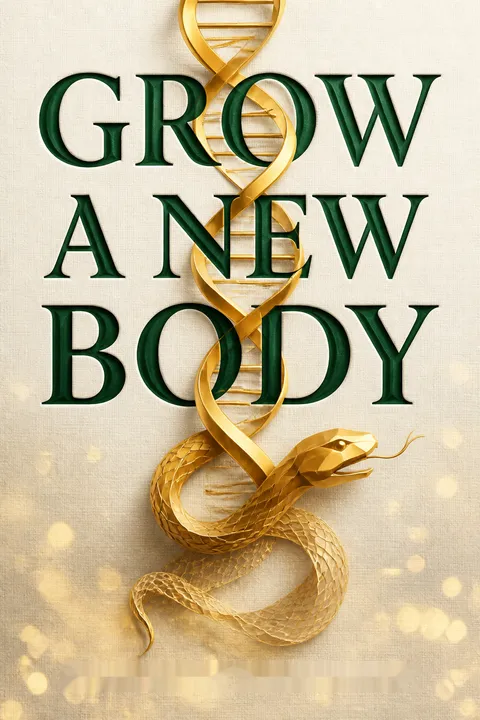
Grow a New Body is part memoir, part spiritual teaching, and part health program. Its narrative begins with Villoldo’s near-fatal illness, then expands into a broad claim: health depends on the coordination of body, brain, gut, emotions, environment, and Spirit. The recurring medicine-wheel journey gives the book a memorable arc, moving from releasing old identities to facing uncertainty, cultivating stillness, and acting with renewed purpose. This structure helps readers connect biological routines to questions of meaning, rather than treating food as a stand-alone fix.
The book is most persuasive when it advocates habits with plausible broad value: eating more vegetables, reducing heavily processed foods, addressing stress, seeking social and medical support, and making time for reflection. Its attention to the gut-brain relationship and cellular nutrient sensing points toward real scientific fields. But it often moves too quickly from a plausible mechanism to a sweeping outcome. A cellular pathway responding to fasting or a plant compound does not demonstrate that a particular regimen prevents cancer, reverses dementia, or produces spiritual states. Nor does one person’s recovery show that a complex program caused it.
The spiritual concepts are best read as interpretive tools, not medical facts. Oneness, the luminous energy field, and the vision quest may help some readers articulate connection, purpose, and change. They cannot diagnose illness or replace established treatment. The same caution applies to the book’s claims about Candida, grains, supplements, and strict fasting. Some advice may be unsuitable or risky, especially for people with chronic conditions, medication needs, or a history of disordered eating.
The adaptation’s central distinction is therefore between useful questions and overconfident answers. Ask how food, stress, sleep, relationships, and meaning affect health. Treat powerful claims as hypotheses, not guarantees. Preserve the book’s invitation to make change embodied and purposeful, while relying on qualified clinicians and stronger evidence for medical decisions.
Review Summary
Grow a New Body receives mixed reviews. Many praise its holistic approach combining nutrition, spirituality, and health. Readers appreciate the inspiration and potential for transformation. However, some criticize the author for incorporating trendy diets and expensive supplements without proper warnings. The book's scientific claims and evolutionary arguments are questioned by some. Despite criticisms, many readers report positive changes in their health after following the program. The book's blend of ancient wisdom and modern health practices resonates with many, though some find it overwhelming or contradictory.
People Also Read






Glossary
One Spirit Medicine
integrated healing approachVilloldo’s name for an approach that combines nutrition, brain and gut health, emotional work, and spiritual practice. It rests on his view that illness is linked to disconnection and that healing involves restoring harmony across the whole person. The term describes his framework, not a standardized medical treatment.
Oneness
felt interconnected awarenessA spiritual state in which a person experiences less separation between self, other people, nature, and the wider cosmos. Villoldo treats this awareness as both a source of meaning and an essential part of healing. It is a spiritual interpretation of experience, not a measurable medical endpoint.
Luminous Energy Field
invisible organizing fieldVilloldo’s term for a subtle field surrounding and extending beyond the physical body. In his model, it carries information that helps organize the body and can be influenced by meditation, nature, and spiritual practice. The book compares it to software coordinating biological hardware, but this field is not established as a scientific mechanism.
mTOR
cellular nutrient sensorA protein pathway involved in sensing nutrients and regulating cell growth, metabolism, and other functions. Villoldo emphasizes the idea that reduced nutrient signals can shift the body toward cellular maintenance. The pathway is a genuine subject of biological research, but its role does not prove that the book’s fasting or protein-restriction plan extends human life or treats disease.
Nrf2
cellular defense regulatorA protein that regulates the expression of genes involved in cellular defense against oxidative stress and certain toxic exposures. Villoldo highlights plant compounds that can influence Nrf2 activity and presents it as central to detoxification and longevity. Activation of this pathway is not, by itself, evidence that a food or supplement prevents a particular illness.
Medicine wheel
four-stage transformation mapThe book’s organizing map for personal transformation, moving through four directions. South concerns healing and releasing old roles, West faces mortality and change, North cultivates stillness, and East develops vision and purpose. Villoldo uses the directions to structure mythic stories and exercises. It is a spiritual teaching map, not a clinical diagnostic system.
vision quest
solitary reflective retreatA practice Villoldo describes as a period of solitude, prayer, and reflection, ideally in nature, to seek insight and purpose. His version includes a multi-day fast, but the reflective practice can be separated from fasting. Fasting or going alone into remote areas may be unsafe for some people and should not be treated as required medical care.
triangle of disempowerment
repeating drama rolesVilloldo’s name for a recurring interpersonal pattern in which people adopt the roles of victim, persecutor, or rescuer. These roles can keep a conflict alive while preventing people from taking responsibility for their own choices. The model is a shorthand for recognizing unproductive dynamics, not a diagnosis of individuals or relationships.
autophagy
cellular recycling processA process by which cells break down and reuse some of their own components. Villoldo connects fasting and reduced nutrient signaling with increased autophagy and presents it as part of cellular repair. Autophagy is an established biological process, but claims about its effects depend on context and do not establish that a specific diet prevents disease.
FAQ
What's Grow a New Body about?
- Transformative Healing Approach: Grow a New Body by Alberto Villoldo integrates spiritual practices and plant-based nutrition to promote health and healing. It combines ancient shamanic wisdom with modern science to help regenerate the body and mind.
- One Spirit Medicine Concept: Villoldo introduces "One Spirit Medicine," emphasizing reconnecting with spirit and nature to heal physical and emotional ailments. This holistic approach addresses root causes rather than just symptoms.
- Personal Journey: The author shares his health crisis and recovery through shamanic practices and dietary changes, forming the foundation for the book's methods.
Why should I read Grow a New Body?
- Holistic Health Insights: The book offers a unique perspective combining spirituality, nutrition, and emotional well-being, providing practical advice for health and longevity.
- Proven Techniques: Villoldo shares techniques tested in retreats and workshops, showing real-life transformations that readers can apply for tangible results.
- Empowerment Through Knowledge: It empowers readers to take control of their health by understanding the mind-body-spirit connection, encouraging a proactive wellness approach.
What are the key takeaways of Grow a New Body?
- Detoxification is Essential: Emphasizes detoxifying the gut and brain to promote healing, explaining how toxins and poor diet lead to chronic diseases.
- Intermittent Fasting Benefits: Advocates for intermittent fasting to trigger autophagy, recycling damaged cells, improving brain function, and promoting longevity.
- Role of Superfoods: Highlights incorporating superfoods and supplements to activate longevity genes and support overall health, emphasizing cruciferous vegetables and healthy fats.
What is the Grow a New Body program?
- Seven-Day Protocol: A structured seven-day program focusing on dietary changes, detoxification, and spiritual practices to reset health.
- Focus on Plant-Based Nutrition: Encourages a diet rich in phytonutrients from plants, including green juices, while avoiding processed foods.
- Spiritual Practices Included: Incorporates shamanic practices like vision quests and soul retrieval to enhance emotional and spiritual healing.
What is the significance of the One Spirit Medicine concept in Grow a New Body?
- Holistic Healing Framework: Serves as the foundation for Villoldo's approach, integrating spiritual, emotional, and physical healing, emphasizing interconnectedness.
- Reconnecting with Spirit: Encourages reconnecting with spirit and nature for healing, vital for achieving balance and well-being.
- Transforming Health Paradigms: Challenges conventional health paradigms, proposing true healing comes from within, promoting self-empowerment and personal responsibility.
How does Grow a New Body address emotional healing?
- Toxic Emotions Impact Health: Explains unhealed emotions manifest as physical ailments, emphasizing addressing emotional well-being in healing.
- Shamanic Techniques for Healing: Introduces shamanic practices to confront and release emotional pain, like soul retrieval for emotional balance.
- Mind-Body Connection: Emphasizes the connection between mind and body, illustrating how emotional states affect physical health.
How does Grow a New Body suggest detoxifying the gut and brain?
- Elimination of Toxins: Outlines methods for detoxifying the gut and brain, including dietary changes and fasting, removing environmental toxins and processed foods.
- Use of Probiotics and Prebiotics: Recommends incorporating probiotics and prebiotics to restore gut health and balance the microbiome.
- Intermittent Fasting: Advocates for intermittent fasting to promote autophagy, recycling damaged cells, and detoxifying effectively.
What is the medicine wheel, and how is it used in Grow a New Body?
- Cultural Significance: A teaching tool from indigenous cultures, representing life's cyclical nature and interconnectedness, serving as a map for personal transformation.
- Four Directions: Each direction corresponds to a journey: South (healing), West (embracing the Divine Feminine), North (achieving stillness), East (becoming a visionary).
- Practical Application: Encourages engaging with the medicine wheel as a framework for healing, cultivating new perspectives and experiences.
What exercises are included in Grow a New Body?
- Finding Empowering Mythology: Involves writing a fairy tale to identify and transform limiting beliefs, crafting a new story of opportunity.
- Micro-Fire Ritual: Writing down and burning old roles and identities to release disempowering narratives and embrace new ones.
- Vision Quest: A three-day retreat in nature focusing on fasting and meditation to deepen connection to Spirit and facilitate transformation.
How does Grow a New Body integrate modern science with ancient wisdom?
- Neuroscience and Shamanism: Combines insights from modern neuroscience with ancient shamanic practices for a holistic health approach.
- Epigenetics and Personal Stories: Discusses how beliefs and narratives influence gene expression, rooted in epigenetics, impacting health.
- Practical Applications: Provides exercises and rituals drawing on scientific principles and shamanic traditions, empowering health transformation.
What are some best quotes from Grow a New Body and what do they mean?
- "You can grow a new body.": Emphasizes regeneration and healing through conscious choices and practices, highlighting the body's innate healing ability.
- "The ailment is alienation—from our emotions, from our bodies, from the earth, and from Spirit.": Asserts disconnection leads to disease, underscoring the importance of reconnecting for true healing.
- "Updating your personal mythology means abandoning the seductive yet limiting beliefs that create for each of us a living hell.": Stresses recognizing and changing disempowering beliefs for personal growth and healing.
How can I implement the Grow a New Body program in my life?
- Start with Dietary Changes: Incorporate recommended dietary practices, like consuming more plant-based foods and reducing sugar and processed carbohydrates.
- Engage in Spiritual Practices: Integrate shamanic practices and mindfulness techniques into daily routines for emotional and spiritual healing.
- Commit to the Seven-Day Plan: Follow the structured seven-day program, focusing on detoxification and regeneration, revisiting practices regularly.
About the Author
Other books by Alberto Villoldo
Download PDF
Download EPUB
.epub digital book format is ideal for reading ebooks on phones, tablets, and e-readers.








