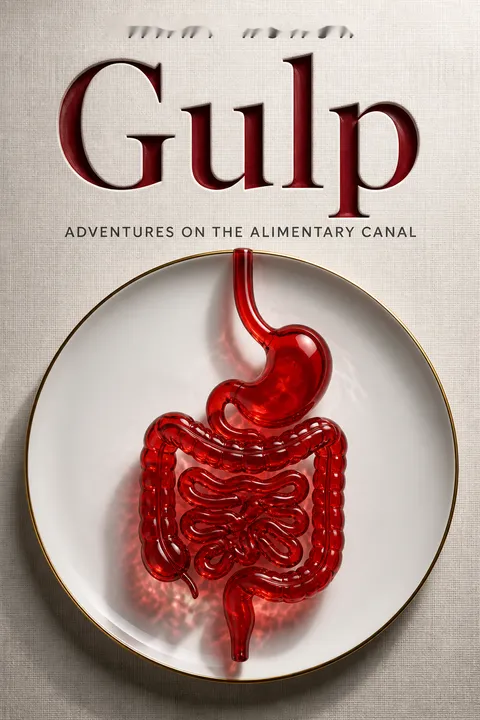


Key Takeaways
Trade disgust for curiosity: your gut is an ecosystem, not a taboo.
The body is terrain. Roach begins with a failed space-food experiment: six men ate meals made from bacteria, an attempt to turn waste into food for long missions. The food was revolting, but the experiment captures the book’s central interest: eating is not just cuisine. It is a continuous biological journey through organs with distinct jobs, from the mouth’s first processing to the colon’s waste management. The alimentary canal is less a tidy tube than a sequence of changing environments, each with its own chemistry and mechanics.
Curiosity changes the view. The book follows that journey through scientists, patients, animals, and strange medical history. Its humor does not deny that bodies can be unpleasant. It asks readers to look past the reflex to turn away and notice how much biology, culture, and ingenuity are hidden there.
What's striking is how disgust acts both as protection and as a blindfold. Avoiding contamination is useful; refusing to discuss digestion can leave ordinary bodily problems shrouded in shame. The book makes anatomy memorable by treating it as a landscape rather than a lecture diagram. That approach also invites a useful distinction: curiosity is not the same as sensationalism. The strongest stories are those that make an intimate bodily fact clearer, not merely more shocking.
Train your nose before trusting your tongue, label, or price.
Flavor is mostly smell. The five basic tastes are sweet, bitter, salty, sour, and umami, but the many distinctions people call flavor come largely from smell. Retronasal olfaction is smelling aromas that travel from the mouth up to the nasal cavity while eating or drinking. Roach reports that smell supplies roughly 80 to 90 percent of the eating experience. Sensory analyst Sue Langstaff can identify a drink’s components because practice has taught her to separate them, much as a trained listener picks out instruments in an orchestra.
Expectation edits perception. In a wine experiment, students described a white wine dyed red using red-wine terms. Blind tastings described in the book also show that high prices and elaborate labels do not guarantee preference. Training sharpens perception, but it does not turn taste into an objective ranking of what is best.
Perception is not a passive reading of the senses. The wine-color experiment shows how quickly the brain uses context to organize ambiguous input, a feature that helps people interpret the world but also makes them vulnerable to packaging and prestige. Practice can improve attention without eliminating subjectivity. A trained evaluator may identify aromas more precisely, yet whether those aromas are desirable still depends on purpose, culture, and personal preference.
Stop assuming appetites are universal; culture and evolution wrote the menu.
Taste has a habitat. Cats cannot taste sweetness, while dogs rely heavily on smell when choosing food. Pet-food makers add palatants, flavor coatings that encourage animals to eat processed food, but owners often mistake their own preferences for their pets’. Cats, for instance, may prefer consistency over the variety humans imagine they want. Appetite is shaped by biology, not just by a shared idea of what tastes good.
Culture trains disgust. Inuit hunters described eating caribou organs and narwhal skin as ordinary, even desirable. In wartime America, researchers tried to persuade families to eat organ meats, but lectures rarely changed dinner habits. Repeated exposure and reaching the person who chose family meals worked better. Foods that seem inherently disgusting can become familiar through upbringing, social approval, and practice.
The chapter’s strongest implication is that food preference is neither purely instinctive nor freely chosen. Biology sets constraints, while family and society teach people which foods signal comfort, status, or contamination. This helps explain why nutrition advice can fail when it ignores cooking traditions and household decision-making. Yet familiarity should not be mistaken for health: a learned preference can be pleasurable without being nutritionally useful, and a culturally unfamiliar food is not automatically superior.
Chew enough to prepare food, not enough to turn dinner into a job.
Chewing has limits. Horace Fletcher promoted extreme chewing, claiming that prolonged mastication could let people live on far less food. His followers sometimes counted hundreds of chews for a single bite. A later study found that people absorbed more fat from peanut butter than from whole peanuts, which are unusually difficult to break down. That result does not prove that every meal needs exhaustive chewing. The digestive system continues the work in the stomach and intestine.
Slow down, but stay human. Chewing breaks food into a swallowable mass, mixes it with saliva, and gives the body time to register a meal. The appeal of crisp foods also has a biological logic: crispness often signals freshness. But hyper-chewing can make meals impractically long, and a textureless diet can be unpleasant. Oral processing is both mechanical work and sensory experience.
This is a useful correction to the familiar belief that more processing must mean more benefit. The peanut comparison concerns a specific food whose intact structure resists digestion, not a general case for counting chews. Slower eating may help people notice a meal and its emerging fullness, but chewing alone cannot override every appetite signal or nutritional imbalance. Texture matters too: food is not merely fuel, and the mouth contributes to satisfaction as well as digestion.
Value saliva as a chemical shield, not merely a lubricant.
Spit does serious work. Adults produce roughly two to three pints of saliva daily. It moistens food, helps form a bolus, and starts breaking down starch through the enzyme amylase. Saliva also responds rapidly to acids, diluting them and helping restore a safer environment for tooth enamel. Its protective proteins and mucins help limit bacterial buildup and maintain a coating on teeth.
Protection extends beyond eating. The book describes saliva’s antimicrobial properties and evidence that components such as histatins help close wounds. People with damaged salivary glands can develop severe dental problems because the mouth loses a critical defense. These functions do not make saliva a universal medicine, but they reveal how much depends on a fluid commonly dismissed as mere spit.
Saliva is a good example of how maintenance systems disappear from view when they work well. It manages lubrication, chemical buffering, and microbial control at once, yet people tend to notice it only when it is excessive or absent. The comparison with wound-healing research should be handled carefully: biological activity in saliva does not mean that licking any wound is safe, since the mouth also contains microbes. The insight is functional complexity, not a folk remedy.
Judge discoveries by both what they reveal and who bears the cost.
A stomach became a laboratory. In the nineteenth century, surgeon William Beaumont studied digestion through a permanent opening left in trapper Alexis St. Martin’s stomach after a gunshot wound. Beaumont observed food and collected gastric fluid, helping establish that digestion involved chemical action. But St. Martin was a working-class man with little power in the arrangement. Beaumont depended on him for years of experiments, and St. Martin sometimes left when he had had enough.
Knowledge has a human history. Their relationship combined scientific ambition, employment, and unequal social status. Beaumont’s work mattered, but St. Martin was not simply an instrument. The episode makes scientific progress more complicated than a tale of a brilliant investigator: the conditions that permit discovery, including consent and control, matter alongside the result.
The case anticipates a central question in research ethics: can agreement be meaningful when one person controls the resources and the other has few alternatives? Applying modern standards to the past requires historical care, but historical context does not erase unequal power. The story also avoids an easy moral lesson. Beaumont’s persistence produced useful observations, while St. Martin’s bodily exposure and limited agency deserve equal attention in any account of that achievement.
Protect the swallow: one mistimed movement can turn lunch dangerous.
Swallowing is choreography. Before swallowing, chewing and saliva gather food into a bolus, a moist mass ready to travel. A coordinated sequence moves the voice box, opens the route to the esophagus, and protects the windpipe. When this timing is impaired, food can enter the airway, causing choking or carrying bacteria into the lungs. The difficulty swallowing is called dysphagia.
Risk depends on age and shape. Young children are especially vulnerable because their swallowing coordination and teeth are still developing. Round foods such as grapes and hotdogs can block an airway tightly, leaving little room for air to pass. Some sticky foods also resist safe swallowing. Texture can be a pleasure for healthy eaters, but for people with swallowing disorders, food design can determine whether a meal is manageable or dangerous.
Swallowing illustrates the body’s reliance on timing, not simply on strong muscles. It also shows why public-health guidance often focuses on food shape and preparation rather than asking children to be more careful. The same texture that signals freshness and makes food satisfying can create hazards for someone with impaired coordination. Accessibility in food design therefore needs to balance sensory appeal with the physical capacities of the person eating.
A stretchy stomach can store a feast, but its warning system still matters.
Capacity is not comfort. The stomach can expand substantially, but stretch sensors, nausea, and vomiting normally discourage dangerous overfilling. In a study described by Roach, competitive eater Tim Janus consumed thirty-six hotdogs while a control subject stopped after seven. Imaging showed Janus’s stomach expanding dramatically, while food left it more slowly than it did the control subject’s stomach. His unusual capacity reflected a mix of physiology and training, not a general strategy for everyone.
Rare failures are dangerous. The book recounts deaths in which a stomach could not empty itself, sometimes after drugs interfered with vomiting. One woman died when a greatly distended stomach pressed against her lungs. The lesson is not that a stomach is easy to rupture, but that suppressing the body’s emergency responses can make extreme eating lethal.
The competitive eater is a striking case of variation in human physiology, but exceptional capacity should not be mistaken for evidence that repeated extremes are safe. The distinction between stomach size and body weight also matters: holding more food is not, by itself, an explanation for obesity. This topic benefits from restraint in interpretation. A dramatic demonstration can reveal what an organ can do, but it cannot establish a healthy target for ordinary eating.
Answer the bowel's call before habit trains the body to resist.
The colon stores and signals. As digested material moves through the colon, water is absorbed and waste is held until the rectum is ready to empty. The defecation reflex is the automatic response to pressure in the rectum: the rectum contracts while the anal sphincter relaxes. People can delay that response, but repeatedly doing so can train the muscles to tighten when they should release, contributing to constipation. The longer stool remains in the colon, the drier and harder it becomes.
Straining is not harmless for everyone. The book describes cardiovascular events associated with forceful bowel movements, especially in vulnerable patients. Elvis Presley had a greatly enlarged colon, and his physician argued that straining contributed to his death, though the cause remains disputed. Ordinary constipation is not a reason to panic, but persistent problems deserve attention rather than shame.
This section makes bodily signals legible without turning them into commands that must always be obeyed instantly. Schedules, access to bathrooms, and anxiety can all shape bowel habits, so advice to respond to the urge needs to account for real constraints. The caution about straining is especially relevant for people with heart disease, not a claim that routine bowel movements are dangerous. Clear distinctions protect readers from both embarrassment and needless alarm.
Read gas as microbial chemistry, not evidence that the body is poisoning itself.
Gas comes from fermentation. Bacteria in the colon break down carbohydrates that the small intestine did not absorb, producing gases including hydrogen. Some people also host methane-producing bacteria. Beans and lactose-containing foods can supply fermentable material, which helps explain why they trouble some people more than others. The odor comes from trace sulfur compounds, not from most of the gas itself.
Bad smells are not proof of toxins. In the early twentieth century, the theory of autointoxication blamed illness on poisons supposedly absorbed from retained stool. The book shows how that belief helped sell laxatives and colon-cleansing devices, despite weak evidence. High concentrations of hydrogen sulfide are genuinely dangerous in places such as manure pits, but ordinary intestinal gas is a different exposure. A molecule’s danger depends on dose and context.
Autointoxication is a cautionary example of a persuasive metaphor outrunning evidence: the colon looked like a sewer, so people assumed its contents must poison the body. Modern biology offers a more discriminating picture. Microbes can produce irritating or hazardous compounds, but they also participate in normal metabolism. This does not mean every digestive symptom is benign. It means that smell, disgust, and the word natural cannot substitute for a specific mechanism and evidence about exposure.
Your gut microbes help make you; sometimes another person's can help heal you.
Microbes are part of digestion. Gut bacteria break down material the body cannot process alone and can produce useful compounds. Their effects depend on where they live and what else shares the gut. A bacterium that causes no symptoms in one location may cause disease elsewhere, or become dangerous when antibiotics remove the organisms that normally keep it in check.
A transplant can reset the balance. Alexander Khoruts treated recurrent Clostridioides difficile infection by transferring screened donor stool into patients. In the book’s account, his first forty patients had a 93 percent success rate. This treatment is not a general wellness shortcut. It is a targeted intervention for a serious illness, and its success depends on careful screening and clinical practice. The gut is not sterile, and health does not require it to be.
The microbiome reframes the body as a community whose members influence one another, a useful ecological model for understanding why antibiotics can have unintended effects. The transplant story also exposes a cultural mismatch: a treatment can be biologically persuasive and socially difficult to accept. That does not justify casual self-treatment or broad claims about commercial probiotics. The strongest conclusion is narrower and more important: microbial relationships can be clinically decisive, and they deserve rigorous study.
Analysis
Gulp is a popular science book organized as a physical journey, but its real subject is how human beings interpret the body. Each stop along the digestive tract makes a different kind of knowledge visible: sensory science explains why flavor is unstable; anthropology shows how appetite is learned; physiology reveals precise reflexes; medical history exposes the compromises through which evidence was produced; and microbiology challenges the idea that an individual body is a sealed, self-sufficient unit. The humor is structural, not decorative. It lowers the reader’s guard around subjects that are usually hidden, making unfamiliar mechanisms easier to remember.
The strongest unifying idea is that disgust is a cultural filter, not a reliable scientific instrument. That distinction matters because disgust can protect against contamination while also discouraging research, honest discussion, and treatment. The book repeatedly replaces a moralized image of the gut as dirty with a functional account of digestion, storage, fermentation, and microbial partnership. It also resists simple wellness narratives. Fletcher’s extreme chewing, colon-cleansing fads, and assumptions about food preferences all illustrate how intuitively appealing explanations can survive despite weak evidence.
The book’s method has limits worth keeping in view. Anecdotes make obscure research vivid, but an arresting case is not the same as a typical case, and a historical episode cannot establish a modern treatment standard. Roach generally signals uncertainty, especially around claims about Elvis, eating capacity, and evolving microbiome science. That caution is essential. The book’s deepest value is not a set of prescriptions but a better habit of thought: ask what a body part does, what evidence supports a claim, whose experience produced the evidence, and whether disgust is obscuring the answer. The result is anatomy made memorable without pretending that curiosity removes the need for rigor.
Review Summary
Gulp is a humorous and informative exploration of the human digestive system. Readers appreciate Roach's witty writing style and ability to make complex scientific concepts accessible. The book covers various aspects of digestion, from smell and taste to flatulence and defecation. While some find certain sections gross or unnecessary, most reviewers enjoy the blend of science and humor. Many praise Roach's curiosity and research, though a few criticize her focus on entertainment over education. Overall, the book is considered engaging and enlightening, with readers learning surprising facts about the alimentary canal.
People Also Read

Glossary
Retronasal olfaction
Smelling from inside the mouthRetronasal olfaction is the perception of aromas that travel from the mouth through the passage behind the nose while a person chews, drinks, or exhales. It combines with the tongue’s basic taste signals to create much of what people experience as flavor. It differs from orthonasal olfaction, which begins when a person sniffs through the nostrils.
Palatants
Pet-food flavor coatingsPalatants are flavor coatings added to processed pet food to make it more appealing to animals. They can alter aroma and taste without changing the basic food underneath. The book describes how manufacturers test these coatings with animal preference trials, while noting that owners’ expectations about what pets enjoy can differ from the animals’ actual responses.
Fletcherism
Extreme, prolonged chewingFletcherism was Horace Fletcher’s dietary program, which urged people to chew food until it was nearly liquid before swallowing. Fletcher claimed this would improve nutrient absorption and allow people to eat much less. The book distinguishes the plausible benefits of chewing from his sweeping claims, which are not supported as a general explanation of nutrition.
Bolus
Moistened mass ready to swallowA bolus is a mass of food particles that has been chewed and mixed with saliva until it can be swallowed. Its formation depends on teeth, tongue, lips, cheeks, and saliva working together. Researchers study boluses to understand chewing, swallowing, and the food properties that make eating safe for people with swallowing difficulties.
Defecation reflex
Automatic urge to empty the rectumThe defecation reflex begins when material stretches the rectum enough to activate pressure sensors. The rectal wall contracts as the anal sphincter relaxes, producing an urge to empty the bowel. A person can consciously delay the response, but repeated suppression may contribute to difficulty relaxing the sphincter and to constipation.
Autointoxication
Discredited fecal-poisoning theoryAutointoxication was the belief that toxins from retained feces entered the body and caused a wide range of illnesses. The theory helped promote laxatives, enemas, and colon-cleansing devices, despite the absence of convincing evidence for its broad claims. The book contrasts this history with the more specific roles of digestion and microbial metabolism.
Gut microflora
Community of gut microbesGut microflora is the book’s term for the community of microorganisms living in the digestive tract. These organisms help break down food and produce compounds that affect the host. Their effects depend on the surrounding microbial community and location. Antibiotics can disrupt that balance, sometimes allowing harmful organisms such as C. difficile to flourish.
Bristol Stool Scale
Chart of stool formsThe Bristol Stool Scale is a clinical chart that classifies stool by shape and consistency, from hard, separate lumps to watery output. It gives patients and clinicians a shared way to describe bowel movements. The book uses it to show that stool texture reflects water absorption and transit through the colon, not personal virtue.
About the Author




Download PDF
Download EPUB
.epub digital book format is ideal for reading ebooks on phones, tablets, and e-readers.








