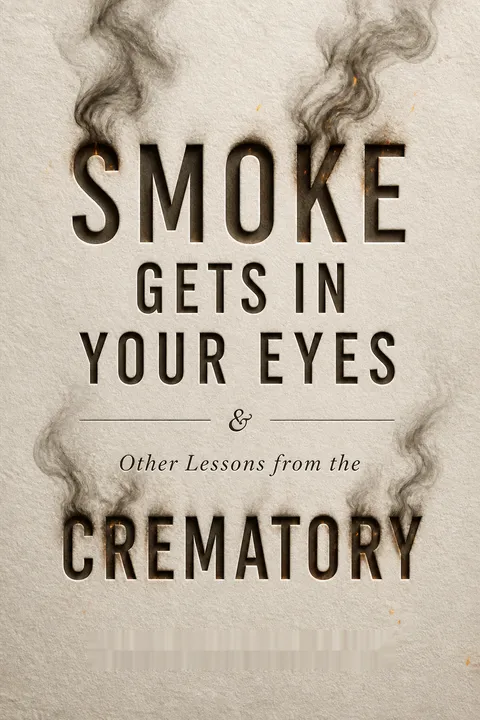


Key Takeaways
Stop hiding death, because secrecy makes its terror harder to understand.
Fear grows in the dark. As a child, Doughty tried to dodge death in cartoons, then witnessed a little girl fall from a shopping mall balcony. The experience made death feel omnipresent. She developed rituals to protect her family, such as repeatedly checking locks and spitting into her shirt. Years later, shaving Byron, her first corpse, she found the body awkward and unsettling, but also unmistakably human. Her work did not make death harmless. It replaced fantasy with concrete knowledge: bodies change, people die, and the dead deserve care.
Reality can be grounding. Doughty’s argument is not that everyone should seek traumatic encounters. It is that treating death as unspeakable can leave people alone with frightening guesses, rather than giving them knowledge and ways to respond.
What's striking is the difference between exposure and sensationalism. Doughty finds that ordinary, respectful contact with the dead can correct the imaginary horror that grows when death is hidden. This resembles a principle in anxiety treatment: carefully approaching a feared situation can make it more familiar and less governed by catastrophic prediction. But exposure is not automatically therapeutic, especially after trauma, and the book’s experience should not be mistaken for a clinical prescription. Its more durable lesson is cultural: people need accurate information and choices, not compulsory encounters or enforced silence.
The hospital moved dying from family life into professional back rooms.
Death became less visible. In the early twentieth century, more than 85 percent of Americans still died at home. As hospitals became the usual place of death, especially from the 1930s onward, dying was increasingly managed by medical professionals and removed from ordinary household life. During her teenage volunteer work in a Honolulu hospital, Doughty helped move corpses to the basement in a covered, false stretcher, sharing elevators with visitors who did not know a body was inside.
Distance became routine. Bodies now travel in unmarked vans, hidden hospital corridors, and sealed containers. These systems can protect privacy and support professional care, but they also make death seem like a specialist problem rather than a common part of family life.
The shift is more than a change of location. It changes who has authority, what families witness, and which knowledge counts as professional. Medicalization can bring comfort, skilled treatment, and infection control, so visibility alone is not a measure of good care. The tension is between necessary expertise and unnecessary exclusion. When institutions hide the body even from people who want to see it, a practical service can quietly become a cultural lesson: death is too dangerous or shameful for ordinary people to face.
Give mourners a role, not just a polished ceremony.
Ritual turns grief into action. During a witness cremation for Mr. Huang, relatives assembled fruit and flowers, knelt, wailed, and followed the coffin into the crematory. His son pressed the button that started the cremation. The action was symbolic, but it gave the family a part in what was happening instead of leaving the entire process to strangers.
Participation need not be elaborate. Doughty contrasts this with funerals that hide the burial until mourners have gone, or present a polished body without explaining how it was prepared. In the book, simple acts such as seeing the body, washing it, or taking part in cremation can help make loss tangible. A ritual is not merely decoration; it gives people something shared to do when words fail.
Rituals work partly because they coordinate people around a difficult transition. A task, a sequence, and a shared witness can hold attention when grief makes conversation difficult. That insight fits both anthropology and the psychology of bereavement: meaning is often made through action, not only through private reflection. Still, no single ritual fits every family. Participation should be offered, not demanded, and a mourners’ visible intensity should not become a test of how much they loved the deceased.
Treat funeral customs as cultural choices, not universal truths.
Dignity depends on belief. The Wari’ people of Brazil once practiced mortuary cannibalism: relatives and community members gathered around the dead, selected people consumed the flesh, and the bones were cremated. For the Wari’, this destruction helped the bereaved community accept the loss. When outsiders brought disease and government pressure, the Wari’ were made to abandon the practice and bury their dead, a method that clashed with their beliefs.
No custom stands outside culture. North American embalming and sealed-casket burial may seem self-evidently proper to their practitioners, but they are no more universal than the Wari’ rites. Understanding another culture does not require adopting its practices. It does require recognizing that ideas of respect, a proper farewell, and what happens to a body are learned rather than fixed.
The Wari’ example challenges the assumption that familiar customs are neutral while unfamiliar ones are barbaric. It also shows how a funeral practice can organize a whole community’s response to loss, not merely dispose of a body. Cultural humility matters here, but so does attention to power: the Wari’ did not freely exchange one ritual for another. Their story is a reminder that judging a custom without asking who chose it, and under what conditions, confuses cultural preference with universal ethics.
Keep families informed about their right to care for the dead.
The body is not automatically the funeral home’s. In California, Doughty explains, a family can choose to care for a dead relative themselves rather than hand every decision to a funeral business. Muslim ghusl, a ritual washing of the dead, offers one example of care treated as a sacred responsibility. Yet families were sometimes told that an unembalmed body would make them sick, or that they had to surrender it immediately. Doughty argues that these claims often rested on superstition, not sound public-health advice.
Information restores choice. Families may want a funeral professional to handle everything, or they may want time to wash, dress, or sit with the body. The essential point is that an informed family should decide, rather than being frightened into a default.
This is an argument about informed consent as much as funeral practice. People cannot make meaningful choices when professionals exaggerate danger or conceal what is legally possible. The public-health point also needs careful handling: specific circumstances can call for precautions, and families should receive case-specific guidance rather than blanket reassurance. The strongest principle is transparency. Explain risks accurately, distinguish law from custom, and let families choose the degree of involvement that fits their beliefs and capacity.
Question who profits when preservation is sold as respect.
Embalming gained commercial power. Before the Civil War, families generally washed and watched over their dead at home. The war created demand to transport bodies over long distances, helping embalmers sell chemical preservation as a practical service. Undertakers then promoted embalming as a mark of technical expertise and public health. Modern embalming replaces blood and bodily fluids with preservative chemicals, yet the procedure is not legally required in the United States.
A polished appearance has a price. Doughty describes eye caps, wires, cosmetics, and glue used to make a face appear peaceful. These techniques can help a family view someone, but the advertised promise of a natural appearance hides how much intervention is involved. She also notes occupational health concerns for embalmers exposed to formaldehyde.
The history makes clear that professional practices can become cultural expectations through marketing, not simply through shared need. A service may have real value in particular situations, such as an extended viewing, while still being sold as a universal obligation. The useful test is not whether embalming is inherently good or bad, but whether a family understands what it does, why it is being recommended, and what alternatives exist. Transparency makes room for genuine care without turning grief into a sales opportunity.
Low-cost cremation can spare expense while removing human contact.
Jessica Mitford exposed real abuses. Her 1963 book attacked inflated funeral prices and helped make direct cremation, a simple cremation without a conventional funeral service, more familiar. Doughty worked at a facility that also offered cremation arranged entirely online, with forms and payment handled without speaking to staff. The process could reduce cost and avoid an unwanted ceremony, but it could also make a death feel like a transaction.
The hard cases reveal the trade-off. One online case involved Ashley, a nine-year-old girl whose parents arranged cremation through the website. Doughty questions a system in which a child’s body can become an anonymous package. Her critique is not that every family needs a funeral; it is that low price should not require the disappearance of human support or truthful information.
Mitford’s reform and Doughty’s unease are compatible. Lower prices protect families from exploitation, while human contact can help people navigate decisions at a vulnerable moment. Digital services may be a welcome choice for some and a painful absence for others. The policy challenge is to offer both affordability and access to a person, rather than treating emotional support as a luxury add-on. A family’s preference for simplicity should be respected, not confused with indifference.
Let bodies return to nature instead of disguising decomposition.
Decay is part of the body’s return. Doughty describes decomposition as a process modern death customs usually conceal through refrigeration, embalming, sealed caskets, and burial vaults. Natural burial offers another choice: a body is placed in a biodegradable shroud and returned to the earth without the usual layers of preservation and containment. The environmentalist Edward Abbey wanted his remains to nourish the desert, an outlook that expresses this return vividly, even though his friends carried out his burial outside normal legal channels.
Acceptance can be practical. Natural burial is available only in some cemeteries, but Doughty sees it as both an ecological alternative and a way to accept that bodies break down. Not everyone will want this method. Its value lies partly in making the choice visible.
The ecological argument links funeral practice to material cycles: bodies require energy and infrastructure to preserve or cremate, while burial choices can return nutrients to the soil. The deeper cultural point is that decomposition is not a failure of dignity; it is biology. Yet natural burial is not equally accessible everywhere, and environmental benefits depend on local land use and cemetery rules. The point is not to replace one compulsory custom with another, but to make less concealed options available.
Plan care and death before a crisis makes choices for you.
A good death is personal preparation. Doughty describes it as having affairs in order, communicating important messages, retaining clarity where possible, limiting avoidable suffering, and accepting that death is inevitable. The book argues that modern medicine can extend life while also extending a period of decline. It cites a 50-50 chance of nursing-home care for people who reach eighty-five, underscoring why families should discuss care preferences before decisions become urgent.
Her grandmother’s death made the issue intimate. Tutu had once said she did not want to live with severe cognitive impairment, but a brain injury left her confused for years. Doughty’s family made funeral decisions under pressure and later regretted not keeping Tutu’s body at home. Advance directives and clear conversations cannot control every outcome, but they can make a person’s wishes easier to honor.
Planning is a form of care for both the person who may become ill and the relatives asked to decide on their behalf. It also brings the book’s cultural argument into medicine: longevity is not a complete account of well-being, and patients deserve honest conversations about prognosis and trade-offs. A written plan cannot predict every future self or settle family disagreements. It should therefore start a conversation, not close one, and remain open to revision as circumstances change.
Let mortality focus life without pretending grief becomes easy.
Knowing death is near can clarify what matters. At Westwind, Doughty saw how love, loneliness, and unfinished relationships looked beside actual bodies. When a dead man resembled her friend Luke, she realized how much she cared for him. Their later rupture devastated her. In another crisis, she found herself contemplating suicide in a redwood forest, then chose to leave, knowing friends and family would be left with the uncertainty of her disappearance.
Acceptance is not a cure for sorrow. The book ends with Doughty sitting in a cemetery and considering mortality without treating it as punishment. Facing death did not guarantee a happy romance or erase despair. It helped her see that life is limited, relationships matter, and the living still have choices about how to meet what cannot be avoided.
The memoir refuses the easy claim that contemplating death automatically makes a person wise or serene. Its strongest insight is more modest: mortality can direct attention toward relationships and unfinished decisions, while grief and mental distress remain real. The redwood episode also deserves care in interpretation. A near-suicidal crisis is not a metaphorical breakthrough to imitate, and survival often depends on support beyond private reflection. The story’s force comes from its specificity, not from turning suffering into a guaranteed path to meaning.
Analysis
Doughty’s central move is to treat the corpse as evidence. It shows that death is biological, but the ways people handle it are historical, commercial, religious, and personal. Her memoir gains force because the argument is tested in daily work: an inexperienced operator shaves a stranger, learns cremation procedures, watches families grieve, and discovers how quickly professional convention can masquerade as necessity. The resulting critique is neither a simple rejection of funeral homes nor a demand that every family perform intimate care. It asks who controls the process, what the family is told, and whether a ritual expresses a belief or merely sells an image.
The most compelling tension is between access and protection. Keeping bodies out of view can shield people from distress and leave trained workers to manage difficult tasks. Yet the same separation can create fear, misinformation, and helplessness. The answer is not universal exposure. It is informed choice, honest explanation, and practical options for participation. This distinction helps prevent the book’s vivid encounters from being misread as a rule that everyone should confront every aspect of death directly.
The memoir also complicates its own argument through vulnerability. Doughty’s work gives her a language for mortality, but does not spare her romantic loss, loneliness, or a suicidal crisis. That honesty matters: accepting death is not the same as enjoying it, and knowledge cannot guarantee emotional stability. The book’s invitation is therefore civic as well as personal. Communities can make death less frightening by restoring trustworthy information, meaningful ritual, family agency, and candid medical planning, while respecting that different people need different degrees of closeness to the dead.
Review Summary
Smoke Gets in Your Eyes receives mostly positive reviews for its honest, humorous look at death and the funeral industry. Readers appreciate Doughty's engaging writing style, fascinating anecdotes, and thought-provoking reflections on mortality. Many find the book informative, entertaining, and surprisingly funny despite the morbid subject matter. Some criticize the book's lack of focus or depth, but most reviewers recommend it for anyone interested in death practices or looking for a unique, eye-opening read. The book sparks important conversations about confronting death in modern society.
People Also Read





Glossary
Medicalization of death
Death managed by medicineThe historical shift that moved dying from homes and community settings into hospitals and medical supervision. In Doughty’s account, the change made death more hygienic and professionally controlled, while also removing many sights, sounds, and responsibilities of dying from ordinary family life.
Witness Cremation
Family watches cremation beginA cremation arrangement in which relatives spend time with the deceased, accompany the body into the crematory, and witness the start of the process. Families may take part in a symbolic action, such as pressing the button that starts the flames. The practice makes cremation visible and gives mourners a role in the final transition.
Direct cremation
Cremation without a funeral serviceA lower-cost arrangement in which a body is cremated without a conventional funeral ceremony or viewing. It can spare families expense and unwanted services. Doughty distinguishes that practical value from a broader cultural pattern in which cremation may be arranged with little human contact, leaving families with fewer opportunities for ritual or explanation.
Ghusl
Ritual washing of the deadA Muslim rite in which the deceased is washed and shrouded, commonly by people of the same gender. Doughty presents the person chosen to perform ghusl as carrying out a sacred responsibility. The practice illustrates how care of the body can be a meaningful religious act rather than a task that must automatically be delegated to funeral professionals.
Ars Moriendi
Guidance for dying wellA medieval Christian tradition of texts that instructed people how to prepare for death, repent, and meet the end of life in accordance with religious belief. Doughty uses the idea of an art of dying to imagine guidance for religious and secular readers alike, while emphasizing that each person’s understanding of a good death is individual.
Webs of significance
Culture shapes what seems meaningfulA phrase from anthropologist Clifford Geertz that Doughty uses to describe the cultural beliefs surrounding death. These beliefs shape what people regard as proper, dignified, or horrifying. Because such assumptions are learned from birth, unfamiliar funeral customs can seem barbaric even when they make profound sense within another community’s worldview.
Natural burial
Return a body to the earthA burial method that avoids conventional embalming and heavy containment. The body is placed in a biodegradable shroud and allowed to decompose in the earth, often in a cemetery designated for this purpose. Doughty presents it as a lower-impact alternative and as an explicit acceptance of bodily decomposition.
Death Midwives
Guides for family death careA term for practitioners who support families caring for someone who has died, often in the home. In the book, death midwives revive forms of family involvement such as washing and attending to the body. They are distinct from licensed funeral professionals, though their work can help families understand available choices and feel supported.
The Order of the Good Death
Community challenging death denialAn organization and public project Doughty created to encourage open discussion of death and challenge assumptions about how bodies and funerals should be handled. It brings together people from funeral service, academia, art, hospice, and other fields to explore more informed, participatory, and varied approaches to death.
Nine cemetery contemplations
Meditation on bodily decayA Buddhist meditation practice focused on successive stages of a corpse’s decomposition, from swelling and discoloration to bones and dust. Doughty describes it as a way for practitioners to contemplate impermanence and loosen attachment to bodily permanence. The practice may involve images or direct observation in a charnel ground.
FAQ
What's "Smoke Gets in Your Eyes & Other Lessons from the Crematory" about?
- Memoir of a mortician: The book is a memoir by Caitlin Doughty, detailing her experiences working in the American funeral industry, particularly in a crematory.
- Exploration of death culture: It explores cultural attitudes towards death and dying, challenging the modern denial of mortality.
- Personal journey: Doughty shares her personal journey from a death-fearing child to a professional mortician advocating for death acceptance.
- Educational insights: The book provides educational insights into the processes and rituals surrounding death, including cremation and embalming.
Why should I read "Smoke Gets in Your Eyes & Other Lessons from the Crematory"?
- Unique perspective: The book offers a unique perspective on death from someone who works directly with it, providing insights that are both personal and professional.
- Challenging taboos: It challenges societal taboos around death, encouraging readers to confront and accept mortality.
- Humor and humanity: Doughty uses humor and humanity to make a difficult subject accessible and engaging.
- Educational value: Readers gain a deeper understanding of the funeral industry and the cultural practices surrounding death.
What are the key takeaways of "Smoke Gets in Your Eyes & Other Lessons from the Crematory"?
- Death acceptance: Embracing death as a natural part of life can lead to a more meaningful existence.
- Cultural critique: The book critiques the modern funeral industry and its practices, advocating for more personal and meaningful death rituals.
- Personal growth: Doughty's journey illustrates how confronting death can lead to personal growth and a deeper understanding of life.
- Ritual importance: The importance of rituals and personal involvement in the death process is emphasized as a way to cope with loss.
What are the best quotes from "Smoke Gets in Your Eyes & Other Lessons from the Crematory" and what do they mean?
- "Looking mortality straight in the eye is no easy feat." This quote highlights the difficulty and importance of confronting the reality of death.
- "Death drives every creative and destructive impulse we have as human beings." It suggests that the awareness of mortality influences all aspects of human behavior and creativity.
- "We are all going to die and we know it." This quote underscores the inevitability of death and the universal nature of this knowledge.
- "The fear of death is why we build cathedrals, have children, declare war, and watch cat videos online at three a.m." It humorously points out how the fear of death motivates a wide range of human activities.
How does Caitlin Doughty describe her first experience with a corpse in "Smoke Gets in Your Eyes & Other Lessons from the Crematory"?
- Awkward and memorable: Doughty describes her first experience shaving a corpse as more awkward than her first kiss or losing her virginity.
- Intimate procedure: She emphasizes the intimacy of the procedure, feeling the need to know the deceased's name, Byron, before beginning.
- Struggle with emotions: Doughty struggles with her emotions, trying to see the body as just "rotting meat" but recognizing it as something more.
- Realization of her role: This experience marks the beginning of her understanding of her role in the funeral industry and the intimate nature of her work.
What is Caitlin Doughty's view on embalming in "Smoke Gets in Your Eyes & Other Lessons from the Crematory"?
- Critical of embalming: Doughty is critical of embalming, viewing it as an unnecessary and unnatural practice.
- Historical context: She provides historical context, explaining how embalming became popular during the Civil War for preserving bodies for transport.
- Lack of belief: Doughty argues that modern embalming lacks the ritual significance it once had and is more about consumerism.
- Personal stance: She expresses that she would not want her own family members embalmed, questioning the practice's necessity and ethics.
How does "Smoke Gets in Your Eyes & Other Lessons from the Crematory" address the concept of death denial?
- Cultural denial: The book discusses how modern culture often denies death, hiding it behind euphemisms and sanitized rituals.
- Impact on society: Doughty argues that this denial leads to a lack of understanding and fear of death, impacting how people live their lives.
- Personal anecdotes: She shares personal anecdotes to illustrate how confronting death directly can lead to acceptance and peace.
- Call for change: The book calls for a cultural shift towards more open and honest discussions about death and dying.
What role do rituals play in "Smoke Gets in Your Eyes & Other Lessons from the Crematory"?
- Importance of rituals: Doughty emphasizes the importance of rituals in helping people cope with death and find closure.
- Critique of modern practices: She critiques modern funeral practices for being impersonal and disconnected from the deceased.
- Advocacy for personal involvement: The book advocates for more personal involvement in death rituals, such as washing and dressing the body.
- Cultural comparisons: Doughty compares different cultural rituals, highlighting those that allow for more meaningful engagement with death.
How does Caitlin Doughty use humor in "Smoke Gets in Your Eyes & Other Lessons from the Crematory"?
- Lightens the subject: Doughty uses humor to lighten the heavy subject of death, making it more approachable for readers.
- Engages the audience: Her humorous anecdotes and observations engage the audience and keep them interested in the narrative.
- Balances seriousness: Humor is used to balance the seriousness of the topic, providing relief while still conveying important messages.
- Personal style: Doughty's humor reflects her personal style and approach to life, showing that death doesn't have to be a somber topic.
What is the significance of the title "Smoke Gets in Your Eyes & Other Lessons from the Crematory"?
- Literal and metaphorical: The title is both literal, referring to the smoke from the cremation process, and metaphorical, representing the unavoidable presence of death.
- Cultural reference: It references the song "Smoke Gets in Your Eyes," suggesting themes of love, loss, and the inevitability of death.
- Lessons learned: The "lessons from the crematory" part of the title indicates the insights and knowledge Doughty gained from her experiences.
- Intriguing and evocative: The title is intriguing and evocative, drawing readers in with its blend of the mundane and the profound.
How does "Smoke Gets in Your Eyes & Other Lessons from the Crematory" challenge traditional funeral practices?
- Critique of consumerism: Doughty challenges the consumerism inherent in traditional funeral practices, such as expensive caskets and embalming.
- Advocacy for change: She advocates for more natural and personal approaches to death, such as green burials and home funerals.
- Questioning norms: The book questions the norms of the funeral industry, encouraging readers to think critically about their own end-of-life choices.
- Personal experiences: Doughty uses her personal experiences to illustrate the limitations and shortcomings of traditional practices.
What impact did working at a crematory have on Caitlin Doughty's personal views on death?
- Transformation: Working at a crematory transformed Doughty's views on death, leading her from fear to acceptance.
- Understanding mortality: She gained a deeper understanding of mortality and the importance of confronting it directly.
- Advocacy for death acceptance: Her experiences fueled her advocacy for death acceptance and reform in the funeral industry.
- Personal growth: The work led to significant personal growth, helping her overcome childhood fears and develop a more meaningful relationship with life and death.
About the Author
Other books by Caitlin Doughty
Download PDF
Download EPUB
.epub digital book format is ideal for reading ebooks on phones, tablets, and e-readers.








