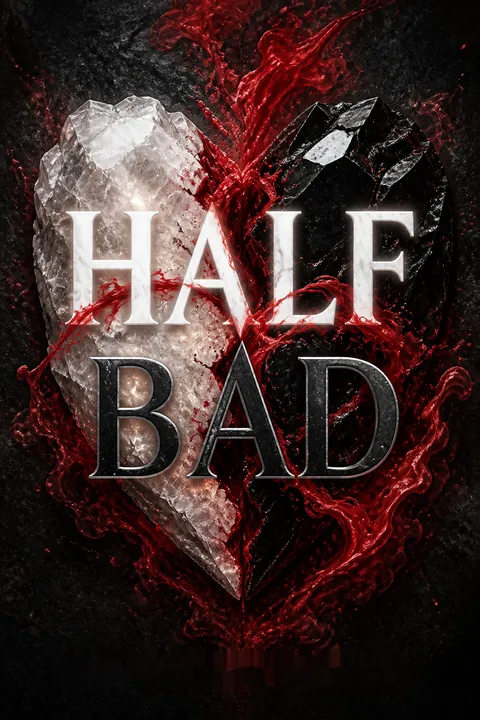


Plot Summary
The Cage Escape
Nathan has spent months chained in a remote Scottish cage under the watch of Celia, a severe woman who makes him exercise and obey. During a run, he crosses the boundary of his permitted circuit, knowing the acid-filled band on his wrist will punish him. He cools the burning wound in a stream and keeps going until Celia catches him at the loch.
Back at her cottage, his hand badly damaged, Nathan attacks her with a heavy iron, then tries to take her knife. Celia stops him and returns him to the cage. The escape fails, but his injuries and defiance open the memories that explain why the Council has imprisoned him.
The opening makes endurance look like Nathan’s only available form of agency. His escape is not a clean victory but a decision to accept bodily harm rather than accept the limits imposed on him. The cage’s routines give him structure while also making resistance seem almost absurd. His private trick of not minding pain fails when his body is seriously injured, exposing the cost of treating survival as emotional numbness. Starting with the failed escape also makes the past feel less like background than evidence: Nathan’s history is the machinery that produced this cage.
The Unwanted Half Code
As a child, Nathan learns that his mother, Cora, was a White Witch and that his absent father is Marcus, a feared Black Witch. His half-sister Jessica uses the Council’s classification of mixed ancestry to make him feel unwanted, even blaming him for Cora’s suicide. His grandmother, Elsie Ashworth, protects him, but the Council repeatedly assesses him and refuses to designate him as either White or Black.
Its rules increasingly isolate him from other witches and threaten anyone who helps him. Nathan finds gentleness in his younger brother Arran and sister Deborah, yet Jessica’s mockery and the Council’s scrutiny teach him that affection can be made dangerous simply by being visible.
The Council’s paperwork turns a child’s ancestry into a verdict before his character can be known. The label Half Code sounds technical, but it governs Nathan’s relationships, schooling, movement, and future access to witchcraft. Jessica’s cruelty gives this public prejudice an intimate voice, while Gran’s care offers a counterexample that cannot undo the institution’s power. Nathan’s silence during assessments is one of his earliest acts of self-definition: refusing to answer prevents the Council from converting every response into evidence. Yet that resistance also deepens his isolation.
Annalise at School
At secondary school, Nathan struggles with reading and with the electronic noise that fills his head, while Annalise O’Brien, a polished White Witch, is the first witch outside his family to treat him warmly. Her brothers Niall and Connor confront Nathan, and when Arran steps in, Nathan knocks both boys down.
Later, Niall and Connor ambush Nathan with a brick; he survives the beating and heals, but retaliates against Connor at school and is expelled. During community service, Nathan keeps meeting Annalise in secret. Her brother Kieran discovers them and carves a B and a W into Nathan’s back, marking both halves of his ancestry. Arran and Gran nurse Nathan through the wounds, and he promises Arran he will not see Annalise again.
Annalise’s kindness matters because it contradicts the social rule Nathan has been taught to expect, not because it removes the danger around him. Their attraction gives him a rare experience of being seen as a person rather than a classification, but secrecy leaves them vulnerable to the O’Briens’ authority. Nathan’s fighting protects him from humiliation while also confirming the image others have already assigned him. Kieran’s paired scars make that contradiction literal: Nathan’s body is turned into a public argument about whether blood, conduct, or other people’s judgments determine who he is.
The Road to Wales
When the Council forbids a Giving ceremony for Half Codes without its permission, Nathan realizes he may never receive the three gifts that complete a witch’s coming of age. He decides he must find Marcus, though he is only eleven and has no idea where to begin. After his expulsion, Gran teaches him about plants, potions, maps, and surviving outdoors; Nathan begins traveling alone into Wales despite a new rule requiring Council approval for every journey.
He studies his body there, discovering that moonlight strengthens his healing and that he becomes ill indoors at night. Gran explains the story of Saba, Marcus’s mother, whose Black Witch powers intensified after dark. Nathan fears the same inheritance is awakening in him.
The journey into Wales converts a denied social future into practical knowledge. Nathan cannot control the Council’s definitions, but he can learn terrain, weather, and the behavior of his own body. His increasing affinity for the night unsettles him because it appears to confirm the ancestry used to condemn him. Gran and Arran offer a moral distinction between biology and choice, but reassurance cannot settle a question Nathan experiences physically. The section’s tension comes from that gap: he can observe what his body does, yet he cannot know what those signs mean for his identity.
Mary Names the Weapons
Before his next assessment, Nathan accepts an invitation from Mary Walker, a former Council worker living in hiding. Mary tells him that Cora loved Marcus and that the Council’s pressure helped drive her to suicide. She also explains that she once helped Marcus’s grandfather escape a torture cell, then reveals Marcus’s warning: two weapons may one day kill him, the Fairborn knife and Nathan himself.
Mary directs Nathan to Mercury, a Black Witch who can arrange his Giving. Nathan returns home and presses Gran for the truth; she confirms that his parents had been involved. Before Arran’s Giving, Nathan slips away, unwilling to let the Council seize him or force him into the role foretold by Marcus’s vision.
Mary’s account dismantles the family story Nathan has been forced to inhabit. Cora’s death is no longer a private consequence of Nathan’s birth but part of a political system that punishes forbidden loyalties. The prophecy then creates a second trap: Nathan is told that his future may make him a weapon against the father he longs to meet. Mary offers a route toward survival, but not certainty. By leaving before Arran’s ceremony, Nathan chooses the possibility of an independent future over the safety of remaining inside a family whose protection the Council can revoke.
Celia’s Two-Year Cage
The morning Nathan leaves Gran’s house, Hunters seize him and take him to a Council assessment. The Council accuses Gran of letting him travel and meet White Witches, then appoints Celia, a former Hunter, as his guardian and teacher. She transports him to a remote cottage, locks him in a cage, and fits him with a lethal choker.
For nearly two years she subjects him to exercise, chores, combat practice, and lessons about Marcus, while Nathan learns to endure captivity without surrendering his attention. The Council visits when he is sixteen and tests his healing and fighting. Celia later tells him Gran has died; a message from Arran will eventually suggest Gran may have taken one of her own potions.
Celia’s captivity is designed as both punishment and preparation: the Council wants Nathan contained, but also trained for an eventual purpose. The daily regimen makes coercion look almost domestic, with meals, lessons, and chores surrounding the cage and choker. Nathan’s attention to detail becomes a survival skill, allowing him to inhabit the present without mistaking endurance for consent. Celia is not simply a monster in his eyes; her grudging concern complicates the role she has accepted. The news of Gran’s death strips away the hope that his old home can remain a refuge.
The Council Brands Him
At sixteen, Nathan is inspected by Clay, leader of the Hunters, Council deputy Soul O’Brien, and a mysterious specialist. They test Nathan’s healing and stamina by making Celia fight him repeatedly, then beat him until his ability falters. Months later, Clay’s Hunters arrive at the cottage and take Nathan to London under a new order requiring Half Codes to be codified.
The Council tattoos B 0.5 into his finger, hand, ankle, and neck, using a painful procedure that reaches bone. Nathan fakes a medical crisis, frees himself with a hidden nail, incapacitates the specialist and a guard, and slips through the Council building into an alley. He is outside at last, but the permanent marks remain.
Codification converts the Council’s abstract classification into something Nathan carries under his skin, even if he escapes its custody. The procedure claims to record identity but functions as a means of control, with its pain and permanence making the institution’s judgment physically unavoidable. Nathan’s escape depends not on overpowering the Council but on careful observation, performance, and timing. Those capacities were sharpened by captivity, turning the skills meant to prepare him for obedience into tools of resistance. Freedom begins with no fanfare: only an alley, an injured body, and a mark he cannot remove.
Cobalt Alley’s Network
Nathan hides in the countryside, then returns to London to follow Mary’s lead toward Mercury. Nikita, a teenage witch who calls herself a helper to Bob, feeds him and teaches him how to enter Cobalt Alley without being drawn back toward the Council building. Bob confirms that he can connect Nathan to the next contact, but sends him onward through a chain of intermediaries.
Nathan steals money to pay Jim for passports, then meets Trev, who examines the tattoos and suspects they could be used to make witch’s bottles that inflict pain or force compliance. When Hunters close in, Nathan and Trev flee; Nathan retrieves Trev’s samples from a Hunter and escapes without killing her. Nikita later helps him reach Arran through a message and a video.
The clandestine network offers Nathan help without the clean certainty of a rescue. Bob, Jim, Trev, and Nikita each provide only a portion of what he needs, requiring him to judge people while guarding against the Council’s reach. The tattoo investigation reframes his marks as potential instruments of coercion, so escape does not mean the danger has passed. His contact with Arran gives him emotional sustenance, but not a route home. Nathan must learn to accept assistance without confusing trust with safety, a difficult balance for someone raised inside surveillance.
Gabriel’s Locked Apartment
Trev’s directions take Nathan to Geneva, where Gabriel keeps him in an apartment while Mercury decides whether he can be trusted. Gabriel’s charm and patience soften Nathan’s suspicion, but Nathan discovers letters hidden in the chimney and attacks him after thinking he has been watched.
Gabriel reveals that he has been living in a body that cannot heal, and explains that Mercury has promised to help him. Once Nathan shares the truth about his captivity and tattoos, Gabriel believes him and takes him through a magical passage to Mercury’s mountain refuge.
Mercury agrees to give Nathan three gifts in exchange for favors, including information about the tattoos. She also demands that he kill Marcus, or serve her for a year, and Nathan refuses to promise his father’s death.
The apartment makes shelter feel uncomfortably like confinement, repeating the shape of Nathan’s captivity without its overt restraints. His attack on Gabriel shows how readily secrecy can turn care into suspected surveillance. Yet their eventual exchange of vulnerabilities creates a more reciprocal form of trust than Nathan has known from the Council. Mercury’s bargain exposes the cost attached to every refuge: help may be genuine and still come with a demand that violates the recipient’s deepest loyalties. Nathan’s refusal preserves his moral agency, but leaves him dependent on someone whose power he cannot match.
Mercury Takes Annalise
At Mercury’s refuge, Nathan learns from Rose that Marcus once asked Mercury to raise him, but she refused. Rose also reveals that Mercury is connected to Marcus’s family and wants revenge for her sister’s death. Meanwhile, Annalise arrives seeking help after her family and the Council interrogate her about Nathan.
Mercury suspects she may be a spy and uses the refuge’s protective spell to put her into a deathlike sleep when she steps off the roof without touching Mercury. Nathan is told that Mercury can wake her if he returns safely. As Clay holds the Fairborn, Mercury orders Gabriel and Rose to steal it, while Nathan remains behind, desperate to protect Annalise and wary of Mercury’s control.
The reunion with Annalise brings intimacy into a refuge governed by suspicion and exchange. Her account makes clear that the Council’s surveillance has constrained her too, but Mercury treats vulnerability as a possible tactic rather than proof of sincerity. The roof’s protective rule turns a small procedural mistake into a life-threatening separation, demonstrating how easily safety can become a weapon in Mercury’s hands. Nathan is forced to weigh affection against strategy: the Fairborn may matter to his father’s fate, while Annalise’s suspended life gives Mercury leverage over his choices.
The Fairborn Heist
Nathan reaches Gabriel and Rose before they enter Clay’s house, warning them of the password spell Annalise described. Rose waits until the Hunters relax, then uses her power to become difficult to notice and slips inside. She emerges with the Fairborn, but Hunters spot the group as they escape.
Nathan kills a young Hunter while trying to stop her from shooting him; another Hunter shoots Nathan with a poisoned bullet. Rose is killed, and Gabriel fires on their pursuers before separating from Nathan to draw the remaining Hunters away. He gives Nathan the Fairborn and tells him to reach Mercury’s passage alone. Nathan is injured, grieving, and uncertain whether Gabriel can survive the diversion.
The theft succeeds in its immediate aim, but its cost exposes the limits of plans built around exceptional abilities. Rose’s invisibility-like Gift can evade attention, not erase the violence waiting once the Hunters notice her. Nathan’s first killing is defensive, yet it breaks the distance he has tried to maintain between himself and the violence attached to his family history. Gabriel’s choice to divert the Hunters converts affection into action without resolving whether either man can return. The Fairborn becomes both a physical prize and a burden of consequences Nathan did not choose.
Jessica in the Alley
Wounded and disoriented, Nathan struggles back toward the apartment, where Hunters are waiting. He sees Jessica disguised as Arran and confronts her with the Fairborn. Her impersonation nearly stops him, but he recognizes the deception and wounds her before escaping.
Nathan hides in a house, steals food, and begins the arduous hike toward Mercury’s mountain refuge, still carrying the poisoned bullet. As the infection worsens, he loses track of time and hallucinates Rose and Annalise.
Eventually he cuts into the swollen wound with Gabriel’s knife, draining the poison, but loses the Fairborn in the process. Exhausted and barely coherent, he presses on toward the valley, with his seventeenth birthday close and Annalise still in Mercury’s hands.
Jessica’s disguise weaponizes Nathan’s deepest attachments, forcing him to distinguish the loved person from the image placed before him. The wound then turns the journey into a contest between intention and bodily failure; his earlier confidence in self-healing cannot remove a poisoned bullet. Hallucinations of Rose and Annalise show grief and fear intruding on perception, but also keep the people he is trying to reach present in his mind. Losing the Fairborn relieves Nathan of one dangerous object while making his return to Mercury more precarious.
Marcus Gives Blood
Nathan reaches Mercury’s cottage during a snowstorm as Hunters attack in the valley, and Marcus stops time to meet him. His father removes the poisoned bullet, then threatens Nathan with a knife before giving him his life as a first gift. He gives Nathan the bullet and his family ring as the second and third gifts, then offers his blood and performs the Giving ceremony.
Nathan becomes a witch, but Marcus does not invite him to leave with him. When Mercury returns, she demands Marcus’s head or heart in exchange for waking Annalise. She says Rose is dead; Nathan admits the Fairborn is with Marcus. As Hunters approach the cottage, Nathan refuses to submit to Mercury’s bargain and runs into the night to find Gabriel.
The long-awaited meeting gives Nathan both the inheritance he needs and a difficult answer to his hope for a father. Marcus recognizes responsibility, yet their brief encounter offers no promise of a shared life, only the formal passage into witchhood. The gifts are deliberately unsettling: life is granted by the same hand that briefly threatens to take it, and the bullet preserves a lesson paid for in pain. Mercury’s ultimatum immediately turns Nathan’s new power into another demand for violence. The ending leaves his identity newly claimed but his loyalties unresolved, with Gabriel still missing and Annalise still captive.
Analysis
Half Bad makes identity a political struggle conducted through bodies, records, and intimate relationships. The Council does not merely dislike Black Witches; it creates categories, assessments, travel rules, and permanent marks that make its prejudice appear objective. Nathan’s mixed ancestry is treated as evidence of danger before he has made any meaningful choices, while his body is repeatedly tested, injured, and trained for an outcome he has not chosen.
The novel’s most important counterargument to biological destiny comes from the people who love Nathan. Arran insists that conduct matters more than blood, Annalise responds to Nathan as an individual, and Gran gives him practical skills without demanding ideological loyalty. Their care does not erase the harm done by institutions, but it gives Nathan a way to imagine a self beyond the labels imposed on him. At the same time, the story refuses to make affection a simple cure: family members can be cruel, loved ones can be inaccessible, and protectors such as Mercury attach dangerous conditions to their aid.
Nathan’s survival depends on attention. He studies landscapes, weather, bodies, and human motives because official knowledge is designed to classify rather than understand him. His humor and refusal to cooperate preserve fragments of agency, but neither can prevent the costs of captivity or violence. The climax therefore offers a beginning, not a clean resolution. Nathan receives the blood and gifts required to become a witch, yet Marcus does not take him away, Mercury still holds Annalise, and Gabriel is missing. Nathan has gained a name for himself that is not only the Council’s code, but he must still decide what kind of person will inhabit it.
Review Summary
Half Bad receives mixed reviews, with praise for its unique premise, well-developed protagonist, and gritty tone. Critics appreciate the exploration of good vs. evil and the engaging first half. However, some find the pacing slow, especially in the middle, and the ending anticlimactic. The writing style divides readers, with some loving its originality and others finding it difficult. Many reviewers express interest in continuing the series despite its flaws, drawn in by the intriguing world-building and complex characters.
People Also Read

Characters
Nathan Byrn
The hunted Half CodeNathan is the son of Cora Byrn, a White Witch, and Marcus Edge, a feared Black Witch. The Council’s rules make his mixed ancestry a permanent suspicion, and he grows up isolated, quick to fight, and slow to trust. His sharp attention to terrain, bodies, and small changes helps him survive where school and official assessments have failed him. Beneath his defensive humor is a longing for family and for a self not dictated by blood. Nathan’s central struggle is not simply whether he belongs to one side, but whether he can choose his conduct while others try to decide what he is.
Marcus Edge
The feared Black WitchMarcus is Nathan’s absent father and one of the most powerful Black Witches in Britain. The Council describes him through his attacks and stolen Gifts, while Nathan privately imagines a father who might love and teach him. Marcus’s capacity for violence is inseparable from the fear and legend that surround him, making it difficult for Nathan to separate inherited reputation from personal knowledge. His ability to glimpse possible futures shapes the choices others make around Nathan. He represents both the ancestry Nathan fears and the family connection he has spent his life hoping to reach.
Annalise O’Brien
The forbidden first loveAnnalise is a White Witch from a prominent family tied to the Council. At school she notices Nathan’s drawings and treats him with a warmth that risks defying her family’s expectations. Her kindness is not naivety: she understands the danger of their connection and still chooses to seek him out. Annalise’s loyalty gives Nathan a glimpse of intimacy beyond the Council’s categories, though secrecy and family control constrain what they can safely share. She is associated with beauty in Nathan’s eyes, but her importance lies in her willingness to act according to her own judgment.
Gabriel
The wary guideGabriel is a resourceful young man who guides Nathan through the hidden network leading to Mercury. His humor, curiosity, and cultivated ease contrast with Nathan’s guarded habits, though he is cautious about what he reveals. He offers practical help and companionship without demanding immediate confession, and his attention to risk is often sharper than his casual manner suggests. Gabriel’s conversations about books, art, and climbing expose a life shaped by experiences far from Nathan’s captivity. He becomes important because their relationship tests whether trust can be built gradually instead of imposed as a condition of survival.
Mercury
The dangerous benefactorMercury is an old, formidable Black Witch whose Gift lets her control the weather. She shelters witches who cannot rely on the Council, but her help comes through bargains, favors, and carefully controlled access. Her emotional life is governed by fierce attachment and a capacity for revenge, qualities that make her both protective and dangerous. Mercury reads people as potential allies, liabilities, or leverage rather than assuming good intentions. Nathan’s dependence on her exposes the tension between receiving help and surrendering control to the person who provides it.
Celia
The appointed jailerCelia is a former Hunter assigned by the Council to supervise Nathan. She is physically formidable, disciplined, and blunt, enforcing captivity through routine while teaching combat, survival, and the history of witches. Her methods are abusive, yet she sometimes shows a practical concern that complicates Nathan’s view of her. Celia’s own losses help explain her allegiance to the Council, though they do not erase the harm she causes. She embodies a system that can present coercion as education and duty, while also suggesting that individuals inside it may retain uneasy, partial forms of conscience.
Arran Byrn
Nathan’s steady brotherArran is Nathan’s gentle older brother, known for patience, honesty, and a deep instinct to protect him. Their closeness begins in childhood, in shared films and quiet companionship, and remains one of Nathan’s few reliable sources of affection. Arran believes that a person’s actions matter more than ancestry, offering Nathan a moral alternative to the Council’s labels. His care can also become anxious and overprotective, especially when Nathan’s choices expose him to danger. Arran gives Nathan a picture of family life not ruled by suspicion, even when the Council’s power keeps the brothers apart.
Jessica Byrn
The hostile half-sisterJessica is Nathan’s older half-sister and a gifted White Witch who trains as a Hunter. She uses her talent for disguise and her understanding of family intimacy to unsettle and pressure Nathan. Her hostility echoes the Council’s belief that mixed ancestry is dangerous, but she is not merely repeating other people’s prejudice: she takes pleasure in asserting power over him. Jessica’s presence makes Nathan’s home life feel unsafe even before he is taken into Council custody. She stands in sharp contrast to Arran and Deborah, showing how shared family ties do not guarantee shared loyalties.
Elsie Ashworth
Nathan’s protective grandmotherKnown to Nathan as Gran, Elsie Ashworth is a practical White Witch skilled in potions and devoted to the children in her care. She protects Nathan from some of the Council’s demands and gives him an education grounded in plants, maps, and outdoor survival. Her secrecy about Marcus and Cora’s relationship grows out of fear for the family, but it also leaves Nathan with painful gaps in his history. Gran offers love through work and guardianship rather than easy reassurance. She represents a form of resistance that is caring, resourceful, and constrained by the danger of openly defying the Council.
Deborah Byrn
The observant sisterDeborah is Nathan’s thoughtful sister, intelligent and inclined to seek information others overlook. She tries to understand his isolation and quietly gathers news that may protect him. Her practical curiosity sometimes leads her to press Nathan when he would rather be left alone, but her concern is genuine. Deborah’s attempts to help show how family members can resist the Council through attention and small acts of loyalty, even when they cannot openly challenge its authority.
Mary Walker
The Council’s dissidentMary is an elderly witch and former Council employee who lives apart from the official community. Her blunt manner and eccentric habits conceal a careful understanding of Council secrets and the damage caused by its punishments. Having once risked herself to spare a prisoner from torture, she distrusts institutional claims of virtue. Mary gives Nathan information and a path toward help, but her guidance is shaped by caution rather than certainty. She demonstrates that dissent can begin with refusing to accept cruelty as an administrative necessity.
Rose
Mercury’s clever assistantRose is a White Witch raised within Mercury’s circle, where she serves as an assistant and uses a rare ability that makes others lose track of her. Beautiful, teasing, and more perceptive than she first appears, she can shift from playful intimacy to practical focus. Rose understands the dangers of the Black and White communities without treating their official divisions as a complete account of character. Her independence and competence make her an active participant in Mercury’s plans, not merely an ornament in her unusual household.
Nikita, also called Ellen
The streetwise helperNikita, whose real name is Ellen, is a Half Blood, born to a White Witch mother and a fain father. She lives outside the protection of the witch community and has learned to judge people through practical experience. She feeds Nathan, warns him about Cobalt Alley, and helps him contact Arran. Her resourcefulness comes with a clear sense of boundaries: she will help, but she does not pretend the risks are small. Ellen’s position parallels Nathan’s exclusion while giving him an example of survival beyond the Council’s approval.
Soul O’Brien
The Council’s polished strategistSoul O’Brien is Annalise’s uncle and a senior Council figure. He presents Council demands in calm, measured language, making coercion sound like assistance and protection. His composure is difficult for Nathan to trust, particularly when Soul frames obedience as a choice that will make life easier. As a representative of the Council’s governing class, he illustrates how power can operate without visible anger: procedures, assessments, and offers of conditional belonging do much of the work.
Clay
The Hunters’ commanderClay leads the Hunters, the Council’s elite force for pursuing Black Witches. He is a skilled fighter and an authority figure whose presence makes the Council’s reach tangible. His history with the Black Witch Saba links him to the same inherited conflicts that shape Nathan’s family. Clay’s confidence and strategic patience distinguish him from impulsive pursuers, while his loyalty to the Council makes him a formidable threat to anyone it has marked as dangerous.
Kieran O’Brien
Annalise’s ruthless brotherKieran is Annalise’s older brother and a Hunter-in-training whose physical strength is matched by a deliberate cruelty. He treats Nathan’s relationship with Annalise as an offense to be punished and turns that belief into violence. Kieran’s ability to become invisible makes him especially dangerous, because he can choose when others know he is present. He carries the confidence of someone protected by family status and the Council’s assumptions about who deserves authority.
Bob
The hidden go-betweenBob is an isolated artist who helps connect witches in trouble to a wider network. His mind-reading ability is limited but practiced, and he prefers discretion to grand claims of heroism. He feeds Nathan and supplies the next step toward Mercury, then refuses to betray him when questioned. Bob’s careful courtesy offers a quiet contrast to the Council’s bureaucratic power.
Jim
The crooked passport brokerJim is a low-level witch and opportunistic broker who sells Nathan passports and access to further contacts. He talks up his services and charges more than Nathan expects, making him difficult to trust but useful in a precarious network. His lack of magic expertise is offset by his streetwise sense of how to move people and information.
Trev
The tattoo investigatorTrev is a quiet, technically minded contact recruited to investigate Nathan’s tattoos. He treats the marks as a complex problem requiring close examination rather than guessing at their purpose. His blunt methods and lack of social warmth make him unsettling, but his work gives Nathan crucial information about the Council’s possible use of the tattoos.
Cora Byrn
Nathan’s absent motherCora was a White Witch and the mother of Nathan, Jessica, Deborah, and Arran. Her love for Marcus and her place within a White Witch family forced her to navigate loyalties that the Council regarded as incompatible. Nathan knows her first through a photograph and through the painful accounts of others, so her absence shapes his sense of himself as much as his father’s reputation does. Her exceptional healing Gift becomes an important part of how others understand the inheritance passed to Nathan.
Saba
The feared Black ancestorSaba was Marcus’s mother and a powerful Black Witch whose story is told as a warning about the dangers of confinement and the pull of night. Her conflict with the Hunters belongs to an older generation, but it gives Nathan a possible explanation for his own bodily changes. Her history reaches him through other people’s accounts, leaving him to decide whether inherited traits define his future.
Plot Devices
Council notifications
Rules as a weaponThe Council issues formal notifications classifying Half Codes and restricting their movement, relationships, education, and access to a Giving. Each new decree turns ordinary acts, such as meeting a classmate or traveling to Wales, into possible offenses. The official language presents these restrictions as protection for White Witches, while their consequences isolate Nathan and punish those who care for him. The notifications also create the conditions for his imprisonment and later codification. They function as a quiet form of violence: the Council can claim it is following procedure even as its rules remove Nathan’s choices one by one.
The three-gift Giving
A threshold to witchhoodA witch receives three gifts and drinks the blood of a parent or grandparent during a Giving ceremony at seventeen. For Nathan, the rite is not a simple tradition: the Council forbids it for Half Codes without permission, and he believes that going without it may leave him ill or unable to live. The need for a Giving drives his search for Mercury and shapes the novel’s deadline. The ceremony also links magical inheritance to family bonds, making Nathan’s desire for his father’s blood inseparable from his longing to know whether Marcus will accept him.
The Fairborn knife
A prophecy’s sharp edgeThe Fairborn is an old, distinctive knife connected to Nathan’s ancestors and to a vision that names it as one of two weapons that could kill Marcus. The Council protects it, Clay carries it, Mercury wants it, and Nathan becomes caught in the struggle over who will possess it. Its danger is not only practical: the knife gives shape to the fear that Nathan may be turned against his father. When Nathan handles it, its pull toward violence makes the prophecy feel less abstract, even as Nathan continues to resist being assigned that role.
The codification tattoos
A mark with hidden usesThe Council tattoos Nathan’s Half Code designation into his finger, hand, ankle, and neck using a procedure that reaches bone. The marks cannot be removed by ordinary healing, and Trev suspects that the tiny finger tattoos could be used in a witch’s bottle to cause pain or exert control. Their full purpose is uncertain, which keeps the threat alive after Nathan escapes. The tattoos embody the Council’s attempt to make its classification permanent, while their possible magical use turns that imposed identity into a tool that could be used against Nathan himself.
The possible futures
A forecast that pressures choiceMarcus’s visions reveal possible futures rather than fixed outcomes, including one in which Nathan becomes a weapon against him. Mary warns Nathan that dwelling on a prophecy can help it come true, while the Council’s actions seem designed to steer him toward that feared role. Mercury also uses her own visions and interpretations to argue that Nathan is made for violence. The device creates uncertainty rather than resolving it: Nathan must decide whether inherited power and other people’s expectations determine his behavior, or whether he can act against the future they predict.
The Half Bad Trilogy Series
About the Author
Other books by Sally Green
Download PDF
Download EPUB
.epub digital book format is ideal for reading ebooks on phones, tablets, and e-readers.








