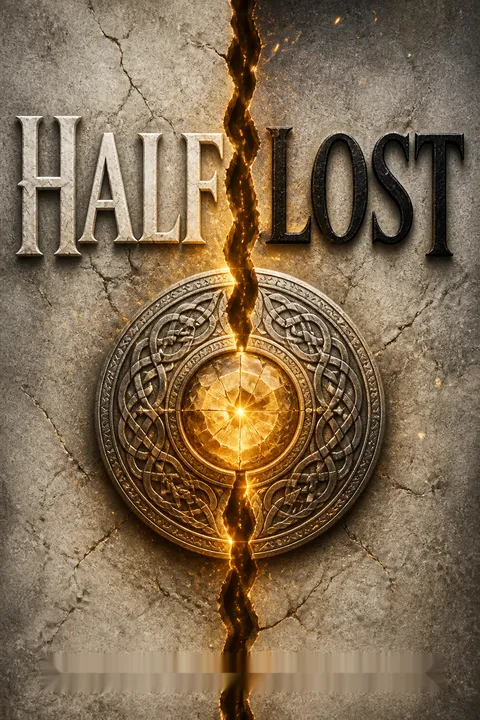


Plot Summary
Prologue
Before the story proper, Gabriel proposes a challenge-and-response password to guard against a Hunter who can imitate Nathan returning to camp in disguise. The test asks whether Nathan has been lost; his answer distinguishes being hurt from losing his way.
He resists practising it, but the exchange exposes what the password is really for: Gabriel wants a small safeguard against losing him, while Nathan deflects the care with impatience. Their private code will later become a measure of whether they can trust each other again.
The password is both a practical defense and an emotional test. In a world where appearance can be stolen and allies may be infiltrated, recognition must rest on shared history rather than a familiar face. Gabriel turns intimacy into a security protocol, but Nathan treats the exercise as needless fuss because accepting protection would mean admitting how much he depends on Gabriel. The distinction between being wounded and being lost also frames Nathan’s coming struggle: his injuries are visible, while the danger of losing his moral bearings is harder for him to recognize.
Fifty-Two Stones
Months after the Battle of Bialowieza, seventeen-year-old Nathan counts fifty-two people he has killed and keeps a stone for each death. His father, Marcus, died in the battle after Annalise, the White Witch Nathan loved, shot him; Nathan still cannot find her and believes revenge will quiet his grief. He carries one white stone for her, separate from the others.
Gabriel, his closest friend, tries to draw him back into ordinary conversation, but Nathan lashes out, then hates himself for wanting Gabriel’s comfort. Nightmares return him to the moment he took Marcus’s Gifts by eating his heart. Nathan hides the full weight of that act and his recent killings, while his isolation makes each day blur into the next.
The stones give Nathan’s violence a countable shape, but they cannot give it meaning or closure. He has converted grief into arithmetic because numbers feel more controllable than the fact that he survived his father. The white stone marks Annalise as both a person he once loved and a target onto whom he can displace pain that has no simple destination. His anger at Gabriel shows the cost of this defense: he rejects the very attachment that could help him remain human, then treats his own need for it as weakness.
A Trap in the Pines
Nathan practises the Gifts he inherited from Marcus, including invisibility, lightning and fire, while struggling to summon his father’s power over time. He also experiences a waking vision: Gabriel beckons him across a beautiful meadow, then Nathan is shot and falls.
Because visions have shaped his family’s life, he fears what this one might mean but trusts neither its warning nor his own judgment. After he and Gabriel argue over Nathan’s attacks on young Hunters, Nathan leaves without telling him his plans.
Following tracks from two dead Hunters, he finds a guarded camp and a stranger’s shoe prints. Convinced the prisoner inside might be Annalise, he recognizes the setup as a trap, weighs escape against a risky rescue, and chooses to attack.
Nathan’s new powers expand his ability to act but do not expand his capacity to judge what action is worth taking. He can detect the trap and still chooses it, because the possibility of finding Annalise overwhelms the evidence that the Hunters are prepared for him. His vision sharpens this contradiction: he knows the future can become a self-fulfilling force, yet he treats its warning as another danger to overpower. The argument with Gabriel also marks a shift from shared resistance to solitary vengeance. Nathan is not simply reckless; he is narrowing his world until only his pursuit seems consequential.
Eight Hunters Fall
Nathan waits until the darkest part of the night, then silently kills the guards before the camp’s sleepers can organize. When the Hunters wake, he uses lightning, fire and the Fairborn, the unusually responsive knife he carries, to defeat the remaining fighters. Eight Hunters die. The captive is chained to a tree with her face covered; when Nathan removes the hood, he finds a frightened blonde stranger rather than Annalise.
She identifies herself as Donna and says she hoped to join the Alliance. Nathan frees her, takes weapons, food and supplies from the camp, but ties Donna’s wrists and makes her walk ahead of him. He cannot tell whether she is an ally or a spy, so he brings her toward the Alliance under guard.
The battle gives Nathan a tactical victory and an emotional disappointment at once. He has killed the people who built the trap, but the prisoner he risked everything to reach is not Annalise. Instead of letting that failure soften him, he transfers his suspicion onto Donna, controlling her body and movement because he cannot verify her story. His practical rescue is real, yet it arrives entangled with threat and coercion. The scene shows how war has altered his sense of care: he can save a vulnerable person and still treat her as a possible weapon.
Camp Three and a Half
The trek back through cold rain and mud exhausts Donna and leaves a trail the Hunters could follow. When she searches Nathan’s pack for food, he catches her beside a gun and binds her again, unsure whether she wanted a meal or ammunition.
At Camp Three, a nervous trainee shoots at Nathan because he gives the wrong password; Gabriel verifies his identity with their private test, and Greatorex learns that Nathan has killed eight Hunters. She orders the camp moved.
Nathan watches the trainees spar, then agrees to fight Greatorex and four of them. He wins despite their coordinated attack and Adele’s briefly metal-hard skin. The contest demonstrates his skill, but also exposes the gap between his confidence and the young fighters’ growing capability.
The camp’s response distinguishes leadership from Nathan’s private war. Greatorex does not condemn him for attracting danger, but she changes position to protect everyone else. The password misunderstanding turns a practical security measure into a reminder that Nathan is not fully integrated into the community he defends. His victory over the trainees restores his sense of superiority, yet Adele’s uncontrolled Gift and their teamwork show that the Alliance cannot be reduced to his individual strength. He is powerful enough to dominate a sparring match, not powerful enough to make the people around him unnecessary.
The Amulet’s Price
Van, a skilled Black Witch and potion-maker, explains that Soul has offered to free Alliance prisoners if the Alliance surrenders Nathan. She suspects Soul wants to turn him into a personal weapon, while the Alliance needs him to challenge the Council leader.
Van proposes a visit to Ledger, a powerful witch who may know how to restore the protective magic of the divided Vardian amulet. Its other half belonged to Gabriel, who gave it to Van; she has now handed it to Ledger as a sign of trust.
Meanwhile, Van tests Donna with a general truth potion, but Donna’s repetitive answers do not establish her loyalties. Nathan briefly stops time during a patrol. Gabriel, exhausted by the war and Nathan’s fixation on revenge, asks him to leave it behind.
The amulet offers Nathan protection, but its promise carries the same danger as the amnesty: other people are making plans around his body and power. Soul wants possession; the Alliance sees a weapon it cannot afford to lose. Van’s proposal gives Nathan a possible defense without pretending that power alone will end the conflict. Gabriel’s appeal introduces a different measure of survival, one concerned with Nathan’s inner life rather than battlefield utility. Donna’s inconclusive test echoes the larger problem: institutions can demand certainty, but potions and appearances cannot reliably supply it.
Annalise in Custody
Celia tells Nathan that the Alliance captured Annalise shortly after the battle and has held her for three months. A mixed Black and White Witch court will decide whether she is responsible for shooting Marcus and helping cause the Alliance’s defeat.
Gabriel had heard a rumour that Annalise was alive but withheld it, hoping to keep Nathan from killing her in rage. Nathan feels betrayed, spits in Gabriel’s face, and attacks Celia when she warns that he may also have to answer for taking Marcus’s Gifts.
As Celia uses her painful sound Gift to stop him, Nathan finally accesses his father’s power over time. He freezes the camp and walks away before anyone can cage him. The achievement saves him from capture, but his escape deepens the rift with Gabriel.
The revelation destabilizes Nathan because it proves that his search has been both unnecessary and enabled by people who believed they were protecting him. Gabriel’s silence is an act of care that Nathan experiences as a theft of agency, precisely because he has come to equate control with safety. When Celia raises the possibility of legal accountability, his history as a captive overwhelms the present dispute; the prospect of a cage collapses justice into imprisonment. Stopping time is a genuine triumph, but it also lets him escape the difficult work of staying with others when they challenge him.
The Password Holds
Nesbitt finds Nathan in the woods and persuades him that Celia will not put him in a cage. Nathan decides to attend Annalise’s trial, then takes one of Van’s sleep potions to quiet his mind.
After returning to camp, he apologizes to Gabriel for spitting at him, but Gabriel refuses an easy reconciliation and leaves Nathan to sit with the consequences. Nathan spends several days alone, recognizing that he wants Marcus’s strength without inheriting his cruelty. He returns through snow to find Gabriel still there.
Their password helps them reconnect: Nathan admits he has been both hurt and lost, and promises not to hide important things. At dawn, his vision sharpens to show Gabriel with a gun and Nesbitt walking away, making the approaching danger feel more specific.
Nathan’s return matters more than his apology. He has to remain present while Gabriel is angry, rather than using distance or force to end the discomfort. His reflection on Marcus separates resemblance from destiny: loving his father does not require repeating every form of his violence. The password becomes a compact ritual of mutual recognition, not proof that trust is restored automatically. The vision complicates this fragile repair by placing Gabriel beside a gun, but Nathan chooses the evidence of their relationship over the certainty he is tempted to extract from prophecy.
Camp One in Ruins
Nathan travels with Gabriel, Celia, Nesbitt, Donna and several trainees toward Camp One, where Annalise is being held. Near the camp, the missing lookout and the faint hiss of Hunter phones warn Nathan that something is wrong. He finds Alliance members shot among collapsed tents, then discovers the prison hut empty and its chains unlocked.
A booby trap kills Kirsty as the group enters the camp. Nesbitt finds Van’s body beyond the tents, while Nathan spots Annalise among the Hunters retreating through a cut. He and Nesbitt run after them, but the last Hunter through is Jessica, Nathan’s half-sister and leader of the Hunters. By the time they reach the rock cleft, the cut has closed and Annalise is gone again.
The attack dismantles the idea that the Alliance can make a safe place simply by moving carefully. Van and Kirsty are not lost in a fair contest but in an assault designed to turn a camp into a field of traps and bodies. Nathan’s pursuit of Annalise is once again thwarted, yet the scene redirects his hatred: Soul’s regime, rather than a single former lover, is driving the deaths around him. His decision to chase also leaves him emotionally exposed when the cut closes. Jessica’s brief appearance turns the war into a family conflict without making family ties a source of safety.
Donna’s Bullet
As Nathan stands in the golden light outside Camp One, a shot from Donna fulfills his vision. The magic bullet enters his stomach and carries a poison that moves toward his heart, while Gabriel and Celia struggle to keep him alive.
Celia cuts into Nathan several times but cannot locate the shifting projectile until she finally removes it. Nathan lies unconscious for ten days as his body slowly clears the poison. Gabriel explains that Donna had been planted by the Hunters: she was meant to enter the Alliance, wait for an opportunity, and use the specially prepared bullet.
During the same attack, Adele killed Donna, and Nesbitt suffered a lesser wound. Nathan’s recovery leaves him physically weak and emotionally shaken, but Gabriel stays beside him through the nightmares.
The vision’s apparent accusation against Gabriel is overturned by the actual shooter, exposing prophecy’s emotional hazard: a true image can still invite a false conclusion. Donna’s betrayal also recasts Nathan’s earlier suspicion as inadequate rather than prophetic; he restrained her, but the Hunters had prepared a hidden weapon he could not detect. The bullet literalizes the political struggle over Nathan’s body, moving through him toward the heart while making him dependent on others. Gabriel’s care during the delirium offers a counterforce to the potion’s manipulation and to Nathan’s fear that intimacy always ends in harm.
Maps Beneath Mercury’s Bunker
After recovering, Nathan decides that the amulet may let him fight Soul without being killed. Nesbitt chooses to leave the Alliance and return to Australia, but first brings Nathan and Gabriel to Mercury’s bunker.
There they inspect the blood store and find maps and diaries recording Mercury’s encounters with Ledger. The records point to a concealed map room in a Philadelphia cellar, where a visitor must choose the correct magical landscape to reach Ledger. Nesbitt refuses to accompany them, leaving Nathan and Gabriel to make the journey together.
In the map room, the walls reveal living terrains when touched. Nathan names Ledger in his request, but he and Gabriel touch different points; the map sends them to separate places, leaving Nathan alone in an unmoving badlands valley.
The journey shifts the conflict from military terrain to a test of interpretation. Mercury’s maps preserve histories of changing witch territories, so Nathan sees evidence that segregation is not an eternal law but a political arrangement that can shift. Yet the same maps punish careless reading: the right destination depends on noticing how a magical system works, not simply forcing entry. Nesbitt’s departure gives this passage a tone of loss as well as adventure. Nathan is moving toward a source of power with Gabriel beside him, but even their joined hands cannot guarantee they will arrive in the same place.
A Finger for Protection
Ledger appears as a young man and receives Nathan in a remote cabin, where he challenges Nathan’s belief that killing Soul is the only answer. He argues that Nathan’s power could grow through patient attention to the earth, but accepts that Nathan will not abandon the war.
Ledger joins the two halves of the Vardian amulet by wrapping them around Nathan’s tattooed little finger and sealing both inside a bottle. Gabriel cuts the finger away; the amulet then deflects knives, bullets and a shotgun blast, though Nathan can still be restrained or influenced by mind control.
Ledger trains him to notice those weaknesses. Before leaving, Nathan gives Gabriel Marcus’s gold ring, a family heirloom, as proof that he intends to share a future with him.
Protection here is not a simple shield: it is built from the conflict the story has repeatedly placed on Nathan’s body. The amulet’s two halves and his mixed witch lineage are joined through the finger Wallend once meant to use as a means of control. The result saves Nathan from ordinary weapons but cannot free his mind or prevent confinement, so it makes him safer without making him sovereign. Giving Gabriel Marcus’s ring counters the amulet’s logic of possession. Nathan chooses to pass on a treasured inheritance as a gift, rather than letting inherited power define what he owes the dead.
Fifty-One Problems
Back with the Alliance, Nathan proves the amulet can deflect Celia’s painful Gift and even a grenade, then hears her plan to attack the annual Council meeting. He must enter through the Roman Tower prison and open a route for the Alliance; after that, he is to target Soul, Wallend and Jessica.
Celia insists that surrendered Hunters must not be executed, forcing Nathan to confront his wish to kill them all. While the fighters rehearse inside a mock Council building, Nathan overhears trainees call him monstrous and fear that he will turn on them.
He answers sharply, then privately reassures Arran, his older brother, that he will not harm the trainees. Arran reveals his affection for Adele, a Black Witch, and tells Nathan he still considers him family.
Celia’s plan makes victory inseparable from the political order that follows it. Nathan can destroy the Council’s leaders, but he cannot decide that every surviving Hunter deserves death without reproducing the system he opposes. The trainees’ hostility shows that his invulnerability has not earned trust; it has made him more frightening to people who know only his reputation. Arran offers a contrasting form of recognition, one rooted in kinship rather than fear or utility. His relationship with Adele quietly embodies the mixed community Celia hopes to build, while Nathan must decide whether he can fight for that future without ruling it through terror.
Sixty-Five, Sixty-Six
Two days before the Council assault, Nathan detects a Hunter phone while running with Gabriel and separates from him to track the signal. The scouts have found the Alliance camp and photographed its training grounds, but Celia believes their report has not yet brought a larger force.
She orders Nathan to kill them before they can return. Nathan waits until the visible scout reunites with her invisible partner, then kills both with the Fairborn as they call for one another.
He takes their phones and notebook, which confirm that they found the camp that morning. Celia relocates the Alliance again, but decides the Council attack will proceed. Nathan repeats the kill count to himself as he runs back, using numbers to keep the bodies from becoming people in his mind.
This is the first time Nathan kills because Celia has ordered him to, rather than because he has chosen a target in pursuit of Annalise. The change does not make the act clean; the scouts are still two people whose deaths he must carry. His counting shows him attempting the same emotional conversion as the stones, turning individual lives into a sequence he can manage. Yet the notebooks also make the killings consequential in a way his private revenge was not: the Alliance gains time and confirms its enemy’s knowledge. The story lets necessity explain the violence without pretending it removes its psychological cost.
Prisoners in Roman Tower
At the midnight guard change, Nathan slips into Roman Tower to learn the prison password, but the building’s wards trigger nausea, cramps and Celia’s remembered screeching Gift. Gabriel drags him outside before the symptoms overwhelm him.
At dawn, Nathan uses the password and a magical hairpin to enter, then incapacitates the Hunters and guards without killing most of the guards. He learns the next password from Sean and admits the Alliance through the prison passage. In the cells, Nathan recognizes Bob, an old ally who can read minds, and finds the prisoners weak and brutalized.
Bob reports that Wallend is developing a potion called blue and points out Clay, the imprisoned former Hunter chief. Clay refuses to explain how Annalise exposed the Geneva safehouse, so Nathan leaves him behind and proceeds with the mission.
The Tower reverses Nathan’s remembered position in the Council’s machinery. He once entered its cells as a captive; now he moves through them with the power to open doors and choose who remains inside. His refusal to kill the guards marks a meaningful limit, even as his threats and the Alliance’s wider attack remain violent. Bob’s information points forward to Wallend’s new weapon, while Clay’s silence denies Nathan the certainty he still seeks about Annalise. By leaving Clay rather than sacrificing the larger mission for an answer, Nathan shows a measure of discipline that his earlier pursuit could not sustain.
The Glass Dome
Inside the Council building, Nathan finds Wallend’s laboratory, where bodies have been opened and witch parts stored in labelled bottles. Wallend’s assistant works over a corpse bearing a Black Witch tattoo; Nathan kills her, pins Wallend to a desk and forces him to reveal the source of the Hunters’ invisibility.
In the next room, hundreds of bottles containing tattooed flesh sit inside a magical glass dome. The bottles disappear whenever their linked Hunters do.
Wallend can open the dome with a wand, but then traps Nathan inside and boasts that only he and Soul can command it. Nathan discovers that the Fairborn can cut the barrier: repeated strikes score the dome until it cracks. He escapes, destroys the bottles and kills Wallend, leaving the Hunters visible.
Wallend’s laboratory makes the Council’s power brutally literal: invisibility is manufactured by taking pieces of bodies and turning them into equipment. The bottles reduce living witches to components, while the dome protects the system that makes them useful. Nathan’s own body has been tattooed and marked for control, so the discovery implicates him in the same logic even as he fights it. He breaks the dome not through a new spell but by understanding the Fairborn’s capacity to cut living magic. The victory is therefore both tactical and intimate: he dismantles a mechanism built from the kind of violation he has already endured.
Blue at Soul’s Desk
Nathan finds Soul alone with a bowl of blue potion, whose fumes soften his judgment and make obedience feel comforting. Soul persuades him to drink, takes the Fairborn and brings him to Annalise, caged nearby.
Annalise warns Nathan that Soul is controlling him; Nathan summons his animal self, attacks Soul’s throat and then shoots him dead. With Soul gone and Wallend’s bottles destroyed, the Alliance forces the Council to surrender. Jessica escapes the main fighting, disguises herself as Arran and shoots at Nathan while using Gabriel and Adele as hostages.
Nathan kills her with lightning, but his amulet deflects Jessica’s bullets into Gabriel. Arran cannot remove the final bullet. Nathan stops time too late to save him, and Gabriel dies in his arms as the last light in his eyes fades.
The climax tests the limits of Nathan’s supposed invulnerability. Blue attacks the part of him the amulet cannot protect, and the animal self becomes his means of refusing Soul’s manufactured obedience. Yet the same armor that lets Nathan survive Jessica’s gunfire redirects the violence toward Gabriel, turning protection into an unintended danger to the person he loves. His power over time arrives at the moment he needs it most, but cannot reverse what has happened. The victory over Soul therefore refuses a clean heroic reward: Nathan can end a regime and still fail to preserve the life that made survival meaningful.
A River Without Gabriel
Nathan retreats to the Welsh river he once promised to share with Gabriel. He buries Gabriel, avoids most visitors and spends long stretches in animal form to escape the human memories that return in nightmares. Annalise is tried, serves a year in prison and later marries a human man; she and Nathan have a son named Edge.
Nathan refuses to meet the child, though he tells Arran that Edge should know what happened, including the deaths each parent caused. As the new mixed Witch Council and smaller Hunter Alliance take shape, Nathan remains apart. He draws portraits and landscapes for his son, then tells Celia that earth can connect a person to the deeper source of magic. After Celia leaves, Nathan vanishes from human view.
The political ending and Nathan’s personal ending move in opposite directions. The Alliance begins building institutions meant to prevent another Soul, while Nathan cannot yet re-enter a community without Gabriel. His refusal to meet Edge is not simple indifference; he fears that his history of violence will become the boy’s inheritance, even as he wants the truth preserved for him. The drawings offer a form of contact without presence, allowing Nathan to leave evidence of affection while withholding himself. His turn toward the earth follows Ledger’s teaching, but it also expresses a grief too large for ordinary speech or companionship.
Epilogue
Celia, now living near Nathan’s chosen river, describes the years after the war from her own perspective. Nathan brings her rabbits, quietly helps finish her cabin and fills pages with portraits and landscapes marked for his son. He never draws himself. When Celia eventually climbs to the place shown in his landscape, she finds a young hazel tree beside Gabriel’s grave, its trunk scarred.
She understands that Nathan has used his connection to the earth to become the tree he once imagined, rooted near Gabriel while remaining beyond human company. Celia returns daily to read aloud to him, renewing the old bond between captor, teacher and student in a gentler form.
The epilogue does not restore Nathan to ordinary life; it gives his withdrawal a form that can still receive care. As a tree, he is no longer forced to explain grief, defend himself or decide whether his presence endangers others. Yet Celia’s readings and Nathan’s drawings keep human relationship alive at the edge of that retreat. Their history began in confinement, when she controlled his world; now she approaches the place he has chosen and respects its boundary. The scarred hazel makes transformation neither cure nor erasure. Nathan remains marked by violence, but he has found a way to root himself beside Gabriel rather than continue the war.
Analysis
Half Lost asks whether a person can inherit violence without inheriting its moral logic. Nathan receives Marcus’s Gifts through an act of bodily intimacy and horror, then tries to make their use feel simple by counting the dead. The stones and his later numbers are not just symbols of guilt; they are procedures for controlling memory. When he cannot bear to see individual lives, he converts people into totals, targets or enemies. The story repeatedly tests that narrowing: Donna appears helpless but cannot safely be trusted, Annalise is both a source of devastating harm and a person entitled to a trial, and the Hunters who serve a brutal system remain human enough to surrender.
The political conflict is therefore not resolved merely by killing Soul. Celia’s insistence on courts, shared government and limits on retaliation challenges Nathan’s desire to make the Council pay in kind. Her proposed order is fragile, but it is meaningfully different from Soul’s rule because it demands that the victorious side obey the same law it imposes on others. Nathan’s resistance to executing surrendered enemies becomes part of the battle’s ethical outcome, not an aside to it.
Magic repeatedly raises the question of what bodies are allowed to mean. Wallend turns tattooed flesh into equipment; Soul uses blue to make submission feel like comfort; the amulet protects Nathan’s body while redirecting bullets into Gabriel. No power is morally neutral once it enters a relationship. Nathan’s animal self offers a way to refuse Soul’s control, but it cannot undo the consequences of the battle or spare Gabriel.
The ending rejects both triumphal recovery and total despair. Nathan cannot return to the life he imagined with Gabriel, yet his turn toward the earth transforms isolation into a chosen, if painful, form of rootedness. Celia’s reading and the portraits for Edge preserve relationship across silence. The book’s final hope is not that grief disappears, but that violence need not be the only inheritance passed forward.
Review Summary
Half Lost received mixed reviews. Many praised it as a powerful, emotional finale that left them devastated. Readers loved the character development and romance between Nathan and Gabriel. However, some felt betrayed by the tragic ending, criticizing it as unnecessary and harmful representation for LGBTQ+ readers. Critics found the plot weak and Nathan's character inconsistent. Despite the controversy, fans appreciated the book's impact and unpredictability, even if they disagreed with the author's choices.
People Also Read

Characters
Nathan
The divided survivorA seventeen-year-old Half Code, Nathan is the son of Black Witch Marcus and a White Witch, and his divided inheritance shapes how others judge him before they know him. He is physically daring, quick to learn magic and more comfortable tracking or fighting than explaining what he feels. His bluntness often protects a deep fear of captivity and abandonment, but it also wounds the people who try to remain close. He wants to honor his father, yet recoils from the cruelty that made Marcus feared. His central drive is to turn extraordinary power toward ending persecution without becoming the next person others must fear.
Gabriel
Nathan’s steady counterpartA Black Witch who can change his appearance, Gabriel is Nathan’s closest friend and romantic partner. He is observant, physically capable and patient enough to recognize when Nathan’s silence hides distress rather than indifference. Gabriel’s humor helps him keep connection alive, though his attempts to protect Nathan can become secrecy, a choice that strains their trust. He values the life they might build beyond the war and repeatedly challenges Nathan to imagine survival as more than remaining alive. His care is neither submissive nor limitless: he expects honesty, mutual regard and a say in the risks that affect them both.
Annalise
The lost first loveA White Witch and Soul’s niece, Annalise once shared a deep romantic bond with Nathan. Her family connection places her inside the Council’s world, while her relationship with Nathan makes her loyalties difficult for others to interpret. Nathan sees her through the wound left by Marcus’s death, but her own choices arise from fear, family attachment and an effort to protect someone she loves. She is not simply a symbol of betrayal or innocence; she is a person whose actions become a contested question of evidence, responsibility and forgiveness. Her history with Nathan exposes how little love can guarantee that two people understand each other.
Celia
The hard-minded mentorA White Witch, strategist and former captor of Nathan, Celia is skilled at planning under pressure and willing to make difficult decisions without pretending they are painless. She helped raise Nathan within the constraints of his captivity, so care and coercion are intertwined in their history. Her painful sound Gift gives her formidable force, but her deeper ambition is political: she wants Black, White and Half Blood witches subject to the same laws. Celia understands that winning a battle is easier than building a fair society afterward. She respects Nathan’s capacity while insisting that his power cannot place him above accountability.
Marcus
The feared Black WitchNathan’s Black Witch father, Marcus is a powerful fighter whose reputation rests on lethal skill and a long record of violence. He loved Nathan, but their time together was brief and shaped by a prophecy that kept them apart through much of Nathan’s childhood. His gifts, including the ability to stop time, become part of Nathan’s inheritance, as does the question of how much a son owes a father’s example. Marcus represents both the protection Nathan longs for and the frightening possibility that strength can harden into indifference toward other lives.
Jessica
The ambitious Hunter leaderNathan’s half-sister and leader of the Hunters, Jessica is intelligent, disciplined and fiercely committed to her organization’s supremacy. Her family history gives her a personal reason to resent Nathan, but ambition and belief in Hunter authority shape her choices beyond that grievance. She understands how to use disguise, hierarchy and fear as practical tools. Jessica is not a battlefield follower waiting for orders; she is a political actor with the capacity to challenge both the Council and the Alliance. Her presence turns Nathan’s struggle against the regime into a conflict with someone who shares part of his family history but not his loyalties.
Soul
The controlling Council leaderSoul leads the White Witch Council and maintains authority through persecution, prisons and carefully managed alliances with the Hunters. His own potion-making Gift is limited, so he relies on Wallend’s exceptional magical skill. Soul sees Nathan as a valuable force to control, not merely an enemy to eliminate, and his interest in Nathan mixes political calculation with personal ambition. He can present domination as benevolence, particularly when offering safety or approval. That ability makes him dangerous even before he uses magic: he knows how to exploit a person’s longing to be understood.
Ledger
The patient magic scholarAn ancient and extraordinarily powerful witch who appears as a young man, Ledger studies the shared source beneath individual Gifts. He favors balance, patience and nonviolence, and initially doubts that Nathan should enter another war. His calm manner conceals sharp curiosity about people and magic, while his ability to alter perception shows how much remains outside Nathan’s knowledge. Ledger does not simply hand over power; he makes Nathan demonstrate his limits and accept responsibility for protection. He offers a possible future based on learning, even when Nathan chooses immediate action.
Arran
Nathan’s gentle older brotherArran is Nathan’s older brother, a White Witch and a developing healer. His gentleness contrasts with the violence surrounding the family, and he offers Nathan affection without demanding that he become the boy he once was. Arran can acknowledge Nathan’s change while continuing to treat him as his brother. His relationship with Adele reflects the possibility of intimacy across witch divisions. He is practical and compassionate, though his healing skills cannot solve every crisis. Arran’s presence gives Nathan a living connection to the childhood and family he lost without requiring him to pretend that nothing happened.
Greatorex
The disciplined camp leaderGreatorex leads one of the Alliance camps and trains its young fighters. A capable former Hunter, she combines tactical caution with an unsentimental sense of humor. She does not treat Nathan’s presence as a reason to blame or flatter him; she moves the camp when necessary and keeps her trainees working. Her leadership depends on preparation, discipline and the ability to see promise in inexperienced people. Greatorex is willing to test Nathan directly, but also recognizes that his power does not make him a substitute for an organized community.
Van
The wise potion-makerVan is a Black Witch known for her skill with potions, sharp judgment and composed presence. She helps the Alliance think beyond its immediate losses, identifying the amulet and Ledger as possible routes to protecting Nathan. Her advice is strategic without being emotionally detached: she sees that his pursuit of Annalise is consuming him, even when he refuses to discuss it. Van is also a trusted friend and partner to Nesbitt. She understands how fragile an alliance between different kinds of witches can be and works to preserve it through both knowledge and care.
Nesbitt
The irreverent trackerNesbitt is an experienced Alliance fighter and exceptional tracker, known for teasing humor that keeps tense company from collapsing into silence. He cares about Nathan openly, even when Nathan has little idea how to answer that care. His relationship with Van gives him a personal stake in the war, while his practical knowledge helps the Alliance move safely. Nesbitt can recognize when humor is no longer enough and when someone needs simple company. His decision-making is shaped by affection as much as ideology, and he is willing to leave the fight when grief makes continuing feel impossible.
Donna
The guarded newcomerDonna is a young White Witch whom Nathan finds chained in a Hunter camp. Thin, exhausted and eager to join the Alliance, she has little power over how others interpret her because her story cannot be verified at once. Her awkward humor and openness sometimes soften Nathan’s suspicion, but her presence exposes the Alliance’s difficulty distinguishing a refugee from an infiltrator. Donna’s role tests Nathan’s judgment at precisely the moment he believes he is learning to read danger. She is vulnerable in appearance, yet the people around her cannot safely assume that vulnerability tells the whole story.
Wallend
The Council’s cruel inventorWallend is a White Witch with an exceptional Gift for magical invention and the Council’s specialist in coercive experiments. He created the tattoos and magical mechanisms that let Hunters become invisible, treating living bodies as materials for his work. His power is technical rather than charismatic; he appears most at home among instruments, bottles and controlled procedures. Wallend’s willingness to harm others is made more chilling by his focus on method, as if a successful experiment could excuse its human cost. He is a central architect of the Council’s practical power.
Adele
The metal-skinned fighterA Black Witch among the Alliance trainees, Adele can temporarily turn her skin hard like metal. Her Gift is useful but initially difficult to control, and her fighting skill grows through training rather than appearing fully formed. Adele is also thoughtful and kind, qualities Arran values alongside her strength. She does not fit the assumption that a fighter must be defined by aggression. Her presence gives the Alliance a capable young combatant and a glimpse of the mixed community its leaders hope to establish.
Bob
The imprisoned mind-readerBob is an older ally with the Gift of reading minds, whom Nathan encounters among the prisoners in Roman Tower. He has endured confinement and physical abuse but retains his dry wit and interest in what is happening outside his cell. His knowledge of people’s thoughts makes him a useful source of information, though he cannot provide everything the Alliance needs. Bob’s imprisonment also reminds Nathan that the Council’s violence reaches beyond combatants and that liberating the political system must include people who have been quietly erased inside its prisons.
Clay
The chained former Hunter chiefClay is a former senior Hunter who once possessed authority and physical power. By the time Nathan encounters him in Roman Tower, he is imprisoned and visibly weakened, but his pride and ability to withhold information remain intact. Clay understands the value of secrets and uses Nathan’s need for answers about Annalise as leverage. His presence connects the current assault to earlier operations against Nathan and Mercury. He is neither a trustworthy guide nor a helpless victim, which makes him difficult for Nathan to dismiss or control.
Mercury
The vanished magic keeperMercury was a powerful witch who kept a hidden bunker, a collection of blood samples and extensive diaries about other witches. Though she is no longer alive, her records guide Nathan and Gabriel toward Ledger and provide evidence about the changing boundaries between Black and White Witch territories. Mercury was perceptive and ambitious, but Ledger’s account suggests that she could also be proud and dismissive. Her hidden maps make her legacy practical rather than sentimental: knowledge she gathered in isolation becomes useful to the Alliance and to Nathan’s search for protection.
Connor O’Brien
Annalise’s Hunter brotherConnor is Annalise’s Hunter brother, whose death during the battle becomes part of the disputed account of why she shot Marcus. Nathan remembers Marcus killing Connor as he reached for a gun. The timing matters to the later question of whether Annalise acted to save him or after he was already dead.
Deborah
Nathan’s remembered sisterDeborah is Nathan’s sister and part of the White Witch family he remembers as kind and thoughtful. Though she has little direct presence in the war, Nathan’s memories of her help him recognize that his mother’s side of his inheritance includes forms of care unlike Marcus’s fearsome reputation.
Plot Devices
Inherited Gifts
Power with a human costNathan gains Marcus’s Gifts by eating his father’s heart after Marcus is dying. The act gives him access to extraordinary abilities, including invisibility, lightning, fire, healing and eventually stopping time, but it also binds power to grief, memory and the fear of becoming like Marcus. Nathan’s own transformation into an animal remains distinct from those inherited abilities and gives him another way to respond when human reasoning is compromised. The Gifts drive the action, but their deeper function is to make Nathan confront whether inheritance determines character or merely gives him choices he must learn to govern.
The Fairborn
A blade against living magicThe Fairborn is a magical knife that responds to blood and seems to possess its own appetite for cutting. Nathan uses it in close combat throughout the war. Its importance extends beyond killing: when Wallend traps Nathan inside the glass dome protecting the Hunter invisibility bottles, the knife can gradually score and crack the barrier. The weapon therefore links Nathan’s repeated exposure to violence with his ability to dismantle the machinery of violence. It is powerful, but its eagerness makes it a dangerous extension of the impulses Nathan is trying to control.
Cuts and Map Room
Hidden routes between worldsCuts are magical passages that let witches travel quickly between distant locations and connect the Alliance’s dispersed camps. They make escape and surprise possible, but they can be tracked, closed or used to trap people. Ledger’s map room extends this system: its walls contain magical landscapes, and the visitor must identify the correct map and ask for the intended destination. Nathan and Gabriel touch different points and arrive apart, showing that transportation magic demands interpretation as well as courage. The device moves the plot between Europe and America while making knowledge, not brute strength, the key to safe passage.
Vardian Amulet
Protection with a weaknessThe Vardian amulet was divided into two parchment halves and is believed to protect its bearer from harm. Ledger joins the halves around Nathan’s tattooed little finger and seals them in a bottle, creating a magical barrier that turns aside knives, bullets and explosions. The protection is not absolute: Nathan can still be trapped, controlled through mind magic or placed in danger when deflected weapons strike someone beside him. The amulet turns Nathan into a near-impossible target, but its true function is to complicate the meaning of safety. It can preserve his body without preserving the people he loves.
Bottles and Blue
Magic engineered for controlWallend uses pieces of tattooed witch flesh stored in bottles to grant Hunters invisibility, with the bottles protected inside a magical dome. The system turns bodies into instruments of military power and gives the Hunters an advantage in combat. Wallend’s later potion, blue, attacks a different vulnerability: its fumes alter mood and memory, making obedience feel comforting and weakening resistance. The two inventions show the Council’s different methods of control, one concealed in the body and one working through the mind. Nathan can destroy the invisibility system with the Fairborn, but he must rely on his animal self to resist blue.
The Half Bad Trilogy Series
About the Author
Other books by Sally Green
Download PDF
Download EPUB
.epub digital book format is ideal for reading ebooks on phones, tablets, and e-readers.








