

Key Takeaways
Stay half-broke: adapt to the world without letting it erase you
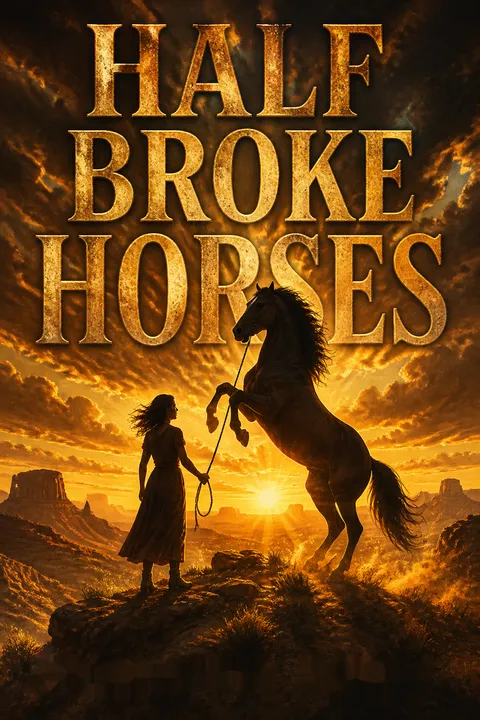
The title’s creature. A half-broke horse has been handled, but not properly trained. It remains wary of people, yet can think for itself and, with patience, become a capable partner. The phrase also suits Lily Casey Smith: she learns to work within schools, marriages, and ranch life without accepting that those roles define her limits. She teaches, rides, runs a business, and keeps making choices others consider improper for a woman.
Independence has a cost. Lily’s daughter Rosemary inherits a similar resistance to being penned in, but mother and daughter disagree about what freedom requires. The book celebrates stubbornness while showing its strain: independence can protect a person from other people’s plans, but it can also make compromise and care harder.
The title works as more than a symbol of rebellion. The horse is neither untouched by human influence nor fully subdued, which captures the difficult middle ground between adaptation and self-erasure. That distinction is useful beyond the frontier: people often need institutions, skills, and relationships while resisting the assumption that belonging means obedience. Still, the book’s admiration for grit can make refusal look easier than it is. A person’s options depend on money, health, and other people’s power, not simply on temperament.
When a crisis hits, act on what you can control
A child takes charge. During a flash flood in west Texas, ten-year-old Lily hears a faint rumble, recognizes danger, and gets her younger siblings into a cottonwood tree. They cling there through the night as water surges beneath them. To keep them awake, Lily quizzes them on school subjects and moves them around when their arms tire. By morning, they reach the house alive.
Belief meets effort. Their mother credits prayer for the rescue; Lily credits the decisions made in the tree. Her father offers a bridge between the two views: people cannot choose every circumstance, but they can choose their response. The story does not promise that determination controls outcomes. It shows Lily focusing on the next useful action instead of waiting for certainty.
The flood scene gives agency a practical scale. Lily cannot stop the water, but she can read its warning, find a refuge, and manage exhaustion one hour at a time. This resembles crisis leadership, where clear priorities matter more than grand explanations. The nuance is essential: surviving does not prove that every person could have acted differently, or that failure reflects weak character. Lily’s competence is striking, but chance, the tree, and her siblings’ cooperation also matter.
Earn cooperation by understanding what fear is protecting
Read the animal first. Lily’s father, Adam, cannot ride because a horse injured him as a child, but he becomes a gifted trainer. He teaches Lily that horses flee because fear is part of how they survive. Rather than striking them, he uses sounds and signals, and tries to become the protector they can trust. Lily applies that patience when she trains Patches, a neglected mare who becomes a dependable mount.
Fear is information. Adam refuses to call a frightened horse stupid or blame it for reacting. He asks what it has learned and what it needs to feel safe. That outlook also shapes Lily’s response to falls: she breaks an arm after a horse bolts, heals, and returns to riding. Skill includes recovery, not just control.
This approach resembles a useful principle in animal behavior and human conflict: conduct that looks irrational may make sense as protection against a perceived threat. Asking what fear is defending can replace punishment with diagnosis. The analogy has limits, since people are not horses and trust cannot be engineered through technique alone. Yet Adam’s method is a powerful corrective to treating resistance as proof of bad character. It invites leaders, teachers, and parents to understand before demanding cooperation.
Turn denied schooling into a portable skill and a credential
A door closes early. At thirteen, Lily is sent home from the Sisters of Loretto after her father spends her tuition money on Great Danes. She has no diploma, but she has learned enough to pass a government test and become a rural teacher at fifteen. She rides roughly five hundred miles to her first school and teaches children in isolated Arizona towns, often with no textbooks.
Ability needs proof. After the war, returning veterans and certified teachers displace her, despite the work she has done. Years later, she resumes teaching, attends college, and earns her degree. Lily’s story separates knowing how to do a job from holding the credential institutions demand. Her talent gets her started; education helps her return on firmer terms.
Lily’s career exposes a persistent tension between competence and certification. Formal credentials can exclude people who have already demonstrated ability, yet they also make that ability legible to employers and institutions. Her eventual degree is not simply a badge of social approval; it gives her access to work she values. The story also warns against treating exceptional self-education as a substitute for fair access. Lily succeeds through unusual persistence, but a system should not require every capable worker to prove herself twice.
Test charm against behavior before entrusting someone with your future
A smooth story collapses. In Chicago, Lily marries Ted Conover, a lively salesman who encourages her ambitions. After a traffic accident leads her to call his office, she learns that he has another wife and children. He has also spent nearly all the money they saved together. The diamond ring he gave her turns out to be fake. Lily leaves, seeks an annulment, and returns to Arizona determined to build a profession.
Reliability looks ordinary. Later, she chooses Jim Smith, whose steadiness and practical competence matter more to her than grand promises. Their marriage is built around shared work and explicit partnership. Lily’s experience does not make her reject intimacy; it makes her distinguish affection from evidence that someone can be trusted.
The contrast between Ted and Jim makes trust concrete. Charm can create emotional closeness quickly, while reliability is visible in repeated conduct, especially when there is no audience to impress. Lily’s response is not to declare all men untrustworthy, but to reclaim the ability to support herself and judge a partner’s actions. The caution is that vigilance can become suspicion when generalized too far. Trust works best neither as blind faith nor as permanent cross-examination, but as confidence built through consistent behavior.
When income collapses, combine practical skills instead of waiting for rescue
Small earnings add up. During the Depression, drought and falling cattle prices threaten Lily and Jim’s garage in Ash Fork. Lily sells bootleg liquor discreetly, earning enough to help cover expenses, but stops when the risk of arrest becomes too high. After moving to a remote ranch, she later turns teaching into several jobs: teacher, bus driver, janitor, and taxi operator. She drives a converted hearse to collect schoolchildren and pays for occasional flying lessons from the extra income.
Resourcefulness has limits. Lily and Jim save carefully, but their garage still fails before Jim finds a ranch-management job. Their survival comes from combining skills and accepting work, not from a guarantee that hustle can defeat every downturn.
Lily’s improvisation resembles a portfolio approach to household security: several modest income streams can cushion the loss of one source. Her choices also show that resourcefulness is not merely optimism. She calculates costs, spots idle assets, and stops selling liquor when the legal danger becomes unacceptable. The book does not romanticize poverty as a creativity workshop; the couple still loses their business. Practical ingenuity can widen options, but it cannot make a weak economy or unfair labor market disappear.
In the desert, water counts more than acres
Land without water is a promise. Jim manages a ranch of more than one hundred thousand acres, but its ponds dry up during drought. Lily proposes using a bulldozer to build dams that capture rain and flash-flood runoff. The water makes the range more useful, while nearby land with a spring and well later gives the operation a second source of supply. During a severe drought, the family also hauls water in barrels to keep the cattle alive.
Work with the place. Lily and Jim see how overgrazing and plowing damage the fragile Arizona soil. They try to keep grass and water in reserve rather than force the land to support more than it can bear. Their success depends on respecting local limits, not pretending the desert is somewhere else.
The ranch story treats infrastructure and ecological knowledge as inseparable. A dam matters because someone understands where stormwater travels; acreage alone does not create carrying capacity. The lesson also reaches beyond private ingenuity: water systems affect neighbors, animals, and entire landscapes. The book’s rain-capture solution fits its setting, but no single intervention suits every watershed. Its deeper contribution is a habit of attention: learn how resources move through a place before deciding what that place can sustain.
Offer presence before plans when someone is close to despair
Helen is running out of hope. Lily’s sister becomes pregnant after a man abandons her. A priest condemns her, and a school official says Lily must send her away if she wants to keep her teaching job. Lily offers practical options and tries to reassure Helen, but Helen dies by suicide. The loss devastates Lily. For months, teaching is the main reason she gets out of bed; the gradual return of attention to ordinary life helps her imagine a future again.
Help is not control. Lily’s story shows how social shame and isolation can narrow a person’s sense of possibility, even when family members are trying to help. Her love and plans cannot guarantee Helen’s safety. Grief remains part of the family’s life, not a problem that one determined person can simply solve.
The tragedy resists the comforting idea that the right speech or practical plan can always rescue someone. Lily offers love and possibilities, yet she does not recognize how immediate the danger has become. That distinction matters: support can be profound without giving one person control over another’s survival. The episode also places individual distress within a punitive social setting, where religious and institutional judgment compound isolation. Compassion requires presence, but severe despair calls for more support than a loved one may be able to provide alone.
Teach girls that a life beyond the one assigned is possible
Give students more than basics. In Main Street, Lily teaches girls in a polygamous community where some are prepared for arranged marriages as teenagers. Their elders want schooling limited to household skills and religious reading. Lily tells her students about teaching, nursing, city life, voting, and women such as Amelia Earhart. Her point is not that every girl must leave, but that a real choice requires knowing alternatives exist.
Information can threaten power. The community’s leader warns Lily to stop discussing the wider world. She refuses, parents withdraw children, and officials do not renew her contract. The episode reveals that education is not neutral when it expands the futures a student can imagine, especially where adults benefit from keeping those futures narrow.
Lily understands education as enlargement of the possible, not merely the transfer of facts. A student cannot freely choose a prescribed life if every alternative has been hidden from her. At the same time, this episode raises a hard question about who defines liberation. Lily is an outsider, and her convictions do not erase the community’s own agency or diversity. The strongest version of her case is not that she should choose for the girls, but that students deserve enough knowledge to make choices knowingly.
Use new tools, but don't mistake spectacle for progress
Lily learns what is coming. She moves from horses to cars, embraces driving, and pursues flying lessons even when people question whether a woman can manage a plane. On the ranch, she and Jim use a bulldozer to build dams. New tools expand what they can do, but only when joined to practical knowledge of the land.
Show can replace substance. After a Hollywood director buys the ranch, he renames it, rebuilds it as a movie set, fires Jim and the experienced ranch hands, and replaces working knowledge with a staged cowboy image. Lily and Jim must leave a place they have cared for without owning. The contrast is not old versus new. It is useful change versus change designed to look impressive.
The book avoids a simple celebration of either tradition or technology. A car and bulldozer give Lily and Jim new capabilities; the director’s renovations instead erase local expertise to create a marketable image. This distinction resembles a broader test for innovation: does a tool solve a real problem, or mainly signal modernity to an audience? The ranch also exposes the limit of good stewardship. Care can preserve a place, but without ownership or power, another person can redefine it overnight.
Don't train a child into your own temperament
Rosemary is not Lily. Lily is practical, disciplined, and alert to danger. Rosemary is impulsive, drawn to animals and art, and suspicious of rules. Lily sends her to boarding schools and tries to teach her through constant lessons, including a severe whipping after Rosemary swims with young Havasupai men. Rosemary later tells her that the experience taught her not to hit her own children.
Love can become a blueprint. Lily wants her daughter to be secure, but she often mistakes her own strengths for the qualities Rosemary must acquire. Jim sees the difference more clearly: some people need a settled life, while others need room to roam. Rosemary chooses art and Rex, a daring, unreliable pilot, rather than the safe future Lily planned.
Lily’s parenting conflict turns the book’s central tension inward. The same vigilance that helps her survive can become overcontrol when applied to a child with a different nature. Her fear is not baseless: Rosemary’s choices carry real risks, and Rex is far from dependable. But protection is not the same as authorship. The difficult parental task is to offer skills and boundaries without treating a child’s distinct ambitions as evidence of failure.
Analysis
Half Broke Horses is a family story shaped like a chain of tests. Lily encounters floods, illness, poverty, betrayal, institutional exclusion, drought, and family loss. Each episode asks whether she can turn observation into action. Her intelligence is practical: she reads animal behavior, notices where water flows, calculates household costs, and recognizes when a credential or a new tool could expand her choices. The book’s vivid western setting is not scenery alone. It determines what counts as competence, from saving water to knowing when a horse is frightened.
The narrative’s most important tension is between resilience and control. Lily’s refusal to wait for rescue makes her capable and generous, but she can also confuse her own toughness with the right way for everyone else to live. This appears most sharply in her treatment of Rosemary. The daughter’s refusal to follow Lily’s carefully designed route is not simply immaturity; it is a different answer to the same question of how much security a life needs. Jim’s steadier acceptance gives the story a counterweight to Lily’s forceful certainty.
The book also separates personal grit from structural freedom. Lily can teach brilliantly and still lose work when policy changes or powerful residents object. Helen’s crisis is intensified by moral condemnation and the loss of her sister’s job, while the girls in Main Street have restricted futures because knowledge itself threatens local authority. Determination opens doors, but it cannot make every door fair.
Finally, the author’s note matters to how the story should be read. Walls describes the book as a novel built from family memories, corroborated histories, and imagined details, not as a complete archival record. That form preserves Lily’s voice and the lessons passed through generations, while leaving room for uncertainty. Its achievement is less a claim that every scene happened exactly as narrated than a portrait of how a family remembers character, hardship, and the choices that shaped them.
Review Summary
Half Broke Horses by Jeannette Walls is a fictionalized account of her grandmother Lily Casey Smith's life in the American Southwest. Most readers found it engaging and well-written, praising Walls' storytelling ability and the depiction of her tough, resourceful grandmother. Many appreciated the historical context and insights into rural life in the early 20th century. Some felt the second half was stronger than the first, and a few questioned the accuracy of some details. Overall, it was generally well-received, though not as universally praised as Walls' memoir The Glass Castle.
People Also Read






Glossary
Half-broke horses
Partly trained, still waryRange horses handled without patient, consistent training. They often remain fearful of people and react defensively, yet may be intelligent and capable. In the book, properly training them requires understanding their fear rather than simply overpowering them. The phrase also gives the story its central image of people who resist being fully tamed.
Theory of Purpose
A test of usefulnessAdam Casey’s personal belief that everything has a purpose and should contribute something rather than merely occupy space. He applies this idea to work, education, and even play, urging Lily to find a worthwhile reason for taking risks. The theory encourages practical responsibility, though its strictness can make recreation seem undeserved.
Think like a horse
Understand fear before trainingAdam Casey’s approach to handling horses. It begins by recognizing that a horse is a prey animal, alert to danger and inclined to flee. A trainer should interpret the horse’s reactions, communicate without needless force, and earn enough trust to become a protector. Lily learns this approach while helping train horses on the family ranch.
FAQ
What is Half Broke Horses about?
- A life of resilience: Half Broke Horses chronicles the extraordinary life of Lily Casey Smith, a woman who embodies resilience and self-reliance as she navigates the challenges of the early 20th century American West.
- From ranch to city: The narrative follows Lily from her childhood on a Texas ranch to her adventures as a teacher, a wife, and a mother, showcasing her adaptability and determination in various settings.
- A journey of self-discovery: The story is not just a biography but a journey of self-discovery, as Lily confronts societal expectations, personal betrayals, and the harsh realities of life, always striving to define her own path.
Why should I read Half Broke Horses?
- Inspiring female lead: Lily Casey Smith is an unforgettable character, a woman who defies conventions and embodies strength, intelligence, and a fierce independence, making her a truly inspiring figure.
- Vivid historical setting: The book offers a rich and immersive portrayal of the American West, from the rugged landscapes to the challenges of ranch life, providing a unique glimpse into a bygone era.
- Themes of resilience and grit: Half Broke Horses explores universal themes of resilience, self-reliance, and the importance of family, making it a compelling and thought-provoking read for anyone facing life's challenges.
What is the background of Half Broke Horses?
- Early 20th-century America: The story is set against the backdrop of the early 20th century, a time of significant social and economic change in America, including the Great Depression and the rise of industrialization.
- The American West: The narrative is deeply rooted in the culture and landscape of the American West, particularly Texas, New Mexico, and Arizona, highlighting the challenges and opportunities of ranch life.
- Cultural and social shifts: The book explores the changing roles of women, the impact of modernization, and the clash between traditional values and new ideas, providing a rich historical context for Lily's journey.
What are the most memorable quotes in Half Broke Horses?
- "You can because you have to.": This quote, spoken by Lily to her siblings during the flash flood, encapsulates her unwavering determination and her belief in the power of inner strength to overcome adversity.
- "Never blame the horse.": This recurring phrase, taught to Lily by her father, reflects a philosophy of understanding and empathy, emphasizing the importance of looking beyond surface appearances to find deeper meaning.
- "When God closes a window, he opens a door. But it's up to you to find it.": This quote, shared by Mother Albertina, highlights the theme of resilience and the importance of taking initiative to create one's own opportunities in the face of setbacks.
What writing style, narrative choices, and literary techniques does Jeannette Walls use?
- First-person narrative: Walls employs a first-person narrative, allowing readers to experience the world through Lily's distinctive voice, which is both strong and authentic, creating a sense of intimacy and immediacy.
- Vivid and descriptive language: The author uses vivid and descriptive language to bring the landscapes and characters to life, immersing the reader in the sights, sounds, and smells of the American West.
- Conversational tone: The narrative has a conversational tone, as if Lily is telling her story directly to the reader, which makes the book engaging and accessible, while also highlighting her down-to-earth personality.
Hidden Details & Subtle Connections
What are some minor details that add significant meaning?
- The pearl-handled revolver: This gift from her father becomes a symbol of Lily's self-reliance and her willingness to protect herself and her family, reflecting her independent spirit and her ability to navigate a dangerous world.
- The red silk shirt: This item, which Lily wears during horse races, represents her boldness and her refusal to conform to traditional gender roles, highlighting her vibrant personality and her desire to stand out.
- The Sears, Roebuck catalog: This recurring object symbolizes the promise of modernity and progress, but also the limitations of a consumer-driven society, reflecting Lily's complex relationship with the changing world around her.
What are some subtle foreshadowing and callbacks?
- The broken bone: Lily's broken arm from a horse fall foreshadows her later resilience and her ability to overcome physical and emotional challenges, while also highlighting her father's philosophy of learning how to fall.
- The mirage of Tinnie: This early scene, where Lily sees an upside-down town in the sky, foreshadows the later disappointments and illusions she encounters in Chicago, highlighting the theme of perception versus reality.
- The recurring mention of the cottonwood tree: This image, first introduced during the flash flood, becomes a symbol of safety and resilience, and is later referenced when Lily comforts her sister, Helen, highlighting the importance of family bonds.
What are some unexpected character connections?
- Lily and Lupe: Despite their different backgrounds, Lily and Lupe share a bond of mutual respect and understanding, highlighting the importance of empathy and compassion across cultural and social divides.
- Lily and Old Man Pucket: Despite their initial conflict, Lily and Old Man Pucket develop a grudging respect for each other, highlighting the importance of understanding different perspectives and finding common ground.
- Lily and Mother Albertina: Despite their different paths, Lily and Mother Albertina share a mutual respect for education and a belief in the power of women, highlighting the importance of mentorship and guidance.
Who are the most significant supporting characters?
- Apache: This enigmatic figure, who lives with the Casey family, represents a connection to the land and a different way of life, highlighting the importance of cultural diversity and the value of non-traditional perspectives.
- Dorothy Clemens: This tenant farmer's daughter, who becomes Buster's wife, embodies strength and practicality, highlighting the importance of hard work and determination in achieving success.
- Mother Albertina: This nun, who runs the Sisters of Loretto Academy, serves as a mentor to Lily, encouraging her to pursue her education and independence, highlighting the importance of female role models and the power of education.
Psychological, Emotional, & Relational Analysis
What are some unspoken motivations of the characters?
- Adam Casey's need for respect: Despite his physical limitations, Adam's actions are driven by a need to be respected for his skills and knowledge, highlighting the importance of self-worth and the desire to overcome adversity.
- Daisy Mae Casey's desire for gentility: Daisy Mae's obsession with propriety and refinement stems from a desire to maintain a sense of control and order in a chaotic world, highlighting the importance of personal identity and the need for stability.
- Lily's fear of vulnerability: Lily's fierce independence and her reluctance to rely on others stem from a deep-seated fear of vulnerability, highlighting the importance of self-reliance and the need to protect oneself from emotional pain.
What psychological complexities do the characters exhibit?
- Lily's internal conflict: Lily struggles with the tension between her desire for independence and her need for connection, highlighting the complexities of human relationships and the challenges of balancing personal goals with family obligations.
- Jim's quiet strength: Jim's stoic demeanor masks a deep well of emotion and a strong sense of responsibility, highlighting the complexities of masculinity and the importance of inner strength.
- Rosemary's artistic temperament: Rosemary's artistic nature and her rebellious spirit reflect a deep-seated desire for self-expression and a rejection of societal norms, highlighting the complexities of adolescence and the search for identity.
What are the major emotional turning points?
- Lily's betrayal by Ted: This event shatters Lily's trust and forces her to confront the harsh realities of the world, marking a turning point in her journey toward self-reliance and independence.
- Helen's suicide: This tragic event deeply affects Lily, forcing her to confront the fragility of life and the importance of resilience, while also highlighting the devastating consequences of despair and hopelessness.
- Lily's decision to leave the ranch: This decision marks a turning point in Lily's life, as she chooses to pursue her own path and define her own destiny, highlighting the importance of personal agency and the courage to embrace change.
How do relationship dynamics evolve?
- Lily and her parents: Lily's relationship with her parents evolves from one of dependence to one of mutual respect, highlighting the importance of family bonds and the challenges of navigating generational differences.
- Lily and Jim: Lily's relationship with Jim is characterized by mutual respect and a shared commitment to their goals, highlighting the importance of partnership and the power of shared values.
- Lily and Rosemary: Lily's relationship with Rosemary is marked by both love and conflict, highlighting the challenges of motherhood and the complexities of raising a child with a strong will and a different perspective.
Interpretation & Debate
Which parts of the story remain ambiguous or open-ended?
- The nature of God's will: The question of whether events are predetermined or a result of personal choices remains open-ended, prompting readers to consider the role of fate and free will in shaping one's destiny.
- The true nature of Rex Walls: Rex's character remains somewhat ambiguous, leaving readers to question whether he is a charming rogue or a genuine soulmate for Rosemary, highlighting the complexities of human relationships and the challenges of judging character.
- The long-term impact of Lily's choices: The book leaves the reader to ponder the long-term impact of Lily's choices on her children and her legacy, highlighting the complexities of motherhood and the challenges of balancing personal desires with family obligations.
What are some debatable, controversial scenes or moments in Half Broke Horses?
- Lily's treatment of her children: Lily's strict parenting style, including her use of physical discipline, may be seen as controversial, prompting readers to consider the effectiveness of different parenting approaches and the impact of cultural norms on child-rearing practices.
- Lily's decision to sell bootleg liquor: Lily's decision to sell bootleg liquor to make ends meet may be seen as morally ambiguous, prompting readers to consider the ethical implications of breaking the law for personal gain.
- Lily's shooting at Uncle Eli: Lily's decision to shoot at Uncle Eli may be seen as a controversial act of defiance, prompting readers to consider the limits of self-defense and the complexities of cultural and religious conflict.
Half Broke Horses Ending Explained: How It Ends & What It Means
- A life of purpose: The ending of Half Broke Horses emphasizes Lily's lifelong pursuit of purpose and her ability to find fulfillment in various roles, from teacher to rancher to mother, highlighting the importance of self-discovery and personal growth.
- The cyclical nature of life: The story ends with Lily's granddaughter, Jeannette, carrying on the family legacy, suggesting the cyclical nature of life and the enduring power of family bonds, while also highlighting the importance of passing down stories and values.
- Embracing the unknown: The ending leaves the reader with a sense of hope and possibility, as Lily continues to embrace the unknown and face the future with courage and determination, highlighting the importance of resilience and the power of the human spirit.

Download PDF
Download EPUB
.epub digital book format is ideal for reading ebooks on phones, tablets, and e-readers.








