

Key Takeaways
Read Bombay's railway as a moving archive of the city it created
A route through time. Rajendra B. Aklekar follows the old railway lines on foot and by train, treating stations, bridges, sidings, and discarded rails as clues to Bombay's past. A station name may preserve an older village; a reused rail may reveal how early lines were built. The same route that once crossed marshes and open fields now runs through crowded neighborhoods, yet its alignment still carries traces of the earlier landscape.
The walk is the method. From Victoria Terminus to Thane, the journey links railway history with the growth of the city. It passes sites where forts, shrines, markets, and old settlements survive beside modern infrastructure. The book's central invitation is to look closely at ordinary places before their histories disappear.
What's striking is how this method turns infrastructure into an archive that can be read without entering a formal museum. Urban historians often use maps and documents to reconstruct change; here, the railway itself provides a continuous field site. That approach also makes historical knowledge public and tangible. Its limitation is that visible remnants are uneven evidence: a surviving stone wall can attract attention while the vanished communities around it remain harder to recover. Pairing close observation with records, as the book does, helps guard against mistaking what survived for the whole story.
The first railway was built to move cotton and troops, not simply passengers
Trade shaped the route. The Great Indian Peninsula Railway began with a thirty-four-kilometre line from Bombay to Thane, opened to passengers in 1853. Its early promoters wanted faster transport for cotton grown inland and shipped through Bombay to Britain. They also saw railways as a way to move troops and strengthen colonial control. The East India Company guaranteed investors a 5 per cent return, tying the project to both commerce and imperial power.
Passenger service was one outcome. The line soon carried people as well as goods, and connected Bombay to a much wider network. The book also points to earlier experiments, including the Red Hill Railroad near Madras in the 1830s, complicating the simple story that railway history began with the celebrated Bombay opening.
The railway is a useful reminder that infrastructure is never just a neutral tool. Its alignment, financing, and early traffic reflected the priorities of the institutions that built it. A political-economy lens clarifies why a line could bring mobility to local passengers while also making extraction and military administration more efficient. That dual effect matters: later public use does not erase the purposes embedded in a system's design. At the same time, the railway's consequences exceeded its sponsors' intentions, as communities and businesses made the network part of everyday life.
Treat railway engineering as negotiation, not imported genius alone
The terrain demanded invention. Chief engineer James John Berkley and contractor William Faviell faced marsh, monsoon, unfamiliar materials, and a shortage of local railway experience. At Sion, workers laid mangrove mattresses beneath layers of soil to create a stable base over mud. The line was not simply copied from Britain; it had to be adapted to Bombay's landscape and conditions.
Labor had its own terms. Thousands of local workers built the line, and disputes arose over hours, wages, bathing time, and working customs. British contractors often described these practices dismissively, while workers sometimes left jobs or struck collectively. The book also recounts Alice Tredwell taking over a difficult mountain railway contract after her husband's death, showing how the work relied on a broader cast than the familiar list of male engineers.
Engineering history becomes more accurate when it includes labor, local knowledge, and maintenance, not just celebrated designers. The Sion embankment is a vivid example of practical adaptation, while the disputes show that a worksite is also a social institution with competing assumptions about time, authority, and acceptable conditions. The record is filtered through colonial observers, so workers' perspectives are often partial or mediated. Even so, their choices to negotiate, resist, and return to work demonstrate that laborers were not merely an anonymous force beneath the engineers' plans.
A faster journey challenged social boundaries without making travel equal
The train unsettled expectations. When the locomotive first appeared in Bombay, some onlookers feared it, mocked it, or suspected it was a trick. Others worried that shared carriages would cross caste and class boundaries. The railway's early rules included a separate compartment for women, and authorities used fines to regulate passengers and behavior. The train made distant places more accessible, but access still depended on class, cost, and social convention.
Mobility changed habits. A journey that had once taken far longer by road could now be made by rail, and the new timetable reshaped daily routines. The book describes how the railway helped make punctuality more consequential and how commuters came to rely on trains as the city's lifeline. Yet the railway did not dissolve hierarchy: it also organized passengers into classes and designated spaces.
Shared transport can create contact across social groups, but proximity is not the same as equality. The Bombay example makes that distinction concrete: the train challenged existing habits while also reproducing social divisions through fares, classes, and rules. In sociology, this is a reminder that institutions can both disrupt and encode hierarchy at once. The railway's cultural effect was therefore not a clean break with tradition. It was a new arena in which older boundaries were tested, defended, and sometimes rearranged.
Follow the port sidings to see how Bombay's railways connected a global trade
The network reached beyond stations. Bombay's railways included the Great Indian Peninsula Railway, the Bombay, Baroda, and Central India Railway, the Harbour Line, industrial branches, and the Bombay Port Trust railway. Their sidings linked markets, factories, docks, and passenger platforms. Cotton, water, garbage, and factory goods all travelled by rail, as did mail, soldiers, and ocean-liner passengers.
The harbour made rail and sea partners. The Harbour Line opened between Kurla and Reay Road in 1910. Since land was scarce and steam engines could not manage the steep climb to an elevated line, electrification became essential. Boat trains carried passengers between ships and long-distance trains. The Frontier Mail and Punjab Limited connected the port with distant destinations, making the railway part of a larger system of sea travel and imperial commerce.
This wider view prevents the familiar mistake of treating a railway as a set of passenger stations. Ports, warehouses, and sidings are where transport systems meet, and where the movement of goods becomes visible in the shape of a city. The book's examples also show why technologies develop together: the Harbour Line's elevation made electric traction useful, while boat trains coordinated rail schedules with ships. Such coordination can improve access and efficiency, but it also concentrates power in the organizations that control routes, land, and timetables.
Save everyday railway relics before modernization turns them into scrap
Small objects carry large histories. Early rails were often reused as station pillars, fences, and supports after they wore out. Their inscriptions identify steelmakers and dates, connecting an ordinary platform to industries in Britain and India. A forgotten bridge plaque or signal cabin can reveal when a line changed or who built it. Aklekar describes relics being rescued for a heritage gallery, but also structures dismantled or sold as scrap before their significance was recognized.
Survival is selective. Victoria Terminus replaced the public gallows at Phansi Talao, while a local shrine survived railway expansion after residents petitioned against its removal. Elsewhere, a bridge's inscription vanished during reconstruction. Preservation, in this account, is not only about grand buildings. It also depends on noticing modest objects and recording them before construction erases their context.
Heritage policy often privileges visually impressive buildings, but the book shows why modest infrastructure deserves attention too. A manufacturer's mark or reused rail can document supply chains, technology, and changing maintenance practices. Recording such evidence before alteration is a form of preventive conservation, not nostalgia for every old object. Still, preservation cannot mean freezing a city in place. The harder question is how to upgrade essential transport while documenting, relocating, or retaining the most informative traces of earlier use.
Track how railway building reclaimed shorelines and displaced old neighborhoods
The city changed around the line. Bombay began as seven islands, and railway construction went hand in hand with land reclamation, road building, and the removal of hills and marshes. The area around Victoria Terminus was rebuilt as the sea was pushed back; the old station site and public spaces changed with it. The 1896 plague also reshaped the city, driving efforts to open up suburbs and relieve crowded districts.
Expansion had human consequences. New lines and wider tracks required land and resettlement. The Kanjur Marg project moved 900 families to make room for tracks, with the book describing residents relocating voluntarily and without police force. Such examples show transport planning as a negotiation over homes, work, and public space, not simply a technical exercise in laying rails.
Railways are powerful agents of urban morphology: they alter where people can live, where trade concentrates, and which land becomes valuable. Reclamation and suburban expansion made Bombay's growth possible, but the gains were distributed unevenly and depended on the conversion of existing landscapes. The Kanjur Marg account offers a different picture of displacement, emphasizing cooperation rather than coercion. That case is worth noticing without treating it as a universal model. Each relocation depends on who has meaningful choice, what compensation exists, and whose interests define public benefit.
Keep Bombay's railways useful by upgrading them without forgetting their past
The system repeatedly changed. Steam gave way to electric trains when India's first passenger electrification opened between Victoria Terminus and Kurla in 1925, using 1,500-volt direct current. The city later began shifting to 25-kilovolt alternating current, using trains that could operate on both systems during the conversion. Regenerative braking also allowed newer trains to return some braking energy to the system.
Resilience has limits. After the catastrophic 2005 rains, services recovered within about a week; after the 2006 bombings, Western Railway service resumed within hours. Yet older modes did not all survive: Bombay's trams ended in 1964 as buses and road traffic gained ground. The book closes with new metro and monorail systems, arguing through the city's history that transport endures when it adapts to new needs.
Adaptation is not the same as technological replacement for its own sake. A network must expand capacity and improve reliability, but its value also lies in the routes, skills, and public trust accumulated over time. The DC-to-AC transition illustrates how modernization can be staged to avoid stopping service altogether. The tram's decline, by contrast, cautions that a useful system can disappear when policy and investment shift elsewhere. The practical challenge is to assess each mode by the service it provides, its costs, and the alternatives it displaces.
Analysis
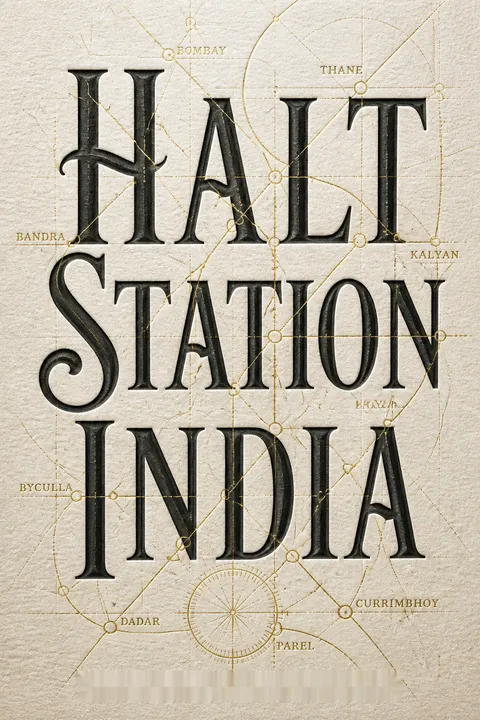
Halt Station India is best understood as a walking history of infrastructure. Its narrative moves along Bombay's railway lines, but the rails serve as a way into the city's deeper transformations: from islands and marshes to a port metropolis, from colonial trade routes to mass commuting, and from steam to electrification. The method is unusually effective because it anchors large historical processes in things a traveler might overlook: a maker's stamp on a pillar, a buried platform, or a station name inherited from a village.
The book's strongest contribution is its insistence that rail history is also urban, social, and material history. A railway line links engineering decisions to land acquisition, labor relations, public health, commerce, and everyday travel. The chapters on the port and the Harbour Line widen the picture beyond passenger service, while the tramways and industrial branches show how transport systems compete and complement one another. Together, these stories make the city legible as a layered transport landscape rather than a collection of isolated landmarks.
That landscape is not politically neutral. The earliest railway plans served cotton exports and military strategy, and the book records British assumptions about Indian labor and social customs. At the same time, local workers, merchants, contractors, and passengers shaped how the system operated. The evidence for their experiences is uneven, often preserved through official records or elite memoirs. This invites readers to treat the book's discoveries as openings for further inquiry, especially into the people whose voices were less likely to enter the archive.
The preservation theme carries a practical argument: modernization should not make historical evidence invisible. A city cannot preserve every structure, nor should it refuse needed upgrades. But documenting ordinary infrastructure before demolition can protect knowledge even when the object itself must go. The railway's history shows that transport is never finished. Its future depends not only on faster trains, but on decisions about access, land, memory, and whose journeys the network is built to serve.
Review Summary
Halt Station India receives high praise for its meticulous research and engaging narrative about Mumbai's railway history. Readers appreciate the author's passion, attention to detail, and ability to weave together historical facts, anecdotes, and present-day observations. The book is lauded for its exploration of station names, forgotten lines, and the city's evolution through its rail network. Many reviewers consider it a must-read for railway enthusiasts, history buffs, and Mumbaikars, offering a fascinating journey through time and space.
Glossary
Great Indian Peninsula Railway
Bombay's pioneering railwayThe Great Indian Peninsula Railway, commonly abbreviated as GIPR, was the company that built Bombay's first major railway line. Its first official passenger service ran from Bori Bunder to Thane in 1853. The network later expanded inland and became the basis of today's Central Railway routes in and around Mumbai.
Bombay, Baroda, and Central India Railway
Bombay's western railwayThe Bombay, Baroda, and Central India Railway, or BB&CI Railway, was a separate railway company that connected Bombay with Gujarat and other regions to the north. It developed the western suburban corridor and its own termini, including Churchgate and Colaba. The company later became the basis of today's Western Railway.
Harbour Line
Railway along the portThe Harbour Line is a Mumbai suburban railway route that developed from links serving the eastern docks and port districts. Its first section, between Kurla and Reay Road, opened in 1910. The route was extended toward Victoria Terminus and became India's first passenger railway line powered by electricity.
broad gauge
Wide railway track gaugeBroad gauge describes a railway track with rails spaced farther apart than standard gauge. The GIPR adopted a gauge of 5 feet 6 inches for its first line in India. That choice shaped construction requirements and became the dominant gauge used across the Indian railway network.
boat train
Train timed to shipsA boat train is a passenger train organized to connect with ships or ferries at a port. In Bombay, port railways carried passengers from Ballard Pier to long-distance trains, linking ocean travel with destinations inland. The arrangement coordinated two transport systems and served passengers, mail, and military movement.
Reversing Station
Station for steep ascentsA Reversing Station was a railway arrangement used on the steep Bhor Ghat ascent near Khandala. Trains and their locomotives changed direction at a specially shaped track junction to negotiate the incline. Steam trains could use a leading locomotive and a rear helper, while a turntable allowed the engines to be repositioned.
regenerative braking
Braking that returns energyRegenerative braking is a system in which an electric train's braking process generates energy that can be returned to the electrical supply system. The book describes its use in newer Mumbai suburban trains, alongside equipment that allowed trains to operate during the change from direct-current to alternating-current power.
About the Author
Other books by Rajendra B. Aklekar

Download PDF
Download EPUB
.epub digital book format is ideal for reading ebooks on phones, tablets, and e-readers.








