

Key Takeaways
Judge happiness by the life you endorse, not today's emotional weather.
A wider measure. A pleasant moment is not the same as a happy life. Lenoir’s working definition combines awareness with an overall, relatively enduring sense of satisfaction. Someone can feel miserable during a difficult afternoon yet still value the direction of their life; another person can enjoy a good day while feeling deeply dissatisfied overall. Happiness depends on how life is going across important domains, including relationships, work, health, and personal meaning.
Attention matters. Humans register threats more readily than ordinary pleasures, a bias that helped ancestors notice danger but can make present-day life feel worse than it is. Montaigne’s practice was to notice pleasure while experiencing it, rather than letting it pass unacknowledged. This does not turn every life into a happy one, but it can make real satisfaction easier to recognize.
The distinction between mood and life evaluation is useful because it prevents a bad morning from becoming a verdict on an entire existence. It also explains why happiness surveys ask people to assess their lives broadly rather than report a passing feeling. Yet the broader judgment is not automatically more objective: memory, expectations, and current hardship can distort it too. A sound assessment therefore benefits from multiple time scales, such as asking what feels good today and what still seems worthwhile across a year. The book’s definition makes happiness reflective, not merely emotional.
Choose pleasures by their aftertaste, not just their intensity.
Pleasure needs judgment. Aristotle treats happiness, or eudaimonia, as the highest human good: a life of activity shaped by virtue, not a string of agreeable sensations. Pleasure belongs in that life, but it can be physical, intellectual, social, or moral. Epicurus likewise does not recommend indulging every appetite. He sorts desires into basic necessities, natural extras, and status-driven wants. Food and shelter answer basic needs; luxury and power can generate fresh dissatisfaction.
Moderation is practical. Epicurus’s ideal, ataraxia, is deep calm of mind, supported by meeting necessary needs, reducing needless fears, and choosing pleasures with care. A feast may delight briefly, while friendship and learning can nourish a life more steadily. The test is not whether an experience feels good now, but whether its consequences support a balanced life.
This account anticipates a modern distinction between immediate reward and durable well-being. A pleasure can be intense yet costly, while a quieter activity can support health, competence, or belonging. The framework also resists the false choice between indulgence and asceticism: the question is what a pleasure does within a life. Still, moderation cannot mean treating every desire as suspect. Desire can signal unmet needs, and deprivation is not wisdom. The stronger lesson is to examine consequences and context rather than trust either appetite or self-denial as a universal guide.
Give your life a direction worth sacrificing short-term comfort for.
Meaning guides choice. Lenoir uses meaning in two senses: a life has a direction and it matters to the person living it. Work, family, service, or resisting injustice can each provide that orientation. This need not depend on a universal answer to the meaning of life. It can arise from commitments that organize ordinary decisions and give effort a purpose.
The journey counts. A person who hopes to become a professional musician must practice, accept frustration, and give up some easier diversions. The point is not that every dream comes true, but that deliberate progress toward a fitting goal can itself be satisfying. Socrates and Jesus represent a more radical case: each accepts death rather than betray a value regarded as higher than personal safety. Happiness is not always the highest priority, and a meaningful life may involve costs.
Meaning turns happiness from a shopping list into a structure of commitments. In contemporary motivation research, goals tend to feel more sustaining when people experience them as self-endorsed rather than imposed, a useful extension of Lenoir’s emphasis on choosing a direction. The examples of sacrifice also expose a tension: a person can act with integrity while suffering, so happiness cannot be the sole test of a good decision. At the same time, sacrifice can be romanticized. A commitment deserves scrutiny when its costs fall heavily on others or when it demands self-erasure rather than purposeful effort.
Know your temperament, then work with it instead of surrendering to it.
Different lives fit different people. A social person may thrive in a busy community, while someone else needs solitude; one person flourishes in hands-on work, another in intellectual or artistic pursuits. Jung’s term individuation describes the process of becoming more fully oneself, often by noticing where a life is shaped more by approval-seeking than genuine inclination. Lenoir pairs this with Schopenhauer’s point that temperament strongly affects how circumstances are experienced.
Disposition is not destiny. The book cites an estimate that about 50 percent of happiness aptitude relates to temperament, 10 percent to circumstances, and 40 percent to personal effort. Lenoir notes that the precision of this estimate is uncertain. His broader claim is that people can influence their outlook through self-understanding, changed habits, and psychological or spiritual practice, even if they cannot choose their starting temperament.
The useful distinction is between respecting stable preferences and mistaking them for an unchangeable identity. Personality research generally finds both continuity and change, so neither a blank-slate story nor strict biological fatalism is convincing. The cited percentages should be treated as a rough illustration, not a personal forecast; their neat arithmetic can imply more certainty than happiness research warrants. Individual fit also depends on opportunity. A person may seem unsuited to a role because the environment is hostile, not because the role violates an inner essence. Self-knowledge should widen options, not prematurely close them.
Treat money as protection and opportunity, not as a happiness scoreboard.
More income is not a guarantee. Lenoir points to Richard Easterlin’s finding that US income per person rose substantially between 1945 and 1970 while the share reporting very high happiness remained around 40 percent. In France, GDP grew by more than 60 percent between 1975 and 2000, while life satisfaction stayed near 75 percent. These comparisons challenge the assumption that a richer society automatically becomes a happier one.
Comparison changes the prize. In one student study, many preferred earning $33,000 when peers earned $30,000 over earning $35,000 when peers earned $38,000. The relative ranking mattered more than the absolute amount. Lenoir does not claim money is useless: too little can trap people in survival concerns, and income can enable independence and meaningful choices. The warning is against endless accumulation after basic security is met.
The distinction between income as a resource and income as a status signal clarifies why financial security can matter greatly while relative wealth often disappoints. Social comparison can reset expectations: what once felt abundant becomes inadequate when the reference group changes. The evidence also deserves care. National trends and hypothetical student choices do not prove that money has no effect on well-being, especially for people facing poverty or insecurity. The more defensible conclusion is conditional: money can reduce hardship and expand choices, while its emotional return depends on needs, social context, and what it displaces.
Give ordinary pleasures your attention, but leave room for the mind to wander.
Attention deepens experience. Lenoir argues that savoring a good moment can make its satisfaction more vivid. Mindfulness meditation, inspired in part by Buddhist practice, trains attention to notice present sensations without being swept away by every thought. The same principle applies to walking, eating, working, or listening to music: attention can prevent an experience from disappearing beneath distraction or worry.
Not all wandering is rumination. Replaying regret or rehearsing future danger can amplify distress. But relaxed reverie, imagination, and pleasant memories can also replenish inner life. Lenoir therefore resists an ideal of constant focus. Children need unstructured play to develop imagination, and adults also benefit from periods without a task or performance goal. Happiness draws on presence, but it is not a demand to police every passing thought.
The distinction between rumination and open-ended daydreaming is important. Attention is not simply a matter of concentrating harder; mental recovery also requires moments when thought can associate freely. This complements research on mind wandering, which finds both costs and benefits depending on whether thought is repetitive or constructive. The advice is especially relevant in environments built to interrupt attention, but mindfulness should not become another productivity metric. Persistent distress may need social support or clinical care, not just a stronger attempt to attend to the present.
Build happiness through reciprocal bonds, not solitary self-improvement.
Close ties are central. Aristotle and Epicurus both treat friendship as essential to a good life. Lenoir describes friendship and enduring love as forms of communion that include shared interests, mutual care, and respect for the other person’s distinctness. Passion can bring pleasure, but idealization, jealousy, and uncertainty can make it painful. Care for others also has limits: generosity should not require destroying one’s own health or capacity to live.
Moods travel through networks. A study of nearly 5,000 people followed over twenty years found that happiness and unhappiness clustered within social networks. The book reports estimates that each happy friend raised a person’s probability of being happy by 9 percent, while each unhappy friend lowered it by 7 percent. Lenoir’s conclusion is ethical as well as personal: pursuing well-being need not compete with concern for others.
The social account corrects the popular image of happiness as a private achievement. Relationships supply care, recognition, and shared interpretation, while a person’s conduct also affects the emotional climate around them. Network studies, however, can show clustering without proving that one friend’s mood directly causes another’s; people choose similar friends and share circumstances. The precise percentages should therefore be read cautiously. The broader point remains compelling: happiness is partly relational, and altruism is most sustainable when paired with boundaries and reciprocal support.
Pursue happiness gently, before the pursuit becomes another demand.
A goal can become a burden. Lenoir draws on Pascal Bruckner’s critique of the modern command to be happy. Advertising links satisfaction to possessions and appearance, while self-improvement culture can make people feel responsible for optimizing every part of life. The result resembles an exhausting second job: career, parenting, exercise, relationships, and leisure all become tests of personal success.
Make the aim workable. The answer is not to abandon hope or stop improving life. It is to set attainable steps, make adjustments patiently, and accept that circumstances include setbacks. Studies discussed in the book show that people who win the lottery often return toward their prior level of satisfaction after an initial rise. That pattern cautions against expecting one achievement to create permanent bliss. A flexible pursuit leaves room for pleasure now, not only after some imagined final upgrade.
This is a sharp diagnosis of how an aspiration can become a norm that judges the person who fails to meet it. It connects with the broader problem of turning personal agency into total responsibility: structural insecurity, illness, and discrimination cannot be solved by optimism alone. Gradual goals preserve agency without pretending that every outcome is controllable. Adaptation to positive events also does not make achievements meaningless; it suggests that lasting satisfaction often depends on ongoing practices and relationships, not a single peak experience.
Change what you can, and stop letting judgment add avoidable suffering.
Separate event from response. Stoicism and Buddhism argue that distress is shaped not only by events but by attachment and interpretation. Epictetus distinguishes what depends on a person, such as judgments and chosen actions, from what does not, such as illness, reputation, or other people’s behavior. The practical aim is not passivity. It is to respond where action is possible without demanding total control over reality.
Acceptance is not approval. Lenoir’s final examples include Etty Hillesum, a Jewish woman deported to Auschwitz who described preserving an inner life amid extreme oppression. Her experience shows that suffering and some form of inner freedom can coexist, not that everyone should be able to endure atrocity serenely. When pain can be reduced, it should be addressed. When it cannot, changing its meaning or one’s relation to it may protect some measure of agency.
The distinction between controllable response and uncontrollable circumstance can restore agency in situations where direct control is limited. It also needs a moral guardrail: emphasizing interpretation must not shift blame onto people who suffer or excuse unjust conditions. The Stoic model is strongest when paired with practical action, including seeking help and resisting harm where possible. Hillesum’s testimony is powerful precisely because it is exceptional and historically situated; it should illuminate human possibility without becoming a standard by which survivors are judged.
Replace a draining desire with one that better expresses your capacity to grow.
Desire can be redirected. Spinoza calls the effort by which each being persists and develops conatus. He sees joy as a movement toward greater power to act, and sadness as a reduction of it. This makes happiness less about scolding oneself for wanting something and more about understanding what a desire does. A desire that repeatedly produces frustration may give way to one that better fits a person’s abilities and curiosity.
Use attraction, not only prohibition. Lenoir recounts a young woman who disliked both school and retail work, then discovered through independent reading that sociology engaged her. She pursued university study and found greater satisfaction in learning. Reason helped her organize a desire that already had energy. The larger aim is not private pleasure at any cost: Spinoza argues that clearer self-understanding can also make people more useful to one another.
Spinoza’s approach offers a practical alternative to moralizing about willpower. Behavior change often becomes more durable when a competing activity supplies a meaningful reward, rather than relying on suppression alone. The example also shows how curiosity can reveal a better-fitting path through experimentation. Still, the language of increasing one’s power to act needs social context: opportunity, money, and discrimination shape which desires are feasible. A wise redirection should distinguish an unhelpful craving from a real need blocked by circumstances.
Analysis
Lenoir’s book is best understood as a guided argument across traditions, not a single technique for producing happiness. Its central movement is from happiness as a fluctuating collection of pleasures toward happiness as a reflective relationship with a whole life. Aristotle and Epicurus show why pleasure needs judgment. Kant, Socrates, and Jesus complicate the assumption that happiness outranks every value. Montaigne and Chuang Tzu defend a humane flexibility, while Stoicism, Buddhism, and Spinoza examine how desire and interpretation shape suffering.
The book’s strongest synthesis is that happiness is conditioned but not fully determined. Temperament, health, economic security, relationships, and chance matter; attention, interpretation, ethical choices, and self-knowledge also matter. This avoids both a simplistic self-help promise and fatalism. Its social argument is equally important: happiness is not merely an inner possession, since friendship, altruism, economic inequality, and shared political life affect whether people can flourish.
A central tension remains. Lenoir sometimes describes happiness as an inward transformation that can survive severe hardship, then also defines it through satisfaction across life domains. These are related but not identical standards. Inner serenity may coexist with deprivation or injustice, while a life with abundant external goods may still feel empty. Keeping the distinction visible helps avoid treating resilience as proof that external conditions do not matter.
The book also blends philosophical traditions and scientific findings with confidence that occasionally exceeds the evidence presented. The numerical estimates of genetic and personal contributions, and the reported social-network effects, are useful prompts rather than universal laws. Their value lies less in precision than in challenging single-cause explanations. Read this way, the book offers not a happiness formula but a disciplined question: what combination of pleasure, purpose, truth, relationship, and inner freedom makes this particular life worth affirming?
Review Summary
Happiness by Frédéric Lenoir receives mixed reviews. Many praise its philosophical exploration of happiness, drawing from various thinkers and cultures. Readers appreciate the concise yet insightful analysis of different approaches to happiness. Some find it thought-provoking and a valuable reference. However, critics argue it oversimplifies complex ideas and lacks depth in certain areas. The book's accessibility is both praised and criticized, with some finding it too superficial while others appreciate its readability. Overall, it's recommended for those interested in philosophical perspectives on happiness.
People Also Read




Glossary
subjective well-being
overall life satisfactionA psychological and sociological way to assess how people experience their lives overall. It is broader than a momentary feeling: surveys ask people to judge their lives across time and important domains. Lenoir uses it to distinguish enduring life satisfaction from a passing mood or a single pleasurable sensation.
eudaimonia
flourishing through virtuous livingAn ancient Greek term for happiness understood as a whole and well-lived life, rather than a passing feeling. In Aristotle’s account, eudaimonia comes through activity guided by virtue and reason. It can include pleasure and external necessities, but it is not reducible to either.
ataraxia
tranquility of the soulA state of deep mental calm, especially associated in this book with Epicurus. It is approached by reducing groundless fears, distinguishing necessary needs from restless wants, and choosing pleasures carefully. Ataraxia does not require rejecting every pleasure; it means avoiding the turmoil produced by excess and dissatisfaction.
individuation
becoming more fully oneselfCarl Jung’s term for a process of developing one’s distinctive individuality. In Lenoir’s account, it can involve recognizing when a person has shaped work or relationships mainly to win approval, then examining whether those choices fit their deeper temperament and aspirations.
fixed point
usual satisfaction levelLenoir’s shorthand for a person’s relatively stable baseline of life satisfaction. Positive or negative events may move someone above or below it for a time, while experience and personal development may alter the baseline. The term summarizes research discussed in the book, not a guarantee that everyone returns to one unchanging level.
prosoche
vigilant present attentionA Stoic spiritual exercise of maintaining attention to what is happening in the present, including external events and internal reactions. The purpose is to notice judgments, desires, or emotions early enough to respond deliberately rather than being carried away by them.
dhukka
deep unsatisfactorinessA Buddhist term Lenoir uses for the pervasive vulnerability and dissatisfaction of existence. It includes pain, aging, loss, and the frustration of wanting life to remain as desired. It does not mean that every moment is acutely miserable; it names the instability that makes beings vulnerable to suffering.
Eightfold Path
Buddhist path beyond sufferingThe Buddhist discipline described as a route toward the cessation of suffering and the understanding of reality. Its eight elements concern understanding, thought, speech, action, livelihood, effort, mindfulness, and concentration. Together they develop ethical conduct, mental discipline, and wisdom rather than relying on a single technique.
conatus
effort to persist and developSpinoza’s term for the striving by which each being tries to continue in its existence and increase its capacity to act. Lenoir connects it to the experience of joy when encounters strengthen a person’s ability to live and act, and sadness when that capacity is diminished.
affects
emotions, feelings, and desiresSpinoza’s specialized term for the changes in a person’s body and mind that shape capacity for action. The category includes emotions, feelings, and desires such as joy, sadness, fear, love, and anger. Understanding their causes, rather than simply condemning them, is central to Spinoza’s account of freedom.
FAQ
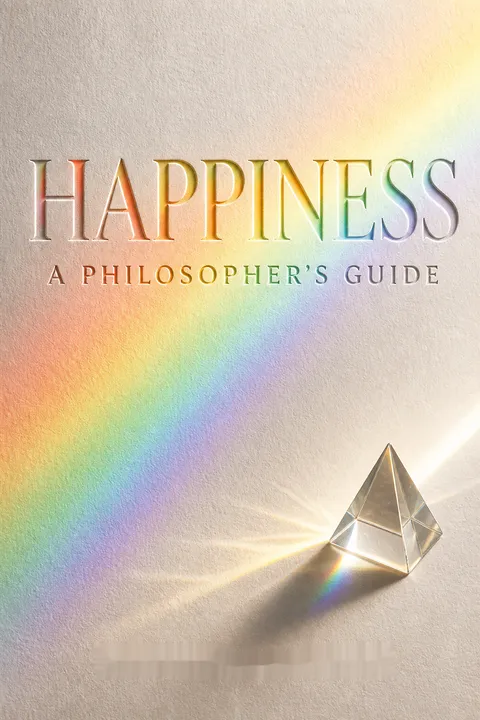
1. What is "Happiness: A Philosopher’s Guide" by Frédéric Lenoir about?
- Philosophical exploration of happiness: The book is a wide-ranging philosophical journey through the concept of happiness, drawing on Western and Eastern traditions, ancient and modern thinkers.
- Combines philosophy and science: Lenoir integrates insights from philosophy, psychology, neuroscience, and spirituality to examine what happiness is and how it can be cultivated.
- Practical and reflective: The book is both a theoretical investigation and a practical guide, offering reflections, exercises, and examples to help readers understand and pursue happiness in their own lives.
- Personal and universal: Lenoir weaves his personal experiences with universal questions, making the book accessible and relevant to a broad audience.
2. Why should I read "Happiness: A Philosopher’s Guide" by Frédéric Lenoir?
- Comprehensive perspective: The book offers a unique synthesis of philosophical wisdom, scientific research, and practical advice on happiness.
- Accessible and engaging: Lenoir writes in a clear, engaging style, making complex ideas understandable and applicable to everyday life.
- Cross-cultural insights: Readers gain exposure to diverse traditions, including Greek philosophy, Buddhism, Taoism, and modern psychology.
- Actionable wisdom: The book provides concrete suggestions and exercises for cultivating happiness, self-awareness, and meaning.
3. What are the key takeaways from "Happiness: A Philosopher’s Guide"?
- Happiness is multifaceted: It involves pleasure, meaning, self-awareness, and the ability to adapt to life’s circumstances.
- No universal recipe: Happiness is subjective and influenced by individual temperament, culture, and life phase, but certain practices can enhance it.
- Role of reason and will: While some aspects of happiness are beyond our control, we can increase our happiness through conscious choices, self-knowledge, and mental training.
- Connection to others: Relationships, altruism, and collective well-being are essential components of lasting happiness.
4. How does Frédéric Lenoir define happiness in "Happiness: A Philosopher’s Guide"?
- Enduring satisfaction: Happiness is described as the awareness of an overall and enduring state of satisfaction in a meaningful existence founded on truth.
- Subjective well-being: Lenoir aligns with psychological definitions, seeing happiness as loving the life one leads and being aware of one’s well-being.
- Beyond fleeting pleasure: True happiness is not just a series of pleasurable moments but a deeper, more stable state that integrates pleasure, meaning, and self-awareness.
- Rooted in self-knowledge: Happiness is closely tied to understanding and living in accordance with one’s deeper nature and values.
5. What philosophical traditions and thinkers does "Happiness: A Philosopher’s Guide" draw upon?
- Greek philosophy: Aristotle, Epicurus, and the Stoics are central, with their discussions of pleasure, virtue, and the art of living.
- Eastern wisdom: The book explores Buddhist and Taoist perspectives, especially regarding desire, detachment, and harmony with nature.
- Modern philosophers: Lenoir discusses Schopenhauer, Kant, Spinoza, Montaigne, and others, examining their views on happiness, meaning, and ethics.
- Contemporary science: Insights from psychology, neuroscience, and positive psychology are integrated to support and challenge philosophical ideas.
6. What is the role of pleasure and meaning in happiness according to "Happiness: A Philosopher’s Guide"?
- Pleasure as a component: Pleasure is necessary but not sufficient for happiness; it must be balanced and guided by reason.
- Meaning gives direction: A meaningful life, with clear values and goals, is essential for deep and lasting happiness.
- Convergence of both: The happiest individuals experience both pleasure and meaning, and these often reinforce each other.
- Ancient and modern agreement: Both ancient philosophers and contemporary research highlight the importance of integrating pleasure and meaning.
7. How does "Happiness: A Philosopher’s Guide" address the influence of genetics, temperament, and external circumstances on happiness?
- Genetic predisposition: About 50% of our capacity for happiness is linked to genetic factors and temperament, according to cited research.
- Limited impact of circumstances: External conditions like wealth, status, and environment account for only about 10% of happiness.
- Personal effort matters: Up to 40% of happiness can be influenced by personal choices, habits, and mental training.
- Change is possible: While we are conditioned by our nature and environment, we are not fully determined by them; self-work can increase happiness.
8. What practical advice and methods does Frédéric Lenoir offer for increasing happiness?
- Cultivate self-awareness: Regular reflection and mindfulness help us savor positive experiences and understand our true needs.
- Practice moderation: Following Aristotle and Epicurus, Lenoir advocates for balanced pleasures and avoiding excess.
- Develop positive thoughts: Working on beliefs, optimism, and gratitude can shift our emotional state and resilience.
- Foster relationships and altruism: Building strong social ties and practicing generosity are shown to enhance happiness.
9. How does "Happiness: A Philosopher’s Guide" discuss the relationship between happiness and other people?
- Essential for happiness: Love, friendship, and emotional ties are identified as pillars of happiness.
- Altruism and giving: Helping others and practicing altruism not only benefit recipients but also increase the giver’s happiness.
- Contagiousness of happiness: Happiness spreads through social networks, making individual well-being a collective phenomenon.
- Balance of self and others: True happiness involves both self-fulfillment and contributing to the happiness of others.
10. What are the main obstacles to happiness identified in "Happiness: A Philosopher’s Guide"?
- Unrealistic expectations: The modern imperative to be happy can create stress, frustration, and even depression.
- Attachment and desire: Excessive attachment to desires, outcomes, or material goods leads to dissatisfaction and suffering.
- Comparison and envy: Measuring oneself against others’ success or happiness undermines contentment.
- Neglecting inner work: Focusing solely on external achievements or possessions distracts from the inner cultivation necessary for lasting happiness.
11. How does "Happiness: A Philosopher’s Guide" compare Western and Eastern approaches to happiness?
- Western focus on reason and virtue: Greek and modern Western philosophies emphasize rational self-mastery, ethics, and the pursuit of meaning.
- Eastern focus on detachment and harmony: Buddhism and Taoism stress the importance of letting go of desires, accepting impermanence, and aligning with the flow of life.
- Converging wisdom: Both traditions ultimately advocate for self-knowledge, moderation, and inner transformation as paths to happiness.
- Practical exercises: Both East and West offer spiritual and psychological exercises to cultivate awareness, acceptance, and joy.
12. What are the best quotes from "Happiness: A Philosopher’s Guide" and what do they mean?
- “Happiness is the awareness of an overall and enduring state of satisfaction in a meaningful existence founded on truth.” This encapsulates Lenoir’s definition, emphasizing self-awareness, meaning, and authenticity.
- “We are conditioned but not determined by various factors to be more or less happy.” Lenoir highlights the balance between fate and personal responsibility in happiness.
- “Happiness is contagious.” The book stresses that our happiness affects others, making it a moral duty to cultivate it.
- “Being happy means loving life, all of life: with its ups and downs, its glimmers of light and its periods of darkness, its pleasures and its pains.” This quote reflects the book’s ultimate message: happiness is not the absence of suffering, but a deep acceptance and love of life as it is.

Download PDF
Download EPUB
.epub digital book format is ideal for reading ebooks on phones, tablets, and e-readers.








