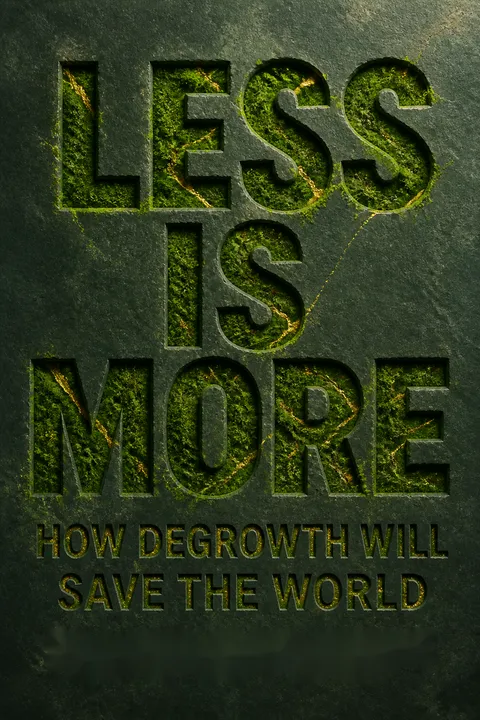


Key Takeaways
Read insect decline as a warning that the living web is failing
Small losses spread. As a child in Eswatini, Hickel remembers driving through clouds of insects. Years later, the family car returned from long trips nearly clean. The change echoed research from Germany, where flying insects in nature reserves fell by about three-quarters over twenty-five years, and from Puerto Rico, where insect biomass in a rainforest dropped by as much as 98% over thirty-six years. These losses matter beyond insects: pollination, soil fertility, and food for birds and other animals depend on them. When one part of an ecosystem weakens, the damage can travel through the whole network.
The crisis has a driver. Hickel argues that today’s ecological breakdown is not simply humanity’s inevitable impact. It is intensified by an economic system that continually expands extraction and production, with high-income countries responsible for a disproportionate share. The book’s opening move is to connect the frightening ecological evidence to the economic rules behind it.
The insect story makes ecological change legible at human scale: a familiar childhood scene becomes evidence of a damaged system. That is a powerful corrective to treating extinction as a remote statistic. Ecology also explains why single-species counts matter: organisms perform functions, and those functions support other life. At the same time, the book’s figures come from specific studies and places, not a uniform global census. The broader case is strongest when the numbers are read alongside the mechanisms Hickel describes, such as habitat loss and chemical use, rather than as proof that every insect population is falling at the same rate.
Trace capitalism to enclosure, coercion, and colonial extraction
A contested beginning. Hickel challenges the familiar story that capitalism naturally emerged from markets and human self-interest. Markets existed long before capitalism. His account instead begins with medieval commoners who resisted feudal lords, won greater access to land, and built local systems of shared resource management. After the Black Death made labour scarce, wages rose and serfdom weakened across much of Europe.
Autonomy was reversed. Elites responded by enclosing common lands, evicting rural communities, and making survival depend on wage labour. Overseas conquest added stolen land, enslaved labour, and raw materials to the same accumulation process. Enclosure also created consumers who had lost access to what they once produced for themselves. In Hickel’s account, capitalist expansion was neither inevitable nor peaceful: it was built by dismantling ways of life that limited elite accumulation.
This history changes the usual question from “Why did markets emerge?” to “Who lost control of the resources needed to live?” That shift connects economic history to political power: ownership is not merely a legal arrangement when access to land, food, and work determines survival. The account also usefully joins domestic enclosure to colonial appropriation instead of treating them as separate histories. Its wide-ranging causal narrative remains a particular interpretation of a complex transition, and historians debate how different regions and institutions shaped it. The central reminder still holds: economic systems are made through political conflict, not discovered in human nature.
Question growth when its purpose is simply to keep capital expanding
Growth is the rule. Hickel uses growthism to mean the pursuit of economic growth as a goal in itself, rather than as a tool for meeting specific needs. Capitalist firms are pressured to reinvest profits and earn more each year. At roughly 3% annual growth, an economy doubles in about twenty-three years. A modest-looking percentage therefore creates a compounding demand for more production, resources, and energy.
GDP is not welfare. Gross Domestic Product counts monetised activity, whether useful or harmful. It rises when forests are cut down, pollution causes illness, or people pay for services once provided without charge. It misses unpaid care and much of the damage to ecosystems. Hickel’s proposal, called degrowth, is a planned reduction of energy and resource use in high-income economies, combined with fairer distribution and protection of human needs. It is not a policy of indiscriminate hardship.
The distinction between growth as a means and growth as an end is the book’s analytical hinge. It invites a practical question for every policy: what is being expanded, for whose benefit, and at what cost? GDP remains useful for measuring some economic activity, but it becomes misleading when treated as a complete scorecard of social progress. The compounding example also helps explain why “just a little more” cannot remain little forever. Still, a growth rate is not a full description of an economy’s impacts. Resource use, emissions, distribution, and public services need direct measurement too.
Demand proof before betting the climate on technological rescue
Efficiency can fuel expansion. Hickel invokes the Jevons Paradox: an efficiency improvement can lower the cost of using a resource, encouraging more use and sometimes raising total consumption. A faster chainsaw, for example, can help loggers cut more trees rather than finish the same work sooner. The argument is not that efficiency is worthless, but that its benefits can be swallowed by an economy designed to expand.
Promises carry risks. One proposed carbon-removal technology, BECCS, grows plants for fuel, burns them, captures the carbon, and stores it underground. Hickel warns that large-scale plans would require vast land, infrastructure, and water, with risks to food production and ecosystems. He also argues that clean power alone does not stop overfishing, deforestation, or mining. Renewable energy is essential, but growth in demand can make the transition harder and add extraction pressures.
This is a useful distinction between a technology’s technical promise and the system in which it is deployed. Efficiency standards can reduce impacts, but total results depend on whether savings are reinvested in further consumption. That is the logic behind rebound effects, although their size varies by technology and policy, so they do not automatically erase every efficiency gain. The book’s warning about speculative carbon removal is especially relevant to risk management: a future device should not become an excuse to delay emissions cuts that are available now. Innovation works best alongside firm limits and clear priorities.
Build health and education through public provision, not GDP alone
Income is not the mechanism. Hickel revisits the claim that economic growth automatically improves health. Historical evidence points instead to sanitation, vaccination, universal healthcare, education, and safer work as direct drivers of longer lives. In the United States, sanitation measures accounted for much of the decline in infant mortality between 1900 and 1936. These improvements required public infrastructure and collective decisions, not simply higher average income.
More can deliver less. Countries such as Japan, Portugal, and Costa Rica have achieved life expectancy comparable to or higher than the United States with substantially less income per person. Hickel argues that what matters is how resources are distributed and whether people can access essential services. He also points to the Genuine Progress Indicator, which adjusts consumption measures for inequality and social and environmental costs. Its trend suggests that additional output can stop translating into greater well-being.
The public-health perspective makes progress concrete: clean water, vaccines, and accessible care have identifiable effects that aggregate income alone cannot guarantee. This also helps explain why public spending can outperform a more expensive private system. The examples are not proof that income never matters. Very low-income societies may need more resources to provide basic services, and institutions differ in cost and effectiveness. The book’s more careful claim is that beyond a threshold, further GDP growth is a weak substitute for deliberate investment and fair access. That distinction is central to designing policy rather than merely ranking countries by wealth.
Reduce rich-country consumption while protecting poorer nations’ development space
Responsibility is unequal. Hickel compares average material use of about 28 tons per person each year in high-income countries with a sustainable benchmark of roughly 8 tons. He also estimates that high-income countries account for 92% of historical emissions above an equal share of a safe carbon boundary. These figures support his argument that “humanity” is too broad a label for assigning responsibility.
Needs differ by place. Many lower-income countries remain below ecological thresholds while lacking reliable healthcare, housing, energy, and sanitation. They may need greater resource use to meet those needs. Meanwhile, wealthier economies rely on materials and labour extracted from poorer countries, often under unequal conditions. Hickel therefore links ecological policy to global justice: rich countries should reduce excess consumption, while poorer countries gain room to develop and retain more value from their work and resources.
This framing prevents climate policy from treating every person or nation as equally responsible. It aligns with the principle of differentiated responsibility: those with greater historical contributions and greater capacity can shoulder more of the transition. It also guards against a green transition that shifts mining and land costs onto poorer communities. The precise allocation of historical emissions depends on choices about population, trade, and the start date used, so the headline percentages are not neutral facts independent of method. But the underlying distributional question is unavoidable: who used the atmospheric and material budget, and who is now asked to make sacrifices?
Cut planned waste before asking households to sacrifice essentials
Much production is avoidable. Hickel’s practical case for degrowth begins with goods and activities that consume resources without reliably improving lives. Planned obsolescence shortens product life to encourage replacement. Advertising can manufacture dissatisfaction and demand. Shared tools and public transport can reduce the need for individual ownership. Food waste is another target: the book cites estimates that up to half of food produced globally is lost or discarded.
Choose what should shrink. Hickel also identifies ecologically destructive sectors, particularly fossil fuels and industrial beef. Nearly 60% of agricultural land is used for beef production, while beef supplies only about 2% of human calories. The proposed shift is selective: expand clean energy, healthcare, and essential services while reducing luxury emissions and wasteful throughput. The aim is to lower ecological pressure without denying people the goods they need.
The emphasis on avoidable waste is strategically important because it distinguishes ecological restraint from blanket austerity. Longer-lasting products and less food waste can lower resource use without asking people to give up basic comfort. The same logic supports public transport and shared equipment, which provide access without requiring every household to own everything. Yet “unnecessary” is politically contested, and consumption choices are shaped by infrastructure, income, and culture. Effective policy therefore needs democratic input, worker protections, and alternatives people can actually use, rather than relying on moral appeals to individual consumers.
Share productivity gains as shorter hours, stable jobs, and care
Less work need not mean joblessness. If durable goods, sharing, and reduced waste lower production, some industries will employ fewer people. Hickel proposes shortening working hours so necessary work is distributed more broadly, alongside job guarantees and retraining for expanding fields such as renewable energy and public services. He points to research linking shorter hours with better health, life satisfaction, and gender equality.
Redistribute the gains. Productivity has risen, but workers have not consistently received the benefits as higher wages or more free time. Hickel argues for stronger labour bargaining, living wages, and less extreme gaps between executive and ordinary pay. More time also makes room for care work, family life, and community activity, much of which is unpaid and invisible in GDP. A fair transition must protect livelihoods as material throughput falls.
Working-time reduction offers a bridge between ecological policy and daily experience: the transition can mean more time, not merely fewer products. It also addresses a basic flaw in productivity-led economies, where greater output per worker can produce layoffs unless demand keeps expanding. Evidence on shorter hours is encouraging, though outcomes depend on wage protection, staffing, and whether workload is compressed into fewer days. A policy that cuts hours without maintaining adequate income could deepen insecurity. The point is not simply to work less, but to share both the work that remains and the gains technology creates.
Remove debt traps that make governments chase extraction for repayment
Debt compounds pressure. Loans require repayment with interest, which can push households and governments to seek ever-higher income. Governments facing heavy debt may expand logging, mining, or other extractive activity to earn revenue. Hickel argues that this links financial rules to ecological damage, especially where poorer countries owe money to foreign creditors.
Money is a design choice. The book describes how commercial banks create most circulating money when they issue loans, while the debt created must be repaid with interest. Hickel considers several alternatives: cancelling unjust debts, using simpler interest rules, or creating public money without requiring every unit to originate as private debt. He invokes the historic Law of Jubilee, a practice of periodically cancelling debts, as evidence that societies have treated repayment rules as changeable institutions rather than sacred laws.
The debt discussion usefully connects financial architecture to real pressures on land and labour. It also challenges the assumption that repayment is always a purely private obligation, since debt rules are established and enforced collectively. The proposed remedies are not interchangeable: cancellation, public money creation, and interest reform have different effects on borrowers, savers, banks, and inflation. Nor does debt alone explain extractive policy. The stronger lesson is institutional: an economy’s financial rules can make ecological restraint socially costly, so any transition must address how essential services and livelihoods are funded when growth slows.
Treat the more-than-human world as a community, not inventory
Relationship changes behaviour. Hickel contrasts dualism, the view that humans are separate from and superior to nature, with animism, a broad family of worldviews in which humans and other beings are interdependent participants in a living community. He draws on Indigenous communities that treat animals, plants, rivers, and forests with respect and reciprocity, taking what can be replenished and giving back through care.
Recovery is possible. Photographer Sebastião Salgado and his wife restored a degraded Brazilian farm to Atlantic rainforest. Springs returned, wildlife came back, and the land became a model for restoration. Hickel also cites research suggesting tropical forests can regain much of their biomass within decades when left to regenerate. He links this possibility to democratic control of shared resources: people can support long-term stewardship when they have a genuine voice in decisions.
The ethical argument gives ecological policy a cultural dimension: people are more likely to protect what they understand as a relationship, not merely a stock of materials. Indigenous knowledge also offers practical insight into local ecological limits and reciprocal stewardship. These traditions are diverse, however, and should not be flattened into a single romantic worldview or treated as a substitute for scientific evidence. The productive connection is between respectful, place-based knowledge and ecological measurement. Together, they can inform decisions that recognize both human needs and the other forms of life on which those needs depend.
Analysis
The book’s central move is to recast ecological crisis as a political-economic problem, not a technical malfunction awaiting a clever invention. Its historical account traces a line from enclosure and colonial appropriation to contemporary growth dependence, then asks what prosperity could mean if public health, security, and ecological stability replaced GDP expansion as governing aims. This makes the argument more than a call for individual restraint. It is a proposal to change the rules that organize production, investment, work, and access to essential goods.
Its strongest contribution is the distinction between lowering economic throughput and imposing austerity. A planned reduction in material use can coexist with better lives if income, working time, and public services are redistributed. The book makes this concrete through sanitation, healthcare, working-hour reforms, and examples of countries achieving strong social outcomes without US-level incomes. Its account of unequal responsibility also prevents an ecological transition from being framed as a universal sacrifice, when consumption and historical emissions are concentrated among wealthier populations.
The argument is ambitious, and that ambition creates points requiring further work. The historical story gives capitalism’s rise a coherent political logic, but the routes from early enclosure to today’s institutional arrangements are varied and contested. The proposed transition also faces practical questions about sequencing, investment, monetary stability, and how democratic resource caps would work across sectors with different ecological impacts. These are not reasons to dismiss the project; they identify where its principles need institutional design.
The animist and relational perspective deepens the book’s ethical case, but its value does not depend on accepting every metaphysical claim about personhood. A reader can recognize ecological interdependence without assuming all cultures understand it in the same way. The lasting challenge is both material and imaginative: build an economy that meets human needs within ecological conditions, and stop mistaking perpetual expansion for progress.
Review Summary
Less is More is highly regarded for its critical analysis of capitalism and advocacy for degrowth economics. Readers appreciate Hickel's accessible writing style and compelling arguments against perpetual economic growth. The book is praised for its historical context, explanation of capitalism's flaws, and proposed solutions for a sustainable future. While some find the second half idealistic, many consider it thought-provoking and even life-changing. Critics argue the book is dogmatic and overly negative, but most reviewers recommend it as an essential read for understanding global economics and environmental issues.
People Also Read

Glossary
Degrowth
Planned reduction of throughputA planned reduction of energy and resource use, especially in high-income economies, to bring economic activity within ecological limits. Degrowth also means distributing resources more fairly, protecting livelihoods, and investing in public goods. It is not simply a shrinking GDP or a recession, since its goal is to reorganize the economy so that well-being does not depend on perpetual expansion.
Growthism
Growth pursued as an endThe belief and political practice that economies should continually increase GDP, often regardless of the social or ecological costs. Hickel distinguishes growthism from using economic growth as a limited means to a defined goal, such as improving access to healthcare. Growthism treats expansion itself as evidence of success and makes it difficult to question which sectors grow, who benefits, and what is damaged.
Lauderdale Paradox
Private riches can diminish public wealthA relationship between private riches and public wealth described by the Earl of Lauderdale. When an abundant resource, such as water, is enclosed or made scarce, owners may charge for access and increase private wealth. Yet the public loses free access to something useful. The paradox shows how economic activity can raise measured wealth while reducing the shared resources that support collective well-being.
Planetary boundaries
Ecological thresholds for planetary stabilityA scientific framework identifying key Earth-system processes that need to remain within a safe operating space. Examples include climate stability, biodiversity, land use, freshwater, and nutrient cycles. Crossing a proposed boundary does not necessarily cause immediate collapse, but it increases the risk of destabilizing feedbacks and irreversible change. Hickel uses the framework to argue for reducing economic pressure before ecological systems lose resilience.
Jevons Paradox
Efficiency can increase total resource useThe possibility that making a resource more efficient to use can lead to greater overall consumption of that resource. If efficiency lowers costs, firms or consumers may use the savings to expand activity. Hickel applies the idea to growth-oriented economies, where a more productive technology can increase total extraction rather than reduce it. The effect depends on the context and does not mean every efficiency improvement is erased.
BECCS
Bioenergy with carbon captureAn approach that grows plants for fuel, burns them to generate energy, captures the resulting carbon dioxide, and stores it underground. It is presented as a way to remove carbon from the atmosphere. Hickel criticizes reliance on large-scale BECCS in climate plans because it requires extensive infrastructure and land, and could compete with food production and damage ecosystems.
Artificial scarcity
Scarcity created by restricting accessA condition in which resources or opportunities remain materially available, but access to them is restricted through ownership, enclosure, pricing, or institutional rules. Hickel describes enclosure as a historical example: common lands still existed, but people were prevented from using them. In his account, manufactured scarcity pressures people to sell labour, buy commodities, and participate in economic growth.
Dualism
A separation of humans from natureA worldview that treats humans as fundamentally separate from, and superior to, the nonhuman world. Hickel traces this perspective through influential European philosophy and argues that it made it easier to regard land, animals, and ecosystems as inert objects for human use. In the book, dualism is both a philosophical idea and a cultural framework that supports extraction and commodification.
Animism
A relational view of living beingsA broad term for worldviews that understand the world as populated by persons, only some of whom are human, and emphasize relationships among humans and other beings. In the communities Hickel discusses, plants, animals, rivers, or mountains may be treated as subjects or kin. Animism does not necessarily prohibit taking from ecosystems; it emphasizes respect, restraint, and reciprocity.
Steady-state economy
An economy within ecological regenerationAn economy that maintains resource use and waste within the capacity of ecosystems to regenerate materials and absorb pollution. In this model, economic activity need not continually expand. Hickel connects steady-state principles to democratic management of shared resources and to ecological economics, which distinguishes human flourishing from ever-rising GDP.
FAQ
What's Less Is More about?
- Focus on Degrowth: Less Is More by Jason Hickel advocates for a shift from economic growth to a sustainable and equitable society through degrowth.
- Critique of Capitalism: Hickel argues that capitalism's growth imperative is incompatible with ecological sustainability and social equity.
- Interconnected Crises: The book highlights the interconnectedness of climate change, biodiversity loss, and social inequality, presenting them as symptoms of systemic issues.
- Vision for Change: Hickel outlines pathways to a post-capitalist world, focusing on human well-being and ecological balance.
Why should I read Less Is More?
- Urgent Call to Action: The book serves as a wake-up call to confront ecological collapse and the limitations of growth-oriented policies.
- Innovative Solutions: Hickel presents practical ideas for creating a just and sustainable world, valuable for activists and policymakers.
- Broad Perspective: Drawing from history, philosophy, and science, Hickel provides a comprehensive understanding of the challenges we face.
- Engaging Narrative: The author combines personal anecdotes and scientific research to make complex topics accessible.
What are the key takeaways of Less Is More?
- Critique of Capitalism: Hickel argues that capitalism's growth imperative drives ecological destruction and social inequality.
- Degrowth as a Solution: The book advocates for degrowth to achieve ecological balance and social equity by reducing consumption.
- Interconnectedness of Issues: Solutions must address ecological and social crises holistically, emphasizing solidarity with marginalized communities.
- Human Well-being Over GDP: Hickel posits that human welfare is not inherently tied to GDP growth.
What are the best quotes from Less Is More and what do they mean?
- “GDP-growth is an index...”: Challenges the notion that economic growth equates to improved quality of life.
- “We cannot wait...”: Emphasizes the urgency of systemic change to prevent further environmental degradation.
- “The collapse is already happening...”: Highlights the injustice of climate change affecting those least responsible.
- “Justice is the antidote to growth.”: Suggests that addressing inequality is crucial for sustainability.
What is the concept of degrowth in Less Is More?
- Definition of Degrowth: Planned downscaling of energy and resource use to achieve ecological balance and social equity.
- Focus on Human Needs: Prioritizes human needs over economic expansion, advocating for well-being and ecological health.
- Practical Applications: Includes reducing working hours, investing in public goods, and promoting local economies.
- Social Equity: Emphasizes fair distribution of resources to improve quality of life for all.
How does Less Is More critique capitalism?
- Growth Imperative: Critiques capitalism for its need for continuous growth, leading to environmental degradation.
- Resource Exploitation: Highlights how capitalism relies on resource extraction, creating social inequalities.
- Systemic Change Needed: Calls for a fundamental transformation of economic systems to prioritize ecological health.
- Historical Context: Links colonialism and capitalism to current ecological crises.
How does Less Is More address the role of technology in solving ecological issues?
- Skepticism of Technology: Expresses skepticism about relying solely on technology to solve ecological problems.
- Historical Context: Discusses how technological advancements have often led to increased resource extraction.
- Need for Systemic Change: Emphasizes that true solutions require systemic change away from growth-oriented policies.
- Focus on Sustainable Practices: Advocates for adopting sustainable practices over speculative technological fixes.
What are the ecological consequences of capitalism as discussed in Less Is More?
- Resource Depletion: Capitalism's growth imperative leads to over-extraction of natural resources, causing ecological degradation.
- Climate Change: Highlights how capitalism contributes to climate change through increased carbon emissions.
- Social Inequality: Connects ecological destruction to social inequality, with marginalized communities bearing the brunt.
- Call for Solidarity: Emphasizes the need for solidarity with affected communities in the fight for sustainability.
How does Less Is More propose to create a post-capitalist world?
- Rethinking Economic Values: Prioritizes human well-being and ecological sustainability over profit and growth.
- Implementing Degrowth Policies: Suggests policies like reducing working hours and wealth taxes to facilitate transition.
- Building Solidarity: Emphasizes the importance of solidarity across social movements to challenge the status quo.
- Vision for a New Economy: Envisions a post-growth economy that focuses on meeting basic needs without continuous growth.
How does Less Is More address social inequality?
- Disproportionate Impact: Highlights that ecological crises disproportionately affect low-income and marginalized communities.
- Redistribution of Resources: Advocates for policies that redistribute wealth and resources to create equity.
- Empowering Marginalized Communities: Emphasizes the need to empower marginalized communities in decision-making.
- Call for Justice: Advocates for reparations and decolonization as part of the solution for ecological justice.
How does Less Is More envision a sustainable future?
- Holistic Approach: Envisions societies prioritizing ecological health and human well-being over economic growth.
- Community-Centric Solutions: Advocates for local economies and community-based solutions to promote sustainability.
- Restoration of Ecosystems: Believes in restoring ecosystems and living in harmony with the natural world.
- Collective Action: Emphasizes the importance of collective action and solidarity in achieving sustainability.
What solutions does Hickel propose in Less Is More?
- Capping Resource Use: Suggests implementing caps on resource use and waste to ensure sustainability.
- Investing in Public Goods: Advocates for increased investment in public services to improve quality of life.
- Promoting Circular Economies: Emphasizes transitioning to circular economies to minimize waste and maximize efficiency.
- Focus on Sustainable Practices: Encourages adopting sustainable practices over profit-driven motives.
About the Author
Other books by Jason Hickel
Download PDF
Download EPUB
.epub digital book format is ideal for reading ebooks on phones, tablets, and e-readers.








