

Key Takeaways
Judge the pattern of harm, not the person’s label or occasional good days
Look at repeated behavior. A relationship can become toxic through manipulation, gaslighting, coercion, or abuse, whether it is romantic, familial, social, or professional. A person need not have narcissistic personality disorder for their conduct to be harmful. The book describes a common sequence: idealizing, when intense praise or attention pulls someone close; devaluing, when criticism and control take over; and discarding, when the person abruptly rejects them. The warm periods do not cancel out the harm. Unpredictable kindness after mistreatment, called intermittent reinforcement, can make the relationship harder to leave because the next good moment is impossible to predict.
Hasim’s coworker stole credit and used racial slurs, while management dismissed his documentation. The pattern, not a clinical label, revealed the damage.
The shift from diagnosing a person to evaluating a pattern is useful because outsiders rarely have enough information to assign a psychiatric diagnosis. Behavior, impact, and repetition are more observable. Yet checklists should prompt reflection, not function as automatic verdicts: a single item can have very different meanings in different contexts. A better assessment asks whether conduct is repeated, coercive, escalating, and resistant to reasonable boundaries. The book’s cycle can help people name confusing experiences, but not every harmful relationship follows the same sequence, and some abuse is openly controlling from the start.
Cut contact where safe; make unavoidable contact narrow, documented, and predictable
Reduce the openings. After leaving, continued messages can revive fear, hope, guilt, or the pull of a trauma bond, an attachment that can form amid abuse, isolation, and intermittent kindness. The author recommends blocking phone, email, and social accounts, changing passwords, and considering location-sharing access. People used to pass messages from the abusive person are called flying monkeys; they may mean well, but can still reopen contact. Tell mutual contacts not to relay messages.
When full separation is impossible, create structure instead. Coparents can use a detailed parenting plan, neutral child exchanges, and a dedicated communication app. At work, keep factual records and seek appropriate professional advice. If contact includes threats or stalking, prioritize safety and seek help from relevant authorities or support services.
Reducing contact can function as both a boundary and a way to lower repeated exposure to distressing cues. The practical detail matters: blocking a number is incomplete if an ex can reach someone through friends, shared accounts, or location services. Still, no-contact advice cannot be universal. Shared children, immigration concerns, finances, disability, or immediate danger can make abrupt separation unsafe or impossible. A sound plan is individualized, supported, and attentive to material constraints, not a test of whether someone is sufficiently determined to leave.
Stop asking the person who hurt you to authorize your recovery
Closure can be self-made. Many people want an apology, an admission, or a clear explanation after abuse. But the person who caused the harm may deny it, blame the survivor, or use renewed contact to draw them back in. Tammy, leaving an emotionally abusive marriage, hoped that a finalized divorce would bring emotional resolution. Therapy helped her recognize that she could begin healing without her husband’s acknowledgment.
The book suggests writing an unsent letter: say what happened, what you wish the person understood, or what you wish they had said. The letter is not a demand for a reply. It can help organize thoughts and validate one’s own experience. The author also rejects forgiveness as a requirement. Someone may choose to forgive, but recovery does not depend on excusing harm or reconciling.
The distinction between accountability and emotional permission is powerful. Justice may matter, and legal or workplace remedies can be important, but an offender’s confession is an unreliable foundation for rebuilding. Writing can create a coherent account when another person has disputed events. It is not a substitute for safety, treatment, or formal redress, and it will not feel helpful to everyone. The central practical question is not whether the injured person has reached perfect acceptance, but whether their next choices can be guided by what they know rather than by a hoped-for apology.
Replace hindsight blame with the context that made leaving difficult
Understand the bind. People can stay in harmful situations for reasons beyond poor judgment: chaotic childhood relationships may feel familiar; low self-worth can weaken boundaries; money or housing may be limited; social pressure may valorize staying; and sunk costs can make past investment feel like a reason to keep investing. Cognitive dissonance, the distress of holding conflicting information, can also trap someone between the loving person they first met and the person now mistreating them.
Trauma bonding describes attachment that can develop through a power imbalance, alternating abuse and kindness, fear, and isolation. It helps explain why someone may miss a person who harmed them. It does not mean the survivor wanted or deserved the abuse. The author encourages replacing thoughts such as I should have known with a fuller account of what was concealed, promised, feared, or unavailable at the time.
This account counters the hindsight bias that makes past danger seem obvious once the outcome is known. It also treats leaving as a practical problem, not merely a decision: resources, housing, custody, and safety shape what choices are feasible. That framing is especially important when people blame themselves for returning. The explanation should not become a rigid biological story, however. Trauma bonding is a useful description, not a complete mechanism or diagnosis, and an individual’s attachment can reflect many interacting emotional and material conditions.
Treat boundaries as actions you control, not rules others must obey
Make the limit actionable. Boundaries are limits that protect a person’s well-being across emotional, physical, sexual, time, and mental life. They can include saying no, ending a conversation when someone yells, or limiting what personal information is shared. A boundary is not a way to make another person behave; it clarifies what the boundary-setter will do if conduct continues. The book calls for calm, clear communication, followed by action when a limit is ignored.
Attachment style, the pattern of relating shaped partly by early caregiving, can influence boundary habits. Anxious attachment may bring fear of abandonment, avoidant attachment may make closeness uncomfortable, and disorganized attachment may combine both. These patterns are not life sentences. The author also describes gray rock, a low-emotion, minimal-response approach for unavoidable interactions, while emphasizing that safety takes precedence over any communication technique.
The distinction between requests and boundaries prevents a common confusion: another person’s cooperation cannot be guaranteed, but one’s own response can be planned. Attachment theory adds context without requiring that childhood determine adult relationships. The caution is that labels can become identity traps, especially when a short checklist is treated as a diagnosis. Gray rock may reduce conversational fuel in some limited interactions, but it is not a universal strategy and may be unsuitable where direct communication, legal obligations, or safety planning require another approach.
Use qualified help to rebuild trust in your perceptions and choices
Choose care deliberately. A licensed mental health professional can help someone sort through self-blame, grief, boundaries, and the effects of abuse. The author recommends looking for a provider with relevant experience, asking about credentials, and treating the first therapist as a possible fit rather than the only option. Therapy is not reserved for people who are mentally ill; it can provide a neutral setting to understand choices and consider next steps.
The book outlines several approaches. Cognitive-behavioral therapy works with thought patterns and behavior. Dialectical behavior therapy builds skills for tolerating distress and holding competing emotions. Solution-focused therapy identifies strengths and workable next steps. Acceptance and commitment therapy helps people observe thoughts without treating each one as fact. For gaslighting or abuse, the author favors individual therapy over couples therapy, where the abusive partner may manipulate the process.
The emphasis on fit and credentials gives readers a practical way to exercise agency inside a helping relationship. Therapy is not automatically effective simply because a provider is licensed; cultural understanding, trust, goals, and the ability to raise concerns matter. The book’s caution around couples therapy is especially relevant when one partner uses coercion, since a shared process can misread an imbalance as ordinary mutual conflict. Professional support should complement, not replace, legal, medical, or crisis services when those are needed.
Stabilize recovery with ordinary routines before chasing dramatic transformation
Start with the basics. Stress and grief can disrupt sleep, eating, hygiene, concentration, and activity. The book treats self-care as routine maintenance, not a reward: regular meals, medical care, sleep habits, movement, time outdoors, and enjoyable activities all count. Small steps are legitimate. Someone who cannot begin a full exercise routine might take a short walk; someone overwhelmed by the day can start by getting out of bed and changing clothes.
Journaling, meditation, and grounding practices can help make feelings easier to notice and manage. One grounding exercise asks a person to name three things they hear, see, and feel. The author also warns against replacing the emotional high and low of a toxic relationship with alcohol, drugs, compulsive exercise, or other damaging behaviors. If coping begins to harm health or daily life, professional support is warranted.
The focus on basic routines recognizes that recovery depends partly on bodily conditions, not just insight. Sleep, food, and movement can make it easier to think and act, while manageable steps restore a sense of capability. But self-care language can be misused if it implies that a person can solve structural harms through better habits. These practices are supports, not remedies for abuse, poverty, unsafe housing, or an unresponsive employer. A useful standard is whether a routine makes life more sustainable, not whether it looks impressive.
Let grief be contradictory, especially when the person is still alive
Expect mixed feelings. Ending a toxic relationship can bring relief and grief at once. A person may mourn the partner they thought they knew, the future they expected, a job they left, or the version of themselves that existed before the relationship. The author presents the familiar five stages of grief as possibilities, not a fixed sequence: people may move among denial, bargaining, anger, depression, and acceptance, or experience several at once.
When the person is alive and contact continues through children or work, the loss can feel unfinished. This is ambiguous loss, a loss without clear finality. The book says around 7 to 10 percent of grieving people experience complicated grief, where distress remains severe and disrupts daily functioning. Persistent inability to care for oneself, intense rumination, or suicidal thoughts calls for professional support.
The account resists the tidy cultural script in which a breakup is followed by quick relief and a clean new beginning. Grief after abuse can include longing without implying that returning is wise. The stages model can reassure people that varied reactions are common, but it is often misread as a timetable or diagnostic test. The more useful measure is functioning, distress, and available support. Grief does not need to be justified by the relationship’s quality; attachment and loss are not moral endorsements of the person who caused harm.
Rebuild belonging through safe relationships and contribution, not urgency
Reconnect selectively. Isolation can leave survivors feeling that they have no one to call. Begin with people who treat them respectfully, listen, and acknowledge mistakes rather than demanding that trust be restored instantly. The book’s example of Jules shows how a new friend’s claims about what mutual friends supposedly said helped isolate her from her existing support. Reconnection can start with a simple invitation, but not every old relationship needs to be revived.
Volunteering offers another route to community and purpose. Alma returned to sewing, a skill her partner had ridiculed, and began teaching it to women seeking practical skills after domestic violence. The author recommends starting with a manageable commitment, checking whether an organization treats people ethically, and monitoring for vicarious traumatization, distress that arises from exposure to others’ trauma. Helping others can restore connection, but it should not become another way to neglect one’s own needs.
The combination of reconnection and service makes recovery relational rather than purely inward. Shared interests can create low-pressure contact, while contribution offers evidence of competence and belonging. Alma’s sewing illustrates how an activity can reclaim personal history as well as build community. Still, helping roles can expose survivors to difficult material, and mission-driven organizations are not automatically healthy. Screening the group, setting limits on hours, and having supervision are not signs of cynicism; they protect both the volunteer and the people being served.
Date and reconnect by observing behavior over time, not potential
Let trust accumulate. After abuse, a new date’s intensity can feel flattering or alarming. The book advises watching for rushed commitment, excessive early disclosure, contempt toward others, boundary violations, and a pattern of blame. Meke, returning to dating after a long harmful relationship, noticed a new date’s abrupt anger at a server and later set a pace around personal disclosure. One incident alone may not settle the question; repeated behavior and the response to a reasonable boundary offer better evidence.
Look at who someone is now, not who they might become if rescued or fixed. Healthy relationships allow give-and-take, respectful disagreement, and the freedom to say no. Codependency means relying excessively on another person for emotional stability or feeling responsible for solving their problems. The author encourages gradual vulnerability, realistic expectations, and self-compassion if a familiar pattern reappears.
The book’s strongest preventive advice is procedural: slow the pace, keep outside relationships, and treat reactions to limits as information. This creates opportunities to observe consistency rather than infer character from chemistry or promises. The approach should not turn dating into a forensic inspection. Nervousness, awkwardness, or a single mistake is not proof of abuse; what matters is accountability, repetition, power, and repair. Cautious openness is more protective than either immediate trust or permanent suspicion.
Analysis
The book is organized as a recovery sequence: identify harmful dynamics, create distance, rebuild self-trust, and develop a life with safer relationships. Its distinctive strength is that it treats toxicity as more than a romantic-partner problem. A bullied employee, a person estranged from family, and a coparent managing ongoing contact all face different constraints, so the book offers practical adaptations rather than relying entirely on the instruction to leave.
Its most useful conceptual move is to separate the survivor’s experience from the perpetrator’s diagnosis. Readers do not need to establish narcissistic personality disorder to recognize coercion, fear, or sustained harm. The repeated pattern of idealization, devaluation, and rejection can also make an otherwise confusing relationship legible. Still, a memorable pattern is not a universal template. The label toxic can flatten distinctions between deliberate abuse, chronic conflict, and ordinary relationship failure. Observable conduct, power, repetition, and impact are safer guides than amateur diagnosis.
The book’s advice is strongest when it recognizes external conditions: finances, children, work, legal processes, and social isolation can narrow choices. Its weaker implication is that many recovery tasks remain individual: set limits, journal, exercise, volunteer, and seek therapy. Those actions can restore agency, but they cannot by themselves correct institutional failures or remove material barriers. A realistic application pairs personal strategies with practical support, such as legal advice, housing help, workplace procedures, and specialized services.
The overall message is not that healing means feeling nothing about the past. It is that safety and self-respect do not require the other person to validate what happened. Progress may be uneven, and missing someone does not invalidate the decision to leave. The most persuasive measure of recovery is increased freedom to choose, connect, and act without organizing life around another person’s control.
Review Summary
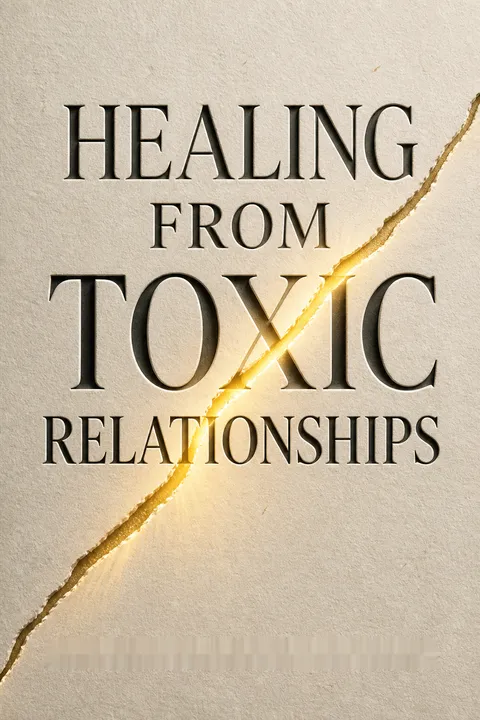
Healing from Toxic Relationships receives overwhelmingly positive reviews, with readers praising its practical advice, step-by-step approach, and empowering message. Many find it helpful for identifying toxic relationships, setting boundaries, and healing from past trauma. The book's journaling prompts and personal anecdotes are particularly appreciated. Readers value its applicability to various types of relationships, including romantic, familial, and professional. Some note its simplistic approach to categorizing toxic behavior, but overall, it's highly recommended for those seeking to recover from unhealthy relationships and improve their emotional well-being.
People Also Read





Glossary
Gaslighting
Undermining trust in realityA form of emotional and psychological abuse in which someone repeatedly manipulates another person into doubting their own perceptions or memory. The target may become increasingly reliant on the manipulator to decide what is true. It is a pattern of behavior, not simply disagreement about an event.
Intermittent reinforcement
Unpredictable rewards sustain behaviorA pattern in which positive treatment appears unpredictably rather than consistently. In an abusive relationship, periods of affection or calm may follow mistreatment. Because the survivor cannot know when the next kind moment will occur, the relationship can become harder to leave and emotionally difficult to disengage from.
Trauma bonding
Attachment amid abuse and kindnessAn attachment to, or sympathy for, an abuser that can develop in a relationship involving a power imbalance, fear, isolation, and alternating abusive and non-abusive treatment. It can occur in domestic violence, child abuse, trafficking, cults, and hostage situations. The term describes a dynamic, not consent to abuse.
Hoovering
Attempts to pull someone backAttempts by a toxic person to resume contact or draw someone back into a relationship after separation. Contact may include affectionate messages, promises, requests, or unexpected appearances. The person may offer change without evidence of it. The book uses the term for behavior that can restart an unhealthy dynamic.
Flying monkey
Third-party message carrierA person who carries messages from a toxic person to someone who has ended or limited contact. The messenger may not understand the harm or know the full history. Even well-intentioned communication can undermine a boundary by relaying pressure, updates, or appeals to reconnect.
Cognitive dissonance
Distress from conflicting beliefsThe discomfort that arises when new information conflicts with existing beliefs or expectations. In a harmful relationship, a person may struggle to reconcile an initially caring partner with later abusive behavior. This confusion can encourage denial, rationalization, or further commitment while the person tries to make the contradiction understandable.
Reactive abuse
Survival response to abuseThe book’s term for a survivor’s use of aggressive or abusive-seeming behavior while responding to threats, relentless provocation, or being trapped in an abusive situation. An abusive person may point to the reaction as proof that the survivor is the real abuser. The surrounding pattern and context matter.
Boundaries
Limits that protect well-beingGuidelines a person sets for their own behavior and for how others may interact with them. The book describes emotional, physical, sexual, time, and mental boundaries. A boundary does not control another person; it states a limit and the action the boundary-setter will take if that limit is crossed.
Attachment style
Pattern of relating to othersA person’s characteristic way of bonding and relating in close relationships, shaped partly by early interactions with caregivers. The book describes anxious, avoidant, disorganized, and secure styles. These patterns can help explain relational habits, but they do not determine a person’s future or serve as diagnoses.
Parallel parenting
Separate, structured coparentingA way of managing parenting after separation when cooperative communication is not workable or safe. Parents keep interactions limited, often communicate in writing, follow a detailed parenting plan, and manage many activities separately. The approach aims to reduce conflict and limit opportunities for one parent to intimidate or harass the other.
Ambiguous loss
Loss without clear finalityA loss that lacks a clear ending, such as grieving a living family member from whom contact has been cut off or a coparent who remains part of daily life. The person is still present in some sense, which can make acceptance difficult and leave the relationship feeling unresolved.
Codependency
Excessive responsibility for anotherAn unhealthy reliance on another person for emotional stability, validation, or purpose, often paired with feeling responsible for that person’s feelings or problems. Someone may neglect their own needs, make excuses for harmful conduct, or work harder than the other person to change the situation.
Cognitive defusion
Stepping back from thoughtsA technique used in acceptance and commitment therapy that helps people notice thoughts without treating them as facts, commands, or definitions of the self. A person can name a painful thought as a thought, creating some distance from it and making room to choose an action based on values.
Vicarious traumatization
Distress from others’ traumaPsychological distress that can develop through exposure to other people’s traumatic experiences, especially in helping or advocacy roles. It may involve intrusive thoughts, sleep problems, emotional numbing, heightened alertness, or burnout. People with their own trauma histories may be particularly affected and can benefit from support and limits.
FAQ
1. What is Healing from Toxic Relationships by Stephanie Moulton Sarkis about?
- Comprehensive recovery roadmap: The book provides a step-by-step guide to healing from toxic relationships, including those marked by gaslighting, narcissism, and emotional abuse.
- Covers all relationship types: It addresses toxicity in romantic, familial, friendship, and workplace contexts, helping readers recognize and recover from harmful dynamics.
- Focus on practical and emotional healing: Sarkis combines real-life stories, actionable advice, and psychological insights to help readers rebuild their lives and self-worth.
- Addresses complex issues: Topics like trauma bonding, complicated grief, and societal pressures are explored to give a nuanced understanding of why people get stuck and how to break free.
2. Why should I read Healing from Toxic Relationships by Stephanie Moulton Sarkis?
- Expert, credible guidance: Sarkis is a clinician with over 20 years of experience in treating ADHD, anxiety, and narcissistic abuse, offering trustworthy and practical advice.
- Validation and empowerment: The book reassures readers that their feelings are normal, provides hope, and equips them with tools to break free from toxic cycles.
- Broad applicability: Whether you are a survivor, a supporter, or a clinician, the book offers tailored advice for various situations, including co-parenting and workplace toxicity.
- Focus on self-care and boundaries: Readers learn how to protect themselves, set boundaries, and rebuild self-esteem for healthier future relationships.
3. What are the key takeaways and steps from Healing from Toxic Relationships by Stephanie Moulton Sarkis?
- Ten essential steps: The book outlines steps such as blocking contact, establishing boundaries, seeking therapy, practicing self-care, processing grief, and reconnecting with healthy people.
- Self-forgiveness and closure: It emphasizes the importance of self-compassion, letting go of self-blame, and creating your own closure when the toxic person won’t provide it.
- Rebuilding purpose and support: Volunteering, finding new social connections, and focusing on personal growth are highlighted as ways to reclaim your life.
- Prevention of future toxicity: The book teaches how to recognize red flags, understand attachment styles, and avoid repeating unhealthy patterns.
4. How does Healing from Toxic Relationships by Stephanie Moulton Sarkis define a toxic relationship?
- Manipulation and harm: Toxic relationships involve manipulation, gaslighting, and abuse that damage your mental, emotional, or physical well-being.
- Cycle of abuse: They often follow a pattern of idealization, devaluation, and discard, with intermittent reinforcement that creates trauma bonds.
- Difficult to recognize: Toxicity can develop gradually and may be masked by charm, making it hard to identify until significant harm has occurred.
- Wide range of symptoms: Signs include emotional turmoil, self-blame, loss of trust in your judgment, physical stress symptoms, and various forms of abuse.
5. What is gaslighting, and how is it explained in Healing from Toxic Relationships by Stephanie Moulton Sarkis?
- Definition and tactics: Gaslighting is psychological abuse where the abuser manipulates the victim into doubting their reality, often through denial, blame, and distortion.
- Common behaviors: Examples include denying events, accusing the victim of being crazy, sabotaging work, and exploiting vulnerabilities.
- Purpose and impact: The goal is to gain control and power, making the victim dependent on the abuser’s version of reality.
- Therapeutic advice: Sarkis strongly recommends individual therapy for survivors, as abusers may manipulate couples therapy to further harm the victim.
6. What are the main reasons people get stuck in toxic relationships according to Healing from Toxic Relationships by Stephanie Moulton Sarkis?
- Family of origin and attachment: Dysfunctional childhoods can normalize chaos, making healthy relationships feel unfamiliar or “boring.”
- Trauma bonding and low self-esteem: Cycles of abuse and intermittent kindness create addictive attachments, while low self-esteem makes boundary-setting difficult.
- Societal and economic pressures: Cultural expectations and financial dependence can trap people in toxic situations.
- Psychological barriers: The sunk cost effect and cognitive dissonance make it hard to leave, as people struggle with conflicting beliefs and fear of wasted time.
7. What does Healing from Toxic Relationships by Stephanie Moulton Sarkis recommend about blocking contact with toxic people?
- Essential for healing: Blocking all forms of contact (phone, email, social media) is crucial to stop the cycle of abuse and prevent “hoovering.”
- Managing unavoidable contact: When contact is necessary (e.g., co-parenting, work), set strict boundaries, use intermediaries, and limit communication to essentials.
- Protective measures: Change passwords, remove tracking apps, and inform friends/family not to relay messages from the toxic person.
- Handling harassment: Be aware of emotional blackmail and threats; contact law enforcement if necessary for safety.
8. How does Healing from Toxic Relationships by Stephanie Moulton Sarkis address the challenge of not getting closure after leaving a toxic relationship?
- Closure is often elusive: Toxic people rarely apologize or take responsibility, so waiting for closure from them can prolong pain.
- Self-created closure: The book encourages therapy, writing unsent letters, and focusing on personal growth to achieve closure.
- Acceptance of ambiguity: Learning to live without all the answers and focusing on meaning and purpose is emphasized.
- Anger and forgiveness: Anger is normal, and forgiveness is optional; healing can happen without forgiving the abuser.
9. What role does self-forgiveness play in recovery according to Healing from Toxic Relationships by Stephanie Moulton Sarkis?
- Letting go of self-blame: Survivors often feel guilt for staying or missing red flags; self-forgiveness is essential for moving forward.
- Self-compassion practices: Affirmations, reframing negative thoughts, and sharing experiences help reduce shame and foster healing.
- Understanding emotions: The book explains that anger may mask deeper fears, and guilt/shame are often exploited by abusers.
- Internal locus of control: Forgiving yourself builds resilience and helps you feel grounded, rather than controlled by others.
10. How does Healing from Toxic Relationships by Stephanie Moulton Sarkis explain boundaries and their importance in recovery?
- Definition and necessity: Boundaries are limits that protect your emotional, physical, and mental well-being, ensuring your needs are prioritized.
- Enforcement and rights: You have the right to say no and be treated with respect; the book provides strategies for setting and maintaining boundaries.
- Attachment style influence: Your ability to set boundaries is linked to your attachment style, which can be improved with awareness and therapy.
- Context-specific advice: The book covers boundaries in co-parenting, work, and family situations, offering practical tools for each.
11. What is self-care according to Healing from Toxic Relationships by Stephanie Moulton Sarkis, and why is it essential?
- Broad definition: Self-care means treating yourself as kindly as you would a best friend, focusing on physical, emotional, spiritual, and social wellness.
- Essential for healing: It’s a necessity, not a luxury, especially after toxic people have minimized your needs.
- Personalized practices: The book encourages experimenting with self-care strategies like exercise, mindfulness, journaling, and social connection.
- Prevents future vulnerability: Self-care builds resilience and helps prevent falling into future toxic relationships.
12. What are the best quotes from Healing from Toxic Relationships by Stephanie Moulton Sarkis and what do they mean?
- “You will be okay. You will heal. You will thrive.” This quote encapsulates the book’s hopeful message that recovery is possible and thriving is within reach.
- “I will no longer set myself on fire to keep you warm.” Highlights the importance of self-care and breaking codependent patterns.
- “Self-care, when you are a caregiver, is like when you are on an airplane, they tell you to put your oxygen mask on before your child’s—you need to take good care of yourself first so you can take care of others.” Stresses that self-care is essential, not selfish.
- “When I thought I had found ‘the one,’ I took a look at my list. It turns out my emotions were overruling my sanity.” Encourages balancing emotions with rational standards to avoid repeating toxic patterns.
Download PDF
Download EPUB
.epub digital book format is ideal for reading ebooks on phones, tablets, and e-readers.








