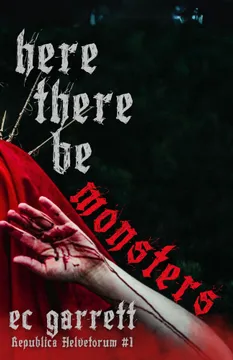


Plot Summary
A Sentence at Solstice
Elsing Wylder, a witch who serves Interlaken as its healer and potion maker, is convicted of murder by Shauptmann Willem Tell. She refuses to plead for mercy, even when Willem announces that she will be sacrificed at Schollen Gorge rather than killed swiftly. The townspeople she once helped cheer the sentence and torment her in the pillory.
Only Uri, her raven familiar, stays beside her through the cold night. Elsing asks Uri to escape before the Mountain Gods arrive, not knowing that familiars bond for life. Uri refuses to leave. Their loyalty steadies Elsing, but the trial has made clear that the town’s tolerance of witches ends the moment its authorities choose a scapegoat.
The opening makes public punishment feel like civic theater: Willem stages justice, the crowd supplies its appetite, and Elsing’s defiance is the only thing she still controls. Her refusal to fear him is not simple bravado. It is a survival rule built from earlier violence, though that history remains hidden for now. Uri’s vigil complicates Elsing’s practiced loneliness. She thinks of herself as expendable, yet the familiar’s presence reveals a bond whose cost she has not understood.
Poison at the Gorge
The next morning, Willem locks an iron bracelet around Elsing’s wrist. The device suppresses her magic, leaving her unable to heal her broken ribs or defend herself when he beats her. Tante Inga, Interlaken’s elderly witch, forces poisonous berries down Elsing’s throat before the mob takes her to the gorge.
As the poison weakens her, Elsing is tied to a tree and left for the Mountain Gods. Uri remains nearby despite her plea to fly away. Then Nerethus, a huge black Dragon in human form, finds the dying witch and carries her to the glass castle called the Aive. Elsing wakes healed, but Nerethus tells her that the curse around the Gods’ territory prevents her from leaving.
The bracelet turns the Republic’s distrust of magic into a practical instrument of control: Elsing is not defeated by a stronger spell, but by a state-backed object that makes her helpless. Her rescue reverses the town’s story about the Mountain Gods without yet resolving it. They may be her captors, but one of them preserves her life. The shift from the gorge to the Aive replaces a public execution with an intimate, unsettling dependence.
The Aive Opens
Inside the Aive, Elsing meets Trystan, a golden-eyed God who can become a Griffin, and learns that Nerethus can take the form of a colossal Dragon. They explain that the Aive houses the Mountain Gods and that anyone who crosses its borders is trapped there by a curse.
Elsing had believed the creatures were demons waiting to eat her; instead, she finds a glass-walled home above the clouds, stocked with enchanted hot springs and comforts beyond anything in Interlaken. The Gods’ beauty and teasing familiarity unsettle her, but she refuses to become a frightened captive. She insists on her name, challenges their assumptions, and begins watching for what they conceal.
The Aive is both refuge and confinement, making safety impossible to separate from dependence. Elsing’s refusal to behave like a grateful rescued victim protects her agency, but it also keeps intimacy at a distance. Trystan’s provocation and Nerethus’s restraint establish contrasting forms of power: one tests boundaries for pleasure, the other studies them. The shift from village persecution to divine hospitality does not remove danger. It changes who holds the keys.
A Murder Confessed
When Aleksander, the God of Death and an Original, returns from the Underworld, he questions Elsing’s presence in his home. She admits that she poisoned Albrecht Bucher, Interlaken’s butcher, after he helped condemn his wife, Daphne, for adultery. Daphne was Elsing’s closest friend, and Elsing planned Albrecht’s death as revenge for the woman’s execution.
She describes how she used poison in his wine and on her lips, then let him die while she watched. Aleksander recognizes the mark of a killer on her soul. The confession does not soften him. He distrusts her, refuses her a place in Nerethus’s room, and assigns her to his own stark, leather-lined quarters.
Elsing’s confession reframes her as more than a persecuted witch. She has acted as judge and executioner, believing revenge is the only language the Republic understands. The moral force of her choice comes from the system that failed Daphne, but the secrecy around it also shows how grief can turn justice into private certainty. Aleksander’s suspicion mirrors Elsing’s own: each has learned to treat trust as a liability, even when another person offers care.
A Dangerous Courtship
Elsing learns that Aleksander can travel astrally beyond the Aive, while Lesser Gods Nerethus and Trystan remain confined. Trystan tests her nerve by throwing her from a high window, then catches her in flight with Nerethus. Elsing answers by punching Trystan and choosing a day alone with Nerethus as his punishment.
Their attraction intensifies through provocation and carefully chosen boundaries, but Elsing keeps the Gods at emotional arm’s length. At dinner she watches their affection for one another and sees how easily they make room for her. The warmth unsettles her more than hostility would. She has not come to trust them, and the kindness of her hosts is beginning to threaten the purpose she brought with her.
The courtship is structured around tests of control. Trystan’s dangerous flight exposes the gap between his confidence and Elsing’s actual vulnerability, while her retaliatory punch restores a measure of balance. Their erotic tension is not a simple surrender: Elsing uses choice, challenge, and refusal to protect herself from being defined as someone’s possession. Yet the Gods’ mutual tenderness offers a model of intimacy she has never allowed herself to expect.
The Knife Beneath Trust
After sharing an intimate evening with the Gods, Elsing waits until they sleep and uses a poison she collected in the glade to paralyze them. She stabs Trystan and Nerethus, then raises a dagger over Aleksander, intending to kill the three beings she believes responsible for Daphne’s death. Aleksander stops her before the blade reaches his eye.
Elsing releases her hidden power, calls down lightning, and reveals that she is a Jäger, a member of a family known for hunting monsters. She turns Aleksander’s shadow creatures against him after secretly feeding them her blood. Before she can strike again, a huge raven crashes into the room and reveals a human form: Uri is an Original God, not merely a familiar.
The betrayal is the collision of Elsing’s grief with the very intimacy she has begun to desire. Her attack is calculated, not impulsive; she has mistaken the Gods’ identity and built a plan around that belief. The Jäger revelation exposes another concealed self, one shaped by a family tradition she had tried to leave behind. Uri’s transformation makes the betrayal reciprocal: Elsing has hidden her purpose, while her closest companion has hidden the scale of their identity.
The Sacrifice Was a Lie
Uri explains that a geas prevented them from telling Elsing the truth about their identity or the curse. The Gods never demanded human sacrifices, and they did not kill Daphne. Uri identifies Tante Inga as Pertcha, the Goddess of Magic, who has used Basilisks to consume the victims and sustain the curse.
Elsing, wounded by her familiar’s long silence and stunned by the revelation, is imprisoned while Aleksander investigates. Uri visits her in the dungeon, makes the cell warm and comfortable, and admits she wanted to return to Elsing even when the curse kept her away. Their reconciliation is cautious rather than complete. Aleksander eventually brings Elsing to the Below so she can hear the truth from Daphne herself.
This revelation dismantles the story Elsing used to organize her grief. The sacrifices were not appeasement but a mechanism of manipulation, and the supposed enemy was not responsible for the loss that drove her revenge. Uri’s silence was constrained by magic, yet its emotional damage remains real. The novel refuses to make good intentions erase the harm of secrecy. Elsing must reconsider both her target and the person she has trusted most.
Goodbye in the Beyond
Aleksander guides Elsing through the Below, where the living can be hunted by its Demons, and brings her to the Beyond. There, Elsing finds Daphne safe in a bright afterlife. Daphne tells her that Albrecht would have found another reason to punish her and that Elsing’s feelings did not cause her death.
She confirms that the creature who attacked her was neither Dragon, Griffin, nor Death, and recalls a woman smelling of rotten mushrooms. The memory points toward Pertcha. Before Elsing returns, Daphne admits that she welcomed Elsing’s kiss and urges her to keep living. On the shore, Aleksander shares his own grief for Lythe, a dead beloved who no longer remembers him.
The reunion gives Elsing something revenge could not: evidence that Daphne’s life was more than its violent ending. Daphne’s confirmation clears the Mountain Gods of the specific murder Elsing blamed on them, while her honesty about their mutual affection deepens the pain of farewell. Aleksander’s story of Lythe creates an unexpected point of recognition. Neither can undo loss, but both know that grief changes shape rather than disappearing.
A Home Reclaimed
Back in the Aive, Elsing cannot yet accept the Gods’ devotion or the possibility of a shared future. She claims the castle’s magic as her own and reshapes a library into a private room, giving herself space to think. A shadow creature chooses to stay with her; Elsing names it Noctis and uses her new power to give it a solid body.
Soon after, Pertcha invades Elsing’s dream, tries to drown her, and leaves real puncture wounds around her heart. Noctis confirms that Elsing has been in contact with Daphne, who wants her to be happy. Elsing understands that Pertcha has been steering her toward violence and now intends to finish the fight with the Goddess herself.
Taking the Aive is Elsing’s first act of belonging that does not depend on permission. She does not reject connection outright; she sets a boundary around it, then builds a room that reflects her own tastes and powers. Noctis’s choice makes friendship possible without demanding trust in the Gods. Pertcha’s attack crosses the boundary between dream and body, making the danger personal and proving that Elsing’s grief has been exploited.
The Curse Breaks
Elsing returns to the Gods after Pertcha’s attack and chooses to attempt the mating bond, despite her fear of being hurt again. She, Nerethus, Trystan, Aleksander, and Uri combine their magic, and the resulting surge shatters the curse that trapped the Mountain Gods in the Helvetas. The blast also reveals that Elsing’s power has become divine: she can create and shape magic without casting.
She takes control of the Aive rather than letting the Gods decide where she belongs. Before the group can settle into their new bond, Uri’s raven network reports that the Republic is moving toward Interlaken. Elsing chooses to return, not to punish the townspeople, but to prevent the Republic from using them again.
The mating bond works as both romantic commitment and a material source of political change: its power breaks a confinement imposed on the Gods. Elsing’s choice is meaningful because it follows an explicit demand for space, not a surrender to pressure. Her seizure of the Aive further complicates the bond. She accepts intimacy while retaining authority over her home, making partnership something negotiated rather than imposed.
Pertcha Reveals Her Army
The Gods find Interlaken deserted, then encounter Willem Tell and Tante Inga in the town square. Tante Inga sheds her false body and reveals Pertcha, while Willem transforms into a Basilisk. Pertcha admits that she engineered the sacrifices, manipulated the Republic’s faith, and created an army by cursing Dragon eggs before they hatched.
The missing townspeople are part of her deception, and the Basilisks attack the Gods. Elsing learns that Willem might have become a Dragon if Pertcha had not altered his fate. Nerethus and Trystan meet the Basilisks in the air, while Aleksander and Uri attack from the ground. Elsing faces Pertcha directly as the town becomes a battlefield.
Pertcha’s revelation makes the Republic’s religious authority an instrument of conquest rather than protection. Her use of Willem also blurs the distinction between culpability and control: he has served as an oppressor, but his history is not yet fully known. The Basilisks embody corrupted potential, their cursed eggs turning a possible Dragon lineage into a weapon. The battle forces Elsing to confront the power behind both her persecution and her mistaken revenge.
Chaos Challenges Death
As the Basilisks tear through the town, Elsing drinks Aleksander’s blood and unlocks her full power as the God of Chaos. She traps Pertcha in lightning and declares that Gods can die, changing the rule that had made the Original effectively immortal. Uri tears out Pertcha’s heart, but the Goddess regenerates; she survives until Aleksander uses his scythe to attack her soul.
Pertcha poisons him with a hidden blade, and Elsing forces him to drink her blood, using her new power to drive the venom from his body. The Gods survive, and Pertcha is left without her mortal form, badly weakened but not confirmed dead. The victory ends the immediate battle, not the threat.
Elsing’s defining act is not simply defeating Pertcha but changing the terms under which power operates. Chaos becomes a capacity to rewrite rules that appeared natural, including divine immortality. The cost is uncertainty: Pertcha is damaged but not securely erased, and Aleksander’s poisoning shows how quickly victory can turn into loss. Elsing’s blood becomes an act of reciprocal survival, reversing the sacrificial logic that opened the story.
Interlaken Gets New Gods
Once Pertcha’s compulsion fades, Willem explains that he had been controlled since birth, though he also admits to killing some townspeople. Elsing refuses to execute him, instead exiling him from Interlaken and warning him that any further attack on innocents will bring her judgment.
Uri and Aleksander restore the damaged town and return its residents, while Elsing ends the sacrifice system outright. The townspeople kneel and ask the Mountain Gods for protection; Elsing tells them to govern themselves and warns the Republic against violence.
She and her mates leave for the Aive, not as the monsters the Republic described, but as powers no longer willing to obey its rules. The ending establishes a new order while leaving the wider conflict unresolved.
Elsing’s judgment of Willem rejects both easy absolution and revenge. His compulsion matters, but so does the harm he caused, so exile becomes a consequence that preserves the possibility of change without restoring his authority. Her refusal to accept the villagers’ renewed submission also marks a political break: she will protect them from conquest, not become their ruler or sacrificial substitute. The ending offers a beginning rather than a settled peace.
Epilogue
After the battle, the God of Death’s regent, Theron, arrives with news that a dangerous prisoner has escaped the Beneath. The fugitive is Hella Jäger, Elsing’s younger cousin, who was sent to the Underworld by Pertcha and has now broken free.
Elsing reacts not with fear but with laughter, warning the others that Hella is far more dangerous than she is. The revelation turns the fragile calm at the Aive into a new problem: the family history Elsing left behind is coming toward her.
The epilogue widens the story’s scale without undoing its emotional resolution. Elsing has claimed a home and chosen her mates, yet the past returns through Hella, a relative who shares her dangerous lineage but not necessarily her restraint. Theron’s report also links the Underworld’s institutions to the Republic’s violence, suggesting that Pertcha’s corruption has consequences beyond the Helvetas. Elsing’s laugh signals confidence, but it also promises that her new life will be tested rather than protected from conflict.
Analysis
Here There Be Monsters builds its fantasy conflict around competing explanations of violence. The Republic calls witchcraft sinful and sacrifice protective; Elsing initially believes the Mountain Gods killed Daphne; both stories are wrong in ways that benefit a more powerful manipulator. By making the protagonist’s revenge morally understandable but factually mistaken, the novel distinguishes the need for justice from the danger of acting on an untested story. Elsing’s grief is real, yet her certainty about its cause turns her into an executioner before she knows whom she is punishing.
The novel also treats intimacy as a negotiation of power rather than a cure for damage. Elsing is most comfortable when she can challenge, choose, or refuse, while the Gods’ possessive language and play with control test how far that agency can stretch. Her eventual commitment matters because she first claims a room, names her limits, and refuses to be rushed. The mating bond therefore has a double meaning: it is a magical mechanism that frees the Gods, and a relationship she enters only after confronting what she fears losing.
Its political world echoes the intimate one. Willem turns fear into authority; the Republic turns religious language into conquest; Pertcha exploits both, using belief to conceal coercion. Elsing’s final refusal to let the villagers make new sacrifices interrupts that pattern without making her their ruler. Her emerging divinity is not presented as moral perfection. It is the capacity to change rules, which makes restraint and accountability more important, not less. The ending offers a fragile alternative to inherited power: a chosen family, a contested home, and a protagonist who understands that protection cannot require obedience.
Review Summary
Here There Be Monsters has earned a strong 3.98/5 rating, praised widely for its intense spice, engaging banter, and surprisingly robust plot. Readers love the feisty antiheroine Elsing and her dynamic with the vividly distinct Mountain Gods. Many highlight the balance between explicit content and genuine world-building, with fast-paced storytelling keeping them hooked. Critical reviews note concerns about representation, particularly around demisexuality feeling underdeveloped, and some found the ratio of smut to plot overwhelming. Trigger warnings are strongly recommended before reading.
Characters
Elsing Wylder
Defiant village witchElsing is a witch, healer, and potion maker whose sharp tongue protects a deep fear of dependence. She has survived by treating fear as a weapon other people must never hold over her. Her loyalty to Daphne and Uri shows the tenderness beneath her abrasive humor, while her willingness to use violence reveals how grief can make certainty feel safer than trust. Elsing distrusts institutions because she has watched them turn law and religion into tools of persecution. Her story asks whether a person who has made survival an identity can choose intimacy without surrendering agency. She is most herself when she challenges a powerful figure, but her hardest work is learning when defiance serves her and when it keeps her alone.
Nerethus
Dragon of deep earthNerethus is a Dragon God whose immense physical power is matched by a patient, attentive manner. He tends to care through practical acts, offering shelter, food, warmth, and steady presence rather than demanding trust. His protectiveness can become possessive, especially when Elsing is threatened, and he must learn that protection does not grant authority over another person. His long bond with Trystan reveals a capacity for affection that complicates Elsing’s assumptions about monsters. Nerethus is also proud of his Dragon nature and his trove, but his greatest vulnerability is his fear of losing someone he has chosen to cherish.
Trystan
Provoking Griffin GodTrystan is a Griffin God and master of the sky, quick to turn danger into a game and flirtation into a test of nerve. His teasing can cross into recklessness, as when he uses flight to challenge Elsing, but he is also observant about what she wants and responsive when she sets a boundary. His relationship with Nerethus is openly affectionate and combative, built on the ease of people who know one another’s weaknesses. Trystan values freedom, appetite, and sensation, yet beneath his bravado is a strong attachment to his chosen family. He is drawn to Elsing because she refuses to play the frightened role he expects.
Aleksander
Original God of DeathAleksander is an Original God who rules the Below and carries the authority of death without the comfort of ordinary human limits. His formal reserve masks profound loneliness and a habit of treating distrust as necessary protection. He is exacting about rules because his realm is dangerous and increasingly difficult to control. Elsing’s refusal to be intimidated unsettles him, while her capacity for violence and grief makes her more legible to him than a compliant guest would be. His history with Lythe has left him wary of love, but it has not erased his capacity to care. Aleksander’s challenge is to let another person close without mistaking control for safety.
Uri
Raven and closest companionUri is Elsing’s raven familiar, companion, and most enduring source of emotional grounding. Witty, hungry, and irreverent, Uri uses humor to keep terror from swallowing the people they love. Their bond with Elsing is intimate enough to make separation painful, yet secrecy has complicated that closeness. Uri’s instinct is to protect Elsing, sometimes by withholding information or trying to manage danger on her behalf. Beneath the mischief lies a fierce commitment and a longing to be accepted without having to perform a role. Uri’s shifting identity and pronouns reflect a nature that resists simple categories, while their connection to Elsing gives their freedom a personal meaning.
Daphne Bucher
Elsing’s beloved friendDaphne is Elsing’s closest friend, a warm and lively woman whose generosity makes friendship feel like a home rather than an obligation. Her marriage places her inside the Republic’s rigid expectations, while her connection with Elsing gives her a rare space for openness. Daphne’s kindness is not passivity: she sees through Elsing’s self-contempt and has the courage to affirm what Elsing cannot admit about herself. Her presence shapes Elsing’s choices even when they are apart, making her both a source of grief and a lasting moral compass.
Pertcha
Goddess of magicPertcha is the Goddess of Magic and Witchcraft, a figure woven into the religious practices and inherited traditions of witches. Her authority connects private spellcraft to the larger divine order, which makes her name a source of comfort and legitimacy for those who invoke her. The distance between what worshippers believe about a deity and what that deity may actually be becomes central to the novel’s questions about faith, power, and obedience. Pertcha’s place in the world also reflects how divine authority can shape human institutions without being visible to the people who serve it.
Willem Tell
Interlaken’s feared governorWillem Tell is Interlaken’s Shauptmann, a handsome, commanding official who knows how to turn a crowd’s fear into political authority. He treats public ceremony as a weapon, using the trial and sacrifice to make punishment look righteous. His feud with Elsing is personal as well as political: her refusal to flinch denies him the emotional submission on which his influence depends. Willem represents the local face of a wider Republic that punishes magic while claiming divine sanction.
Tante Inga
Interlaken’s elder witchTante Inga is an elderly witch tolerated by Interlaken because she serves the town’s interests and helps enforce its hostility toward other magic users. Her age, knowledge of potions, and alliance with Willem make her a figure Elsing once hoped to learn from. That apparent respectability conceals a more threatening relationship to the town’s religious and magical order. As a character, she embodies the danger of collaboration: survival within an oppressive system can come at the cost of helping it punish others.
Albrecht Bucher
Daphne’s butcher husbandAlbrecht is Interlaken’s butcher and Daphne’s husband, a man whose social standing helps his accusations carry weight. He represents the private cruelty that gains force when public institutions agree to endorse it. Elsing sees him not as an abstract villain but as the person whose actions helped take Daphne from her. His position in the town also shows how ordinary authority can turn prejudice into lethal consequence.
Theron
Steward of the BelowTheron is the first Vampir and Aleksander’s regent in the Below. He is disciplined, blunt, and focused on the practical demands of keeping the Underworld functioning. His long service there gives him a perspective shaped by responsibility rather than the more impulsive appetites of the Mountain Gods. Theron’s formal manner can make him seem cold, but he is dependable in matters of duty and willing to report a crisis directly, even when it disrupts the fragile peace of the Aive.
Sälva
Guardian of the BelowSälva is a powerful shadow unicorn who carries Aleksander and Elsing through the dangerous passages of the Below. She is intelligent, proud, and unwilling to accept commands without respect. Her shifting forms make her a vivid emblem of the Underworld’s beauty and menace, while her response to Elsing suggests that courtesy can matter even among creatures built to frighten.
Lythe
Aleksander’s lost belovedLythe is a mermaid who lives in the Beyond and once shared a deep love with Aleksander. She no longer remembers him, a loss that gives his visits to her shore their quiet ache. Though she appears briefly, Lythe helps reveal the emotional cost of immortality: a relationship can remain vivid to one person while time erases it for another.
Plot Devices
The Solstice Sacrifices
A ritualized public lieWillem tells Interlaken that the Mountain Gods demand a person at each solstice, promising the sacrifices will protect nearby towns from attacks. The ritual turns fear into compliance and gives local authorities a ready-made justification for killing people they already distrust. Its apparent success keeps the villagers obedient, while the missing bodies and repeated ceremonies point toward a hidden mechanism. The sacrifices also bring Elsing to the edge of the Gods’ territory, where Nerethus rescues her. Later revelations show that the ritual serves a different power than the villagers believe.
The Aive’s Border Curse
A refuge that confinesThe Aive is the Mountain Gods’ glass castle, positioned high in the Helvetas and protected by a curse that prevents those who enter the territory from leaving. The boundary makes the Gods’ home both sanctuary and prison: Elsing is saved from the gorge but cannot return to her former life. The curse also limits the Gods themselves, keeping Nerethus and Trystan isolated from the wider divine world. Its physical reality shapes every choice about trust and belonging, until Elsing’s bond with the Gods generates enough power to break it.
The Mating Bond
Intimacy becomes powerThe bond links Elsing to Nerethus, Trystan, Aleksander, and Uri through mutual magic and a lasting emotional connection. It is not merely a romantic convention: completing it releases the conscious and subconscious power needed to destroy the curse around the Aive. The bond also heightens their awareness of one another and makes separation difficult, increasing both comfort and vulnerability. Because Elsing has spent her life resisting possession, the bond’s meaning depends on her consent. Her choice makes shared power an act of agency rather than another form of confinement.
The Below
A passage through griefAleksander’s Underworld is divided into the Between, where souls travel; the Beyond, where the worthy find peace; and the Beneath, where the condemned are punished. The Below is dangerous even to powerful beings, and Elsing must remain in physical contact with Aleksander during their journey. Its rules create immediate suspense, but its deeper function is emotional: it gives Elsing a chance to speak with Daphne and learn that the Mountain Gods did not kill her. The journey also exposes Aleksander’s own unresolved loss through his visits to Lythe.
Blood and Creation
Hidden power comes aliveBlood carries magical force throughout the story. Elsing feeds Aleksander’s shadow creatures her blood, forming a connection that later lets her influence them. Drinking divine blood helps awaken the power already latent in her, and she eventually uses her own blood to drive basilisk venom from Aleksander. This progression prepares the revelation that Elsing can create rather than merely cast magic. Her power is tied to both inheritance and choice: it emerges through encounters with the Gods, then becomes decisive when she reshapes the rules governing divine mortality.

Download PDF
Download EPUB
.epub digital book format is ideal for reading ebooks on phones, tablets, and e-readers.








