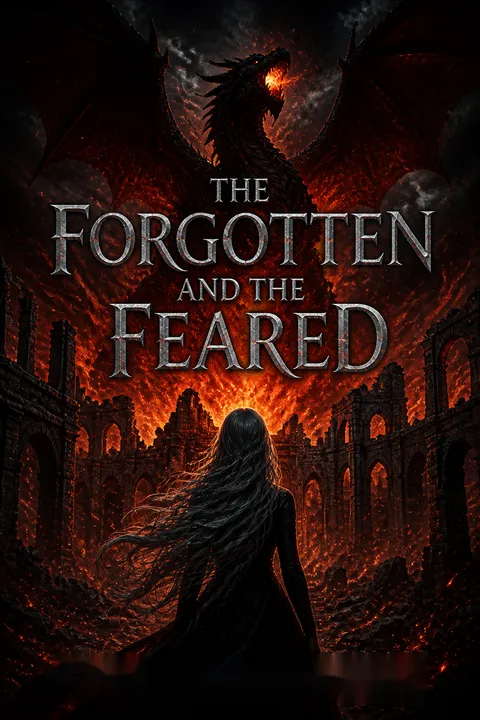


Plot Summary
Prologue
In a storm-battered northern cabin, Jhon and Ophyia hide their young daughter beneath a cupboard while a powerful pursuer closes in. They have prepared her to survive without them: a false name, a destination in the North, and strict instructions to conceal her unusual abilities.
The child comforts her pet mouse, Puff, unaware that her parents are preparing to face the danger at the door alone. As the storm suddenly stills, Jhon and Ophyia clasp hands and turn toward the intruder, choosing to protect their daughter even if it costs them their lives.
The prologue makes protection feel both loving and coercive: the parents save their daughter by deciding, without her understanding, what her future must be. Their concealment plan plants the novel’s central tension between safety and self-erasure. The child’s small tenderness toward Puff also establishes her instinctive bond with vulnerable creatures before the plot explains its magical force. By ending at the cabin door rather than showing the encounter, the opening leaves the child’s survival suspended, turning the later story into an answer to a question its protagonist cannot remember asking.
Twyn Fells Is Taken
Amalia Roth survives in isolated Twyn Fells by caring for horses and keeping close to Dyana, her adopted sister in all but name. She expects the approaching Gauntlet to threaten Dyana, since the fae choose human contestants for a public tournament where almost everyone dies. Instead, a Dragon and imperial soldiers attack early.
They burn the Birdcage, kill the blacksmith and innkeeper Mrs. Hunton, and drag Dyana into the square. Amalia fights the soldiers, but the fae name her and Dyana as candidates after the Dragon kills a villager to force the town’s compliance. With no chance to escape, the friends pack what little they own, mount Taran, and leave the wreckage under guard.
The attack converts a feared possibility into an immediate loss of agency. Amalia’s protective habits have helped her and Dyana survive poverty and isolation, but they cannot shield either woman from a political system that treats people as selectable property. The killing of Mrs. Hunton makes the regime’s power intimate: the person who quietly fed Amalia becomes an example used to compel the entire town. Taran’s voluntary loyalty offers a counterpoint to the fae’s coercion, suggesting that attachment can exist without ownership even as the women are forced into the tournament.
The Pit’s Golden Trainer
The journey south exposes the distance between Twyn Fells’ poverty and the capital’s polished wealth. At the Dragon Pit, Amalia and Dyana meet Os, the brutal head trainer who will prepare the candidates for five weeks of combat. He carries a baby Dragon, whose mind reaches Amalia’s through an unfamiliar magical connection; she hides her reaction and the ability she has kept secret for years.
Os notices her defiance and watches her closely, while she resists his authority and his obvious physical power. He lays out the training schedule and warns that the candidates are expected to face adult Dragons. Their cramped quarters and threadbare uniforms make clear that the capital has brought them here to perform, not to be protected.
Os’s introduction places attraction and danger in the same relationship. Amalia recognizes a threatening authority figure, yet the baby Dragon’s reaching mind unsettles the emotional defenses that have kept her functional. Her response is not simply compassion; it is an involuntary recognition that her supposedly private gift connects her to beings the regime exploits. The Pit’s institutional architecture makes violence ordinary, arranging trainees, prisoners, and spectators into a machinery of entertainment. Amalia’s guardedness is therefore adaptive, but the first hint of Dragon contact shows that her survival strategy may be incompatible with her capacity to feel.
Blood at the Welcome Ball
At the candidates’ presentation, Amalia sees High Councilor Achan Drayven, the man she remembers from her parents’ murder. Before she can act, the Council stages a feast by killing four young Dragons and serving their bodies to the court. Amalia’s hidden power binds her to the red hatchling, so she experiences its terror and death as if the violence were happening to her own body.
She escapes the ballroom in shock, and Os takes her to his quarters, where he helps her through the panic. There he identifies her as an Arkaydian, a people the fae believe extinct, and warns that uncontrolled magical bonds will expose her. Amalia agrees to train with him, while keeping her identity secret from most of the candidates.
The banquet is the novel’s moral rupture because it strips away the polite spectacle surrounding the Gauntlet and shows what the ruling class consumes to maintain its authority. Amalia’s bond makes her a witness in the most painful sense: she cannot preserve distance by treating the hatchlings as symbols or statistics. Os’s intervention offers care, but it is entangled with surveillance and leverage, preserving Amalia’s suspicion even as she accepts his instruction. Her ancestry becomes politically dangerous because it represents a form of power the Council cannot comfortably absorb or control.
A Dangerous New Circle
Amalia begins punishing daily training with Os, learning to build mental barriers and direct her magical power instead of being overwhelmed by it. Dyana befriends Mirielle Zenyth, a warm, capable candidate from Sud Azyl, and their attraction grows through sparring and private moments.
When four men corner them in the city, Mirielle defeats the attackers with speed and skill she had concealed. She admits to Dyana that she is not human, but asks her to keep the secret from Amalia.
Dyana agrees, uneasy about hiding anything from her closest friend. Meanwhile, Amalia struggles to trust the new alliance, even as she starts making room for Mirielle. Their small circle becomes a source of comfort, but it is built on secrets that will soon strain it.
The relationships develop through embodied trust: shared training, assistance in danger, and the physical care of exhausted bodies. Dyana’s warmth helps create connection, while Amalia’s reserve functions as both protection and a barrier to belonging. Mirielle’s concealment complicates the group’s intimacy before anyone has agreed on what honesty requires. The episode also links combat skill to social performance: Mirielle can appear harmless because others assume they understand what she is. Each woman is negotiating visibility differently, and affection grows in the narrow space between genuine closeness and necessary disguise.
The Heir Wants Rebellion
Amalia encounters Crown Prince Nyall Drayven outside the city, where his strange blood and mixed-colored eyes hint that he is not what his title suggests. He later asks to meet her through Os. In private, Nyall explains that he is part elf, a Siphon who can take magical power from living beings, and that he wants to overthrow his father and restore stolen magic to the land.
Mirielle’s connection to the rebellion becomes clear, along with her concealed heritage and the fact that she has passed information about Amalia to Nyall. Dyana feels betrayed, and Amalia refuses to join the prince’s plan, believing it will get them killed. She still agrees to hear him out, but trust within the group is badly shaken.
Nyall reframes rebellion as a technical problem of power transfer, but Amalia evaluates it through the immediate risk to people she loves. Her refusal is not indifference to injustice; it is the logic of someone whose experience has taught her that grand plans often spend other people’s lives. Mirielle’s disclosure exposes the asymmetry between intimacy and political necessity: she has acted on a wider purpose while Dyana believed their closeness was personal and reciprocal. The scene makes trust more than a feeling. It becomes a decision about who is allowed to use knowledge of another person.
Kydis Behind Iron Bars
Punished after a confrontation with Achan, Amalia is assigned to clean the Dragon Pit. There she sees starving, scarred Dragons trapped in metal stalls, and learns that the arena’s monthly Fray sends them to fight for spectators. One captive, a crimson Dragon called Kydis, answers Amalia when she approaches her cell.
Kydis has been imprisoned for centuries and expects to die in an upcoming bout. Amalia tells her she is sorry, then leaves with Kydis’s despair lodged in her mind. At the Fray, Amalia watches Os fight as the masked champion known as the Beast, killing a blue Dragon before the crowd. The display reveals that even the trainer’s body and life belong to the institution he serves.
The Pit turns the novel’s earlier glimpses of cruelty into a sustained environment, where confinement is not an exception but a system. Kydis’s resignation reflects the psychological endpoint of prolonged captivity: the future has narrowed until death appears to be the only available release. Amalia’s apology does not free her, yet it breaks the isolation the captors rely on. Os’s appearance as the Beast complicates the roles of victim and enforcer. He can enact violence for the audience while remaining subject to the same coercive order, making complicity harder to judge from the outside.
The Crimson Queen Rises
The Fray’s featured bout pits Kydis against Abeloth, a broken Dragon once known to her. Kydis refuses to fight back as he batters her, but Amalia secretly channels her own magic into Kydis, closing her wounds and giving her the strength to rise. Kydis kills Abeloth and survives the arena, then returns to the Pit with new power and a name for the girl who helped her.
The other Dragons hear Kydis’s account and rally behind her. Soon she asks Amalia and Os to help break the wards holding them prisoner, explaining that Dragon and Arkaydian magic together may open the cages. She also sends Nyall a clue about a spell he needs, drawing the scattered plans into one dangerous possibility.
Amalia’s intervention is a decisive breach in the logic of the spectacle. The arena expects a predictable death, but her willingness to share pain and power changes the outcome without turning Kydis into a passive rescue object. Kydis’s survival restores collective possibility: the Dragons begin to imagine action rather than endure each day separately. Yet the rescue depends on a secret act that could expose Amalia and provoke retaliation. The scene therefore frames hope as a practical force, not reassurance. It is a capacity to alter what seemed inevitable, even when the alteration creates new dangers.
The First Gauntlet Crossing
When the Gauntlet opens, the candidates must cross the arena and evade a green Dragon. Amalia and Dyana follow Mirielle’s guidance through the hazards and reach the warded finish line alive. The Dragon attacks the invisible barrier separating it from the survivors, and Amalia reaches into its mind.
She finds compulsive, shattered thoughts that do not belong to a creature acting freely. The experience leaves her sick and furious, but she conceals what she has learned. The candidates receive little time to recover before another round is announced.
Amalia understands that the fae are not merely imprisoning Dragons; someone is altering their minds to turn them into obedient weapons. Her growing knowledge deepens the danger of everything she has already set in motion.
The first crossing establishes survival as a collective skill, but the more consequential victory is Amalia’s perception of the Dragon’s compromised mind. The apparent monster becomes legible as another captive whose violence has been engineered. This recognition undermines the categories the Gauntlet depends on: human contestant, Dragon enemy, fae spectator. Amalia’s decision to keep the discovery quiet reflects both caution and the limits of her trust. She can identify the moral truth before she can act on it, a gap that will persist until protecting the Dragons becomes more urgent than protecting her own cover.
Traps in the Arena Sand
The next round turns the arena into a field of hidden steam traps and a giant spiderlike predator. Mirielle spots dangers the others cannot see, leads Amalia and Dyana through the sand, and cuts the creature’s legs when Dyana falls beneath it. A trap then burns Dyana’s arm as they near the finish. Amalia and Mirielle carry her across the line, while Mirielle fights off candidates who attack them to improve their own chances.
The round leaves only a fraction of the contestants alive and Dyana badly injured. Amalia’s anger at the fae intensifies, but she still cannot reveal everything she knows. Mirielle’s choices protect Dyana, even as the secret rebel’s earlier deception keeps the women from fully trusting one another.
The arena’s traps make the contestants’ bodies bear the cost of a design they did not choose, while the crowd watches injury as entertainment. Mirielle’s concealed competence becomes protective rather than merely strategic, particularly when she risks her position to defend Dyana. That action does not erase her betrayal, but it prevents the relationship from collapsing into a simple opposition between liar and victim. Amalia’s protectiveness also has a cost: she must accept help from someone she distrusts. The round tests whether solidarity can survive imperfect motives and whether care can be recognized even before forgiveness is possible.
Lava Beneath the Stones
For the third round, the candidates must cross rivers of lava while Dragons, themselves chained in the molten heat, attack from below. Amalia refuses to kill them unless there is no other choice, so she draws their attention while Dyana and Mirielle cross. The three women evade the first two creatures, but attackers interfere near the final crossing.
A Dragon kills another candidate, and Mirielle loses part of her leg to the lava while helping the others survive. Amalia carries her over the final stones, and healers later save Mirielle’s life. The survivors have now seen the Council use pain as a weapon against both contestants and Dragons. Each round makes the Gauntlet’s supposed contest look more like organized cruelty.
The lava round collapses the distinction between obstacle and punishment: the Dragons are not simply guarding the course, they are being tortured to make the contestants’ passage harder. Amalia’s refusal to attack them preserves a moral boundary under extreme pressure, though it places her and her friends at greater risk. Mirielle’s injury makes that boundary costly rather than abstract. The women survive because they coordinate, improvise, and accept bodily danger for one another. The spectacle’s cruelty is therefore met by a counter-practice of care, but the contrast does not soften the violence; it makes its authorship clearer.
Taran’s Last Goodbye
After the third round, Amalia goes to the stables to see Taran and finds a fae butcher skinning him while he is still alive. She kills the attackers in a burst of uncontrolled violence, then uses her magic to end Taran’s suffering and feels his final words through their bond. Captured and imprisoned, Amalia is found by Nyall, who shows her compassion instead of demanding an immediate answer.
She returns to Os, Dyana, and Mirielle shattered by grief. This time, she accepts Nyall’s offer to join the rebellion, but sets a condition: they must free every Dragon during the final bout. The loss that destroys her last reason to stay hidden also gives her a clear purpose beyond surviving the tournament.
Taran’s death destroys the fragile refuge Amalia built from routine, work, and reciprocal affection. Her violence is not presented as a clean transformation into a hero; it is a response to unbearable injury, and she is left with grief rather than triumph. The scene also changes what rebellion means to her. Earlier, she could treat it as an unnecessary risk that might endanger Dyana. Now the regime has made neutrality impossible by attacking the living bond that sustained her. Her condition to Nyall converts private mourning into political action, without pretending the action can repair what was lost.
The Beastkin’s Open Wound
Amalia learns that Os is Remus Ostia, a Dragon-born being trapped in human form by Elven wards, and that his bond with her can grow into a familiar connection. She does not complete the bond, but chooses intimacy and begins to trust him with her grief. With Kydis and the elder Dragon Vesimyr, she plans to channel Arkaydian magic through Remus to break the Pit’s restraints.
Remus reveals how he has secretly comforted the hatchlings the fae kill, sharing their fear and deaths for centuries. Amalia draws on her full power and burns away his warding, restoring his ability to shift. Their renewed closeness gives them a stronger magical connection, but the plan now depends on Amalia risking the very power she has spent her life hiding.
Remus’s revelation changes the meaning of his severity: he is not detached from the suffering around him, but has survived by compartmentalizing a grief too large to express. His bond with the hatchlings mirrors Amalia’s care for animals, making their intimacy ethical as well as romantic. Yet her decision to remove his wards is not a simple act of rescue; it is a mutual exposure that makes both of them more vulnerable and more capable. The scene treats love as shared risk and practice, not as a cure for trauma. Their power grows through trust, but the wider system remains intact.
Dyana’s Staged Elimination
In the semifinal, eight candidates face a chaotic fight that includes three Dragons and attacks from other contestants. Amalia and Mirielle kill the Dragons and defeat their human opponents, but Amalia has already arranged a way to keep Dyana out of the final. Mirielle strikes Dyana unconscious so the officials will disqualify her rather than send her into the deadliest bout.
The plan succeeds, and Amalia and Mirielle advance. Dyana wakes before they reach their rooms and confronts both women for taking away her choice. Amalia admits that she acted because she cannot bear to lose her sister, while Mirielle accepts that Dyana may never forgive her. Their protection has saved Dyana from the arena, but it has also made her feel abandoned.
Amalia repeats the structure of her parents’ protection: she makes a life-altering decision for someone she loves, believing that survival justifies withholding choice. The repetition exposes how care can become control when fear dominates judgment. Mirielle’s participation shows that loyalty is not always gentle; she harms Dyana to keep her alive. Dyana’s anger is therefore ethically important, not merely an obstacle to reconciliation. She insists that being loved does not make her a possession. The scene grants her agency precisely by showing how others have taken it from her, even for reasons they consider noble.
The Dragon-Flesh Supper
Before the final, Achan summons Amalia and Mirielle to a formal dinner and serves them food made with Dragon flesh. The meal makes Amalia and Mirielle violently ill. Achan then uses a compulsion to force Remus to raise a spoonful, exploiting his bondage and the women’s presence. Amalia distracts the Council by asking about the northern legend of the Gray Wytch, giving Nyall time to interrupt the compulsion and get them out.
The cruelty confirms that the Council’s dinner is another demonstration of control. Afterward, the group reviews its plan: Amalia and Mirielle will keep the Council’s attention while Nyall prepares his siphoning spell and Remus opens the Dragon stalls. Their escape depends on the final bout becoming a diversion.
The meal transforms consumption into a weapon of humiliation. Amalia and Mirielle are forced to ingest the bodies of beings they have tried to protect, while Remus is commanded to participate in the violation of his own people. Achan’s power works by turning intimacy into leverage: he knows that hurting one person will wound those attached to him. Amalia’s use of the Gray Wytch story is a tactical act of self-presentation, briefly performing harmlessness to buy time. The episode reveals how the Council’s authority depends not only on force but on making victims enact the hierarchy imposed upon them.
The Final Bout Unravels
Achan surprises the finalists by sending Kydis into the arena under compulsion, severing the group’s mental communication. Amalia breaks the spell, frees the Dragon stalls through the ground, and uses her power to make Kydis and Mirielle appear dead while the crowd watches. She then reveals that she is Amalia Asteroth, the last heir of Arkaydia and friend to Dragons.
Hellfyre engulfs the arena as Nyall attacks the High Council and begins siphoning its stolen magic. The plan falters when the Archmage intervenes. Dragons escape, but Kydis takes Achan into a fatal dive, Dyana is struck by the Archmage’s magic, and Remus is mortally wounded. Nyall opens a portal as the arena collapses, carrying Amalia and Kydis’s hatchling away from the dead.
The climax forces Amalia to expose the identity her parents taught her to conceal, turning survival’s old rule into a public challenge. Her reveal is not a victory speech detached from consequences: it occurs amid a failing plan, the release of prisoners, and the deaths of those she loves. The moment also distinguishes liberation from restoration. The Dragons escape, but Nyall’s siphoning does not resolve the damage to the land, and the Council’s collapse is purchased at an immense cost. Amalia’s power can alter the arena, yet it cannot guarantee that the people she protects will survive it.
Ashes in the Old Cave
Nyall’s portal deposits Amalia and the hatchling in the hidden cave where she once lived with Dyana and a pack of Dyre wolves. Remus, Dyana, and Kydis are gone; Amalia believes them dead and collapses into grief. The wolves recognize her, and their leader Virgyl welcomes both her and the hatchling as family. The Dragon identifies herself as Ryu, but Amalia is too shattered to offer more than shelter.
Weeks pass before she wakes with a new resolve: she is Amalia Asteroth, the Gray Wytch, and she will pursue the forces that destroyed her family. The rebellion has broken the Council and freed many Dragons, but the world remains damaged, the Archmage survives, and the people Amalia loves are beyond her reach.
The return to the cave closes a geographical circle without restoring the home Amalia lost. She is again surrounded by wolves and hidden from the world, but this time concealment is not obedience to her parents’ survival plan. It is a temporary ground from which she can choose what comes next. Virgyl’s recognition and the hatchling’s dependence keep grief connected to care, preventing vengeance from becoming her only relationship. Still, the ending refuses emotional repair: Amalia’s vow arises from bereavement, and the open threat of the Archmage leaves her new purpose unresolved.
Epilogue
Two years later, Dyana wakes in a bright room beside the sea, in the Dragons’ hidden homeland of Elysium. Mirielle tells her that she has been in a coma and that Amalia stayed behind when the others escaped. Dyana refuses to accept that her sister is dead. She also learns that Vesimyr saved her life with Dragon blood, giving her magic and making her no longer human.
Though Elysium’s laws appear to forbid her from leaving, Dyana insists that she will find Amalia. Vesimyr agrees to help, since the hatchling Ryu is the last of Elysium’s royal line. Dyana’s recovery begins not with certainty, but with a new power and a search she will not abandon.
The epilogue denies the reader the comfort of a conventional reunion. Dyana wakes into a changed body, a changed political world, and the belief that Amalia is lost, while her bond insists that the story may not be finished. Her transformation from human to magical being complicates the identity she has defended throughout the book, but it does not erase her central desire: to return for her sister. Elysium appears as sanctuary and confinement at once, echoing the novel’s repeated question of whether protection without freedom is another form of captivity. The final promise is movement, not resolution.
Analysis
The novel’s central conflict is not simply between oppressed humans and ruling fae; it is over who has the authority to define another being as a weapon, a threat, or expendable material. The Gauntlet makes that claim public, while the Dragon Pit extends it into daily captivity. Amalia’s animal empathy counters the regime’s abstractions by making another creature’s pain impossible to ignore. Her power is ethically complicated, however: she can protect others by imposing her will, and she repeatedly risks reproducing the control she opposes when she decides what Dyana should endure.
Relationships provide the book’s alternative political structure. Amalia and Dyana call each other family through shared care rather than blood, while Mirielle’s love and deception show that good intentions do not erase the injury caused by secrecy. Remus’s care for hatchlings and his connection with Amalia make intimacy a form of resistance, but their bond cannot prevent loss. Nyall’s plan to restore stolen magic also exposes the limits of technical solutions: a system built on domination cannot be safely dismantled by power alone, especially when its hidden enforcer remains active.
The climax refuses the easy equation of victory with liberation. The Dragons escape and Achan falls, yet the land remains damaged, Nyall’s siphoning plan fails, and the people central to Amalia’s life are lost or presumed dead. Dyana’s epilogue further unsettles closure: she survives in Elysium, transformed and constrained, determined to return. The ending’s emotional force comes from its refusal to call survival a happy resolution. Instead, it leaves Amalia’s grief and anger as the fuel for a new struggle, while asking whether resistance can build a world that does not repeat the violence it defeats.
Review Summary
People Also Read


Characters
Amalia Roth
A guarded animal healerAmalia is a poor, solitary stable worker from Twyn Fells who trusts animals more readily than people. She is practical, observant, physically courageous, and often sharper than her own feelings allow her to admit. Years of loss have trained her to hide, plan, and take responsibility for Dyana, her closest companion. Her care for animals is not sentimental: she reads their fear and responds to it as a form of obligation. Amalia’s emotional life is organized around protection, but her instinct to decide what others need can become controlling. Her guardedness is both armor and a source of loneliness, especially as new allies ask her to risk more than simple survival.
Dyana Arkos
Amalia’s bright-voiced sisterDyana is Amalia’s adopted sister and closest friend, a dancer whose humor and warmth make her easy to approach. Beneath that sociability is a person who has survived repeated loss and learned to keep fear from controlling every moment. She values connection, but she also wants to be treated as an adult capable of choosing her own risks. Her differences from Amalia are complementary: Dyana draws people in, while Amalia watches for danger. Dyana’s growing feelings for Mirielle test her trust and her loyalty to Amalia, while the Gauntlet forces her to discover whether her expressive confidence can coexist with the discipline of a fighter.
Remus Ostia, called Os
The scarred head trainerKnown to the candidates as Os, Remus is the imposing head trainer at the Dragon Pit. His commands are blunt, his standards severe, and his presence difficult to ignore. Beneath that harsh exterior is a person shaped by long captivity and an intimate knowledge of the violence he is ordered to teach. He notices Amalia’s abilities and pushes her to master them, though their exchanges are charged with mutual distrust and attraction. Remus tends to express care through action rather than reassurance: he trains, protects, and attends to the people around him. His difficulty accepting care in return makes his connection with Amalia both tender and tense.
Mirielle Zenyth
The candid rebel fighterMirielle is a candidate from Sud Azyl whose kindness, composure, and fighting ability make her seem unusually self-possessed. She has spent a long time learning how to conceal parts of herself, and she approaches danger with more experience than her apparent vulnerability suggests. Her attraction to Dyana is sincere, but her political loyalties lead her to keep secrets from the people she wants to protect. That contradiction gives her relationships real stakes: she wants closeness while operating within a cause that demands secrecy. Mirielle is disciplined and compassionate, yet capable of decisive violence when someone she loves is threatened.
Nyall Drayven
The divided crown princeNyall is the Crown Prince of Ur Daoine, an imperial figure whose wit and confidence conceal a complicated relationship with his father and his inherited authority. He wants to end the High Council’s rule and believes a dangerous magical plan can restore what the rulers have taken from the land. Nyall is strategic and politically experienced, but his willingness to risk himself for a better future can become reckless. He understands the cost of power without being able to escape its temptations. His dealings with Amalia are shaped by mutual suspicion, shared grief, and the difficult task of asking people harmed by his family to trust him.
Kydis
The captive crimson DragonKydis is an ancient red Dragon held in the Dragon Pit, where years of mistreatment have left her scarred and exhausted. She has outlived much of her kin and expects little from the future. Amalia’s compassion challenges that resignation, though Kydis is not naïve about the cost of hope. Her manner carries the authority of someone who remembers a freer world and the grief of watching it disappear. Kydis’s bond with the other Dragons gives her a purpose beyond survival, while her conversations with Amalia reveal an intelligence and emotional depth the fae’s spectacle tries to erase.
Achan Drayven
The ruthless High CouncilorAchan rules Ur Daoine as High Councilor and presents his authority as divinely justified. He uses public ritual, religious language, and spectacular violence to maintain control over humans, magyka, and Dragons. His calm manner makes cruelty feel administrative until he chooses to make it personal. Achan is driven by appetite for power and an insistence that the world should confirm his superiority. He regards dissent as an insult rather than a political disagreement, which makes him especially dangerous to people who refuse the roles he assigns them.
Jhon
Amalia’s protective fatherJhon is Amalia’s loving father, a former prince who gave up status to build a life with Ophyia. He is practical and affectionate, teaching his daughter survival skills while trying to shield her from the political danger surrounding her birth. His habit of turning fear into preparation shapes Amalia’s later need to plan for every contingency. Jhon’s tenderness is clearest in the ordinary rituals he shares with his family, especially reading and caring for Amalia.
Ophyia
Amalia’s steadfast motherOphyia is Amalia’s mother, a devoted partner to Jhon and a careful guardian of their daughter. She understands that love cannot keep danger away, so she helps create a plan for Amalia’s survival while trying to make their family’s remaining time feel ordinary. Ophyia’s gentleness does not diminish her resolve; she faces threats with the same determination that guides her care for Amalia.
Taran
Amalia’s trusted horseTaran is a large, steady horse cared for by Amalia in Twyn Fells. Their closeness is built through daily work, rides, grooming, and an unusual emotional bond that lets Amalia sense his feelings. Taran is more than transport: his uncomplicated trust gives Amalia a rare experience of companionship without suspicion. His presence grounds her when fear and grief threaten to overwhelm her.
Vesimyr
The ancient Dragon veteranVesimyr is an old, formidable Dragon whose survival and authority command respect among his kin. He is cautious, blunt, and conscious of the danger facing the Dragons, but he also recognizes that action may be worth the risk. His judgment carries the weight of someone who remembers the earlier war and its cost.
Virgyl
The watchful wolf alphaVirgyl is the black Dyre Wolf who shelters Amalia and Dyana in the forest when they are young. He is protective, perceptive, and capable of communicating with Amalia in ways others cannot. His pack becomes a rare refuge from the human world, and his presence reinforces Amalia’s trust in animal loyalty.
Ireyna
The unforgiving combat trainerIreyna is a fierce trainer assigned to prepare candidates for the Gauntlet. She is demanding, unsentimental, and skilled enough to make her authority credible. Her harsh methods reflect the Pit’s priorities, though she is not simply a mouthpiece for the Council. To the candidates, she embodies the punishing discipline they must survive before the arena begins.
The Archmage
The Council’s hidden enforcerThe Archmage serves as the High Council’s powerful magical authority. His unnatural composure and formidable presence distinguish him from the ordinary soldiers around the Council. He is associated with the hidden magical work that sustains the regime, making him a threat beyond the public spectacle of the Gauntlet.
Karol Hunton
The innkeeper’s kind wifeKarol Hunton runs the inn with her husband and gives Amalia a meal each morning in exchange for stable work. Her consistent generosity offers Amalia a modest glimpse of care beyond her closest relationships.
Puff
The little white mousePuff is Amalia’s childhood pet, a small white mouse who accompanies her through danger and hiding. His presence links her earliest memories to the tenderness and vulnerability that remain important throughout her life.
Bloodwyng
The invading green DragonBloodwyng is the green Dragon sent with the fae soldiers to Twyn Fells. His size and violence make the Gauntlet’s threat tangible before Amalia ever enters the arena.
Plot Devices
The Gauntlet
A state-run death spectacleThe Gauntlet is a periodic tournament in which human candidates are forced through increasingly lethal rounds for the entertainment and profit of the fae. Its public framing as a chance to win a prize disguises its real function: it turns state violence into ritual, encourages the audience to bet on contestants’ deaths, and teaches the population to accept human lives as expendable. Each round introduces a different engineered danger, from a Dragon and hidden traps to lava and chained creatures. The tournament also provides the planned cover for the rebellion, since the rulers and city crowd gather to watch the finalists.
Empathic and familiar bonds
Connection becomes shared powerAmalia can sense and influence the feelings of animals, and her abilities reach beyond the limits she understands. A familiar bond is a deeper magical relationship that can increase both participants’ power and permit healing across distance. The possibility of such a bond connects Amalia to Remus, while her contact with Dragons lets her share their pain and, in Kydis’s case, help her recover. These connections make compassion materially powerful, but they also expose Amalia to others’ suffering and make separation dangerous. The bond is not a simple romantic guarantee; Amalia has to choose how much trust and power she is willing to share.
Elven wards and compulsions
Magic enforced as imprisonmentThe High Council relies on powerful wards to confine Dragons and control those who might resist. Compulsions can override a creature’s will, turning captive Dragons into threats in the arena and forcing Remus to obey commands against his own values. The wards are made stronger through Elven magic, which the Council uses to conceal its operations and limit communication. Amalia’s rare power can damage these enchantments, while Nyall’s work gradually weakens restrictions elsewhere. The device makes the political conflict bodily: control is not only an order or threat, but a magical force written onto people and places.
The blood oath
Secrecy made physically bindingNyall requires Amalia, Dyana, Mirielle, and Remus to seal their confidential conversation with a blood oath. Each participant gives blood and promises not to reveal what is said. The magic makes betrayal carry a lethal consequence, allowing Nyall to speak about the rebellion despite the restrictions placed on him by his father. The oath grants the group a protected space, but it also raises the stakes of trust: agreeing to hear a plan becomes a bodily commitment, not an easily reversible choice.
Siphoning and Hellfyre
Power’s dangerous counterforceNyall’s Siphon ability lets him draw magical power from living beings and redirect it, while his proposed weaving is meant to take the Council’s stolen magic and return it to the land. The spell is dangerous to him and requires preparation, so the final bout is designed to provide cover. Amalia’s Hellfyre, a rare force tied to her hidden ancestry, offers a separate means of attack and protection. Both powers promise to challenge the Council’s control, but neither guarantees victory: the Archmage disrupts Nyall’s plan, and Amalia’s magic carries a severe physical and emotional cost.
Download PDF
Download EPUB
.epub digital book format is ideal for reading ebooks on phones, tablets, and e-readers.








