


Key Takeaways
Treat water as life's mirror, and test the messages its crystals seem to show.
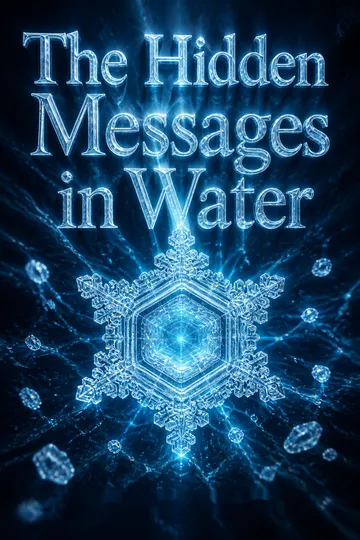
A theory with a moral center. Masaru Emoto begins with water's central role in living bodies and ecosystems, then proposes that water can retain and reflect information. In his account, frozen crystals make that hidden record visible. Their shapes, he argues, respond to words, music, images, and human consciousness. The message he draws from his photographs is that love and gratitude help life flourish, while hostility and neglect deform it.
From photographs to purpose. Emoto's first successful image came after two months of trial and error. He spent years gathering photographs before publishing them, and came to see each crystal as both a research clue and a lesson about how people should live. His larger invitation is to treat water with care and use gratitude as a guide.
What's compelling is the bridge between a material necessity and an ethical question: how should people treat the substance that sustains them? That framing can encourage attention to water quality and environmental responsibility without requiring belief in hidden messages. The crucial distinction is between a meaningful interpretation and an established finding. A beautiful image can prompt reflection, but its appearance alone cannot show that water has stored a thought or understood a word. The book is most useful when its images open a conversation, rather than close a scientific argument.
Read Emoto's crystal photographs as evocative prompts, not proof of water's memory.
How the images were made. Emoto's team placed water samples in small dishes, froze them at about -20 degrees Celsius for three hours, then photographed crystals as the ice began to melt. The brief window for viewing a crystal, he says, lasts roughly 20 to 30 seconds. He reports that natural spring, river, and glacier water produced more complete shapes than some treated tap water.
The comparisons. Bottles were exposed to music or wrapped in paper bearing words. Classical compositions and phrases expressing thanks reportedly yielded orderly crystals; heavy metal and insulting language produced broken forms or none. The book describes later efforts to label samples blindly and score many dishes, but also says observers selected a representative image. That selection makes the photographs striking, but weakens their value as controlled evidence.
The method contains the seed of a testable question: do samples exposed to different conditions crystallize differently? But crystal formation is sensitive to temperature, impurities, handling, and timing, so those factors must be controlled before attributing a result to meaning. Blinding, random assignment, preregistered scoring, and independent replication would help separate a real effect from expectation and image selection. The book's own discussion of observer influence makes this concern especially important. Scientific caution need not drain the images of beauty; it clarifies what the pictures can and cannot establish.
Choose words for the human worlds they build, not supposed effects on water.
Words carry consequences. Emoto's experiments claim that water responds differently to kind and cruel language. In one school exercise, children spoke praise or insults to separate samples; in another account, families addressed jars of cooked rice with thanks, insults, or silence. The author reports that the ignored rice spoiled first, while the jar addressed kindly changed differently from the others. He interprets these results as evidence that words and attention affect matter.
The human lesson stands independently. Words plainly shape how people feel and behave. Emoto contrasts inviting language with commands, arguing that the difference between a cooperative request and a blunt order is felt by children and adults alike. Even if the water and rice claims are unproven, the practical point remains: speech can build trust, or make a relationship feel unsafe.
This is where the book's ethical intuition is strongest and its physical explanation least necessary. Research across psychology and communication consistently treats language as part of the social environment: tone and wording can influence cooperation, threat perception, and belonging. That gives readers a sound reason to speak with care without imagining that a bottle decodes written sentences. The rice anecdote, however, cannot isolate language as the cause without controls for preparation, contamination, and handling. Its value is better understood as a memorable prompt about how people respond to being addressed or overlooked.
Protect water's movement because the planetary cycle carries the conditions for life.
Water is infrastructure for life. The book points to familiar properties with immense consequences: ice floats, helping keep lakes from freezing solid, and liquid water dissolves and transports substances. Water cycles through rain, soil, rivers, and oceans, carrying nutrients that support living systems. Emoto uses this circulation as a model for human life, arguing that stagnation, whether physical or emotional, is dangerous.
Pollution makes the metaphor urgent. He contrasts natural water with urban tap water and describes industrial contamination moving through the water cycle. He also recounts a group prayer at Lake Biwa, after which the lake's recurring algae did not appear that year. He takes this as evidence that collective intention can purify water. The environmental concern is serious; the prayer story, by itself, cannot establish that the gathering caused the change.
The ecological case does not depend on crystal photographs. Water's ability to transport nutrients and pollutants makes watershed protection a practical necessity, while its changing state connects rivers, soils, weather, and living things. The book's language of circulation can help readers see pollution as a system problem rather than a distant local nuisance. At the same time, attributing a lake's changing algae to prayer confuses sequence with causation. Monitoring water quality and examining multiple causes are stronger routes to stewardship than treating a single event as proof of intention's physical power.
Give attention deliberately; neglect can hurt more than criticism.
Attention is a form of care. Emoto's most unsettling rice-jar story compares three treatments: kind words, insults, and silence. He says the jar that received no attention spoiled before the one that was insulted. He draws a lesson for family life: children, plants, and animals need attentive care, not just the absence of harshness.
A useful distinction. The experiment does not show that rice understood speech or that attention changed its physical state; uncontrolled differences could account for the outcome. Yet the contrast between criticism and indifference resonates in human relationships. A person can repair a relationship after conflict, while persistent disregard communicates that the other person does not matter. The actionable idea is simple: make attention visible through listening, noticing, and responding.
The distinction between active hostility and passive neglect is psychologically important. Conflict can at least signal engagement, while chronic inattention can undermine a person's sense of significance and security. That does not make the rice experiment reliable evidence; without standardized jars and blinded assessment, the reported result remains anecdotal. But the human application is independently plausible and practical. Attention is not merely a feeling of goodwill. It is behavior: noticing what someone says, responding to their needs, and returning to the conversation when distraction has taken over.
Balance love with gratitude before generosity becomes another form of taking.
Gratitude limits appetite. Emoto argues that modern culture emphasizes love as action and giving, while neglecting gratitude for what is already received. He links this imbalance to consumption and environmental damage: people may claim to act for family or country while taking more from the earth than they need.
A symbolic proportion. The book proposes twice as much gratitude as love, drawing an analogy from water's two hydrogen atoms and one oxygen atom. This is a metaphor, not a scientific rule about emotion. Its practical meaning is that care should include receptivity and acknowledgment, not only pursuit and possession. Emoto asks readers to notice ordinary gifts such as clean air and water, and to let appreciation temper the impulse to acquire more.
The distinction between giving and receiving adds useful depth to familiar celebrations of love. Gratitude can interrupt the assumption that resources, relationships, or attention are automatically owed, and that pause may support less extractive choices. The H2O comparison is memorable precisely because it is concrete, but chemical composition cannot establish an ideal ratio for human emotions. The stronger case is ethical rather than numerical: appreciation helps people recognize dependence on others and on ecosystems. It is most valuable when it leads to reciprocity and conservation, not merely a pleasant private mood.
Use resonance to imagine connection, but demand evidence for physical causation.
A universe of vibrations. Emoto presents vibration as a basic feature of existence and uses a musical scale to imagine different frequencies interacting. He calls this his Do-re-mi-fa-so-la-ti theory. He also discusses Rupert Sheldrake's proposed morphic resonance, the idea that repeated patterns may make similar patterns more likely elsewhere. In this framework, human moods and relationships are described as forms of resonance.
From metaphor to extraordinary claims. Emoto extends the idea to claims that thoughts affect water, that distant events leave measurable traces, and that collective intention can influence the world. He recounts measuring unusual readings in Tokyo during the start of the Gulf War. These stories express his conviction that everything is connected, but they do not demonstrate a mechanism or rule out ordinary explanations.
Resonance is a productive metaphor for how people influence one another: moods spread through groups, and repeated social patterns can become self-reinforcing. The metaphor becomes misleading when physical frequency is treated as a universal explanation for emotions, events, or distant influence. In physics, resonance has precise conditions and measurable mechanisms; similarity of feeling is not enough. Sheldrake's morphic resonance is also a speculative proposal, not an established scientific law. Keeping metaphor and mechanism distinct preserves the book's imaginative reach while preventing evocative language from doing the work of evidence.
Turn striking claims into blinded, repeatable tests before trusting them.
Conviction needs a method. Emoto describes efforts to improve his crystal research by labeling samples with letters, hiding which treatment each received, counting different crystal types, and asking several observers to assess results. He recognizes that water samples and observers may vary. These steps point toward the discipline required to test a surprising claim, even though the book's image selection and scoring leave important room for bias.
Health claims require extra care. The author invokes homeopathy, proposing that water can preserve information from substances diluted until the original material is no longer detectable. He also links emotion, water, and illness. These are not established grounds for treatment. Readers should not replace evidence-based medical care with homeopathy, crystal interpretations, prayer, or positive thinking. A claim about health must be tested independently and safely before it guides care.
The book's stated desire for repeatable experiments is a productive opening, but reliability requires more than careful intentions. A convincing study would specify outcomes in advance, use randomization and blinded evaluation, share complete results, and invite replication by researchers without a stake in the conclusion. These safeguards matter most when claims could alter medical decisions. Emotional support and a sense of purpose can improve how people cope with illness, but that is different from proving that water stores semantic information or that homeopathic dilutions treat disease. Respect for wonder is compatible with demanding evidence.
Analysis
Hidden Messages in Water is part spiritual argument, part memoir of an unconventional research project, and part environmental appeal. Its narrative moves from Emoto's first difficult attempts to photograph ice crystals, through increasingly ambitious interpretations of those images, toward a global ethic of love, gratitude, and respect for water. The photographs are the book's engine: they make an invisible thesis feel visible, then invite readers to treat water as a participant in human and planetary life.
The adaptation's central challenge is to preserve that emotional and narrative force without presenting the author's disputed claims as established science. Emoto reports that words, music, prayer, and consciousness alter crystal forms, and he extends those observations to health, homeopathy, earthquake prediction, and worldwide influence. His descriptions of blind labeling and scoring show an interest in method, but choosing representative images and interpreting their shapes leaves substantial scope for expectation and selection effects. No claim in the book should be treated as proof that water understands language or retains thoughts.
The strongest enduring value lies elsewhere. Water's role in sustaining ecosystems is real, and language and attention shape human relationships whether or not they alter ice. The book asks readers to connect private conduct with collective conditions: what is done to water, and what is said to children, are both matters of care. Its gratitude ethic also challenges consumption by asking what it means to have enough.
A careful reader can therefore hold two responses at once. The crystals may be aesthetically powerful and spiritually meaningful to viewers, while remaining inadequate scientific evidence. The book is best read as an invitation to reverence and responsibility, alongside a reminder that extraordinary physical and medical claims require controlled, reproducible tests. That distinction lets its ethical insights travel without granting unsupported mechanisms scientific authority.
Review Summary
Hidden Messages in Water receives mostly positive reviews, with readers praising its fascinating content and beautiful photography. Many find the concept of water crystals responding to thoughts and words intriguing, noting potential implications for human well-being. Some readers appreciate the book's message about the power of positive thinking and its impact on our surroundings. However, a few critics question the scientific validity of Emoto's methods, calling for more rigorous research. Despite this, most reviewers find the book thought-provoking and visually appealing.
Glossary
Water memory
Water retaining informationEmoto's hypothesis that water can take in, retain, and transmit information from substances, words, music, images, or human consciousness. He treats the shapes of frozen crystals as visible expressions of this stored information. The book presents this as an explanation for his experiments, not as a mechanism established by mainstream science.
Hado
Vibration or wave fluctuationA specialized term used in Emoto's work for the vibrational quality or wave fluctuation associated with a person, object, or substance. He proposes that these qualities can be detected and transferred to water, where they influence crystal formation. The book uses Hado to connect emotional or spiritual states with physical effects.
kotodama
Spirit attributed to wordsA Japanese spiritual idea that words carry a spirit or power capable of affecting the world. Emoto invokes kotodama to explain why spoken or written language might influence water and human life. In his account, words are not merely labels; they express an inner condition and transmit a distinctive vibration.
Do-re-mi-fa-so-la-ti theory
Seven-note model of frequenciesEmoto's way of organizing the universe's frequencies through the seven notes of a musical scale. He proposes that frequencies can be understood as ascending and repeating musical relationships, and uses resonance between notes to explain connections among objects, emotions, and people. The book presents this as a conceptual model rather than a standard scientific framework.
morphic resonance
Proposed influence of repeated patternsA hypothesis associated with Rupert Sheldrake, which Emoto discusses, proposing that repeated forms or events create a field that makes similar patterns more likely to recur. Emoto connects it to crystal formation and collective awareness. It remains a speculative proposal, not an accepted general mechanism in science.
implicate order
Enfolded underlying realityPhysicist David Bohm's term for a proposed underlying order in which information about the whole is enfolded, while the observable world appears as an unfolded expression of it. Emoto uses the idea to suggest that each part of the universe may contain information about the whole. This philosophical interpretation does not establish that consciousness directly changes external events.
FAQ
What's "Love Thyself: The Message from Water III" about?
- Exploration of Water's Nature: The book delves into the mysterious properties of water, particularly how it forms crystals that reflect the vibrations of words, music, and thoughts.
- Photographic Evidence: Masaru Emoto presents photographs of water crystals that change form based on the stimuli they are exposed to, suggesting that water can store and transmit information.
- Connection to Human Emotions: The book explores the idea that water, which makes up a significant portion of the human body, can be influenced by emotions and consciousness, impacting health and well-being.
- Spiritual and Philosophical Insights: Emoto discusses the broader implications of his findings, suggesting that love and gratitude are fundamental principles that can transform both water and human life.
Why should I read "Love Thyself: The Message from Water III"?
- Unique Perspective: The book offers a novel view on the relationship between water and human consciousness, challenging conventional scientific understanding.
- Visual Impact: The photographs of water crystals provide a compelling visual representation of the book's concepts, making the abstract ideas more tangible.
- Holistic Approach: Emoto combines scientific inquiry with spiritual and philosophical reflections, appealing to readers interested in both science and spirituality.
- Practical Implications: The book suggests practical ways to improve personal well-being and environmental health through positive thinking and gratitude.
What are the key takeaways of "Love Thyself: The Message from Water III"?
- Water's Sensitivity: Water is highly sensitive to external stimuli, including words, music, and thoughts, which can alter its crystalline structure.
- Impact of Emotions: Positive emotions like love and gratitude can create beautiful water crystals, while negative emotions lead to distorted forms.
- Interconnectedness: The book emphasizes the interconnectedness of all life, suggesting that changes in individual consciousness can have a global impact.
- Role of Gratitude: Emoto highlights gratitude as a powerful force that can purify water and, by extension, improve human health and the environment.
How does Masaru Emoto's method of photographing water crystals work?
- Freezing Process: Water samples are frozen at -20°C for three hours, forming ice drops about one millimeter across.
- Crystal Formation: As the ice begins to melt, crystals form for a brief period, during which they are photographed.
- Variety of Stimuli: Different types of water and stimuli, such as words, music, and images, are used to observe variations in crystal formation.
- Interpretation: The resulting crystal structures are analyzed to understand the impact of different stimuli on water.
What is the significance of love and gratitude in "Love Thyself: The Message from Water III"?
- Fundamental Principles: Love and gratitude are presented as fundamental principles of life and nature, capable of creating harmony and beauty.
- Crystal Formation: Water exposed to words of love and gratitude forms the most beautiful and complete crystals, symbolizing positive energy.
- Healing Power: Emoto suggests that these emotions can purify water and, by extension, improve human health and environmental conditions.
- Universal Message: The book conveys a universal message that adopting an attitude of love and gratitude can transform individual lives and the world.
What are some of the best quotes from "Love Thyself: The Message from Water III" and what do they mean?
- "Water is the mirror of the soul." This quote suggests that water reflects the state of human consciousness and emotions, highlighting its sensitivity to external influences.
- "Love and gratitude are the words that must serve as the guide for the world." Emoto emphasizes the transformative power of these emotions in creating a harmonious and peaceful world.
- "What you really know is possible in your heart is possible." This quote encourages readers to trust their intuition and the power of positive thinking to manifest desired outcomes.
- "The life you live and the world you live in are up to you." Emoto underscores the individual's responsibility in shaping their reality through their thoughts and actions.
How does "Love Thyself: The Message from Water III" connect water to human health?
- Human Composition: The book notes that the human body is composed of about 70% water, making it highly susceptible to the influences that affect water.
- Emotional Impact: Emotions and thoughts can alter the structure of water within the body, potentially affecting physical health and well-being.
- Purification through Positivity: Emoto suggests that maintaining positive emotions like love and gratitude can purify the body's water, leading to better health.
- Holistic Health: The book advocates for a holistic approach to health, where emotional and spiritual well-being are integral to physical health.
What scientific criticisms exist regarding Masaru Emoto's work in "Love Thyself: The Message from Water III"?
- Lack of Scientific Rigor: Critics argue that Emoto's experiments lack the scientific rigor and repeatability required for validation in the scientific community.
- Subjectivity in Interpretation: The interpretation of water crystals is seen as subjective, with results potentially influenced by the observer's expectations.
- Absence of Peer Review: Emoto's work has not undergone extensive peer review, leading to skepticism about its scientific credibility.
- Alternative Explanations: Some scientists propose alternative explanations for the observed phenomena, such as the effects of temperature and impurities on crystal formation.
How does "Love Thyself: The Message from Water III" address the concept of vibration?
- Existence as Vibration: Emoto posits that everything in the universe, including water, exists in a state of vibration, influencing and being influenced by other vibrations.
- Impact on Water: Water is particularly sensitive to vibrations, which can alter its structure and properties, as demonstrated by the crystal photographs.
- Human Resonance: The book suggests that human emotions and thoughts emit vibrations that can resonate with water, affecting its form and behavior.
- Universal Connection: Emoto's concept of vibration underscores the interconnectedness of all things, with implications for personal and global harmony.
What role does consciousness play in "Love Thyself: The Message from Water III"?
- Influence on Water: Consciousness, through thoughts and emotions, can influence the structure of water, as evidenced by changes in crystal formation.
- Creation of Reality: Emoto suggests that consciousness plays a role in creating reality, with positive thoughts leading to positive outcomes.
- Global Impact: The book posits that changes in individual consciousness can have a ripple effect, influencing the collective consciousness and the world.
- Spiritual Dimension: Emoto explores the spiritual dimension of consciousness, proposing that it is a fundamental aspect of existence and transformation.
How does "Love Thyself: The Message from Water III" propose to use water crystals for environmental healing?
- Purification through Prayer: Emoto describes experiments where prayer and positive intentions were used to purify polluted water, suggesting a method for environmental healing.
- Community Involvement: The book advocates for collective efforts, such as group prayers and affirmations, to enhance the healing effects on water and the environment.
- Technological Integration: Emoto envisions combining traditional methods with modern technology, like ultrasound, to enhance water purification processes.
- Global Responsibility: The book calls for a global shift in consciousness towards love and gratitude, which can lead to the restoration of natural water sources.
What future research directions does Masaru Emoto suggest in "Love Thyself: The Message from Water III"?
- Scientific Validation: Emoto acknowledges the need for further scientific validation of his findings, including repeatability and control of variables in experiments.
- Technological Advancements: He suggests developing new technologies to make photographing water crystals more accessible and reliable for everyone.
- Predictive Applications: Emoto envisions using water crystals to predict natural disasters, such as earthquakes, by observing changes in crystal formation.
- Interdisciplinary Collaboration: The book calls for collaboration across scientific disciplines to explore the implications of water's properties for health, environment, and consciousness.
About the Author
Other books by Masaru Emoto


Download PDF
Download EPUB
.epub digital book format is ideal for reading ebooks on phones, tablets, and e-readers.








