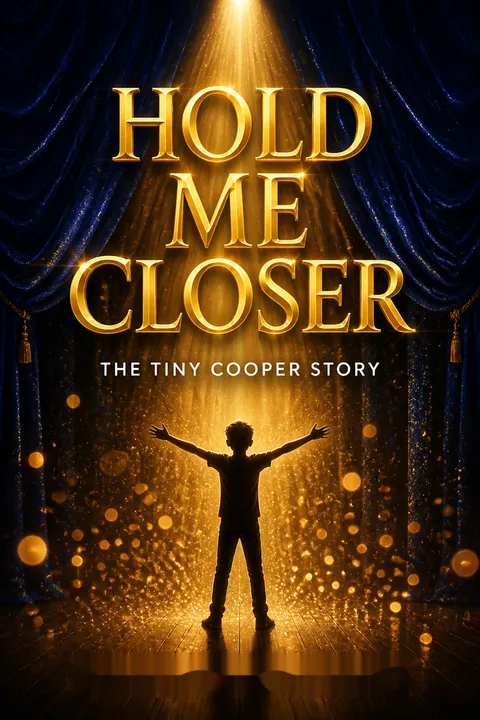


Plot Summary
Born Under the Spotlight
Tiny Cooper enters the world already certain of himself: big, gay, and eager to be seen. His neighbors turn his difference into a spectacle, but his parents protect him from their judgment and love him without asking him to become someone else. At home, Sunday football becomes a family ritual.
Tiny learns from his parents’ devotion to the Chicago Bears that belief means sharing both victory and defeat, a lesson that will later help him build a life around his own passions. Their acceptance does not erase the outside world’s scrutiny, but it gives Tiny a first shelter and a model of love sturdy enough to outlast disappointment.
The musical’s opening makes visibility both Tiny’s gift and his early burden. He is not discovering who he is; the problem is that other people treat his certainty as something to inspect. His parents offer a counterexample to public judgment, and their football ritual supplies an emotional grammar of attachment: commitment persists through losses without pretending losses do not hurt. That combination matters later, when Tiny mistakes romantic intensity for security. The home he grows up in has already shown him a less conditional form of devotion, even if he will need time to recognize it.
Lynda's Sketchbook Lesson
When Tiny is five, his parents’ busy schedules bring Lynda, his sixteen-year-old babysitter, into his life. She is the first person outside his family with whom he forms a close bond. After heartbreaks of her own, Lynda sketches instead of letting anger consume her, and Tiny watches her transform hurt into something she can hold and examine.
She also warns him against treating people as incomplete halves who need one another to become whole. Tiny treasures a page from her sketchbook and carries her advice forward, though its meaning will be tested when he starts to believe that having a boyfriend is what will complete him.
Lynda gives Tiny two tools that pull in opposite directions only if he misunderstands them: art can give pain shape, and a person is already whole. The first lesson becomes a practical method for survival, not a cure that prevents heartbreak. The second is more difficult because Tiny’s imagination prizes romantic pairing and theatrical grand gestures. Lynda’s own vulnerability keeps her guidance from sounding like detached wisdom. She is not untouched by love’s failures; she is showing Tiny how to remain a person inside them.
Phil and Second Base
At eight, Tiny finds his closest childhood friend in Phil Wrayson, a thoughtful boy he meets in the Little League dugout. They become companions through jokes and shared frustration with Coach Frye, whose cruelty turns practice into a source of dread. When teammates tease Tiny for being gay, Phil defends him, treating his identity as ordinary rather than shameful.
The boys also mockingly sing about what second base might mean for a gay man, though Tiny is too young to understand the sexual implications. Years later, Phil offers to discuss Tiny’s attraction to boys. Tiny evades him, protecting their friendship from a conversation he is not ready to have.
Phil’s support is deliberately undramatic: he does not claim special insight or make Tiny’s identity into a crisis. That steadiness lets Tiny experience acceptance before he can name what he needs from it. Yet the friendship has a boundary, created less by Phil than by Tiny’s fear of changing its terms. The baseball teasing shows how a child can encounter sexuality as public joke before understanding it privately. Tiny’s silence is not evidence that he lacks trust in Phil; it reveals how difficult it can be to risk even a safe relationship.
One Word, Then Runway
At fourteen, Tiny can see that everyone around him understands his sexuality, but he still struggles to say it aloud. Alone, he finally names himself as gay, and the relief makes the next disclosure possible. His mother responds with warmth, while his father, moved and uncertain, assures Tiny that he loves him too.
Tiny then asks his father to join him in a mother-daughter fashion show. His father privately confronts the discomfort left by his own distant relationship with his father, then chooses to walk the runway beside Tiny in matching, flamboyant outfits. Their awkwardness does not disappear, but they finish the event together, turning acceptance into a public act.
The first audience Tiny must persuade is himself; the disclosure to his parents follows only after he stops treating his own identity as unsayable. His father’s hesitation adds necessary complexity to acceptance. Love does not make the request effortless, and the father’s choice gains meaning precisely because he recognizes his discomfort and acts anyway. The runway converts a private family bond into a visible alliance, but it is not a demand that the father become Tiny. They remain different people, making the shared walk a practice of closeness rather than a performance of sameness.
Boystown Says Welcome
Tiny brings Phil to Chicago’s Pride parade and finally tells his best friend plainly that he is gay. Phil is not surprised; he jokes about how obvious Tiny’s tastes and mannerisms have always been, then makes clear that their friendship is unchanged. Tiny next faces the group he fears may reject him: his high-school football teammates.
Two bullies make crude locker-room jokes, but the rest of the team shuts them down and backs Tiny as a teammate. With his family, Phil, and the team behind him, Tiny seems to have secured a place in the world. Still, after he celebrates being openly himself, he realizes that friendship and belonging have not answered his longing for romantic love.
These disclosures widen Tiny’s circle of safety without making acceptance a single climactic event. Phil’s humor works because it confirms continuity: he has known Tiny all along, and the new information does not rewrite their bond. The football team’s response matters for a different reason. It contests the assumption that masculinity and gay identity cannot coexist, using collective action rather than a speech. Yet Tiny’s remaining loneliness complicates the apparent triumph. Social recognition can reduce fear without satisfying the desire for intimacy, and he is about to confuse those separate needs.
Brad Leaves the First Date
Once Tiny starts dating, he expects being out to make romance straightforward. His first real prospect, Brad Langley, shares his love of musicals and pop culture, and their easy conversations make Tiny feel he has found a kindred spirit. After weeks of talking without clarifying what they are to each other, Tiny pours out his attraction.
Brad is not ready for the intensity and leaves, ending what might have become a friendship as well as a romance. Tiny then dates Silas, hoping that being gay in common will be enough, but he spends the date thinking about Brad and drives Silas away. His first rejections teach him that desire cannot be made mutual by wanting harder.
Tiny’s mistake is not that he feels deeply, but that he reads shared taste as proof of shared readiness. Brad’s musical references create genuine connection, yet compatibility in conversation does not settle the question of romantic consent or pace. Tiny’s declaration tries to force a definition where neither boy has established one. The rebound with Silas makes the cost clearer: Tiny approaches another person while emotionally attached elsewhere, reducing Silas to a possible remedy. The episode begins a pattern in which he seeks certainty from dating before he has learned how to tolerate ambiguity.
Size Becomes a Verdict
As Tiny reviews his early romantic failures, several boys’ comments expose how his size shapes their treatment of him. One barely dates him before rejecting him; Curtis cannot withstand his friends’ judgment, and Royce uses flirtation to unsettle him. Tiny answers their contempt with a bold song about his body and self-worth, but two of the boys laugh, and the bravado falters.
Another short-lived date, arranged through Phil’s extended family, proves to have been chosen merely to avoid staying home. These experiences do not show Tiny that he is unworthy, but they make that fear harder to silence. He continues seeking romance, determined to be seen beyond his body.
The scene distinguishes self-affirmation from immunity. Tiny can articulate why his body deserves respect, yet other people’s laughter still reaches him; the book refuses the easy fiction that a confident performance instantly heals shame. The exes also fail in different ways. Some openly objectify or insult him, while Curtis lets social pressure govern a private relationship. Tiny’s hurt is real, but the story does not make every rejection proof of one flaw in him. That distinction is psychologically important: repeated rejection can feel like a verdict even when its causes belong to other people.
A Kiss, Then Goodbye
Jimmy, an aspiring actor, gives Tiny his first kiss during a summer movie date. Their shy closeness makes Tiny imagine a future, but Jimmy soon explains that he likes him without wanting to date him. Tiny initially experiences the rejection as the loss of everything, then discovers that the pain loosens with time.
Looking for a wider circle of people like himself, he goes to Camp Starstruck, a drama camp where musical theater and queer friendships make him feel at home. He falls for Joseph, a fellow camper, and they share an intense summer romance. When camp ends, they part rather than attempt a distance Tiny does not want. The relationship ends, but his sense of belonging remains.
Jimmy’s tenderness and refusal coexist, challenging Tiny’s habit of treating intimacy as a promise. A kiss can be meaningful without guaranteeing a relationship, a distinction he can grasp only after the first shock passes. Camp then shifts the source of his confidence. Joseph matters, but the larger discovery is a community in which Tiny’s theatrical tastes and queerness are not liabilities to explain. Their parting is painful but comprehensible, allowing him to experience an ending that does not have to become an accusation or a catastrophe.
Texting Into the Silence
Back at school, Tiny dates Evan, who soon leaves him for Ramon, another boy on the football team. Ramon then ends things without offering an explanation and begins dating Evan. Tiny’s hurt turns inward, and his friend Phil tries to remind him that a boyfriend is not the measure of his completeness. Tiny cannot accept the reassurance.
He soon pursues Devon, whose silence draws a stream of increasingly desperate texts from Tiny. In a theatrical intervention, the Ghost of Oscar Wilde takes Tiny’s phone away and urges him to stop trying to force a response. Wilde points him toward words and creative work as sources of passion that do not depend on one boy answering.
The quick pairing of Evan and Ramon makes rejection feel especially personal to Tiny, while Phil’s care cannot reach him because he is asking for romantic confirmation rather than friendship. The phone gives this need a new instrument: it lets Tiny keep acting even when the other person has withdrawn. Wilde’s intervention is comic in form but precise in diagnosis. Communication becomes compulsive when it is used to deny another person’s silence. His advice does not ask Tiny to suppress feeling; it redirects the energy of feeling toward art, where expression need not compel a reply.
Desire Meets a Boundary
Several boyfriends pressure Tiny to have sex before he feels ready. When he confides in Djane, she helps him focus on whether he actually wants it and whether the boys treat him with care. Tiny answers by turning them down in a song that makes his boundary unmistakable. Their demands leave him feeling depleted, but the failures also give him material.
Remembering Lynda’s lesson about making art from pain and Wilde’s warning against narrowing all passion to romance, Tiny begins writing a musical about his life and the boys who have passed through it. The project changes his position: instead of waiting for someone else to define what happened, he starts shaping the story himself.
Djane offers Tiny a practical standard rather than a moral rule: his own willingness matters, and pressure is not affection. That intervention supports sexual agency without framing desire as dangerous or shameful. Tiny’s song lets him make the refusal public and vivid, reclaiming control over a situation in which others have tried to set the pace. His decision to write also gathers earlier lessons into action. Art does not erase rejection, but it can turn experience from something that merely happens to him into material he can interpret and arrange.
Will Meets the Musical
Tiny finds Will, a boy sitting alone in profound distress, and tries to comfort him with a song from the musical he is writing. Will is initially irritated and admits that he dislikes gay people, including himself. Tiny’s exuberance cannot repair that self-loathing, and his first attempts at reassurance only make Will push back.
But Tiny waits rather than filling every silence. When Will finally lets him close, they kiss. Will is frightened by the connection even as he is grateful Tiny exists, and Tiny leaves the encounter hopeful. He has found someone who responds to him, but Will’s warning that he is not a simple person to love remains hanging over their new bond.
Tiny approaches Will through his familiar belief that a song can change the emotional weather. The gesture is not wholly misguided, but it cannot substitute for knowing what Will needs. The meaningful shift comes when Tiny stops performing optimism long enough to remain present through Will’s anger. Their kiss offers connection, not resolution: Will’s self-rejection and distress persist. The scene therefore resists the rescue fantasy that Tiny is already inclined to embrace. His compassion opens a door, but the warning establishes that closeness will not grant him control over another person’s pain.
Love Cannot Be Rescued
Tiny excitedly tells Phil and Djane about Will, and his breathless happiness helps Phil and Djane finally kiss. Tiny and Will begin dating, but their different emotional rhythms soon matter. In Will’s bedroom, Tiny discovers that Will takes medication for depression.
Will explains that being with Tiny feels like a temporary escape from a darkness that remains, while Tiny keeps offering himself as a way out. He sings that he can give Will something else, hoping love will lift him. For a while they share tenderness, but Tiny’s desire to help risks turning Will into a problem he can solve and Tiny into the solution Will never asked him to be.
The parallel romance between Phil and Djane highlights how affection can emerge from mutual recognition, while Tiny and Will’s relationship carries a more unstable imbalance. Tiny’s care is sincere, but he imagines it as an intervention powerful enough to displace Will’s depression. Will’s disclosure is an act of honesty, not a request to be fixed. The bedroom scene exposes a central tension in Tiny’s way of loving: his generosity can become pressure when he treats another person’s suffering as a role for himself. Care requires listening to limits, not only offering comfort.
Landing, Still Standing
After Tiny says something hurtful to one of Will’s former friends, Will confronts him and insists that Tiny has made his private troubles worse by trying to fix them. At a swing set, Tiny tries to persuade Will that they can still find happiness together, but Will names the problem: Tiny is attached to his need more than to the person he is.
Tiny accepts that Will does not need him, even though the admission hurts. He leaps from the swing and lands on his feet, then turns the loss into the musical’s finale. Surrounded by his parents, Lynda, Wilde, Phil, Djane, and former boyfriends, he recognizes that his life already contains many forms of love.
The ending does not reward Tiny with the romance he wanted; it asks him to revise what romance is supposed to prove. His leap from the swing makes landing part of the image of falling, giving pain a consequence without turning it into a moral failure. The breakup also sharpens Lynda’s old warning: Tiny is not half a person, and Will cannot be made whole by being loved intensely. The ensemble finale expands the idea of intimacy beyond a single partner. Tiny’s story remains open, but his capacity to love no longer depends on one boy returning it.
Analysis
Hold Me Closer treats coming out and falling in love as distinct tasks. Tiny is unusually certain about being gay; what unsettles him is the hope that romantic recognition will certify that he is lovable. The sequence of boyfriends gives that hope repeated tests, while the musical form lets Tiny turn each failure into an account he can shape. His songs are not proof that he has mastered pain. The song about body confidence falters when exes laugh, and his attempts to comfort Will reveal how easily generosity can become a rescue fantasy.
The story’s most reliable forms of love are not the ones Tiny initially prioritizes. His parents accept him, Phil stays his friend, Lynda gives him tools for handling heartbreak, and Djane helps him protect his boundaries. These relationships do not replace romance, nor does the ending claim that a person should stop wanting partnership. Instead, they challenge the belief that one boyfriend must make a life complete. Lynda’s warning against halves becomes the book’s structural idea: intimacy should join people who are already whole, not appoint one person to repair the other.
The theatrical frame makes that distinction unusually visible. Tiny can direct scenes, choose songs, and arrange the ensemble, but he cannot direct Will’s recovery or make a rejection disappear. His growth comes when he stops treating authorship as control over other people and uses it to understand his own experience. The final ensemble does not hand him a perfect romance. It places him among the many people whose affection already gives his life harmony, leaving the future open without leaving him alone.
Review Summary
People Also Read




Characters
Tiny Cooper
The theatrical romanticTiny is a large, openly gay high-school student whose love of musical theater gives him a flamboyant way to meet the world. He craves connection and expresses affection at full volume, often before he has learned whether another person can meet him there. His confidence is real, but it coexists with sensitivity to rejection, especially when boys make his body the focus of their judgment. Tiny’s parents, Lynda, Phil, and later Djane offer different kinds of care that help him see himself beyond dating. He is imaginative, funny, and generous, but his impulse to turn love into rescue can make it difficult for him to hear another person’s limits.
Will
The guarded new boyfriendWill is a withdrawn boy carrying intense distress and a deep dislike of himself. He does not trust affection to change what he is experiencing, and Tiny’s loud optimism can feel less like comfort than a refusal to hear him. At the same time, Will is capable of tenderness and honesty, particularly when he explains the difference between a brief escape and a lasting cure. His guardedness is not a puzzle Tiny can solve through persistence. Will’s presence tests whether Tiny can love someone without making himself responsible for that person’s survival or happiness.
Phil Wrayson
The steadfast best friendPhil is Tiny’s thoughtful, good-natured childhood friend, first drawn into his orbit in a Little League dugout. He defends Tiny without turning their friendship into a performance of virtue, and he offers practical comfort when Tiny is rejected. Phil is more reserved than Tiny and has little experience with romance, which sometimes limits his ability to understand the intensity Tiny feels. His own feelings for Djane sit beneath their familiar banter, though he is slow to act on them. Phil’s loyalty is a durable form of love, even when Tiny is too focused on dating to recognize its value.
Lynda
The artistic older guideLynda is Tiny’s sixteen-year-old babysitter and his first close connection outside his family. While coping with her own breakups, she shows him how drawing can give pain somewhere to go. She also challenges the idea that people exist as incomplete halves waiting for a partner. Lynda is young herself, not an all-knowing adult, which makes her advice feel earned rather than abstract. Her mix of tenderness and frankness gives Tiny an early model for surviving heartache without surrendering his sense of self.
Tiny's mother
The unconditional parentTiny’s mother loves him without demanding that he make his identity easier for others to understand. She responds to his coming out with reassurance and welcomes the vivid, complicated person he already is. Her acceptance gives Tiny a secure base from which to take social risks, though it cannot spare him the sting of rejection elsewhere. She and Tiny’s father also teach him the value of devotion through their shared family rituals.
Tiny's father
The hesitant allyTiny’s father is loving but sometimes unsure how to respond when his son asks him to step into unfamiliar public territory. His own memories of a distant father shape his determination to stay present for Tiny. He does not become instantly comfortable with every request, but he chooses connection over avoidance. Their relationship combines shared rituals, awkwardness, and genuine affection.
Djane
The candid confidanteDjane is Tiny’s friend and one of the few people he turns to when he needs advice outside the dating world. She gives him a clear test for sexual decisions: he should not do anything he does not want to do. Her directness helps Tiny hear his own reluctance beneath the pressure from boyfriends. Djane is also the person Phil loves, though their friendship makes it difficult for him to say so plainly.
The Ghost of Oscar Wilde
The theatrical conscienceThe Ghost of Oscar Wilde appears as a theatrical guide who interrupts Tiny’s spirals and offers perspective on passion, writing, and romantic obsession. His advice is playful but pointed: repeated messages cannot force someone to answer, and love should not become the sole source of a person’s creative life. As a figure from Tiny’s imaginative world, he gives the musical a way to dramatize the counsel Tiny already struggles to accept.
Brad Langley
The first romantic prospectBrad is an older student who shares Tiny’s enthusiasm for musicals and pop culture. Their easy conversation creates real excitement for Tiny, but Brad is not prepared for the level of romantic commitment Tiny quickly imagines. He represents the gap between having much in common and wanting the same relationship.
Jimmy
The tender first kissJimmy is an actor Tiny dates during the summer. He shares a sweet movie outing and gives Tiny his first kiss, but he does not want the relationship Tiny hopes for. His gentleness does not prevent disappointment, and his refusal helps Tiny learn that intimacy and commitment are not always the same thing.
Joseph Templeton Oglethorpe the Third
The summer romanceJoseph is a fellow drama camper who becomes Tiny’s boyfriend during the summer at Camp Starstruck. Their relationship is intense and joyful within the camp’s close-knit world. When the summer ends, their different circumstances make continuing together impractical, but Tiny retains the sense of queer community and belonging he found there.
Coach Frye
The Little League bullyCoach Frye is a harsh youth baseball coach who humiliates players and encourages a narrow, punitive idea of masculinity. Tiny and Phil find common cause in resisting him. His behavior helps establish the early setting in which Tiny learns that some authority figures use shame to enforce conformity.
Evan and Ramon
The overlapping exesEvan is a new student Tiny welcomes before Evan leaves him for Ramon, a longtime teammate of Tiny’s. Ramon soon ends his own relationship with Tiny and begins dating Evan. Their choices intensify Tiny’s fear that romance is something everyone else can find more easily, while showing that his rejection is not a measure of his worth.
Devon Chang
The unanswered texterDevon is a former awkward classmate who becomes newly attractive to Tiny. Their brief connection leaves Tiny sending messages after Devon has stopped responding. Devon’s silence triggers one of Tiny’s most compulsive attempts to keep a relationship alive through words.
Plot Devices
The musical within the story
Turns memory into performanceTiny presents his life as a musical he is writing, complete with songs, stage directions, scene changes, and an ensemble. This form lets him frame difficult events with humor and spectacle without hiding their consequences. It also makes his changing understanding visible: early songs help him announce who he is, while later writing gives him a way to examine rejection and regain authorship of his experiences. The theatrical frame is not simply a fantasy that makes life easier. Tiny’s own directions reveal where he is still trying to control how other people see him.
The ex-boyfriend parade
Makes rejection cumulativeTiny’s eighteen ex-boyfriends appear in a stylized parade, each associated with a different reason a relationship ended. The device compresses many short romances into a memorable pattern, while later scenes return to particular boys and show the circumstances behind their departures. The parade exposes Tiny’s tendency to treat every breakup as evidence against himself, but it also makes the exes’ own limitations visible. Their collective presence turns dating history into material Tiny can organize rather than a blur of private disappointments.
The Ghost of Oscar Wilde
Interrupts romantic obsessionOscar Wilde appears as an imagined theatrical visitor who can address Tiny’s behavior directly. He intervenes when Tiny keeps texting boys who have stopped answering and redirects him toward writing, passion, and self-command. Because Wilde is both comic character and guide, the advice does not arrive as ordinary adult instruction. His appearances connect Tiny’s creative ambition to the practical need to stop treating one boy as the sole source of meaning.
The swing and the fall
Gives heartbreak a physical shapeA swing set opens the dating section and returns near the end, linking Tiny’s repeated falls in love to the harder act of landing after a breakup. The image changes meaning as he does. At first, falling suggests an uncontrolled rush toward romance; later, Tiny recognizes that falling includes impact and recovery. His final leap from the swing turns the metaphor into action, allowing the ending to affirm his willingness to love without promising that every relationship will last.
Will Grayson, Will Grayson Series Series

About the Author




Download PDF
Download EPUB
.epub digital book format is ideal for reading ebooks on phones, tablets, and e-readers.








