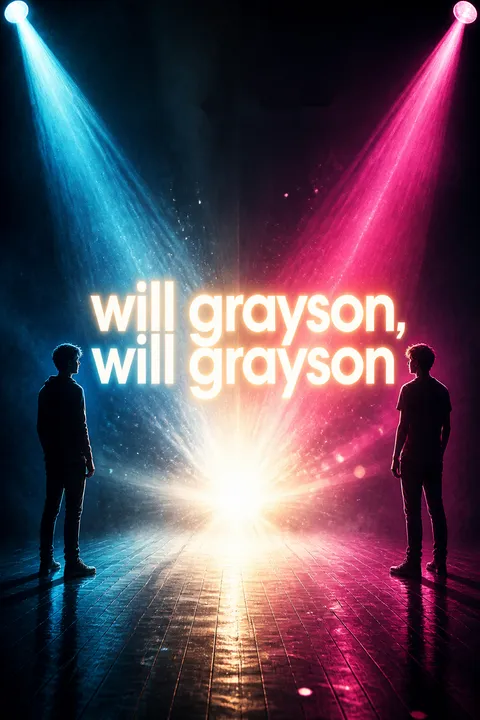


Plot Summary
The Wrong Reunion Show
Evanston teenager Will Grayson has just lost his shallow school friends after publicly defending Tiny Cooper, his enormous, exuberant best friend, from homophobic criticism. When Tiny hears that Neutral Milk Hotel is playing secretly in Chicago, Will rushes with him to the Hideout, only to discover that the band is an impostor.
The night worsens when Tiny learns that his boyfriend has dumped him by posting online. Jane, a GSA friend, helps Will get the distraught Tiny home. There, Tiny collapses and begins choking on his own mucus. Will and Jane cannot lift him, so Will clears his friend's airway himself. For all his rules about staying quiet and detached, Will has already acted from a fierce, practical loyalty.
The opening makes care visible through awkward labor rather than declarations. Will describes emotional restraint as a survival strategy, yet his choices contradict it: he defends Tiny publicly, drives him home, and tends to him when he cannot care for himself. Tiny's conspicuousness attracts ridicule, but it also makes their bond impossible to hide. The failed concert plants the story's recurring contrast between anticipated experience and actual intimacy. Will does not get the cultural event he hoped for; he gets the more demanding, less glamorous proof that friendship means remaining present when someone is at their least composed.
A Love Behind Glass
The second Will Grayson lives in Naperville, keeps to himself, takes medication for depression, and treats silence as armor. His friendship with Maura is uneasy: she wants emotional access, while he resists being examined. Online, however, he has made an exception for Isaac, a boy in Ohio whose messages make him feel understood.
They trade jokes and confidences for months, and Will begins to imagine that their connection might become a real relationship. When Isaac suggests they finally meet in Chicago, Will abandons a math competition and persuades Maura to take his place. He lies to his mother about the trip, chooses a shirt with unusual care, and heads into the city with more hope invested in the meeting than he admits to himself.
This Will's cynicism is not simply a personality quirk. It is a method for limiting the reach of disappointment, shaped by depression, a strained family history, and the conviction that wanting anything invites pain. Online intimacy lets him control distance while still receiving tenderness. The planned meeting therefore changes the stakes: a private fantasy must face another person's actual presence. His lie to his mother and withdrawal from the math team are not signs of sudden confidence. They show how badly he wants an exception to his rule that nothing good should be expected.
The Alliance and the ID
Tiny persuades Evanston Will to attend a Gay-Straight Alliance meeting so the group can secure funding for his autobiographical musical, Tiny Dancer. Will meets Jane Turner, a sharp, music-loving student whose kindness unsettles his practiced indifference.
Tiny pushes them together, and Jane attempts to kiss Will in her orange Volvo; he turns away, then struggles to explain why he wants closeness without a relationship. Jane helps him obtain a fake ID from her brother's acquaintance, and Will discovers he likes the way she sees him.
Tiny wins student council support for the musical and casts Will's fictional counterpart in the story, despite Will's objections. When Tiny pressures him to call Jane, Will does so, but his instinct to keep desire at a safe distance remains stronger.
Will's connection with Jane develops through attention, not a clean romantic decision. He notices her habits and appearance, then retreats as soon as those observations might require action. The GSA makes his private loyalties public: he has already defended Tiny, but now he must enter a space where identity and advocacy are discussed openly. Tiny's musical complicates friendship by turning lived relationships into material for an audience. Will resents being represented without consent, even as Tiny's work makes his own importance to the friendship harder to deny.
Two Wills at Frenchy's
On the night of a Maybe Dead Cats concert, Evanston Will's fake ID gives the wrong age, so Tiny and Jane enter the club without him. Alone across the street, Will uses the useless card to enter an adult shop and buys a magazine as proof that he did something daring. There he meets another teenager who also calls himself Will Grayson.
The second Will is waiting for Isaac, the online boyfriend he has traveled to meet. As they compare details, Maura calls the second Will and reveals that she invented Isaac, using a false profile to draw out the feelings he would not share with her. The two strangers sit together while his imagined relationship collapses. Tiny arrives, recognizes the other Will's heartbreak, and takes him away from the shop.
The meeting fuses two separate stories through an almost absurd coincidence, but the emotional mechanism is precise: both Wills have come to a place where they feel exposed and out of control. The first Will's failed ID has made him an outsider to his own night; the second has discovered that the person he trusted was a fabrication. Maura's deception is cruel partly because it exploits a real need for intimacy. The coincidence does not erase the harm. It gives the devastated Will a witness who cannot repair the lie, but can refuse to leave him alone with it.
Truth Opens Two Doors
As Tiny walks the second Will through Millennium Park, he listens to the story of Isaac and sings to comfort him. The two boys kiss, and Tiny's warmth gives the second Will a first experience of wanting another boy in person.
Meanwhile, Evanston Will tells Jane about the night and admits that he likes her, including his jealousy when he thinks she may return to her ex, Randall. They kiss, though Jane explains that she still has unresolved feelings and cannot promise a relationship.
Back home, the second Will tells his mother he is gay; she accepts him and learns that Isaac was part of his life, though he bends the truth about the meeting. He cuts Maura off, then begins telling classmates the truth and befriends Gideon, another gay student.
The two romances begin through imperfect but genuine acts of disclosure. Tiny offers the second Will care without demanding that his grief become tidy; Jane's conversation with Evanston Will gives him permission to admit attraction without pretending certainty. Their kisses do not solve either boy's fears. Instead, they make avoidance more difficult. The second Will's mother's acceptance also alters the scale of his risk: coming out is no longer only an imagined confrontation. By speaking plainly to her and to classmates, he discovers that reality can be frightening without being uniformly hostile.
A Place at the Table
The second Will starts a relationship with Tiny and tells his mother about it, while Tiny's relentless texts make him feel accompanied through ordinary school days. Tiny visits for dinner, bringing Will's mother a glass bowl that moves her to tears.
In the privacy of Will's room, they kiss, but talk of Will's absent father exposes how quickly affection can feel like a threat to someone accustomed to retreat. Tiny promises him something beyond pain, and Will tries to accept it.
At school, Gideon becomes a dependable friend, while Maura's attempts to apologize meet silence. Evanston Will, meanwhile, grows closer to Jane as Tiny pours his energy into rehearsals, but he remains unsettled by being written into Tiny's play and by how easily Tiny's attention shifts elsewhere.
The dinner scene makes intimacy concrete through hospitality, embarrassment, and a gift chosen with care. Tiny enters a household marked by financial strain and emotional reserve, and his presence allows Will's mother to receive beauty without first dismissing it as too much. Yet the visit also exposes Will's fear that closeness will uncover damage he cannot control. Across both storylines, attention is becoming a scarce resource: the second Will fears losing Tiny, while Evanston Will feels reduced to a character in Tiny's larger self-narration. Affection helps, but it does not automatically correct unequal expectations.
The Swing Set Break
As Tiny's musical approaches, he stays up rewriting it, finally deciding that the story should be about love rather than himself. Evanston Will sees Tiny's focus on the production deepen and feels pushed aside.
During Tiny's visit to his school, Tiny bristles at Gideon, then confronts Maura at lunch and publicly credits her cruelty for bringing the boys together. Will stops him, angry that Tiny has reopened a wound he has chosen to leave alone. At a neighbor's swing set, Tiny explains how often people reduce him to his size and overlook the work he does for others.
Will admits he cannot offer the relationship Tiny wants, and they part. Around this period, the second Will and Tiny also break up, after their closeness becomes more than the second Will can sustain.
The swing set turns private hurt into a confrontation about recognition. Will assumes Tiny's confidence means his life is easy; Tiny reveals the daily cost of being seen only as a body and a performance. At the same time, Tiny's public defense of Will against Maura violates Will's boundaries, showing that generous intentions can still become control. Both relationships fail for different reasons, but the shared pattern is telling: Tiny offers love expansively, while each Will experiences that intensity as pressure to become someone more open than he knows how to be.
The Dugout Holds
After the breakup, Evanston Will leaves school in distress and retreats to a Little League dugout where he remembers Tiny once punching their coach for humiliating him. His father comes home to sit beside him, tells him he is proud of him, and makes clear that college plans will not determine his love.
Jane later visits and explains that she has ended things with Randall; they kiss and begin moving toward a real relationship. Will then goes to Tiny's rehearsal but leaves when Tiny describes his character's flaws to the actor playing him.
He finally tells Jane he loves Tiny as his best friend, not as a boyfriend. At the dugout, Will and Tiny admit how they have hurt each other, affirm their friendship, and agree that Will will help backstage.
The dugout links childhood loyalty to adult choice. Will remembers Tiny defending him long before either boy could articulate what friendship required, and that memory makes his silence harder to maintain. His father's reassurance counters the belief that love must be earned through achievement or emotional ease. Jane's honesty gives Will room to choose her without making her a substitute for Tiny. Most importantly, Will names a form of love that his culture tends to undervalue: a best friend can be central without being a romantic partner.
Try, Err, Try Again
The second Will spends the night before Tiny's opening talking online with the other Will, who confirms that Tiny is hurting but still believes in his musical. Their exchange helps him see that mistakes need not end every attempt at connection.
The next day, his mother urges him to attend the show and speak to Maura. Will apologizes for evading her, while still making clear that her deception was unacceptable; Maura admits that the conversations with Isaac carried real feelings despite the invented identity.
Gideon then offers his car and insists on driving Will to the performance. Evanston Will and Jane prepare Tiny's requested music mix, and he arrives backstage to help the cast. His decision to return is not a promise to resume dating Tiny. It is a choice to witness the work and honor their friendship.
Repair here is deliberately smaller than reconciliation. Will does not excuse Maura or erase the boundary her deception crossed; he acknowledges his own evasions and allows both truths to stand. The online exchange with the other Will gives him a model of persistence that is neither optimism nor denial. Gideon's practical offer matters because support becomes an action, not advice. Evanston Will's return to the theater similarly refuses a false choice between romantic partnership and care. He can decline one relationship while still showing up for the person who matters to him.
Tiny's Story Takes Flight
On opening night, Tiny is so nervous that he vomits and damages his voice, but Will, Jane, and the cast help him recover. Tiny's musical begins with comic scenes drawn from his childhood friendship with Will, including the moment Will learned Tiny was gay.
The performance transforms private memories into songs and gives Will an unsettling chance to see their history from the outside. During intermission, Tiny admits the second half is more personal.
The second Will arrives after receiving encouragement from his namesake, while Gideon supports Evanston Will in the audience. Onstage, Tiny describes the pain of imagining a kinder world and falling short of it. He swings high, releases the chains, and crashes to the floor as Will's phone begins to ring.
The musical is both an act of self-creation and a risky demand to be understood. By staging childhood memories, Tiny makes the friendship public, but the audience's laughter also reveals how easily an individual can become a character in someone else's story. The production's comedy does not cancel its vulnerability; it gives the vulnerable material a form that other people can enter. Tiny's fall literalizes the danger of his faith in love, while the phone call interrupts the performance at precisely the moment when private relationship and public art can no longer be kept apart.
The Names in the Room
Will answers the second Will's call and, with Gideon beside him, stands to address Tiny from the audience. He identifies himself and tells Tiny that he appreciates him. Other people named Will Grayson, along with cast members, Jane, and audience members, rise in turn to offer their own appreciation.
The second Will comes forward too, expressing love as a friend rather than pretending their romance can resume. Tiny, who began the night convinced that the musical had to prove his worth, receives a response from people who have chosen to speak for themselves.
The applause grows as the room joins in. The two Wills recognize each other across the stage, and Tiny, surrounded by voices instead of carrying the whole show alone, seems to lift beyond his size.
The ending changes the audience from spectators into participants. Tiny's musical began as an effort to make his experience legible, but the final recognition cannot be supplied by applause alone; people must risk standing and attaching their names to what they feel. The repeated name turns coincidence into community without claiming that the two Wills are interchangeable. Their distinct choices matter. The second Will offers friendship rather than a romantic promise, while Evanston Will publicly names gratitude. Tiny's final weightlessness is not a cure for rejection. It is the visible consequence of being answered.
Analysis
The novel's central problem is not whether love is possible, but whether people can tolerate its ordinary conditions: uncertainty, unequal need, misreading, and the discovery that another person cannot become the answer to every private wound. The two Wills begin with opposite defenses. Evanston Will performs indifference, while the other Will uses irony and isolation to blunt depression. Both approaches reduce risk by reducing contact. Their meeting does not magically cure either boy; it gives them evidence that another person can hear the truth without immediately turning away.
Tiny's size and theatricality make him conspicuous, but conspicuousness is not the same as being known. His musical tries to convert personal history into a gift, even as his friends resist becoming characters in his self-portrait. That tension is especially important because the book refuses to treat good intentions as automatic innocence. Tiny can be generous and self-centered. Will can be loyal and hurtful. Maura's deception grows from a real wish for connection, but the wish does not erase the breach of trust. Repair begins only when people name both the affection and the damage.
The story also broadens love beyond couplehood. Jane asks to be chosen honestly, Tiny needs appreciation without being treated as a burden, and Gideon offers care through presence and practical help. Evanston Will's declaration at the performance therefore matters as much for friendship as romance. The final audience response turns recognition into a shared act: Tiny does not receive proof that rejection will never happen again. He receives proof that he is not alone in making the effort to love. The book's hope is modest but hard-won. People cannot stay suspended in possibility, and they cannot prevent every fall. They can, however, keep trying after mistakes, tell the truth more directly, and help one another stand back up.
Review Summary
Will Grayson, Will Grayson receives mixed reviews, with ratings ranging from 1 to 5 stars. Many readers appreciate the humor, unique characters, and exploration of friendship and identity. The character of Tiny Cooper is often highlighted as a standout. Some criticize the writing style, particularly Levithan's lowercase chapters. The book's handling of LGBTQ+ themes is praised by some but seen as unrealistic by others. The ending, featuring a musical, is divisive. Overall, readers find the book entertaining and touching, though some struggle to connect with the characters.
People Also Read






Characters
Will Grayson, Evanston
The guarded loyal friendThis Will is a quiet Evanston teenager whose habits of withholding, self-mockery, and emotional distance are meant to protect him from embarrassment. He has remained close to Tiny since childhood, even when Tiny's size, flamboyance, and constant romantic crises draw unwanted attention. His loyalty is clearest in what he does: he defends Tiny publicly, tends to him when he is drunk, and eventually returns to support the musical. His friendship with Jane makes him confront the difference between noticing someone and risking honest connection. Will is not naturally eloquent about affection, but his development depends on recognizing that love need not be romantic to deserve direct expression.
Will Grayson, Naperville
The wary online romanticThe second Will is a depressed, isolated teenager who uses sarcasm and deliberate emotional withdrawal to manage a life that often feels beyond his control. He lives with his mother, takes medication, and struggles to trust that other people can bear the truth about him. His online friendship with Isaac offers a rare space for vulnerability, while his relationships with Tiny and Gideon challenge his assumption that closeness must end in humiliation or abandonment. He is quick to interpret his own flaws as proof that he is unlovable. His central tension is between wanting to be known and fearing the consequences of being seen.
Tiny Cooper
The unapologetic showmanTiny is a six-foot-six gay football player whose size and theatrical personality make him impossible to overlook. He treats affection as something to express loudly and often, and his romantic life is marked by an eagerness to believe each new connection might last. He writes and stages a musical based on his experiences, combining ambition with a real desire to make other people feel included. His confidence is genuine, but it does not shield him from being reduced to his body or from feeling that his effort goes unrecognized. Tiny's friendship with Evanston Will is one of the few relationships that predates his public self-invention.
Jane Turner
The music-loving truth tellerJane is a perceptive, witty student and a friend of Tiny's through the Gay-Straight Alliance. Her deep knowledge of music and her dry humor make her comfortable challenging other people's assumptions, but she is also shy and uncertain about what she wants after a relationship ends. She recognizes Evanston Will's reluctance to act on his feelings and does not let his evasions stand in for honesty. Jane's interest in him is real, yet she insists on being treated as a person with choices rather than as a match Tiny can arrange. Her curiosity and candor help Will notice how much he hides behind detachment.
Maura
The intrusive confidanteMaura is a goth student who shares a bleak, sarcastic humor with the second Will and wants a degree of closeness he resists. She can be perceptive about what he is hiding, but her desire to force a confession leads her to cross boundaries. Her friendship with him contains both genuine attachment and an unhealthy habit of turning his privacy into a problem she must solve. Maura's story asks whether emotional need can justify manipulation, and whether an apology can acknowledge harm without pretending the relationship can return to its earlier shape.
Gideon
The steadfast new friendGideon is a gay student who approaches the second Will with welcome rather than suspicion. He offers friendship, listens without demanding a polished account of pain, and is willing to help through concrete acts. His gentle manner can initially make him seem uncomplicated, but his humor and bluntness emerge when someone he cares about needs a push. Gideon models a form of support that does not require possession or romantic expectation. He helps the second Will feel less alone while encouraging him to take responsibility for repairing relationships.
Anne Grayson
The accepting motherAnne is the second Will's mother, a medical professional who works long hours and tries to reach a son who often answers concern with sarcasm. She worries about his depression and limited social world, but does not respond to his coming out with shame or rejection. Her tenderness is practical: she makes room for conversation, accepts the people he cares about, and understands that his silences do not mean he feels nothing. Anne's own loneliness and her marriage's aftermath give her empathy without making her son responsible for fixing her life.
Mr. Grayson
The quietly present fatherEvanston Will's father is a doctor whose serious manner can make ordinary conversations feel momentous. He and Will's mother have expectations about college, but his deeper care appears when Will is struggling: he comes home, sits with him, and reassures him that parental love does not depend on achievement. He does not demand a full explanation before offering company. His steady presence gives Will an example of affection that is neither theatrical nor conditional.
Gary
The practical GSA allyGary is a member of Tiny's GSA circle and a capable singer who helps make the musical possible. He can be blunt and skeptical about Tiny's romantic choices, but he is also loyal to the group and willing to take on a major role in the production. His performance as Will's counterpart turns a private friendship into public theater.
Nick
Gary's attentive boyfriendNick is Gary's boyfriend and part of Tiny's close circle. His relationship with Gary provides context for Tiny's brief romantic entanglements, and he helps with the musical's rehearsals and opening night.
Simon
The competitive mathleteSimon is one of the second Will's limited school friends, a computer-minded mathlete who expects him to honor the team's commitment. His blunt reaction to Will's coming out reveals that acceptance among peers can be awkward and uneven rather than instantly enlightened.
Derek
The quiet math teammateDerek is Simon's friend and the second Will's fellow mathlete. Reserved and computer-focused, he belongs to the small social circle Will can count on before he begins building a wider one.
Randall
Jane's poetic exRandall is Jane's former boyfriend, a water-polo player whose grand gestures and sudden declarations complicate her feelings. His return forces Jane to decide what kind of consistency she wants from a relationship.
Clint
The former friendClint is a student council officer and a member of the group Evanston Will once hoped to join. His jokes about Tiny's musical show how casual cruelty can coexist with friendliness, leaving Will uncertain where he stands.
Plot Devices
The two Will Graysons
A collision of perspectivesThe novel alternates between two teenage narrators who share a name but lead separate lives. Their accidental meeting at an adult shop brings together the storylines without making either boy a mere copy of the other. Each has a different defense against vulnerability, and each gives the other a new angle on Tiny, Jane, and the risks of intimacy. Their names also create the book's central joke, but the plot uses that coincidence to explore how recognition depends on listening to a particular person rather than assuming shared labels mean shared experience.
Isaac's online profile
Trust tested by distanceThe second Will's months-long online bond with Isaac lets him experience emotional closeness while keeping physical vulnerability at a distance. The planned Chicago meeting gives that connection a concrete destination. The profile also becomes the mechanism through which Maura's desire to know him turns into deception. Once the truth emerges, the story distinguishes between a fabricated identity and the real feelings Will attached to it. His grief is not dismissed as foolish simply because the person he imagined never existed.
Tiny's musical
Friendship made theatricalTiny's production begins as a musical portrait of his own life, with a fictional version of Evanston Will in a central role. The rehearsals and performance turn their private history into public entertainment, provoking Will's discomfort at being represented and Tiny's desire to make a meaningful gift. As the show develops, its subject shifts toward love and the limits of idealized stories. The stage lets characters revisit events they could not discuss plainly, but it also raises the question of who has the right to tell a shared story.
Schrödinger's cat
A metaphor for choosingJane explains the thought experiment to Evanston Will: an unseen cat is treated as both alive and dead until someone opens the box, though observation does not control what has already happened inside it. Will applies the image to his habit of delaying romantic decisions, hoping that refusing to look will preserve every possibility. The metaphor returns as he learns that avoidance does not suspend other people's lives or his own feelings. It gives Jane and Will a shared language for deciding when friendship can become something more.
FAQ
Synopsis & Basic Details
What is Will Grayson, Will Grayson about?
- Two Wills, Intertwined Lives: The story follows two teenagers, both named Will Grayson, whose lives unexpectedly intersect in Chicago, leading to a complex exploration of friendship, love, and self-discovery.
- Navigating Identity and Relationships: Both Wills grapple with their identities, romantic relationships, and the challenges of expressing their true feelings, set against the backdrop of high school and personal struggles.
- Tiny's Musical as Catalyst: Tiny Cooper's ambitious musical project, "Hold Me Closer," becomes a central element, reflecting the characters' journeys and serving as a catalyst for their emotional growth and connections.
Why should I read Will Grayson, Will Grayson?
- Unique Dual Narrative: The novel offers a compelling narrative structure with alternating perspectives of two characters sharing the same name, providing a fresh and engaging reading experience.
- Exploration of Complex Themes: It delves into universal themes of identity, love, friendship, and acceptance, making it relatable and thought-provoking for a wide range of readers.
- Heartfelt and Humorous: The story balances emotional depth with humor, creating a captivating and enjoyable read that resonates with readers long after they finish the book.
What is the background of Will Grayson, Will Grayson?
- Contemporary High School Setting: The story is set in a contemporary high school environment, reflecting the social dynamics, challenges, and experiences of modern teenagers.
- Chicago as a Backdrop: The city of Chicago serves as the backdrop for the characters' interactions, adding a layer of urban realism to the narrative.
- Cultural Emphasis on Acceptance: The novel explores themes of LGBTQ+ acceptance and self-discovery, reflecting a broader cultural conversation about identity and inclusivity.
What are the most memorable quotes in Will Grayson, Will Grayson?
- "The problem with people is they forget that most of the time it's the small things that matter.": This quote highlights the importance of everyday moments and connections, a central theme in the novel.
- "Falling in love is awful. It's awful and terrifying and amazing.": This quote captures the complex and often contradictory nature of love, reflecting the characters' emotional journeys.
- "You are so busy being you that you have no idea how utterly unprecedented you are.": This quote, spoken by Tiny, emphasizes the unique value of each individual and the importance of self-acceptance.
What writing style, narrative choices, and literary techniques does John Green use?
- Alternating First-Person Narration: Green employs a dual first-person narrative, switching between the two Will Graysons, allowing readers to experience the story from multiple perspectives.
- Conversational and Witty Dialogue: The dialogue is realistic, witty, and often humorous, reflecting the way teenagers communicate and adding to the novel's engaging tone.
- Use of Metaphor and Symbolism: Green uses metaphors, such as Tiny's musical, and symbolism, like the recurring motif of falling and floating, to deepen the story's themes and emotional impact.
Hidden Details & Subtle Connections
What are some minor details that add significant meaning?
- The Porn Store Encounter: The initial meeting of the two Wills at a porn store, seemingly random, sets the stage for their interconnected lives and highlights the awkwardness and vulnerability of adolescence.
- Tiny's Musical Title Changes: The evolution of Tiny's musical title from "Tiny Dancer" to "Hold Me Closer" reflects his growth from self-centeredness to a broader understanding of love and connection.
- The Significance of Names: The shared name "Will Grayson" emphasizes the theme of identity and the idea that individuals can be both similar and vastly different, despite surface similarities.
What are some subtle foreshadowing and callbacks?
- Early Mentions of Isaac: The initial mentions of Isaac, the online boyfriend, foreshadow the later revelation of his fabricated identity and the emotional impact it has on the second Will Grayson.
- Tiny's "Falling and Floating" Concept: Tiny's recurring concept of "falling and floating" foreshadows the characters' emotional journeys and their acceptance of life's uncertainties.
- Jane's Honesty: Jane's emphasis on honesty early in the story foreshadows the first Will Grayson's eventual embrace of radical honesty and its impact on his relationships.
What are some unexpected character connections?
- Maura's Connection to Both Wills: Maura's actions, though primarily affecting the second Will Grayson, indirectly impact the first Will Grayson's understanding of honesty and relationships.
- Gary and Nick's Support: Gary and Nick, seemingly minor characters, provide crucial support to both Wills and Tiny, highlighting the importance of community and friendship.
- Gideon's Quiet Understanding: Gideon's quiet understanding and support for the second Will Grayson reveal the power of genuine connection and empathy in overcoming adversity.
Who are the most significant supporting characters?
- Jane Turner's Influence: Jane's character challenges the first Will Grayson to be honest and vulnerable, driving his emotional growth and shaping his understanding of love.
- Maura's Complex Role: Maura's actions, though misguided, force the second Will Grayson to confront his loneliness and seek genuine connections, making her a significant catalyst.
- Gary and Nick's Community Support: Gary and Nick provide unwavering support and humor, highlighting the importance of community and acceptance in the characters' journeys.
Psychological, Emotional, & Relational Analysis
What are some unspoken motivations of the characters?
- First Will's Fear of Vulnerability: The first Will Grayson's reluctance to express his emotions stems from a deep-seated fear of vulnerability and rejection, which he gradually overcomes.
- Second Will's Desire for Connection: The second Will Grayson's online relationship with "Isaac" reveals his underlying desire for genuine connection and his struggle with loneliness.
- Maura's Need for Validation: Maura's creation of Isaac is driven by her own need for validation and connection, highlighting her own insecurities and emotional struggles.
What psychological complexities do the characters exhibit?
- First Will's Emotional Repression: The first Will Grayson exhibits a tendency to repress his emotions, using sarcasm and indifference as defense mechanisms, which he learns to overcome.
- Second Will's Identity Crisis: The second Will Grayson experiences an identity crisis after the Isaac revelation, forcing him to confront his true self and seek meaningful relationships.
- Tiny's Insecurities Beneath Confidence: Despite his outward confidence, Tiny harbors insecurities about his weight and his place in the world, which he explores through his musical.
What are the major emotional turning points?
- The Isaac Revelation: The revelation that Isaac is a fabrication is a major emotional turning point for the second Will Grayson, forcing him to confront his loneliness and seek genuine connections.
- First Will's Honesty with Jane: The first Will Grayson's decision to be radically honest with Jane marks a turning point in his emotional growth and his ability to form meaningful relationships.
- Tiny's Musical's Success: The success of Tiny's musical is a major emotional turning point for all the characters, symbolizing their growth, acceptance, and the power of community.
How do relationship dynamics evolve?
- Will and Tiny's Friendship Strain: The friendship between the first Will Grayson and Tiny is tested by Tiny's focus on his musical and his new relationship, leading to a temporary rift.
- First Will and Jane's Growing Connection: The relationship between the first Will Grayson and Jane evolves from initial attraction to a deeper connection based on honesty and vulnerability.
- Second Will's Acceptance of Friendship: The second Will Grayson learns to accept genuine friendship and support from Tiny and others, moving beyond his reliance on online connections.
Interpretation & Debate
Which parts of the story remain ambiguous or open-ended?
- Maura's Future: The novel leaves Maura's future somewhat ambiguous, leaving readers to wonder if she fully understands the consequences of her actions and if she will find genuine connection.
- The Long-Term Impact of Honesty: While the novel emphasizes the importance of honesty, it leaves open the question of how the characters will navigate future challenges and relationships with this new approach.
- The Nature of Love: The novel explores different forms of love, but it doesn't offer a definitive answer about what love truly means, leaving room for interpretation and debate.
What are some debatable, controversial scenes or moments in Will Grayson, Will Grayson?
- Maura's Deception: Maura's creation of Isaac is a controversial act that raises questions about the ethics of online relationships and the impact of deception on emotional well-being.
- Tiny's Self-Centeredness: Tiny's initial focus on his musical and his own experiences can be seen as self-centered, sparking debate about the balance between self-expression and consideration for others.
- The First Will's Emotional Distance: The first Will Grayson's initial emotional distance and sarcasm can be interpreted as both a defense mechanism and a flaw, leading to debate about his character development.
Will Grayson, Will Grayson Ending Explained: How It Ends & What It Means
- "Hold Me Closer" as a Symbol: The successful performance of Tiny's musical, "Hold Me Closer," symbolizes the characters' growth, acceptance, and the power of community, marking a positive resolution.
- Embracing Uncertainty: The ending emphasizes the importance of embracing life's uncertainties and finding strength in vulnerability, encouraging readers to let go of fear and embrace the journey.
- New Beginnings: The characters look toward the future with renewed hope and understanding, suggesting that the bonds formed through shared experiences and honesty will pave the way for new beginnings.
Will Grayson, Will Grayson Series Series
About the Author
Other books by John Green




Download PDF
Download EPUB
.epub digital book format is ideal for reading ebooks on phones, tablets, and e-readers.








