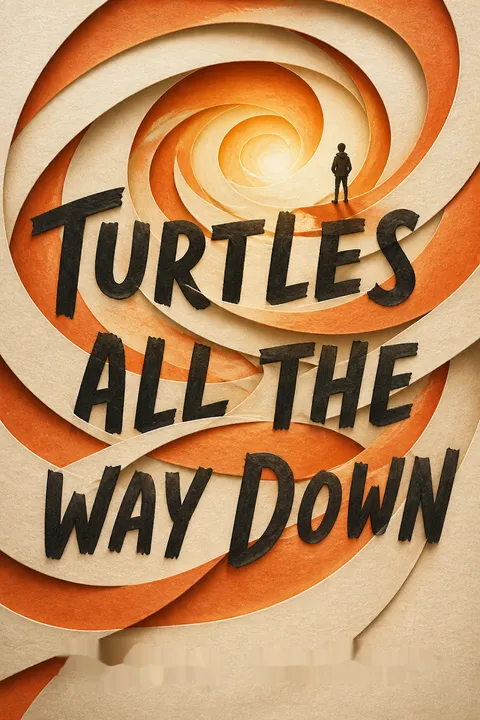


Plot Summary
The Spiral at Lunch
At White River High, Aza Holmes tries to follow a cafeteria conversation while her attention locks onto the bacteria inside her body and the possibility of infection. She presses open the familiar crack in her fingertip, then hides the wound beneath a fresh Band-Aid. Her best friend, Daisy Ramirez, notices that Aza has barely spoken and offers to spend the afternoon with her.
Before they can leave, Daisy explains that construction magnate Russell Pickett has vanished ahead of a corruption investigation, with a reward offered for information. His son Davis is someone Aza knew as a child at a bereavement camp. Daisy sees a chance to investigate; Aza remembers their shared silences and agrees to look for a lead.
Aza's first obstacle is not a mystery outside her but a mind that can turn ordinary bodily sensations into urgent evidence. The missing-person story gives her attention somewhere to go, but the shift is not a cure: investigation becomes another way to manage thoughts she cannot command. Daisy's decisiveness supplies momentum without making her a simple rescuer. She recognizes Aza's withdrawal, stays beside her, and turns a news item into a shared task. The story begins by placing agency under pressure, then tests whether friendship and purposeful action can create room to move.
A Camera in the Woods
Aza and Daisy paddle the White River to the Pickett property, where they remember childhood visits and find a motion-triggered camera hidden in the woods. Its images show Russell walking past at 1:01 a.m. on the night he disappeared, dressed in his sleep clothes. Before Aza can inspect more, a security guard spots her; Daisy damages their canoe to make their trespass look like an accident, and the guard, Lyle, offers to escort them home.
At the estate, Davis recognizes Aza and remembers her favorite soda. He speaks plainly about his father, who rarely cared for his sons, and about the strangers now approaching him because of the reward. Daisy's invented excuse gets the friends inside, but Aza's reunion with Davis becomes real.
The camera supplies a concrete clue, while Daisy's improvised canoe damage turns a risky intrusion into an awkward social encounter. Their contrasting responses matter: Daisy acts before fear can stall them, while Aza stays fixed on the evidence. Davis's recognition complicates the reward-driven motive that brought them there. He is not simply an heir guarding a secret; he is a lonely teenager watched by people who want something from him. The reunion also revives Aza's sense of being understood through shared attention, a feeling that will draw her toward Davis even as her internal distress resists closeness.
The Case Gets Personal
Daisy obtains the police report by impersonating a reporter and pressuring a junior journalist to send it. Aza searches the document and Davis's abandoned online writing, finding a thoughtful boy's private reflections beneath his guarded public manner.
The report confirms that the estate staff left before nightfall and records no explanation for Russell's departure; the photograph gives the girls a timeline the police lack. Daisy argues that they should claim some of the reward. Aza asks Davis what would happen if she gave the police the image.
He explains that an arrest would hurt his younger brother, Noah, who still hopes their father will return, and that he would rather Russell contact them himself. Aza promises not to hand over the photograph, though she cannot entirely quiet her doubts.
The investigation creates an ethical problem rather than a clean detective's choice. The photograph could help authorities, but it could also accelerate a prosecution that Davis believes would harm Noah. Aza's promise is emotionally motivated before it is rationally settled, which fits her broader uncertainty about what she controls. Meanwhile, Daisy's deception shows how readily she treats institutions as systems to be outmaneuvered, especially when money could change her prospects. Their approaches are not simply right versus wrong: both respond to real constraints, but only Aza has begun to understand the cost of turning Davis's family into a prize.
A Fortune in Cereal
At dinner with Daisy and their friend Mychal Turner, Aza reconnects with Davis, then follows him through the mansion's private theater and out beneath the stars. They trade stories about grief and identity: Davis describes his mother's long illness and remembers how his father dismissed her attempts to respond to him.
When Davis realizes Aza has seen the night-vision photograph, he offers her a hundred thousand dollars from cash Russell hid in cereal boxes, framing it as payment for keeping the image private.
Aza accepts the bag, then finds Noah alone, ashamed and desperate for news about their father. Noah gives her Russell's phone notes, including a cryptic reference to a runner's mouth. His tears leave Aza with a promise to keep looking, even as Davis has tried to end the investigation.
Money arrives as both temptation and defense. Davis cannot know whether anyone likes him apart from his wealth, so he converts uncertainty into a transaction he can control. Aza accepts, but the scene does not settle whether their connection is genuine; it makes that question sharper. Noah's grief prevents the payment from functioning as a clean exit. His need is not for a reward or a legal answer, but for his father to come home. By taking his notes, Aza becomes responsible to someone who has no power to reward her, complicating Daisy's view of the case as a profitable opportunity.
The Wound Keeps Talking
Aza tells Daisy about the money and divides it evenly with her. Daisy sees the sum as a path toward college and leaves her restaurant job, while Aza remains uneasy about accepting wealth from a grieving boy.
Noah's notes point toward countries without easy extradition and the difficulty of faking a death, but the final reference remains opaque. Russell's lawyer arranges for the girls to deposit their cash. On the drive, Aza becomes convinced that she has left a Band-Aid on her cut too long and that the wound is infected.
She repeatedly cleans and rebandages it, barely reaching the bank on time. The girls open accounts, but the deposit does nothing to settle Aza's fear. She texts Davis, and they arrange another evening together beneath the sky.
The windfall exposes a gap between Daisy's material reality and Aza's moral discomfort. Daisy has worked punishing shifts for modest pay, so the money means time and education; Aza's hesitation is sincere, but it risks treating their unequal circumstances as if they were interchangeable. Her finger anxiety gives the scene a parallel tension: an event that should feel like security becomes another occasion for checking and doubt. The episode also shows how little reassurance changes the structure of a compulsion. A successful deposit resolves a practical problem, yet Aza's mind continues to generate threats beyond what practical evidence can answer.
A Kiss Under Clouds
Before Davis takes Aza out, her mother insists on meeting him and warns him not to mistake money for permission to control her daughter. Her severity makes Davis cry, revealing the grief beneath his polished composure.
At his house, the house manager, Rosa, serves the teenagers dinner and offers the kind of care their absent parents have not. Davis tells Aza that schoolmates even suspect him of harming his mother, while he worries that Noah is deteriorating without a parent.
Their planned meteor shower is hidden by clouds, but they stay outside talking about the night sky and the fear of being trapped inside one's own thoughts. Aza kisses Davis. Then the thought of exchanging microbes takes hold, and she retreats to wash her mouth and reopen her finger wound.
The scene puts several forms of care beside one another. Aza's mother protects through caution, Davis's tears expose a need that wealth cannot meet, and Rosa gives affection within the limits of paid work. The cloudy sky becomes a useful counterpoint: the event they planned to watch is invisible, but their shared attention remains possible. Aza's kiss is a genuine act of desire, followed by an equally genuine compulsive fear. The sequence refuses to make intimacy a cure or anxiety a rejection. Davis can offer patience, but he cannot enter Aza's experience or make the fear disappear for her.
A Self Without Certainty
After the kiss, Aza tells Davis she cannot manage a conventional relationship, and he accepts the boundary rather than demanding that she improve for him. In therapy, she describes feeling like a product of circumstances instead of a stable self.
Dr. Singh challenges her belief that unwanted thoughts define her, while also insisting that her treatment requires consistent care. At home, Aza raises the possibility of attending an expensive college far from Indianapolis, and her mother answers with practical doubts about cost and distance.
Unable to speak easily face to face, Aza asks Davis by text what he likes about her body. He names specific features with warmth, and she agrees to see him again, finding that written intimacy feels safer than kissing.
Aza's fear is philosophical as well as clinical: if she cannot choose her thoughts or bodily responses, she wonders whether there is an independent self beneath them. Dr. Singh does not answer with a tidy theory; she separates the presence of a thought from the person experiencing it and presses for treatment adherence. Davis's patience respects Aza's limits, while their texts let her approach desire at a distance she can tolerate. The college conversation adds another version of the same question. Aza imagines possible selves, but financial and familial circumstances narrow the options before she can test them.
Sanitizer in the Mouth
At the Pickett estate, Aza meets Malik, the zoologist studying Tua, the long-lived tuatara named in Russell's will. Davis then confides that thirteen-year-old Noah has been suspended for bringing marijuana to school and that he feels helpless as a substitute parent.
During a movie, Aza tries kissing Davis again, but microbial fears return. She goes to the bathroom and swallows hand sanitizer in an attempt to rid herself of contamination. Noah, meanwhile, asks her to keep searching for his father because he cannot stop hoping Russell will contact them.
Aza agrees, then returns to Davis, who does not punish her for withdrawing. She leaves with the crisis unresolved, carrying both Noah's request and the knowledge that her attempts to control fear can put her in danger.
This episode escalates Aza's compulsions from painful rituals to direct physical risk. Her attempt to disinfect herself is not a considered choice but a response to an intolerable thought, and the brief relief it promises cannot last. Malik's research offers an ironic backdrop: Tua can carry parasites without becoming ill, yet Aza interprets microbial life as a threat she must eradicate. Davis's support is real but limited; he can pause the film and stay near her, not undo the mechanism of panic. Noah's request adds an external responsibility that Aza accepts even while struggling to care for herself.
Ayala's Unwanted Mirror
Unable to sleep after the failed movie night, Aza searches for Davis's new blog and finds his private poems and entries. A quiet video call lets them share each other's presence without the pressure of physical contact, and for a time they build a relationship through messages and late-night calls.
Aza then reads Daisy's popular Star Wars stories and discovers Ayala, an anxious, obstructive character modeled partly on her. Davis has been gentle about Ayala, but Aza reads the stories as proof that her closest friend finds her useless.
She says nothing at first. Later, after a night of stargazing and swimming with Davis, she reads about the gut-brain connection, drinks hand sanitizer, and spirals through shame and fear. Her distress carries into the next day's drive with Daisy.
The blog and the fan fiction offer opposing forms of mediated intimacy. Davis's writing lets Aza feel known without immediate bodily exposure; Daisy's fiction makes her feel observed and judged from a distance. Ayala is not simply a secret portrait, but Aza cannot separate the character's flaws from her fear that she exhausts the people who love her. The sanitizer episode marks the return of a compulsion despite moments of closeness and pleasure. Her relationships are not failing because affection is absent. They are strained because Aza's interpretations, Daisy's unspoken frustrations, and the limits of what either friend knows remain unresolved.
Harold Takes the Blow
When Daisy picks her up, Aza confronts her about Ayala and accuses her of turning their friendship into a joke. Daisy says the character began years earlier and has since become her own creation, but she also admits that Aza's self-absorption can make friendship difficult.
She lists how little Aza knows about her family, work, and younger sister, Elena, and explains that the money has not erased their different lives. Aza fires back that Daisy cannot know what it is like to be trapped inside her mind.
As the argument continues, Aza fails to slow Harold for traffic. The car hits an SUV, then another vehicle strikes them from behind. Aza's ribs and liver are injured, and Harold is wrecked. She clutches her dead father's damaged phone, grieving the object as well as the crash.
The argument exposes a real imbalance in their friendship: Aza's suffering is consuming, but it has also narrowed her curiosity about Daisy's life. Daisy's anger is not invalidated by Aza's illness, and Aza's illness is not disproved by Daisy's hurt. The collision gives that emotional failure a physical consequence without making either girl its sole cause. Harold and the phone carry Aza's attachment to her father, so losing them reactivates an older grief inside a new emergency. Her reaction to the wrecked car may look disproportionate, but the object has been a portable link to childhood, memory, and her father's presence.
The Hospital Spiral
Doctors find a mild liver laceration and keep Aza in hospital for observation, where her fear of C. diff intensifies. Unable to escape the thought that contamination is spreading through her, she drinks sanitizer from a wall dispenser and vomits.
Her mother discovers her, and Dr. Singh is called to help explain the crisis. Aza remains hospitalized for eight days, then spends two weeks at home recovering from the injury and acute mental distress.
Dr. Singh identifies trauma from the collision and Aza's inconsistent medication use, then changes her prescription and follows her closely. Aza returns to school in December still afraid and not fully well, but willing to take the new medication. Daisy waits for her, and the two begin repairing their friendship.
The hospital removes Aza's usual routines while intensifying the very fears those routines serve to manage. Her act with the sanitizer shows that insight alone cannot stop a compulsion: she knows enough to be frightened by what she is doing, yet feels driven to do it. Treatment here is not a sudden recovery but a set of repeated, practical interventions, medication, monitoring, rest, and honest communication. The return to school matters because Aza resumes ordinary life without being declared cured. Daisy's presence offers relational repair, but neither friend pretends the crash or their argument has vanished.
Back Among the Living
Daisy welcomes Aza back with chatter about the weeks she missed, including her breakup with Mychal and the sale of her new car. During lunch, Aza asks about Daisy's parents and learns how much she had failed to notice about her friend's daily life. The two share pizza beneath a tree, where Daisy explains that the search for a single, solid self may be misguided because identity has no final layer beneath experience.
Aza also tells her mother about the fifty thousand dollars Davis gave her and chooses to keep it for college. Her mother accepts that the choice belongs to Aza, even while fearing for her health. Later, Aza arranges to see Davis again, carrying the renewed friendship with Daisy into a difficult conversation about intimacy.
Repair begins not with a dramatic apology but with attention. Aza asks questions she should have asked long ago, and Daisy answers from the material facts of her life rather than from an abstract claim about being misunderstood. Their conversation about identity reframes Aza's search for an uncontaminated, singular self: a person may be layered and still be real. The exchange with her mother is another small shift from protection toward autonomy. Aza's money, treatment, and future remain sources of worry, but her mother acknowledges that concern cannot substitute for Aza's own choices.
A Tunnel Beneath Town
At Applebee's, Davis sits beside Aza, and the proximity revives her fear of kissing and microbial exchange. She tells him that the life he hopes to share may be beyond what she can offer; he says he needs closeness, not a relationship maintained only at a safe distance. They part without a workable compromise.
The next day, Daisy invites Aza to an underground art show in the unfinished Pogue's Run tunnel, where Mychal's composite portrait of an exonerated prisoner is being exhibited. Aza agrees to go, partly because Daisy needs her there and partly because she is ready to re-enter the world. In the tunnel, the girls pass graffiti, rats, and the original Pickett Engineering project sign before following the art into a side passage.
Aza's breakup with Davis is painful precisely because neither person is at fault for wanting something the other cannot provide. His need for embodied closeness is legitimate; her boundaries are not a test he can pass by waiting. Daisy's invitation then offers a different form of connection, grounded in shared activity rather than romantic expectation. The setting binds personal and civic history: the tunnel is an art space, a sewer route, and evidence of Russell Pickett's failed public works. Moving underground places Aza in darkness she can navigate with a flashlight, a contrast to fears she cannot simply illuminate.
The Runner's Hidden Mouth
The exhibition draws Aza and Daisy farther into the tunnel, away from the crowd and toward an unfinished outlet above the White River. When Daisy identifies the spot as the mouth of Pogue's Run, Aza connects it to Russell's cryptic phone note about a runner's mouth.
She suspects he may have hidden there and notices a foul smell, but neither girl sees him. Aza decides not to alert the police herself, knowing that Russell's will leaves his fortune and estate to Tua rather than his sons.
After telling her mother what they found, she privately informs Davis. He realizes the clue may mean his father is dead and breaks down in Aza's arms. She cannot promise a comforting answer, but reminds him that he and Noah still have time to build a life together.
The clue works because it is both linguistic and geographic: a phrase that seems meaningless becomes legible only when Aza stands at the terminus of the very infrastructure Russell's company failed to complete. Yet solving it does not restore control. Aza has a plausible location, not proof, and chooses to give Davis the information before involving authorities. Her decision recognizes that truth has consequences for the brothers' inheritance and grief. Davis's collapse marks the moment possibility gives way to anticipated loss. Aza cannot make uncertainty disappear, but she can stay with him while he faces it.
A Light Still Traveling
After Christmas, news reports that authorities have found Russell's body in a branch of Pogue's Run, likely dead within days of vanishing. Davis tells Aza that he and Noah provided the anonymous tip; not knowing had become worse than losing the estate, which Russell's will leaves to Tua.
Months later, Davis arrives at Aza's home the night before he and Noah move to Colorado. He gives her the spiral painting from his house and lies beside her under the branching trees, discussing the stars and the brother he has chosen to care for.
They part tenderly, without pretending the separation is easy. Aza's retrospective account imagines the life ahead of her, including further illness and recovery, and understands first love as a gift that remains meaningful even after it ends.
The final choice belongs to Davis and Noah, not to Aza: they surrender the estate's security because knowing what happened to their father matters more than preserving the fortune. Russell's will makes that cost concrete, turning Tua into the unexpected beneficiary of a family rupture. Davis's gift of the spiral painting carries their connection forward without promising a reunion or denying the move. The retrospective voice broadens the ending beyond a teenage romance, imagining illness as recurring rather than conquered. Aza's future is not guaranteed to be easy, but memory and love remain part of a life that continues.
Analysis
Turtles All the Way Down makes its central conflict unusually literal: Aza experiences thought as something that happens to her, not something she freely selects. Her contamination fears are not merely symbols for adolescent insecurity; they govern specific actions, from reopening her finger to swallowing sanitizer, and the novel tracks the damage those actions cause without presenting them as moral failures. The language of spirals, hosts, and parasites gives shape to a fear that otherwise resists description, while therapy and medication offer imperfect tools rather than a clean cure.
The mystery of Russell Pickett's disappearance runs alongside this interior story, but its resolution is not a victory over illness. Aza can identify the likely location of Russell's body without gaining control of her mind, and truth brings Davis and Noah grief as well as an answer. Their choice to surrender the estate's promise of security in exchange for knowing what happened makes the family's emotional stakes tangible. The case asks whether certainty is always beneficial; for Noah, not knowing has become its own injury.
Aza's relationships test the limits of empathy. Daisy loves her but is exhausted by the attention Aza's illness demands, and Aza's failure to ask about Daisy's life is a real hurt rather than a side effect to dismiss. Davis offers patience, yet their romantic connection cannot survive on patience alone when he needs physical closeness and Aza cannot make it safe for herself. The novel avoids turning either relationship into treatment. Love can accompany suffering, but it cannot perform the work of recovery for another person.
The title's image of endless turtles resists the fantasy of a final, pure self beneath all conditions. Aza does not discover an untouched identity that explains or defeats her illness. Instead, she learns to live without that foundation, supported by chosen relationships, treatment, memory, and ordinary acts of attention. The ending's hope is therefore conditional but substantial: life may remain difficult, and still continue to contain love, change, and a future.
Review Summary
Turtles All the Way Down received mixed reviews. Many praised its authentic portrayal of mental illness, particularly OCD, and found the characters relatable. Some felt the plot was slow or disjointed, while others appreciated the focus on character development. The writing style and philosophical discussions were divisive - some found them profound, others pretentious. Several reviewers noted it felt more mature than Green's previous works. Overall, most agreed it was an important book for mental health representation, even if not everyone enjoyed the story itself.
People Also Read










Characters
Aza Holmes
An anxious observerAza is an intelligent Indianapolis high-school student whose attention can be captured by obsessive fears about contamination, illness, and whether her thoughts belong to her. She is close to Daisy, relies on her mother, and carries the loss of her father in habits of memory, including keeping his old phone. Aza notices patterns and feels deeply, but her inward focus can make her miss what is happening in the lives of people around her. She wants friendship and intimacy while also fearing the body's ordinary vulnerabilities. Her story is shaped by the difficult distinction between living with a mental illness and being reduced to it.
Daisy Ramirez
A fearless best friendDaisy has been Aza's closest friend since childhood. Funny, forceful, and quick to improvise, she works at Chuck E. Cheese while writing popular Star Wars fan fiction on her phone. She is ambitious about college and acutely aware of the economic limits that shape her choices. Daisy often uses humor and boldness to keep embarrassment or fear from slowing her down, but her confidence does not make her immune to hurt. She wants Aza's loyalty and attention, not only her affection. Their friendship matters because it asks both girls to see beyond their own versions of the other's life.
Davis Pickett
The lonely heirDavis is a thoughtful teenager and the older son of missing construction magnate Russell Pickett. Aza knew him as a child at a bereavement camp, and their reunion grows through shared curiosity about identity, grief, and the night sky. He writes privately, reads widely, and uses astronomy to think about time and distance. His wealth makes him conspicuous but does not protect him from loneliness or the burden of caring for his younger brother. Davis longs to be liked for himself, yet cannot easily separate his identity from the money and public attention surrounding his family.
Aza's mother
A protective single parentAza's mother teaches mathematics at White River High and shares her daughter's love of books and sharp, practical humor. Since her husband died, she has raised Aza alone while worrying about both college costs and Aza's mental health. Her instinct is to protect, sometimes by anticipating danger before Aza can describe it. That care can feel like pressure to Aza, especially when her mother treats Aza's suffering as something she must prevent. Beneath their misunderstandings is a deep, reciprocal attachment, and the mother gradually has to recognize that love cannot give her control over her daughter's choices.
Noah Pickett
A grieving younger brotherNoah is Davis's thirteen-year-old brother, left without reliable parental care when their father disappears. He hides distress behind video games, school trouble, and a tough manner, but privately longs for Russell to come home. Noah's grief gives Aza a reason to keep investigating even after Davis tries to end the search. He and Davis respond differently to their father's absence, which makes Davis's role as guardian emotionally difficult as well as legally demanding.
Dr. Karen Singh
Aza's steady clinicianDr. Singh is Aza's psychiatrist and therapist. She treats Aza's intrusive thoughts as real experiences without accepting their feared conclusions as facts. Her manner is calm, candid, and patient, and she repeatedly urges Aza to take medication consistently and consider therapeutic strategies she finds frightening. Dr. Singh understands that language and metaphor help Aza describe pain, but she also keeps returning the conversation to concrete care and safety.
Mychal Turner
The artist at their tableMychal is Aza and Daisy's friend, an artistic student who experiments with composite portraits and image-making. He develops a romantic connection with Daisy and creates a portrait from the mugshots of men later exonerated. Mychal is sincere and earnest, though his growing relationship with Daisy eventually strains the group's familiar balance. His artwork connects their school life to the underground exhibition and its themes of identity and mistaken judgment.
Russell Pickett
The vanished tycoonRussell is a powerful construction-company founder facing a corruption investigation when he disappears. His wealth has built an extravagant estate, but his sons describe a distant father who rarely cared for their daily needs. He has a fascination with the tuatara and its longevity, which shapes his estate plans. Russell's absence drives the mystery, while the choices he made as a parent continue to affect Davis and Noah.
Lyle
The estate's watchmanLyle is the elderly security guard at the Pickett estate. He catches Aza and Daisy trespassing but recognizes Aza's connection to Davis and brings them to the house. Blunt and observant, he knows the estate's routines and understands that Davis and Noah are fragile after their father's disappearance. His role is small but important: he is one of the few adults consistently present in the boys' world.
Malik Moore
Tua's devoted zoologistMalik studies the tuatara Tua on the Pickett property. His research concerns the animal's biology and unusually rapid molecular mutation, and he speaks about the work with evident enthusiasm. Malik represents a form of curiosity that welcomes unanswered questions rather than treating them as threats. His explanations help Aza understand why Russell values Tua so intensely.
Rosa
The boys' trusted caretakerRosa is the Pickett family's house manager and has cared for Davis since infancy. She prepares meals, keeps the household running, and offers Davis and Noah warmth that their absent parents have not provided. Her work is paid, a fact Davis recognizes, but her affection is not therefore meaningless. Rosa embodies the practical, everyday labor that makes a home feel cared for.
Simon Morris
The family lawyerSimon Morris is Russell Pickett's lawyer and manages financial matters while Russell is missing. Exacting and reserved, he explains the legal arrangements for the Pickett family and helps Aza and Daisy deposit their cash without drawing suspicion.
Aza's father
The remembered fatherAza's father died suddenly when she was a child. He named her and left behind photographs, a phone, and memories of a close family life. Aza's attachment to his images of the sky gives her a way to revisit him, even as she knows memory cannot restore his presence.
Elena
Daisy's younger sisterElena is Daisy's eight-year-old sister, with whom Daisy shares a room. Aza's initial failure to know Elena's name becomes a revealing example of how little she has asked about Daisy's daily life.
Tua
The heirloom tuataraTua is the tuatara cared for by Malik on the Pickett estate. She is an ancient, long-lived animal, not a lizard, and Russell's fascination with her informs his unusual plans for his fortune. Her presence turns the family's private wealth into a source of conflict and gives the novel a living counterpoint to human fears about mortality.
Plot Devices
Aza's fingertip ritual
Makes fear bodilyAza repeatedly presses her thumbnail into a callus on her finger, opens the skin, and covers it with a Band-Aid. The ritual begins as a way to reassure herself that she is real, but it becomes entangled with fears of infection and repeated cleaning. It makes Aza's mental distress visible in concrete action and creates a route by which imagined danger can lead to genuine physical harm. The changing Band-Aids also mark moments when she is trying, unsuccessfully, to secure certainty.
The night-vision photograph
Fixes Russell's timelineA motion-triggered camera near the Pickett estate captures Russell walking through the woods in his nightclothes shortly after midnight on the night he vanishes. Aza and Daisy find an image the police report does not contain. It gives them evidence about when he left the house, but not where he went or whether he survived. The photograph initiates the ethical conflict between helping the investigation, respecting Davis's wishes, and claiming a reward.
Russell's phone notes
Hides a location in languageNoah shares the final notes saved on his father's phone, which mention countries where extradition is difficult, a book about a fugitive, and a cryptic reference to a runner's mouth. Most entries look like private reminders without context. The last clue eventually connects to the mouth of Pogue's Run, an unfinished sewer project associated with Pickett Engineering. The notes give the investigation a second trail after the camera photograph, but require Aza and Daisy to interpret words through the city around them.
The tuatara trust
Turns wealth into a choiceRussell has arranged for his fortune to benefit Tua and other tuatara rather than leaving his estate to his sons. The plan is introduced as an eccentric detail about a billionaire's pet, then becomes a concrete cost when Davis and Noah consider what reporting the likely location of their father will mean. It also shapes Aza's and her mother's unease about the money Davis gives her. The will asks whether wealth is security, power, or a substitute for care, without making any one answer sufficient.
The branching night sky
Makes distance intimateDavis's astronomy and Aza's father's photographs of branches dividing the sky recur through moments of grief, intimacy, and separation. The stars let Davis think in light-years and deep time; the photographs let Aza keep a sensory connection to her father. Both devices make absence visible without pretending it can be reversed. Looking at the same sky gives characters a form of closeness that does not require them to explain or solve everything they feel.
FAQ
Synopsis & Basic Details
What is Turtles All the Way Down about?
- Teen grapples with anxiety: The story centers on Aza Holmes, a high school student struggling with intrusive thoughts and anxiety, which significantly impacts her daily life and relationships.
- Mystery sparks self-discovery: Aza gets drawn into the mystery of a missing billionaire, Russell Pickett, which leads her on a journey of self-discovery and forces her to confront her mental health challenges.
- Friendship and relationships: The novel explores the complexities of Aza's friendships, particularly with her best friend Daisy, and her budding relationship with Davis Pickett, the missing billionaire's son.
Why should I read Turtles All the Way Down?
- Authentic mental health portrayal: The book offers a raw and honest depiction of living with anxiety and obsessive-compulsive disorder, making it relatable for readers who experience similar struggles.
- Compelling character development: Aza's journey of self-discovery is both heartbreaking and inspiring, as she learns to navigate her mental health and relationships.
- Thought-provoking themes: The novel explores profound themes of identity, control, and the nature of reality, prompting readers to question their own perceptions of the world.
What is the background of Turtles All the Way Down?
- Contemporary Indianapolis setting: The story is set in modern-day Indianapolis, providing a realistic backdrop for Aza's experiences and the mystery surrounding Russell Pickett's disappearance.
- Cultural references: The novel incorporates contemporary cultural references, such as social media, fan fiction, and popular music, grounding the story in a relatable context.
- Focus on mental health: The book is deeply rooted in the author's personal experiences with mental health, aiming to destigmatize mental illness and promote understanding.
What are the most memorable quotes in Turtles All the Way Down?
- "The thing about a spiral is, if you follow it inward, it never actually ends. It just keeps tightening, infinitely.": This quote encapsulates Aza's experience with her intrusive thoughts and the cyclical nature of her anxiety.
- "You're not your thoughts, even though deep down you're not sure what exactly that makes you.": This quote highlights Aza's struggle to separate her identity from her mental illness, a central theme of the novel.
- "Everybody disappears eventually.": This quote reflects the novel's exploration of loss, impermanence, and the human condition, adding a layer of melancholy to the narrative.
What writing style, narrative choices, and literary techniques does John Green use?
- First-person perspective: The novel is narrated from Aza's first-person perspective, allowing readers to intimately experience her thoughts, feelings, and anxieties.
- Introspective and philosophical: Green's writing style is characterized by its introspective and philosophical nature, often delving into complex questions about identity, reality, and the human condition.
- Use of metaphors and similes: The author employs vivid metaphors and similes to convey Aza's internal struggles, making her abstract thoughts and feelings more tangible for the reader.
Hidden Details & Subtle Connections
What are some minor details that add significant meaning?
- The Band-Aid on Aza's finger: This seemingly minor detail symbolizes Aza's struggle with control and her obsessive-compulsive tendencies, as she repeatedly picks at the skin and covers it with a Band-Aid.
- Harold, Aza's car: The old Toyota Corolla, named Harold, represents Aza's connection to her deceased father and serves as a source of comfort and stability in her life.
- The recurring image of the sky split by tree branches: This image, often found in Aza's father's photos, symbolizes the way Aza's mind perceives the world, fragmented and complex.
What are some subtle foreshadowing and callbacks?
- The mention of C. diff: Early in the book, Aza's fear of contracting C. diff foreshadows her later mental health crisis and her desperate attempt to sanitize her mouth.
- The "You're the One" song: This cheesy pop song, which Aza and Daisy both enjoy, becomes a recurring motif, symbolizing their friendship and the comfort they find in shared experiences.
- The tuatara: The tuatara, a seemingly random detail, becomes a significant plot point, as it is revealed that Russell Pickett left his entire estate to the animal, highlighting the absurdity of wealth and power.
What are some unexpected character connections?
- Aza and Noah's shared vulnerability: Despite their limited interactions, Aza and Noah share a deep sense of vulnerability and loss, connecting them on an emotional level.
- Davis and Aza's shared experience of loss: Both Aza and Davis have lost a parent, creating a bond between them and allowing them to understand each other's pain.
- Daisy and Mychal's artistic connection: Daisy and Mychal's shared passion for art and creativity leads to a romantic relationship, highlighting the power of shared interests and values.
Who are the most significant supporting characters?
- Daisy Ramirez: As Aza's best friend, Daisy provides a contrasting perspective and serves as a source of support and humor, challenging Aza's self-centeredness and pushing her to engage with the world.
- Dr. Karen Singh: Aza's therapist, Dr. Singh, offers guidance and insight into Aza's mental health, helping her to understand her thoughts and behaviors and encouraging her to seek treatment.
- Noah Pickett: Davis's younger brother, Noah, represents the impact of loss and the need for healing, and his vulnerability highlights the importance of family and support.
Psychological, Emotional, & Relational Analysis
What are some unspoken motivations of the characters?
- Aza's desire for control: Aza's obsessive thoughts and behaviors stem from a deep-seated desire for control over her own mind and body, as she struggles with the feeling that her thoughts are not her own.
- Davis's need for connection: Davis's seemingly aloof demeanor masks a deep need for connection and understanding, as he grapples with the loss of his parents and the burden of his father's legacy.
- Daisy's fear of being ordinary: Daisy's bold personality and creative pursuits stem from a fear of being ordinary, as she seeks to make her mark on the world and avoid being defined by her circumstances.
What psychological complexities do the characters exhibit?
- Aza's intrusive thoughts and anxiety: Aza's mental health struggles are portrayed with nuance and complexity, highlighting the cyclical nature of her intrusive thoughts and the impact of her anxiety on her daily life.
- Davis's emotional detachment: Davis's emotional detachment is a coping mechanism for dealing with the loss of his parents and the burden of his father's actions, making it difficult for him to form meaningful connections.
- Daisy's performative confidence: Daisy's seemingly unwavering confidence masks her own insecurities and vulnerabilities, as she struggles with her identity and her place in the world.
What are the major emotional turning points?
- Aza's car accident: The car accident serves as a major turning point, forcing Aza to confront the severity of her mental health struggles and the need for treatment.
- Davis's decision to reveal his father's location: Davis's decision to reveal his father's location to the police marks a turning point in his character arc, as he chooses to prioritize his brother's well-being over his own.
- Aza and Daisy's fight: The fight between Aza and Daisy forces them to confront their own flaws and the impact of their actions on each other, leading to a deeper understanding of their friendship.
How do relationship dynamics evolve?
- Aza and Daisy's friendship: Aza and Daisy's friendship evolves from a seemingly unbreakable bond to a more nuanced relationship, as they learn to navigate their differences and support each other's growth.
- Aza and Davis's romantic connection: Aza and Davis's romantic connection is complicated by Aza's anxiety and Davis's emotional detachment, ultimately leading to a mutual understanding that they are not meant to be together.
- Davis and Noah's sibling relationship: Davis and Noah's sibling relationship evolves from a strained dynamic to a more supportive one, as they learn to rely on each other in the absence of their parents.
Interpretation & Debate
Which parts of the story remain ambiguous or open-ended?
- The nature of Aza's recovery: The novel does not offer a clear-cut resolution to Aza's mental health struggles, leaving the reader to wonder about her long-term prognosis and the ongoing nature of her journey.
- The true nature of Russell Pickett: The novel leaves the reader to speculate about Russell Pickett's true motivations and the extent of his corruption, as his character remains shrouded in mystery.
- The future of Aza and Davis's relationship: The novel ends with Aza and Davis parting ways, leaving the reader to wonder about the possibility of their paths crossing again in the future.
What are some debatable, controversial scenes or moments in Turtles All the Way Down?
- Aza's decision to accept the money: Aza's decision to accept the money from Davis raises questions about her morality and the impact of wealth on her relationships.
- Daisy's portrayal of Aza in her fan fiction: Daisy's portrayal of Aza in her fan fiction sparks debate about the nature of friendship and the impact of creative expression on personal relationships.
- Aza's drinking of hand sanitizer: Aza's drinking of hand sanitizer is a controversial moment, highlighting the severity of her mental health struggles and the lengths she will go to in order to find relief.
Turtles All the Way Down Ending Explained: How It Ends & What It Means
- Aza's acceptance of her condition: The ending emphasizes Aza's acceptance of her mental health struggles as an ongoing part of her life, rather than a problem to be solved.
- The importance of self-compassion: The ending highlights the importance of self-compassion and the need to be kind to oneself, even in the face of adversity.
- The cyclical nature of life: The ending suggests that life is a series of beginnings and endings, and that even in the face of loss and uncertainty, there is always the possibility of growth and change.
About the Author
Other books by John Green





Download PDF
Download EPUB
.epub digital book format is ideal for reading ebooks on phones, tablets, and e-readers.








