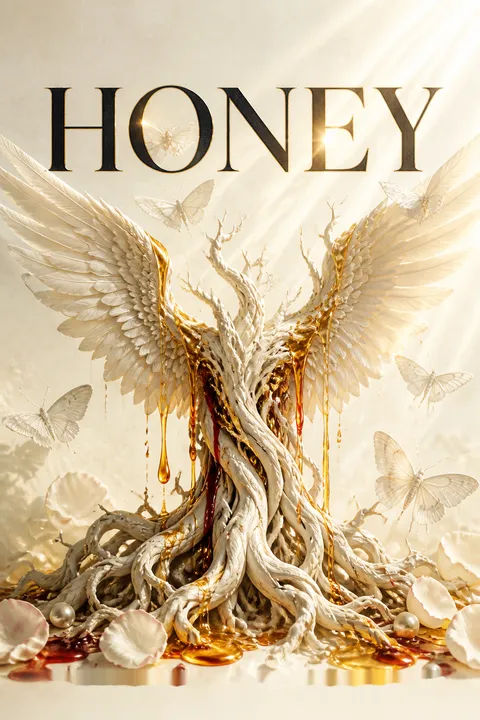


Plot Summary
The Moth Through Darkness
Aheia sees herself as a child beside a faceless woman in a living forest, learning to notice what hides beneath beauty. When she kisses a moth, the ground splits and blackness drags her through strange worlds into a frozen Keloseros grove. Knives fall around her, piercing her hand, leg, and shoulder while the moth watches.
She cannot call for help before it flies into her mouth. The vision ties her earliest sense of home to a terrifying passage into darkness, but it offers no explanation of whether she is remembering, dreaming, or reliving her own death. Its unanswered warning follows her into the present.
The opening makes perception a survival skill: Aheia is taught that nourishment and poison can look alike, then plunged into an experience she cannot interpret. The moth is neither a clear rescuer nor a clear threat, so wonder becomes inseparable from violation. The faceless woman suggests a childhood memory that has survived without a stable image of its source. This is not simply fantasy disorientation. Aheia’s mind has learned to preserve sensations while obscuring their causes, a pattern that will shape how she reads danger, desire, and her own history.
Arioch Paints the Ruins
Arioch, ruler of Aljira, kneels beside Aheia’s corpse as his allies fight Ophion’s Mithra forces in Keloseros. Grief nearly leaves him helpless, so he hurts his wounded shoulder to force himself back into action. Mazikeen, an ancient Ifrit, finds a nearby vortex and uses her Calmani power to open it for the Nephilim.
Arioch stays behind long enough to let his allies escape, then slaughters the Mithra who follow him into the Lyria ruins. The battle ends with the enemy leader Ophion captured and carried back to Aljira. There, Arioch tortures him for answers about Kazim, his brother, and the deaths that have brought him here.
Arioch’s response to loss is action without relief. He uses pain to regain control, then makes vengeance into a task with visible results: enemies dead, Ophion chained, a route home secured. Yet the narrative keeps showing the gap between punishment and repair. Killing does not reverse Aheia’s death or correct Arioch’s earlier failures toward Kazim. His violence gives him a language he can use when grief has made speech impossible, but it also risks turning every unanswered wound into another target.
The Moth Finds Her Again
While Arioch returns to Aljira with Aheia’s body, Aheia experiences a strange afterlife beside a black lake. The moth leads her underwater to a flooded town and a ruined house, where she finds a scrap marked with a letter and glimpses faceless creatures closing in. Above her floats her own body, wearing the blue stone she carried from her mother.
Aheia touches the gem and is pulled into herself as the water turns violent. She then surfaces in the Asara River, where Nyco and Tei haul her from the current. Aheia cannot explain how she crossed from death to life, and the stone remains her only familiar possession.
Aheia’s return begins through recognition rather than explanation. The moth draws her toward places that feel intimate but cannot yet be named, while the stone provides a tangible link between her lost past and her present body. Her passage through water reverses the earlier fall into darkness, but it does not restore memory or security. She survives by following a guide whose intentions remain uncertain. The sequence establishes a central tension: Aheia is moving toward knowledge, yet each step closer to herself feels physically dangerous.
The Atrium Breaks Open
Nyco and Tei bring the bloodied, disoriented Aheia into an owl-filled atrium near the forest. A sudden Shykoya attack tears through the glass roof. The monsters’ venom poisons anyone they wound, and Tei dies while trying to fight them off. Aheia kills one attacker with a borrowed dagger, but several others overwhelm her.
Arioch, Emryn, and Lúc arrive from Aljira and tear the creatures away. Emryn treats Aheia with dark-magyck flowers, yet Aheia’s blood rejects the poison instead of succumbing to it. Her survival astonishes the rescuers. The attack also makes clear that the Shykoya have breached the boundary meant to protect Aljira.
The atrium turns Aheia’s return into a public crisis. She is no longer only an impossible resurrection; her body behaves differently from the other victims of the Shykoya, making her both a survivor and an unexplained medical problem. Tei’s death also gives her guilt a concrete object. Although he chose to help her, Aheia immediately interprets his loss as something she caused. The rescue introduces the care of Arioch’s circle, but that care arrives amid gore, emergency decisions, and a realm already failing to protect its people.
Awake Among the Dead
Aheia wakes in a soil-lined healing bath, surrounded by others still sealed beneath wax, and mistakes her rescuers for threats. Arioch steadies her, while Mazikeen shows her memories of the Keloseros battle: Kazim stabbed Aheia in the back, and she died before Arioch carried her body to Gehenna.
She learns that more than a month has passed and that Ophion remains captive. Arioch leaves her in a guarded room while he returns to the Shykoya crisis. Aheia resents the isolation, but she is too weak to leave safely. Koutávi, Arioch’s shadowy Varcolac, stays beside her as grief and confusion overwhelm her.
The memory demonstration replaces uncertainty with a fact Aheia cannot absorb: she died, and other people have been living with the consequences while she was absent. Arioch’s protection is materially real, but his decision to leave repeats the emotional pattern she fears, making safety feel like confinement. Koutávi offers a different kind of presence because the creature does not interrogate or manage her. Aheia’s first need is not a complete account of the afterlife. It is enough stability to remain in her body while the truth catches up.
A Stone Without Answers
As Aheia struggles in Aljira, Arioch visits the Shayṭān oracle with the blue stone she carried when she returned. The oracle identifies it as a binding that suppressed magyck, though breaking it will not automatically restore what it held. Arioch realizes Aheia may have crossed Lyria without her own power and returns with more questions than answers.
He also visits Kazim, who has come back from Keloseros starved and traumatized. Kazim cannot bear Arioch’s presence because Ophion used Arioch’s face in the abuse he endured. Arioch recognizes that his brother’s return does not undo the years he failed to protect him, and that political rivals may exploit Kazim’s condition.
The stone converts Aheia’s mystery into a political and bodily question, but the oracle refuses the comfort of a neat explanation. Its binding may account for her missing power without explaining what she is. Meanwhile, Kazim’s reaction forces Arioch to confront a less convenient truth: his image has become part of his brother’s trauma. Arioch’s authority cannot fix that by command or generosity. The two mysteries echo each other, one about power hidden inside an object, the other about harm hidden inside a family history.
Aheia Leaves the Room
After Arioch leaves to question the oracle, Aheia rejects the food and white clothes he provided, slips out of her quarters, and follows Nyco into an underground club built inside a mockery of mortal Hell. At the Den, two demons corner and insult her and Nyco. Nyco restrains one attacker, then Arioch arrives and offers Aheia his knife, inviting her to punish the other.
Rather than cut off his hand, she forces him to apologize to Nyco and leaves the blade unused. Arioch then challenges her to name where she wants to go. She admits she has no destination, only a need to escape the room, and accepts a dangerous chase through the club’s dark tunnels.
Aheia’s escape is an effort to test whether choice can exist without a fully formed plan. She knows she is not ready to leave Aljira, but refuses to treat that uncertainty as consent to being confined. At the club, she refuses both the helpless role imposed by the attackers and the violent role Arioch offers her. Making the aggressor apologize to Nyco is a small, precise use of power. Her decision shows that agency need not look like escape or revenge; sometimes it is choosing the terms of a refusal.
The Chase Becomes a Pact
Arioch and Aheia turn their chase into an intense, negotiated sexual encounter, with Aheia naming a safeword that requires him to stop if she uses it. Their attraction does not erase the earlier betrayal: she still remembers him taking her back to Keloseros, while he uses anger and pleasure to pull her away from emotional numbness.
Afterward, he tells her that Nyco has been reporting on her, but insists the Nephilim is there for her safety rather than to imprison her. Aheia also learns that Arioch expects her to live with him and begins giving her a weapon and access to his library. His possessiveness remains, but she starts challenging it directly.
The scene’s negotiated boundary matters because it introduces a form of consent inside a relationship otherwise shaped by power imbalance and past coercion. The safeword does not make their dynamic uncomplicated or healthy; it gives Aheia one concrete mechanism for interrupting it. Arioch’s strategy of provoking anger is also double-edged. It can pull her out of numbness, but it allows him to decide what emotional state she should inhabit. Their closeness deepens without resolving the question of whether care can coexist with control.
Color Breaks the Rules
Aheia learns that Aljira’s customs differ sharply from the restrictions imposed in Keloseros. Shiron explains its history and language, while Lúc describes how Nephilim have turned hostile myths about themselves into a kind of defiant public identity. Aylee executes a demon who abused a child, giving the victim’s family a measure of justice and a public warning.
Kar invites Aheia to paint with her, then offers colorful clothes when Aheia admits she has no favorite color. Emryn begins strength training and refuses to soften her criticism, but eventually acknowledges that she would also struggle to trust kindness after Aheia’s past. Aheia starts eating more regularly and accepts the people who are making room for her.
Aljira gives Aheia more choices than Keloseros did, but choice itself is initially disorienting. A favorite color is not a trivial preference when she has rarely been allowed to want anything safely. Kar makes experimentation physical through paint, while Emryn treats strength as a practical skill rather than a moral test. The public punishment scene complicates the community’s violence: its brutality is real, yet it is directed toward accountability for harm others have hidden. Aheia is not instantly healed by belonging, but she begins to experience belonging as something she can help shape.
Kar Enters Kazim's Room
Kar, an empath who feels the emotions of others, enters Kazim’s heavily barricaded room hoping to reach Arioch’s estranged brother. Kazim provokes her, then suddenly attacks, tearing her dress and breaking her wrist. Kar refuses to call for help until Shiron arrives and strikes Kazim.
The confrontation overwhelms Kar with the pain radiating from both men, and she vomits as Shiron leads her away. Arioch finds her in the hall and orders her not to return, his fear visible beneath his anger. Kazim remains inside, furious and unable to tolerate Arioch’s face. His trauma is real, but his violence now threatens the people trying to approach him.
Kar’s empathy gives her access to pain but not control over what another person will do with it. She enters Kazim’s room believing emotional contact might help, then discovers that witnessing suffering does not make her invulnerable to it. Kazim’s attack is neither excused by his history nor detached from it. His trauma has become an active danger, while Arioch’s impulse to forbid contact shows how fear can turn protection into another restriction. The scene refuses a quick reconciliation and makes care look like a difficult practice with limits.
The Forest Has Tunnels
After Kazim breaks Shiron’s protective devotional necklace, Shiron briefly loses control of a violent part of himself before restoring the beads. Later, he kills a Shykoya attacking two Nerium users in Jahra. One dying victim accuses him of killing a woman, a detail Shiron cannot explain.
When another attack leads the group to a drug den in Thryn, the evidence suggests the monsters may be emerging from inside Aljira rather than crossing its border. The attackers also show impossible strength despite severe drug use. Arioch and his allies begin to suspect that Nerium may be changing its users, while hidden tunnels appear to connect the dens and circulate the drug through the territory.
The Shykoya threat shifts from invasion to possible transformation within Aljira itself. This is more disturbing than a breached border because the supposed monsters may have once been neighbors, and the drug trade may be turning vulnerability into a weapon. Shiron’s moment without his necklace establishes that restraint is an ongoing practice, not proof that dangerous impulses have vanished. His dying victim’s reference to a woman remains unresolved, so the investigation advances through suggestive evidence rather than certainty. The tunnels make social neglect physically legible: hidden routes carry both contraband and consequences.
Aheia Names Her Need
Arioch takes Aheia to Valhara, an abandoned town where he gathers soma, a plant that can become either poison or medicine depending on how it is prepared. Later, in a gathering where Nephilim treat pleasure as worship, Aheia admits that she wants quiet rather than another distraction. The two draw closer, and Arioch begins treating her memories with more care.
When Aheia suffers a nightmare, he washes her hair and helps her understand that gaps in childhood memory can be the mind’s way of preserving survival. She tells him that she does not remember being young. In return, Arioch explains how his mother’s addiction and death separated him from Kazim, exposing grief he usually hides.
The shift in their intimacy comes through disclosure, not simply desire. Aheia asks for quiet, a request that identifies what she needs beneath her pursuit of intense sensation. Arioch responds by sharing the history he has avoided, linking his present fear of loss to the childhood he and Kazim endured. His explanation of memory offers Aheia a compassionate frame without claiming to recover what she cannot recall. The soma gathering quietly mirrors their relationship: a substance that can soothe or harm, depending on use, much like the power they share.
The Gem Becomes a Necklace
As Aheia studies Aljira’s history and stars, she learns that the moth signifies rebirth and the owl warns of death. Kar helps her replace the white clothes that made her feel erased, and Arioch returns her cracked blue stone as a necklace made by Shiron. He invites her to a formal dinner, then takes her through the city on Lúc’s fast two-wheeled ryde.
At the gathering, Arioch uses his shadows to pleasure her discreetly while he handles political disputes, and Aheia begins to understand how his public authority and private possessiveness coexist. She also sees how Lúc and Tariq’s relationship holds affection alongside shared desire, broadening her sense of what intimacy can look like.
The stone’s return offers Aheia continuity without restoring the past unchanged. It is no longer simply an object she clutches; it becomes something she can wear by choice. The city ride and dinner likewise move her from guarded observation into participation. Yet the public scene keeps intimacy and power tangled: Arioch’s attention can make her feel chosen while also exposing her to a dynamic he controls. The contrast between that possessiveness and Lúc and Tariq’s more openly shared relationship invites Aheia to notice that desire does not have to take only one shape.
Ophion Loses His Wing
Arioch brings Aheia to the cave where Ophion is restrained, giving her the chance to ask why he tormented her. Ophion says she was not his child and reveals that her father was a Nephilim whom he killed. Aheia notices that scars across Ophion’s body match injuries on her own, then realizes Arioch carved those marks into him in retaliation.
Arioch offers her his gold knife. With his hand steadying hers, Aheia cuts away Ophion’s remaining wing. The act gives her a choice in how she faces the man who controlled her life, but it also leaves her shaken by her own capacity for violence. Arioch then explains he had heard the mixed-parentage claim before, but never believed it.
The revelation about Aheia’s father changes the story’s account of her identity without giving her a usable family history. Ophion’s contempt is tied to her ancestry, while Arioch’s revenge turns her old wounds into visible marks on the man who caused them. Cutting off the wing lets Aheia act rather than merely witness, but the choice is morally and emotionally costly. The act does not erase what happened to her or make violence uncomplicated. It gives her a moment of agency inside a history that has repeatedly treated her body as something other people may claim.
Sahren's Crest Beneath Thryn
A Shykoya raid in Thryn leads Arioch’s group into a Nerium den and a tunnel network marked with the crest of Sahren, Arioch’s dead father. Arioch connects the discovery to his mother’s addiction and suspects Sahren’s involvement in the trade. His shadows surge beyond his control. When Emryn tries to remove Aheia, Arioch attacks Lúc and pulls Aheia into a vast darkness.
A second presence inside the shadows tells him to release her, then breaks the blue stone at Aheia’s throat. The force throws Aheia into a forest clearing. A horde of Shykoya pursues her, but Koutávi saves her. Wounded and poisoned, Aheia senses a new hunger in herself as the Varcolac weakens.
The crest links a present public danger to a private family wound, turning Arioch’s investigation into a threat to his self-command. His shadows are not merely weapons here; they reveal that something within him can act against his intentions. The second presence intervenes to protect Aheia, but its destruction of her stone also removes a restraint whose purpose remains unclear. The resulting separation is both physical and psychological. Aheia must face the forest without Arioch, and the power rising inside her arrives at the exact moment she most needs help.
Koutávi's Last Heartbeat
As Koutávi lies dying, Aheia discovers that the force inside her has drained the Varcolac’s life. She begs Mazikeen to save the creature, but Mazikeen says she can only help Aheia and that Koutávi is already dead. She explains that Aheia fed on life, a power neither Mithra nor Nephilim possess in this form.
The ability belongs to the Kaymaat, children of Manāt, and Mazikeen tells Aheia she should not exist. Aheia is left with Koutávi’s fading warmth inside her and no way to undo what she has taken. The revelation ends the main story on a loss, not an answer, as Aheia confronts a nature she may not be able to control.
Aheia’s awakening power is presented first as an act of harm, not as triumph. She did not set out to consume Koutávi, yet intention cannot reverse the creature’s death. The distinction between what she meant and what she caused is central to the horror: survival may now require a capacity that endangers others. Mazikeen names a lineage but offers no practical path toward control, leaving identity as an accusation rather than a solution. The ending denies the familiar fantasy of power as liberation. Aheia has gained an explanation and lost the being who made her feel safe.
Epilogue
Aheia dreams again of the mushroom forest and finally recognizes the faceless woman as her mother, Andromeda. The childhood image breaks apart into blood and a memory of Ophion beside Andromeda’s dead body. He praises Aheia, then the dream leaves her with the impression that her own energy was involved in her mother’s death.
She wakes alone, with Koutávi’s life still burning inside her. Terrified that she is dangerous to everyone near her, she smashes the washroom mirror until blood covers her hands. In the remaining shard, she sees one blue eye and recognizes the name Khalee, though she cannot explain it.
The epilogue turns Aheia’s missing childhood from a protective blank into a source of immediate danger. Her mother’s murder and Ophion’s praise surface together, suggesting that Aheia may have been manipulated into participating in a horror she was too young to understand. The mirror breaking is not a clean rejection of an old identity; it leaves her with a single eye, an incomplete image that she cannot escape. The name Khalee arrives as bodily knowledge without conscious context, repeating the book’s pattern of truths felt before they can be understood. Her fear now centers on what she may do to others.
Analysis
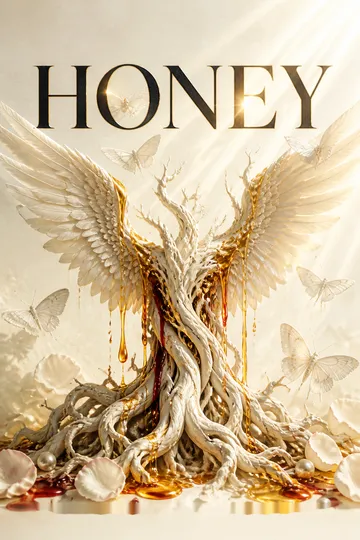
Honey makes recovery inseparable from power. Aheia returns from death with no clear account of what happened and no reliable access to the magyck that once defined her. Her body is treated as evidence by healers, rulers, and enemies, yet the novel repeatedly gives her small chances to choose: refusing a punishment, naming a safeword, selecting clothes, asking for quiet, and deciding how to confront Ophion. Those choices matter precisely because none can undo the past. Arioch’s central contradiction is that he wants Aheia safe and also wants to control the conditions of her safety. His care becomes most convincing when he listens, offers knowledge, or admits his failures; it becomes dangerous when he assumes he knows what she needs. Their relationship does not resolve this tension. Its erotic intensity can give Aheia a bounded way to surrender control, but the surrounding history of coercion makes that boundary fragile. The book invites attention to the difference between chosen vulnerability and a power imbalance merely renamed as desire.
The parallel family stories deepen that conflict. Arioch’s grief over Malia and guilt toward Kazim show how violence and addiction can shape the next generation without making its members interchangeable. Aheia’s missing childhood similarly suggests that forgetting can be a survival response, not a failure of character. Yet recovered memory does not automatically heal her. The epilogue’s fragments imply that Ophion may have shaped her understanding of her own actions while she was a child, leaving the source of her guilt profoundly uncertain.
Finally, the Shykoya investigation links private trauma to public systems. Nerium, hidden tunnels, and Sahren’s crest point toward a threat produced inside the realm, not simply an enemy crossing its border. The unresolved ending makes Aheia’s newly revealed hunger part of that wider danger. Her power may help explain her survival, but it has already cost Koutávi her life. The novel closes by asking whether a person can claim an identity that was concealed, exploited, or bound before she could consent to it.
People Also Read
Characters
Aheia
The returning survivorAheia is a pale-haired fugitive raised under the strict rules of Keloseros. She is observant, intelligent, and deeply practiced at hiding fear, but her uncertain memories make it difficult to trust her own perceptions. She has learned to survive by reading the moods of people with power, often confusing endurance with the only available choice. Her relationship with Arioch draws out both defiance and desire, while the people of Aljira introduce her to forms of belonging she has never been able to imagine safely. Aheia’s central struggle is not simply to discover what she is, but to decide how to live with her needs, memories, and capacity for harm.
Arioch
Aljira's shadow sovereignArioch rules Aljira through formidable shadow magyck and a political system he is trying to reform. He is decisive in public crises, protective of his people, and much less confident in intimate relationships. Loss has taught him to convert grief into action, sometimes at the cost of tenderness or restraint. His bond with Aheia unsettles his usual control, while his history with his mother and brother reveals how deeply family shaped his ideas of power and failure. He can recognize Aheia’s strengths before she can, but his tendency to manage her safety risks repeating the coercion she has escaped.
Mazikeen
The ancient IfritMazikeen is an ancient Ifrit whose Calmani power lets her sense and manipulate forces older than the realm’s ordinary rules. She helps Arioch when his people are stranded and later provides Aheia with memories others cannot show her. Her perspective on death is less certain than Arioch’s, and she is willing to challenge his faith in finality. Mazikeen is patient but not comforting by default. She offers knowledge when she can, yet refuses to pretend that every loss can be reversed.
Lúc
The feral ShifterLúc is a sharp-tongued Shifter and one of Arioch’s most trusted allies. His appetite for danger and his talent for intimidation conceal a painful childhood shaped by his mother’s addiction and neglect. He is devoted to Tariq, though their intimacy allows room for other partners and shared play. With Aheia, Lúc can be teasing, blunt, and unexpectedly perceptive. He resists the false idea that gentleness is the only virtue, while his own attraction to violence makes him attentive to the cost of letting instinct rule.
Nyco
Aheia's sharp-eyed guideNyco is a Falkri warrior with a divided heritage, a quick mind, and an irreverent manner. They pull Aheia from the river, fight beside her during the Shykoya attack, and help her navigate Aljira without treating her solely as a patient or prisoner. Nyco is observant about other people’s defenses, though they do not force Aheia to trust them. Their owl, Noctua, is a frequent companion. Nyco’s loyalty is practical: they give Aheia room to make choices while staying close enough to intervene when danger becomes immediate.
Karyme
The feeling empathKaryme, usually called Kar, is an empath who feels the emotional states of others with unusual intensity. Her practiced smile and playful sensuality help her move through a world that can overwhelm her, and she uses plants to dull the constant pressure. She offers Aheia color, clothing, food, and companionship without demanding quick trust in return. Kar is compassionate but not invulnerable; her attempt to reach Kazim exposes the risk of taking another person’s pain into herself. She believes that family can be chosen, not only inherited.
Emryn
The unsparing healerEmryn is a Syraphem healer and warrior whose dark wings and disciplined manner make her difficult to approach. She is direct with Aheia, sometimes painfully so, because she values preparedness over reassurance. Her mistrust is rooted in survival, not indifference, and she commits herself to the work of healing and defending Aljira. Emryn’s complicated relationship with her father and her place among Arioch’s allies reveal how hard she works to keep emotion from interfering with duty. She expects people to take responsibility for their choices, including herself.
Kazim
Arioch's wounded brotherKazim is Arioch’s older brother and the former heir whose long captivity in Keloseros has left him physically depleted and psychologically unmoored. He is unable to separate Arioch’s face from the abuse he endured, making reunion painful for both brothers. Kazim is intelligent and perceptive, but his defenses can turn vicious when he feels exposed. His history illuminates the violence of the family that raised him and complicates any easy distinction between victim and threat. He needs more than rescue, and the people around him do not yet know how to help.
Ophion
The merciless Mithra rulerOphion is a powerful Mithra leader whose religious authority supports a rigid social order. He uses doctrine to justify control over those around him and treats obedience as proof of virtue. His presence in Aheia’s past makes the language of faith inseparable from fear, punishment, and political power. Ophion is calculating and proud, convinced that suffering serves a higher purpose. He represents the system Aheia escaped, but his beliefs are not the only source of its influence; others have helped sustain the world that gave him power.
Shiron
The devoted LeviathanShiron is a Leviathan and one of Arioch’s steadiest allies. His devotional beads help suppress a dangerous part of his nature, while his faith gives him a framework for living with what he has done. He teaches Aheia about Aljira’s history and beliefs without demanding that she share them. Shiron is disciplined, thoughtful, and protective, but he understands that restraint must be practiced rather than assumed. His loyalty to Arioch is strong enough to include disagreement, and his care for others does not erase the violence he must continually hold in check.
Koutávi
The loyal VarcolacKoutávi is a large, shadowy Varcolac bonded to Arioch’s world but guided by her own instincts. She offers Aheia quiet company when conversation feels impossible and intervenes when danger reaches her. Koutávi communicates through presence, breath, and touch rather than explanation. Her loyalty helps Aheia experience care that does not depend on performance or perfect words. She is both formidable and gentle, a creature whose steady attention lets Aheia feel less alone in an unfamiliar realm.
Aylee
The serpent-bearing enforcerAylee is a Nephilim warrior and Arioch’s trusted enforcer. Her two familiars, Salamander and Embyr, accompany her through both political gatherings and dangerous work. She is composed, precise, and capable of turning that calm into frightening force when someone has harmed the vulnerable. Aylee can be cool toward Aheia, but she is not indifferent to injustice. Her actions show how Aljira’s court combines care for victims with public punishment, and how difficult it is to separate protection from brutality.
Tariq
The commanding LeviathanTariq is a horned Leviathan, a respected warrior, and Lúc’s closest partner. He is stern and intimidating with strangers, but his bond with Lúc carries teasing, trust, and a fluency that does not rely on exclusivity. Tariq values control and can be harsh when directing others, yet he understands the importance of boundaries and communication in intimacy. His confidence often makes him a stabilizing presence among the court’s more volatile personalities, though he can misread Aheia’s vulnerability as inexperience.
Kal
Aheia's former confidantKal is a figure from Aheia’s life in Keloseros who offered her companionship and helped her escape. He knew more about her origins than she did and tried to use that knowledge to influence Arioch. Their history matters to Aheia because kindness and loyalty became difficult for her to distinguish from survival. Kal is part of the world she left behind, and memories of him remain tangled with her questions about betrayal, freedom, and what she was told about herself.
Tei
Nyco's doomed companionTei is a blunt, practical Nephilim who helps Nyco rescue Aheia from the river. He is impatient with risk and skeptical of Nyco’s instincts, but he stays when danger arrives. His brief role leaves Aheia with a lasting sense of guilt and makes the cost of her arrival in Aljira immediate.
Andromeda
Aheia's remembered motherAndromeda is Aheia’s mother, remembered for her dark hair, blue eyes, and stories about faraway places. The memories Aheia keeps of her are incomplete, but they include moments of imaginative refuge that helped her endure a restrictive life. Andromeda’s presence in Aheia’s thoughts is both a source of tenderness and an unanswered part of her childhood.
Malia
Arioch's lost motherMalia is Arioch and Kazim’s mother, whose addiction shaped their childhood and family life. Arioch remembers her with grief, anger, and the regret of a child who could not protect her. Her absence continues to influence how he responds to suffering, dependence, and the people he loves. Malia’s story makes clear that addiction harms families without making those who suffer from it simple villains.
Sahren
The dead former sovereignSahren was Arioch and Kazim’s father and the former ruler of Aljira. His household taught his sons to compete for power, while his political legacy still shapes the realm after his death. The mark associated with him remains recognizable in places tied to Aljira’s past. Sahren’s influence persists through both family memory and institutions that Arioch is trying to change.
Nameless
The combative young warriorNameless is a red-haired Nephilim warrior who refuses to choose a personal name and often provokes the people around her. Her hostility grows from grief and a fierce dislike of being managed. Emryn is one of the few people who can impose limits on her, though their relationship is complicated by family ties and defiance.
Plot Devices
The Blue Lápis
A stone that binds powerAheia’s blue gemstone belonged to her mother and is the one familiar object she carries across the boundary between death and life. Arioch takes it to an oracle, which identifies it as a binding that suppressed magyck. The stone’s crack and eventual destruction are tied to Aheia’s missing abilities and to the force that intervenes through Arioch’s shadows. It works both as a physical clue and as an emotional anchor: Aheia’s attachment to it predates her understanding of its function. The stone’s full history remains unknown at the end.
The Moth and the Dreams
A guide through fractured memoryThe moth appears in Aheia’s earliest remembered landscape, at the moment that world breaks apart, and returns in her experience of death. It draws her toward fragments of a submerged town and a version of her own body, suggesting a connection between memory, identity, and the passage between worlds. The moth does not explain what it wants or whether it is protecting Aheia. Its recurring presence prepares the later return of childhood memories while preserving uncertainty about what Aheia can trust.
Vortexes
Gates between realmsVortexes allow travel between realms and across Aljira. Mazikeen can manipulate a gate through her ancient Calmani power, allowing Arioch’s allies to escape Keloseros. Other vortexes connect the compound, cities, and territories, making political and military movement possible. Their existence changes the stakes of a border: crossing is not merely a journey on foot, but a question of access, protection, and who can use the necessary magyck. For Aheia, unfamiliar routes through these gates make Aljira feel both reachable and difficult to escape.
Nerium and the Shykoya
A drug trail becomes a threatNerium is an addictive drug that appears in the histories of both Arioch’s family and the attacks troubling Aljira. The Shykoya initially seem to be monsters from the Sephy Forest, kept out by a protective border. Attacks at drug dens, the condition of their victims, and tunnels beneath the city lead Arioch’s circle to suspect that Nerium may be connected to the Shykoya’s appearance. A crest associated with Sahren complicates the investigation. The evidence supports a dangerous theory, but the characters have not established exactly who created the threat or how it works.
Sentient Shadows
Power that resists its masterArioch’s shadows are magyck, weapons, and a presence that sometimes behaves independently of his intentions. They help him travel, defend others, and overwhelm enemies, but their reactions to Aheia intensify his attachment and complicate his self-control. In moments of crisis, the shadows can become a force Arioch cannot fully command. Their connection to Aheia is related to the soul and magyck she once shared with him, but neither character understands the whole mechanism. They embody both his capacity to protect and the danger of confusing possession with care.
Agía Sahnta Series Series


Download PDF
Download EPUB
.epub digital book format is ideal for reading ebooks on phones, tablets, and e-readers.








