

Key Takeaways
Build a life beyond survival without pretending survival leaves no scars
A home can shelter. Ly’s earliest lasting memory is a blue tarp in a Thai refugee camp. In 1993, her family reaches New York after fleeing Vietnam, where her father had spent years in a prison camp. Their first apartment is cold and nearly empty, but its brick walls seem to promise safety from storms that once tore apart their house of leaves and sticks.
The past travels too. Her parents’ relief and determination coexist with poverty, fear, and her father’s night terrors. Across the memoir, outward security grows, yet the family’s old injuries continue shaping home life. The title points to both the fragile dwelling they left behind and the precarious life they keep trying to build.
What's striking is the gap between physical refuge and felt safety. Migration changes the family’s surroundings quickly, but trust, sleep, and emotional security do not move at the speed of a plane. This resembles a wider insight from trauma-informed care: safety is not simply the absence of immediate danger; it also depends on predictability, agency, and relationships that do not threaten. The memoir resists an easy immigrant-success story. A sturdier address matters enormously, but it cannot by itself repair what made safety feel temporary.
Family labor can feed children while quietly taking their childhood
Work becomes play. To earn money at home, the family sews ties and cummerbunds for a contractor. Ly, still very young, cuts elastic while her parents and brothers assemble the garments. The children turn repetitive tasks into races and games, and that shared rhythm gives the work warmth as well as purpose.
The numbers expose the bargain. After one overnight push, the family finishes 400 items and learns they will earn only $11.25. The sewing machine later fills their home with metal dust; their father delays replacing worn parts until the children develop nosebleeds. The family is not a factory in name, but its children supply hours of labor under pressure from rent and hunger.
The memoir captures a difficult distinction: children can experience affection and play inside work that remains exploitative. That complexity matters because sentimental accounts of family sacrifice can make harmful conditions seem harmless. Labor protections are designed partly because children have limited power to refuse work, negotiate pay, or assess health risks. The family’s games do not cancel the economic pressure surrounding them. At the same time, the shared labor creates real memories of competence and closeness, so reducing it to victimhood would also miss what the children made of it.
Understand a parent's history without excusing the harm it caused
Fear has a history. Ly’s father was captured after the fall of South Vietnam and spent years in a re-education camp, where prisoners faced hunger, hard labor, and violence. He rarely discusses those experiences, though he tells his children how a turtle he rescued became entangled with his escape and eventual release. The story gives his survival a sacred meaning.
Pain enters the home. In America, his nightmares, suspicion, and sudden rages remain part of family life. His insistence that his children master mathematics comes from a soldier’s belief that numbers helped keep him away from gunfire. That history helps explain his fear and control. It does not make beatings, intimidation, or neglect harmless.
Intergenerational trauma is often discussed as if explanation automatically produces forgiveness. This story makes a more careful distinction: understanding a parent’s past can clarify the origins of behavior without erasing its effects on children. Trauma can narrow a person’s sense of threat and make control feel like protection, but responsibility still matters. The account also avoids turning the father into a single diagnosis. He is frightening, wounded, resourceful, and sometimes tender. Holding those truths together gives the family history more moral precision than either condemnation or absolution alone.
Treat a child's report of need as evidence, not defiance
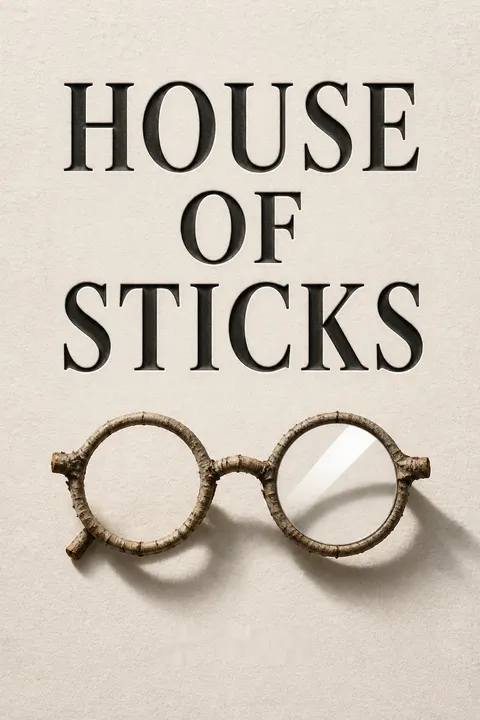
The blur is real. At a school vision screening, Ly cannot read the lower rows of the eye chart. Her father rejects the result, convinced that glasses are unnecessary and part of a scheme to make children dependent on them. She accepts his explanation, squints, and even presses at her eyes to force a clearer image.
Denial compounds the cost. Over the following years, street signs, classroom boards, and faces become harder to see. Her headaches and grades worsen, but she fears that speaking up will bring another outburst. A teacher eventually buys her glasses. An optometrist confirms myopia with slight astigmatism, a correctable problem. The memoir shows how a child can mistake an adult’s certainty for proof that her own perception is wrong.
This episode is about more than eyesight. Children rely on adults to interpret unfamiliar problems, so confident dismissal can teach them to distrust their own observations. Developmental psychology describes this as a threat to self-trust: repeated invalidation makes it harder to report symptoms or seek help. The useful lesson is not that parents should accept every claim uncritically, but that they should investigate, especially when a child’s functioning is changing. A school screening and a medical exam provide a better response than arguing over whether a child is pretending.
Notice when tradition turns love into unequal work and silence
Duty is unevenly assigned. Ly’s mother teaches her domestic work and later brings her to nail salons to translate and help serve customers. When Ly asks why her brothers are exempt, the answer is that they are boys. Her mother has herself suffered under a marriage and family system that treated women as subordinate, yet she passes some of its expectations to her daughter.
Belief shapes the body. When Ly begins menstruating, her mother explains it through a Buddhist story that portrays women’s blood as defiling. Ly is told to wash her underwear separately. These teachings sit beside genuine care, faith, and her mother’s own effort to earn money. The memoir shows how affection can coexist with inherited ideas that restrict women.
Traditions are rarely only oppressive or only sustaining. Filial duty, religious practice, and family roles can create belonging and teach care, yet they can also make unequal labor seem natural. Gender studies helps name the asymmetry visible here: a daughter is trained for service while brothers receive more freedom, even when the mother enforcing the rule has experienced the same inequality. Criticism is strongest when it recognizes that people inherit norms while living inside them. The aim is not to dismiss cultural identity, but to ask who carries its costs and who gets choices.
When you translate for adults, you inherit burdens no child can carry
English becomes protection. Ly accompanies her mother to nail salons, translating customer requests and smoothing over misunderstandings. Some clients insult or mistreat her mother, who cannot easily answer back. Ly is a child, but she is expected to manage conversations involving money, work, and adult dignity.
Silence carries danger. After a salon shift, a man sexually harasses Ly in a subway station. She is frightened and struggles to explain what happened to the station agent. Years later, a customer touches her during a manicure; she stays polite and accepts a tip, unsure how to interpret the violation. The memoir connects language barriers with a broader vulnerability: people with less power can be forced to absorb treatment they cannot safely challenge.
Children who interpret for adults take on more than vocabulary. They may become responsible for negotiating conflict, conveying bad news, and protecting a parent’s standing, all without adult authority or emotional preparation. Research on language access in health and public services supports the need for trained interpreters rather than relying on family members, especially minors. This memoir also shows that silence is not consent: fear, dependence, and uncertainty can make resistance difficult. The account is specific to Ly’s circumstances, but it invites institutions to notice who is being asked to carry the conversation.
Depression can hide behind achievement until the body refuses to keep going
Success conceals strain. Ly enters the Bronx High School of Science, joins an all-girls robotics team called the Fe Maidens, and later wins a place at Hunter’s Macaulay Honors College. Yet her untreated vision problem, family pressure, shame, and isolation make school increasingly difficult. She sleeps excessively, withdraws, and eventually stops attending classes.
Collapse is not a character flaw. A therapist diagnoses dysthymia, and Ly later experiences severe depression, including a psychiatric hospitalization. She also drinks heavily, loses her scholarship, and drops out. The memoir does not present these events as a simple failure of motivation. Her functioning depends on support she does not always have, while shame repeatedly keeps her from telling people how bad things have become.
High achievement can mask serious distress because visible performance is not the same as internal capacity. The memoir is a useful counterweight to stories that turn persistence into a cure-all. Depression can affect sleep, attention, memory, and decision-making, making the demand to simply try harder especially misplaced. At the same time, achievement alone cannot diagnose a condition, and the book does not claim it can. Its sharper point is that people may look capable while privately losing the ability to manage ordinary tasks, so support should follow signs of distress rather than prestige or grades.
Let trustworthy adults share burdens children were never equipped to carry
Help can feel dangerous. Ly hides her eyesight problems and later lies to child welfare workers because she fears their intervention will harm her parents. Her school counselor reports suspected neglect after learning that her father refuses to get her glasses. The investigation frightens the family, but the counselor is acting on a duty to protect a student.
Other adults make help practical. A teacher secretly buys Ly glasses so she can see in class. Later, legal advocate Pam helps her find City Year, reconnect with therapy, and plan college applications. These relationships do not erase the family’s love or replace it. They give Ly access to care, information, and choices her family cannot provide on its own.
The memoir refuses the easy idea that intervention is automatically comforting. The counselor’s report is distressing to Ly, even though a professional has a responsibility to respond to suspected neglect. That tension argues for transparency, cultural humility, and follow-through, not for ignoring a child’s unmet needs. The more effective support in this account is concrete: glasses, a job pathway, help with applications, and a steady advocate. Social support works best when it expands a person’s options rather than demanding that they choose between loyalty to family and care for themselves.
Use meaningful work and writing to rebuild agency after a collapse
Contribution restores direction. After leaving college, Ly tutors Joseph’s son Ethan, whose schooling has been disrupted by repeated moves. She also joins City Year, mentoring middle-school students who are behind in reading and mathematics. Helping students gives her a way to use her own experience without pretending her difficulties are over.
A story connects the fragments. With support from Pam and a former teacher, Ly applies to Columbia’s School of General Studies. Her long personal essay explains the circumstances behind her academic record and helps her make sense of her past. She is accepted. The achievement is not a sudden cure; it is a new opportunity built through other people’s advocacy, useful work, and her willingness to put painful experience into words.
Purpose can support recovery when it creates agency and connection, rather than becoming another demand to prove worth. Tutoring Ethan and serving students let Ly act meaningfully while her own life remains unsettled. Narrative writing offers a different kind of agency: it can organize events without pretending they were orderly when they happened. Psychology has explored how putting experience into coherent language can help people make meaning, though writing is not a substitute for treatment or material support. The memoir’s achievement is the combination: reflection matters, but so do advocates, money, education, and time.
Learn to swim through fear one deliberate stroke at a time
Progress is embodied. As a child, Ly nearly drowns at a public pool and never learns to swim. Years later, after eye surgery and renewed support from her family, she visits a lagoon in the Dominican Republic with Joseph. He encourages her into the water. She remembers her father’s earlier swimming lessons and finally paddles toward a branch at the water’s edge.
Repair is partial, but real. Before the surgery, Ly’s father accompanies her and helps her into a cab. His apology after she bumps her head is small, not a complete reckoning with years of harm. Still, his concern and her mother’s touch mark a change in how they can be together. The ending offers movement, not a claim that fear or family history has vanished.
The water motif gathers several strands of the memoir: the Mekong, the ocean, the pool, and the family’s crossings between countries and states of mind. The final swim matters because recovery is shown as action under uncertainty, not as a declaration that the past is finished. The father’s encouragement is moving precisely because it does not erase his violence. In family repair, tenderness and accountability are separate questions; one can be present without resolving the other. The image of a first swim is therefore hopeful without forcing a tidy reconciliation.
Analysis
House of Sticks is a memoir of migration and family, but its deeper structure is the gradual recovery of trust in perception. Ly first struggles to recognize a new country, then cannot recognize her own reflection, cannot see the classroom board, and cannot name what she feels. The repeated failures of sight and speech are not decorative metaphors. They arise from material conditions: an untreated vision problem, limited English, poverty, and a household where authority is difficult to question.
The father’s past gives the book moral complexity. His imprisonment, hunger, and fear illuminate his vigilance and rage, but the narrative does not convert explanation into absolution. Likewise, the mother’s religious devotion and sacrifice coexist with gendered expectations that burden her daughter. The memoir’s strongest scenes preserve these contradictions instead of simplifying the parents into either villains or saints.
Its institutions are also mixed. School staff identify needs and open routes to care, yet child welfare intervention frightens Ly and increases her sense of betrayal. Therapists and advocates can help, but one clinician’s absence during hospitalization exposes how fragile care becomes when communication fails. The book thus locates recovery neither solely inside the individual nor in a perfect system. It emerges through practical acts by people who offer glasses, guidance, meals, opportunities, and steady attention.
The narrative’s central movement is from endurance without language toward chosen action and authorship. Ly’s essay does not erase her family history; it makes that history tellable. Her final swim is not proof that trauma is cured or family relations are repaired. It is a modest but earned image of agency: she enters the water while still afraid, and discovers that movement is possible. The memoir’s hope is credible because it remains incomplete.
Review Summary
House of Sticks receives overwhelmingly positive reviews, averaging 4.37/5. Readers praise Ly Tran's beautiful, honest prose and her nuanced portrayal of the immigrant experience, intergenerational trauma, poverty, and mental health struggles. Many highlight her compassionate treatment of her complicated family dynamics, particularly regarding her father's PTSD from years as a political prisoner. The memoir resonates deeply with immigrant readers and is frequently compared to other celebrated memoirs. Critics note the second half loses some momentum, but most find it a compelling, emotionally powerful read.
People Also Read




Glossary
Humanitarian Operation
Refugee resettlement programA program described as part of the Orderly Departure Program, created to resettle former South Vietnamese prisoners of war and their immediate families in the United States. Ly’s father applied after hearing about it on the radio. The family’s departure from Vietnam and arrival in New York depend on this program.
re-education camps
Postwar prisoner labor campsCamps in postwar Vietnam where former South Vietnamese soldiers were detained and subjected to hard labor, deprivation, and violence. The official idea of re-education framed labor as a way to purify prisoners and remake them. Ly’s father describes a sentence of ten years, though he was released after roughly seven.
Snellen Chart
Eye chart for visionA chart used to test visual acuity, typically by asking a person to identify letters that become progressively smaller. In the memoir, a school nurse uses one to screen Ly’s eyesight. She can read the large letters but struggles with the smaller rows, prompting a recommendation that her parents take her to an eye doctor.
dysthymia
Persistent depressive disorderA term used by Ly’s therapist for a long-lasting depressive condition that can coexist with outward achievement. The therapist believes Ly has been depressed for years while continuing to function at school. Later, during hospitalization, staff classify her condition as major depressive disorder as her functioning deteriorates.
Fe Maidens
All-girls robotics teamThe name Ly and two classmates give their all-girls robotics team at the Bronx High School of Science. Fe refers to the chemical symbol for iron. The team builds a robot named Rosie the Riveted and wins a Rookie of the Year award at the New York City regional competition.
The Blood Bowl Sutra
Story about menstrual impurityA Buddhist story Ly’s mother recounts to teach filial duty. In the version described, a devoted son finds his deceased mother suffering in a special hell associated with women’s menstrual blood. The story presents women’s bodies as spiritually polluting, a belief Ly questions after learning reproductive biology.
Download PDF
Download EPUB
.epub digital book format is ideal for reading ebooks on phones, tablets, and e-readers.








