

Key Takeaways
Make the reader's path effortless by doing the hard work yourself.
Ease takes effort. Evanovich aims for readable, fast-moving novels, but simplicity on the page is the result of deliberate craft. She varies dialogue, action, description, and narration to create rhythm, and favors a clear, mostly chronological structure. She also pares down prose, keeping the vivid parts and removing material that slows the story. Her target for a brisk entertainment novel is around 300 pages, or roughly 90,000 words, though she says the story and genre should determine length.
Clarity is a choice. Evanovich describes spending hours making prose feel natural and unforced. The goal is not to sound simple-minded; it is to keep the reader's attention on the characters and events, not on the labor of decoding the writing.
What's valuable here is the distinction between easy reading and easy writing. A reader's fluency often depends on invisible decisions: what to explain, what to omit, and when to change pace. That makes revision less like decoration and more like hospitality. Still, brevity is not a universal virtue. A dense subject or a deliberately meditative story may need more room. The useful test is whether each sentence earns its place in the experience the book is trying to create.
Give every memorable character a want, an obstacle, and revealing choices.
Desire creates motion. A protagonist needs something badly enough to act, while a person, circumstance, or practical problem blocks the way. The character's response to that conflict reveals values and temperament more vividly than a list of traits. Stephanie Plum, for instance, is a novice bounty hunter who often lacks confidence and skill. Her ordinary worries and imperfect attempts make her approachable even when the situations around her turn absurd.
Build beyond appearance. Evanovich recommends brief profiles of important characters, covering background, habits, values, and distinctive speech. She also draws on people she knows, then reshapes them into fictional personalities. Supporting figures need not dominate the plot, but they should have a clear function and an individual flavor. A memorable name, an eccentric habit, or a contrasting sidekick can make a small role stick.
The emphasis on choice gives character design a practical test: remove the description and ask what the person does under pressure. That connects personality to behavior rather than labels. Evanovich's use of familiar, vulnerable protagonists also shows how reader attachment can coexist with comic incompetence. The caution is that quirks alone do not create depth. A distinctive outfit or catchphrase becomes memorable when it expresses a motive, a history, or a way of seeing the world.
Mine ordinary life, then research whatever could break credibility.
Observation supplies texture. Evanovich looks for characters and story material in everyday encounters, overheard speech, family stories, newspapers, television, and places she visits. Her fictional neighborhood draws on the close-knit New Jersey community she knew growing up. She also turned her own experiences with diets into comic material for Lula, a supporting character who repeatedly tries to lose weight.
Research protects trust. To understand bounty hunting, Evanovich contacted bail bondsmen and enforcement agents, and rode with police officers to hear their language and collect stories. She researched guns by handling one and taking lessons. The facts do not need to overwhelm the novel, however. She checks details that can expose a mistake, such as geography, time period, or job procedure, then uses only what serves the scene.
This approach treats research as a credibility tool, not a display of expertise. The strongest details often come from close attention to ordinary behavior, while targeted interviews help a writer avoid conspicuous errors. Evanovich also makes a useful distinction between knowing everything and knowing enough for the reader to trust the story. The limit is that comic license can conceal some inaccuracies but cannot repair a plot built on a false premise. Research should support invention, not substitute for it.
Map the story loosely so its middle has somewhere to go.
Plan for direction. Evanovich starts with characters, a location, and a central crime, then makes a timeline of major events. Her timeline is usually about five pages, enough to identify the opening, ending, and key turns without prescribing every scene. She also uses storyboarding, a visual method for tracking events, characters, settings, and secondary storylines on a large board.
Keep complications alive. She thinks of plot and subplots as strands woven together, often combining crime, romance, and family trouble. Each scene should advance events, reveal motivation, or do both. If the middle loses energy, strengthen the original conflict or introduce a smaller complication. In one example, a false claim about taking cello lessons creates a family problem unrelated to the main danger, giving readers another question to follow. A flexible map offers direction without forbidding new ideas.
The combination of a known destination and open space for discovery is a sensible compromise between rigid outlining and improvisation. A timeline makes sequence visible, while a board can expose neglected characters or storylines. The subplot example shows how a small, concrete problem can renew attention without competing with the central threat. The method is not inherently superior to drafting by instinct; its value depends on whether it helps a writer notice stalled momentum before the entire draft becomes difficult to repair.
Make scenes legible through action, dialogue, and just enough place.
Let readers infer. Evanovich favors showing a character's state through behavior and speech instead of naming the emotion outright. A character who slams down keys and complains about a doughnut-stained car communicates anger through action. Telling still has a place when brief background information is needed, but long blocks of explanation can drain momentum.
Orient without clutter. Dialogue should reveal who is speaking as well as move the story forward. Distinct speech patterns help separate characters, and reading dialogue aloud can expose lines that sound stiff. Setting also needs a few well-chosen cues: where a character is, what the place feels like, or what the weather is doing. Evanovich often writes in first person, which keeps the reader close to the narrator but limits access to other characters' thoughts. That restriction can make their motives more intriguing.
The techniques work together as a system of reader orientation. Action conveys emotion, dialogue differentiates voices, and a few spatial cues prevent the scene from becoming a disembodied conversation. First person adds intimacy but deliberately withholds information, asking readers to interpret what other characters do. That can create engagement, though it also limits what the story can reveal directly. The practical balance is not simply showing everything; it is giving the reader enough evidence to understand the moment without explaining away its uncertainty.
Let humor lift the story without flattening its danger or grief.
Comedy reveals character. Evanovich draws humor from physical mishaps, social observation, and details rooted in her own life. Grandma Mazur's habit of visiting funeral homes for company and cookies grew from the author's memories of neighborhood women doing the same. The joke makes Grandma eccentric, but it also shows her appetite for company and pleasure.
Vary the emotional temperature. Evanovich argues that a funny story still needs moments of fear or sadness; otherwise, its emotional range becomes monotonous. She sets boundaries around violence: it should not be gratuitous, and especially horrible events can happen offstage. She also avoids killing animals or beloved characters simply to shock readers. Humor is most effective when it belongs to the character and scene, not when it is inserted mechanically to meet a quota.
Comedy can do more than provide relief. In these examples, it is a way of seeing: a funeral becomes a social gathering, and an awkward mishap exposes a character's values. The emotional contrast also gives danger weight, because readers need something to fear losing. Evanovich's restraint is a tonal choice, not a universal rule. Some stories require brutal consequences. The broader craft lesson is to decide what emotional contract the book offers, then make jokes, violence, and tenderness serve that contract.
Finish the messy draft before polishing its first paragraph.
Completion teaches craft. Evanovich warns against endlessly revising the opening or abandoning a manuscript because its first pages feel poor. She advises writers to keep moving toward the ending, even when the prose is rough, because finishing gives them a whole story to improve. Her own first drafts were once followed by substantial rewriting; after her skills improved, she began editing as she wrote.
Revise with distance. A fresh read can reveal unclear sentences, weak transitions, missing description, slow sections, and actions that contradict a character. Evanovich recommends trusted readers who can give honest feedback, while cautioning writers to judge suggestions thoughtfully rather than react emotionally. Her daughter questioned parts of one manuscript, prompting a rewrite of about a third of it. The goal is not to preserve every page, but to make the finished book work.
A complete draft changes the writer's problem from imagining a book to diagnosing one. That shift makes revision more concrete: scenes can be compared, moved, cut, or rebuilt in context. Evanovich's own willingness to replace a large portion of a manuscript illustrates that revision is structural, not merely cosmetic. There is no single correct drafting rhythm, however. Some writers revise continuously. The essential safeguard is to notice when polishing one passage has become a way of avoiding the larger work.
Treat writing like a job, and rejection like tuition.
Routine beats waiting. Evanovich describes beginning work around five in the morning and treating writing as a professional responsibility, even when the blank screen feels intimidating. She suggests setting a regular time, place, or daily target, and leaving a note about the next day's direction before stopping. The point is continuity, not a perfect performance every session.
Persistence can be long. Before her first novel sold, Evanovich wrote three manuscripts that did not find publishers and spent roughly ten years trying to improve. She later moved from romance to crime fiction, studying the new form and researching its world. Rejection still does not prove a manuscript is good, but it is not a reliable verdict on a writer's future. If the work is not succeeding, learn from it, revise or set it aside, and begin the next project.
The book's account of persistence is persuasive because it joins ambition to ordinary work: a schedule, repeated practice, and a willingness to learn. It does not romanticize waiting for inspiration. At the same time, persistence should not mean repeating the same approach indefinitely. Evanovich's own career included changing genres and improving through practice. Rejection is useful only when it can be separated from identity and converted into a decision: strengthen the manuscript, change the target, or move on.
Build a series around familiar characters who still have room to change.
Familiarity earns return visits. Evanovich's Stephanie Plum novels rely on a central heroine surrounded by recurring figures, including family, friends, colleagues, and romantic interests. Not every supporting character appears prominently in every installment, which lets each book vary its comic energy and focus. She gives characters some development while preserving the traits that make them recognizable. Stephanie becomes more capable, for example, but is not transformed into an expert bounty hunter.
Keep each book readable alone. Evanovich aims for a self-contained adventure, even as relationships continue across the series. This offers readers a satisfying resolution to the immediate story and a reason to return for the ongoing cast. A series can also reduce repeated research and deepen character relationships. The tradeoff is commitment: success can tie a writer to the same world, and each new book must reintroduce familiar information without boring returning readers.
A series creates a distinctive bargain: readers trade some surprise about the world for greater intimacy with its inhabitants. Evanovich keeps that bargain active by changing which supporting characters take the foreground while preserving the heroine's recognizable center. Her choice not to age Stephanie also clarifies the series' aim: ongoing entertainment rather than a realistic life chronicle. This model suits some genres far better than others. A series needs variation, but too much change can make its familiar characters feel like strangers.
Learn the publishing machinery, then return to the next book.
A manuscript needs a route. Evanovich describes a traditional path: complete and polish the novel, send a concise query to an appropriate agent, and submit the full manuscript if requested. The agent can guide revisions, approach editors, negotiate terms, and track rights and payments. She warns against agents who charge a representation fee up front; in her account, agents usually earn a commission from a sale.
Distribution matters. Publishers handle production, sales, and publicity, so an author's promotion cannot compensate for a book that is not available to readers. Evanovich recommends realistic self-promotion, such as a simple website, while noting its costs and limits. Her publishing advice reflects the period in which the book was written, but the central priorities endure: understand the process, check the credentials of anyone offering paid help, and keep writing rather than letting promotion consume the work.
This section demystifies publishing by dividing a vague ambition into roles and decisions. The distinction between agent, editor, and publisher helps writers ask better questions and protect their interests. Its most durable emphasis is on controllable work: finish the manuscript, research representation, and treat promotion in proportion to actual distribution. The specific channels and submission customs are historically situated, so contemporary writers should verify current practices. The underlying lesson is not to ignore the business, but not to mistake business activity for writing.
Analysis
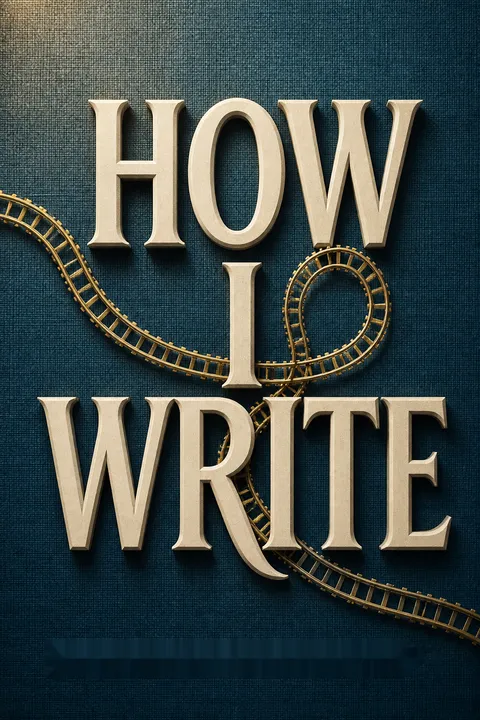
How I Write is less a universal theory of fiction than a practical portrait of one successful writer's working method. Its form, assembled from reader questions, gives the book an accessible, conversational structure, while its recurring examples from the Stephanie Plum novels demonstrate how a technique looks in practice. That makes it useful and also limits its claims: Evanovich repeatedly distinguishes what works for her from rules every writer must follow.
The book's strongest through-line is the relationship between deliberate craft and a seemingly effortless reader experience. Character, pacing, dialogue, setting, and revision all serve the same end: make the story vivid without making its construction obtrusive. Its advice about characters is especially coherent. Desire creates action, obstacles create conflict, and choices make personality observable. The advice about research is similarly pragmatic: gather enough knowledge to protect credibility, but do not let research displace the actual writing.
The book also presents authorship as a profession rather than a calling that excuses inconsistency. Evanovich describes routine, deadlines, revision, and a decade of unsuccessful manuscripts alongside creative inspiration. Her story complicates the familiar bestseller myth that talent announces itself immediately. Yet persistence is not presented as passive endurance. She learns, changes genres, seeks feedback, and keeps producing work.
Some advice belongs to its 2006 publishing context. Submission formats, websites, and marketing channels have changed, and current writers should verify practical guidance before acting on it. More broadly, Evanovich's preference for linear plots, compact prose, and comic optimism is an artistic signature, not a universal standard. The book's most transferable contribution is its method of matching craft choices to a clear promise for the reader, then revising until that promise is delivered.
Review Summary
How I Write receives mixed reviews, with an average rating of 3.77 out of 5. Some readers find it helpful and entertaining, praising Evanovich's humor and practical advice for aspiring writers. Others criticize its basic content, outdated information, and Q&A format. Fans of Evanovich's Stephanie Plum series appreciate the behind-the-scenes insights, while more experienced writers may find it too simplistic. The book's strengths include its accessibility, encouragement, and glimpses into Evanovich's writing process, but its weaknesses lie in its dated publishing advice and lack of depth on certain topics.
People Also Read




Glossary
Reduction writing
Prose pared to essentialsEvanovich's term for tightening prose until only the most useful material remains. The writer cuts repetition and unnecessary explanation while preserving the scene's meaning, energy, and clarity. The aim is not simply fewer words, but a concentrated effect that keeps attention on character and story.
Storyboarding
Visual plot trackingA planning technique Evanovich uses to display a novel's events, storylines, characters, and settings at a glance. She writes brief notes about the action on a large board, often arranging them by day. This overview helps her check chronology, track character development, and see whether separate plot threads fit together.
suspending disbelief
Making improbability believableA storytelling effect in which an unlikely event is presented in a way that allows readers to accept it for the duration of the story. Evanovich uses the idea to describe writing beyond her direct experience, while emphasizing that the passage still needs to feel plausible and should not contain avoidable factual errors.
in medias res
Beginning amid the actionA technique that opens a story during an unfolding event rather than at its earliest chronological point. Background information is supplied afterward, once the reader is engaged. Evanovich explains the approach but notes that she personally prefers more gradual openings because a sudden start can feel confusing if it withholds too much context.
slush pile
Unsolicited submission backlogThe collection of manuscripts sent to agents or publishers without a prior request. Such submissions may wait unread, be screened by assistants, or be rejected without close consideration. Evanovich describes the pile as a difficult route to publication, while acknowledging that an exceptional manuscript can still be discovered there.
advance
Payment before royalties accrueMoney a publisher pays an author before the book has generated enough royalties to cover that amount. Evanovich describes advances as commonly paid in stages tied to contract signing, manuscript delivery, and publication. The advance is recouped from the author's royalty share before additional royalty payments are made.
FAQ
What's "How I Write: Secrets of a Bestselling Author" about?
- Author's Insights: The book offers a detailed look into Janet Evanovich's writing process, sharing her personal experiences and methods.
- Writing Techniques: It covers various aspects of writing, from character creation to structuring a novel, and provides practical advice for aspiring writers.
- Publishing Guidance: Evanovich also discusses the publishing process, including finding an agent and getting published.
- Personal Stories: The book includes anecdotes from Evanovich's life and career, making it both informative and entertaining.
Why should I read "How I Write: Secrets of a Bestselling Author"?
- Learn from a Bestseller: Gain insights from Janet Evanovich, a successful author known for her Stephanie Plum series.
- Practical Advice: The book is filled with actionable tips and strategies for writing and publishing.
- Inspiration and Motivation: Evanovich shares her journey, including challenges and triumphs, to inspire other writers.
- Comprehensive Guide: It covers a wide range of topics, making it a valuable resource for both new and experienced writers.
What are the key takeaways of "How I Write: Secrets of a Bestselling Author"?
- Character Development: Creating memorable and believable characters is crucial for engaging storytelling.
- Writing Discipline: Consistency and treating writing like a job are essential for success.
- Publishing Process: Understanding the roles of agents, editors, and publishers can help navigate the publishing world.
- Persistence Pays Off: Evanovich emphasizes the importance of perseverance in the face of rejection and challenges.
How does Janet Evanovich create great characters?
- Multidimensional Characters: Characters should have quirks, flaws, dreams, and motivations to make them relatable and memorable.
- Observation and Imagination: Evanovich draws inspiration from real-life people and situations, adding her creative twist.
- Honesty and Vulnerability: Characters should be honest and vulnerable, allowing readers to connect with them emotionally.
- Unique Dialogue and Actions: Each character should have distinct speech patterns and behaviors that set them apart.
What is Janet Evanovich's advice on finding story ideas?
- Everyday Inspiration: Ideas can come from newspapers, magazines, TV shows, and personal experiences.
- Observation Skills: Pay attention to the world around you and listen to people's conversations for potential storylines.
- Write It Down: Always jot down ideas as they come to you, as they can be fleeting.
- Personal Experiences: Use your own life experiences as a source of humor and authenticity in your writing.
How does Janet Evanovich handle the writing process?
- Structured Approach: Evanovich uses a combination of character sketches, location selection, and a time line of action.
- Flexibility: While she has a general outline, she remains open to changes and new ideas during the writing process.
- Daily Writing Routine: She emphasizes the importance of writing every day, even if it's just a few sentences.
- Editing and Revising: Evanovich believes in multiple drafts and revisions to refine the story and characters.
What are Janet Evanovich's rules for successful writing?
- Commitment to Writing: Treat writing as a responsibility and show up on time, just like a job.
- Be Brave: Never hold back ideas for future projects; always give your best effort in the current work.
- Respect the Audience: Write with the reader in mind, ensuring the story is engaging and enjoyable.
- Embrace Imperfection: Accept that writing "stuff that sucks" is part of the learning process.
How does Janet Evanovich suggest handling rejection?
- Persistence is Key: Rejection is a part of every writer's journey, and perseverance is crucial.
- Learn from Feedback: Use constructive criticism to improve your writing and grow as an author.
- Stay Positive: Maintain a positive attitude and focus on the progress you've made.
- Keep Writing: Start a new project immediately after finishing one, regardless of its reception.
What is Janet Evanovich's approach to humor in writing?
- Think Funny: Humor can come naturally or be crafted by looking at situations from a different perspective.
- Balance Emotions: While humor is important, it's essential to evoke a range of emotions in the reader.
- Physical and Social Comedy: Use both physical humor and social commentary to create engaging scenes.
- Character Insight: Humor can provide deeper insights into characters and their relationships.
How does Janet Evanovich structure her novels?
- Linear Structure: Evanovich prefers a chronological approach, avoiding flashbacks for easier reading.
- Storyboarding: She uses a dry-erase board to map out the plot, character development, and key events.
- Plot and Subplot: Incorporates a main plot and subplots to add depth and maintain reader interest.
- Pacing and Transitions: Focuses on smooth transitions and pacing to keep the story engaging.
What advice does Janet Evanovich give on getting published?
- Complete Manuscript: Ensure your manuscript is polished and complete before seeking representation.
- Query Letters: Write a compelling query letter to capture an agent's or editor's interest.
- Finding an Agent: Research and target agents who represent your genre and have a good track record.
- Be Prepared for Rejection: Understand that rejection is common and part of the process; keep trying.
What are the best quotes from "How I Write: Secrets of a Bestselling Author" and what do they mean?
- "Writing stuff that sucks is part of the learning process!" - Emphasizes the importance of embracing imperfection and learning from mistakes.
- "If Stephanie Plum can make it through the day, so can my reader." - Highlights the relatability and resilience of her characters, offering readers hope and inspiration.
- "Never hold anything back for the next book. Always go for it." - Encourages writers to give their best effort in every project, without saving ideas for the future.
- "Persistence is what separates the men from the boys." - Stresses the importance of perseverance and dedication in achieving writing success.
About the Author
Other books by Janet Evanovich



Download PDF
Download EPUB
.epub digital book format is ideal for reading ebooks on phones, tablets, and e-readers.








