

Plot Summary
The Painting Nick Denies
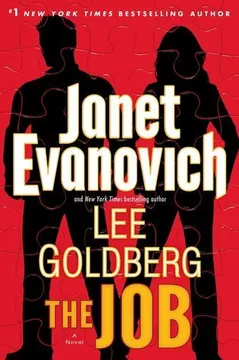
FBI agent Kate O’Hare ends a dull undercover stakeout by knocking out a bank robber with her computer keyboard and helping arrest his crew. Then her boss, Carl Jessup, shows her a photograph of Nick Fox apparently stealing a Matisse in Nashville. Nick is a master thief whose conditional freedom depends on secretly helping the FBI catch criminals, and Kate is responsible for keeping him on that path.
His brief call, insisting he did not commit the theft, matches Kate’s own suspicion: the crude grab is too small and clumsy for him. She finds him aboard a borrowed yacht in Los Angeles. Nick says someone is framing him, and Kate persuades Jessup to let her investigate rather than arrest Nick.
The story begins by placing Kate between two kinds of work: the routine danger of an armed bank robbery and the more intimate uncertainty of supervising Nick. Her quick physical response at the bank establishes competence without making her invulnerable; she solves the immediate crisis, then faces a case whose central evidence may itself be a performance. Nick’s denial matters less as proof than as a test of their uneasy arrangement. Kate trusts her professional knowledge of his methods, but her willingness to defend him also exposes a personal investment she would rather classify as judgment. The false Matisse theft turns that tension into the engine of the investigation.
A Fingerprint in Istanbul
In Nashville, Kate studies footage of the Matisse theft and sees a disguised thief deliberately show a face resembling Nick’s before escaping in a pickup. The museum’s curator, Alton Pruitt, cannot explain the absent daytime safeguards, while FBI agent Maxine Cutler helps Kate trace possible getaway vehicles.
Nick visits Kate’s hotel in disguise and demonstrates how cheaply a convincing face mask can be made. Before they can pursue the Nashville case, Turkish authorities report that Nick’s fingerprint has been found at the theft of a jeweled Ottoman goblet in Istanbul.
Kate joins Chief Inspector Semir Atalay and foundation director Ceren Demirkan at the museum. She argues that the broken display case, missing surveillance video, and careless fingerprint do not fit Nick’s careful habits, but the evidence has already directed suspicion toward him.
The two museum jobs make imitation the case’s central problem. The Nashville footage offers a recognizable face while withholding the thief’s actual identity; the Istanbul fingerprint appears more conclusive, yet Kate knows that even physical evidence can be manufactured. Her expertise therefore consists not in accepting or rejecting clues wholesale, but in judging whether the behavior around them belongs to Nick. The contrast between Nick’s elaborate criminal style and the second thief’s blunt methods supplies a practical investigative standard. Atalay’s local authority and Ceren’s expectations also remind Kate that the case is not hers alone, even when others treat her knowledge of Nick as a shortcut to certainty.
The Prison Hotel Escape
Kate compares Istanbul hotel registrations with television-character names Nick has used as aliases and singles out Dale Cooper at the Four Seasons, a former prison. The guest has only just checked in, so she realizes the name belongs to the real Nick, not the museum thief.
She secretly texts him to run, but Atalay’s officers call the room before Nick can leave normally. Nick climbs from a window, scales a drainpipe, crosses rooftops, and escapes by leaping onto a passing minibus.
At breakfast he reveals that he came to Istanbul despite Kate’s warning and admits a long-ago, unpublicized Topkapi Dagger theft. Before she can settle the argument, another report places a stolen Vermeer in Cologne. Kate sees the crimes may spell out Nick’s name through their cities, with the next target still to come.
Kate’s mistake is a consequential one: her knowledge of Nick identifies him correctly, but that very success directs armed police to him. The prison-turned-hotel sharpens the irony, making a place built to contain escapees the stage for Nick’s escape and Kate’s professional miscalculation. His rooftop flight dramatizes a capacity she both admires and resents: he can turn a tightening perimeter into a route. The revelation about the Topkapi Dagger further complicates her model of him. Nick’s crimes are not always driven by money; sometimes he steals to test an idea or complete an imagined challenge. The new Cologne theft converts that personal history into a pattern Kate can investigate.
Serena Behind the Mask
Kate links the sequence of Nashville, Istanbul, and Cologne to Orléans, where Nick once committed a theft. With French art-crimes investigator Killian Bernard, she watches a masked burglar enter the Musée des Beaux-Arts through a window whose faulty alarm has gone unrepaired.
Officers arrest the thief while she climbs back out with two paintings. The mask conceals Serena Blake, a British cat burglar and one of Nick’s former collaborators. Nick appears at the station disguised as her lawyer, Jean-Luc Picard, and helps negotiate a possible sentence reduction in exchange for the locations of the stolen works.
Serena refuses to reveal those locations yet. She tells Nick privately that she engineered the crimes to force him to find her, because she needs his help against Lester Menendez, the drug lord who killed her brother.
The arrest resolves the immediate question of who has been wearing Nick’s face, but it opens a more morally charged one: why Serena chose such a dangerous way to reach him. Her thefts function as a message that only Nick would recognize, while turning his reputation into collateral damage. Kate’s success at predicting Orléans proves her own ingenuity, yet Nick had independently guessed another possible city and was watching nearby. Their contest is not a simple opposition between law and crime; both read behavior as information, and each can outmaneuver the other. Serena’s motive shifts the story from impersonation toward grief and revenge, giving the international crimes a human cause beyond the puzzle.
A Crew for Menendez
Serena explains that Menendez had her brother, a plastic surgeon, tortured and killed after the operation that gave the fugitive drug lord a new identity. Nick agrees to dismantle Menendez’s empire, not assassinate him, and draws Kate into a plan built around the man’s known love of rare chocolate and sunken treasure.
Kate brings in her retired commando father, Jake O’Hare, while Nick recruits driver Willie Owens, actor Boyd Capwell, treehouse builder Tom Underhill, and effects artist Rodney Smoot.
The crew outfits a stolen cargo ship as a research vessel and builds a convincing, if partly theatrical, underwater command center. In Cartagena, Kate and Nick steal sediment-covered Spanish gold coins from a museum collection, using Willie’s staged car crash in the parking garage to distract security while they enter through air ducts.
This turn transforms a private debt between old associates into a collective operation, but the crew’s varied motives matter as much as their skills. Serena seeks redress for her brother; Nick honors a past rescue; Kate accepts an illegal theft because it may reach a criminal no ordinary investigation can locate. Jake’s participation adds a family bond built on trust and shared danger, while the hired specialists bring ambition, playacting, and appetite for risk. The operation also reframes performance as a practical tool. The ship, the costumes, and the later underwater imagery must persuade Menendez by engaging what he wants to believe. The stolen coins provide a tactile proof that the fabricated discovery can be made convincing.
The Broker's Golden Door
In Lisbon, Nick and Kate approach Diogo Alves, a criminal broker who connects buyers and sellers in the city’s underworld. They present a sediment-encrusted coin and claim to have found the legendary Santa Isabel, a Spanish galleon supposedly carrying a fortune.
Alves agrees to seek a buyer for a commission and later supplies three names. Back aboard the ship, Kate compares those names with a list of European customers for rare chocolate, assembled by FBI agent Seth Ryerson at Jessup’s request. One name matches: Demetrio Violante, a reclusive construction magnate in Marbella.
Nick recognizes Violante as a ruthless newcomer whose rise involved suspicious deaths and coercion. The match suggests he is Menendez under a new identity. Because he is obsessed with chocolate and treasure, the crew now has a way to draw him into their staged discovery.
The broker scene shows how information travels in a world where official records are incomplete and trust is transactional. Alves does not verify the treasure; he evaluates the coin, the Hartleys’ nerve, and the profit he might earn by connecting them to a buyer. The investigators’ breakthrough is similarly indirect. Menendez’s new face defeats ordinary identification, so Kate and Nick look for continuity in his tastes and habits. Chocolate becomes more than a colorful detail: it is a behavioral trace that survives bodily disguise. This is a psychological approach to identity, treating a person as a pattern of wants rather than a recognizable appearance. The match gives the crew a target, but not yet control over him.
Hostage at the Marbella Palace
Nick and Kate visit Violante’s fortified Marbella estate and show him digitally created images of the supposed wreck. He agrees to inspect the treasure, but demands that Kate remain behind with his head of security, Reyna Socorro, while he sails with Nick.
Before the boat leaves, Kate sneaks outside and attaches a covert listening device to the estate’s satellite connection, letting the FBI monitor Violante’s communications. Reyna drugs chocolates intended for Kate; Jake eats one and collapses. Kate hides him, then knocks Reyna unconscious with a frying pan when she enters carrying tools for torture.
She and Jake escape through a concealed elevator hidden in a closet, using an underground route Jake has discovered. Meanwhile, Nick keeps the sea operation moving, unaware that Kate has escaped until she calls him from safety.
The estate’s luxury does not soften its coercive structure: Kate is a hostage in a beautiful guesthouse, watched by armed guards and treated as leverage. Her work depends on resisting that role without revealing her training. The listening device turns apparent confinement into intelligence gathering, while her reconnaissance run maps the property for an escape that becomes necessary once Reyna’s intentions are clear. Jake’s arrival complicates rather than solves the danger; his trust in Kate is profound, but the drugged chocolate makes him vulnerable and forces her to protect him. The frying pan is a comic domestic object repurposed as a weapon, capturing Kate’s blend of improvisation and disciplined restraint.
Gold on the Dark Seafloor
At sea, the crew uses Rodney’s interactive visual effects to make the remote submersible appear to explore a real wreck. Violante pilots it across the fabricated seabed, sees the gold table and scattered coins, and operates the robotic arms to bring a bucket of genuine, stolen coins to the surface.
The proof overwhelms his suspicion. He agrees to pay for the treasure’s location, while the satellite bug on his estate begins feeding the FBI details of his accounts and criminal network. When the ship returns to Málaga, Kate reappears after her escape and raises the price to twenty-five million dollars, citing Reyna’s attempted torture.
Violante accepts, still intent on taking the treasure. Nick then separates the crew’s routes and arranges the final exchange in London, where Violante will bring cash and the FBI can act on the intelligence.
The con succeeds because it gives Violante more than evidence; it lets him participate in the fantasy. By taking the controls, he becomes the explorer who has found the treasure, and his own desire supplies the conviction the crew could not impose through argument alone. The real coins bridge the gap between simulated spectacle and physical proof. At the same time, the operation’s machinery produces a second result: the bug turns Violante’s confidence into a stream of actionable information for law enforcement. Kate’s return changes the price and restores her agency after captivity. The bargain therefore rests on several kinds of leverage, including money, desire, surveillance, and the crew’s ability to stage reality.
The Thames Turns to Fire
In London, Scotland Yard detective Dennis Gooley positions armed teams around the Excelsior Tower while Kate watches Nick’s apartment across the Thames. Violante arrives with twenty-five million dollars in euros and accepts the stolen art Nick offers, including the Matisse, Vermeer, and jeweled goblet.
As police move in, Violante learns of the raid through a hidden earpiece. Reyna fires flares at the bridges, causing crashes that block the approaching teams. Violante drives a Range Rover through the apartment window and drops toward the street, but Nick escapes through a service corridor.
On the river, Kate rams Reyna’s powerboat with a seized yacht; Reyna attacks her in the dinghy, and Kate fights her off before police pull Kate from the water. Violante is captured, identified as Lester Menendez, while Nick disappears in police gear.
The climax breaks the orderly geometry of the planned arrest. Nick and Kate have prepared for surveillance, cash, and a controlled exchange, but Reyna’s flares and Violante’s vehicle stunt turn the tower and river into a chaotic escape route. Each character’s response reflects a different relationship to control: Menendez abandons the purchase to survive, Reyna uses violence to keep his escape possible, and Kate acts physically when the operation’s perimeter fails. Nick’s escape preserves the story’s central asymmetry: the FBI can use his talent, but cannot make him fully governable. Kate’s injury is the cost of translating that unstable alliance into a successful capture.
A Prisoner Leaves Orléans
In hospital, Kate learns that Menendez is in custody and Reyna survived the river fight, while Nick has escaped the London raid. He asks Kate to help with one last loose end: Serena, still awaiting trial in Orléans.
Disguised as a lawyer, Nick enters the prison with actor Boyd impersonating Gooley and persuades the staff that Serena is being transferred under an extradition agreement. Kate drives their getaway. At the airport, Jessup calls to report Serena’s escape and warns Kate against involvement; she pretends the connection is breaking up.
The stolen artworks have been returned, Menendez’s criminal network is exposed, and Serena is free to leave. Nick parts from Kate with a kiss and leaves her a giant Toblerone, a teasing token that lets their partnership end this operation with affection still unresolved.
The resolution refuses a clean division between justice and legality. Kate has helped capture a mass murderer and expose his organization, yet she also helps Nick falsify a prison transfer to free Serena. Her decision is not presented as a simple rejection of the law; it grows from loyalty to Nick, sympathy for Serena’s loss, and the limits of a system that cannot easily account for their history. The operation closes its practical loop by returning the stolen art and putting Menendez in custody, but its emotional loop remains open. Nick and Kate’s flirtation has become a form of trust, though neither can convert it into an ordinary relationship while their roles remain opposed.
Analysis
The novel treats identity as a set of behaviors that can outlast a face. Menendez changes his appearance so completely that conventional recognition fails, while the investigators find him through habits he considers private: rare chocolate, treasure, and a longing rooted in childhood. The false Nick mask works in the opposite direction. It makes a public reputation look like evidence, showing how easily a familiar name can distort judgment. Kate’s investigation therefore depends on separating what a person seems to be from what their actions consistently reveal.
The book also makes performance an instrument of power. Nick’s thefts, Serena’s impersonation, Boyd’s acting, Rodney’s imagery, and Kate’s undercover disguises all rely on controlling what another person expects to see. The elaborate treasure con is effective because it does not merely present a fake; it gives Violante a role inside the fantasy. He drives the sub, handles the coins, and supplies his own conviction. His appetite completes the illusion.
Yet the story resists a clean celebration of cleverness. Kate and Nick’s success depends on fraud, stolen property, forged identities, and an operation that repeatedly puts civilians at risk. The FBI’s institutional authority is not absent, but it is insufficient on its own to reach Menendez. Kate’s choices expose the personal cost of working in that gap: she wants lawful accountability, cares for Nick, and finds herself assisting actions she cannot openly endorse. Their attraction is not a cure for that conflict. It sharpens it, because each is drawn to the qualities that make the other difficult to trust. Finally, Serena’s motive gives the caper its emotional weight. The crimes that look like a contest of criminal reputations are also a plea from someone who has lost her brother and cannot confront his killer alone. Nick responds through loyalty, Kate through investigation, and Jake through protection. The story’s idea of justice is consequently practical and compromised: the crew uses performance and deception to expose a predator, while the people involved remain responsible for the risks and moral ambiguities of their methods.
Review Summary
Reviews for The Job are generally positive, averaging 4.04 out of 5. Readers enjoy the fast-paced action, humor, and chemistry between FBI agent Kate O'Hare and con man Nick Fox. Kate's father Jake is frequently cited as a standout character. Many compare the series to Ocean's Eleven for its elaborate cons and colorful ensemble cast. Common criticisms include formulaic plotting, shallow character development, and the slow progression of the Nick-Kate romance. Most agree it's entertaining, light reading perfect for those seeking fun escapism rather than literary depth.
Characters
Kate O’Hare
FBI agent and pursuerAn FBI special agent and former Navy commando, Kate is observant, physically capable, and impatient with inactivity. Her expertise comes from knowing how Nick Fox thinks, but that familiarity is also a liability: she can recognize his habits and still be drawn into his orbit. Kate wants to catch criminals through patient investigation, yet she is willing to improvise when official methods fail. Her relationship with Nick combines professional vigilance, attraction, irritation, and a growing reliance on his instincts. She is not merely the competent straight woman beside a charming thief; her judgment and tactical decisions repeatedly determine whether their schemes succeed.
Nick Fox
Thief turned covert assetNick is a celebrated con artist and thief whose pleasure lies in difficult, inventive crimes rather than simple profit. He possesses a polished taste for luxury, a performer’s instinct for reading people, and the nerve to remain calm when plans turn dangerous. His conditional arrangement with the FBI gives his talent a new purpose without making him obedient or wholly trustworthy. Kate is both his handler and the person whose judgment he respects most, a combination that feeds their teasing rivalry and genuine dependence. Nick’s intelligence is matched by a deep attachment to old partners, even when loyalty complicates his obligations.
Serena Blake
Acrobatic cat burglarA British burglar with exceptional agility and a history of working alongside Nick, Serena is clever, self-contained, and capable of taking extreme risks when someone she loves is threatened. She knows how to use disguise and spectacle to manipulate an investigation, but her schemes are not driven by greed alone. Her connection to Nick is rooted in shared criminal history and mutual obligation, making their relationship more complicated than a former colleague’s. Serena’s reserve conceals intense grief and a strong need to act rather than remain at the mercy of events.
Jake O’Hare
Kate’s commando fatherJake is Kate’s retired military father, still lean, disciplined, and eager for the danger he claims to have left behind. He approaches ordinary tasks with operational precision and treats unconventional skills as useful family knowledge. His career kept him away during much of Kate and her sister’s childhood, a history that makes his present commitment especially meaningful. Jake’s affection tends to arrive as practical help, weapons, or an improbable plan rather than sentimental explanation. He trusts Kate’s abilities but remains fiercely protective of her, bringing both a formidable resource and an unmistakably paternal presence to the crew.
Lester Menendez
Fugitive drug lordMenendez is a notorious international narcotics boss whose rise was built on calculated brutality. He is intelligent, wealthy, and difficult for law enforcement to locate, with a taste for rare chocolate and a childhood fascination with sunken treasure. His obsession with control makes him wary of strangers, yet his appetites offer others a way to predict him. Menendez treats people as replaceable while regarding extraordinary objects as nearly sacred, a revealing imbalance between human and material value. He is the central target of the crew’s plan, though he remains mostly a distant presence until they find a way to draw him into their reach.
Reyna Socorro
Menendez’s armed protectorReyna is a highly trained former Colombian guerrilla who now leads security for Menendez. She reads bodies and intentions quickly, and she approaches protection as a license for force rather than a passive duty. Her alertness makes her difficult to deceive, while her history of hostage-taking shapes how she interprets Kate’s presence. Reyna combines tactical discipline with a disturbing appetite for domination. She is not simply a guard with a weapon; she is an independent threat whose instincts can complicate even a carefully designed con.
Carl Jessup
Kate’s FBI supervisorJessup is Kate’s FBI boss, a pragmatic administrator who understands that conventional methods cannot catch every criminal. He authorized the arrangement that gives Nick conditional freedom and assigns Kate to supervise him. Jessup values results but must also protect the Bureau from the consequences of covert operations that stretch legal boundaries. His trust in Kate allows her room to pursue an unconventional lead, though it does not erase the institutional limits she is expected to observe.
Maxine Cutler
Nashville FBI agentCutler is an FBI agent in Nashville who supports Kate’s investigation into the museum theft. Direct and practical, she provides local knowledge, staff, and access to the early evidence. Her grounded manner helps move Kate’s hunches into concrete investigative steps, even when the available footage and witness accounts offer little certainty.
Semir Atalay
Istanbul police inspectorAtalay is the Turkish chief inspector overseeing the goblet theft. He is courteous, experienced, and initially skeptical of Kate’s insistence that Nick has been framed. Unlike Kate, he has to answer to powerful local institutions and a prominent museum family, which makes the case’s political pressure tangible. He respects evidence and procedure, but he is willing to work with Kate when her knowledge may help.
Ceren Demirkan
Museum foundation directorCeren directs the Demirkan Foundation and represents a family whose collection carries both historical prestige and political influence. She wants the stolen goblet recovered and believes Kate’s record against Nick makes her uniquely valuable. Her polished confidence reflects the authority of her position, while the theft exposes how much a private institution depends on security arrangements that can fail.
Diogo Alves
Lisbon crime brokerAlves is a fado singer and underworld intermediary who arranges introductions between criminals and wealthy buyers. He trades in access, reputation, and the threat of consequences when deals go wrong. His theatrical manner is backed by real influence among Lisbon’s criminals, making him useful to Nick and dangerous to disappoint. Alves understands that every transaction carries a risk that someone else may try to transfer to him.
Willie Owens
Unlicensed vehicle aceWillie is a fearless driver who can handle vehicles across land, sea, and air, though formal training and legal permission rarely constrain her. She uses charm as readily as speed and regards dangerous machinery as an invitation. Her appetite for adventure makes her a natural fit for Nick’s operations, while her improvisational style can leave a trail of expensive wreckage.
Boyd Capwell
Committed character actorBoyd is an actor whose conviction in a role can outlast the practical needs of a scheme. He treats preparation as a craft, developing a character’s mannerisms and backstory even when the part is meant to deceive a criminal for only a few minutes. His vanity and earnestness make him comic, but his willingness to risk himself for the crew gives his theatrics real utility.
Tom Underhill
Inventive treehouse builderTom builds elaborate treehouses and has a practical gift for making objects look convincing, even when their inner workings are improvised. Nick’s earlier help brought him into the crew’s orbit, where he finds the danger and invention more exciting than his ordinary business. Tom’s work turns a cargo ship into a persuasive stage for the treasure scheme, and his imagination gives the operation much of its visual character.
Rodney Smoot
Underwater effects designerRodney is a special-effects artist whose film career and company have suffered financial collapse. The promise of renewed work and a difficult technical challenge draws him into Nick’s plan. He understands that convincing effects depend on details viewers barely notice, from drifting particles to startled fish. Rodney’s creative pride becomes useful to the operation, but it also places him in danger if the illusion fails.
Dennis Gooley
Scotland Yard investigatorGooley leads Scotland Yard’s specialist operations unit and becomes Kate’s partner in planning the London arrest. He is a blunt, experienced detective with a battered coat, a practical sense of humor, and confidence in the surveillance resources at his disposal. His methods are orderly and forceful, making him effective at organizing a large response, though Nick’s talent for escape tests the limits of a carefully closed perimeter.
Plot Devices
The Nick Fox impersonation
Turns reputation into baitThe thief wears a mask resembling Nick and leaves fingerprints or camera evidence that point toward him. The false identity sends Kate and international police chasing the wrong explanation, while the crimes are deliberately simple enough to clash with Nick’s usual style. Kate’s knowledge of his habits lets her notice that contradiction, but it also leads her to the real Nick in Istanbul and nearly hands him to the police. The impersonation’s purpose is not merely to conceal the thief. It exploits Nick’s fame among criminals and investigators to force a response from him.
The television-name trail
Finds Nick through aliasesNick favors names borrowed from television characters when traveling under an assumed identity. Kate asks Atalay to compare Istanbul hotel records against a directory of television programs, narrowing a long list to Dale Cooper at the Four Seasons. The clue works because it depends on a personal habit, not a forged document or conventional surveillance. It also creates risk: identifying Nick accurately helps the police locate him, so Kate must choose between allowing Atalay’s plan to unfold and warning the man she is officially meant to supervise.
The fabricated shipwreck
Makes greed believe its eyesNick’s crew combines real stolen coins, a staged research vessel, a decorated remote submersible, and Rodney’s interactive underwater imagery to simulate the discovery of the Santa Isabel. The effects react to the vehicle’s movement, so Violante can steer through the scene and use the robotic arms to collect a genuine sample. The scheme succeeds by making him participate rather than simply observe. Its theatrical controls and lights appear frivolous to Kate, but they help create a fantasy compelling enough to overcome Violante’s suspicion and commit him to the purchase.
The satellite-line bug
Turns appetite into evidenceKate secretly attaches a device to the satellite connection at Violante’s estate. It copies the communications stream and sends information to the FBI, exposing accounts and the movements of his criminal organization. The bug is installed during Kate’s confinement with Reyna, when a brief bathroom distraction gives her access to the roof. It changes the plan from a risky attempt to identify a hidden man into an operation backed by intelligence from his own systems. The device makes the crew’s con useful to law enforcement beyond the immediate capture.
About the Author
Other books by Janet Evanovich






Download PDF
Download EPUB
.epub digital book format is ideal for reading ebooks on phones, tablets, and e-readers.








