

Key Takeaways
Change how you feel, and change the life you help create.
The book’s wager. Matthews contrasts Trent, whose life gathers accidents, illness, and financial loss, with Jane, whose romantic prospects improve after she stops obsessing over finding a partner. He argues that feelings shape the events people encounter. The stories illustrate his belief, but they do not prove that someone’s mood caused those events.
A grounded interpretation. Treat emotion as a starting condition, not a guarantee of fate. A hopeful mood can affect what someone notices, how they behave, and whether they keep trying. Matthews goes further, claiming that feelings attract matching circumstances through a connected universe. That spiritual claim is central to the book, but the practical insight does not depend on accepting it.
The strongest version of this idea is psychological rather than cosmic: emotions influence attention, judgment, and social behavior, which can alter the range of outcomes a person encounters. Jane may have become more open and socially active when she stopped treating a partner as the only acceptable result. The distinction matters. A mindset can help shape choices without controlling accidents, illness, or other people’s decisions. Reading the book this way preserves its invitation to agency while avoiding the conclusion that bad luck signals a person’s bad inner state.
Trace recurring patterns before calling your life a string of coincidences.
Automatic programs. The book uses subconscious mind to mean both the body’s automatic processes and learned behaviors that operate with little conscious attention. Driving, typing, and familiar routines become automatic through practice. Matthews also argues that beliefs about oneself can guide repeated choices, such as dating the same kind of partner or repeatedly mishandling money.
Look for the loop. His dieting example describes Mary losing weight through willpower, then regaining it because her self-image has not changed. The lesson is to notice the pattern beneath a repeated result: what is expected, tolerated, or done automatically? Matthews presents early childhood as a powerful period for absorbing beliefs, but his broader practical advice is simpler: examine old assumptions and practice a different response.
Automatic behavior is a useful bridge between self-image and repeated outcomes. In psychology, expectations can influence what people notice and how they interpret ambiguous situations; habits can then make those interpretations self-reinforcing. That account is more credible than treating the subconscious as a hidden force that arranges external events. The book’s account of childhood learning is emphatic, but adult patterns are not fixed. People can revise them through practice, supportive relationships, and changes to the situations that cue familiar behavior.
Interrupt one sour thought before it recruits the whole day.
A small spark spreads. Matthews describes a worker who receives a rude phone call, then links it to feeling underpaid, unappreciated, and unhappy at home. One unpleasant moment expands into a sweeping verdict on life. He calls these accumulating negative thoughts a rat-like infestation and recommends asking what, if anything, is useful or positive in the situation.
Reappraise, don’t deny. A broken leg might bring rest or time to read, but that does not make the injury desirable. The practical move is to stop one event from becoming proof that everything is hopeless. Matthews compares changing thought habits to changing a diet: a few days of effort cannot erase years of practice. Repetition matters more than a burst of forced optimism.
This resembles cognitive reappraisal, the practice of finding a more workable interpretation of an event without pretending it did not happen. The technique can interrupt rumination and restore a sense of choice. Its limit is important: asking for a bright side can feel dismissive when someone is grieving, unsafe, or facing injustice. A better first question may be what is true, what is within reach, and what support is needed. Positive thinking is most useful when it widens options, not when it silences legitimate distress.
Rehearse the outcome, then make belief visible through action.
Imagination as preparation. Matthews recalls picturing a red BMW and later learning that a friend had found a matching car for sale. He also describes writing a book while repeatedly imagining its success. These stories show how he understands visualization, though coincidence and selective memory cannot establish that mental images caused the outcomes.
Put the picture to work. The book’s more practical examples connect imagining success with doing the work: a job seeker pictures being employed, then studies interview skills, revises a résumé, and applies. Matthews calls action evidence of belief. In this account, visualization gives a goal emotional pull, while concrete steps build skill, expose opportunities, and make progress possible. Imagining alone is not the whole method.
Mental rehearsal can be valuable when it prepares a person for the process, not just the applause at the finish. Rehearsing a difficult conversation or interview can make the situation feel more familiar and clarify what to practice. By contrast, a vivid fantasy of success may offer emotional reward without improving performance. The book’s own job-search story contains the essential corrective: imagined confidence becomes useful when it leads to applications, preparation, and persistence. The BMW anecdote is memorable, but it remains an anecdote rather than a reliable model of causation.
Choose goals you can emotionally inhabit, not fantasies built from lack.
Want the lived result. Matthews argues that a goal must genuinely excite its pursuer. A million dollars may sound impressive, but the activities it could fund, such as starting a business or traveling with family, may be more vivid and motivating. He distinguishes wanting an outcome from repeatedly dwelling on its absence. His term reverse gear describes attention fixed on what is missing, such as worrying that a delayed pizza has been forgotten.
Build belief gradually. If a goal feels impossible, the book recommends starting with smaller aims that feel plausible. A person anxious about bills might first picture handling one payment calmly, then build toward a broader sense of financial security. This approach makes the goal easier to revisit without turning every thought into a reminder of failure.
Motivation is stronger when goals connect to specific activities and values than when they remain abstract numbers or status markers. Smaller steps can also make a distant aim feel actionable. The book’s idea of reverse gear captures a real attentional trap: fixation on scarcity can crowd out planning. But distress about a genuine shortage is not itself a cause of poverty. Clear goals, material resources, and practical support still matter. Emotional framing can help people use their options; it cannot conjure options that do not exist.
Accept today’s facts while loosening your grip on one exact outcome.
Acceptance is not surrender. Matthews uses the film Groundhog Day, in which a resentful man repeatedly relives the same day, to illustrate how fighting circumstances can keep a person stuck. He defines acceptance as recognizing the current situation and then moving toward something better, not agreeing that the situation is fair or permanent.
Stay determined, stay flexible. Matthews tells of Caroline, who moved through hotel-management jobs without applying for them and says she was not consumed by fear of unemployment. He presents detachment as caring about a goal without treating one result as the only route. Prepare carefully, make the effort, and continue with life if a particular opportunity does not come through. Flexibility leaves room for alternatives.
This is close to psychological flexibility: acknowledging reality while remaining able to act in line with what matters. Acceptance can reduce the energy spent arguing with facts that cannot immediately be changed, freeing attention for decisions that can be made. Detachment is not a promise that opportunities will arrive on their own, as Caroline’s story might suggest. Her case is an illustration, not proof of a universal rule. The useful distinction is between commitment to a direction and dependence on one specific doorway.
Forgive without excusing harm, and replace self-attack with self-compassion.
Resentment has a cost. Matthews argues that refusing to forgive usually prolongs the injured person’s distress more than it affects the person who caused the harm. He suggests noticing another person’s good qualities rather than repeatedly rehearsing the offense. Forgiveness, in this framing, is a way to loosen the past’s hold, not to approve of what happened or restore trust automatically.
Drop the inner prosecution. The book calls the self-critical voice the Inner Critic. It contrasts comparison-based self-esteem, which depends on being better than someone else, with self-compassion: treating personal mistakes with the understanding offered to other imperfect people. Practical steps include naming the hurt, acknowledging progress, and speaking to oneself without contempt.
Self-compassion is not indulgence; it can make accountability more sustainable by reducing the shame that often drives avoidance. Forgiveness also needs careful boundaries. A person may release some resentment without reconciling, excusing abuse, or giving an unsafe person renewed access. The book’s practical emphasis on reducing rumination is valuable, but its language of personal responsibility can become harmful if it implies that victims attracted their mistreatment. Agency includes choosing protective action, seeking help, and refusing blame that belongs elsewhere.
Use mind-body effects wisely, without mistaking hope for medical proof.
Expectation can affect symptoms. Matthews points to the placebo effect, in which a person’s expectation of treatment can contribute to reported improvement. He recounts a study of 180 people with knee pain: some received arthroscopic procedures, while a comparison group underwent sham surgery. The sham group improved as much as the groups receiving the procedures, challenging the assumption that those operations were always responsible for relief.
Keep the claim bounded. The book uses this example to argue that belief influences physical health. The study supports caution about particular procedures and shows that treatment context can matter. It does not show that thought alone cures disease, that every illness responds to expectation, or that patients are responsible for becoming ill. Medical decisions still require evidence, qualified care, and attention to a person’s specific condition.
The placebo effect is a reminder that treatment is not just a chemical or procedure; expectation, care, and the meaning of an intervention can shape symptoms and experience. That does not make symptoms imaginary. Nor does it mean that placebo responses replace effective treatment. The knee study is especially useful because it tests whether a procedure adds benefit beyond the surrounding ritual and expectations. The book’s leap from this finding to broad claims about thought controlling genes or disease goes beyond what the example establishes.
Practice gratitude as attention training, not a ban on grief.
Notice what is already here. Matthews recommends reviewing the day before sleep, recording things worth appreciating, and keeping photographs or reminders of people and experiences that matter. He also suggests looking for one good thing within a difficult situation. The point is to make appreciation a repeated habit rather than waiting until life is perfect before feeling thankful.
Keep gratitude honest. A small pleasure, a kind exchange, or a safe place to rest can deserve notice even during a hard period. The book treats gratitude as a way to shift emotional focus toward what is present and valued. It should not require pretending that loss, illness, or financial strain is secretly wonderful. Appreciation can coexist with sorrow and with efforts to change difficult circumstances.
Gratitude can function as attention training: deliberate noticing counters the tendency to let threats and frustrations dominate awareness. The practice is most credible when it expands a person’s picture of life rather than insisting on a positive interpretation of every event. Gratitude also depends on context. Someone under severe pressure may need safety, income, or care more urgently than a journal prompt. The book’s modest rituals are accessible, but their value lies in perspective and emotional steadiness, not in guaranteeing external rewards.
Return to the present instead of postponing happiness until life is fixed.
Do not live inside a forecast. Matthews describes falling in love as an experience of being absorbed in the current moment rather than worrying about what must change. He argues that people often postpone contentment until they have more money, a better job, or a partner. His practical alternative is to notice what is happening now and identify what can be enjoyed or handled in this moment.
Plan without rehearsing disaster. The book goes further, claiming that only the present exists. That need not be taken literally to be useful. Planning for the future is necessary, but repeatedly imagining worst-case scenarios can make the future feel like a current emergency. Returning attention to the present can help distinguish an immediate problem from a feared possibility.
Present-moment attention is useful because action happens now, even when goals concern the future. Mindfulness practices often train people to notice thoughts without treating every thought as a fact or command. That skill can reduce needless rumination while leaving room for realistic planning. The book’s claim that the future does not exist is a philosophical position, not a requirement for its practical lesson. A balanced approach plans for likely needs, then returns attention to the task, relationship, or experience actually at hand.
Treat self-love as daily care, not a reward for achievement.
Care before the trophy. Matthews argues that self-worth should not depend on a promotion, a relationship, a bank balance, or an ideal body. He recommends noticing personal strengths, making one’s home more pleasant, accepting compliments and help, and choosing affordable activities that bring enjoyment. These practices express care in ordinary life instead of waiting for success to make care feel deserved.
Practice kindness, not grandiosity. The book distinguishes self-acceptance from vanity. A person can acknowledge mistakes and still avoid turning them into a verdict on personal worth. Looking for good qualities in others, taking time for interests, and recognizing small steps forward are ways of weakening the habit of constant self-judgment.
Self-worth that depends on constant achievement is fragile because success, health, and approval inevitably fluctuate. Everyday care offers a steadier basis for functioning and can make setbacks easier to face. The book’s suggestion to improve one’s surroundings is concrete and humane, especially when framed within a person’s means. Still, self-love is not a substitute for changing harmful conditions or obtaining professional support when needed. It is better understood as a stance that makes care and change more possible, not as a force that guarantees good fortune.
Find purpose by developing talents in service, not merely chasing status.
Purpose has a practical direction. Matthews uses the Sanskrit term dharma for a person’s distinctive talents and their expression in life. He suggests asking what one can contribute, rather than focusing only on what can be gained. In his account, work motivated by service and love tends to create less resistance than work aimed chiefly at control, attention, or status.
Give without keeping score. The book links generosity to a sense of connection and recommends giving in ways that feel freely chosen, such as offering help or appreciation. This does not mean ignoring one’s own needs. A useful application is to find an activity where skill, interest, and contribution overlap, while keeping boundaries around time, money, and energy.
Purpose becomes more durable when it connects personal strengths to needs beyond personal prestige. This links the book’s spiritual language to familiar ideas in vocational psychology, where meaningful work often involves both competence and contribution. The caution is that service can be romanticized, especially for people already expected to give more than they receive. Generosity is healthiest when it is voluntary and reciprocal over time. Contribution need not mean self-sacrifice; it can include skilled work, care, creativity, or simply doing one’s part well.
Analysis
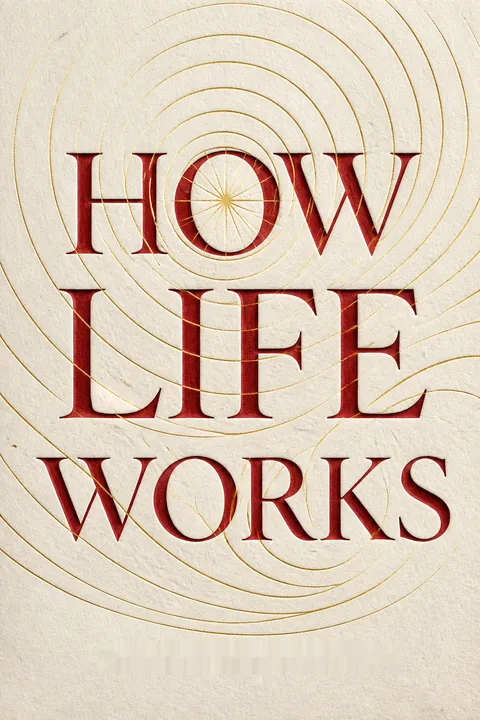
How Life Works is a story-led self-help book built around a single provocative claim: emotional states do not merely color experience, they help create it. Matthews moves from personal anecdotes about dating, work, money, and misfortune to a spiritual account of attraction, then closes with practices such as acceptance, gratitude, forgiveness, and self-care. The most useful thread is behavioral. Expectations can steer attention, moods can affect decisions and social interactions, and repeated habits can shape the opportunities a person is prepared to notice and pursue. Imagining a desired future can help when it leads to practice and action.
The book’s scientific scaffolding is much weaker than its practical advice. It invokes quantum physics, water crystal photographs, electron behavior, and heart energy as evidence that thoughts directly alter external events. These claims do not follow from the scientific concepts cited. Quantum entanglement does not allow thoughts to transmit usable information across the universe, and the water crystal demonstrations are not reliable proof of mental influence. Placebo research does show that expectation and context can affect symptoms, but that is a narrower claim than thought controlling disease or destiny.
This distinction is ethically important. If every misfortune is described as a match for someone’s feelings, readers may blame themselves for illness, accidents, poverty, or abuse. Such experiences often reflect chance, biology, other people’s choices, and social conditions beyond an individual’s control. A more responsible reading separates agency from omnipotence: people can influence some decisions and responses without being responsible for everything that happens to them.
The book is strongest when it treats emotional practice as a way to regain perspective and take the next step. Its stories make abstract advice memorable, though their coincidence-based conclusions should not be mistaken for evidence. Readers can keep the humane practices, challenge the cosmic guarantees, and build a model of change that respects both personal agency and real-world constraints.
Review Summary
How Life Works receives mostly positive reviews for its simple, engaging writing style and motivational message. Readers appreciate Matthews' use of cartoons and real-life examples to illustrate concepts about positivity and the power of thoughts. Many find the book transformative and easy to understand. Some critics argue it oversimplifies complex issues or relies too heavily on pseudoscience. Overall, reviewers recommend it as an uplifting, accessible self-help book that can potentially change one's perspective on life and happiness.
People Also Read







Glossary
Law of Attraction
Thought and feeling attract outcomesMatthews uses this term for the claim that a person’s recurring thoughts and feelings draw matching people, events, and circumstances into life. He presents emotion as the main influence on this process and recommends imagining desired outcomes as already achieved. The book’s stories illustrate the belief, but they do not establish it as a scientific law.
Subconscious mind
Automatic learned and bodily processesIn the book, this term covers automatic bodily functions, practiced skills, and learned beliefs that influence behavior outside deliberate awareness. Matthews argues that these underlying programs can outlast conscious willpower and shape recurring life patterns. His use is broader than the more specific ways psychologists use the term, and some of his claims about its power are spiritual rather than established findings.
Reverse gear
Attention fixed on absenceMatthews’s label for focusing on not having a desired outcome rather than imagining or pursuing its presence. His example is a diner who begins by anticipating a meal but spends the wait thinking about its absence and feeling increasingly angry. The concept encourages readers to notice when concern about a goal has turned into repeated attention to scarcity.
Vibration
Emotional energetic stateMatthews uses vibration to describe the quality of a person’s thoughts and feelings, such as hopeful, fearful, or grateful. He treats these states as a kind of energy that attracts circumstances of a similar quality. This spiritual meaning should not be confused with the measurable physical frequencies used in science; the book does not establish that emotions emit forces that rearrange external events.
Synchronicity
Meaningful-seeming coincidenceThe book uses synchronicity for striking coincidences or unexpected connections that appear to help a goal unfold, such as encountering a useful person or opportunity. Matthews presents these events as signs that a person’s inner state and the outside world are linked. The term describes how an event is experienced, not proof that thought caused the coincidence.
Inner Critic
Internal voice of judgmentThe Inner Critic is Matthews’s name for recurring self-critical thoughts that attack a person’s intelligence, appearance, worth, or progress. The book connects this voice to comparison and learned judgments from childhood. It recommends responding with self-compassion rather than trying to prove worth by outperforming other people.
Dharma
Purpose through distinctive talentsMatthews draws on the Sanskrit term dharma to describe a person’s distinctive talents and their expression in life. He links purpose to asking what one can contribute, rather than focusing only on personal gain. In this book, the concept is a guide to meaningful activity, not a detailed religious account of dharma across Hindu traditions.
Law of Least Effort
Love-aligned action with less frictionMatthews presents this as a Vedic principle: action motivated by love and service tends to meet less resistance than action driven by ego, control, or the wish to impress. He uses it to argue that contribution can make achievement feel less like struggle. The book’s account is a spiritual interpretation, not a promise that ethical work will always be easy or successful.
Placebo effect
Expectation-related treatment responseThe placebo effect refers to changes in symptoms or reported well-being associated with the expectation and context of treatment, rather than the specific active component of a treatment. Matthews uses a study of sham knee surgery to show that expectations can matter in medical care. The effect does not mean symptoms are imaginary or that belief alone cures disease.
FAQ
1. What’s "How Life Works" by Andrew Matthews about?
- Core Message: The book explains how our thoughts and, more importantly, our feelings shape our life experiences, drawing on both spiritual wisdom and scientific research.
- Law of Attraction: Matthews explores the Law of Attraction, emphasizing that we attract what we feel, not just what we think.
- Practical Guidance: It offers practical advice on how to change your feelings and beliefs to create a happier, more successful life.
- Accessible Style: The book uses stories, humor, and illustrations to make complex ideas easy to understand and apply.
2. Why should I read "How Life Works" by Andrew Matthews?
- Understand Life’s Patterns: The book helps readers recognize why the same positive or negative patterns keep repeating in their lives.
- Empowerment: It empowers you to take control of your happiness, relationships, health, and success by changing your inner world.
- Science Meets Spirituality: Matthews bridges the gap between quantum physics and ancient spiritual teachings, making the concepts relatable and actionable.
- Practical Tools: The book provides simple, actionable steps to improve your mindset, feelings, and ultimately, your life circumstances.
3. What are the key takeaways from "How Life Works" by Andrew Matthews?
- Feelings Create Reality: Your feelings, more than your thoughts, are the driving force behind what you attract and experience in life.
- Subconscious Programming: Your subconscious beliefs and patterns, often formed in childhood, control much of your behavior and outcomes.
- Change from Within: To change your life, you must first change how you feel and what you believe about yourself and the world.
- Gratitude, Acceptance, and Detachment: Practicing gratitude, accepting your current situation, and letting go of desperation are essential for positive change.
4. How does Andrew Matthews define the Law of Attraction in "How Life Works"?
- Feeling is the Magnet: Matthews emphasizes that it’s not just thinking about what you want, but feeling as if you already have it that attracts it into your life.
- Vibration and Energy: Everything in the universe, including thoughts and feelings, is energy with a unique vibration; like attracts like.
- Subconscious Reprogramming: The subconscious mind is reprogrammed through repeated feelings, not just affirmations or willpower.
- Practical Examples: The book provides real-life stories and analogies to illustrate how the Law of Attraction operates in everyday situations.
5. What role does the subconscious mind play in "How Life Works" by Andrew Matthews?
- Primary Controller: The subconscious mind is described as the main driver of your habits, beliefs, and life outcomes, often overpowering conscious willpower.
- Early Programming: Most subconscious patterns are formed before age six, making early experiences and messages from others highly influential.
- Literal Interpreter: The subconscious takes instructions literally, so repeated thoughts and feelings—positive or negative—become your reality.
- Change is Possible: Matthews stresses that you are not your patterns and that you can change your subconscious programming by changing your feelings and beliefs.
6. How does "How Life Works" by Andrew Matthews explain the connection between thoughts, feelings, and reality?
- Thoughts Spark Feelings: Thoughts are the seeds that, when repeated, generate feelings; these feelings then become the dominant energy you emit.
- Feelings Attract Experiences: The universe responds to your dominant feelings, bringing you experiences that match your emotional state.
- Scientific Support: The book references quantum physics and experiments (like Dr. Emoto’s water crystals) to show that thoughts and feelings can affect physical reality.
- Practical Application: By consciously choosing better-feeling thoughts and focusing on gratitude, you can shift your emotional state and attract better outcomes.
7. What practical steps does Andrew Matthews recommend in "How Life Works" to change your life?
- Focus on Feeling Good: Make it your mission to feel a little better each day, even if you can’t jump from despair to joy overnight.
- Visualize and Imagine: Regularly imagine your goals as already achieved, and immerse yourself in the feelings of success, love, or abundance.
- Practice Gratitude: Keep a gratitude journal or board, and give thanks for both big and small things to elevate your vibration.
- Let Go and Detach: Pursue your goals with enthusiasm but without desperation; trust that the right opportunities will come at the right time.
8. How does "How Life Works" by Andrew Matthews address setbacks, negative patterns, and resistance?
- Patterns Repeat: The book explains that recurring negative experiences are the result of subconscious patterns and beliefs.
- Resistance Blocks Flow: Resisting or fighting against circumstances creates energetic blockages, making it harder for positive change to occur.
- Acceptance is Key: Accepting your current situation, rather than resenting it, allows energy to flow and opens the door to new opportunities.
- Learn from Pain: Matthews suggests that crises and setbacks are often catalysts for growth and teachable moments that help us realign with our true power.
9. What is the importance of gratitude, acceptance, and forgiveness in "How Life Works" by Andrew Matthews?
- Gratitude Elevates Vibration: Regular gratitude shifts your focus from lack to abundance, attracting more good things into your life.
- Acceptance Releases Resistance: Accepting where you are, even if it’s not ideal, dissolves resistance and allows positive change to begin.
- Forgiveness Frees You: Forgiving others (and yourself) is not about condoning bad behavior, but about freeing yourself from resentment and negative energy.
- Practical Exercises: The book offers simple practices like gratitude journaling and looking for good qualities in others to foster these attitudes.
10. How does "How Life Works" by Andrew Matthews blend science and spirituality?
- Quantum Physics: Matthews references quantum physics to explain how everything is energy and interconnected, supporting the idea that thoughts and feelings affect reality.
- Ancient Wisdom: The book draws on spiritual teachings from various traditions, showing that concepts like prayer, detachment, and love are universal and practical.
- Scientific Experiments: Examples like Dr. Emoto’s water crystal experiments and placebo studies illustrate the tangible effects of belief and emotion.
- Unified Message: Both science and spirituality, according to Matthews, point to the same truth: you are a powerful creator of your own experience.
11. What are the most important concepts and methods in "How Life Works" by Andrew Matthews?
- Feeling is the Secret: The core method is to generate the feeling of your wish fulfilled, as if your goal is already achieved.
- Detachment and Allowing: Let go of desperation and allow things to unfold, trusting that the universe is working in your favor.
- Mirror Principle: The world reflects your inner state; to change your outer world, change how you feel about yourself.
- Small Steps and Consistency: Build belief and positive feelings through small, daily actions and affirmations, rather than expecting instant transformation.
12. What are the best quotes from "How Life Works" by Andrew Matthews and what do they mean?
- “When you are feeling angry or depressed and you ask yourself, ‘What else can go wrong?’ the answer is, ‘Quite a lot!’” – This highlights the importance of your emotional state in attracting further experiences.
- “Experience follows feeling. Feeling is the prayer.” – Matthews emphasizes that your feelings are the true drivers of what you manifest in life.
- “You are not separate from anything. You don’t have to go anywhere to find the power of the Universe. You find it by feeling different.” – This quote encapsulates the book’s message that everything you seek is already within you, accessible through your feelings.
- “The world believes, ‘Success makes you happy.’ The truth is; happiness makes you successful.” – Matthews reverses the common belief, stressing that inner happiness is the foundation for outer achievement.
- “Love yourself. Your life depends on it.” – Self-love is presented as the cornerstone for a fulfilling and successful life, affecting every experience you have.
About the Author
Other books by Andrew Matthews



Download PDF
Download EPUB
.epub digital book format is ideal for reading ebooks on phones, tablets, and e-readers.








