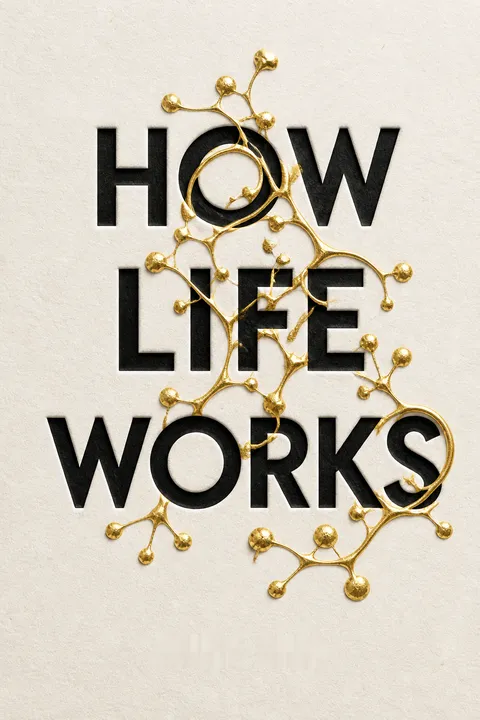


Key Takeaways
Stop treating the genome as a blueprint; it supplies ingredients, not a body.
A sequence is not a plan. The Human Genome Project decoded roughly three billion DNA base pairs, but the result did not reveal a hidden set of instructions for building a person. Humans have a little over 20,000 protein-coding genes, and these occupy only about 2 percent of the genome. Knowing the sequence is valuable, but it cannot tell us by itself how an embryo develops or how a cell behaves.
Context makes the difference. DNA is more like a supply of resources than a step-by-step construction manual. Cells select which parts to use, when to use them, and how to combine their products. The same genome supports radically different cells, from neurons to liver cells, because their activity and surroundings differ.
The blueprint metaphor is attractive because it turns a complicated process into a readable object. Its danger is not simply scientific inaccuracy. It encourages people to treat genetic information as destiny and to expect a sequence to answer questions that depend on development, physiology, and environment. A useful distinction is between a parts list and a process model: the first describes available materials, while the second explains how they interact over time. Genomes excel at the former. The book's argument is strongest when it challenges genetic determinism without denying that inherited differences can matter.
Ask what a gene enables in context, not what trait it supposedly controls.
One gene, many contexts. The gene Wnt1 was first identified in fruit flies as wingless, because mutations can prevent wings from developing. A related gene in mice was named for its connection to tumors. They turned out to be versions of the same gene family. Wnt proteins help transmit signals into cells, but their effects vary with the cell, tissue, and other signals present. A single label such as wing-making cannot capture that range.
Knockouts can mislead. Removing a gene thought essential may produce little visible effect, or an unexpected one. Mice lacking Src develop nearly normally, though they later have problems with bone growth. Genome-wide association studies also find correlations between genetic variants and traits, not proof that a variant directly causes the trait.
This reframes a gene from a miniature command to a contributor in a larger causal story. That distinction matters in both research and public discussion: a genetic association can be predictive without explaining a mechanism. It also makes biological names sound less definitive. A gene named for one observed outcome may participate in processes far beyond it. The caution should not be overextended, though. Some mutations do have strong, well-understood effects, especially in certain rare inherited diseases. The better lesson is to ask how much causal work a gene does in a particular setting, rather than assuming every case is either deterministic or irrelevant.
Treat RNA and epigenetic regulation as active biology, not genetic footnotes.
RNA does more than relay. Messenger RNA carries information from DNA to protein, but many RNA molecules regulate genes without encoding proteins. The Xist RNA, for example, helps silence one X chromosome in female cells. Small microRNAs can influence whether a cell remains stem-like or differentiates. ENCODE found that cells transcribe far more of the genome than the protein-coding fraction alone would suggest, though transcription does not automatically prove a sequence has a useful function.
Cells adjust gene use. Epigenetics means changes in gene activity that do not alter the DNA sequence. Chemical marks on DNA or its packaging proteins can make some genes easier or harder to use. These patterns help cells maintain distinct identities and can respond to development and environmental conditions. Alternative splicing also lets a gene produce different RNA messages in different contexts.
The RNA story changes the apparent location of biological information. DNA may preserve sequences, but the cell's regulatory activity determines which sequences become relevant at a given moment. This resembles the distinction between stored capacity and active interpretation: a library contains many possible texts, but readers and contexts shape what gets used. The ENCODE debate supplies an important caution. A molecule being present or transcribed is not enough to establish that it has a necessary function. The useful approach is neither to call everything meaningful nor to dismiss what does not encode protein, but to test what the activity contributes.
Build explanations around noisy collectives, not perfect molecular switches.
Molecular life is not clockwork. Proteins move amid constant random collisions, and many lack one fixed shape. Intrinsically disordered proteins can bind several partners, often briefly and imperfectly. In gene regulation, proteins, RNA, and DNA may gather in changing hubs rather than forming a permanent, precisely assembled machine. One study described regulatory components remaining together for only about six seconds, yet gene activity can still be coordinated.
Flexibility can stabilize outcomes. In BMP signaling, different combinations of proteins can produce similar effects in one cell type but different effects in another. This combinatorial logic absorbs molecular variation. Causal emergence is the idea that a larger-scale system can produce a dependable outcome that is not obvious from its individual parts. The system's collective behavior can be more reliable than any single interaction.
The chapter's sharpest move is to treat biological noise as a condition systems can use, rather than a defect that must always be eliminated. That idea connects naturally to resilient organizations and distributed computing: robust outcomes may survive individual errors when no single component has absolute control. It also explains why a molecule-by-molecule inventory can fail to predict a living cell. Still, flexibility is not automatically beneficial. The same disorder that supports rapid communication can make proteins prone to harmful aggregation. Robustness is a balance, not a guarantee, and the mechanisms that preserve it remain partly unresolved.
Read development as cells negotiating form, not executing a hidden plan.
Cell states form a landscape. Canalization describes how a complex developmental system tends to settle into a limited set of stable outcomes despite small differences in genes or surroundings. Waddington pictured cell development as movement through valleys. Modern measurements show a more complicated landscape, with gradual transitions, overlapping routes, and cells that can change direction. Signals from neighboring cells help shape which states become available.
Bodies grow through interaction. Chemical gradients, electrical activity, cell adhesion, and mechanical forces all help organize tissue. Planarian flatworms can regenerate a whole animal from small fragments, while experiments that alter their cells' electrical communication can change the shape of the head they regrow. These examples suggest that form depends on collective cell activity, not just a genetic recipe specifying each part in advance.
The landscape model is memorable because it explains both regularity and variation: development has favored routes, but not a single scripted path. It also makes tissue shape causal. A growing tissue can change the forces cells experience, and those forces can alter cell behavior in return. This reciprocal account is more realistic than a one-way chain from genes to organs. The metaphor should remain a guide rather than a literal map, however. The number and identity of the relevant cell states depend on how researchers measure them, and a landscape diagram cannot by itself explain the physical mechanisms that create its valleys.
Track evolution's reusable regulatory toolkit, not only mutations in genes.
Evolution reuses working parts. Many animal proteins combine modular regions called domains, which can be rearranged to create new combinations. Alternative splicing provides another way to produce different protein forms from the same gene. Rather than inventing every structure from scratch, evolution often modifies existing materials and regulatory relationships.
Complexity changes the level of control. The book calls the increasing importance of higher-level organization causal spreading. In complex organisms, cell networks, tissue interactions, and regulatory systems can shape outcomes that are not predictable from genes alone. Comparisons of organisms suggest that multicellular complexity relied heavily on new ways of regulating existing genetic resources, not simply on acquiring more genes. Natural selection still matters, but it acts on organisms whose developmental systems make some forms possible and others unlikely.
This view restores the organism to evolutionary explanation without rejecting genetics or natural selection. It asks not only which variants spread, but what kinds of bodies and behaviors a developmental system can generate in the first place. That is a valuable distinction between variation's source and variation's fate. The argument also challenges the assumption that complexity is always an improvement. Single-celled life remains abundant, and the book notes that complex multicellularity arose only a small number of times. A broader toolkit expands possibility, but it does not guarantee that evolution will choose the most elaborate option.
Explain life through goals and meaningful information, without mystifying it.
Living systems evaluate their surroundings. The book proposes that life is not defined only by features such as metabolism or reproduction, but by its capacity to treat some conditions as significant and act accordingly. A bacterium need not be conscious to respond differently to nutrients and hazards. In this sense, meaning is information that matters to an organism's goals.
Agency has material requirements. The Maxwell's demon thought experiment imagines a tiny being sorting fast and slow molecules to create a useful temperature difference. The demon must detect relevant information, retain it briefly, and act on it. Living cells likewise use information to respond to changing conditions while consuming energy and maintaining themselves far from equilibrium. Evolution has no evident goal, but organisms can acquire goals that support their continued functioning.
This argument offers a way to discuss purpose without invoking a supernatural planner. It distinguishes the directionless process of evolution from the goal-directed behavior of organisms shaped by evolution. That distinction helps make sense of why a cell's response depends on its state and history, not just on the stimulus it receives. The conceptual risk is that words such as knowledge, decision, and purpose can slide toward claims about consciousness. The account is most persuasive when these terms describe observable capacities, such as selective response and self-maintenance, rather than implying that every cell has an inner experience.
Treat disease as a body's state, not merely a defective molecule.
One symptom can have many causes. Genetic variants can raise disease risk, but common illnesses often involve many genes, cell types, and environmental influences. Different triggers can converge on similar physiological responses. During COVID-19, for example, some people became gravely ill while others had few symptoms, despite the virus and its entry route being rapidly characterized. Dexamethasone reduced deaths among severely ill patients by calming inflammation, illustrating the value of treating the body's response as well as the pathogen.
Cancer is more than rogue cells. Tumors can contain multiple cell types, including healthy neighboring cells that support the growth. This makes cancer resemble disordered tissue development, not simply uncontrolled multiplication by one mutant cell. A treatment aimed at a single molecular target may miss the larger organization that sustains disease.
The book's medical argument is not that genes or drug targets never matter, but that a successful intervention must match the level where the harmful process is maintained. That is a strong case for combining molecular data with physiology, tissue context, and immune behavior. It also offers a reason to repurpose drugs: different diseases may converge on shared response pathways. Yet broad treatment can carry its own risk. Inflammation protects the body as well as damaging it, and interventions that help one patient or disease stage can harm another. Context is not an excuse to abandon targeted medicine; it is a demand to target more intelligently.
Engineer by guiding cell collectives, not scripting every outcome.
Living matter has room to improvise. Organoids are miniature tissue-like structures grown from stem cells. They can organize into forms resembling parts of the brain, gut, kidney, or other organs, though they often lack the full signals and blood supply of the body. Xenobots offer a more startling example: clusters of frog cells formed into small moving structures unlike frogs, using their cilia for coordinated motion.
Design can mean steering. Traditional genetic engineering works especially well in simpler organisms, where gene circuits can produce predictable effects. Multicellular systems are harder to control because cells respond to one another and to their surroundings. Synthetic morphology explores shaping those interactions, using signals, physical conditions, or scaffolds to encourage useful structures. The promise is new tools for research and repair. The challenge is predicting outcomes and setting ethical limits as engineered living systems become more capable.
This final turn makes the book's theory practical: if form emerges from interacting cells, engineering may work better by shaping conditions than by specifying every detail. That approach resembles the difference between building a machine part and cultivating a system that can maintain and repair itself. Organoids and xenobots also expose the limits of familiar categories such as organism, machine, and tissue. Their novelty invites care as well as excitement. A system's ability to organize itself does not make it safe, predictable, or ethically uncomplicated. Better control requires understanding what cells can do, and what they may do beyond the intended design.
Analysis
Ball's central argument is a shift in explanatory scale. DNA remains indispensable for inheritance, but a sequence alone cannot explain how cells select, modify, and coordinate its products. The book replaces a linear story, genes then proteins then organisms, with a layered account in which regulatory RNA, protein dynamics, cell communication, mechanics, and environment jointly produce biological outcomes. Its strongest contribution is not a single new mechanism but a different standard for explanation: a convincing account should connect molecular detail to the organized behavior of cells and bodies, rather than treating the organism as an output that can be read directly from its genome.
The case is persuasive when it shows how context defeats simple prediction: Wnt proteins participate in varied processes, gene knockouts can have surprising effects, and developing tissues adjust through chemical and mechanical feedback. The author also usefully distinguishes correlations from causes and inherited resources from developmental processes. These are not arguments against molecular biology. They are arguments against treating a successful method of analysis as a complete theory of life.
The more ambitious claims deserve careful handling. Causal emergence, organismal agency, and meaning are proposed as scientific concepts, but their operational definitions are still unsettled. A cell's selective response can be described as goal-directed without settling whether the cell possesses experience or intention. Likewise, higher-level causation need not displace lower-level mechanisms; genes, proteins, cells, and tissues can all contribute causes at once. The book's language sometimes moves quickly from useful metaphor to ontological claim, so readers should distinguish demonstrated processes from promising interpretations.
That caution does not weaken the overall thesis. It sharpens its research agenda: identify what is stable across molecular noise, measure how organization changes causal influence, and test interventions at the level that sustains a phenotype. The result is neither genetic determinism nor vague holism. It is a call for explanations that preserve molecular evidence while taking development, physiology, and organism-level behavior seriously.
Review Summary
How Life Works challenges traditional views of biology, arguing against oversimplified metaphors like DNA as a blueprint. Ball emphasizes the complex, interconnected nature of biological processes, from genes to organisms. He explores concepts of agency, purpose, and meaning in living systems. Reviewers praise the book's ambitious scope and thought-provoking ideas, though some find it dense for non-specialists. Many appreciate Ball's critique of gene-centric biology and his exploration of recent discoveries. The book is seen as an important contribution to understanding life's complexity, though its communication style receives mixed reviews.
People Also Read





Glossary
Canalization
Stable outcomes despite variationA developmental system is canalized when it tends to produce a limited set of reliable outcomes despite small differences in genes, environment, or molecular activity. Conrad Waddington used the image of valleys in a landscape: a cell lineage may vary in its path but still settle into a stable cell type. The concept helps explain how development can be both robust and variable.
Omnigenic model
Diffuse genetic influenceThe omnigenic model proposes that complex traits and diseases can be influenced by variants spread across much of the genome. A relatively small set of core genes may act directly on a trait, while many other genes affect those core genes through dense regulatory networks. Each peripheral influence can be tiny, yet their combined effects may matter substantially.
Epigenetics
Gene activity without sequence changeEpigenetics concerns processes that alter how genes are used without changing the DNA sequence itself. Chemical marks on DNA or on histone proteins, which package DNA, can affect whether particular regions are accessible for transcription. Such regulation helps cells maintain distinct identities and can respond to developmental signals or environmental conditions. Some marks persist through cell division, while others are temporary.
Intrinsically disordered proteins
Proteins without fixed shapesIntrinsically disordered proteins, or proteins with disordered regions, do not maintain one stable, compact structure under ordinary cellular conditions. Their flexibility can let them bind several partners, change shape when binding, and connect regulatory pathways. These properties support adaptable signaling, but can also make some proteins prone to aggregation and disease-related tangles.
Liquid-liquid phase separation
Temporary molecular compartment formationLiquid-liquid phase separation occurs when molecules in a cell gather into a dense droplet-like region distinct from the surrounding fluid, without requiring a membrane. These condensates can concentrate RNA and proteins, helping organize cell processes or temporarily store components. Their formation and persistence depend on molecular affinities, and the extent of their role in particular cellular processes remains under study.
Causal emergence
System-level causal influenceCausal emergence describes cases in which a larger-scale organization, such as a cell network or tissue, predicts and influences an outcome better than a description of its individual molecular parts. It does not claim that lower-level interactions disappear or that a mysterious force is added. It emphasizes that collective organization can stabilize outcomes despite noise among components.
Causal spreading
Causation across higher levelsCausal spreading is Ball's term for the proposed evolutionary increase in the importance of higher organizational levels. As life developed greater complexity, outcomes became more dependent on networks, cells, and tissues, rather than being attributable chiefly to individual genes or molecules. Lower-level causes remain active, but causal influence is distributed across the hierarchy.
Reaction-diffusion systems
Patterns from reacting, spreading signalsReaction-diffusion systems produce spatial patterns through the interaction of chemical substances that react and spread at different rates. In a common model, an activator increases its own production while an inhibitor limits it and diffuses farther. The resulting patterns can form spots, stripes, or boundaries. Alan Turing proposed that such systems could help explain biological pattern formation.
Morphogen
Signal that helps specify formA morphogen is a signaling substance whose concentration can help cells determine their position and developmental fate. A source may release the substance, which spreads through nearby tissue and forms a gradient. Cells can respond differently at different concentrations. Morphogens such as Sonic hedgehog participate in multiple developmental processes, so their effects depend on context.
Xenobots
Self-organizing frog-cell structuresXenobots are small structures made from cells taken from African clawed frog embryos. In experiments described in the book, separated skin cells gathered into clusters and used their cilia to move in coordinated ways, producing forms unlike frogs. They demonstrate that cells can organize into unfamiliar structures under new conditions, while raising questions about organismhood, engineering, and oversight.
FAQ
What is "How Life Works: A User’s Guide to the New Biology" by Philip Ball about?
- Comprehensive exploration of biology: The book provides a deep dive into modern biology, moving beyond gene-centric and mechanistic metaphors to explain how life operates from molecules to organisms.
- Integration of new scientific advances: Philip Ball synthesizes recent research in genetics, cell biology, evolution, immunology, and synthetic biology to present a unified, updated view of life’s complexity.
- Focus on emergent properties: The narrative emphasizes hierarchical organization, self-organization, and emergent properties, challenging the idea that genes alone dictate biological outcomes.
- Agency and meaning in biology: Ball explores how living systems generate meaning, purpose, and agency, making these concepts central to understanding life.
Why should I read "How Life Works: A User’s Guide to the New Biology" by Philip Ball?
- Clarifies complex biological concepts: The book breaks down intricate topics like gene regulation, protein dynamics, and epigenetics into accessible explanations without oversimplifying.
- Challenges outdated metaphors: Ball critiques traditional views such as the genome as a blueprint, helping readers avoid common misconceptions about genetics and life.
- Relevance to health and technology: The book connects biological principles to practical issues in medicine, biotechnology, and synthetic biology, showing their impact on disease treatment and innovation.
- Prepares for future advances: Readers gain insight into emerging fields and ethical considerations, equipping them for the ongoing biological revolution.
What are the key takeaways from "How Life Works: A User’s Guide to the New Biology" by Philip Ball?
- Genes are not blueprints: Genes provide resources, not deterministic instructions; life’s complexity arises from context-dependent interactions and regulation.
- Life is hierarchical and self-organizing: Biological systems operate across multiple levels, with feedback and emergent properties shaping outcomes.
- Agency and purpose emerge: Living systems exhibit agency, generating meaning and goal-directed behavior through complex, multi-level interactions.
- Networks and environment matter: Biological networks are dynamic and influenced by environmental and epigenetic factors, blurring the line between nature and nurture.
How does Philip Ball in "How Life Works" challenge the traditional genome-as-blueprint metaphor?
- Genome lacks prescriptive plan: Ball argues that the genome is not an instruction book or code; it does not contain a clear, step-by-step plan for building organisms.
- Genes as servants, not masters: Genes do not act independently or possess agency; they are regulated by cellular context and environmental factors.
- Complex regulation beyond DNA: The function of the genome depends on chromatin structure, noncoding RNAs, and epigenetic modifications, requiring new conceptual frameworks.
How does "How Life Works" by Philip Ball explain gene regulation and the role of RNA?
- RNA as a key regulator: RNA molecules, especially noncoding RNAs, play crucial roles in gene expression, chromatin structure, and cellular responses.
- Diverse RNA functions: The book highlights long noncoding RNAs, microRNAs, and other small RNAs that modulate transcription, translation, and epigenetic states.
- RNA enables adaptability: RNA-based regulation allows cells to rapidly adjust gene expression in response to environmental and developmental cues, providing flexibility.
What is the significance of epigenetics in "How Life Works: A User’s Guide to the New Biology" by Philip Ball?
- Epigenetic regulation of genes: Chemical modifications like DNA methylation and histone modification control gene activity without altering DNA sequences.
- Environmental influence and plasticity: Epigenetic marks are shaped by environmental factors, lifestyle, and experiences, contributing to differences even among genetically identical individuals.
- Inheritance and limitations: While some epigenetic changes can be inherited, most are reset in animals, so epigenetics complements but does not replace genetic inheritance.
How does Philip Ball describe proteins and their functions in "How Life Works"?
- Proteins as dynamic entities: Many proteins have intrinsically disordered regions, enabling flexible and promiscuous interactions essential for cellular signaling and regulation.
- Protein folding complexity: The book discusses the challenges of predicting protein structure and function, emphasizing that dynamic conformations often matter more than fixed shapes.
- Modularity and multifunctionality: Proteins often consist of modular domains, allowing for diverse functional variants and supporting evolutionary innovation.
What are biological networks and how are they described in "How Life Works" by Philip Ball?
- Networks over linear pathways: Biological processes involve complex, dynamic networks of interacting genes, proteins, and RNAs, rather than simple cause-and-effect chains.
- Three-dimensional genome organization: Gene regulation depends on chromatin folding and looping, bringing distant genetic elements into contact for coordinated expression.
- Fluid and ephemeral assemblies: Regulatory molecular complexes are dynamic, assembling and disassembling rapidly to allow flexible and robust control.
How does "How Life Works" by Philip Ball explain cell differentiation and the Waddington landscape?
- Epigenetic landscape metaphor: Ball uses Waddington’s model, visualizing cell differentiation as a ball rolling down a landscape of branching valleys, each representing a stable cell fate.
- Stable attractor states: Despite molecular complexity, cells settle into a limited number of stable gene expression states, corresponding to differentiated cell types.
- Role of noise and flexibility: Differentiation is gradual, reversible, and influenced by noise, allowing cells to explore and switch between fates as needed.
What is causal emergence and how does it shape biological systems in "How Life Works" by Philip Ball?
- Higher-level causation: Causal emergence means that primary causes of biological behaviors arise at higher organizational levels, not just from molecular interactions.
- Robustness against noise: Emergent causation helps systems function reliably despite molecular variability, ensuring stable outcomes.
- Evolutionary significance: The shift to higher-level causation was key in the evolution of complex multicellular organisms, promoting adaptability and resilience.
How does Philip Ball address agency, purpose, and meaning in biology in "How Life Works"?
- Agency as a defining feature: Living systems are agents with goals, capable of using meaningful information to manipulate themselves and their environment.
- Information and thermodynamics: Organisms use information to maintain order and evade equilibrium, linking agency to energy efficiency and prediction.
- Beyond genetic determinism: Purpose and meaning arise from higher-level regulatory networks, making life a process of goal-directed, adaptive behavior.
What are the implications of "How Life Works: A User’s Guide to the New Biology" by Philip Ball for medicine, disease, and biotechnology?
- Limits of genetic determinism: Many diseases are polygenic and influenced by complex networks and environmental factors, not just single genes.
- Integrative medical approaches: Effective treatments may target higher-level processes and network dynamics rather than focusing solely on genetic mutations.
- Future of health monitoring: The book envisions personalized medicine using digital twins and real-time data, raising ethical and social challenges for healthcare.
About the Author


Download PDF
Download EPUB
.epub digital book format is ideal for reading ebooks on phones, tablets, and e-readers.








