

Key Takeaways
Treat mortality as a deadline for noticing the life already available.
Mortality breaks delay. In 1922, a Paris newspaper asked what people would do if a catastrophe made death imminent. Marcel Proust argued that life would suddenly seem precious because postponed plans, trips, and affections would no longer feel safely available in the future. The threat would not make life beautiful so much as expose how habit and procrastination had obscured its possibilities.
The reminder came too late. Proust died four months after sending his response. A cold he caught after going out ill developed into pneumonia, while he continued working and refused medical treatment. His point is not to panic-buy experiences. It is that ordinary life already contains things worth doing, and certainty that there will always be more time can make them invisible.
What's striking is that mortality functions here as an attention device, not a command to maximize experiences. Contemporary research on mortality reminders finds mixed effects: awareness of death can sharpen priorities, but can also intensify defensiveness and attachment to familiar beliefs. The useful distinction is between reflection that clarifies a person's actual commitments and alarm that merely provokes frantic action. Proust's own unfinished plans make the argument poignant, though they also show that insight does not grant control over time. The practical question is small and immediate: which valued action is being deferred only because the future feels guaranteed?
Read novels as instruments for seeing your own hidden emotional life.
Fiction reflects the reader. Proust treated a novel less as an escape from life than as a lens for noticing life. De Botton calls the recognition of familiar people and feelings in art the Marquis de Lau phenomenon, or MLP. The name comes from Proust identifying a fifteenth-century painted man with a Parisian gentleman of his own time. Across centuries, the same recognizable human types kept appearing.
Recognition can relieve isolation. A reader might see a friend in a fictional character, or recognize an emotion that has felt too private to name. Proust's narrator, for example, admits to acting cruelly when a beloved seems unkind, rather than confessing hurt. Such scenes can make a reader feel less singular, while giving precise form to feelings that had been sensed but not understood.
This account anticipates a modern idea from psychology: stories can help people practice interpreting motives, emotions, and conflicting perspectives. The benefit is not simply identification with a character. It is the chance to test an interpretation of oneself at a safe distance, where shame may loosen enough for curiosity to begin. Yet recognition is not proof that a character captures a reader's life completely. A novel offers a useful lens, not a diagnostic instrument. Its strongest effect may be to generate better questions about experience, rather than to settle what that experience means.
Slow the story down before deciding what an ordinary event means.
Compression erases lives. Proust read even brief newspaper reports as possible human dramas. A short notice about a young man who killed his mother and then himself became the subject of a long reflection. Proust connected the crime to tragic stories such as those of Oedipus and King Lear, considering family love, guilt, and the limits of judgment. The expansion did not excuse the violence. It resisted treating a complicated human event as a few sensational lines.
Detail changes understanding. When diplomat Harold Nicolson summarized a morning of committee work as a meeting at ten, Proust pressed him to describe the journey, the rooms, the papers, and even the refreshments. The added particulars made an ordinary routine vivid. Proust's practice is a defense against rushing from a thin description to a confident conclusion.
The method resembles narrative medicine, a practice in which clinicians attend to a patient's account as a story rather than reducing it to a symptom list. Context can reveal what a compressed label misses, whether the subject is illness, conflict, or a news report. But elaboration is not automatically insight. A vivid story can encourage projection, and more detail can obscure rather than clarify when evidence is weak. Proust's useful discipline is not to invent motives, but to suspend premature certainty long enough to notice what the initial summary left out.
Turn pain into inquiry, but do not mistake suffering for wisdom.
Discomfort can provoke learning. Proust argues that people often investigate experiences only when something goes wrong. Insomnia makes sleep noticeable; heartbreak reveals dependence; illness draws attention to the body. His fictional painter Elstir argues that wisdom cannot simply be handed over by a teacher. People must work through experience themselves, including mistakes they later regret.
Pain alone teaches nothing. Madame Verdurin, excluded from aristocratic circles, protects herself by declaring the people who exclude her boring. Her disappointment hardens into self-deception instead of understanding. Proust contrasts this with the possibility of examining why exclusion hurts and what it reveals about status and desire. Suffering can supply a motive to think, but it can also produce blame, cruelty, or denial. Reflection is the hinge between pain and learning.
The distinction matters because romantic accounts of adversity often imply that hardship reliably produces character. Psychological research on trauma and resilience offers a more conditional picture: some people find new meaning after painful events, while others experience lasting harm, and support can shape the outcome. Proust's strongest claim is not that pain is beneficial, but that it can force attention onto truths comfort leaves unexplored. That possibility should never become a reason to seek suffering or to judge those who do not transform it. Inquiry is an opportunity, not an obligation imposed on the wounded.
Replace borrowed phrases with words fitted to what you actually perceive.
Clichés flatten perception. Proust objected to familiar phrases not because they were always false, but because they could make a speaker feel finished before describing what was particular. A friend hummed a few vague notes after hearing Beethoven and called them wonderful; Proust urged him to explain the experience instead. Another writer decorated a preface with grand, overused descriptions, making it sound important without making it more exact.
Originality begins with attention. Proust believed each writer had to form a language suited to that writer's own perception, rather than imitate approved literary styles. The same principle applies beyond writing: stock language can conceal whether a person has really noticed the rain, the music, or the feeling being described. Searching for a more accurate phrase is a way of looking again.
Language does more than report perception; it guides what becomes salient. Cognitive science supports a measured version of this claim: labels can influence categorization and memory, without wholly determining what people see. Proust's resistance to formulaic speech therefore has practical force. Precise description can expose assumptions that a familiar phrase leaves untouched. Still, originality is not valuable for its own sake. A fresh metaphor can also distort. The test is whether language helps another person see the experience more clearly, not whether it sounds unusual.
Practice seeing ordinary things before declaring your life aesthetically poor.
Art trains attention. Proust describes a dissatisfied young man who longs for palaces and resents the plainness of his home. Paintings by Jean-Baptiste-Siméon Chardin, full of bread, fruit, kitchenware, and everyday rooms, teach him to notice beauty in the surroundings he had dismissed. The lesson is not that a modest room equals a palace. It is that a narrow idea of beauty can make an actual life seem poorer than it is.
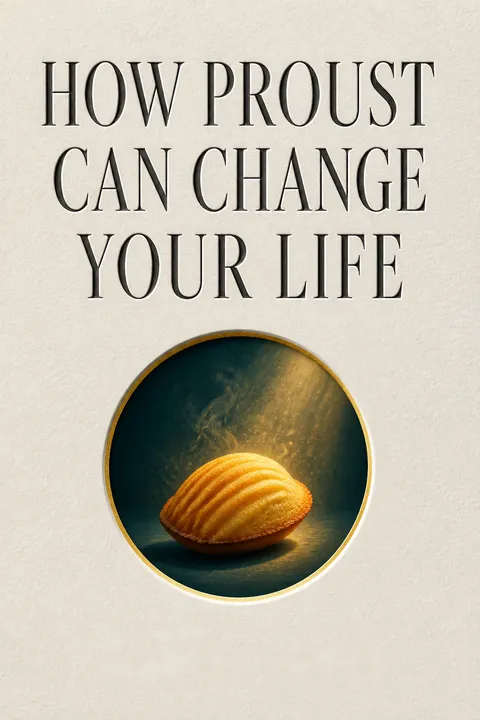
Memory needs texture. In Proust's novel, tea and a madeleine unexpectedly bring the narrator back to childhood. This involuntary memory restores sensory detail that deliberate recollection had lost: the feel of a place, its smells, and the routines of visiting an aunt. The experience reveals that appreciation depends on vivid particulars, not just on knowing the facts of the past.
The argument connects art to attention training: a painting can teach viewers to notice features they had looked at without registering. This is one reason familiar scenes can feel newly rich after encountering an artist's way of seeing them. The madeleine adds a distinct point: memory is not a perfect archive, and sensory cues can revive associations that deliberate effort cannot summon. That vividness should not be confused with historical accuracy. A powerful recollection can feel true while remaining selective, so appreciation and verification are different tasks.
Judge people by their qualities, not by titles or cultural credentials.
Prestige is a crude shortcut. Proust's narrator idealizes the aristocratic Guermantes family, imagining refinement and distinction behind its famous name. Meeting them reveals ordinary weaknesses and disappointments rather than a superior species of person. Proust later describes friendship with both a valet and a driver, and refuses to assume that a duke must possess more class or intelligence than either.
Credentials can mislead. Albertine talks perceptively about seabirds without knowing that Vermeer is a painter, not a group of Dutch people. Her gap in art history does not cancel her sensitivity to the scene. Proust challenges snobbery, whether it worships social rank, formal education, or famous works of art. The relevant question is what someone can notice and understand, not which category makes that person seem impressive.
Proust exposes a recurring problem in social judgment: visible markers, such as titles and credentials, are easy to measure, while qualities such as discernment and kindness are harder to assess. Sociology's idea of cultural capital helps explain why specialized knowledge can function as a status signal as well as a genuine skill. The caution cuts both ways. Formal education is not a complete measure of intelligence, but rejecting credentials wholesale can dismiss real expertise. The better approach is to treat status as limited evidence, then look for the underlying ability it is supposed to represent.
Use absence to renew attention, not jealousy to control a lover.
Familiarity can dim desire. Proust compares the effect of constant presence to the biblical Noah seeing the world anew after being confined in the Ark. Distance can make familiar surroundings noticeable again. In a relationship, habit may create the illusion of knowing a partner completely, while the person's inner life remains partly unknown.
Delay can deepen appreciation. Albertine, who cannot afford many clothes, spends time imagining and studying the garments she wants. A wealthier character acquires clothes quickly but has less opportunity to dwell on them. Proust similarly observes that a lover's unavailability can revive desire. Yet his characters often answer jealousy by seeking control, which brings only temporary relief. The deeper lesson is to renew attention to another person, not manufacture insecurity.
This is a perceptive account of hedonic adaptation: repeated exposure often makes pleasures less noticeable, even when the underlying relationship remains valuable. Brief separations, independent interests, and deliberate curiosity can interrupt routine without turning intimacy into a contest. Proust's emphasis on resistance, however, risks making scarcity seem like the engine of love. Strategic withdrawal can manipulate rather than deepen a bond. Absence is useful when it restores perspective; it is corrosive when used to provoke anxiety or secure control.
Give friendship warmth, and give difficult truths a better medium.
Conversation has limits. Proust was generous with friends, asked about their interests, and worked to make guests feel welcome. Yet he doubted that ordinary conversation could carry the most sustained or complex thoughts. His brief meeting with James Joyce produced little real exchange, despite both men's literary stature. Speech happens in real time, leaves little room for revision, and often requires politeness.
Writing can hold what friendship cannot. Proust kept an unsent critical letter to Fernand Gregh rather than delivering every harsh judgment face to face. De Botton presents the novel as a place where uncomfortable observations could be examined without making every friendship bear their full force. The distinction is not a license to deceive. It is a reminder that affection, candid analysis, and conversation serve different purposes.
Proust's separation of warmth from unfiltered judgment resembles a useful principle in conflict resolution: honesty works best when its purpose, timing, and audience are considered. Private writing can help sort irritation from a real grievance before a conversation begins. Yet silence can also protect a relationship at the cost of trust, especially when a problem needs repair. The goal is not to choose politeness over truth indefinitely. It is to avoid treating every accurate observation as something the other person must hear immediately, in its rawest form.
Let books awaken your judgment, then close them and continue thinking.
Reading opens a door. Proust's encounter with John Ruskin made the visible world newly valuable to him and led him to study and translate Ruskin's work. But admiration did not make Ruskin an authority on everything. After years of scholarship, Proust recognized the limits and errors in the writer he had once revered.
A book is a beginning. Proust argued that reading can prompt readers to recognize their own thoughts, but cannot do the thinking for them. Virginia Woolf's early awe of Proust made her fear that nothing remained worth writing; she eventually returned to her own work. For Proust, reverence becomes a mistake when a writer's conclusions replace a reader's independent inquiry. The best reading changes what readers can see, then lets them carry that attention into life.
The section offers a demanding model of education: learn deeply from another mind, then test its claims against experience and independent thought. This resembles intellectual apprenticeship, where imitation develops judgment only if it eventually gives way to discrimination. Woolf's response also shows why artistic greatness need not make other work redundant; one creator's achievement can enlarge the field rather than close it. The danger runs in both directions. Excessive reverence suppresses judgment, while reflexive dismissal prevents genuine learning. A good reader practices gratitude without surrendering independence.
Analysis
How Proust Can Change Your Life is a literary self-help book built from biography, scenes in In Search of Lost Time, and comic reversals of ordinary advice. Its central claim is not that Proust supplies a tidy program for success. Rather, art can retrain attention, and attention can alter the felt quality of a life that has not materially changed. The sequence is subtle: mortality makes postponement visible; fiction gives private feelings names; careful description resists simplification; and art reveals value in scenes habit has made invisible.
The book's strongest contribution is its account of reading as both intimate and limited. A reader recognizes personal experience in a character, but the work does not own that experience or complete its interpretation. This makes reading a form of self-inquiry instead of passive consumption. The same logic governs the book's treatment of memory and beauty: perception is not merely receiving facts, but noticing and organizing details that were already present.
Its most productive tension concerns suffering. Proust's attention to pain explains how distress can motivate inquiry, and the book explicitly distinguishes reflective suffering from blame or self-deception. Still, the idea can romanticize the distressed artist if detached from that distinction. Pain can deepen knowledge, but it can also narrow attention, impair judgment, or overwhelm a person's capacity to reflect. Proust's own illness makes the point vivid, not universally prescriptive.
A second tension is the promise that looking more carefully can make ordinary life more beautiful. This is an ethical corrective to status-driven dissatisfaction, not a claim that aesthetic attention erases poverty, illness, or social exclusion. The book is most convincing when it asks readers to revise inattentive judgments, not when its aesthetic optimism risks sounding like compensation for material hardship.
Its form reinforces its thesis. De Botton moves between a newspaper anecdote, a novel, a letter, a painting, and a dinner party, asking readers to slow down and find the underlying human pattern. The resulting lesson is less about adopting Proust's habits than about borrowing his patience, then applying it independently to a world his books cannot exhaust.
Review Summary
How Proust Can Change Your Life receives mixed reviews. Many praise de Botton's witty and accessible approach to Proust's ideas, finding it insightful and enjoyable. Some appreciate it as an introduction to Proust's work, while others criticize its superficiality and self-help format. The book explores Proust's life and writings, offering lessons on topics like love, friendship, and suffering. Despite its title, some readers note it doesn't dramatically change lives but provides interesting perspectives on Proust's thoughts and their relevance to modern life.
People Also Read

Glossary
Marquis de Lau phenomenon (MLP)
Recognizing familiar people in artDe Botton's name for recognizing people and emotional patterns from one's own life in works of art. Proust's identification of a Renaissance portrait with a Parisian acquaintance illustrates the idea. Such recognition can make unfamiliar eras feel human, ease loneliness, and help readers identify feelings they had not previously described.
Voluntary memory
Deliberate recollectionMemory summoned through deliberate effort, such as trying to recall a childhood place or event. In Proust's account, this kind of remembering can preserve basic facts while losing the sensory qualities that made an experience vivid. It contrasts with involuntary memory, in which an unexpected sensation revives a more detailed past.
Involuntary memory
Sensory-triggered recollectionA memory of the past that returns unexpectedly through a sensation, such as a taste, smell, or touch. In Proust's madeleine episode, cake dipped in tea revives the narrator's childhood in Combray, including details that deliberate recollection had not recovered. The experience brings renewed appreciation as well as remembrance.
Artistic idolatry
Revering art's objects, not visionProust's term for admiring the subjects associated with a celebrated artist while missing the artist's way of seeing. A person may prize a dress because Balzac described something similar, or seek out a town because a novelist lived there, without learning to notice beauty independently. The error is venerating the object instead of adopting the attention that made it meaningful.
to proustify
Overdo social praiseA verb Proust's friends used for his elaborate, unusually conscious displays of geniality and politeness. He sent extravagant compliments, flowers, and gifts to win affection, sometimes praising work more generously than his private judgment warranted. The term captures his effort to protect friendship and secure warmth, while keeping frank criticism for private writing.
FAQ
What's "How Proust Can Change Your Life" about?
- Exploration of Proust's Ideas: The book by Alain de Botton explores how the ideas and life of Marcel Proust can offer insights into improving our own lives.
- Combination of Biography and Philosophy: It combines elements of biography, philosophy, and self-help, using Proust's life and work as a lens to examine everyday issues.
- Literary Criticism with a Twist: The book is a unique form of literary criticism that presents Proust's thoughts in a way that is accessible and applicable to modern readers.
- Practical Advice: It offers practical advice on how to appreciate life, love, and art more deeply, inspired by Proust's reflections.
Why should I read "How Proust Can Change Your Life"?
- Gain New Perspectives: The book provides new perspectives on how to approach life's challenges and appreciate its beauty, drawing from Proust's wisdom.
- Blend of Humor and Insight: Alain de Botton uses humor and wit to make complex ideas from Proust's work relatable and engaging.
- Self-Improvement: It offers practical self-help advice, encouraging readers to reflect on their own lives and make positive changes.
- Literary Appreciation: For those interested in literature, it provides a deeper understanding of Proust's work and its relevance today.
What are the key takeaways of "How Proust Can Change Your Life"?
- Appreciation of the Ordinary: Proust teaches us to find beauty in everyday life and to appreciate the small details that often go unnoticed.
- Value of Suffering: The book suggests that suffering can lead to personal growth and deeper understanding, echoing Proust's own experiences.
- Importance of Art and Literature: It emphasizes the role of art and literature in enhancing our perception and understanding of the world.
- Complexity of Human Relationships: Proust's insights into love and friendship highlight the complexities and challenges of human relationships.
How does Alain de Botton use Proust's life to offer advice?
- Biographical Insights: De Botton uses anecdotes from Proust's life to illustrate his philosophical ideas and how they can be applied to modern life.
- Practical Lessons: He distills Proust's complex thoughts into practical lessons on topics like love, friendship, and happiness.
- Relatable Examples: By relating Proust's experiences to common human dilemmas, de Botton makes his advice accessible and relevant.
- Humorous Approach: The author uses humor to engage readers and make Proust's sometimes dense ideas more digestible.
What are some of the best quotes from "How Proust Can Change Your Life" and what do they mean?
- "We suffer, therefore we think": This quote suggests that suffering prompts introspection and can lead to personal growth and understanding.
- "The real voyage of discovery consists not in seeking new landscapes, but in having new eyes": It emphasizes the importance of changing our perspective to appreciate the world around us.
- "Happiness is good for the body, but it is grief which develops the strengths of the mind": This highlights the idea that challenges and hardships can strengthen our mental faculties.
- "A picture’s beauty does not depend on the things portrayed in it": This suggests that beauty is subjective and lies in the perception of the observer.
How does "How Proust Can Change Your Life" redefine the concept of happiness?
- Beyond Materialism: The book suggests that true happiness comes from appreciating the ordinary and finding beauty in everyday life, rather than material possessions.
- Embrace of Suffering: It posits that happiness is not the absence of suffering but the ability to find meaning and growth through it.
- Mindful Living: Proust's philosophy encourages living mindfully, paying attention to the present moment, and savoring life's simple pleasures.
- Redefining Success: Success is redefined as personal fulfillment and understanding, rather than societal measures of achievement.
What does Alain de Botton say about the role of art and literature in our lives?
- Enhancing Perception: Art and literature are seen as tools that enhance our perception and help us see the world in new ways.
- Emotional Resonance: They provide emotional resonance and can articulate feelings and experiences that we might struggle to express ourselves.
- Connection to Humanity: Engaging with art and literature connects us to the broader human experience and offers insights into different perspectives.
- Catalysts for Reflection: They serve as catalysts for reflection and self-discovery, encouraging us to explore our own thoughts and emotions.
How does "How Proust Can Change Your Life" address the theme of love?
- Complexity of Love: The book explores the complexity of love, highlighting its potential for both joy and suffering.
- Jealousy and Appreciation: It suggests that jealousy can sometimes reignite appreciation in relationships, though it must be managed carefully.
- Love as a Learning Experience: Love is portrayed as a learning experience that can teach us about ourselves and our desires.
- Beyond Physical Attraction: The book emphasizes the importance of emotional and intellectual connection over mere physical attraction.
What insights does "How Proust Can Change Your Life" offer on friendship?
- Superficiality of Social Interactions: Proust's view on friendship highlights the superficiality often present in social interactions.
- Value of Solitude: It suggests that solitude can be more fulfilling than shallow friendships, allowing for deeper self-reflection.
- Honesty vs. Politeness: The book discusses the tension between honesty and politeness in friendships and the importance of balancing the two.
- Friendship as a Reflection: Friendships are seen as a reflection of our own values and desires, offering insights into our character.
How does "How Proust Can Change Your Life" suggest we deal with suffering?
- Transformative Power of Suffering: Suffering is seen as a catalyst for personal growth and deeper understanding of oneself and the world.
- Acceptance and Reflection: The book encourages acceptance of suffering and reflection on its causes and implications.
- Learning from Pain: It suggests that we can learn valuable lessons from pain, which can lead to greater resilience and wisdom.
- Avoiding Destructive Responses: The book warns against destructive responses to suffering, advocating for constructive and thoughtful approaches instead.
What does "How Proust Can Change Your Life" say about the importance of memory?
- Involuntary Memory: The book highlights the power of involuntary memory, as exemplified by the famous madeleine scene, in evoking vivid recollections.
- Memory and Identity: Memory is seen as integral to our identity, shaping our understanding of ourselves and our past.
- Selective Memory: It discusses the selective nature of memory and how it can distort our perception of past events.
- Memory as a Source of Joy: The book suggests that revisiting cherished memories can be a source of joy and comfort.
How does "How Proust Can Change Your Life" encourage us to appreciate the ordinary?
- Finding Beauty in Details: The book encourages finding beauty in the small details of everyday life, which are often overlooked.
- Challenging Conventional Notions: It challenges conventional notions of beauty and success, advocating for a more personal and nuanced appreciation.
- Mindful Observation: Proust's philosophy promotes mindful observation and a deeper engagement with the present moment.
- Reevaluation of Priorities: The book encourages a reevaluation of priorities, focusing on what truly brings fulfillment and joy.
About the Author
Other books by Alain de Botton






Download PDF
Download EPUB
.epub digital book format is ideal for reading ebooks on phones, tablets, and e-readers.








