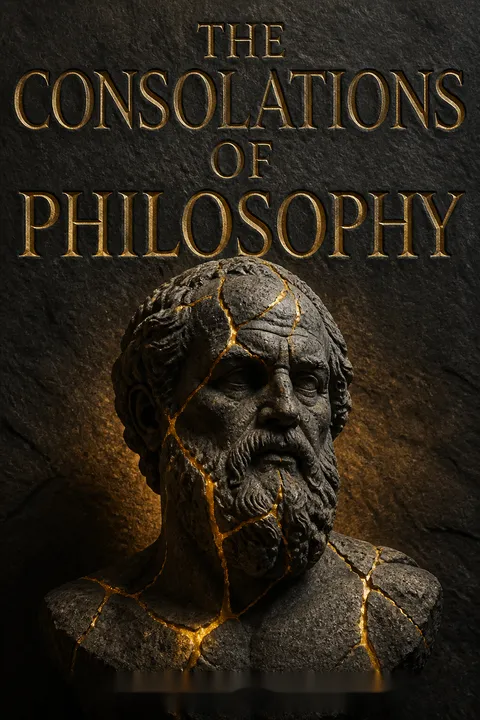


Key Takeaways
Treat philosophy as mental medicine, matching each grief to a different thinker.
A practical tradition. The book presents philosophy not as a museum of difficult ideas, but as a way to understand and ease particular kinds of distress. Socrates helps with disapproval, Epicurus with anxious wanting, Seneca with frustration, Montaigne with inadequacy, Schopenhauer with heartbreak, and Nietzsche with the pain involved in striving. Each thinker offers a different diagnosis, not a single cure for every problem.
Diagnosis before remedy. The common thread is that distress can be worsened by mistaken assumptions: that popularity proves truth, expensive things guarantee happiness, or pain means a worthwhile goal is impossible. Examining those assumptions may not remove hardship, but can make it more intelligible and less isolating.
The book’s strongest organizing idea resembles a useful clinical habit: identify the kind of suffering before choosing an intervention. A fear of judgment needs a different response from grief, material insecurity, or shame about the body. That specificity keeps philosophical advice from becoming a stack of attractive slogans. The medical analogy also has limits. Reflection can clarify meaning and challenge assumptions, but severe depression, trauma, or disabling anxiety may require professional treatment and social support, not a better argument alone.
Judge criticism by its reasoning, not by the size of its audience.
Socrates under judgment. In Athens, Socrates was accused of corrupting young people and disrespecting the city’s gods. At his trial, 280 jurors voted to convict him and 220 voted against conviction. The majority’s verdict carried the power to condemn him, but its numerical weight could not, by itself, show that its reasoning was sound.
Separate force from truth. The book’s point is not that critics are always wrong or that defiance proves wisdom. Socrates asks readers to inspect how a judgment was reached. A crowd may be informed, but a crowd can also share prejudice, fear, or a convenient story. The useful question is not simply how many people disapprove, but whether their reasons withstand examination.
This distinction matters because social agreement and factual accuracy are different things. Classic conformity experiments, including Solomon Asch’s studies, show that people may echo a group’s judgment even when their own perception points elsewhere. Yet expertise and collective judgment can also correct individual blind spots. Socrates’ lesson is therefore not to dismiss the public, but to evaluate the evidence, incentives, and competence behind its verdict. Popularity is neither proof nor disproof.
Stress-test confident beliefs with counterexamples before building a life around them.
Question the definition. Socrates tests common beliefs by asking whether they survive difficult cases. General Laches initially defines courage as holding one’s position in battle. Socrates points to a battle in which Greek soldiers retreated before turning and winning, exposing a case where retreat need not be cowardice. The definition needs revision.
Keep refining. In another conversation, Meno claims that virtue requires wealth. Socrates shows that money acquired unjustly cannot make someone virtuous, while poverty alone does not establish moral failure. The Socratic method is this practice of examining a confident claim, testing it against counterexamples, and improving it when it proves too broad. A belief supported only by habit or authority is less dependable than one whose alternatives have been considered.
Counterexamples are powerful because a single valid case can expose a universal claim’s weakness. This resembles falsification in science, where a theory must risk being contradicted by evidence. Ethical concepts, however, are often less precise than scientific hypotheses. Disagreement may arise from different meanings of courage or virtue, not only faulty logic. The method works best when the questioner defines terms fairly, tests the strongest version of a claim, and treats revision as progress rather than defeat.
Treat expensive wants as clues to needs money may not satisfy.
Epicurus questions luxury. The philosopher associated pleasure with happiness, but did not mean that a grand house, rare food, or lavish entertaining was essential. He separates desires into those that are necessary, those that are natural but optional, and those that are neither natural nor necessary. Food, shelter, and clothing meet basic needs; a costly version may add variety without removing a deeper distress.
Look beneath the purchase. The book suggests that a luxury can stand in for something less saleable: a vehicle may symbolize freedom, a drink may promise companionship, and a beautiful room may seem to offer calm. Epicurean thinker Diogenes of Oinoanda even paid for public inscriptions warning shoppers that more possessions would not necessarily bring peace.
This is a sharp way to read consumer desire: ask what emotional problem the object appears to solve. Marketing often attaches products to belonging, status, or independence, even when the product cannot reliably deliver those experiences. Still, money is not irrelevant. It can reduce genuine insecurity and expand practical choices, especially for people who lack necessities. Epicurus is most persuasive as a guide to distinguishing sufficiency from status consumption, not as evidence that financial conditions barely matter.
Build happiness around friendship, freedom, and a mind at ease.
The Garden’s priorities. Epicurus and his companions created a community outside Athens’s commercial and political scramble. They shared meals and conversation, grew vegetables, and accepted a simpler life to avoid dependence on employers they disliked. Epicurus treated friendship as a central source of security and pleasure, not a decorative extra.
Make room to think. The community also examined anxieties about death, illness, poverty, and the supernatural. Epicurus argued that reflective thought could prevent vague fears from expanding unchecked. His account of happiness did not require a mansion or elaborate dinners, but it did require enough material support to avoid bodily deprivation. The combination is practical: maintain relationships, protect some independence, and investigate the fears that disturb the mind.
Epicurus’s community makes happiness look less like private consumption and more like a social arrangement. Contemporary research on well-being likewise gives relationships substantial importance, while autonomy is a recurring concern in theories of human motivation. The Garden also hints that values are easier to sustain when shared with others. But opting out of ordinary work and politics is not equally available to everyone. The ideal is better treated as a question about what kinds of dependence and companionship a life can support.
Expect ordinary disorder, so small frustrations stop feeling like cosmic insults.
Anger carries assumptions. Seneca sees frustration as the collision between a wish and a reality that does not cooperate. Anger often grows when someone assumes that life should have followed a smoother script. The wealthy Roman Vedius Pollio, for example, was so enraged when a slave broke glassware that he ordered the man thrown into a pool of lampreys. Seneca treats the reaction as a disastrous error of proportion, not an unavoidable reflex.
Prepare for uncertainty. Seneca’s practice of praemeditatio means thinking in advance about misfortunes that could occur. The point is not to predict disaster, but to loosen the assumption that safety, status, or plans are guaranteed. When a feared outcome is considered calmly, it may prove difficult without being unbearable.
Seneca’s advance rehearsal of setbacks resembles a modern premortem, in which people imagine how a plan could fail before acting. This can make risks more manageable and reduce the shock of predictable problems. But rehearsal can become rumination for people prone to anxiety, especially if every possibility is treated as imminent. The useful version is bounded and practical: consider plausible setbacks, identify responses, then return attention to present responsibilities.
Separate what reason can change from what reality requires you to bear.
The leash has limits. Stoic thinkers compare people to a dog attached to a moving cart. The animal can walk willingly with the cart or be dragged by it, but cannot command its direction. The image distinguishes events beyond control from the choices still available in response. It does not mean every obstacle must be accepted as inevitable.
Resistance can be useful. Roman engineers refused to accept inadequate water supplies and built aqueducts to bring water to Nîmes. Seneca’s distinction is between that kind of solvable obstacle and a reality that cannot be changed. His own political danger under Nero eventually left him little power over events, so he turned to study and prepared himself to endure what he could not prevent.
This is an early account of psychological flexibility: act where action can help, and avoid adding needless suffering where it cannot. The crucial work is classification. Calling an injustice unavoidable can excuse passivity, while denying genuine limits can exhaust a person in futile resistance. The aqueduct and the cart belong together because they prevent either extreme. A wise response asks what leverage exists, whose interests define the limits, and what remains possible if the desired outcome is unavailable.
Stop demanding a body and mind that never embarrass you.
Montaigne restores the body. He argues that reason does not give people complete command over digestion, desire, pain, or sexual response. His account includes a friend whose fear of losing an erection made the problem recur. The friend found relief by speaking openly about the possibility, rather than treating it as proof of a permanent defect or a failure of manhood.
Honesty reduces shame. Montaigne writes about bodily functions and sexual awkwardness that respectable portraits tend to omit. By putting ordinary vulnerability into serious writing, he challenges the idea that dignity requires pretending to be above physical life. His broader claim is that accepting the body’s limits is healthier than splitting the self into a supposedly noble mind and a humiliating physical shell.
Montaigne’s frankness anticipates a useful principle in contemporary care: shame often grows when common experiences are treated as unspeakable. In sexual performance anxiety, fear of failure can itself intensify difficulty, so reducing the pressure to perform may help. Normalization should not become dismissal, however. Persistent sexual changes can have medical or psychological causes worth addressing. Acceptance means refusing humiliation, not refusing help or pretending every bodily problem is harmless.
Let unfamiliar customs expose how provincial your idea of normal is.
Normal varies by place. During a long journey through Europe, Montaigne noticed that French and German travelers disagreed about how a room should be heated. Each group treated its familiar method as obviously superior, though both open fires and German iron stoves had advantages. What felt natural at home could look strange elsewhere without being irrational.
Difference is not inferiority. Montaigne also read accounts of Indigenous peoples in the Americas and condemned European judgments that treated unfamiliar customs as proof of lesser humanity. He opposed the brutality of conquest, while warning that customs still need moral evaluation rather than automatic approval. Travel, reading, and friendship can reveal how much of a person’s sense of normality comes from local convention.
Montaigne’s comparison offers a practical defense against ethnocentrism: familiarity is not a moral argument. The warning remains valuable in a world where dominant groups often mistake their habits for universal standards. Yet cultural humility is not the same as moral relativism. Practices can be judged by consistent principles, including harm and coercion, without treating unfamiliarity itself as evidence against them. The book’s historical accounts also reflect the sources available to Montaigne, so they are best read as part of his argument, not as a complete portrait of Indigenous life.
Treat heartbreak as human pain, not proof of personal defect.
Schopenhauer explains intensity. He argues that romantic love can overwhelm reason because it serves the continuation of human life. In the book’s modern story, a man becomes captivated by a woman on a train, imagines a shared future, and is devastated when she does not return his interest. The short encounter does not make his grief ridiculous; the force of desire helps explain why rejection can hurt so much.
Art makes pain recognizable. Schopenhauer points to Goethe’s novel about unreturned love. Readers recognized their own experience in the story, despite its different setting and characters. Art can turn private confusion into a pattern that others have also lived through, making suffering feel less like an individual curse. The book offers this as consolation, not as proof that every romance follows one biological script.
The chapter’s evolutionary account is vivid, but it narrows love too aggressively when it treats reproduction as its hidden purpose. Human attachment also involves history, culture, companionship, identity, and chosen forms of family. Its more durable insight is that rejection is not a reliable verdict on a person’s general worth. Stories can help by showing emotional patterns across lives, though no fictional account should dictate how an individual relationship must be understood.
Measure intelligence by how well it helps you live, not what it stores.
Learning is not wisdom. Montaigne questions an education that prizes Latin, logic, and historical facts without asking whether students become better at living. He imagines examinations about jealousy, death, domestic conflict, and self-respect. For him, knowledge matters most when it improves judgment and conduct in ordinary life.
Experience can teach. Montaigne’s Essays draw philosophy from commonplace details, including his habits, discomforts, and preferences. He does not reject scholarship, but resists treating prestigious books as the only source of insight. A person can learn from examining a recent fit of anger or a difficult friendship. The goal is not to sound learned, but to understand experience well enough to respond more wisely.
Montaigne anticipates the distinction between declarative knowledge, knowing facts, and practical wisdom, knowing how to act in context. Education needs both: without knowledge, judgment can become parochial; without reflection, knowledge can remain inert. His focus on ordinary experience is democratic, since it gives people without elite credentials a legitimate route to insight. It also requires discipline. Personal experience becomes useful evidence only when examined honestly rather than treated as automatically universal.
Cultivate difficulty into capacity instead of treating pain as proof of failure.
Nietzsche rejects comfort as the only goal. He breaks with Schopenhauer’s emphasis on avoiding pain, arguing that meaningful achievement often involves strain, disappointment, and repeated effort. Raphael, still an inexperienced artist, studied the work of Leonardo and Michelangelo in Florence rather than allowing envy to convince him he lacked talent. His later work shows what patient learning can build.
Hardship needs cultivation. Nietzsche compares difficulty to harsh natural conditions that can contribute to later growth. The point is not that suffering automatically improves anyone. Pain may produce despair, bitterness, or insight, depending on how it is met and what support is available. His challenge is to avoid discarding a valued ambition merely because its early stages are uncomfortable.
The distinction between pain and growth matters. Research on post-traumatic growth finds that some people report positive changes after adversity, but growth is neither guaranteed nor a reason to romanticize trauma. Nietzsche is most useful when difficulty is tied to a chosen project and can be worked with, as in Raphael’s study. His argument is less convincing when applied to suffering imposed by illness, violence, or deprivation, where endurance alone cannot substitute for protection and care.
Analysis
The book’s structure is therapeutic rather than systematic: each philosopher becomes a specialist for a recurring human wound. Socrates challenges the belief that social approval certifies truth. Epicurus asks whether possessions answer the need that produced the desire. Seneca examines the expectations that turn inconvenience into rage. Montaigne restores fallible bodies, unfamiliar cultures, and ordinary experience to philosophical attention. Schopenhauer makes heartbreak legible through a bleak theory of desire and art. Nietzsche argues that some worthwhile projects demand difficulty rather than the immediate removal of pain.
Together, these accounts create a useful sequence: name the distress, inspect the assumptions beneath it, then choose a response proportionate to what can change. That sequence resembles aspects of cognitive therapy, which tests interpretations, and acceptance-based approaches, which distinguish workable action from futile control. The book’s value lies in making abstract traditions usable through vivid lives and scenes, from Socrates’ trial to Epicurus’s Garden and Nietzsche’s mountain climbs.
Its limitations are also instructive. Ancient philosophers speak from societies with exclusions and assumptions that cannot simply be imported into modern life. Epicurus’s independence was easier to imagine from a privileged position; Stoic endurance can be misused to excuse preventable injustice; Schopenhauer’s reproductive account reduces a complex human bond. Nietzsche’s celebration of hardship risks confusing productive challenge with avoidable suffering. De Botton’s own method is strongest when it presents these ideas as lenses rather than laws. Philosophy can improve interpretation, but material conditions, relationships, and professional care also shape what people can endure. The most trustworthy consolation is therefore not a promise that pain has a hidden benefit. It is the possibility of seeing suffering more clearly, answering it with judgment, and refusing to let other people’s certainty become the final authority on one’s life.
Review Summary
The Consolations of Philosophy receives mixed reviews. Many praise its accessible approach to philosophy and its practical life advice. Readers appreciate de Botton's ability to make complex ideas relatable and find comfort in the wisdom of famous philosophers. Some criticize the book for oversimplifying philosophical concepts or being too self-help oriented. Overall, most readers find it an engaging introduction to philosophy's relevance in everyday life, though some desire more depth and rigor in its treatment of the subject matter.
People Also Read





Glossary
Socratic method
testing beliefs through questionsA way of examining a belief by asking for its meaning, testing it against counterexamples, and revising it when it proves too broad. In the book, Socrates uses this approach to challenge claims about courage and virtue. Its aim is not merely to defend an opinion, but to understand why it holds up and why plausible alternatives fail.
natural and necessary
essential desiresEpicurus’s category for desires that meet basic needs and prevent bodily distress. Food, shelter, clothing, and friendship belong to the necessities emphasized in the book. Meeting these needs supports happiness, while increasingly luxurious versions of food or possessions are not automatically more satisfying. The category helps distinguish a real requirement from an attractive but optional preference.
idle opinions
distorting social beliefsEpicurus’s term for widely repeated views that misrepresent what people need for happiness. The book applies it especially to social and commercial messages that elevate wealth and luxury while neglecting friendship, freedom, and reflection. Such opinions can make a purchasable object seem like the answer to a psychological need it cannot actually meet.
praemeditatio
advance rehearsal of misfortuneA Stoic practice described by Seneca: calmly consider in advance the losses, disruptions, and hardships that could occur. The purpose is not to predict a particular disaster or live in fear, but to reduce the shock of uncertainty and examine whether a feared outcome would truly be unbearable. Seneca recommends making room for this reflection as part of daily preparation.
productum
preferred external advantageA Stoic classification for an external condition that is generally preferable but not essential to virtue or inner steadiness. Seneca can prefer wealth, health, or comfort without treating them as requirements for a good life. The test is whether a person can lose such advantages without believing that their character or entire capacity to live has been destroyed.
will-to-life
drive to survive and reproduceSchopenhauer’s term for an underlying force that pushes living beings to continue existing and reproduce. He argues that this drive can shape desire while remaining partly hidden from conscious reasoning, especially in romantic attraction. The book uses the theory to explain love’s intensity, while also presenting it as a bleak and contestable account rather than an established explanation of every relationship.
Übermensch
ideal of expanded human vitalityNietzsche’s contested term for an ideal of human possibility, which the book distinguishes from later fascist associations and comic-book interpretations. De Botton links the idea to people who engage actively with life, develop artistic or practical capacities, and show independence and strength of character. The term does not mean that suffering automatically ennobles a person or that one fixed model of success fits everyone.
FAQ
What's "The Consolations of Philosophy" about?
- Philosophical Guidance: "The Consolations of Philosophy" by Alain de Botton explores how philosophy can provide comfort and guidance in dealing with life's challenges.
- Six Philosophers: The book examines the ideas of six philosophers: Socrates, Epicurus, Seneca, Montaigne, Schopenhauer, and Nietzsche, each offering insights into different aspects of human suffering.
- Practical Application: De Botton illustrates how these philosophical ideas can be applied to modern life, addressing issues like unpopularity, financial struggles, frustration, inadequacy, heartbreak, and difficulties.
- Philosophy as Therapy: The book positions philosophy as a form of therapy, offering practical advice and wisdom to help readers navigate personal and existential challenges.
Why should I read "The Consolations of Philosophy"?
- Accessible Philosophy: Alain de Botton makes complex philosophical ideas accessible and relevant to everyday life, making it a great introduction to philosophy.
- Practical Insights: The book provides practical insights and advice on dealing with common human problems, making it useful for personal growth and self-reflection.
- Engaging Writing: De Botton's engaging writing style combines humor, anecdotes, and historical context, making the book both informative and entertaining.
- Timeless Wisdom: By exploring the thoughts of renowned philosophers, the book offers timeless wisdom that can help readers find comfort and meaning in their lives.
What are the key takeaways of "The Consolations of Philosophy"?
- Socrates on Unpopularity: Socrates teaches the importance of staying true to one's beliefs despite societal disapproval, emphasizing the value of independent thinking.
- Epicurus on Money: Epicurus suggests that true happiness comes from simple pleasures, friendship, and freedom, rather than wealth and luxury.
- Seneca on Frustration: Seneca advises accepting the inevitability of frustration and using reason to manage emotions and expectations.
- Montaigne on Inadequacy: Montaigne encourages embracing human imperfection and finding contentment in the ordinary aspects of life.
How does Alain de Botton use Socrates' philosophy in the book?
- Consolation for Unpopularity: Socrates' philosophy is used to address the fear of unpopularity, teaching the importance of standing by one's convictions.
- Independent Thinking: Socrates exemplifies the value of questioning societal norms and thinking independently, even in the face of opposition.
- Rational Confidence: The book highlights Socrates' rational confidence in his beliefs, encouraging readers to develop their own reasoned convictions.
- Intelligent Skepticism: Socrates' life and death serve as an invitation to practice intelligent skepticism and seek wisdom through philosophy.
What does Epicurus teach about money in "The Consolations of Philosophy"?
- Simple Pleasures: Epicurus teaches that happiness is derived from simple pleasures, such as friendship, freedom, and thought, rather than material wealth.
- Natural Desires: He distinguishes between natural and necessary desires and those that are neither, suggesting that fulfilling basic needs is sufficient for happiness.
- Critique of Luxury: Epicurus critiques the pursuit of luxury, arguing that it does not lead to greater happiness and can distract from more meaningful pursuits.
- Advertising and Desires: The book discusses how modern advertising skews our perception of needs, promoting unnecessary desires that Epicurus would advise against.
How does Seneca's philosophy address frustration?
- Acceptance of Reality: Seneca advises accepting the inevitability of frustration and understanding that it stems from unrealistic expectations.
- Preparation for Adversity: He emphasizes the importance of preparing for adversity and recognizing that suffering is a part of life.
- Rational Management: Seneca encourages using reason to manage emotions and adjust expectations, reducing the impact of frustration.
- Philosophy as a Tool: The book presents Seneca's philosophy as a tool for enduring life's challenges with dignity and equanimity.
What insights does Montaigne offer on inadequacy?
- Embrace Imperfection: Montaigne encourages embracing human imperfection and accepting the limitations of reason and intellect.
- Ordinary Life: He finds value in the ordinary aspects of life, suggesting that wisdom lies in accepting and understanding our everyday experiences.
- Critique of Reason: Montaigne critiques the overemphasis on reason, highlighting the importance of acknowledging our emotional and physical selves.
- Self-Acceptance: The book uses Montaigne's philosophy to promote self-acceptance and the idea that we are adequate in our own unique ways.
How does Schopenhauer's philosophy provide consolation for heartbreak?
- Inevitability of Suffering: Schopenhauer acknowledges the inevitability of suffering in love, viewing it as a natural part of the human condition.
- Will-to-Life: He introduces the concept of the will-to-life, which drives our desires and often leads to romantic suffering.
- Understanding Rejection: Schopenhauer's philosophy helps readers understand rejection as a biological imperative rather than a personal failure.
- Acceptance of Pain: The book encourages accepting the pain of heartbreak as a necessary experience, offering a philosophical perspective on love's challenges.
What role does Nietzsche's philosophy play in "The Consolations of Philosophy"?
- Embrace of Difficulty: Nietzsche's philosophy emphasizes the importance of embracing difficulties as a path to personal growth and fulfillment.
- Critique of Comfort: He critiques the pursuit of comfort and ease, advocating for a life of challenge and striving for greatness.
- Creative Suffering: Nietzsche views suffering as a catalyst for creativity and self-discovery, encouraging readers to find meaning in adversity.
- Philosophical Courage: The book uses Nietzsche's ideas to inspire philosophical courage and the pursuit of a life rich in experiences and challenges.
What are the best quotes from "The Consolations of Philosophy" and what do they mean?
- "We will cease to be so angry once we cease to be so hopeful." This quote from Seneca highlights the connection between expectations and frustration, suggesting that adjusting our hopes can reduce anger.
- "Nothing satisfies the man who is not satisfied with a little." Epicurus emphasizes the sufficiency of simple pleasures and the futility of excessive desires.
- "Upon the highest throne in the world, we are seated, still, upon our arses." Montaigne humorously reminds us of our shared humanity and the importance of humility.
- "The secret for harvesting from existence the greatest fruitfulness and the greatest enjoyment is – to live dangerously!" Nietzsche encourages embracing risk and challenge as a means to achieve fulfillment.
How does Alain de Botton make philosophy accessible in "The Consolations of Philosophy"?
- Engaging Writing Style: De Botton uses an engaging writing style, combining humor, anecdotes, and historical context to make philosophical ideas relatable.
- Practical Examples: The book provides practical examples of how philosophical concepts can be applied to everyday life, making them relevant to modern readers.
- Clear Explanations: Complex philosophical ideas are explained clearly and concisely, making them accessible to those new to philosophy.
- Human Stories: De Botton uses human stories and experiences to illustrate philosophical concepts, helping readers connect with the material on a personal level.
What is the structure of "The Consolations of Philosophy"?
- Six Chapters: The book is divided into six chapters, each focusing on a different philosopher and a specific human challenge.
- Philosopher Profiles: Each chapter provides a profile of the philosopher, their key ideas, and how these ideas can be applied to modern life.
- Thematic Approach: The book takes a thematic approach, addressing issues like unpopularity, money, frustration, inadequacy, heartbreak, and difficulties.
- Philosophical Lessons: Each chapter concludes with philosophical lessons and practical advice, offering readers tools for personal growth and self-reflection.
About the Author
Other books by Alain de Botton









Download PDF
Download EPUB
.epub digital book format is ideal for reading ebooks on phones, tablets, and e-readers.








