

Key Takeaways
Choose imperfect action before perfect conditions arrive.
Excellence is not perfectionism. Guise distinguishes striving to do good work from perfectionism, the belief that anything short of flawless is unacceptable. Imperfectionism is pursuing what matters without requiring a perfect result. It is not laziness or indifference; it gives action priority over flawless performance. The difference appears in small decisions. On a grocery trip, Guise was near his gym but lacked workout clothes and had a fractured finger. Instead of postponing exercise, he chose movements he could safely do under the circumstances.
Begin where you are. That makes imperfectionism less a slogan than a practical permission slip: adapt the task to the day instead of waiting for a better day. The point is not that every workaround is ideal, but that imperfect participation can still count as meaningful progress.
What's useful here is the move from self-evaluation to participation. It resembles behavioral activation, an approach that uses planned activity to interrupt withdrawal rather than waiting for motivation to improve first. The grocery-store workout also demonstrates flexible problem solving: the aim remains stable while the method changes. That flexibility matters because rigid plans are brittle under illness, fatigue, or competing demands. The limit is equally important: adapting a task should not mean ignoring injury or safety. Imperfect action is not reckless action. It is a way to preserve agency while making sensible adjustments.
See perfectionism as a shield against exposure, not a badge of excellence.
Protection can become paralysis. Guise argues that perfectionism often protects people from the symbolic meaning they attach to failure. A rejected proposal may feel not like one person's decision, but proof of being inadequate. Setting an impossible standard then makes inaction seem prudent: if the work cannot be perfect, there is a reason not to expose it. Some people become overdriven, never satisfied with their output; others become paralyzed and retreat into safe, passive activities. Both patterns preserve the self from judgment at the cost of experience.
The cost can be serious. The book cites a study of 450 older adults in which perfectionistic tendencies were associated with a 51 percent higher likelihood of death during six and a half years of follow-up. That finding is an association, not proof that perfectionism caused the deaths.
The shield metaphor makes avoidance intelligible: the behavior has a short-term payoff, namely relief from scrutiny, even as it narrows future choices. This is consistent with learning theory, where escaping a feared situation can reinforce avoidance because anxiety drops immediately. The distinction between striving and self-punishing standards also matters. High standards can guide craft when the target is clear; the more damaging pattern is tying personal worth to flawless performance. The mortality statistic signals a possible health concern, but an observational association cannot establish direction or rule out other causes.
Shrink the required win until partial progress counts.
Quantity hides perfectionism. Guise describes three forms of perfectionistic standards: context, or requiring ideal circumstances; quality, or demanding flawless work; and quantity, or deciding that anything below a chosen amount does not count. Quantity is easy to miss. A person who treats a 20-minute workout as the minimum may call a shorter session failure, even though it still helps.
Make starting nearly effortless. A mini habit is a daily behavior deliberately small enough to be manageable even on a bad day. Guise began with one push-up. Over time, starting became easier, and he moved on to regular gym sessions. His daily writing target was 50 words, though he often wrote more. The tiny target sets a floor, not a ceiling: doing more is welcome, but not required for the day to count.
This reframes consistency as a design problem rather than a test of character. A small minimum reduces the friction of starting and creates repeated contact with the activity, which can help behavior become more familiar. The crucial feature is that the minimum remains genuinely small; raise it too quickly and the old all-or-nothing test returns in disguise. Nor does a tiny action guarantee a dramatic result. Its value is that it keeps the behavior available on difficult days and creates room for larger effort without making larger effort mandatory.
Keep broad optimism, but stop demanding a good outcome from each event.
Separate life from the occasion. Guise distinguishes general expectations, a broad sense that life can go well, from specific expectations about how one meeting, interview, or conversation should unfold. His advice is to keep general confidence while loosening expectations for individual events. If every conversation must be smooth, ordinary pauses and awkward moments can feel like evidence of social failure. With looser expectations, an imperfect exchange is simply one event, not a verdict on a person's future.
Return to the next step. The book illustrates process-focused thinking through Navy SEAL Marcus Luttrell's account of surviving an ambush. Injured and separated from his team, Luttrell focused on immediate needs, such as finding water, rather than mentally carrying the whole ordeal at once. For everyday setbacks, the same principle is modest: identify the next useful action instead of letting current conditions dictate the entire outcome.
This is a useful balance between hope and nonattachment. Optimism can support persistence, while flexible event-level expectations make disappointment less likely to collapse into a global judgment of the self. The process focus also resembles attentional control: directing attention toward a concrete next action can reduce the mental load of rehearsing distant outcomes. Luttrell's extreme survival story is vivid, but it should not flatten the difference between combat and ordinary frustration. The transferable principle is narrower: people often function better when they make the next step clear, not when they demand certainty about the whole path.
Turn regret into a next move, not another trial of your past.
Rumination keeps reopening the case. Guise defines rumination as repetitive focus on problems or past events, often with self-criticism but without useful action. For what cannot be changed, he recommends acceptance: wishing harder cannot reverse a loss or undo an event. For a repairable problem, accept what happened and try again. He also suggests replacing the backward-looking phrase "should have" with "could have," which treats an alternative as a possibility rather than a conviction that the past must be condemned.
Sort chance from failure. A rejection or hiring decision depends partly on other people and circumstances, so one negative result is not a reliable measure of personal ability. A repeatedly ineffective method, by contrast, may call for a change in approach. Guise describes sending several guest posts to a publication without success, then studying its articles and revising his pitch. The next submission was accepted.
The distinction between acceptance and repair gives regret a practical destination: stop trying to edit what is fixed, and act where change remains possible. The chance-versus-failure lens also counters the tendency to draw sweeping conclusions from a tiny sample. Still, the categories are not always clean. Outcomes usually combine effort, skill, other people's choices, and circumstance. A useful response is to ask what evidence the result provides, rather than declaring either total innocence or total blame. Changing "should" to "could" can soften self-judgment while preserving the chance to learn.
Set a reachable benchmark before other people define your worth.
Confidence depends on comparison. Guise uses the word benchmark for the standard against which someone judges their ability. A person who measures social confidence against a movie hero may conclude they are hopeless; a smaller, controllable benchmark can make practice possible. Guise's first goal in approaching women was simply to say hello. The conversation did not need to be brilliant for that step to count. As he gained experience, he could raise the challenge.
Practice harmless independence. For people who constantly seek approval, Guise proposes rebellion practice: deliberately doing safe, legal things that challenge their usual dependence on other people's reactions. His examples include starting a conversation with a stranger or singing in public. The point is not to provoke for its own sake, but to learn that embarrassment is uncomfortable rather than catastrophic, and that one's choices need not be approved by everyone.
A reachable benchmark converts confidence from a vague feeling into a judgment about a specific action. That pairs naturally with graded exposure, where a person approaches a feared situation in manageable steps and learns from experience. Rebellion practice can also strengthen autonomy, the sense that behavior reflects one's own choices rather than constant social monitoring. Yet approval is not inherently unhealthy: relationships require responsiveness, and social norms can protect others. The valuable target is compulsive approval seeking, not empathy or accountability. Practice works best when the act is low-stakes, ethical, and chosen for personal freedom rather than attention.
Define success as showing up when performance is still uncertain.
Make the goal binary. The binary mindset means defining a task by whether the action happened, rather than grading its quality. A speech can be counted as a success if the speaker gets up and speaks, even if the delivery is rough. Guise uses the story of runner Heather Dorniden, who fell during a 600-meter race, got back up, and went on to win. The stumble mattered, but it did not decide the outcome; continuing to run mattered too.
Keep the target concrete. A binary goal could be starting a conversation, submitting a proposal, or completing a short practice session. This strips away many imagined ways to fail before beginning. It does not claim that every result is equally good. It separates the courage to act from the later task of improving performance, which requires feedback and practice.
Binary goals are powerful when perfectionistic self-monitoring turns one task into an impossible collection of quality checks. They simplify the entry point and make avoidance less attractive. The distinction between participation and performance also protects learning: novices need permission to produce work that is not yet polished. But binary completion should not erase standards where quality is consequential. A completed safety inspection that missed a hazard is not a success in every relevant sense. The approach is strongest as a starting rule, followed by honest review of what worked and what needs improvement.
Test your predictions with small experiments instead of endless deliberation.
Predictions are not evidence. Guise calls projection the act of imagining how an effort will feel or turn out before trying it. Such predictions can exaggerate difficulty, especially when a person is already resisting the task. He compares his expectation of exercise with the experience itself: once he started, the workout often felt easier and more rewarding than he had predicted. Writing down a prediction and comparing it with the result can expose where the forecast was wrong.
Choose, then implement. The book describes procrastination as getting stuck in deliberation instead of moving into action. For low-risk choices, Guise recommends deciding once a reasonable option is clear rather than repeatedly reopening the question. His two-minute rule, adapted from David Allen, is to do tasks that take two minutes or less instead of spending longer deciding whether to do them. If more information is needed, decide to seek it.
This is an informal form of behavioral experimentation: make a forecast, test it, and update beliefs with observed results. It is more informative than trying to argue oneself into confidence because experience can reveal effects that advance planning misses. Decision shortcuts are especially helpful for reversible, low-cost actions, where extended analysis often has little value. The boundary matters: decisions with irreversible consequences, substantial safety risks, or major financial stakes deserve careful deliberation. A useful decision skill is not always deciding faster, but matching the amount of analysis to the actual cost of being wrong.
Let rough repetitions teach what perfect planning cannot discover.
Quality grows through revision. Guise argues that quantity can be the route to quality when each attempt provides information for the next. A first draft, awkward conversation, or rejected pitch can reveal what planning alone cannot. The point is not to repeat the same mistake indefinitely; it is to make attempts, notice results, and adjust. Guise's blog began slowly, with 440 email subscribers after two years. He changed its focus and strategy rather than treating the early numbers as a final verdict, and later reported attracting more than 9,000 subscribers.
The route can change. A perfect plan assumes reliable information about an uncertain future. In practice, action generates new information, and adaptation uses it. A detour or a weak first attempt may still contribute skills and knowledge, even when it is not the route originally imagined.
The strongest version of this idea is iterative learning, not volume for its own sake. Repetition becomes useful when paired with feedback, reflection, and a willingness to change the method; otherwise, quantity can simply reproduce an ineffective pattern. This resembles deliberate practice, which organizes repeated attempts around specific weaknesses and corrective information. The blog example illustrates adaptation rather than a guaranteed formula for audience growth. Its broader lesson is that early performance is often a poor predictor of eventual fit, particularly when the person can revise both the work and the strategy.
Practice one or two changes at a time, without using guilt.
Make change small enough to sustain. Guise warns that perfectionists often try to fix every flaw at once, then feel defeated when they cannot maintain the effort. He recommends beginning with only a few mini habits, usually two or three, rather than taking on the book's full menu of strategies. A project-based mini habit plan lets someone rotate small practices as needs change, instead of treating every tactic as a permanent daily obligation.
Review without punishment. The book suggests reflecting briefly on one mindset or action each day and gives a six-week example: spend a week on general imperfectionism, then a week on each of five specific patterns. The schedule is a template, not a test. If rumination returns or a practice is missed, the response is to resume with a manageable step, not to use guilt as fuel.
This closing framework recognizes a familiar implementation failure: advice can become another impossible standard. Limiting the number of changes protects attention and makes it easier to see which practices help. Rotating experiments is especially useful when the problem has several causes, though frequent switching can make routines harder to establish. A person can balance both aims by keeping one small anchor behavior while experimenting with another. The emphasis on restarting without self-punishment is also practical: shame often increases avoidance, while a clear next step makes re-entry easier.
Analysis
This book's most useful contribution is its translation of a broad psychological problem into small, observable decisions. Perfectionism is not treated simply as a desire for quality, but as a pattern in which fear of evaluation narrows the conditions under which a person will act. The proposed countermeasure is correspondingly behavioral: lower the threshold for starting, treat early attempts as information, and build confidence through experience rather than waiting for the right feeling. The book's architecture reinforces that logic, moving from a general account of perfectionism to specific patterns and finally to a practical implementation guide.
Its strongest ideas are the distinction between broad confidence and event-specific expectations, the shift from rumination to present action, and the use of binary goals to separate participation from performance. Together, these tools interrupt all-or-nothing evaluation without requiring a person to stop caring about outcomes. The insistence on small steps also creates an approachable bridge between insight and practice, a point many self-help books neglect.
Some claims, however, are more sweeping than the evidence supports. Perfectionism is associated with depression and other difficulties, but that does not establish it as the primary cause; mental health conditions and perfectionistic thinking can influence one another. The cited mortality result is observational and cannot show that perfectionism itself caused the deaths. The book's presentation of power posing is also stronger than the evidence warrants: later replication work has supported subjective effects more consistently than the hormonal and risk-taking claims popularized in early accounts.
The framework is best used as a guide to reduce unnecessary self-protection, not as a universal rule to minimize standards. In high-stakes work, careful checking is essential. The practical question is whether a standard improves the task or merely delays exposure to judgment. By asking that question, readers can preserve rigor where it matters while loosening the grip of perfectionism where it blocks learning and participation.
Review Summary
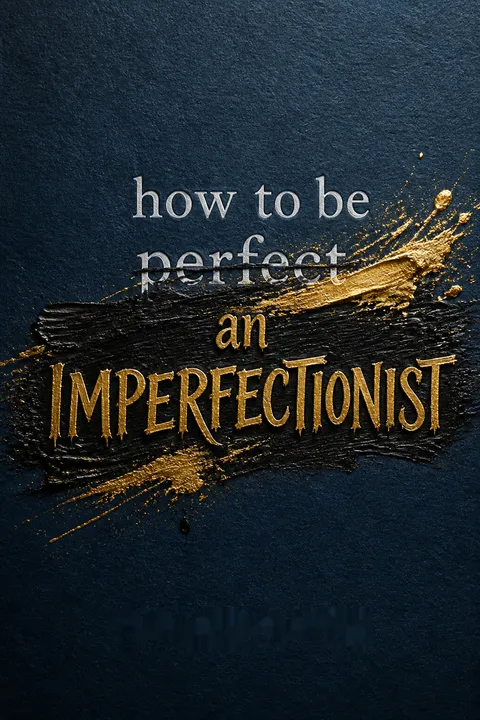
How to Be an Imperfectionist receives praise for its practical advice on overcoming perfectionism. Readers appreciate the book's focus on taking small steps, forming mini-habits, and embracing imperfection. Many find the author's personal examples relatable and the writing style engaging. The book's emphasis on self-acceptance and fearless living resonates with readers struggling with procrastination, anxiety, and low self-esteem. While some critics note repetition and self-promotion, most reviewers recommend the book for its actionable strategies and potential to positively impact daily life.
People Also Read





Glossary
Imperfectionism
Action without perfection demandsA way of pursuing meaningful goals without expecting flawless conditions or results. In Guise's use, imperfectionism does not mean apathy, laziness, or accepting poor work as a final standard. It means placing action and progress ahead of the demand to perform perfectly, while remaining free to improve through practice.
Mini Habits
Very small daily actionsA behavior reduced to a small, manageable daily minimum, chosen so that starting remains feasible even on a difficult day. The minimum is not a cap: someone may do more, but the small requirement makes consistent participation easier. Guise uses mini habits both to build routines and to practice acting without ideal conditions.
The Three Types of Perfectionistic Standards
Context, quality, and quantityGuise's way of organizing perfectionistic demands. Context standards require the right time, place, or resources; quality standards demand flawless performance; quantity standards reject effort below a specified amount. The framework highlights that perfectionism can prevent action even when someone is not especially concerned with polished work.
Result apathy
Focus on process over outcomeA deliberate reduction in fixation on how a task will turn out, while still making a serious effort. It directs attention toward the actions under a person's control rather than the final result, which may depend on other people or circumstances. It is not indifference to doing good work.
Rumination
Repetitive focus on problemsA recurring, often self-critical focus on problems or past events that does not produce useful movement toward a solution. Guise distinguishes between events that cannot be changed, which call for acceptance, and repairable situations, which call for action. He also recommends examining whether a disappointing result reflects chance, an ineffective approach, or both.
Binary mindset
Define success as actionA way of defining a task by whether the action occurred rather than by grading its quality. For example, a person might count giving a speech as success once they get up and speak, regardless of whether the delivery is polished. The approach reduces fear at the starting line while leaving room to improve performance afterward.
Rebellion practice
Safe practice against approval seekingA deliberate, harmless action that challenges a person's dependence on social approval or conventional expectations. Examples in the book include starting a conversation with a stranger or singing in public. The purpose is to practice choosing one's behavior without treating possible embarrassment or disapproval as a reason to retreat.
Project-based Mini Habits
Rotating small practice actionsA flexible plan that uses small actions to develop several related skills, rather than keeping one fixed set of behaviors indefinitely. A person can rotate practices according to current needs, such as using one period to work on approval seeking and another to practice binary goals. Guise presents it as a way to explore solutions without adopting every tactic at once.
Impostor Syndrome
Feeling fraudulent despite achievementA pattern in which a person has achieved success or earned a role but privately feels undeserving or fraudulent. In the book, this feeling is linked to heightened anxiety about mistakes and fear that imperfections will expose supposed inadequacy. Guise suggests recording accomplishments to make achievements easier to recognize and internalize.
FAQ
What's "How to Be an Imperfectionist" about?
- Focus on Imperfectionism: The book by Stephen Guise explores the concept of imperfectionism as a path to self-acceptance, fearlessness, and freedom from the constraints of perfectionism.
- Perfectionism vs. Imperfectionism: It contrasts the restrictive nature of perfectionism with the liberating mindset of imperfectionism, encouraging readers to embrace flaws and imperfections.
- Practical Strategies: The book provides actionable strategies and mini habits to help readers shift their mindset and behavior towards imperfectionism.
- Personal Growth: It emphasizes personal growth through small, consistent actions rather than striving for unattainable perfection.
Why should I read "How to Be an Imperfectionist"?
- Overcome Perfectionism: If you struggle with perfectionism, this book offers practical solutions to help you break free from its constraints.
- Improve Well-being: Embracing imperfectionism can lead to reduced stress, increased happiness, and greater self-confidence.
- Actionable Advice: The book provides clear, actionable steps and mini habits that can be easily integrated into daily life.
- Empowerment: It empowers readers to take control of their lives by focusing on progress rather than perfection.
What are the key takeaways of "How to Be an Imperfectionist"?
- Embrace Imperfection: Accepting imperfections can lead to greater freedom and personal growth.
- Focus on Process: Prioritize the process over results to reduce anxiety and improve performance.
- Mini Habits: Implement small, manageable habits to create lasting change and overcome perfectionism.
- Shift in Mindset: Change what you care about to align with imperfectionist values, such as progress over perfection.
What is the "Binary Mindset" in "How to Be an Imperfectionist"?
- Binary Tasks: The binary mindset involves viewing tasks as either done or not done, rather than focusing on how well they are done.
- Perfection in Simplicity: By simplifying tasks into binary outcomes, you can achieve a sense of perfection in completion.
- Reduce Fear of Mistakes: This mindset helps reduce the fear of making mistakes by focusing on action rather than performance.
- Encourages Action: It encourages taking action without the pressure of achieving perfect results.
How does "How to Be an Imperfectionist" suggest overcoming rumination?
- Acceptance: Accept the past as unchangeable to prevent dwelling on it.
- Action-Oriented: Replace rumination with action, especially in areas related to the rumination.
- Self-Talk: Change self-talk from "should have" to "could have" to foster a sense of possibility.
- Timer Techniques: Use timers to prompt action and focus, breaking the cycle of rumination.
What are "Mini Habits" according to Stephen Guise?
- Small Steps: Mini habits are small, easily achievable actions that can be done daily to build positive habits.
- Consistency Over Intensity: The focus is on consistency rather than the intensity of the action, making it easier to maintain.
- Habit Formation: These small actions help form habits by reducing resistance and increasing the likelihood of success.
- Synergy with Imperfectionism: Mini habits align with imperfectionism by emphasizing progress and action over perfection.
How does "How to Be an Imperfectionist" address the need for approval?
- Confidence Building: Increase self-confidence through chemical boosts, faking confidence, and adjusting benchmarks.
- Rebellion Practice: Practice small acts of rebellion against social norms to reduce the need for approval.
- Self-Validation: Focus on self-validation rather than seeking external approval to build self-esteem.
- Be Yourself: Encourage authenticity by reducing the influence of others' opinions on your actions.
What is the "Imperfectionist Process" in "How to Be an Imperfectionist"?
- Five Steps: The process includes imperfect thoughts and ideas, decisions, actions, adaptations, and results.
- Embrace Imperfection: Each step involves accepting and embracing imperfection as part of the journey.
- Focus on Action: The process emphasizes taking action despite imperfections to achieve successful outcomes.
- Adaptation: It encourages adapting to imperfections and learning from them rather than being hindered by them.
What are the best quotes from "How to Be an Imperfectionist" and what do they mean?
- "Strive for continuous improvement, instead of perfection." - This quote emphasizes the importance of progress over perfection, encouraging ongoing growth.
- "Care less about results. Care more about putting in the work." - It highlights the value of focusing on effort and process rather than being fixated on outcomes.
- "Imperfectionism is freedom because it’s our natural state." - This quote suggests that embracing imperfection aligns with our inherent nature and leads to liberation.
- "Make success easier than failure, and you’ll succeed." - It underscores the idea of setting achievable goals to create a path of least resistance towards success.
How does "How to Be an Imperfectionist" suggest handling doubts about actions?
- Experience Over Projection: Encourage taking action to gain real experience rather than relying on projections.
- Faster Decisions: Practice making faster decisions to reduce doubt and procrastination.
- Risk Assessment: Evaluate the risk and reward of actions to make informed decisions.
- Quantity Over Quality: Focus on taking more actions to refine and improve over time, rather than seeking perfection from the start.
What is the "Perfectionism Habit" in "How to Be an Imperfectionist"?
- Habitual Thinking: Perfectionism is described as a habitual way of thinking that equates perfection with adequacy.
- Change Through Action: The book suggests changing this habit through consistent, small actions that challenge perfectionist tendencies.
- Neurological Basis: It emphasizes the need for repetition over time to form new neural pathways and change behavior.
- Action-First Strategy: Encourages starting with action to influence emotions and motivation, rather than relying on motivation alone.
How does "How to Be an Imperfectionist" propose dealing with concern over mistakes?
- Binary Mindset: Use the binary mindset to focus on whether a task is done, not how well it is done.
- Redefine Success: Redefine success as progress, accepting that mistakes are part of the learning process.
- Modular Success: View success as modular, with each small step contributing to the overall goal.
- Easier Success: Make success easier than failure by setting achievable goals and celebrating small victories.
About the Author


Download PDF
Download EPUB
.epub digital book format is ideal for reading ebooks on phones, tablets, and e-readers.








