

Key Takeaways
Stop treating a partner as the missing ingredient in a complete life
Love is not a cure-all. Taitz opens with Rachel, who saw every bad date as evidence she would be alone forever. The author recognizes the same trap in her own history: years of worrying about being single, then an engagement that looked ideal from the outside but could not reconcile two incompatible visions of life. Ending it hurt, but she found that a relationship status did not determine her worth or capacity for purpose.
The happiness boost is modest. In a 15-year study of more than 24,000 people, marriage raised reported happiness by about one tenth of a point on an 11-point scale, on average. Many people returned to their previous baseline. This is not an argument against partnership. It is a reason not to postpone living until partnership arrives.
The useful distinction is between wanting a relationship and making one responsible for a whole life. The first is a legitimate desire; the second gives a partly uncontrollable outcome too much power over daily well-being. Research on adaptation helps explain why a wedding may not permanently change a person's baseline, but averages cannot predict any particular couple. The point is not that marriage matters little to everyone. It is that its value depends on the relationship's actual quality, not the cultural promise attached to the label.
Interrupt the replay before rejection becomes your whole reality
Replaying is not resolving. Rumination means repeatedly dwelling on a problem, rejection, or feared future without moving toward a useful action. Emma, a client grieving a breakup, spent much of her waking time monitoring her ex online and imagining encounters. The habit worsened her mood, distracted her at work, and strained friendships. Studies discussed in the book link rumination with depression, anxiety, and difficulty recovering from upsetting events.
Give the mind an exit. Notice the spiral, name the feeling, and postpone analysis until you are calmer. Then choose something absorbing, such as meeting a friend for a planned activity, rather than scrolling through an ex's updates. Talking can help, but repeatedly revisiting the same details, sometimes called co-rumination, may deepen distress instead of relieving it.
Rumination can masquerade as diligence: the mind keeps working, so it feels as if progress must be happening. A practical test is whether each round produces a decision, new information, or a next step. If not, the thinking may be maintaining the problem rather than solving it. Digital feeds make this especially potent because they offer fresh fragments to interpret without the context needed to interpret them well. A deliberate pause is not denial; it is a way to restore attention for decisions that can actually be made.
Use regret to learn, not to prosecute your past self
The past cannot be rerun. Casey regretted leaving her high-school boyfriend after discovering that he had become a successful musician. Social media made the alternate life look vivid and perfect, while her own present felt dull. Taitz helped her consider several possible versions of that relationship, including the possibility that staying together would have limited her education or brought problems she could not see from a distance.
Separate learning from self-blame. Regret can point toward a value or a lesson, but endless replay drains the attention needed to act. Self-compassion does not mean declaring every past choice flawless. It means accepting that a person made a decision with the knowledge and priorities available at the time, then asking what useful step follows now. Casey eventually recognized that she valued creativity and courage, without treating her ex as her sole chance at happiness.
Counterfactual thinking has two faces. Comparing what happened with what might have happened can reveal a better choice for next time, but it can also manufacture certainty about an imagined life that was never tested. Casey's rock-star fantasy omitted ordinary incompatibilities because distance allowed the fantasy to stay edited. A disciplined review asks what the regret teaches and what can be changed; it does not require proving that the old decision was perfect or disastrous. Compassion makes that review more honest because shame tends to narrow attention toward blame.
Measure your days by values you enact, not outcomes you cannot command
Goals are destinations; values guide conduct. A goal, such as finding a partner or getting hired, can be reached or missed. A value, such as kindness, courage, or curiosity, can shape what someone does today regardless of the outcome. Chelsea arrived in therapy convinced that being unemployed, heavier than she wanted, and single made her worthless. She began volunteering with animals, walking with friends, and pursuing publishing opportunities, actions connected to the kind of person she wanted to be.
Control the contribution. Taitz contrasts résumé achievements with qualities remembered by others, and describes a working musician whose daily commitment to practice mattered more than fame. Chelsea's circumstances did not instantly transform, but she built momentum and felt less shattered by rejection. The approach is not to abandon goals. It is to stop using their uncertain results as the only scorecard for a meaningful life.
This distinction resembles process goals in performance psychology: effort and chosen conduct are more controllable than winning, approval, or timing. It also provides a sturdier measure of progress during long searches, when outcomes arrive irregularly. Still, values do not erase material constraints. A person facing financial insecurity, discrimination, or illness cannot solve those conditions through attitude alone. The strongest version of the idea joins personal agency to realistic problem-solving: choose actions that express what matters, while seeking the resources and structural changes that make those actions possible.
Schedule pleasure and mastery before motivation arrives
Activity can precede enthusiasm. When Maggie lost a television job and faced chronic pain, she assumed there was little point in making plans. Taitz helped her schedule activities that offered pleasure, such as visiting a beach, and mastery, such as trying Pilates or setting aside time to look for work. Behavioral activation, the structured use of meaningful activities to improve mood, does not require waiting until someone feels ready. Maggie tracked what she did and how she felt, then found that engagement helped her mood and gave her access to new opportunities.
Accept pain while participating. Radical acceptance means acknowledging present reality without adding the exhausting struggle of insisting it should be different. It is not approval or resignation. Maggie could recognize her physical pain and still take steps toward work, friendship, and future plans. The book argues that adding meaningful action and reducing resistance can make life larger even before circumstances change.
This approach challenges the assumption that motivation must come first. In many tasks, especially during low mood, action supplies information and reinforcement that waiting cannot provide. Tracking activities also makes the method empirical: some plans will help, others will not, and the schedule can be adjusted. Acceptance adds an important safeguard against turning self-improvement into another demand to feel cheerful. It should not be used to normalize preventable harm or deny a need for medical care; it is most useful when paired with concrete efforts to change what can be changed.
Turn parenthood hopes into informed options, not panic-driven deadlines
Make choices with qualified guidance. Taitz devotes a substantial section to fertility because some readers want children and feel unclear about their options. In a 2017 interview, reproductive endocrinologist Richard Marrs described egg freezing as one possible way to preserve choices, while emphasizing that outcomes depend on age and the number and quality of eggs. The book reports that freezing was often recommended in the late twenties to early thirties, and cites a cost of about $10,000, plus storage fees. These are figures and recommendations from a 2018 book, not current medical advice.
Parenthood has several routes. The author also discusses IVF, donor sperm or eggs, surrogacy, and foster adoption, including the possibility that foster care involves reunification with a birth family. These paths differ in cost, timing, emotional demands, and access. The practical lesson is to seek individualized medical and legal information early, then weigh options against personal values rather than treating one route as universal.
This section's strength is its effort to replace vague dread with a menu of concrete questions and options. Reproductive decisions are unusually vulnerable to both social pressure and misleading certainty, so individualized counseling matters more than any general age rule. The chapter's financial estimates and success claims are time-sensitive, and medical technology and coverage can change; they should be treated as a starting point for consultation, not a forecast. Autonomy here means informed choice, including the choice not to pursue parenthood, rather than proving independence by choosing the most difficult route.
Let emotions inform decisions without letting them drive the car
Name the feeling before acting. Nicole was distressed that her boyfriend would not commit, and feared both leaving and remaining. Taitz asked her to distinguish sadness, anger, and anxiety rather than bundling them into a single sense of feeling bad. The book describes research in which putting an emotion into words reduced activity in a brain region associated with emotional response. Naming does not settle a relationship decision, but it can make the next step clearer.
Use a pause to choose behavior. The chapter's emotion-management approach includes noticing vulnerabilities, addressing solvable situations, checking interpretations, observing bodily urges, and deciding whether those urges fit the facts. Nicole practiced speaking calmly instead of yelling and eventually ended the relationship in line with her need for commitment. She later reconsidered when her former partner's actions changed. Managing emotion is not suppressing it; it is creating room to respond deliberately.
Emotion labeling is useful because it turns a global alarm into more specific information: fear of loss is different from anger about a boundary, and each may call for a different response. The approach also avoids treating every feeling as either truth or noise. A person's distress can signal a genuine unmet need, even when its intensity is amplified by fatigue or fear. Nicole's story shows why decisions benefit from both emotional honesty and time: regulation should clarify a choice, not train someone to tolerate a relationship that violates their priorities.
Replace self-attack with care that keeps you capable of giving
Kindness is not self-deception. Rachel interpreted romantic rejection as proof that something was wrong with her and picked apart her appearance. Taitz introduced self-compassion as a more realistic alternative: treat personal pain with the care one might offer a friend, recognize that imperfection is human, and notice feelings without exaggerating or dismissing them. This differs from forcing positive affirmations or pretending rejection does not hurt.
Create positive experiences deliberately. The book also recommends loving-kindness meditation, small acts of service, and brief gratitude practices. Research cited by Taitz found that people who spent even small amounts on others reported greater happiness than those spending on themselves. Gratitude is not a command to minimize hardship; it works better as a separate, intentional practice. These actions can broaden attention beyond romantic approval and remind a person that care is something they can both receive and offer.
Self-compassion is often mistaken for lowering standards, but the distinction is between accountability and contempt. Contempt consumes attention with a verdict about the self; compassion leaves more room to repair, learn, and act. Prosocial behavior can also interrupt the tunnel vision of rejection by making another person's needs salient. The caution is that generosity should not become a new performance test or a way to earn love. Service is most sustaining when it expresses chosen concern, includes reasonable boundaries, and does not require immediate emotional payoff.
Build a circle of friends instead of asking romance to meet every need
Loneliness is not a relationship status. After ending a long relationship, Madison lost not only a boyfriend but much of their shared social circle. She kept training for a marathon, spoke openly with a friendly acquaintance, and formed new friendships that helped her through the breakup. A study of 25,000 people cited in the book associated life satisfaction strongly with friendship quality and engagement at work. A separate review of research linked social integration with substantially lower mortality risk.
Make connection practical. Taitz advises showing warmth, asking genuine questions, validating another person's experience, and communicating requests directly rather than silently keeping score. The book presents named therapy tools for these skills, but their everyday core is simple: pay attention, show that the other person makes sense, and state what would help. Online contact can supplement relationships, but passive monitoring of other people's lives is a poor substitute for time together.
The shift from a single soulmate to a wider circle reduces the pressure placed on romantic partnership and creates more resilience when one bond changes. It also fits a basic network principle: support is more robust when it comes from several relationships with different strengths. The health findings are population-level associations, not proof that adding friends alone prevents illness; health, income, and social opportunity interact. Still, the practical implication is strong: connection is a behavior to cultivate, not a prize reserved for people who are coupled.
Choose dates by character and compatibility, not scarcity or fantasy
Be open without abandoning standards. Taitz describes judging her future husband too quickly because he had belonged to a fraternity, then discovering that their deeper priorities aligned. Openness can correct snap judgments, but it does not mean ignoring important incompatibilities. Erika, by contrast, tried to persuade herself to accept a kind boyfriend despite lacking the physical chemistry she valued. She eventually spoke honestly, ended the relationship, and later found a better fit.
Replace games with clear signals. Taitz's experience with a charming, inconsistent date showed how unpredictable attention can keep someone hooked without offering a dependable relationship. She asked what he wanted rather than pretending not to care, and learned that he wanted something casual. The book encourages evaluating kindness, respect, shared priorities, and genuine attraction, while accepting that dating cannot guarantee an outcome. A date is information, not a verdict on anyone's worth.
The balance here is subtle: premature certainty can close off a promising person, while fear of scarcity can make someone rationalize a poor fit. Values and observed behavior offer a better filter than either a fantasy checklist or a rulebook about playing hard to get. Early impressions should remain provisional when evidence is thin, but repeated disrespect or incompatible life plans deserve weight. Honest questions may end an ambiguous connection sooner, which can feel disappointing while still returning time and attention to more reciprocal possibilities.
Analysis
Taitz's central argument is not that romantic love is unimportant. It is that treating romance as the sole gateway to a worthwhile life creates a second source of pain on top of dating's ordinary uncertainty. The book's narrative makes this claim concrete: the author spends years anticipating solitude, reaches the milestone of an engagement, and discovers that external achievement cannot resolve a mismatch in values. Her clients then show different versions of the same trap, from Emma's post-breakup surveillance to Casey's imagined alternate life with a now-famous ex.
The book is strongest when it translates clinical ideas into choices made under emotional pressure. It distinguishes rumination from problem-solving, goals from values, and acceptance from resignation. Behavioral activation, mindfulness, and emotion-regulation skills appear not as abstract wellness ideals but as ways to make the next hour more inhabitable. Its recurring practical message is to stop waiting for the right mood or partner before acting on what matters.
The argument also has limits worth keeping in view. Many cited findings are correlational or describe group averages; a modest average change in happiness after marriage does not predict the value of an individual relationship. Nor can personal practices remove structural barriers, reproductive constraints, disability, discrimination, or economic insecurity. The book is most persuasive when agency means choosing a next step within real constraints, not pretending constraints are imaginary.
Its broadest contribution is a model of romantic life as one domain within a larger life, rather than a referendum on personal worth. That model protects two truths at once: wanting partnership is reasonable, and being single does not make a person incomplete. The result is neither forced independence nor cynical detachment, but a more flexible way to pursue closeness without putting one's present life on hold.
Review Summary
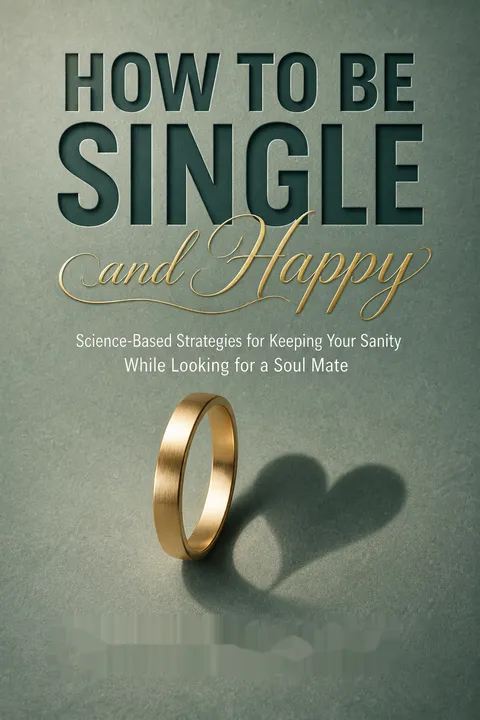
How to Be Single and Happy receives overwhelmingly positive reviews, with readers praising its science-based approach and practical strategies for improving overall happiness. Many appreciate the book's focus on mindfulness, cognitive behavioral therapy, and living well regardless of relationship status. Readers find the advice applicable to various life situations, not just singlehood. Some note that the title is misleading, as the book offers broader life advice. A few criticize the emphasis on being alone or find certain anecdotes depressing, but most readers highly recommend the book for its insightful and empowering content.
People Also Read







Glossary
husband treadmill
chasing lasting happiness through couplingTaitz's term for the pursuit of a partner as if changing relationship status will permanently raise happiness. The metaphor borrows from the hedonic treadmill, the idea that people often adapt to changed circumstances and return toward their usual well-being. It applies to anyone who treats coupling as the essential solution to an unsatisfying life.
anticipated aloneness
fear of ending up aloneThe distress produced by imagining a future without close relationships, rather than simply being single at present. Taitz draws on research suggesting that this expectation can impair clear thinking and intensify hopeless predictions. The term describes a felt forecast, not reliable evidence about how a person's future relationships will unfold.
affective forecasting
predicting future feelingsThe process of estimating how an event will affect future emotions. Taitz uses research on affective forecasting to explain why people often overestimate both the intensity and duration of reactions to breakups, marriage, and other major events. These predictions can feel certain while overlooking adaptation and the many details of life beyond the imagined event.
rumination
repetitive, unproductive dwellingA pattern of repeatedly turning over distressing thoughts, events, or symptoms without reaching a useful decision or action. In the book, rumination about dating, rejection, or an ex can sustain low mood, disrupt work, and strain friendships. It differs from purposeful reflection, which clarifies a problem and helps identify a next step.
experiential avoidance
escaping unwanted inner experiencesA coping pattern in which someone tries to avoid or control unpleasant thoughts, feelings, memories, or bodily sensations. Taitz explains that avoidance may bring brief relief but can preserve the underlying difficulty, such as remaining in an unsatisfying relationship to avoid grief. The alternative is willingness to experience discomfort while acting toward what matters.
values
chosen directions for livingIn the book's therapeutic vocabulary, values are personally meaningful qualities that guide ongoing behavior, such as honesty, kindness, or courage. Unlike goals, they are not completed once and for all. A person can act in line with a value today even when an external goal, such as finding a partner or getting a job, remains uncertain.
behavioral activation
planned meaningful activityA therapy approach that helps people schedule activities connected to pleasure, accomplishment, or longer-term aims, rather than waiting for motivation to appear. Taitz uses it with Maggie, who gradually resumed work, exercise, and exploration after losing a job. The approach treats participation as a route toward improved mood, not a reward for already feeling better.
radical acceptance
fully acknowledging present realityA DBT skill described by Marsha Linehan that involves acknowledging reality as it is in the present, including pain that cannot immediately be removed. It does not mean approving of a situation, giving up, or refusing to change it. Its purpose is to reduce the added suffering of fighting facts while preserving energy for effective action.
mindfulness of thoughts
seeing thoughts as mental eventsA practice of noticing thoughts without automatically treating them as facts, commands, or accurate forecasts. Taitz contrasts it with rumination and suppression: a person can observe a painful thought, allow it to be present, and choose an action based on values. The skill is especially useful when a thought is too emotionally charged for calm fact-checking.
opposite action
acting against an unhelpful urgeA DBT emotion-regulation skill that means choosing behavior opposite to an emotional urge when the emotion does not fit the facts or acting on it would be ineffective. For example, someone who wants to withdraw while sad might join a meaningful social activity. The aim is not to fake a feeling, but to act deliberately while allowing the feeling to exist.
GIVE
skills for respectful connectionA DBT acronym Taitz uses to describe interpersonal behaviors that support connection: being gentle, showing interest, validating another person's experience, and maintaining an easy manner. The skills apply both to making relationships and sustaining them. Their purpose is not to impress or perform, but to help another person feel respected and understood.
DEAR MAN
structured interpersonal requestsA DBT communication technique for asking for something or addressing a problem clearly. It guides a person to describe the facts, express feelings, assert a request, explain its value, stay mindful, communicate confidently, and negotiate when needed. Taitz presents it as an alternative to silently resenting others or replaying a difficult conversation without having it.
FAQ
What's How to Be Single and Happy about?
- Focus on Individual Happiness: The book emphasizes finding happiness independently of relationship status, using science-based strategies.
- Challenging Societal Norms: Jennifer Taitz encourages readers to embrace independence and challenge the notion that being single is a crisis.
- Practical Tools and Insights: It combines personal anecdotes, case studies, and research to offer actionable advice for navigating dating and relationships.
Why should I read How to Be Single and Happy?
- Empowerment for Singles: Ideal for those feeling societal pressure about relationships, it empowers readers to find joy in their current status.
- Science-Backed Strategies: Taitz uses evidence-based methods from psychology to help readers understand their emotions and improve mental well-being.
- Real-Life Applications: The book provides practical exercises and insights that can be applied immediately to enhance one’s life, regardless of relationship status.
What are the key takeaways of How to Be Single and Happy?
- Happiness is Internal: True happiness comes from within and is not contingent on external factors like relationships.
- Mindfulness and Acceptance: Taitz advocates for mindfulness practices to help individuals accept their feelings and live in the present moment.
- Value-Based Living: Readers are encouraged to identify their values and live according to them for a more fulfilling life.
What are the best quotes from How to Be Single and Happy and what do they mean?
- Self-Reflection: “Your task is not to seek for love, but merely to seek and find all the barriers within yourself that you have built against it.”
- Finding Purpose: “Life is never made unbearable by circumstances, but only by lack of meaning and purpose.”
- Wholeness: “You are whole; a person is a ‘+1.’”
How does How to Be Single and Happy address the issue of loneliness?
- Understanding Loneliness: Loneliness can stem from negative thought patterns and societal pressures, not just from being single.
- Mindfulness Techniques: Offers strategies to acknowledge and cope with loneliness, promoting self-compassion and acceptance.
- Building Connections: Emphasizes fostering connections with friends and family for fulfillment beyond romantic relationships.
What is the "husband treadmill" concept in How to Be Single and Happy?
- Chasing External Validation: Refers to societal pressure to find a partner as a measure of success and happiness.
- Cycle of Disappointment: This mindset can lead to unfulfillment even after entering a relationship.
- Breaking Free: Encourages focusing on personal growth and happiness rather than solely seeking a partner.
What strategies does Jennifer Taitz suggest for overcoming negative thoughts about being single?
- Cognitive Restructuring: Challenge and reframe negative thoughts about being single with positive perspectives.
- Mindfulness Practices: Stay present and reduce anxiety about relationship status through mindfulness techniques.
- Engaging in Activities: Participate in enjoyable activities and pursue personal interests to build a fulfilling life.
How can mindfulness help in dating according to How to Be Single and Happy?
- Awareness of Emotions: Mindfulness helps individuals become more aware of their emotions and reactions during dating.
- Reducing Anxiety: Practicing mindfulness reduces anxiety related to dating and relationships.
- Improving Presence: Being present enhances the quality of interactions, making connections more meaningful.
What role does self-compassion play in How to Be Single and Happy?
- Foundation for Happiness: Essential for building a positive self-image and fostering resilience against negative thoughts.
- Reducing Self-Criticism: Helps reduce self-criticism and accept one’s current situation, leading to greater emotional well-being.
- Encouraging Growth: Allows viewing setbacks as opportunities for growth rather than failures.
What specific methods does Jennifer Taitz recommend in the book?
- Mindfulness Techniques: Includes meditation and the "three-minute breathing space" for emotional awareness.
- DBT Skills: Incorporates Dialectical Behavior Therapy skills like DEAR MAN for effective communication.
- Radical Acceptance: Involves acknowledging and accepting one’s current situation without judgment.
How does Taitz suggest dealing with societal pressures regarding being single?
- Challenging Norms: Encourages questioning societal expectations and redefining happiness and success independently.
- Focusing on Values: Align life with personal values rather than societal expectations for authenticity.
- Celebrating Independence: Advocates for celebrating independence and self-sufficiency, finding happiness within oneself.
What are some practical exercises included in How to Be Single and Happy?
- Gratitude Journaling: Keep a gratitude journal to shift focus from what is lacking to what is positive.
- Mindfulness Meditation: Includes guided mindfulness exercises for awareness and acceptance of thoughts and feelings.
- Social Engagement Plans: Create plans for social engagement to foster connections and reduce loneliness.
About the Author
Download PDF
Download EPUB
.epub digital book format is ideal for reading ebooks on phones, tablets, and e-readers.








