Key Takeaways
1. Marx's Enduring Prophetic Vision of Capitalism
The globalised capitalist world that emerged in the 1990s was in crucial ways uncannily like the world anticipated by Marx in the Communist Manifesto.
Uncanny accuracy. Marx's foresight into the nature of capitalism, particularly its globalizing tendencies, proved remarkably accurate, resonating strongly with the world of the late 20th and early 21st centuries. He envisioned a system that would relentlessly expand, breaking down national barriers and creating a universal interdependence of nations, a process now widely recognized as globalization. This transformative power, though often destructive, was central to his analysis.
Crisis-generating dynamism. Marx understood capitalism not as a stable, permanent system, but as a historically temporary mode of human economy characterized by inherent contradictions. He predicted its jagged rhythm of growth, producing periodic crises of overproduction that would, sooner or later, prove incompatible with its operational logic. This self-transforming modus operandi, driven by endless bouts of tension and temporary resolutions, leads to economic concentration and continuous change through "creative destruction."
Foundational intellectual. Beyond specific predictions, Marx stands as a foundational thinker for understanding capitalism's historical temporality and its internal dynamics. His work remains a crucial lens for analyzing the ever-expanding, concentrating, crisis-generating, and self-transforming nature of the capitalist system. He is recognized as a key figure in economic thought, historical analysis, and modern social science, whose questions continue to be relevant even if his proposed answers are debated.
2. The Genesis of Marxian Thought: A Synthesis of European Currents
The triple origin of Marxian socialism in French socialism, German philosophy and British political economy is well known.
French revolutionary spirit. Marx and Engels drew significantly from French thought, particularly the Enlightenment's systematic rationalism and the revolutionary tradition stemming from the French Revolution. This included the egalitarianism of Rousseau and the critiques of early utopian socialists like Saint-Simon, Fourier, and Owen, who provided a critique of bourgeois society and initial ideas about a future communist society, though often lacking a robust economic analysis.
British economic realism. The British Industrial Revolution and its accompanying political economy profoundly influenced Marx. He absorbed the insights of classical economists like Ricardo, particularly the labor theory of value, which he then adapted to develop his theory of exploitation. Engels' direct experience in industrial Manchester provided crucial empirical data and an understanding of capitalism's dynamics, including the concept of the trade cycle and the "industrial reserve army."
German philosophical depth. From Germany, Marx inherited the rich tradition of classical philosophy, especially Hegel's dialectics and Feuerbach's materialism. This philosophical framework provided the tools for a comprehensive critique of society, allowing Marx to "turn Hegel the right way up" and develop a materialist conception of history. The synthesis of these diverse European intellectual currents formed the unique and powerful foundation of Marxian thought.
3. The State and Revolution: A Dynamic, Evolving Political Theory
Marx’s own thinking about the state began with the attempt to settle accounts with the Hegelian theory on the subject in the Critique of Hegel’s Philosophy of Law (1843).
State as class power. Marx initially conceived the state as the official expression of class opposition within bourgeois society, destined to disappear in a communist future. He saw political power as representing the interests of the ruling class, leading to the concept of the "dictatorship of the proletariat" as a necessary transitional phase after a revolutionary victory. This early analysis, though vague on institutional specifics, laid the groundwork for his later political thought.
Refining revolutionary strategy. The experiences of the 1848 revolutions and the Paris Commune (1871) significantly refined Marx's views. He concluded that the old state machinery could not simply be taken over but had to be "shattered," emphasizing the need for the working class to secure itself against its own representatives to prevent the state from becoming an autonomous master. This led to a vision of a transitional state that combined democratic transformation with measures against counter-revolution.
Evolving political thought. Marx and Engels' political ideas were dynamic, adapting to changing historical contexts, from the Jacobin-inspired radicalization of bourgeois revolutions to the rise of mass proletarian parties. They grappled with the complexities of nationalism, international relations, and the role of war in revolutionary strategy. Their legacy, though containing ambiguities and gaps, provided a method for analyzing political action within historical limits, rather than a fixed set of rules.
4. Engels' Pioneering Analysis of Industrial Capitalism
In Lenin’s words ‘he was among the first to say that the proletariat is not only a class that suffers; that it is precisely its shameful economic situation which irresistibly drives it forward, and obliges it to struggle for its final emancipation’.
Foundational social science. Engels' The Condition of the Working Class in England (1845), written at age 24, was a pioneering work systematically applying the concept of the Industrial Revolution to analyze British society. It was the first large-scale attempt to use a proto-Marxist method for concrete social study, establishing the proletariat not merely as a suffering class but as a dynamic force for change.
Capitalism's social impact. Engels meticulously documented the social consequences of industrialization and urbanization, portraying a process of concentration and polarization. He identified:
- Growing proletariat: A class increasingly confined to wage labor.
- Shrinking bourgeoisie: Fewer, larger capitalists.
- Urbanization: Cities as sites of unrestrained exploitation and social war.
- Reserve army of labor: A permanent surplus population keeping wages down.
- Trade cycles: Periodic crises as an integral part of capitalism.
His work provided a stark, detailed picture of the dehumanizing conditions faced by workers.
Enduring historical value. Despite being written during a period of acute capitalist crisis, which led to some over-optimistic revolutionary predictions, Engels' book remains an indispensable primary source. Its detailed observations, combined with a nascent Marxist analysis, offered a perspicacious critique of capitalism's inhumanity, superior to many contemporary accounts. It continues to be a landmark in understanding the early industrial era and the origins of the labor movement.
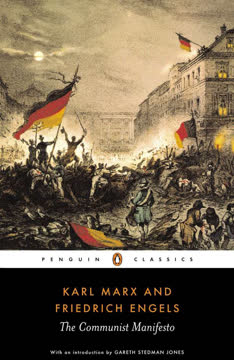
5. The Communist Manifesto: A Timeless Diagnosis, a Shifting Prognosis
What gives the Manifesto its force is two things. The first is its vision, even at the outset of the triumphal march of capitalism, that this mode of production was not permanent, stable, ‘the end of history’, but a temporary phase in the history of humanity... The second is its recognition of the necessary long-term historical tendencies of capitalist development.
Compelling diagnosis of capitalism. The Communist Manifesto, a document of astonishing intellectual and stylistic force, offered a remarkably prescient diagnosis of capitalism's revolutionary character. It accurately predicted the system's inherent drive towards globalization, its capacity to destroy all preceding social forms, and its relentless pursuit of profit, transforming the world in ways that resonate profoundly even in the 21st century.
Evolving revolutionary prognosis. While the Manifesto's vision of capitalism's dynamism proved accurate, its prognosis for the proletariat's inevitable overthrow of the system was more complex. The belief that capitalism would necessarily produce its "own gravediggers" in a revolutionary proletariat, leading to its inevitable fall, stemmed more from a philosophical hope about human emancipation than a purely analytical conclusion. History showed that capitalism had a longer life and greater adaptive capacity than anticipated.
A call to political action. Far from being a purely determinist document, the Manifesto is fundamentally a call to political action. It emphasizes that historical change proceeds through human agency, with the proletariat organizing itself into a political party to conquer power. This commitment to politics, distinguishing Marxian socialism from anarchism, underscores that while history sets conditions, men must actively make their own history, even if the path to a communist future is complex and unpredictable.
6. Unveiling Marx's Mature Thought: The Late Discovery of the Grundrisse
It contains analyses and insights, for instance about technology, that take Marx’s treatment of capitalism far beyond the nineteenth century, into the era of a society where production no longer requires mass labour, of automation, the potential of leisure, and the transformations of alienation in such circumstances.
A hidden treasure. The Grundrisse, a collection of Marx's 1857-58 manuscripts, remained virtually unknown for over half a century after his death, only gaining widespread recognition in the 1960s. This late discovery meant that a significant portion of Marx's mature thought, particularly his preliminary work for Das Kapital, was absent from early Marxist discourse, leading to a partial understanding of his theoretical scope.
Methodological depth. These manuscripts offer a unique window into Marx's intellectual process, revealing his dialectical method and the comprehensive, interdisciplinary nature of his inquiry. They provide the only guide to the full range of the treatise he planned, extending beyond the published volumes of Capital to encompass broader philosophical, historical, and sociological dimensions. The Grundrisse are essential for understanding the unity and complexity of his thought.
Prescient future insights. Beyond its methodological value, the Grundrisse contains remarkably prescient analyses that transcend 19th-century capitalism. Marx explored the implications of technological advancement, automation, and the potential for a society where mass labor is no longer required. He delved into the transformations of alienation and the possibilities for human leisure and self-realization in a post-capitalist future, making it a text of enduring relevance for contemporary discussions on technology and society.
7. Marx on Pre-Capitalist Formations: A General Theory of Social Change
The general theory of historical materialism requires only that there should be a succession of modes of production, though not necessarily any particular modes, and perhaps not in any particular predetermined order.
Abstract historical analysis. In the Grundrisse, Marx delves into pre-capitalist historical evolution at a high level of abstraction, aiming to establish the general mechanism of social change. He posits that societies develop through the formation of social relations of production corresponding to the level of material productive forces, with conflicts between them leading to "epochs of social revolution." This framework is not a rigid historical timeline but a dynamic model of societal transformation.
Progress and humanism. Marx's analysis is rooted in an objective concept of progress, viewing human history as the growing emancipation of man from nature and increasing control over it. This process, driven by man as a social animal engaged in labor and appropriation, also leads to human individualization and the break-up of primitive communal unity. Even in its most alienated capitalist form, this progress brings humanity closer to the humanist ideal of free individual development.
Diverse evolutionary paths. Marx identified various historical epochs or "modes of production" – Asiatic, ancient, feudal, and modern bourgeois – as steps in the evolution of private property and the separation of labor from its objective conditions. He recognized alternative routes out of primitive communalism, such as the self-sustaining, disintegration-resistant oriental system versus the dynamic, city-based ancient mode. This nuanced view emphasizes that historical development is not simply unilinear but a complex interplay of different social structures and their internal dynamics.
8. Marxism's Global Ascent and Diverse Adaptations (1880-1983)
Marx’s ideas became the doctrines inspiring the labour and socialist movements of most of Europe. Mainly via Lenin and the Russian Revolution they became the quintessential international doctrine of twentieth-century social revolution, equally welcome as such from China to Peru.
Global ideological force. From the late 19th century, Marxism rapidly ascended to become a dominant intellectual and political force, inspiring labor and socialist movements across Europe and, after the Russian Revolution, becoming the quintessential doctrine of 20th-century social revolution globally. Its influence extended from mass parties in industrialized nations to liberation struggles in the "Third World," making Marx a figure of unparalleled historical impact.
Diverse national interpretations. The spread of Marxism led to a wide array of national interpretations and adaptations, often shaped by local historical contexts and political struggles.
- Eastern Europe: Marxism became a foundational ideology, often intertwined with national liberation.
- "Third World": It offered a framework for anti-imperialist struggles and overcoming backwardness, leading to theories of "underdevelopment" and "world-systems."
- Western Europe: It competed with indigenous left-wing traditions, leading to debates like "revisionism" and the emergence of "Eurocommunism."
This diversity challenged the notion of a monolithic Marxist orthodoxy.
Intellectual magnetism. Marxism's appeal to intellectuals was disproportionate, especially during periods of capitalist crisis and student radicalization (e.g., the 1930s and 1960s). It offered a comprehensive critique of society and a coherent framework for understanding historical change, attracting a vast number of thinkers across disciplines. This intellectual engagement, though often leading to internal debates and heterodox interpretations, solidified Marxism's position as a central subject in academic and cultural discourse.
9. Anti-Fascism: A Crucible for Marxist Intellectuals
If fascism stamped out Marx, it equally stamped out Voltaire and John Stuart Mill. It rejected liberalism in all its forms as implacably as socialism and communism.
Crisis and conversion. The Great Depression and the rise of fascism in the 1930s profoundly radicalized Western intellectuals, drawing many towards Marxism. The stark contrast between capitalist breakdown and the Soviet Union's apparent immunity to crisis, coupled with fascism's existential threat to an entire civilization, made communism seem a necessary bulwark for reason, science, and progress. This period saw a significant influx of intellectuals into communist parties and their orbit.
United front against barbarism. Anti-fascism became the paramount political issue, uniting communists, socialists, and liberals against a common enemy that threatened not only political freedoms but the entire heritage of the Enlightenment. This imperative for unity led to the "Popular Front" strategy, where ideological differences were often subordinated to the urgent need for collective resistance. Intellectuals, facing book burnings and mass expulsions, recognized fascism as a threat to their very existence and values.
Strategic and theoretical shifts. The anti-fascist era compelled Marxists to adapt their political strategies, moving from sectarian "class-against-class" policies to broader alliances, even contemplating "people's democracy" as a transitional path to socialism. This period also reinforced the rationalist and scientific aspects of Marxism, as it positioned itself as the defender of progress against fascist irrationalism. These adaptations, though sometimes controversial, demonstrated Marxism's capacity for strategic flexibility in the face of unprecedented global threats.
10. Gramsci's Political Theory: Hegemony and the Modern Prince
Gramsci is a political theorist inasmuch as he regards politics as ‘an autonomous activity’ (Prison Notebooks), within the context and limits set by historical development, and because he specifically sets about investigating ‘the place that political science occupies or should occupy in a systematic (coherent and logical) conception of the world in Marxism’.
Politics as autonomous activity. Antonio Gramsci, a uniquely original Marxist thinker, developed a profound theory of politics, distinguishing it as an autonomous activity within historical constraints. His Italian background, marked by a complex national history, a powerful Church, and a failed revolution, made him acutely aware of the need for a sophisticated political analysis beyond purely economic determinism. He saw politics as central to human praxis, integrating understanding and changing the world.
Hegemony and intellectual leadership. Gramsci's most influential concept is "hegemony," which describes how a ruling class maintains authority not just through coercive force, but through intellectual and moral leadership, securing the consent of subaltern classes. He emphasized that this hegemony is not automatic but achieved through conscious political action and the role of "intellectuals" – broadly defined as those who exercise social functions of organization and direction. This insight highlights the crucial role of culture and ideology in maintaining or challenging power.
The party as "modern Prince." For Gramsci, the political party is the "modern Prince," the essential instrument for the working class to develop its consciousness, transcend "economic-corporative" interests, and achieve hegemonic leadership. He advocated a "war of position" – a protracted struggle for cultural and ideological dominance – as a necessary strategy in Western societies, where the state is buttressed by a robust civil society. This approach underscored that revolution requires not just seizing power, but transforming the collective will and building a new social consensus.
11. The Great Recession of Marxism (1983-2000)
Capitalism had lost its memento mori. Socialists saw that the end of the Soviet Union foreclosed any hope that somehow a different and better socialism (‘with a human face’ as the Prague Spring put it) could emerge from the heritage of the October Revolution.
Post-Soviet disillusionment. The collapse of the USSR and its European satellites in the late 20th century dealt a devastating blow to Marxism. This event removed capitalism's primary global counterbalance and discredited "really existing socialism" as a viable alternative. For socialists worldwide, the failure of the Soviet experiment, despite its flaws, extinguished the hope that a different, more humane socialism could emerge from the October Revolution's legacy, forcing a retreat into theoretical speculation.
Decline of traditional left. The recession of Marxism was also driven by the gradual decomposition of non-state communist parties and the crisis of social democracy in Europe. The manual working class, historically the bedrock of these movements, shrank in size and lost its unified class-consciousness, with some segments shifting towards neoliberal parties. This undermined the foundational belief that the proletariat was the inevitable agent of social transformation, leaving traditional left-wing ideologies bereft of their historical anchor.
Intellectual and ideological shifts. Beyond political setbacks, Marxism faced a broader intellectual retreat, part of a general skepticism towards grand theories of social change. The rise of neoliberal economics, identity politics, and postmodern relativism challenged the very premises of historical materialism. While Cold War anti-communism continued, the intellectual marginalization of Marxism stemmed more from internal critiques and a perceived historical discrediting, leading to a period where Marx was largely dismissed as irrelevant.
12. Capitalism's Self-Correction and Marx's Enduring Relevance
Once again it is manifest that the economic system’s operations must be analysed both historically, as a phase and not the end of history, and realistically, i.e. not in terms of an ideal market equilibrium, but of a built-in mechanism that generates potentially system-changing periodic crises.
Capitalism's inherent instability. The period of untrammeled laissez-faire policies from the 1970s to 2008, culminating in a severe global financial crisis, starkly re-exposed capitalism's inherent instability. This demonstrated that the system, when left unchecked, generates potentially system-changing periodic crises, a core tenet of Marx's analysis. The notion of a self-stabilizing market, championed by neoliberal ideologists, proved fundamentally flawed.
Beyond "end of history." The 2008 crisis shattered the post-Cold War triumphalism that proclaimed "the end of history" and the definitive victory of liberal-democratic capitalism. It became evident that capitalism is not the final stage of human economic development but a historical phase with built-in contradictions. This realization, independent of any socialist alternative, forced a re-evaluation of the system's long-term viability and its capacity to address global challenges.
Renewed call for Marx. In this context, Marx's insights into capitalism's historical temporality, its crisis-generating mechanisms, and its impact on labor and natural resources gained renewed relevance. His critique of economists who failed to recognize these inherent flaws, and his emphasis on analyzing the economic system realistically rather than idealistically, position him as a crucial guide for understanding 21st-century problems. The time has come, once again, to take Marx seriously as a profound critic of capitalism's untrammeled global operations.
Last updated:
Review Summary
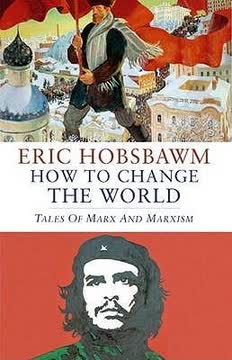
How to Change the World by Eric J. Hobsbawm receives praise for its scholarly analysis of Marx and Marxism, though reviewers note the title is misleading—this isn't an activist manual but a historical examination. Readers appreciate Hobsbawm's accessible writing and comprehensive coverage of Marxist thought from Marx and Engels through Gramsci to modern relevance, especially post-2008 financial crisis. Common criticisms include the book's Eurocentric focus, dense academic nature, and being a collection of essays rather than cohesive narrative. Most agree it's essential for understanding Marxism's historical impact, though some found it repetitive or too specialized.
Similar Books