


Plot Summary
The Neighbor With Answers
Reclusive romance writer Toby watches the muscular man next door and decides that his black clothes, shadowed basement, and late-night habits look suspicious. When Toby asks how long a stomach wound takes to kill, Dexter answers with unsettling precision. The next morning, Dexter takes a hammer from Toby before he can injure himself, and the two finally exchange names while discussing amputations.
Toby is embarrassed by his own chatter, but Dexter is pleased to have his attention. Behind the closed basement door, Dexter carries out his grim work against a man whose cruelty has made him irredeemable. A disturbing dream then shows Toby imprisoned, leaving Dexter afraid that the image might be a warning rather than a dream.
The first contact makes misreading part of the courtship. Toby interprets Dexter's unusual knowledge through the conventions of the thrillers he writes, while Dexter treats practical concern as a language of intimacy. Each is wrong about the other's motives, but neither is wrong about the other's attention. The basement scene complicates the comic flirtation before it can settle into simple wish fulfillment: Dexter's violence is real, even if he directs it toward the cruel. His dream also gives his protectiveness a source beyond attraction. Toby is not merely an appealing neighbor to him; he has already become someone Dexter fears losing.
A Kiss in the Margins
Toby's next writing problem involves a tortured character who must survive a gruesome scene, so he invites Dexter inside to discuss how blood behaves. Dexter explains the difference between slow bleeding and arterial spray, giving Toby the concrete detail he needs to revise the scene. Toby becomes absorbed in his work and leaves Dexter waiting with coffee and the returned hammer.
When he finally looks up, Dexter calls him cute, and Toby's flustered rambling turns into a kiss. Dexter leaves before their attraction can rush further, choosing to court Toby rather than simply take what he wants. Later, while hunting a cruel man named Marcus, Dexter finds a captive and two guard dogs, rescues them, and carries them back to Paradise Falls.
Writing gives the pair a socially acceptable reason to talk about bodies, injury, and desire. Toby can ask questions that would otherwise expose how little he knows about flirtation; Dexter can offer expertise without explaining its source. The kiss marks a change from projection to mutual contact, but Dexter's decision to leave preserves Toby's agency and signals that attraction is not the same as entitlement. His rescue of the captive extends the same protective instinct into the wider world. The contrast matters: Dexter's violence is not presented as harmless, yet the story asks readers to distinguish cruelty from intervention by examining whom he chooses to protect and punish.
A Stranger at Cassius's
The captive Dexter removes from Marcus's basement resists him, convinced that the rescuer may be another threat. Dexter still refuses to leave him behind, though the discovery forces him to abandon his plan to burn the house with its owner inside.
He escapes with the man and the two dogs, then brings all three to Cassius, a coffee-shop owner who has helped him before. Cassius is startled by the improvised delivery but takes responsibility for the rescued human and animals.
The episode exposes Dexter's odd habit of arranging safe homes for people he finds in danger, while also showing that Paradise Falls is already connected to supernatural figures. Dexter's new attachment to Toby, meanwhile, is becoming another reason he does not want to leave town.
This rescue establishes a moral pattern before the central danger intensifies. Dexter's first instinct is not to seek permission or involve institutions; he acts immediately, then improvises a landing place for those he has saved. That approach is compassionate but paternalistic, a tension the romance also has to negotiate. Cassius functions as a counterweight: he can turn Dexter's unilateral rescue into continuing care. The episode also widens the novel's world without displacing its intimate focus. Paradise Falls is not simply a quiet backdrop for a love story; it is a crossroads where supernatural residents, vulnerable humans, and Dexter's itinerant work already overlap.
The Fan Finds a Door
After the first kiss, Toby receives a flood of messages from a fan he had blocked for harassment. The writer compares their lives to a fictional kidnapping romance, insists they belong together, and sends a handwritten letter to Toby's post-office box.
Toby's assistant Amy admits that the fan had repeatedly tried to rejoin Toby's online groups, information she had withheld to spare him anxiety. When Dexter notices Toby has withdrawn from his usual routines, he forces entry after hearing fear inside and finds Toby waiting with a kitchen knife.
Toby explains the threats and shows him the letter. Dexter takes the evidence, promises to investigate, and gives Toby his number. His concern makes Toby feel less alone, even as it brings his own safety into question.
The stalker's escalation exposes the danger in treating fiction as a permission slip. Toby's work contains possessive fantasies, but he understands the difference between a story's negotiated danger and a real person's refusal to stop. Amy's protective silence, though well meant, leaves Toby without a clear account of how long the threat has been growing. Dexter responds by supplying certainty and physical presence, which soothes Toby while introducing another ambiguity: his protectiveness can easily become control. The scene begins the book's negotiation over care. Safety matters, but so does the threatened person's right to know what is happening and participate in decisions about it.
Brothers at the Door
Dexter starts securing Toby's house with motion lights and a repaired doorframe, while Toby worries that the elderly neighbor's property may have attracted a buyer. Dexter's packmates Jude and Corbin arrive, and Dexter introduces Toby as his boyfriend before Toby has decided what to call their relationship.
Toby is surprised but welcomes the label. That night, Dexter joins the brothers on a run through the woods in a form Toby cannot identify. Watching from his porch, Toby sees an enormous dark creature with glowing eyes and flickering flame.
He chalks it up to exhaustion, though the dents in his kitchen counter and the strange howls leave him unsettled. Dexter's brothers begin settling into the neighboring property, making the growing relationship part of a larger found family.
Dexter's declaration of boyfriend is both tender and presumptive. He speaks from an instinctive certainty that Toby experiences as welcome, but the mismatch in how quickly they define the relationship remains important. Meanwhile, the brothers make Dexter's private world visible: he is not an isolated eccentric but part of a durable family with shared habits and responsibilities. Toby's glimpse of the creature is filtered through the stories he writes, so he can approach the impossible with curiosity before fear. The scene lets wonder precede explanation. His imagination does not solve the mystery, but it gives him a flexible way to stay engaged with someone whose life exceeds his expectations.
Flowers That Listen
A delivery van brings Toby flowers supposedly celebrating his latest release. Dexter, Jude, and Corbin intercept the arrangement and find miniature cameras disguised as stones, along with listening devices hidden among the leaves.
The delivery boy identifies the shop owner, Kurt, as the person who ordered the special drop. Dexter destroys the equipment, then tells Toby what it contained; the knowledge that someone has watched and listened to him at home leaves Toby shaking.
Dexter stays close, and their attraction turns into sex before Toby recognizes that flames are licking across the bed and Dexter's eyes are burning. Asked to explain, Dexter admits that he and his brothers are hellhounds who hunt humans beyond redemption. Toby takes the revelation in stride and chooses to keep trusting him.
The flowers convert vague harassment into a violation of domestic space. Their cheerful appearance conceals surveillance, making the threat feel more intimate than the earlier messages: the stalker has tried to enter Toby's private life without being physically present. Dexter's response is effective, but his existing habit of installing cameras outside Toby's home means protection and surveillance are already entangled. The supernatural revelation follows sex, a moment of unusual vulnerability, and asks whether desire can survive new knowledge. Toby does not mistake Dexter for harmless; he evaluates the distinction he has been given between predation and punishment. His acceptance is a choice grounded in trust, not ignorance.
Following the Rot
Dexter goes to Kurt's home with Atlas, the most solitary of his brothers, and interrogates the flower-shop owner about the concealed devices. Kurt admits that he supplies surveillance tools to stalkers and that Toby's admirer contacted him through cash and remote access.
He cannot identify the client, but he remembers a previous customer who targeted a bartender. Liam searches the records and finds that the bartender disappeared after reporting harassment, with several possible suspects named to police.
Jude and Corbin investigate those leads while Dexter stays near Toby. The missing bartender's scent on the suspected stalker's belongings suggests he may still be alive. The hunt now has two aims: stop the man pursuing Toby and find out what happened to the person he targeted before.
The investigation changes the threat from a private nightmare into a repeated pattern. Kurt's business turns stalking into a purchasable service, revealing how technology can make intrusion scalable and deniable. The missing bartender gives Dexter's pursuit a moral history: Toby may not be the stalker's first fixation, and the earlier disappearance could conceal a living victim. The pack divides its work efficiently, making their family bond practical rather than merely sentimental. At the same time, Dexter remains emotionally narrowed around Toby. His capacity to hunt is formidable, but the investigation requires him to widen his attention and recognize that protecting one beloved person does not erase responsibility for others.
A Bullet at the Door
While Toby and Dexter sleep, Dexter wakes to the unmistakable presence of a corrupt soul nearby. He texts his brothers, then moves toward the front door with Toby close behind him. Outside, the stalker waits with a gun. Dexter sees the weapon and chooses not to dodge, because a missed bullet might strike Toby. He tells Toby to run, then the shot hits him in the head and he collapses.
Toby flees through the back of the house into the forest, pursued by the stalker, who tries to lure him out by pretending to be help. Toby recognizes the deception, hides among the trees, and keeps moving toward the houses. The belief that Dexter may be dead nearly overwhelms him, but he continues searching for help.
The climax begins with a choice that condenses Dexter's protective ethic into a single bodily risk: he accepts the bullet because Toby stands behind him. For Toby, the result is not reassuring heroism but apparent catastrophe. He has to act without knowing whether the person he trusts is alive, and his writing instincts help him identify the stalker's false appeal to authority. The scene also exposes the limit of supernatural strength: Dexter can protect Toby only if Toby participates in his own survival. Their bond is not a rescue fantasy in which one partner remains passive. Toby's fear is real, but so is his ability to read danger and keep moving.
The Forest Gives Him Back
A flaming hellhound charges through the trees and knocks the stalker off Toby, then bites his wrist when he reaches for his gun. The creature holds him until Dexter, recovered from the head wound, appears with blood still on him.
Toby runs to Dexter, who steadies him and carries him home. Atlas takes the captured stalker to Dexter's basement, where Dexter learns his name is Bradley and forces him to reveal that the missing bartender, Aiden, is being held elsewhere.
Dexter punishes Bradley for the kidnapping and his earlier stalking. Jude and Corbin locate Aiden and bring him back alive. The rescue answers the question raised by Liam's search, but Aiden's year in captivity leaves him withdrawn and unsure whether there is any life to return to.
The forest scene reverses the stalker's intended power arrangement. He has a weapon and a plan, but Atlas's intervention turns him into the vulnerable body he expected Toby to become. Dexter's return confirms that the shot did not kill him, yet Toby's terror is not erased by the supernatural explanation; he has watched the person he loves fall. Aiden's rescue prevents the climax from collapsing into revenge alone. The victim has needs beyond the punishment of his captor, and his survival requires patience rather than a triumphant return to normal. The narrative thus measures justice by both the threat stopped and the person who must rebuild after it.
A Bond Beyond Mortality
After Aiden explains that his old friendships no longer feel like a life he can resume, Toby and Dexter offer him shelter and a chance to choose what comes next. They take him to Cassius's coffee shop, where Aiden meets Quinton, another guarded survivor, and Cassius's angel partner.
Once Aiden is in care, Dexter admits he fears Toby's human mortality. Cassius explains that Dexter's bite and their mating have tied their life forces together, meaning neither can be separated from the other by death.
The revelation turns an instinctive attachment into a lasting bond. Toby and Dexter embrace, then reaffirm their commitment physically and emotionally. Dexter no longer has to imagine a future in which Toby's mortal life ends while his continues alone.
The resolution makes care extend beyond the couple. Toby refuses to treat Aiden as a case to be closed, offering him choices and time; Cassius and Quinton provide a community where recovery need not begin from isolation. Dexter's fear of Toby's mortality reveals the cost hidden inside his long life, while Cassius's explanation supplies an answer without making their earlier bond feel calculated. Their permanence is not simply a romantic reward. It transforms possessiveness into mutual obligation: the connection that gives Dexter certainty also binds him to Toby's vulnerability. The ending grants them a future, but it does so through dependence freely recognized rather than through protection imposed from one side.
Epilogue
Toby finishes his novel while Dexter settles more of his belongings into Toby's house, turning their hurried closeness into an ordinary shared life. The pack gathers for lunch, and Toby meets Liam, Dexter's technology-minded brother.
Liam reveals that Quinton's abduction may have involved a larger trafficking operation, and the brothers agree to investigate. Toby watches the hellhounds plan their work and realizes that this strange family is now his, too. He and Dexter leave together for home, trading affection and making plans for another private celebration.
The epilogue gives the couple domestic time without pretending the world has become safe. Toby's finished book mirrors the novel's own happy ending, while the pack's meal turns his new belonging into a lived routine rather than a declaration. Liam's discovery about Quinton introduces a continuing danger, but the threat is framed as collective work, not a fresh crisis that displaces Toby and Dexter's resolution. Toby has entered Dexter's world without surrendering his own: he remains a writer, a friend, and an active witness to what the pack chooses to do. Their future is both intimate and communal.
Analysis
The novel builds its romance around a productive mismatch in how Toby and Dexter understand danger. Toby turns uncertainty into story, an imaginative habit that makes him playful and observant but sometimes leaves him anxious. Dexter reads danger through supernatural senses and responds with immediate force. Their attraction works because neither mode simply replaces the other. Toby's questions and judgments matter, while Dexter's protection becomes most meaningful when it supports Toby's agency rather than erasing it.
The stalker plot sharpens the distinction between fictional possession and real consent. Toby writes fantasies involving danger, but he recognizes that a reader's fixation is not romance when it disregards the author's boundaries. The flowers make that difference material: surveillance hides inside a conventional gift, turning affection's familiar signs into evidence of violation. Dexter's own protective surveillance complicates the moral contrast. He installs cameras and monitors Toby, so the story does not pretend that loving intentions automatically make intrusion harmless. Toby's willingness to accept Dexter depends on trust, disclosure, and his ability to choose.
Dexter's work as a punisher raises a parallel question about violence. The novel distinguishes his actions from the cruelty of men like Bradley by grounding them in the protection of victims and the prevention of further harm. Yet Dexter's certainty is not neutral. His instincts can make him possessive, and his interventions sometimes bypass human institutions. The rescued characters keep the narrative from treating vengeance as a complete solution: Aiden needs care and choice after Bradley is stopped.
Finally, the mating bond transforms an unequal lifespan into shared fate. That promise answers Dexter's fear of loss, but it also makes intimacy consequential beyond the moment. The book's happy ending is therefore both a romantic fantasy and an ethical commitment: Toby enters Dexter's family and world without giving up his own judgment, while Dexter learns that protecting someone means meeting him as a partner, not merely claiming him as something precious.
Review Summary
How to Flirt with a Hellhound received mostly positive reviews, with readers praising its humor, quirky characters, and fun paranormal romance elements. Many enjoyed the chemistry between Toby, a socially awkward writer, and Dex, the protective hellhound neighbor. Reviewers appreciated the low-angst plot, steamy scenes, and the introduction of interesting side characters. Some criticism focused on the lack of world-building and character development. Overall, readers found it an entertaining, light-hearted read perfect for those seeking a quick, enjoyable paranormal romance.
People Also Read

Characters
Toby
Hermit romance writerToby writes dark fantasy and paranormal romance from a home where he can lose hours to a plot and forget to buy dinner. His imagination makes him funny and inventive, but it also encourages him to turn uncertain events into elaborate stories. Socially awkward and quick to blush, he is not timid about the things that matter: he asks questions, values his friends, and wants a partner who respects his work and his choices. His curiosity about Dexter begins in suspicion, then becomes a way of understanding someone unlike himself. Toby's openness is not gullibility; he can recognize genuine danger and decide, with clear eyes, whom he trusts.
Dexter
Watchful next-door neighborDexter is physically imposing, observant, and much less practiced in ordinary human conversation than his confidence suggests. He understands injury and danger intimately, yet struggles with small social conventions such as how to return a hammer or start a courtship. His strongest drive is protection, an instinct that can make him tender and, at times, overbearing. Toby draws him toward a settled life and gives his attention a personal focus beyond the work he has done for years. Dexter's affection is direct, tactile, and possessive, but he also tries to respect Toby's pace. His development turns an instinctive claim into a relationship that requires honesty and mutual choice.
Jude
Easygoing pack brotherJude is the most socially fluent of Dexter's brothers, with an easy humor and a fondness for Beatles songs. He helps Dexter interpret ordinary human signals and notices when his brother needs support more than advice. Beneath the teasing, Jude is reliable in a crisis and willing to take responsibility for difficult investigations. His warmth makes the pack less intimidating to Toby.
Corbin
Bird-loving brotherCorbin is reserved, blunt, and frequently more interested in the birds around him than in a conversation. His connection to crows and ravens gives him an unusual way to watch the world, while his steadiness helps ground Dexter and Jude's more impulsive habits. He is not demonstrative, but he treats the people he accepts as family with quiet loyalty.
Liam
Pack's tech expertLiam works comfortably with computers and online records, using technology to find leads that Dexter's senses alone cannot provide. He has a big-brother manner, mixing practical competence with teasing and exasperation at Dexter's disregard for details. His investigations show that the pack's protective work depends on varied skills, not only physical force.
Atlas
Solitary pack brotherAtlas is a solitary, nearly feral member of Dexter's family who often communicates more through action than conversation. His rough manner can make him seem dangerous, but his loyalty to the pack is strong. He prefers space and direct solutions, and his presence adds a harder, less socially polished edge to the brothers' family.
Josh
Toby's grounding friendJosh is one of Toby's closest friends and often acts as the voice of reason when Toby's imagination runs ahead of the evidence. He is caring without being sentimental, and he can tease Toby while still taking his fears seriously. His own relationship troubles make him less available at times, though he remains an important source of friendship.
Sebbie
Cheerful loyal friendSebbie is warm, cheerful, and inclined to find humor even in bleak circumstances. Repeated brushes with death have left him wondering whether he brings bad luck, though he remains generous with Toby and Josh. His lightness is not a lack of feeling; it is part of how he keeps showing up for the people he loves.
Amy
Toby's protective assistantAmy manages Toby's social media and professional workload, protecting his time so he can concentrate on writing. She tries to shield him from hostile messages, believing that withholding them will spare him anxiety. Her good intentions reveal how care can become counterproductive when it removes information someone needs to make decisions.
Cassius
Oracle coffee-shop ownerCassius runs a welcoming coffee shop and serves as a practical point of contact for the supernatural community around Paradise Falls. He is sharp, compassionate, and more perceptive than he initially lets on. When vulnerable people arrive at his door, he responds with a mixture of exasperation and real responsibility.
Quinton
Guarded new arrivalKnown around Cassius's shop as Q, Quinton is wary, prickly, and slow to trust people he has only just met. His sharp humor and defensive manner hint at a painful history without defining his whole character. He is a survivor trying to regain control over the shape of his life.
Aiden
Quiet, watchful strangerAiden is a reserved man who has difficulty imagining where he belongs after a long period of isolation. He responds cautiously to kindness and has a strong instinct to protect others, even when he is frightened himself. His silence should not be mistaken for passivity; it reflects someone measuring whether the world around him is safe.
Bradley
Possessive online fanBradley begins as a fan of Toby's books, then treats access to the author as something he is owed. He uses fictional romance as a script for real-life entitlement and interprets boundaries as obstacles rather than refusals. His fixation shows how admiration can curdle when a person values a fantasy of intimacy more than another person's autonomy.
Rick
Josh's difficult boyfriendRick is Josh's boyfriend, whom Toby and Sebbie find rude and belittling. His presence leaves Josh tense and distracted, while Josh remains reluctant to discuss their disagreements with his friends.
Plot Devices
The Stalker's Trail
Escalating intrusionThe threat begins with hostile messages sent to Toby's author account, then advances through repeated attempts to bypass blocks, a handwritten letter, and flowers fitted with cameras and listening devices. Each step converts a private unease into a more concrete violation, giving Toby and Dexter evidence to act on. The trail also links Toby's pursuer to a service provider who equips stalkers, then to an earlier target who has disappeared. The device makes the central danger cumulative: no single message proves what the admirer intends, but the pattern reveals a person who is steadily crossing boundaries.
The Hellhound Senses
Moral threat detectionDexter and his brothers can sense the decay of a soul that has become irredeemably cruel. This ability helps them identify dangerous humans, follow threats through a crowded world, and distinguish a truly corrupt person from someone whose choices have not reached that point. It gives the story a supernatural system for judging guilt, but not an easy escape from ethical questions: Dexter still chooses how to intervene, and his protective instincts can overreach. The soul-scent also makes danger bodily and immediate, a smell that can interrupt domestic calm before a human character sees any proof.
The Mating Mark
A bond made permanentA bite and mating ritual connect Dexter and Toby's life forces. Neither partner understands the full consequence at first, and Toby's human mortality makes Dexter fear an eventual separation. Cassius later explains that the bond means they cannot be divided by death. The device gives the romance a supernatural answer to the difference between their lifespans, but it also raises the emotional stakes of their physical intimacy. What begins as desire and instinct becomes a lasting mutual obligation, confirming that their attachment is not only Dexter's claim but a bond they both accept.
Fiction as Fieldwork
Research fuels courtshipToby's writing gives him reasons to ask Dexter about wounds, blood loss, and torture without disguising his curiosity. Dexter responds with precise, practical information, and those exchanges become their earliest form of intimacy. The method also lets the romance blend humor with darker material: Toby's fictional scenes require plausible details, while Dexter has far more experience with violence than he can initially explain. As the story progresses, their collaboration becomes a shared language, though it also forces Toby to confront the difference between depicting danger and living through it.
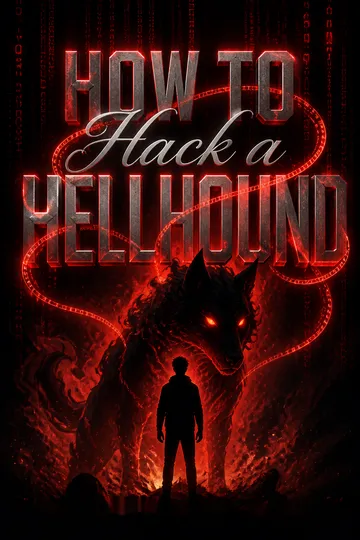
Hellhounds of Paradise Falls Series




About the Author
Other books by Shannon Mae
Download PDF
Download EPUB
.epub digital book format is ideal for reading ebooks on phones, tablets, and e-readers.








