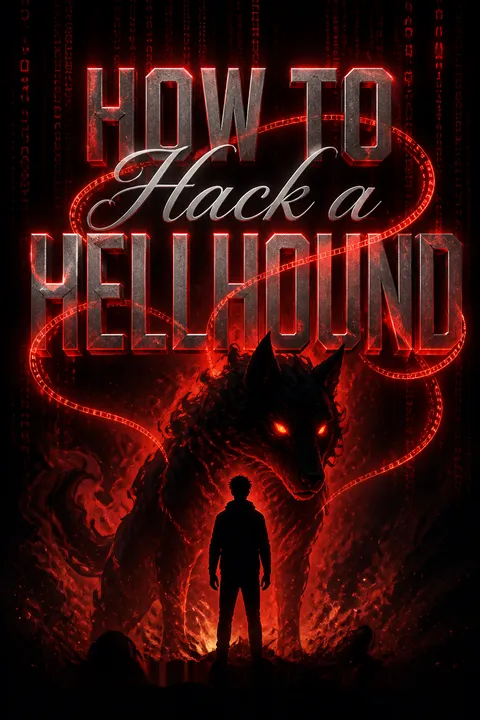


Plot Summary
After the Basement
At the Paradise Falls coffee shop, Quinton works beside Aiden, another survivor of captivity, while trying not to think about the basement he escaped. Toby, a cheerful writer and partner to the hellhound Dexter, draws Quinton into a relaxed evening with friends. Their easy company makes Quinton notice how few people truly knew him before he vanished.
He also admits to himself that he went willingly with Marcus, the man who imprisoned him, and turns that fact into self-blame. By morning, he is searching online for the club where they met. Marcus was not working alone, Quinton decides, and he will find the people who sold captives. His need for revenge gives his frightened, adrift life a direction.
Quinton’s first response to trauma is to convert it into a task. Investigation offers agency where shame has made him feel complicit, but it also lets him postpone asking what captivity has done to him. The friends’ warmth unsettles his belief that nobody would notice his absence, yet he still treats dependence as dangerous. His choice to pursue the trafficking ring is therefore both moral courage and a defense against vulnerability. The plot begins with an apparent contradiction: Quinton wants to rescue strangers while refusing care for himself. That tension will shape how he approaches Liam, Aiden, and the difference between surviving harm and blaming oneself for it.
The Hacker Comes Home
Liam, a hellhound with a gift for technology, returns to Paradise Falls after completing work against a separate group of evil humans. He has already become fixated on Quinton, whom he first saw during Dexter’s rescue from Marcus’s house.
Liam watches Quinton through hacked devices and cameras, telling himself that surveillance is protection because the traffickers believe Quinton died in the fire. He also senses evil through a person’s online traces, a skill he treats like instinct sharpened into code.
When Quinton leaves the coffee shop with Toby, Liam worries, then learns Quinton is heading to Bliss, the club tied to Marcus. He follows, determined to keep Quinton in sight, though he knows a stranger approaching him could feel like another threat.
Liam’s protectiveness is sincere, but sincerity does not make his control harmless. He has translated moral certainty into a technical system: if he can monitor a person, he can anticipate danger and prevent loss. That logic is useful against traffickers and ethically unstable when applied to Quinton without permission. His attraction intensifies the contradiction. Liam recognizes Quinton as innocent and compelling, yet initially approaches him as a problem to manage rather than a person whose choices matter. The book lets his supernatural certainty coexist with social cluelessness, creating both comedy and a real question about the boundary between care and possession.
The Drugged Drink
At Bliss, Quinton approaches the bar to test what people remember about Marcus. Bartender James, whom Quinton had trusted, steers him into an office after a spiked soda leaves him dizzy and unable to move properly. Liam appears, knocks James unconscious, and gets Quinton out before the bartender can hand him over.
Quinton wakes in a secure pool house beside Aiden, who came because the unfamiliar setting might frighten him. Liam explains through Quinton’s laptop that the traffickers now know he is alive, then appears in person with coffee made exactly to Quinton’s taste. The care is comforting, but the cameras and hacked computer are unsettling. Quinton agrees to hear Liam out and asks him to help find Marcus’s associates.
The rescue reverses Quinton’s earlier helplessness, but it does not immediately restore his trust. James’s betrayal shows how danger can wear the face of ordinary familiarity, while Liam’s protection arrives through another form of intrusion. The parallel matters: Quinton is not asked to choose whether to be watched until after the surveillance has already begun. Still, he distinguishes Liam’s actions by their consequences and by Liam’s willingness to explain himself. His decision to accept help is not uncomplicated forgiveness. It is a practical judgment made under threat, and the story makes that distinction part of the romance’s ethical ground.
A House With Cameras
Liam urges Quinton and Aiden to leave their vulnerable apartment for the pool house on pack land. Quinton first checks that Aiden has a genuine choice; Aiden agrees because the property feels safer and he trusts the hellhounds who rescued him.
They set terms: cameras can remain in shared rooms, but Liam removes the bathroom camera and turns off audio when asked. Overnight, the pack transfers their belongings and adds rugs because Quinton walks barefoot.
The gesture is thoughtful and invasive at once, so Quinton and Aiden tease Liam rather than pretending the unease has vanished. Liam introduces himself properly to Aiden, and Quinton begins working beside him in the computer room, where they trace James’s online contacts and missing club regulars.
The move makes safety tangible through alarms, land, and nearby allies, but the cameras keep the cost of that safety visible. Quinton’s insistence on Aiden’s consent marks a change from his earlier reflex to act alone: he now understands protection as a shared decision. Liam, meanwhile, begins learning that affection requires more than correctly predicting a danger. Removing one camera and accepting limits are modest actions, yet they give the humans control over the space where they live. The house becomes a test of whether a found family can offer protection without reproducing the coercion that its vulnerable members have already endured.
Aftercare Before Trust
As their investigation continues, Quinton invites Liam to watch him pleasure himself through the bedroom camera. The act begins playfully, but afterward Quinton breaks down in the shower, overwhelmed by shame and fear that he has exposed too much. Liam hears him crying, joins him fully clothed, and holds him until he can breathe again.
Rather than press for sex, Liam calls the moment intimate and stays beside him. When Aiden wakes later and needs company, Liam rearranges himself so Aiden can climb into bed with them. In the days that follow, Quinton tests closeness through kisses and making out, while Liam follows his lead. Their relationship grows through deliberate restraint as much as desire.
The scene reframes intimacy as an experience that can trigger grief even when it is chosen and pleasurable. Quinton’s tears are not evidence that he regrets desire; they reveal how captivity has made control over his own body emotionally complicated. Liam’s response matters because he does not treat sexual access as proof of trust or as a debt owed for rescuing Quinton. He stays present and accepts Quinton’s pace. Aiden’s place in the bed also prevents romance from being imagined as a replacement for friendship. Security emerges through overlapping bonds, not through one lover becoming the sole answer to trauma.
Todd Gets Tasered
When Quinton insists on returning to Bliss, Liam goes with him instead of keeping him confined at home. Quinton tells bartender Scotty that James drugged him, then learns that bouncer Todd often escorted very drunk patrons away from the crowd. In a back room, Quinton helps a heavily intoxicated young man reconnect with his friends while Liam confronts Todd.
Todd attacks Liam with a taser and pepper spray, but neither weapon stops the hellhound. His attempt to seize Quinton pushes him beyond Liam’s category of morally uncertain people and into clear guilt. Liam carries Todd to the pack’s torture basement, while Quinton asks questions and threatens consequences, choosing to avoid watching the more graphic punishment.
Quinton’s return to Bliss is not a simple act of bravery. He goes back to a place associated with his capture, but this time he has support and a specific purpose. His intervention for the intoxicated stranger shows that his vigilance is becoming more than revenge: he notices another person’s impaired ability to consent and acts before harm can occur. Liam’s supernatural immunity changes the balance of force, yet Quinton’s judgment remains central. The distinction between suspicion and culpability also complicates vigilantism. The pack does not punish every compromised person alike; Todd’s direct attempt to abduct Quinton, rather than mere association, makes the decision to act irreversible.
The Ring Has Layers
Under questioning, Todd gives Liam and Quinton names of local accomplices but little knowledge of the organization’s leaders. The men who drug and deliver victims receive instructions from a contact who disappears after each handoff; the trafficking operation is larger than the club and its immediate crew.
Liam explains why he will not attack every person whose online trail looks suspicious: some are compromised but may still choose differently. Quinton wants every participant punished, yet he begins to see that indiscriminate violence could destroy evidence and harm the wrong person.
Liam and Corbin pursue the next confirmed hellbound associate, while the search turns toward the club manager, Dev, whose position may give him more knowledge than the others.
This discovery changes the problem from a revenge list into an investigation of a system. The organization’s structure protects its most informed members by making local criminals replaceable, while the victims remain hidden behind transfers and layers of anonymity. Liam’s moral framework offers a counterweight to Quinton’s anger, but it is not merely leniency: it demands distinctions between suspicion, complicity, and deliberate harm. Quinton’s willingness to listen marks a small but important shift from wanting punishment to wanting usable truth. The story’s supernatural justice is therefore constrained by uncertainty. Even hellhounds cannot simply treat every imperfect soul as irredeemable.
Aiden’s Old Family
Liam learns that Aiden’s blood relatives are looking for him and tells him while Quinton is still asleep. Aiden panics and assumes the safest choice may be to leave before his family’s trouble reaches the pack.
Liam bluntly refuses to let him face that danger alone, then makes clear that the group will protect him rather than force him to stay. Later, Quinton and Aiden talk privately about the guilt both carry from their captivity.
Aiden explains that his survival sometimes depended on accommodating his abuser, and Quinton recognizes his own self-blame over trusting Marcus. Their conversation helps Quinton understand why Liam’s patience matters. He begins to admit that his experience left wounds, even though he was not physically assaulted.
Aiden’s fear exposes the afterlife of captivity: freedom does not automatically restore a survivor’s confidence that they can remain safely connected to others. His impulse to leave is an attempt to protect the people he loves by making himself disappear, a strategy formed under coercion. Liam’s clumsy promise to follow and protect him initially sounds controlling, but Aiden’s choice to stay depends on the reassurance that he retains agency. Quinton’s recognition of his own trauma comes through comparison without equivalence. Aiden does not erase the difference between their experiences; he gives Quinton language for the bargains and self-blame that can persist even when the worst feared harm did not occur.
Dev Becomes Bait
After the pack divides the confirmed criminals among its members, Liam captures Dev, the manager at Bliss, and brings him to the basement for Quinton’s questions. Dev admits that a buyer selected Quinton specifically and knew details about his social isolation. He insists he does not know the buyer’s identity, only that the person understands the club and directs the local crew.
Liam searches Dev’s accounts while Quinton presses him to cooperate, then uses the manager’s access to send the buyer a message confirming that Quinton is alive and will return to Bliss. Liam dislikes using Quinton as bait, but Quinton argues that the buyer already considers him a loose end. The message sets the final confrontation in motion.
Dev’s confession makes Quinton’s isolation more than a private wound: the trafficking operation used it as intelligence. A life with few close ties became a vulnerability that criminals could calculate. Yet Quinton now uses the same fact strategically, choosing to appear where the buyer can find him. This is not a return to reckless independence, because he acts with Liam’s skills and the pack’s protection behind him. The bait plan also reveals the limits of Liam’s protective instinct. He cannot keep Quinton safe by eliminating all risk without also denying him participation in his own rescue and the search for other victims.
Love at Their Pace
After hearing Toby describe the intense bond he shares with Dexter, Quinton worries that Liam’s patience means he does not want him fully. Aiden helps him see that Liam has been avoiding pressure, not desire, and connects Quinton’s hesitation to the trauma he has minimized.
Quinton asks Liam directly why they have not had penetrative sex. Liam admits he wants every kind of intimacy but has been following Quinton’s lead because he loves him. Quinton returns that love, then chooses to have sex with Liam.
Liam’s bite, tail, and knot deepen the experience and unexpectedly establish a supernatural mating bond. Neither man understands the full consequence immediately, but their relationship has shifted from tentative courtship to committed partnership.
The turning point depends on a misreading that is emotionally plausible: Quinton interprets restraint through the old logic of desirability, where being wanted means being taken. Liam’s restraint instead reflects an effort to keep choice with the person he loves. Aiden helps translate that difference, using his own history to show why consent and pace matter without making Quinton feel weak. Their first penetrative sex is therefore not a prize for healing or a cure for trauma. It is an act Quinton actively asks for, within a relationship where he can stop or redirect. The unexpected bond makes the stakes sharper: care can create consequences neither partner fully intended.
Emmett’s Locked Room
Quinton is at work when a call lures him outside the coffee shop, where someone drugs and abducts him. He wakes tied to a chair beside Emmett, a club acquaintance who reveals himself as the buyer’s local link and admits that he helped choose Quinton.
Emmett intends to ship him out with two other captives. Liam feels their new bond and uses it, alongside his technological tracking, to reach the house with Dexter. They free Quinton and find the other victims, but Sheriff Paul arrives after pursuing the speeding hellhounds.
Quinton insists the police search the house; officers recover the captives and accept that Liam came to rescue him. Emmett escapes with Dexter, leaving the pack to face the betrayal and extract the locations of the wider network.
The abduction gives Quinton’s earlier trust wound a precise human face. Emmett is not a faceless criminal but someone who shared ordinary nights and jokes with him, making betrayal feel like an assault on memory as well as safety. The story also pays off Liam’s supernatural bond and hacking as distinct forms of connection: instinct points him toward Quinton, while technology helps make that instinct actionable. The police arrival introduces public accountability into a world where the pack usually handles evil privately. Quinton’s insistence that officers search for the other captives matters; even while endangered, he keeps the rescue from narrowing to his own survival.
Mercy Without Forgiveness
Back at the pack’s basement, Quinton confronts Emmett after police have secured the other captives. He recalls their genuine friendship and refuses to torture the man himself, even though he knows Emmett helped sell people.
Quinton asks for the truth about the victims and offers a quicker death in return; Emmett refuses, so Dexter takes over the interrogation. Information from Emmett identifies the buyer and overseas seller, allowing Liam to contact another hellhound pack and direct local members toward victims still nearby.
The remaining captives are recovered, while international allies pursue those shipped farther away. Quinton returns to Aiden and Liam, shaken but no longer alone with the aftermath. His choice to walk away from personal revenge protects the parts of himself that betrayal has not destroyed.
Quinton’s refusal is not absolution. He does not deny Emmett’s crimes or argue that a shared past cancels them; he declines to make torture his own chosen instrument. That boundary separates justice from imitation and lets him mourn the friend he thought he had without excusing the person Emmett became. The broader rescue effort also prevents the climax from ending with a private reckoning alone. Information moves through a network of allied packs, matching the traffickers’ distributed structure with a protective one. Quinton’s recovery remains unfinished, but its terms have changed: he can pursue accountability while allowing others to help carry the danger and the grief.
Epilogue
At Toby’s housewarming gathering, Quinton complains about the crowd while staying close to Liam and Aiden. When Aiden worries that the couple will leave him to make space for their relationship, Quinton and Liam assure him that he remains family. Aiden also describes the huge guard dog that follows him through the woods and has nicknamed it Fluffy.
Liam recognizes the animal as Atlas, another hellhound, and sees that Aiden has already formed a bond with him. The gathering closes on a household that has expanded beyond the couple: Quinton, Liam, Aiden, and the strange, protective pack they have chosen.
The epilogue measures healing through ordinary belonging rather than a declaration that trauma is over. Aiden’s fear that the couple will abandon him shows how easily old expectations return, while Quinton answers with an explicit refusal to treat love as a scarce resource. The Fluffy revelation gives his daily walks a new meaning: protection has already become relationship, even before Aiden understands who is beside him. The scene also shifts the book’s romantic ending into a communal one. Quinton has not merely found a partner; he has entered a durable network in which care can be shared, negotiated, and sometimes expressed through teasing.
Analysis
How to Hack a Hellhound builds its romance and crime plot around the same question: what does protection mean when someone has already lost control of their life? Quinton’s captivity gives him a reason to pursue the trafficking ring, but his first instinct is to translate pain into blame and relentless action. Liam’s instinct runs in the opposite direction. He wants to prevent danger by monitoring and arranging everything. Both responses make sense as attempts to manage fear, and both can become harmful when they leave no room for choice.
The story’s most significant emotional progress comes through negotiation rather than rescue alone. Quinton accepts the pool house only after considering Aiden’s comfort. He sets limits on cameras, asks Liam to help rather than take over, and eventually names the intimacy he wants. Liam’s development is similarly concrete: he learns to disclose, wait, and accept that a person can be safer without being completely controlled. Aiden’s conversations help Quinton recognize that trauma is not measured by whether the worst possible injury occurred. His guilt over trusting Marcus is real, but it is not proof of responsibility for Marcus’s crimes.
The investigation extends this ethic into the question of justice. Hellhound senses identify some irredeemable offenders, but the pack does not treat every suspicious person as equally guilty. Quinton’s final refusal to personally torture Emmett is not forgiveness. It is a refusal to let betrayal dictate what kind of person he becomes. By carrying the criminal network beyond one club and involving distant packs, the resolution also resists the fantasy that one act of vengeance can erase structural harm.
The ending’s found family is therefore not a cure that cancels trauma. It is a durable arrangement of people who notice, negotiate, and return. Quinton’s future opens not because he stops being sharp or afraid, but because he no longer has to face danger as if solitude were the only form of control.
Review Summary
How to Hack a Hellhound is generally well-received, with readers praising its humor, romance, and character development. Many enjoy the dynamic between Liam, the protective hellhound hacker, and Quinton, the sassy human. The book's handling of trauma and found family themes is appreciated. Some readers find the stalking aspect creepy yet endearing. While a few felt disconnected from the characters, most are invested in the series and eagerly anticipate future installments. The spicy scenes and paranormal elements are also highlighted as enjoyable aspects of the story.
People Also Read


Characters
Quinton
The prickly survivorQuinton is a sharp-tongued coffee shop worker whose sarcasm keeps people at a distance. The deaths of his parents and his habit of drifting between jobs and parties have left him with few deep connections, a fact that makes him especially vulnerable to manipulation. After surviving captivity, he turns his anger toward the trafficking ring and initially treats self-blame as proof that he should have known better. His loyalty to Aiden is more tender than his manner suggests, and he is fiercely attentive to other people’s safety. Quinton’s central struggle is not learning to become gentle, but learning that accepting help does not erase his independence.
Liam
The watchful hackerLiam is a hellhound whose facility with computers has made him an effective tracker of criminals. Precise, orderly, and socially awkward, he understands people most easily through patterns and surveillance, a habit that becomes ethically complicated when his interest in Quinton grows personal. His protective instincts are genuine, but he must learn that safety cannot be built by removing another person’s choices. Raised by Wilder after his biological father gave him up, Liam values the pack that made him feel wanted. With Quinton, he discovers that devotion means listening, accepting boundaries, and loving the person rather than only guarding him.
Aiden
The gentle survivorAiden is Quinton’s roommate and fellow survivor, a quiet baker who finds steadiness in familiar routines, therapy, and caring for others. He is touch-starved and cautious after prolonged captivity, yet he gradually chooses comfort and connection with the people who make him feel safe. Aiden’s gentle manner is not passivity: he can identify emotional truths that Quinton avoids and help his friend understand that survival responses are not moral failures. His bond with Quinton is familial rather than romantic, built from mutual protection and shared recovery. Baking gives Aiden a way to focus his attention and create something nourishing when memory becomes difficult.
Dexter
The blazing rescuerDexter is a hellhound who rescues Quinton from Marcus’s property and later becomes part of the protective circle around him and Aiden. Direct, physically powerful, and not especially skilled at reading human expectations, he tends to treat rescue as a practical matter before considering how it feels to the person rescued. His relationship with Toby softens that bluntness, while his loyalty to the pack makes him a dependable ally in dangerous work. Dexter is comfortable confronting evil with force, but he also respects the bonds that make a house feel like home.
Toby
The cheerful plotterToby is a successful suspense writer, Dexter’s partner, and a relentlessly sociable human whose enthusiasm can overwhelm people who need quiet. He moves easily from friendly invitations to detailed speculation about crime and torture, often turning real events into story material. Beneath the eccentricity, Toby pays close attention to consent and privacy, and he challenges Liam’s assumption that protective motives excuse surveillance. His warmth helps draw Quinton into a wider circle, although Aiden needs time to meet him at his own pace. Toby’s unusual combination of cheerfulness and grisly imagination makes him a comic presence with a serious ethical voice.
Cassius
The unsettling oracleCassius is the coffee shop’s owner and an oracle who seems to carry more knowledge than he can easily explain. He and Kushiel offer Quinton and Aiden work, shelter, and a place among their friends without demanding repayment. Cassius can be cryptic and emotionally intense, especially when a vision forces him to weigh one person’s immediate safety against the possibility of stopping greater harm. His connection to the shop makes him a practical caretaker as well as a supernatural guide. He believes in protecting the humans in his care, but his choices can leave others confused or angry.
Kushiel
The nature-talking caretakerKushiel is Cassius’s partner and a quietly strange presence who talks with trees and takes walks with Aiden. He helps provide the humans with stability while respecting that recovery cannot be forced. His exact nature remains mysterious to Quinton, who is learning that Paradise Falls contains more than one kind of supernatural being. Kushiel’s patience and connection to the natural world make him a gentler counterpoint to the hellhounds’ direct approach.
Jude
The human-savvy protectorJude is one of Liam’s hellhound packmates and has more experience navigating ordinary human life than most of the group. He helps Aiden and Quinton get to work, offers practical reassurance, and understands that protection works best when it does not feel like confinement. Jude’s easy manner makes him a bridge between the pack’s supernatural habits and the humans’ need for choice. He is also a capable ally when the hunt for the trafficking ring expands.
Corbin
The crow-guided witchCorbin is a hellhound with witch ancestry and a connection to crows, which sometimes bring him information the rest of the pack lacks. He is thoughtful and strategically minded, often reminding Quinton and Liam that human trafficking is a layered operation rather than a single local conspiracy. Corbin’s perspective keeps the investigation from mistaking one successful arrest for a complete solution. He is comfortable with the pack’s work but understands the scale and uncertainty of what they are confronting.
Atlas
The solitary guardAtlas is a hellhound packmate who values solitude and is often more comfortable in his animal form than among people. He has been building a cabin on the woods near the others and joins the pack’s dangerous work when needed. In the epilogue, Aiden’s affectionate nickname for the huge guard dog hints at a bond forming between them. Atlas’s reserve contrasts with the care he shows by keeping watch over the people he considers his own.
Wilder
The pack’s adopted fatherWilder is an ancient hellhound who raised Liam and the other pack members after they struggled to fit into their original lives. He is blunt, confident, and deeply loved, offering the pack a sense of family that survives long periods apart. His expected return to Paradise Falls gives Liam hope that the group will be whole again.
Marcus
The first captorMarcus is the man Quinton met at Bliss and later trusted enough to leave with. He concealed a predatory purpose behind that familiarity, leaving Quinton to struggle with the false conclusion that trusting him made the resulting harm Quinton’s fault. His role in Quinton’s history drives the investigation that begins the novel.
James
The familiar bartenderJames is a bartender at Bliss who knows Quinton as a regular and appears comfortable among the club’s patrons. His proximity to the nightlife gives him access to people who may be vulnerable, though Quinton initially sees him as a familiar face rather than a threat. James becomes the first new lead connecting Quinton’s past to the club’s hidden activity.
Todd
The swaggering bouncerTodd is a bouncer at Bliss whose cocky manner and crude flirting have made him memorable to Quinton. He moves easily through the club and is known to take intoxicated patrons away from the main floor. His role illustrates how predatory behavior can hide inside routines that bystanders choose not to question.
Dev
The club managerDev manages Bliss and is friendly enough with Quinton that their conversations feel ordinary. His position gives him a broad view of the club’s people and operations, making him important to the investigation. He represents the uneasy space between a familiar community and the possibility that someone within it knows more than they admit.
Emmett
The club acquaintanceEmmett is part of Quinton’s wider clubgoing circle, a sociable acquaintance who appears to have money and knows many people. He is not one of Quinton’s closest friends, but their shared nights out have created enough familiarity for Quinton to trust his presence. His vague account of his work and his access to club gossip make him difficult to read.
Sheriff Paul
The watchful lawmanSheriff Paul is a relatively new presence in Paradise Falls, a decent man who takes an interest in the people and properties around town. He encounters Liam during a traffic stop and later responds to the rescue at Emmett’s house. His arrival brings ordinary law enforcement into a crisis usually handled by the hellhound pack, creating friction as well as public accountability.
Scotty
The concerned bartenderScotty is another bartender at Bliss who takes over when James leaves the bar. He reacts with genuine concern when Quinton explains that he was drugged and offers to help if the investigation needs a witness. His response shows that not everyone at the club is complicit.
Danny
The observant club regularDanny is a club regular who speaks with Quinton and shares his suspicions about Todd’s behavior. His casual observations give Quinton a useful lead and show how warning signs can circulate among patrons without being fully acted upon.
Josh
The skeptical friendJosh is one of Toby’s friends, practical and accustomed to steering conversations away from Toby’s wildest story ideas. He is dating Rick and is less certain about the health of that relationship than he pretends. Quinton notices the strain and offers him a moment of uncomplicated kindness.
Seb
The life-saving EMTSeb is an EMT and one of Toby’s friends. His work brings him into contact with emergencies, and Toby jokingly turns that pattern into supernatural speculation. Seb is warm and open, giving Quinton a low-pressure glimpse of the friendships he has avoided building.
Steph
The sharp-tongued coworkerSteph manages the coffee shop and shares Quinton’s talent for blunt, sarcastic observations. Their mutual prickliness becomes a form of easy camaraderie, making the workplace feel more like a place where Quinton can belong.
Plot Devices
Hellhound moral scent
Detecting the irredeemableLiam and other hellhounds can sense the moral corruption of people they encounter, while Liam has learned to approximate that judgment through online behavior. This ability helps him distinguish confirmed predators from people who are merely suspicious or morally compromised. It gives the investigation a supernatural shortcut, but not a perfect one: online traces cannot always establish what someone has done or whether they might change. The device therefore creates a tension between certainty and evidence. Liam’s judgment can guide the pack toward a target, but Quinton’s questions and the facts they uncover still matter.
Cameras and hacking
Protection through surveillanceLiam uses hacked phones, computer cameras, security feeds, facial recognition, and online financial trails to monitor Quinton and investigate the trafficking network. The same tools that help him rescue Quinton and locate criminals also create a serious privacy conflict. Quinton and Aiden negotiate where cameras may remain and when audio must be off, forcing Liam to learn that the ability to watch someone does not give him the right to do so. Technology is both a weapon against hidden systems and a measure of how easily protection can become control.
The hellhound bond
A supernatural tracking linkHellhound intimacy can involve a bite and a mating bond, a connection Liam does not initially understand he has formed with Quinton. The bond later helps Liam sense where Quinton is when he is abducted, complementing Liam’s technical investigation with a direct supernatural link. It also changes the meaning of their sexual relationship, since the bond carries lasting consequences neither fully discusses beforehand. The device supports the romance’s focus on commitment and protection, while raising a question about consent: Liam has to explain what the bond means and let Quinton decide how he feels about its consequences.
Cassius’s vision
A costly warning withheldCassius’s prophetic sight lets him foresee that Quinton will be abducted and that the event will help the pack identify the trafficking ring’s hidden buyer. He does not prevent the abduction, believing that intervening would allow the criminal to escape and continue hurting others. The vision makes the rescue morally difficult before it happens: Cassius has to weigh Quinton’s immediate danger against the lives that may be saved by allowing the chain of events to unfold. It also forces Liam to trust that Quinton can survive the danger and that he can reach him in time.
The pack’s safe houses
A refuge with boundariesThe hellhound pack’s properties provide a secure place for Quinton and Aiden to live, with alarms, cameras, nearby allies, and rooms designed to protect them. The pool house becomes more than a fortified location as the pack brings over the humans’ belongings, stocks the kitchen, and makes the space comfortable. Its usefulness depends on negotiation: Quinton and Aiden set privacy limits, and the pack must treat them as people rather than strays to be relocated. The houses embody the found-family promise of the story, but also make clear that safety is only meaningful when residents retain a say in their own lives.
Hellhounds of Paradise Falls Series




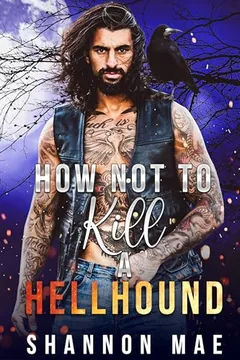
About the Author
Other books by Shannon Mae
Download PDF
Download EPUB
.epub digital book format is ideal for reading ebooks on phones, tablets, and e-readers.








