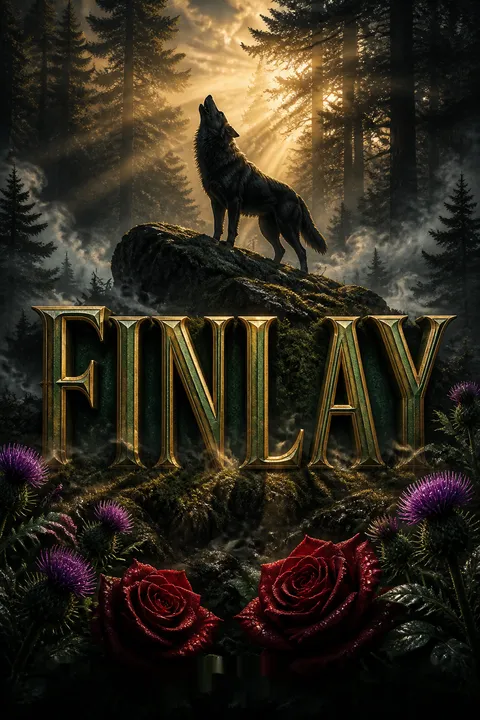


Plot Summary
Prologue
A century and a half earlier, Finn returned to the McCarthy clan lands and learned that Sarah and her infant daughter, Maria, had been killed in a trap meant for Danny, the clan’s alpha and Finn’s closest friend. Finn had loved Sarah in secret, but his grief had to wait: Danny had disappeared, and Finn was suddenly responsible for leading a clan still compromised by traitors.
He and his brother Calan ran to the loch where they had once been happy, then returned to face the council and protect the survivors. Finn’s private heartbreak became a lifelong habit of putting duty before his own needs.
The prologue makes Finn’s emotional restraint legible as more than stoicism. He loses Sarah and Maria in the same political betrayal that removes Danny from his life, then inherits the work of protecting the people responsible for the loss. His grief is sharpened by an unspoken love he considers illegitimate, so even mourning feels like something he must ration. The loch serves as both refuge and witness: Finn returns there to break down, but must leave it to lead. This history establishes why love later feels dangerous to him, and why his private needs have been subordinated to responsibility for so long.
Chester Starts Again
After years with Matt, a partner who isolated him and wore down his confidence, Chester receives an inheritance from an uncle he never knew. It includes a florist shop and a house beside Loch Bunachton, giving him the means to leave Portsmouth and build the life he once imagined in Scotland.
He opens Thistle Do Nicely and employs Reid, a talented florist whose ADHD makes conventional timekeeping difficult. Chester treats him with patience, but keeps everyone else at a careful distance. Even the work he loves cannot quiet Matt’s internalised criticism or the fear that closeness will cost him his independence. His new home is a real escape, yet he has not learned how to feel safe inside it.
Chester’s escape is materially secure before it is psychologically complete. The inheritance gives him property, income, and distance, but it cannot instantly undo the habits formed under Matt’s control. His patience with Reid shows that his capacity for care remains intact, even as he denies himself the same generosity. The shop therefore functions as both a genuine achievement and a controlled enclosure: Chester can welcome customers, arrange their flowers, and choose his working life, while keeping emotional intimacy outside the door. The central tension begins in this gap between having freedom and being able to inhabit it.
A Memorial at Dawn
On the anniversary of Sarah and Maria’s deaths, Finn drives into town after his inner circle challenges him to stop burying himself in work. He enters Chester’s shop to commission flowers for the two people he has mourned for more than a century. Chester asks about their names, ages, habits, and favourite things instead of rushing him through the order.
Finn explains that Sarah pressed wildflowers and that Maria loved birds and carried a yellow blanket. Chester listens closely, proposes yellow blooms and birds of paradise, and offers to gather local flowers himself. Finn is unsettled by how easily this quiet florist makes him laugh, then by the unexpected tenderness of being allowed to speak openly about his grief.
The first meeting connects the novel’s two forms of isolation through a practical task. Finn can describe the dead to Chester because the florist’s questions focus on how Sarah and Maria lived, not on extracting a dramatic account of their deaths. That method gives grief a shape he can approach without surrendering control. Chester’s attention is professional, but it also reveals a mode of care he has not lost despite his own history. Their attraction emerges inside an act of remembrance, so desire does not replace grief; it first makes room beside it. The commission becomes a cautious test of whether intimacy can begin without demanding disclosure on command.
Primrose in the Woods
Chester searches the woods for Scottish primrose, thistles, bluebells, and other flowers to make Finn’s memorial personal. Finn appears nearby after swimming in the loch, shirtless and surprised to find him there. Chester bristles at Finn’s concern about him being alone outdoors, then catches himself and apologises.
When Finn recognises the primrose as a flower Sarah loved, he breaks down; Chester stays beside him rather than offering a polished consolation. The encounter leaves Chester newly aware of Finn’s grief and newly uneasy about his own attraction. At home, Chester realises the loch Finn swims in is directly outside his property, giving his growing curiosity a daily view he cannot quite resist.
The woodland meeting brings attraction and trauma into the same small exchange. Chester’s sharp reaction is not simple hostility: concern resembles the control he endured, and his body responds before he can assess Finn’s intent. His apology shows that he can recognise the difference, though not yet trust it. Finn’s tears, meanwhile, interrupt the role of the composed clan leader and let Chester see the cost beneath it. Chester’s silent companionship is significant because it offers presence without trying to manage Finn’s feelings. The flowers are not merely symbols of the past; gathering them creates a shared present in which both men can be vulnerable without either being required to fix the other.
The Thistle Finds Home
When Finn collects Chester’s arrangement, he finds the pressed wildflowers, Sarah’s favourite primrose, and the colours chosen for Maria woven into a careful memorial. He carries it to the loch and sets it afloat, naming his farewells to Sarah and Maria as the flowers drift away. A gust lifts a dried thistle from the wreath and carries it to the porch of Chester’s house, which Finn takes as Sarah’s blessing.
Afterward, Reid catches Finn outside the shop and explains that Chester seems lonely, carries signs of past mistreatment, and is not ready to let a human close. Reid also reveals that he knows shifters exist. Finn accepts the warning, deciding to protect Chester without forcing a romance.
The memorial gives Finn an action he could not perform while grief remained sealed inside duty. He does not forget Sarah and Maria or claim that a gesture has healed him; he makes a deliberate farewell and allows himself to feel the loss while doing it. The thistle’s arrival at Chester’s home links remembrance to the possibility of a future, though Finn treats the moment as permission rather than proof. Reid’s warning then complicates that possibility. Finn’s desire is no longer only a private longing: it carries an ethical obligation to respect Chester’s boundaries. The section turns mourning into movement, but insists that moving forward must not mean overriding someone else’s pace.
Buddy at the Door
Finn hears Chester collapse during a panic attack and reaches the house before he can explain himself as a man. Shifted into a huge wolf, he enters through an unlocked back door and stays close while Chester’s breathing steadies. Chester mistakes him for a dog, calls him Buddy, and confides that Matt controlled his food, routine, and sense of worth.
Finn returns the next morning, letting Chester believe the visits are simply a stray animal’s choice. Their breakfasts become a ritual: Chester cooks bacon, and Buddy nudges him to eat some too. Chester begins singing again while he showers, reclaiming a pleasure Matt had silenced. Finn sees the man emerging beneath Chester’s self-doubt and chooses to remain near without demanding trust.
Finn’s disguise creates both intimacy and a serious ethical fault line. In wolf form, he can offer companionship without triggering Chester’s fear of a human partner, and Chester’s disclosures help Finn understand the damage Matt left behind. Yet the comfort depends on Chester not knowing who is listening. The story makes the benefit real without pretending the deception is harmless. Meanwhile, the breakfasts reverse a learned pattern: Chester feeds someone else, then accepts a gentle insistence that he eat too. His returning song marks recovery as a small, bodily act rather than a sudden declaration of independence. Care begins to restore Chester’s choices before he can yet trust the person offering it.
Reid Remembers Evan
Evan visits the florist and Reid recognises him as the shifter he met thirteen years earlier at a diplomatic summit. As a bruised, underfed child in the jaguar clan, Reid had asked Evan to take him away; Evan thought the request was a joke and later accepted Reid’s father Clyde’s explanation that the boy exaggerated.
Reid drives him out of the shop, and Evan returns to Finn shaken by the memory. Finn realises Reid may be hiding from his family, while Evan fears the clan could still reclaim him. Finn orders Evan not to approach Reid again until they understand the danger. Reid, however, tells Chester that Finn is trustworthy and that Evan will not expose his location.
This history reframes Evan’s guilt as a collision between a child’s urgent need and an adult’s limited understanding of what he was seeing. Evan did not knowingly abandon an abused child, but his failure to recognise the plea still matters to Reid, who has carried the memory for years. The book resists an easy absolution: Finn can explain the circumstances, but cannot make Reid forgive. At the same time, Reid’s insistence that Finn is safe shows that his ability to judge character survived his upbringing. The episode makes protection more demanding than good intentions. It requires attention, accountability, and the willingness to hear a person even when their distress is inconvenient.
Flowers Meant for Chester
Finn returns to the shop and asks Chester to design a bouquet that signals desire to a man he wants to sleep with. Chester, believing Finn means someone else, builds it with roses, tulips, camellias, and other flowers associated with passion.
Finn gives the bouquet to Chester instead. Chester kisses him, then agrees to one night while making clear he cannot promise a relationship. At Chester’s home, a question about what he wants sexually triggers a panic attack linked to Matt’s insults about his body and preferences.
Finn helps him breathe, asks what would make him comfortable, and listens when Chester says he prefers to bottom. They share intense, affectionate sex, but Finn respects Chester’s decision to leave penetration for another time.
The bouquet lets Chester receive desire before he can believe it is meant for him. His jealousy during its construction exposes a want he has been trying to disqualify, while Finn’s reveal makes that want answerable rather than imagined. Their first night turns on communication, not simply attraction: Chester’s panic brings Matt’s conditioning into the room, and Finn responds by returning control to him. The choice to postpone penetration is not a failure of the encounter but evidence that consent is more than a single yes. Finn wants lasting commitment, yet accepts the limited promise Chester can make. That restraint gives Chester a reason to consider another meeting without treating it as a debt.
Clyde Comes Calling
A tall, tense stranger enters the florist shop asking for Reid, and Chester lies to protect his employee. The man leaves a card and warns that he has respected a treaty by avoiding violence, which tells Chester the matter is far larger than a family search. Finn recognises the scent on the card as belonging to a jaguar shifter and summons Calan, Logan, and Evan.
Evan identifies the visitor as Clyde, Reid’s father and the Clarkson Clan’s alpha. The group explains that Reid was born human to shifters, treated as a servant, and escaped his clan five years earlier. Reid refuses to involve police or provoke a fight, so Finn’s circle assigns guards while Evan keeps his distance.
Clyde’s visit converts the private work of recovery into a question of political safety. Chester’s instinct to lie for Reid shows that his protectiveness is no longer abstract; he is willing to risk a confrontation rather than hand over someone vulnerable. The treaty gives the threat a structure, but its language also exposes its weakness: a hostile visitor can intimidate without technically committing the violence that would trigger retaliation. Reid’s refusal of police and force is not passivity. He knows escalation could make him less safe, and he asks the people helping him to respect that judgment. The conflict therefore tests whether protection will listen to its supposed beneficiary.
Buddy Becomes Finn
After a lonely evening, Chester takes tablets and begins choking while Buddy is beside him. Finn shifts from wolf to human and performs abdominal thrusts, dislodging the pills before Chester loses consciousness. Once Chester can breathe, Finn reveals that he is a wolf shifter and that he has been visiting as Buddy. Chester is mortified by the secrets he shared, but asks why Finn deceived him.
Finn explains that Chester had been lonely and frightened of letting him close, and that he chose the form Chester felt safe with. Finn then answers questions about shifters and his role as acting leader of the McCarthy Clan. Chester does not end the relationship; instead, he asks Finn to stay and tell him the truth.
The emergency makes disclosure unavoidable, but the rescue alone does not earn Finn forgiveness. Chester has to weigh the fact that Finn saved his life against the fact that he used a false identity to gain access to his most vulnerable thoughts. Finn’s explanation acknowledges the motive without denying the breach. Chester’s decision to keep talking is therefore active, not automatic: he chooses more information before choosing what the relationship means. The revelation also alters the emotional terms of their intimacy. Buddy had been a safe listener precisely because Chester thought he was an animal, while Finn must now prove that the care was not merely a strategy. Trust begins again through questions answered plainly.
A Seat Among Wolves
As Chester and Finn grow closer, Finn brings him to the clan house to meet Calan, Logan, and Evan properly. Logan tries to provoke Finn with crude questions, but Chester answers with humour and holds his ground. The others welcome him, and he sees how the four men combine teasing with unquestioned loyalty. Chester also learns that Finn’s leadership is rooted in practical care, not just authority.
Their bond with Reid remains part of the room: Evan carries guilt about his childhood failure, while Chester reminds him that Reid’s abuse was not Evan’s doing. The dinner leaves Chester less afraid of being absorbed into Finn’s life and more able to imagine belonging to people who would protect one another.
The clan dinner gives Chester evidence that intimacy with Finn need not mean isolation from everyone else. Matt’s control narrowed Chester’s world until dependence could masquerade as love; Finn’s community offers a contrasting structure in which loyalty is distributed across several relationships. The group’s humour matters because Chester can participate rather than perform politeness for approval. His defence of Reid and measured reassurance to Evan also reveal that he is not merely being welcomed as Finn’s love interest. He contributes moral judgment of his own. The scene makes belonging reciprocal: the clan receives Chester, but he also changes the emotional balance of the group by offering compassion where guilt has stalled Evan.
The Loch Holds Memory
Finn takes Chester near the cabin where Sarah and Maria lived, explaining that he had served as their guard and secretly loved Sarah. Their deaths left him afraid that loving someone only creates another person he can lose. Chester then admits that Matt made him fear losing his identity, sharing decisions, and becoming trapped again.
Finn addresses each concern directly: Chester can keep his own finances, make his own choices, and rely on the clan if Finn ever mistreats him. He also tells Chester that his present self is the person he loves, not a version to be corrected. Chester cannot promise a bond yet, but he can picture a future with Finn and no one else. Their trust deepens without an immediate demand for permanence.
The conversation makes the romance a negotiation between two histories of danger. Finn fears bereavement, while Chester fears coercion; neither fear is irrational, and neither can be solved by declarations alone. Finn’s strongest response is practical. Separate finances and a protective community address the conditions that made Chester vulnerable, rather than asking him to trust blindly. His disclosure about Sarah also replaces a romantic ideal with a specific grief: he has spent more than a century fearing that attachment ends in loss. Chester’s willingness to imagine a future, while still withholding a final promise, is an important form of agency. Hope grows because the men can name what frightens them without being punished for it.
Clyde Grabs Chester
While Chester hangs Christmas lights, Clyde startles him on the ladder, then grabs his throat and threatens to use him as leverage for Reid’s return. Finn arrives as the other wolves close in. Evan tackles Clyde, Calan pulls Chester clear, and Logan joins the fight in wolf form. The three overwhelm Clyde and kill him for violating the treaty and threatening a human under Finn’s protection.
Finn turns his attention from the fight to Chester, keeping him facing away while the others remove the remains. Chester is shaken but safe; he tells Finn that he loves him. Finn returns the confession beside the loch, where his grief has long gathered, and takes Chester home as the Clarkson conflict hardens into open war.
The climax forces Finn to choose between vengeance and care in the moment when both feel urgent. His pack can handle Clyde, but Chester needs Finn’s attention, so he turns his back on the violence and helps Chester stay grounded. That action differs from Finn’s former pattern of making duty his only purpose: he still leads, but leadership now includes intimate care rather than displacing it. Chester’s declaration arrives amid danger, yet it is not a reward for rescue; it follows months of observed respect and a relationship in which he has learned to state what he wants. The loch’s return makes the scene a counter-memory: Finn’s old site of loss becomes the place where he accepts love.
War Finds Southampton
The Clarkson Clan declares war in response to Clyde’s death, even though Clyde violated the treaty first. Finn cannot reach Danny because Danny and his human mate Riley have returned from a holiday with new phones after a boat accident left their old ones lost at sea.
Finn and Chester travel to Southampton and find Danny at The Closet, a gathering place for supes. Danny is relieved to see Finn and welcomes Chester warmly, while Riley explains that Danny jumped into the water after him despite Riley being able to swim.
Finn then recounts Clyde’s threat, Reid’s history, and the looming clan conflict. Danny offers help, restoring Finn’s connection to the friend whose absence once shaped his grief and confirming that the McCarthy Clan will not face the threat alone.
This journey makes the political conflict personal without allowing it to erase the romance. Finn is forced to seek help from Danny, the friend whose loss once left him carrying the clan alone, and finds that Danny has built a life beyond the old tragedy. Their reunion models a form of loyalty that survives distance and change. Riley’s account of the boat incident adds a comic echo of Finn’s protectiveness, but also shows that fear for a loved one can overwhelm even an immortal shifter’s judgment. Chester accompanies Finn into a wider supernatural community, extending his world beyond the Highlands. The war remains unresolved, but Finn no longer approaches danger as someone abandoned to handle it alone.
Uncle Cal Was Real
At The Closet, demon Cal recognises Chester and explains that he had watched Matt mistreat him before arranging a way out. With Harlow’s help, Cal had placed the florist shop and lochside house within Finn’s protected territory, then engineered the inheritance that allowed Chester to leave.
The money Matt had hidden was redirected toward Chester’s new start, while demonic restrictions prevented the demons from physically harming Matt. Chester initially fears this means his recovery belongs to other people, but Cal and Harlow distinguish the opportunity from what Chester built with it.
Bailey, Harlow’s mate and another survivor of Matt’s manipulation, later shares how fear delayed his own commitment to Harlow. His story helps Chester see that waiting for perfect certainty can also cost a person the life they want.
The revelation complicates Chester’s account of independence without negating it. Others provided the conditions that made escape possible, but they did not open his shop, rebuild his confidence, or choose his future for him. This distinction matters because abuse often leaves survivors doubting their own agency; help can feel like proof that they were incapable rather than evidence that they deserved support. Bailey’s history offers a parallel without turning his experience into a prescription. He does not tell Chester that fear is foolish, but shows that fear can also prolong deprivation. The section redirects gratitude away from indebtedness and toward choice: Chester can honour those who helped him without surrendering authorship of his life.
Chester Chooses Forever
Bailey’s account leaves Chester unwilling to let Matt’s damage decide whether he can keep Finn. Back in Scotland, Chester prepares a romantic dinner and arranges flowers whose meanings include love, lasting devotion, and a bond made through magic. He uses the bouquet to ask Finn to make him his mate.
Finn accepts, and the bite at Chester’s shoulder seals their chosen bond, allowing them to feel one another’s emotions. Chester’s decision is not a cure for his history; it is a commitment made with clear knowledge of what the bond means and with the freedom to choose it. Finn’s happiness answers the grief that once kept him from hoping, while Chester enters the clan’s protection without losing his own voice.
The bouquet reverses the earlier courtship gesture. Finn once used flowers to make desire legible to Chester; now Chester uses them to articulate a commitment he has chosen for himself. Their shared language of flowers turns the shop’s practical craft into a means of consent and memory. The bond is powerful, but the story’s emphasis falls on the decision preceding it: Chester does not mate because danger has frightened him into dependence, but because he has tested Finn’s respect across time. The outcome joins emotional intimacy to practical security, while preserving the difference between protection and ownership. Finn’s long grief does not vanish; it becomes part of a life that can now contain joy as well as remembrance.
Epilogue
Evan’s epilogue finds him guarding Reid while believing his old failure can never be repaired. When four jaguar shifters attack Reid’s home, one disables Hamish and three corner Reid. Evan reaches them first, kills two attackers in wolf form, and holds off another until Finn, Logan, and the other wolves arrive.
Once Reid is safe, he throws himself into Evan’s arms and asks him to protect him. Evan accepts the responsibility he once failed to take, promising to keep Reid safe. The danger has not disappeared, but Reid has finally asked Evan for help again.
The epilogue shifts the emotional centre from Finn and Chester’s fulfilled romance to Evan’s unresolved guilt, then gives that guilt a consequential test. Evan cannot change what happened when Reid was a child, and the story does not pretend that one rescue erases thirteen years of harm. What he can do is respond differently now: he reaches Reid, fights the attackers, and accepts the direct request to protect him. Reid’s appeal matters because it is voluntary. Evan does not seize forgiveness or closeness; Reid chooses to place trust in him in an emergency. The ending therefore offers repair as a practice rather than absolution, while leaving the clan threat active and the relationship unfinished.
Analysis
Finlay treats recovery as a matter of restored agency rather than a sudden escape from pain. Chester leaves Matt with money and distance, yet his body still obeys old instructions: he limits food, fears praise, and anticipates punishment when he speaks freely. His progress becomes convincing because it appears in concrete reversals. He sings again, eats the food he wants, defends Reid, and eventually asks for the commitment he once feared. Finn’s parallel recovery is slower and differently shaped. For centuries he has converted grief into clan service, avoiding any future that might expose him to another loss. Chester does not erase Sarah and Maria; he helps Finn imagine that loving someone new need not betray the people he lost. Their romance works because care is shown through practical respect: Finn asks what Chester wants, accepts boundaries, and makes space for independent finances and relationships. That emphasis distinguishes protection from possession, a distinction tested by both Matt’s manipulation and the supernatural clan politics around them. The novel also complicates the idea that good intentions are enough. Finn’s Buddy disguise comforts Chester, but still withholds the truth; Evan’s concern for Reid does not undo his childhood failure to understand a plea for help. Repair requires accountability and the other person’s choice to trust. The flowers gather these concerns into a recurring practice: a life is honoured through attention to its particular details, not through grand claims about what it means. The ending grants Finn and Chester a chosen bond, while the epilogue refuses total closure. Evan’s opportunity to protect Reid is not absolution, and the new attack leaves the clan conflict unresolved. Love offers shelter here, not immunity from danger or grief.
Review Summary
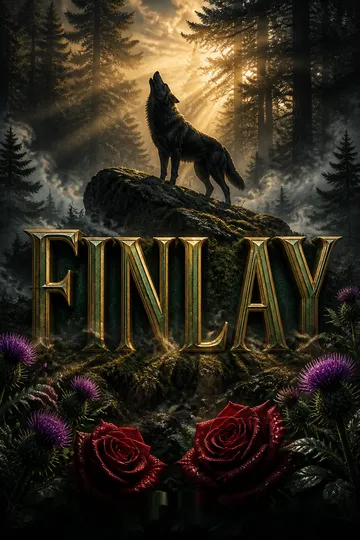
Finlay is a well-received MM paranormal romance featuring a wolf shifter and human. Readers praise the emotional depth, sweet romance, and hurt/comfort themes. The story follows Finn and Chester as they heal from past traumas and find love. Many appreciate the patient character development and the integration with the author's existing universe. Some critics note repetitive plot elements, but overall, the book is highly rated for its tender romance, found family dynamics, and engaging world-building. Fans eagerly anticipate future installments in the series.
People Also Read




Characters
Chester
The guarded floristChester is a broad-built human florist who has built Thistle Do Nicely after leaving a controlling relationship. He uses flowers to honour the details that make a life individual, and he extends that same attentive care to his employee Reid. His warmth has not disappeared, but years of criticism have taught him to distrust praise, suppress appetite, and treat loneliness as safer than dependence. Chester’s central struggle is not whether he can love, but whether he can remain himself while being loved. He values autonomy, clear boundaries, and a safety net of his own. His wit and protective instincts emerge most readily when he feels safe enough to stop monitoring every reaction.
Finn
The grieving wolf leaderFinn, formally Finlay McCarthy, is a centuries-old wolf shifter and acting leader of the McCarthy Clan. Loyal to his friend Danny and protective of his clan, he has made responsibility the organising principle of his life. The deaths of Sarah and Maria left him carrying grief alongside an unspoken love and the fear that loving again invites another loss. Finn is perceptive, playful, and physically formidable, but his devotion can tip toward overprotection. His deepest growth comes through learning that care must preserve another person’s choices. He wants a lasting bond with Chester, yet understands that patience and honest communication matter more than securing the outcome he hopes for.
Reid
The quick-witted floristReid is Chester’s young human employee, talented with floral design and openly affected by ADHD, especially when timekeeping or attention becomes difficult. He has a fast-moving, funny conversational style and a keen instinct for reading people. Born into a jaguar-shifter clan despite being human, he has reason to be wary of those who mistake difference for weakness. Reid values Chester’s patience and tries to help him reconnect with life beyond the shop. His friendship with Finn’s circle is complicated by old injuries and by his need to decide for himself what kind of help feels safe.
Evan
The burdened protectorEvan is a wolf shifter in Finn’s inner circle, younger than the others and valued for his judgment in diplomacy. He is generally good-humoured, observant, and protective of vulnerable people. A formative encounter at a shifter summit leaves him questioning whether he noticed enough when a child needed help. Evan’s instinct is to take responsibility, even when guilt exceeds what he could reasonably have known. His struggle exposes the difference between remorse and repair: wanting to protect someone is not the same as earning that person’s trust.
Calan
Finn’s formidable brotherCalan is Finn’s brother and the McCarthy Clan’s enforcer. He is blunt, physically powerful, and quick to anger when someone threatens his family, but his loyalty is steady rather than showy. Calan has stood beside Finn through grief and political danger, often grounding him when his wolf pushes toward violence. His practical instincts make him an effective protector, though his stubbornness can make emotional conversations difficult. He supports Finn’s movement toward a life beyond clan duties even while remaining watchful of the risks.
Logan
The irrepressible strategistLogan is a wolf shifter in Finn’s inner circle, known for quick humour, strange drinks, restless energy, and a taste for provoking people. Beneath the performance is a fiercely loyal friend who notices when someone is isolated and can use levity to make difficult company easier to bear. Logan is also dangerous when the people he loves are threatened. His irreverence can cross a line, but his warmth is real, and he often helps others approach painful subjects without pretending they are simple.
Danny
The absent alphaDanny is the former alpha of the McCarthy Clan and Finn’s closest friend. His leadership once gave Finn a place beside rather than above the clan, and his history of devastating loss remains central to Finn’s understanding of grief. Danny is devoted to the people he loves and can be fiercely protective, sometimes to the point of acting before assessing the danger. He has built a life away from the Highlands with his mate, Riley, while retaining deep ties to the clan and to Finn.
Riley
Danny’s steadfast mateRiley is Danny’s human mate and a self-possessed member of a close supernatural community in Southampton. His relationship with Danny is affectionate and lively, with Riley willing to challenge Danny’s overprotectiveness rather than simply accept it. He helps Finn reconnect with the life Danny has built away from the clan. Riley’s confidence around supernatural beings reflects his experience within a world where humans can be active participants, not merely people to be shielded.
Matt
Chester’s controlling exMatt is Chester’s former partner, charming at first and increasingly controlling once Chester has moved away from his support network. He criticises Chester’s body, food, work, and self-expression, gradually teaching him to doubt his own judgment. His influence persists after the relationship ends, most visibly in Chester’s reflexive shame and anxiety. Matt’s character illustrates how control can be built through repeated small humiliations rather than a single dramatic act.
Clyde
The jaguar clan alphaClyde leads the Clarkson Clan and is Reid’s father. He is politically powerful, calculating, and accustomed to treating other people as leverage. His relationship with Reid reflects a clan culture that prizes strength while failing to protect a vulnerable human child. Clyde’s actions bring the story’s private concern for Reid into the open political conflict between clans.
Sarah
Danny’s beloved wifeSarah is Danny’s wife and Maria’s mother. She loves wildflowers, presses them, and shares an easy warmth with Finn, who is often near her as a guard and friend. Her favourite flowers and memories remain vivid for Finn long after his life has changed. Sarah represents a love Finn treasured without claiming as his own.
Maria
The remembered childMaria is Danny and Sarah’s infant daughter, remembered by Finn through her yellow blanket, laughter, and delight in small gifts. Her brief presence in Finn’s memories carries the tenderness he has tried to keep buried.
Cal
The resourceful demonCal is one of Lucifer’s sons, a demon who is practical, strategic, and protective of people harmed by controlling partners. He is connected to Finn’s supernatural community and tends to solve problems through resources and careful arrangements. His dry humour sits beside a serious commitment to helping people recover agency.
Harlow
The flamboyant demonHarlow is a demon, one of Lucifer’s sons, and Bailey’s mate. He is theatrical, confident, and quick with a joke, but his loyalty to the people he loves is absolute. Harlow understands how past mistreatment can distort a person’s view of their own worth, and he uses both tenderness and boldness to counter it.
Bailey
The survivor who understandsBailey is Harlow’s human mate and has experience recovering from a toxic relationship with Matt. He is thoughtful about the ways shame can persist after a person leaves an abuser, and he speaks with care rather than treating his own recovery as a template for someone else. Bailey offers Chester a perspective on love, hesitation, and the possibility of choosing commitment without denying past harm.
Gran
Chester’s first safe homeChester’s grandmother raised him after his parents died and gave him a childhood rich in food, music, and affection. Though she is absent from the present action, her memory helps Chester recognise which parts of himself existed before Matt’s influence.
Plot Devices
The memorial flowers
Grief made tangibleChester’s arrangements translate remembered habits into physical detail. Sarah’s love of pressed wildflowers, Maria’s yellow blanket, and the birds she watched shape Finn’s memorial. The flowers let Finn speak about people he has avoided remembering aloud, then give him a ritual for saying goodbye at the loch. Later, floral symbolism becomes part of the lovers’ courtship and Chester’s proposal of a chosen bond. The device links mourning, desire, and agency through the same craft, while showing how careful attention can honour someone without reducing them to the fact of their loss.
Finn’s wolf form
Safe closeness before trustFinn’s ability to shift lets him approach Chester in a form Chester instinctively reads as nonthreatening. As Buddy, he comforts Chester during panic, shares breakfast, and becomes a companion while Chester talks through loneliness and the damage Matt caused. This enables real tenderness, but it also depends on concealment and creates a breach of trust when Finn’s identity is revealed. The device therefore serves both comfort and conflict: it shows how accommodation can help someone feel safe, while reminding the story that safety built on withheld truth has limits.
The chosen mating bond
Commitment by consentWolf shifters do not have fated mates; they choose whether to form a permanent bond. A mate shares the shifter’s strength and healing, and the pair can sense each other’s emotions. For Finn, the bond also offers protection in a dangerous clan world. For Chester, its permanence makes the choice especially significant after a relationship that took away his autonomy. The bond matters not simply as a supernatural guarantee, but because Chester can decide when he is ready. Its power has emotional and practical consequences, but the story treats consent as more important than the protection it provides.
Treaties and protective wards
Boundaries under pressureTreaties between shifter clans set limits on entering territory, taking people, and inciting violence. They offer a framework for restraint, but Clyde exploits the gap between intimidation and an overt treaty violation. Finn also places magical wards around Chester’s home, allowing him to sense when someone crosses onto the property. The treaty gives the political conflict its rules, while the wards provide immediate protection. Neither can guarantee safety: the treaty can be manipulated, and a ward can only alert Finn to danger, not prevent every attack.
The arranged inheritance
A practical route to freedomThe shop, house, and inheritance that bring Chester to Scotland appear to be the legacy of a distant uncle. In fact, Cal and Harlow arrange the resources after seeing how Matt treats him, and they place Chester within the McCarthy Clan’s protected territory. The money gives Chester a way to leave without asking Matt’s permission or depending on him financially. The device creates the conditions for a new life, but it does not do the work of recovery for Chester. He still has to build the shop, form new relationships, and reclaim the choices that the money makes possible.
The Wild Edges Series

About the Author
Other books by Lark Taylor






Download PDF
Download EPUB
.epub digital book format is ideal for reading ebooks on phones, tablets, and e-readers.








