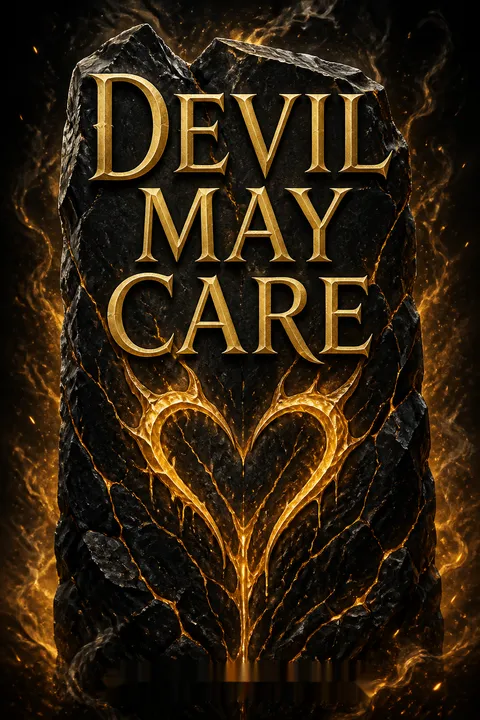


Plot Summary
A Stranger at Cal’s
Harlow, a demon who has spent centuries guarding his freedom, visits his brother Cal’s bookshop and finds Bailey there with Cal and Oscar. The instant Bailey’s hand meets his, Harlow’s instincts identify him as the mate fate has chosen. The knowledge feels less like romance than a trap: accepting a demon’s mark would bind their lives, while rejection would leave Harlow unable to love anyone else.
He has no wish to surrender his hard-won independence, so he bolts from the shop, flies north, and tries to outrun the pull. Weeks in Scotland and Amsterdam fail to loosen Bailey’s hold on his thoughts. Harlow eventually returns to Southampton, compelled to see the man he has already decided he cannot claim.
The meeting turns Harlow’s usual confidence into a problem of agency. He has spent centuries resisting the expectations of Hell, yet fate’s apparent certainty threatens to reproduce the same coercion in a more intimate form. His flight is not evidence that he feels little; it is the first sign that the feeling is powerful enough to frighten him. The mark sharpens the stakes by making desire irreversible. Harlow’s central conflict begins before Bailey knows there is one: whether love can be chosen when the body seems to have chosen first.
The Kiss He Rejects
Three weeks after their first encounter, Harlow finds Bailey at The Closet, the club owned by another brother, Mori. They dance, and the kiss that follows leaves both men shaken. Bailey’s fear takes over: he calls the kiss a mistake, insists Harlow is not his type, and leaves him standing alone.
Harlow takes the rejection as proof that his mate does not want him, though he cannot stop watching Bailey from a distance. For six months he avoids other lovers and keeps track of Bailey’s routines, while Bailey also steers clear of him. The silence protects neither man. It allows Bailey’s attraction to become an obsession and Harlow’s hurt to harden into the belief that friendship is the most he can ask for.
The rejection is a collision between two different defenses. Bailey exits first, not because the kiss meant nothing, but because its intensity threatens the solitary life he has built after repeated abandonment. Harlow, who interprets the moment through the supernatural certainty of a mate bond, reads Bailey’s retreat as a verdict on his own worth. Their mutual avoidance turns a brief encounter into a durable misunderstanding. Each man protects himself by treating his fear as knowledge, and the resulting distance gives both of them time to imagine the other is indifferent.
Friends, With Reservations
Oscar, Bailey’s best friend and Cal’s partner, engineers a dinner that puts Bailey and Harlow in the same room again. They begin stiffly, but a private conversation about Bailey’s Welsh childhood and his absent father lets Harlow’s sharp humor draw out the more guarded man.
At Oscar’s urging, they agree to try friendship. Their next meeting, meant to be a cinema outing, turns into a lesson in Marvel films when Harlow admits he knows almost nothing about them.
At Bailey’s home, they watch late into the night; Harlow falls asleep on the sofa, and Bailey covers him rather than waking him. In the morning, Harlow leaves Bailey’s favorite coffee and pastry, then invites him to continue watching. Small acts of care begin to challenge Bailey’s expectation that people leave.
Friendship gives the pair a safer structure than either romance or sex. The films offer Bailey a language for sharing enthusiasm without having to name his longing, while Harlow’s willingness to be taught reverses their usual imbalance of confidence. Bailey’s blanket and Harlow’s breakfast are modest gestures, but both carry more emotional weight than a declaration would at this stage. They show attention becoming reciprocal. Oscar’s matchmaking matters less than the ordinary intimacy he makes possible: time together, remembered preferences, and the right to be imperfect in another person’s company.
The Key to Hell
After reconnecting with Bailey, Harlow admits to Oscar that he recognized Bailey as his mate and still fears forcing a bond on someone who rejected him. Soon afterward, mage leader Anya brings her clan to Mori’s club and asks for Harlow’s specially altered portal key.
A seer named Wilson explains that mages have been vanishing in their sleep, including Willow, Anya’s mate, and that ghasts are taking them. He believes the supernatural balance is failing and proposes triggering the apocalypse by releasing lower demons from Hell.
Harlow and his brothers refuse, unwilling to risk humanity. Anya leaves determined to find another route. Later, Blaise, her powerful and hostile mage ally, attacks Harlow’s wards to steal the key; Harlow restrains him and warns him away.
The supernatural crisis echoes the lovers’ private struggle over choice. Anya’s grief makes her proposed sacrifice understandable, but she treats humanity as an acceptable price for recovering Willow. Harlow’s refusal marks a moral break from the demonic role expected of him: he protects people he loves without claiming that love grants him ownership over them. His decision also makes the portal key a concrete danger rather than a piece of lore. Blaise’s attack shows that refusing the plan will not end the threat; it merely forces the conflict into a more personal and unpredictable form.
More Than Friendship
As their film nights continue, Bailey grows comfortable enough to cuddle Harlow, but his old belief that a bigger man cannot be desired or wanted in the bedroom keeps him wary. On a rain-soaked evening, Harlow arrives drenched and strips off his wet clothes; Bailey recoils, then realizes his fear has hurt the man he wants.
He asks not to forget what is happening between them, and they sleep together. Harlow treats Bailey’s inexperience with care, honoring his limits rather than pushing him.
The next morning Bailey proposes an exclusive friends-with-benefits arrangement, afraid that a relationship would expose him to another abandonment. Harlow agrees to Bailey’s boundaries, while promising to stay in his life. Their intimacy deepens, but neither has yet made the emotional commitment the other longs for.
Bailey’s body shame is not simply a private insecurity; it has been reinforced by partners who treated his size as incompatible with vulnerability and desire. Harlow’s response offers a counterexperience, one in which Bailey can state a limit and still be wanted. Yet Bailey manages the risk by naming the relationship in a way that keeps permanence at arm’s length. Harlow accepts the arrangement because proximity matters more to him than status. That generosity is loving, but it also leaves an imbalance: Bailey controls the terms to avoid loss, while Harlow quietly absorbs the uncertainty.
The Exit He Chooses
Harlow encourages Bailey to imagine leaving teaching and offers to invest if he wants to open a gym. Bailey’s interest is real, but the offer makes their shared future feel dangerously possible, so he avoids discussing it. When Blaise appears outside the school and later confronts them near Cal’s bookshop, Harlow orders Bailey inside while he and Cal pursue the mage.
Bailey reads the secrecy as proof Harlow does not trust him. At Bailey’s home, he ends their benefits arrangement and claims they want different things. Harlow challenges the excuse, then tells Bailey that he is in love with him and will not stop caring, even if Bailey asks for space. He leaves rather than force an answer. Bailey is left facing the pain he tried to prevent.
Bailey’s fear converts uncertainty into a self-fulfilling loss. The gym offer matters because it makes Harlow’s investment in Bailey’s future tangible, but Bailey experiences that intimacy as a countdown to disappointment. The threat outside the bookshop intensifies the rupture: Harlow’s protective secrecy looks to Bailey like exclusion, while Bailey’s refusal to explain himself looks to Harlow like rejection. Their conflict is therefore not a lack of love but a failure to share information and risk. Harlow’s confession breaks the pattern of concealment, although he still leaves Bailey free to choose.
A Ballroom Apology
After Harlow leaves, Bailey stays awake replaying the breakup and recognizes that his attempt to prevent abandonment has made him the one pushing someone away. His mother, Angela, helps him see the resemblance between his behavior and the hurtful choices of his father and former boyfriend.
Bailey apologizes to Oscar, then asks him and Cal to help arrange a gesture worthy of Harlow. The brothers briefly kidnap Harlow and bring him to a hotel ballroom, where Bailey has arranged daffodils, a string quartet, and dinner for two.
He admits that the future frightened him because he could not bear a life without Harlow, then tells him he loves him. Harlow accepts the apology, but their reconciliation depends on Bailey promising to communicate when fear returns.
The apology is effective because Bailey does more than declare a feeling: he identifies the strategy that has been hurting both of them. Angela’s challenge reframes his self-protection as a repetition of the very abandonment he fears, giving him a chance to act differently rather than merely feel guilty. The ballroom also answers Harlow’s taste for romance, but its true value lies in Bailey’s initiative. For once, Harlow is not the only one pursuing the relationship. Bailey makes a visible, costly choice to meet him in the open.
Wings in the Ballroom
Before they can settle into a future, Harlow tells Bailey what he has hidden: he and his brothers are demons, sons of Lucifer, and Harlow’s instincts identified Bailey as his fated mate. He demonstrates his nature with fire and black wings, while Bailey worries first about protecting him from the musicians in the room.
Oscar later explains the supernatural world from a human perspective. Bailey accepts that Harlow’s secrecy came from fear of driving him away, but he wants time to understand the mark and its consequences.
Meanwhile, the brothers keep Bailey close because Blaise remains dangerous and Harlow’s scent and protective wards expose their connection. Bailey eventually asks to be marked, but Harlow refuses to rush him, insisting the choice must be freely made.
The revelation tests whether Bailey’s new trust survives information that cannot be folded into ordinary romance. His immediate concern for Harlow’s safety is not proof that he has no fear; it shows that care remains available even while his understanding is unsettled. Harlow’s decision to wait before marking him is crucial. The demon bond could make their relationship physically permanent, but Harlow refuses to use fate as leverage. The scene distinguishes intimacy from consent: feeling chosen by destiny does not entitle either man to decide for the other.
The Classroom Fall
Mori discovers that Blaise has obtained another altered portal key, so Harlow and his brothers descend into Hell to prevent the mages from releasing its lower demons. Before leaving, Harlow asks Bailey to stay with Oscar, but Blaise reaches him at school instead.
Blaise uses Bailey as leverage, and Bailey tackles him in an effort to escape. The struggle ends when Blaise pulls Bailey off balance and he strikes his head on a jagged metal shelf support.
Bailey experiences his own death from outside his body, watching Harlow arrive and cradle him before grief drives Harlow’s power into an uncontrolled explosion. In Cal’s flat, Harlow repeatedly loses control and must be restrained. His brothers and Oscar pull him back when they discover Bailey’s soul is in Hell, not beyond reach.
The death sequence makes the cost of incomplete protection brutally concrete. Harlow’s wards and warnings cannot cover every contingency, and Bailey’s choice to resist Blaise is brave but not enough to keep him alive. From outside his body, Bailey sees the emotional consequence that his insecurities had made difficult to trust: Harlow’s love is not a performance or a temporary appetite. Harlow, meanwhile, confronts the danger of treating protection as something he can guarantee alone. His family’s intervention becomes essential, turning grief into a shared, if desperate, search.
A Mark Through Hell
In Hell, Ferryman Ferry shelters Bailey from demons searching for Harlow’s mate, while Harlow and his brothers arrive to find him. Ferry warns that taking Bailey out without a bond would erase Harlow’s soul, so Harlow offers his mark.
The first attempt fails as their lifeforces begin to unravel. Mori, Dagon, and Cal lend Harlow power, and Ferry adds his ancient strength, allowing Bailey to accept the mark before both men disappear. Their bond takes hold just as demons batter the shelter.
Harlow fights beside his brothers and Ferry while angels led by Dimitri hold off the attackers; Dagon returns with them rather than remain with Dimitri. The group escapes through a portal, bringing Bailey and Harlow back to Earth alive and bound to one another.
The climax resolves the novel’s central question of choice under pressure. The mark is not imposed as a shortcut: Harlow risks himself, Bailey must accept, and the bond succeeds only when others help sustain their agency against forces pulling them apart. The brothers’ power makes love a communal act rather than an isolated rescue, while Ferry’s aid complicates the assumption that Hell contains only enemies. The battle then externalizes what the relationship has survived. Harlow can protect Bailey, but he cannot do so alone; their return depends on solidarity across family and even supernatural boundaries.
Epilogue
Six months later, Bailey’s gym opens to the public, built with Harlow’s investment and the work they put in together. Angela is preparing to move nearer to them, while Harlow and Bailey continue recovering from the violence of their separation. Blaise has vanished after being taken by a ghast, and Anya is dying after losing Willow, her mate.
The ghast threat remains unresolved, so Dagon pursues new leads. At the club, a human arrives seeking Mori’s help to find his missing brother. Mori feels no mate-bond pull, but the request offers a new mystery, and he agrees to hear the man’s terms.
The epilogue gives the couple an ordinary achievement after an extraordinary rescue. Bailey’s gym turns an earlier fear of dependence into a shared project, while Angela’s move answers Bailey’s long-standing worry about his mother’s isolation. Their life together is not presented as a cure for trauma; the memories of Hell and near-loss still require care. The broader supernatural plot remains deliberately unsettled: Blaise’s fate and the ghasts signal dangers beyond the romance. Mori’s new visitor also tests the hope he has invested in finding a mate, offering connection without promising that every encounter is destiny.
Analysis
Devil May Care makes romantic commitment a contest between destiny and consent. The fated mate bond seems to promise certainty, but the story refuses to treat certainty as sufficient. Harlow knows what he wants early, yet his power and supernatural knowledge give him advantages Bailey does not share. He must wait, disclose the truth, and accept that Bailey’s answer has to be freely given. The bond becomes meaningful only when Bailey understands the choice and speaks it himself.
Bailey’s central obstacle is not a lack of desire but a learned expectation of being left. His father’s rejection and Matt’s contempt have made him interpret intimacy as a temporary arrangement with an inevitable expiry date. He tries to control that danger by ending things before Harlow can, repeating the very abandonment he fears. Angela’s blunt comparison helps him see the pattern, while Harlow’s willingness to remain present gives him evidence that can challenge it. The novel treats reassurance as behavior, not merely language: remembered food, patient sexual care, honesty, and staying through conflict all become tests of trust. The supernatural plot mirrors this personal conflict without reducing it to metaphor. Anya’s plan to unleash Hell is a genuine ethical threat, driven by grief but willing to sacrifice strangers. Harlow refuses to reproduce Hell’s logic of coercion, even though doing so puts his family at risk. When Bailey dies, the romance’s emotional stakes become literal: rescuing him requires power, cooperation, and an accepted bond, not Harlow’s desire alone. The brothers, Oscar, Ferry, and even the angels make survival collective. The happy ending therefore does not erase pain or danger. It gives Bailey and Harlow a shared future in which fear can be spoken, choices can be revised, and love is proven through repeated acts of consent and return.
Review Summary
Devil May Care is a paranormal romance featuring Harlow, a sassy demon, and Bailey, a human with insecurities. Readers praised the chemistry, steamy scenes, and emotional depth of the relationship. Many enjoyed Harlow's character and the slow-burn romance. Some found Bailey's insecurities frustrating but ultimately appreciated the character development. The book includes unexpected plot twists and builds on the series' overarching story. While most readers loved it, a few found the pacing slow or struggled to connect with the characters.
Characters
Harlow
The reluctant demon romanticHarlow is a centuries-old demon, one of Lucifer’s estranged sons, and the youngest of four brothers. Bold, flirtatious, and theatrically self-assured, he has built a life outside Hell and resists any force that might dictate how he should live. His confidence conceals a capacity for profound attachment, which becomes difficult to manage when he recognizes Bailey as his fated mate. Harlow’s instinct is to protect, but that instinct can blur into secrecy and surveillance. His challenge is to love Bailey without turning fate, fear, or his supernatural power into a substitute for Bailey’s consent. Family loyalty and fierce humor keep him connected to others even when he feels rejected.
Bailey
The guarded Welsh teacherBailey is a large, athletic PE teacher from the Welsh valleys, a devoted son and Oscar’s closest friend. He is generous with other people and much less forgiving toward himself. His father’s rejection, cruel treatment from an ex, and repeated romantic disappointments have taught him to expect that affection will expire. He prefers casual relationships because they seem easier to survive, though he longs for tenderness and, in the bedroom, the freedom to surrender control. Bailey’s dry humor and practical kindness coexist with a habit of treating insecurity as fact. He must learn that vulnerability is not a demand for abandonment, and that choosing someone requires more than waiting for proof they will stay.
Oscar
Bailey’s steadfast best friendOscar is Bailey’s best friend, a teacher, and Cal’s partner. Having survived an abusive relationship and ongoing anxiety, he understands how fear can disguise itself as self-protection. He supports Bailey and Harlow without always respecting their wish to work things out alone, sometimes arranging encounters to force a conversation. His care is practical as well as emotional: he knows when Bailey needs encouragement and when Harlow needs space. Oscar’s closeness with both men makes him a bridge between their perspectives, though he has to remember that helping is not the same as deciding for them.
Cal
The protective eldest brotherCal is Harlow’s eldest brother, a powerful demon who runs a bookshop and is bonded to Oscar. He is controlled, formidable, and intensely protective of the people he loves. His history with Oscar gives him a personal understanding of how a mate bond can overwhelm someone before trust has had time to grow. Cal often takes the lead when supernatural threats arise, balancing old resentment toward the mages with responsibility for the humans around him. His instinct to protect can lead him to withhold information, making him an imperfect but important example of how care must be joined to honesty.
Mori
The grieving club ownerMori is one of Harlow’s older brothers and owns The Closet, the Southampton club where Harlow and Bailey first kiss. He is imposing, practical, and often the quietest presence in a room. Mori once loved a human named Eric, whose mortality left him wary of expecting a lasting bond, yet he remains the brother most openly hopeful about finding a mate. He gives Harlow room to grieve without demanding a performance of strength. His patience is not detachment; it is a way of making space for other people’s pain while he carries his own.
Dagon
The sharp-tongued fighterDagon is Harlow’s brother, a dangerous demon with electric-blue hair and a talent for provoking people into revealing what they feel. He distrusts the idea that fate should choose his partner, even as his unresolved history with the archangel Dimitri complicates that skepticism. Dagon is a capable fighter and loyal ally, but he often uses sarcasm to avoid discussing his own vulnerability. His bond with his brothers is expressed through teasing, rivalry, and immediate action when they are threatened.
Dimitri
Dagon’s entangled archangelDimitri is an archangel who has helped Harlow’s family before and shares a charged, unresolved history with Dagon. He is disciplined in danger but emotionally exposed when Dagon is involved. Their exchanges suggest an intimacy neither has fully addressed, and Dimitri’s loyalty repeatedly puts him at odds with the boundaries of Heaven. He offers a different supernatural perspective from the demons: duty matters to him, but so do the people he has chosen to protect.
Blaise
The hostile mage enforcerBlaise is a powerful mage associated with Anya’s clan. Scarred, physically imposing, and openly contemptuous of demons, he sees Harlow’s portal key as a necessary tool rather than a boundary that should be respected. His conviction that the crisis justifies extreme measures makes him dangerous, particularly when he turns from argument to intimidation. Blaise’s actions are driven by the urgency of the missing mages, but his certainty leaves little room for other people’s lives or choices.
Anya
The desperate mage leaderAnya is a long-lived mage leader whose composure hides fear for Willow, her mate. She approaches Harlow’s family because she believes the disappearances threaten her clan and the supernatural order. Her grief makes her willing to consider catastrophic means of finding Willow, and she struggles to accept that the demons will not share that calculation. Anya is not casual about the risk; she has persuaded herself that inaction is worse. That conviction makes her both sympathetic and dangerous.
Willow
Anya’s missing mateWillow is a powerful mage and Anya’s mate. Her disappearance is the personal loss behind Anya’s desperate appeal to Harlow’s family, and the fear that Willow may be beyond rescue shapes the clan’s choices.
Wilson
The mage seerWilson is a water mage whose vision connects the vanishing mages to a weakening supernatural balance. Nervous and deferential, he conveys the clan’s theory that the apocalypse could restore order, though he cannot make its human cost disappear.
Ferry
Hell’s guarded ferrymanFerry is the ferryman who transports souls across the fiery river and guards the passage into Hell. He is sardonic, powerful, and reluctant to indulge the dramatic sons of Lucifer, especially Harlow. Beneath his guarded manner lies a strict respect for the sacredness of a mate bond. His knowledge of the afterlife makes him a rare guide through rules that even demons do not fully understand.
Angela
Bailey’s fierce motherAngela, whom Bailey calls Mam, is a Welsh mother who has defended her son’s identity publicly and without apology. She is affectionate, practical, and willing to confront him when self-pity becomes an excuse for retreat. Her home remains a source of comfort for Bailey, while the distance between them troubles them both. Angela’s warmth is paired with blunt honesty, making her one of the few people who can challenge Bailey without weakening his sense of being loved.
Matt
Bailey’s wounding exMatt is Bailey’s former boyfriend, a polished lawyer whose dismissiveness and cruelty helped shape Bailey’s doubts about his body and his desirability. Though absent from the present action, his judgment lingers in Bailey’s assumptions about what partners will accept.
Plot Devices
The devil’s mark
A bond requiring consentA demon can offer a mark only once. If accepted, it binds the demon’s soul and life force to the recipient and grants the human immortality, healing, strength, and speed. The mark cannot be treated as a simple declaration of love: rejection has lasting consequences for the demon, and acceptance must be spoken by the human. This rule gives the romance a supernatural mechanism, but also makes consent central. Harlow’s restraint matters because he could try to claim Bailey before Bailey understands what the bond entails.
Harlow’s portal key
A gate with catastrophic reachA demon’s portal key opens a passage between realms. Harlow has altered his so that many beings can travel through at once, making it far more dangerous than an ordinary key. Anya’s clan wants it to release lower demons from Hell and provoke Heaven into responding, believing the ensuing apocalypse will restore supernatural balance. Harlow refuses because the plan could devastate humanity. The key draws Blaise into direct conflict with Harlow and connects the political crisis to Bailey’s growing danger.
The ghasts
The unseen kidnappersGhasts are a newly emerging supernatural threat, described as half demon and half spirit. They abduct mages in their sleep, leaving no sign of struggle. Wilson’s vision links their appearance to a shift in the balance between good and evil, though the characters cannot establish the full cause or how to stop them. Their existence motivates Anya’s dangerous plan and keeps the wider crisis unresolved beyond the central romance.
Wards and compulsion nets
Protection and concealmentHarlow uses wards to shield homes, the club, the bookshop, and parts of Bailey’s school from supernatural intrusion. Compulsion nets keep ordinary humans from noticing demonic wings, powers, or other impossible events. The protections provide practical safety and help the brothers move through human spaces without exposure. They are not absolute, however: Blaise can test Harlow’s defenses, and the school’s protections cannot prevent Bailey from being caught in a crisis when Harlow is elsewhere.
The afterlife scales
A soul’s uncertain destinationA human’s destination after death depends on scales that settle at the moment of death. Bailey’s connection to a demon does not automatically decide where he will go, and the distinction between Heaven, Hell, and limbo creates the urgency of the rescue. The afterlife rules establish why Harlow cannot simply retrieve Bailey by force and why Ferry’s knowledge matters. They also transform the supernatural romance from a question of future commitment into a question of whether the lovers can remain together at all.
The Reckless Damned Series


About the Author
Other books by Lark Taylor






Download PDF
Download EPUB
.epub digital book format is ideal for reading ebooks on phones, tablets, and e-readers.








