


Plot Summary
Prologue
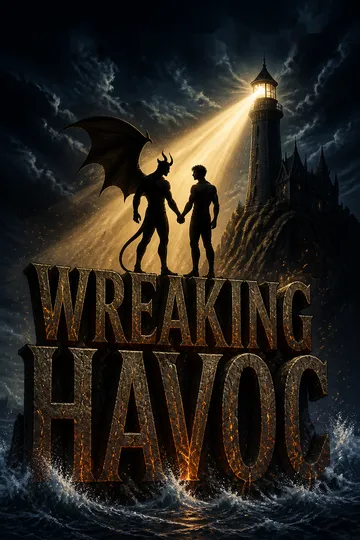
Micah, leader of Heaven’s elite Seraphim, leads his unit into Hell to rescue Dimitri, the angel he has loved for centuries. He saves Dimitri’s demon lover, Dagon, then learns Dimitri has two fated mates and is choosing a life beyond the Seraphim. As the battle ends, black wings mark Dimitri’s fall from Heaven.
Micah’s grief curdles into anger until he notices a demon whose presence answers a pull he has felt for ages. The stranger is Nox, his fated mate. Micah rejects the bond, and Nox rejects him in turn, but neither can stop watching the other depart.
The opening makes love the cause of both Micah’s bravest act and his most humiliating loss. He enters Hell out of devotion to Dimitri, yet the rescue confirms that devotion cannot make him indispensable or chosen. Dimitri’s fall also makes the cost of love visible within the angelic order: intimacy can redraw identity and allegiance. Nox’s sudden appearance does not heal Micah’s grief; it gives that grief a new object to resist. The prologue therefore frames the romance as a collision between inherited enmity and a desire neither man trusts, rather than as an effortless reward for suffering.
A Replacement for Dimitri
Back from Hell, Micah faces Heaven’s tribunal for bringing the Seraphim into an unsanctioned battle. Emilio, the disciplinary archangel and Micah’s old rival, turns the sentence of one hundred lashes into hundreds more, then uses cursed ointment to prevent Micah’s wounds from healing quickly. Micah hides the damage from his unit and returns to lead the search for Dimitri’s replacement.
Candidate after candidate fails the Seraphim’s tests until Noah, a powerful angel from the Juniper unit, withstands Benji’s attack and defeats him. Micah recognizes heartbreak behind Noah’s easy smile and welcomes him into the unit. The new second-in-command eases one practical gap, but cannot fill Micah’s private loss or relieve the punishment he conceals.
Micah’s leadership begins as a form of self-erasure: he absorbs punishment so the unit can remain protected and functional. His secrecy is not simple pride; it is a strategy shaped by a hierarchy that makes care flow downward but rarely back toward him. Noah’s recruitment offers a revealing counterpoint. Micah sees another angel’s hidden pain because he knows how convincingly grief can be covered by competence. The unit’s demand for a replacement treats loss as an organizational vacancy, while Micah experiences it as the end of a relationship and a way of life.
The Demon at the Casino
Nox has only recently escaped Hell with four fellow demons, and freedom proves harder to inhabit than he expected. Their housemates struggle to adjust: Quill refuses to leave home, Dahlia keeps provoking him, and the group’s powers weaken without the steady supply of sin they had below.
Nox heads to a London casino to feed on greed, manipulating wealthy gamblers into envy, lust, and anger. Micah follows the disturbance and finds him at the table. The touch of Micah’s hands briefly quiets the mysterious pull between them, but neither man welcomes the relief.
Nox mocks Micah’s authority, gives him his name, and leaves. Their encounter turns an abstract bond into a person Micah cannot stop thinking about, while Nox resents the angel’s attempt to control his new life.
The casino establishes that liberation is not the same as recovery. Nox is outside Hell but still organizes his existence around survival, power, and resistance to anyone who might command him. Micah approaches the same scene through duty, but his body reacts before his principles can intervene. Their first contact is therefore a small experiment in intimacy and authority: touch brings relief, while speech restores hostility. Both men interpret the connection through the identities they have been taught to defend. Nox sees control; Micah sees a threat to order. Their attraction becomes compelling because it unsettles both readings without yet replacing them.
Lust Breaks the Standoff
Nox keeps provoking disorder across Knightsbridge, partly to demonstrate that Micah cannot dictate his conduct. Micah quietly repairs the damage instead of reporting him, drawing suspicion from Ezekiel and Benji. At a club, Micah finds Nox dancing with two men and feels jealousy he cannot explain away.
Nox identifies how Micah’s unreturned love for Dimitri is shaping his reaction, then presses on that wound until Micah kisses him. They leave for an alley, where Micah asks for rough sex and Nox agrees, insisting it means no tenderness and no promise. The encounter gives Micah a rare chance to surrender control, but afterward he thanks Nox and walks away. Their bodies have crossed the line their words keep rebuilding.
The first sexual encounter is fueled by a double misrecognition. Micah thinks he can use Nox’s resemblance to Dimitri to approach a lost love; Nox fears he is being reduced to that resemblance. Their explicit insistence on hostility protects them from the vulnerability of asking for affection, while jealousy exposes an attachment neither has admitted. Micah’s surrender matters because his public identity depends on vigilance and control. Yet the aftermath restores his familiar defenses: courtesy, distance, and denial. Sex does not solve the conflict; it gives both men evidence that their stated indifference is becoming harder to sustain.
A Roof Without Pretence
Micah tracks Nox to the roof of the demons’ house, claiming he only wants to check that Nox has stopped causing trouble. Their attraction quickly takes over, and they have sex again, this time with Nox insisting Micah face him rather than hide behind the wall. Micah keeps his shirt on, concealing both his scars and the shame attached to them.
He leaves afterward, telling himself the encounters are only a way to quiet the bond. Nox waits for him to return, but Micah is pulled away by Seraphim duties and a tense visit to a jaguar clan. Meanwhile, Benji challenges the angels’ unquestioned division between good and evil, making Micah confront how much their rules shield Heaven from accountability.
The roof scene changes the meaning of their sexual arrangement: Nox asks to be seen, while Micah keeps part of himself literally covered. Their asymmetry is not merely erotic preference. Micah fears that being known will expose him as damaged and unworthy, so he offers access to his body while withholding the history written on it. Nox senses that something is being hidden but does not yet understand why. Benji’s challenge to angelic moral certainty extends this private tension into the world around them. If virtue is defined by obedience rather than action, Micah’s self-sacrifice may preserve the system more than it protects anyone.
The Forest Takes Its Toll
After the jaguar-clan mission and a week of accumulated demands, Micah breaks down alone in the woods beside the Seraphim compound. Nox arrives intending to announce that he will leave, but instead finds Micah crying and holds him until he can stand again. Micah resists Nox’s offer to know him, insisting he will not let fate make his choices.
Nox returns in a theatrically burning car and takes Micah to a rage room, where Micah smashes appliances and finally releases some pressure. Their meetings become regular outings: they walk Brighton beach, visit museums, share food, and trade stories about the lives they have lived. Micah begins to find pleasure outside his rank, while Nox learns to value him beyond the bond.
Nox’s most important gesture here is not sexual. He stays with Micah through a collapse without treating the tears as weakness or an opportunity to claim him. That kind of care challenges Micah’s belief that he must remain useful to deserve closeness. The rage room then gives his anger a safe, chosen outlet, in sharp contrast to the punishments imposed on him by Heaven. Their dates make freedom practical: a pastry, a museum visit, an evening by the sea. The intimacy grows through attention and shared curiosity, not through destiny alone. Each man begins to recognize the person beneath the role his enemy was supposed to occupy.
The Crane Comes Down
At a London bar, Micah and Nox hear a crane collapse into a building and a Tube train below. Micah freezes because Heaven forbids angels from interfering in human events, even during a disaster. Nox rejects that rule and urges him to act.
Micah summons the Seraphim, while Nox alerts his demon housemates; together they extinguish fires, pull survivors from wreckage, and evacuate the damaged building. Quill, who has been refusing to leave the house, joins the rescue and helps clear the crane.
Later, exhausted and relieved, Micah and Nox stand with both groups. Ezekiel tests Nox by killing Micah, expecting him to reincarnate; Nox loses control and attacks. Micah revives and stops the fight, but Nox’s reaction makes their bond impossible to conceal.
The disaster converts an ethical disagreement into a test with human lives at stake. Micah’s hesitation shows how deeply obedience has become moral reflex, even when the rule produces preventable suffering. Nox does not offer a theoretical critique; he points Micah toward the people trapped below. Their joint rescue makes a different kind of alliance visible, one based on shared action rather than faction. The later fight reveals the cost of that intimacy. Nox’s violence is dangerous, but it also exposes a loyalty that Micah has never received outside his unit’s formal obligations. The scene forces both men to see that their bond is no longer safely private or merely physical.
Love Finds the Scars
Nox realizes he loves Micah when Micah returns to him after the disaster, but their happiness is shadowed by the Seraphim learning they are fated mates. They take one night together in a hotel, speaking more honestly and making love without disguising their attachment as hatred. When Nox touches Micah’s bare back, he discovers the intersecting scars and learns they came from a whip and cursed ointment.
Micah refuses to identify his torturer or accept that he deserved better. Nox understands that Heaven’s discipline is responsible and ends their relationship rather than risk drawing further punishment onto Micah. He then seeks help from Dimitri, Micah’s former love, to identify the angel who inflicted the wounds.
The scars make private intimacy encounter institutional violence. Micah has treated his injuries as evidence of his own failure, which reveals how thoroughly authority has taught him to internalize punishment. Nox’s response is protective but also controlling: he decides that separation is safer without asking Micah to share that decision. His love is real, yet it initially repeats the same pattern of unilateral sacrifice that has isolated Micah throughout his life. Dimitri’s involvement also reopens the old triangle in altered form. Rather than compete for Micah, Nox seeks information from the man whose place he fears occupying.
Emilio Faces Judgment
Dimitri confirms that Emilio is the likely torturer and helps Nox find him. Before acting, Nox buys ice cream for Lucky, Dimitri’s human mate, then speaks privately with Dimitri about the punishment Micah has hidden. Nox obtains cursed ointment and tracks Emilio to a brothel in Amsterdam.
He tortures the archangel with the same whip and ointment used on Micah, then executes him and leaves a warning that Heaven is not beyond judgment. Nox makes sure witnesses can identify him, intending to keep the blame from falling on Micah. Micah sends messages asking to see Nox, but Nox refuses contact. Soon after, Ezekiel reports Emilio’s death to the Seraphim, and Micah recognizes that Nox has acted for him.
Nox’s revenge is both intimate and political. He uses the instrument of Micah’s punishment against Emilio, refusing Heaven’s assumption that only its own authorities may decide who deserves consequences. Yet the execution does not simply free Micah. By making himself identifiable, Nox turns protection into a public challenge and invites retaliation. His refusal to answer Micah’s messages is another attempt to manage Micah’s future without his consent. The irony is that Nox understands the injustice of Micah’s isolation but still chooses secrecy as a form of care. His action makes the conflict harder to hide and forces Micah to decide whether obedience still has any claim on him.
A False Execution
Heaven summons Micah and disguises its demand as a prestigious assignment: he must find and execute Nox. Micah understands that the judges know about their connection, but he accepts the mission long enough to locate Nox on Brighton beach. Nox expects Micah to kill him and accepts his own death rather than let Micah be punished for loving a demon.
Micah instead strikes him down temporarily, wounds him enough to make the staged execution convincing, and carries him away before the approaching angels can inspect the body. In the Amazon, Micah marks Nox, linking their survival and making Nox stronger while he heals. He also lays false wards across the jungle, buying them time to hide from Heaven.
Micah’s deception is a decisive break with the role that has defined him. For once, he does not absorb danger alone or let an authority determine the meaning of love. His staged execution is not a rejection of duty in the abstract; it is a judgment that the order is morally illegitimate. Nox’s willingness to die reflects the same sacrificial logic Micah has long practiced, and Micah refuses to let that logic stand unchallenged. The mark is at once protection and a consequential choice made without Nox’s permission, echoing their earlier pattern of deciding for each other. Their love has become mutual, but trust still requires negotiation.
The Jungle Becomes a Refuge
Nox wakes in the Amazon and learns Micah has marked him and chosen to flee rather than let him die. The two argue over protection, then lay layers of wards around their hiding place and seek help from Dimitri, whose earlier debt may bring allies. Their pursuers find the false trails. Lyle, leader of Noah’s former Juniper unit, arrives with Atlas and Rowan, and Noah soon joins them.
Noah confronts Lyle over their exploitative relationship and the lies Lyle forced him to maintain. While Noah holds Lyle’s attention, Micah carries the still-healing Nox away. Later, Lyle and a group of regents catch up with the pair. Lyle’s power turns volatile, and Nox emerges from hiding to defend Micah until Dimitri arrives and stops the attack.
The jungle makes the couple’s private choices into a contested political space. Wards and false trails offer temporary control, but every delay reveals that Heaven’s reach is larger than their refuge. Noah’s confrontation with Lyle parallels Micah’s growing refusal to accept authority as proof of virtue. He names the personal cost of a hierarchy that protects leaders while silencing those beneath them. Nox’s emergence from hiding shows how quickly protective instinct can override strategy, while Dimitri’s arrival demonstrates that loyalty can cross the borders Heaven depends on. The sequence also turns Noah from a recruit into an agent with his own grievance and capacity to resist.
The Cells Remember
After the jungle confrontation, Micah and Nox agree to go with the regents rather than risk the Seraphim being arrested in their place. The allies leave, and the regents take the couple to purgatory, where their hearing is postponed and they are placed in separate cells. Micah recognizes his cell as the place where Emilio tortured him.
Nox, imprisoned beside him, keeps him grounded through the wall, distracting him with imagined intimacy and then sharing memories until they fall quiet together. They have no food or clear timetable, and Micah realizes the delay is meant to weaken them. When guards finally come, they chain Nox and lead both men toward the courtroom. Seeing his mate restrained shifts Micah’s fear into controlled resolve.
The cells turn memory into an instrument of power. Micah is not merely imprisoned; he is returned to the physical setting where authority taught him to associate obedience with pain. Nox cannot cross the wall, but his voice and their bond create a small counterspace in which Micah can recover some agency. Their shared memories are not escapism alone. They establish a record of ordinary joy against the institution’s attempt to reduce them to accused bodies. Micah’s final change in mood is triggered by seeing Nox chained, not by fear for himself. The same protective instinct that once made him conceal his wounds now prepares him to resist openly.
The Court Loses Its Grip
In court, Gloria accuses Nox of killing Emilio and Micah of loving a demon. Benji cites the law protecting fated mates, but Gloria insists Nox must be executed and Micah stripped of rank. Micah unleashes enough power to break his manacles and damage the courtroom, while the Seraphim formally challenge the court’s authority.
Dimitri, Dagon, Ferry, and other demons arrive, shielding Nox and warning that his execution could mean war with Hell. When Gloria demands the killer, the Seraphim each claim responsibility, and Dimitri finally does the same. Faced with witnesses, legal contradictions, and the threat of a wider conflict, Gloria has no defensible path to punishment. She releases Micah and Nox without charges.
The climax defeats the court through a combination of law, solidarity, and political consequence. Benji’s knowledge matters because the regime has relied on others not reading its own rules; the Seraphim’s intervention matters because legal rights alone cannot protect those without allies. The demons’ shields reverse the expected moral arrangement, placing supposed agents of evil in the role of defenders. The false confessions make loyalty collective rather than hierarchical: Micah’s unit refuses to let its leader carry the entire cost. Gloria’s retreat is not a conversion, and the threat she poses remains. What changes is the balance of visibility. Her decisions now have witnesses who can name the injustice.
A Home With Open Doors
Back at the Seraphim compound, Micah admits he has treated himself as separate from the unit, responsible for carrying every punishment and decision alone. Ezekiel, Benji, and the others insist that he belongs to the same family they protect.
They agree to accompany him if Heaven summons him again, and Nox promises that Micah will not face another whipping unprotected. The demons also confront Nox for keeping the danger from them, renewing their own family bond.
Micah and Nox choose to live together at the compound, while the unit begins planning how to watch Gloria and support the regents who helped them. Noah takes responsibility for dealing with Lyle. Micah’s new life does not remove danger, but it no longer depends on solitary endurance.
The resolution is less a victory over Heaven than a redistribution of care. Micah does not abandon leadership; he changes what leadership permits him to ask of others. His unit’s loyalty becomes useful only when he accepts it rather than treating protection as something reserved for subordinates. Nox faces a parallel correction when his friends make clear that secrecy has excluded them from the very solidarity he values. Their shared home gives this change a practical shape, bringing angelic and demonic family life into the same space. The unresolved threat from Gloria prevents a neat ending, but the couple now has both chosen intimacy and collective support.
Epilogue
Nox drives Micah to visit Dimitri, whose friendship Micah wants to repair. Over dinner, Micah apologizes for trying to break Dimitri and Dagon apart and for repeatedly helping Dimitri while nursing unreturned feelings. Dimitri admits he should have considered how those requests affected Micah. Their conversation restores the possibility of friendship without asking Micah to return to his old longing.
Nox watches without jealousy, secure in the bond he and Micah have chosen. Later, Micah admits he felt possessive when Dimitri hugged Nox, and Nox reassures him that his heart is no longer divided. Their future remains uncertain politically, but emotionally they have found a home in each other.
The epilogue repairs a relationship the central romance could otherwise leave as collateral damage. Micah does not erase his past attachment to Dimitri or pretend it never hurt; he names the ways he acted badly, and Dimitri names his own failures. Their reconciliation makes emotional maturity reciprocal rather than a reward Micah must earn alone. Nox’s lack of jealousy is equally important. He can witness Micah’s former love without treating it as a threat, because their bond rests on present choice rather than resemblance or competition. The final domestic confidence answers the opening’s wound: Micah is no longer measuring love by whether he is selected over someone else.
Analysis
Conflicted asks whether virtue can be separated from obedience when an institution defines goodness as compliance and reserves the right to punish anyone who acts from conscience. Micah’s crisis is not that he lacks moral judgment. He repeatedly knows what care requires, but has learned to distrust that knowledge whenever it conflicts with orders. His decision to save people from the crane disaster is therefore a turning point in self-understanding: he acts first for strangers, then must reckon with the system that taught him not to.
Nox offers a counter-ethic formed by coercion. He has been trained to manipulate and punish, yet he distinguishes people who deserve harm from those who need help. His challenge to Micah is persuasive because it is enacted, not preached. Still, Nox’s protective sacrifices reveal a shared flaw: both men confuse love with taking responsibility alone. Micah hides his wounds to shield the unit; Nox plans to die so Micah can be free. Their growth depends on rejecting that solitary martyrdom and allowing others to choose solidarity with them.
The romance also examines how desire can be misread through old wounds. Micah initially sees Nox through Dimitri’s resemblance, while Nox fears he is only a substitute. Their shift from hate sex to companionship matters because they begin to recognize each other through attention, humor, and shared histories rather than fate alone. The bond names a connection, but it cannot supply trust or consent on its own.
The court’s defeat is deliberately incomplete. Gloria is forced to release the couple because allies, witnesses, legal knowledge, and the threat of war make injustice costly. She is not persuaded into goodness. The ending’s hope rests instead on a new structure of accountability: Micah shares the burden with his unit, Nox lets his friends help, and love becomes not an escape from political power but a reason to challenge it together.
Review Summary
Conflicted is a well-received paranormal romance featuring an angel and demon fated mates. Readers praise the enemies-to-lovers storyline, steamy scenes, and emotional depth. Many consider it one of Lark Taylor's best works, appreciating the world-building and character development. The forbidden love aspect and questioning of heaven's morality intrigue readers. While some found parts repetitive or too long, most enjoyed the chemistry between Micah and Nox, the found family elements, and connections to Taylor's other series.
People Also Read









Characters
Micah
Burdened angelic commanderMicah leads the Seraphim, Heaven’s elite unit, and has spent centuries making himself responsible for its safety. His composure is a learned survival skill, not proof that he feels less than others; he hides grief, injury, and uncertainty because he believes his role leaves no room for need. His love for Dimitri exposes the loneliness beneath that discipline, while his bond with Nox tests whether he can choose a life beyond obedience. Micah’s central psychological conflict is between care as service and care as mutual relationship. He wants to protect everyone around him, yet struggles to accept that others may choose to protect him in return.
Nox
Defiant demon outsiderNox is a higher demon newly freed from Hell, where he survived through power, wit, and a refusal to surrender hope of escape. On Earth, he is irreverent and provocative, often using disruption to prove that no one can command him again. His loyalty to the demons who endured Hell with him is fierce, though he initially treats attachment as a risk best avoided. Micah unsettles his belief that angels are privileged and uncaring, while also exposing Nox’s habit of making sacrifices on other people’s behalf without asking them. Beneath the swagger is someone learning that freedom includes the vulnerability of choosing and being chosen.
Ezekiel
Fierce second-in-commandEzekiel is Micah’s fiery second in the Seraphim, a capable soldier whose temper can fill a room before his concern becomes visible. He challenges Micah when the leader withdraws behind rank, and his loyalty is both personal and institutional. Their relationship depends on candor, even when Micah tries to keep him at a distance.
Noah
Gifted new recruitNoah is a powerful angel who joins the Seraphim after leaving Juniper. His humor and confidence conceal a history he is not ready to share, and Micah recognizes that pain without forcing him to explain it. Noah values belonging, but not at the cost of surrendering his own account of what happened.
Benji
Quiet legal mindBenji is a precise, observant Seraphim member who handles much of the unit’s administration and remembers the rules others overlook. His autistic perspective is presented as part of how his mind works, not a flaw to overcome. He questions angelic assumptions about goodness and recognizes truths Micah has tried to keep hidden.
Rami
Steady healer and friendRami is a strong, sociable member of the Seraphim whose warmth makes him an informal anchor for the group. He can be stubborn when Micah shuts others out, and his healing ability becomes valuable when lives are at stake. His easy manner should not be mistaken for passivity.
Theo
Combative twinTheo is one of the Seraphim’s identical twins, defined by energy, competitiveness, and a talent for turning tension into mischief. He and Nate fight hard but share a deep bond that keeps their aggression from becoming simple hostility. Their closeness is both comic relief and a reminder of the unit’s family structure.
Nate
Sharp-witted twinNate is Theo’s identical twin and fellow Seraphim, equally competitive but distinct in his sharp humor and technical skill. The brothers’ affection often arrives disguised as provocation. Nate is most dangerous when someone threatens the people he considers his own.
Breann
Devoted Seraphim partnerBreann is a member of the Seraphim and Grace’s long-time mate. She is direct, affectionate, and protective of the life they have built together. Her ease with intimacy contrasts with Micah’s isolation and offers the unit an example of partnership that is lived openly.
Grace
Gentle artistic angelGrace is an artist and a Seraphim member, bonded to Breann. Her kindness is quiet rather than passive, and she often notices when another person is struggling. The tenderness of her relationship with Breann gives the unit a softer counterweight to its martial identity.
Dimitri
Micah’s former belovedDimitri is a former member of the Seraphim whose complicated closeness with Micah shaped the unit for centuries. He is protective of those he loves and willing to defy expectations for them, though his choices have sometimes left Micah carrying the emotional cost. His history with Micah is rooted in friendship as well as unreturned desire.
Dagon
Lucifer’s fiercely loyal sonDagon is a demon and one of Lucifer’s sons, mated to Dimitri and Lucky. His fierce protectiveness can come wrapped in charm or threat, and he is quick to defend the people he considers family. His presence makes the political consequences of harming his loved ones impossible to ignore.
Lucky
Fearless human mateLucky is a human loved by both Dimitri and Dagon. He is blunt, brave, and unwilling to be treated as helpless simply because he is human. His directness can puncture supernatural posturing, and his loyalty is expressed through action rather than deference.
Emilio
Cruel disciplinary archEmilio is an archangel in Heaven’s disciplinary system and a former training rival of Micah. Resentment over their different careers has hardened into vindictiveness. He uses his official authority to make punishment personal, embodying the danger of institutions that give unchecked power to those nursing private grievances.
Gloria
Smiling court authorityGloria is a senior judge in Heaven’s court, polished and politically shrewd. She presents decisions as orderly and principled while protecting the authority of the system she serves. Her composure makes her difficult to read, and her confidence depends on others accepting her interpretation of the rules.
Quill
Withdrawn demon housemateQuill is one of Nox’s fellow demons, funny and stubborn, but increasingly withdrawn after their release from Hell. He retreats into cereal, television, and a rotating collection of hobbies. His difficulty leaving home reveals that freedom can feel frightening when survival has trained someone to stay within familiar walls.
Dahlia
Volatile demon guardDahlia is a demon who helped secure her group’s escape from Hell. Restless and forceful, she often turns frustration into combat, especially with Quill. Beneath the volatility is concern for her friends and a longing for connection she does not know how to satisfy.
Jeremiah
Provocative loyal friendJeremiah is one of Nox’s demon housemates, quick with a joke and inclined to defuse pain by refusing seriousness. He is loyal beneath the teasing and can see when Nox is avoiding an emotional truth. His skepticism about lasting love protects him from disappointment, though it also narrows what he permits himself to hope for.
Darius
Reserved demon protectorDarius is a quiet demon in Nox’s circle who often disappears for stretches of time. He is observant and deeply loyal, especially to Quill, and can recognize how isolation functions as a refuge for someone overwhelmed. He tends to reveal concern through practical action rather than explanation.
Ferry
Former Grim ReaperFerry is an ancient fallen angel known as the Grim Reaper. His long separation from his mate gives him hard-won knowledge of the cost Heaven can impose on love. He is terse, formidable, and unwilling to let another couple be trapped by the same machinery without protest.
Damon
Questioning regentDamon is a regent angel assigned to guard Heaven’s borders. Practical and willing to question an order that seems unjust, he recognizes the contradictions in Micah’s case and helps create room for a different outcome.
Arthur
Cautious regent allyArthur is a regent who approaches the crisis with caution and sympathy. He understands that carrying out orders can still make someone complicit in harm, and his willingness to bend procedure reflects a conscience stronger than institutional convenience.
Amelia
Principled regentAmelia is a regent angel whose plainspoken objections expose the contradictions in Heaven’s commands. She is courageous enough to challenge authority despite knowing the personal cost, and she treats the sacredness of a mating bond as more than convenient rhetoric.
Lyle
Controlling unit leaderLyle leads Juniper, the angelic unit Noah leaves behind. Ambitious and controlling, he treats loyalty as something owed to him and uses his rank to obscure private misconduct. His relationship with Noah reveals how power can turn intimacy into leverage.
Lucifer
Ruler of HellLucifer rules Hell and is the father of Dagon and his brothers. His conflict with an uprising forms the backdrop of the prologue, while his power shapes the political risks of conflict between Heaven and Hell.
Plot Devices
The fated-mate bond
Destiny meets personal choiceAngels and demons can be drawn toward a fated mate, but the bond does not make affection automatic or remove the need for consent. Micah and Nox initially treat their connection as an unwanted command, then discover that knowing one another matters more than the fate that brought them together. A mark can provide protection before a full bond is formed, while a completed bond joins their lives more completely. The device drives the romance and exposes the gap between Heaven’s claim that mates are sacred and its willingness to punish those who follow that connection.
Sin as demon fuel
Power requires moral frictionMany demons draw strength from sin, making Earth both a source of power and a difficult new environment after centuries in Hell. Nox initially cultivates greed, anger, and lust to replenish himself, and his powers wane when Quill isolates himself from the world. The mechanism makes the demons’ adjustment concrete: freedom brings choice, but also the responsibility to meet needs that Hell once supplied. The London disaster provides a dense surge of human emotion, yet the demons use their strength to rescue people rather than simply exploit the moment.
Heaven’s intervention laws
Order against conscienceHeaven limits angels’ interference in human affairs under the rationale of preserving free will, and it prohibits romantic involvement between angels and demons. Those rules structure Micah’s conflict: he has been trained to obey even when obedience means leaving people to die. The court’s own laws, however, also state that a mating bond is sacred and allow angels to challenge unjust judgments. Benji’s knowledge of the statutes turns institutional language against Gloria, showing that power depends partly on who can interpret and invoke the rules.
Cursed ointment
Punishment made visibleThe ointment used by Emilio slows supernatural healing, leaving Micah’s whip wounds visible for weeks instead of allowing them to vanish. It turns an otherwise hidden abuse of authority into physical evidence, though Micah still conceals the scars from his unit and treats them as personal shame. Nox later obtains the same substance to make Emilio’s injuries persist, transforming the tool of punishment into a message about accountability. The ointment links private violence to public consequence and makes healing, or its deliberate obstruction, a measure of who controls a body.
The protection bargain
Allies inherit the dangerNox and his companions helped the mates of Lucifer’s sons escape Hell in exchange for protection while living on Earth. The bargain gives Nox a path to freedom, but its terms also draw powerful allies into the conflict when Heaven pursues him. Micah and Nox sometimes try to avoid triggering the agreement because they do not want their friends or their friends’ mates endangered. Its presence turns romance into a political crisis, demonstrating that a private choice can be protected or threatened by networks of obligation.
Hopeless Blessed Series


About the Author
Other books by Lark Taylor





Download PDF
Download EPUB
.epub digital book format is ideal for reading ebooks on phones, tablets, and e-readers.








