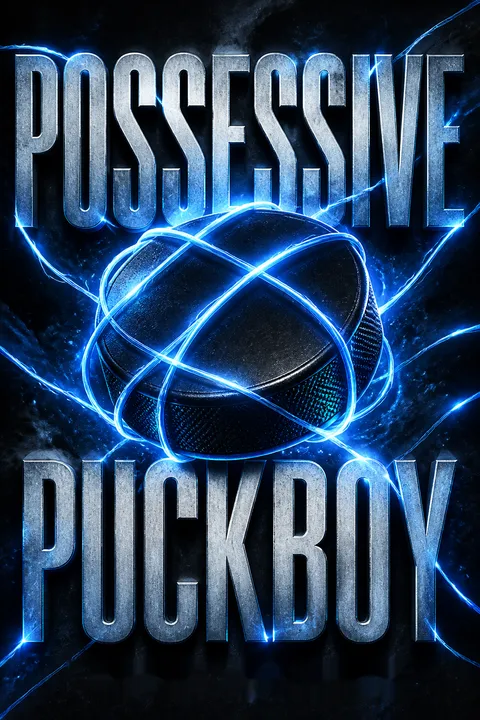


Plot Summary
A Billionaire Buys Colorado
Six months after losing his father, Parker Duchene1 has sold his software company, watched his mother leave on a long trip, and been abandoned by his boyfriend. He buys the Colorado hockey team his father once played for, hoping ownership will keep him close to the sport they shared.
At his first game as owner, he spots Connor Kikishkin,2 the captain who helped make high school miserable by turning Parker's surname into a lasting insult. Parker1 tells himself revenge is part of the purchase, though honoring his father matters more. When Connor2 approaches, Parker1 pretends they have never met and insists the players call him Mr. Duchene.1 Connor2 realizes the old hurt has followed them into the arena.
The purchase binds Parker's grief to his old humiliation before he can separate either from his new role. Ownership gives him institutional power, but that power cannot repair the loss he is actually carrying: his father is gone, and the team is one of the few places where memory still feels present. Connor, meanwhile, has been accustomed to being admired rather than examined. Parker's refusal to recognize him reverses their old social arrangement, yet the revenge fantasy also shows Parker trying to turn vulnerability into control. The team becomes both memorial and battleground, forcing private history into a workplace where Connor's livelihood is now subject to Parker's decisions.
The Locker Room Repeats
Connor's2 first attempt to stay away fails when he sees Parker1 speaking with his younger brother,3 Easton.3 Years earlier, Connor2 had shoved Parker1 against a locker after mistaking his closeness with Easton3 for a threat to his brother's hockey future. Now he follows them into the locker room and again pins Parker1 against a wall.
Easton3 pulls him away and names the pattern: Connor2 keeps treating his adult brothers as people he must control. Parker1 admits he is not there to make peace, but to make Connor's2 life miserable. Connor2 leaves fearing he may lose the only identity he trusts, his career, while Parker1 is shaken by how much his body still reacts to the man he resents.
The repeated wall pin makes Connor's failure concrete: he has not merely remembered a past mistake, he has reenacted it under new conditions. His protection of Easton began as responsibility, but he has confused care with authority and treats his brother's independence as danger. Parker's retaliation echoes the institutional power Connor once wielded socially. Yet the scene also exposes the unstable border between anger and attraction: Parker's physical response complicates his effort to make the encounter purely punitive. Neither man can safely interpret the other's behavior yet, so both reach for familiar defenses, control for Connor and revenge for Parker.
A Benefit Turns Personal
Parker1 fills the team's seats at a fundraiser for anti-bullying programs, placing Connor2 among his family, best friend4 Knox,4 and Knox's4 partner, Easton.3 Before the speakers take the stage, Connor2 tries to apologize, but Parker1 refuses the version that centers Connor's2 intentions instead of the harm done. Their argument sharpens when Connor2 implies Parker's1 success grew out of being bullied.
Parker1 explains that years of isolation cannot be balanced by money and threatens to use his ownership power against Connor.2 The survivors' accounts leave Parker1 shaken too. Connor2 drinks heavily, then ends up on the bathroom floor while Easton3 and Knox4 try to get him home. Parker1 has a chance to punish him publicly, but leaves without exposing him.
The fundraiser makes bullying audible as accumulated experience rather than a single schoolyard incident. Connor has treated the past as a mistake with a manageable apology; Parker insists that intent does not erase the social consequences of a captain's silence. His own revenge threatens to reproduce the coercion he condemns, a contradiction he cannot yet admit. Connor's drunkenness is not absolution, but it reveals that the testimony has breached his defenses. Parker's decision not to exploit the moment is an early ethical choice: he declines to convert power into spectacle, even while he still wants Connor to feel the fear and isolation he once caused.
An Apology Without Armor
The next morning Connor2 is still vomiting and expects Parker1 to report him to Coach Macklin.8 Instead, Parker1 and Easton3 cover for him by calling it food poisoning, and Parker1 takes Connor2 to the owner's suite to watch the game.
Connor2 apologizes without blaming his age or intentions, admitting he should have stopped his teammates and failed to see Parker's1 isolation. Parker1 accepts the apology and explains that he sold his company too late to pay for treatment that might have helped his dying father.
Connor2 confesses that he feels unwanted by his brothers and best friend4 as they seek independence. They recognize that both are grieving different losses and agree to attempt friendship, though Connor's2 new thoughts about attraction unsettle him.
Their first honest exchange begins when each stops using the other as a convenient container for pain. Connor's apology matters because it names omission as participation, while Parker's disclosure reframes his wealth as the residue of an emergency he could not solve. The emotional symmetry does not make their histories equivalent, but it gives them a basis for listening rather than prosecuting. Connor's fear of becoming unnecessary sits beside Parker's loneliness, exposing how both men have mistaken usefulness for connection. Their tentative friendship is therefore not a sudden cure. It is an experiment in relating without a role to perform, and that openness makes Connor's established self-image less secure.
New York Breaks The Truce
On the team's flight to New York, Connor2 sits beside Parker1 and insists their offer of friendship was sincere. Later, after Colorado wins, Connor2 finds Parker1 alone at a hotel bar while Parker1 considers a hookup.
Jealousy catches Connor2 off guard; he follows Parker1 outside and kisses him instead of letting him leave with another man. Connor2 immediately worries that he has acted without permission, but Parker1 welcomes him back to his suite and makes clear the kiss was wanted. They talk through Connor's2 confusion, then kiss again, slowly and deliberately.
Parker1 admits he has wanted Connor's2 attention since high school. They spend the night cuddling, something Parker1 has missed, and wake close together, giving Connor2 room to explore desire without pretending he already understands it.
The kiss converts a long-standing imbalance of attention into mutual recognition, but it does not erase the power difference between owner and player. Connor's sudden jealousy reproduces his old possessiveness in a new context; the difference is that Parker can answer freely and set limits. Their conversation after the kiss is as consequential as the physical contact because it prevents Connor's confusion from becoming Parker's responsibility to interpret silently. Cuddling introduces a form of intimacy Connor has not previously valued or examined. The scene's emotional risk lies not in defining Connor too quickly, but in allowing him to act while remaining accountable for how his actions affect another person.
A Rat Joins The Household
Back in Denver, Parker1 admits that his large penthouse feels empty and visits an animal shelter with Connor.2 After rejecting the dirt, noise, and unpredictability he associates with other pets, Parker1 meets a small, litter-trained rat who curls against him.
He adopts the animal and names him Conishkin, while Connor2 declares himself a co-parent despite claiming to dislike rats. Connor's2 jealousy flares when the shelter worker flirts with Parker,1 revealing how quickly he has begun to think of Parker1 as his.
At home, he asks why Parker1 stayed in Denver instead of joining his mother abroad. Parker1 explains that hockey keeps his father's memory close. Connor2 responds with affection rather than teasing, and their physical relationship deepens as they begin to trust each other with vulnerability.
The rat is a small but telling domestic choice. Parker selects an animal that meets his need for cleanliness and order while still offering warmth, a compromise that mirrors his guarded approach to attachment. Connor's insistence on co-parenting is partly comic jealousy, but it also shows him seeking a place in Parker's private life rather than merely pursuing sexual access. Their conversation about Parker's father clarifies that his attachment to hockey is not simply ambition or nostalgia; it is a way of maintaining a bond with someone absent. The new household routine makes intimacy material, built from care, shared space, and responsibility rather than declarations alone.
The Kikishkins Close Ranks
Before a game against their youngest brother,5 rookie Lachie,5 Connor2 learns that his brothers and Knox4 plan to take him to a gay bar. The outing makes him confront how little he knows about his own attraction, and he apologizes to Easton3 for treating his sexuality as a threat to hockey. Connor2 drinks too much, calls Parker1 for help, and arrives at Parker's1 home with Easton,3 Lachie,5 and Knox4 in tow.
The brothers tease Connor,2 recognize his feelings for Parker,1 and promise discretion. Their easy affection leaves Parker1 astonished by the family closeness Connor2 had dismissed as ordinary. The gathering also lets Connor2 see that his brothers can support him without being managed, and that asking for help does not cost him his place among them.
The night reverses Connor's habitual position in the family. He is no longer the sober protector monitoring everyone else's choices; he becomes the person who needs collecting, and his brothers respond with care rather than judgment. His apology to Easton marks a change from defending his intentions to acknowledging their impact. The bar does not deliver a tidy identity label, but it exposes the cost of Connor's assumption that he already understood himself. Parker's apartment gives the brothers' intimacy a visible form, one Parker can witness rather than imagine from outside. Their joking is more than comic relief: it makes acceptance ordinary, reducing the sense that Connor's discovery must become a crisis.
Mine Means Dating
On the road in Vegas, Connor2 tells players from the league's Queer Collective that he is seeing a man, then admits the relationship is with Parker,1 the team's owner. The group accepts the disclosure and understands why they need to keep it private.
When Connor2 returns to Denver, Parker1 asks what dating means to him and explains that he cannot share a partner casually after being hurt in an open relationship. Connor2 chooses exclusivity and makes clear that the possessive attention Parker1 enjoys is not a temporary game.
They have sex for the first time, with Parker1 guiding Connor2 through what he does not yet know. Connor2 also begins questioning whether hockey has ever been a personal choice, or a life built from his parents'6 expectations and his duty to his brothers.
The relationship becomes more secure at the same time Connor's larger identity becomes less certain. Naming the relationship to trusted queer teammates gives him a community beyond his family, while Parker's request for exclusivity makes desire answerable to an actual agreement. Connor's possessive streak can feel affirming to Parker, but the story distinguishes chosen erotic play from the control that damaged Connor's relationship with Easton. Their sexual trust depends on explicit attention to comfort, not on Connor's confidence as a captain. Meanwhile, his questions about hockey expose a deeper pattern: he has treated inherited expectations as evidence of desire. Intimacy helps him notice what he wants, but does not decide his career for him.
Hockey Loses Its Shine
Parker1 revives his interest in technology by designing software that turns game footage into visual coaching simulations. Connor2 encourages him to pursue it without replacing the human coaches, and Coach Macklin8 responds positively when Parker1 presents a working prototype.
At the same time, Connor's2 doubts about hockey sharpen. He plays well, but success no longer answers whether he wants the life: the travel, the pressure, and the expectation that the Stanley Cup must justify every sacrifice.
Parker's1 wish to win the Cup for his late father lands heavily on Connor,2 who has only just begun separating his own wishes from other people's needs. Pride night approaches, making the gap between Connor's2 private relationship and his public role harder to ignore.
The parallel arcs are deliberately asymmetrical. Parker regains agency through work that is genuinely his, while Connor discovers that professional excellence can coexist with profound misalignment. The software matters not because it promises a championship, but because Parker builds something from curiosity rather than grief alone; he can honor his father without reducing himself to the memorial. Connor's response to the Cup request is more complicated. It touches the same old reflex that made him responsible for his brothers and his family's sacrifices. The story asks whether achievement remains meaningful when it is pursued chiefly to satisfy others. Pride night adds a public dimension: Connor's private life is becoming real while the career structure still rewards concealment.
Pride Night Goes Sideways
Before Colorado's Pride night game, Parker asks Connor to help win the Stanley Cup for his father. Connor2 hears a new obligation in the request, though Parker1 never meant to pressure him.
While signing jerseys, Connor2 meets a young queer player named Parker who has been driven from an unsafe team; the encounter forces Connor2 to recognize how silence can help a bully. He gives the teenager encouragement, then skates into a career-best performance against Los Angeles, despite privately wanting hockey to end.
His frustration spills into a fight with veteran Radimir Novicov,9 and both are ejected. In the locker room, Connor2 tells Novi9 that he no longer wants to play. Parker1 arrives in time to hear him, understanding that Connor2 has kept the decision from him.
Connor's extraordinary performance is not proof that he should stay; it is the contradiction that makes his crisis visible. His body still knows how to excel in a game his mind increasingly rejects. The young fan turns Connor's old failure into a present choice: he can offer one teenager the intervention he withheld from Parker, even if that cannot undo the past. The fight with Novi releases anger that has accumulated around hockey, secrecy, and expectation, but it also harms another player and confirms that Connor cannot resolve the conflict through self-sabotage alone. Parker's arrival exposes a relational cost: Connor's independence has again become silence, leaving someone who loves him outside the decision.
The Last Shift
After the fight, Connor2 explains to Parker1 and Knox4 that hockey has felt like an obligation for years, and that he wants to leave rather than keep sacrificing his identity and relationship to it. Parker1 apologizes for attaching the Stanley Cup to his father's memory, then supports Connor's2 choice.
Connor2 tells his parents6 he wants to retire; they are shocked but do not treat him as a failure, and his mother6 says he owes the family nothing. Parker1 works with the general manager on a route that places Connor2 on long-term injured reserve while his contract runs down, protecting his privacy and freeing the team roster space. Connor2 plans to sell the mansion he bought to fit an imagined future, move in with Parker,1 and try public speaking about bullying.
The decision is not a rejection of Connor's family so much as a refusal to keep confusing love with repayment. His parents' response matters because they recognize that their sacrifices and encouragement may have helped turn hockey into duty, even without intending to. Parker's apology also corrects the earlier imbalance: he does not ask Connor to stay for the sake of his father or the team. The long-term injured reserve arrangement preserves Connor's privacy, though it does not make the departure publicly transparent. His plan to speak about bullying transforms guilt into a possible form of service, but the story leaves room for ongoing work rather than presenting one speech as redemption.
Epilogue
At the Stanley Cup Final, Connor2 watches from Parker's1 suite as Easton3 scores twice early and Colorado eventually wins Game Seven. Connor2 could return for one game and qualify to have his name on the Cup, but he stays retired, unwilling to treat the trophy as proof that years of self-denial were worthwhile.
He and Parker1 are building a life together, and Connor2 plans to travel with him while speaking to young people about bullying and queer athletes. The team's victory honors Parker's father, but Connor's2 choice makes clear that love for Parker1 and loyalty to family do not require him to return to a career he no longer wants.
The Cup arrives as a gift, not a cure. Colorado's victory gives Parker a moment of shared joy with the team and his father's memory, while Connor refuses to use the trophy to validate a life that no longer fits. That distinction prevents the ending from reducing either man's growth to a conventional prize: Parker can love hockey without demanding that Connor keep playing, and Connor can love his family without remaining their protector on the ice. Their future is defined less by public recognition than by negotiated support, including Parker's continuing place in the franchise and Connor's work beyond it. The final celebration resolves the emotional question of belonging without requiring Connor to reclaim his old identity.
Analysis
The novel treats identity less as a hidden fact waiting to be uncovered than as a set of choices made possible by safety, attention, and permission. Connor's2 realization about his sexuality occurs alongside his recognition that hockey and caretaking may have been inherited duties rather than freely chosen desires. These discoveries are linked: he has spent years interpreting self-denial as discipline, and only when Easton3 resists his protection does Connor2 see how a role can become a cage. Parker1 faces a parallel problem. His wealth gives him power, but it cannot buy the belonging he wants or recover time with his father. His effort to punish Connor2 initially turns grief into a manageable target; listening and being listened to offer a less satisfying but more honest alternative.
The romance's central ethical tension is its power imbalance. Parker1 owns the team, so consent between him and Connor2 cannot be treated as uncomplicated simply because they desire each other. The story addresses this through discretion, explicit negotiation, and Parker's1 willingness to support Connor's2 career decision rather than leverage it. Their private relationship remains vulnerable to public interpretation, which gives secrecy both protective and isolating functions. Connor's2 possessiveness is likewise treated with nuance: it can be pleasurable when chosen and bounded, but harmful when it substitutes for another person's autonomy.
The ending refuses the usual sports-romance equation between fulfillment and winning. Colorado's Cup victory matters deeply to Parker,1 but Connor's2 decision not to return makes clear that success cannot retroactively justify a life he does not want. Instead, the novel offers two forms of meaningful work: Parker1 builds a tool that helps coaches and players, while Connor2 turns his history into a reason to intervene against bullying. Neither form repairs the past completely. Both allow the characters to act differently in the present, which is the book's more durable measure of change.
Review Summary
Possessive Puckboy received generally positive reviews, with readers praising the character development, chemistry between Connor and Parker, and the enemies-to-lovers trope. Many enjoyed Connor's journey of self-discovery and the healthy relationship portrayal. Some criticisms included pacing issues in the latter half and concerns about Connor's decision to quit hockey. Readers appreciated the reduced cameos from previous characters and the setup for the next book. Overall, fans of the series found it enjoyable, while some felt it was predictable or lacked excitement.
People Also Read






Characters
Parker Duchene
Grieving tech magnateParker is a young software entrepreneur who has become wealthy but remains socially isolated. His father's death leaves him grasping for a way to preserve their bond, and buying the Colorado team gives him a place inside the hockey world they shared. He is precise, anxious, and more comfortable with systems than with unstructured closeness; professional polish helps him conceal how easily rejection still unsettles him. His history with Connor2 mixes injury, attraction, and a persistent desire to be seen as an equal. Parker's central tension is between wanting control as protection and wanting intimacy that cannot be managed like a business.
Connor Kikishkin
Protective NHL captainConnor is a celebrated defenseman and the eldest Kikishkin brother. He learned early to manage his younger brothers' needs while his parents6 worked, then carried that role into adulthood as if protection were his sole measure of love. On the ice he is forceful and capable; away from it, his confidence often masks a limited understanding of his own needs. His tendency to act before thinking has hurt people, even when he believed he was helping. Connor is loyal, affectionate, and capable of self-reflection, but he must learn that accountability is more than regret and care is not the same as control.
Easton Kikishkin
Independent younger brotherEaston is Connor's2 younger brother, an NHL forward, and Knox's4 partner. He values his bond with Connor2 but resists being treated as someone whose life requires constant supervision. His directness forces Connor2 to confront the difference between support and interference. Easton is also part of the league's queer community, where he has found peers and relationships that exist beyond hockey and family expectations.
Knox Addison
Best friend and refereeKnox grew up close to the Kikishkin family2 and became Connor's2 best friend. As a hockey referee pursuing work at higher levels, he shares Connor's2 sports world without being a player under Connor's2 authority. His relationship with Easton3 unsettles Connor's2 old habit of keeping his closest people within reach, but Knox remains loyal while making space for Easton's3 independence. He offers practical reassurance without pretending Connor's2 problems are simple.
Lachie Kikishkin
Rookie youngest brotherLachie is the youngest Kikishkin brother and a rising professional hockey player. He is less entangled in Connor's2 daily life than Easton3, but he shares the family's closeness and irreverent humor. His emergence as a competitor gives Connor2 a chance to meet him as an adult rather than simply as someone to protect. Lachie's ease around his family helps show the warmth beneath their teasing.
Kate Kikishkin
Lawyer turned agentKate is Connor2, Easton3, and Lachie's5 mother, a corporate lawyer who later helps manage her sons' careers. She and her husband7 worked hard to give the boys access to hockey, relying heavily on Connor2 when the children were young. Kate is practical and protective, but she can distinguish her professional concerns from her role as a parent. Her care is genuine even when the expectations she helped establish weigh heavily on Connor2.
Michael Kikishkin
Hockey father and agentMichael is the Kikishkin brothers'2 father, a former professional player whose career ended early with injury. He worked hard to support his family and later became involved in managing his sons' hockey careers. The game is both a family inheritance and a source of shared purpose, shaping the expectations his sons carry into adulthood. His devotion to them is clear, even as the family's protective habits sometimes become difficult to separate from professional pressure.
Fred Macklin
Blunt team coachMacklin coaches Colorado and values results, discipline, and players who can be trusted. His bluntness gives Parker1 useful feedback about how his wealth and formal manner affect the people around him. He also provides the team's practical structure, balancing concern for Connor2 with the demands of the season.
Radimir Novicov
Guarded veteran defensemanNovicov is a veteran NHL player whose reserve around Pride events leaves others uncertain about his beliefs. His life has been shaped by the risks queer people face in Russia, and he is cautious about what he reveals. He meets Connor2 as an opponent first, but his guardedness contains more than simple hostility. His presence connects private choices about identity with the unequal safety available to athletes.
Brendan Murray
Outgoing team ownerMurray owns Colorado before Parker's1 purchase and knows Parker's1 family through his father's connection to the team. He supports Parker's1 bid because of that history and believes Parker1 will care for the franchise. His approval opens the door to the story's central collision.
Plot Devices
Colorado team ownership
Power meets old historyParker's1 purchase gives him a legitimate reason to remain near the hockey world his father loved, while also placing him in authority over Connor's2 career. That double function keeps the romance emotionally charged and ethically complicated. Parker1 can affect Connor's2 professional future, even when he tries to treat him fairly, so private attraction cannot be separated from the workplace hierarchy. The team also gives Parker1 a structure for grief and a chance to contribute beyond writing checks. As he learns how the franchise operates, ownership shifts from a revenge fantasy toward an active role in the community and the sport.
The high school nickname
A wound made publicConnor2 turns Parker's1 surname into an insult, and the rest of the hockey crowd helps that insult become a lasting marker of social exclusion. The nickname condenses a wider harm: Connor's2 status made his silence influential, even when he was not the person committing every act of bullying. Parker's1 return as owner gives the old name a new setting, but revenge alone cannot repair the years of isolation. The device drives Connor2 toward a fuller understanding of responsibility, including the ways leaders enable harm by refusing to intervene.
The anti-bullying fundraiser
Past harm gets a witnessParker's1 fundraiser places Connor2 among people describing what bullying did to them, moving the conflict beyond a private argument between former classmates. It challenges Connor's2 tendency to reduce his behavior to one regrettable incident and makes him confront the wider effect of a team's culture. The event also unsettles Parker1, who must face memories he has spent years trying to outgrow. Its use is double-edged: Parker1 initially intends it as punishment, but the testimony pushes both men toward a more honest reckoning than humiliation alone could provide.
Conishkin the rat
Affection becomes domesticParker1 chooses a clean, intelligent, affectionate rat after rejecting pets he sees as too messy or difficult to manage. Connor's2 comic claim to co-parent Conishkin gives him an excuse to enter Parker's1 home and participate in small acts of care. The pet is not a magical cure for loneliness; instead, it makes companionship practical, asking the men to share attention and responsibility. Conishkin also brings Connor's2 possessiveness into harmless comic focus, contrasting chosen playfulness with the controlling behavior that has strained his family relationships.
Pride night and the Cup
Public duty versus private truthPride night places Connor's2 developing understanding of himself beside the public expectations of professional hockey. At the same time, Parker's1 hope that Colorado can win the Cup for his father connects the team's season to an intimate grief. Connor2 experiences both as obligations he may not be able to fulfill without losing himself. The young queer player he meets offers a human-scale counterpoint to the trophy: Connor2 can make a difference through the way he treats people now. The device drives the final conflict between achievement, secrecy, family loyalty, and the life Connor2 wants.
Puckboys Series



About the Author


Download PDF
Download EPUB
.epub digital book format is ideal for reading ebooks on phones, tablets, and e-readers.








