


Plot Summary
Two Farriers, One Town
Colton Darling, a thirty-seven-year-old farrier rooted in his family’s Montana ranch, hears that the Brookes have switched to Noah King, the rival who has competed with him for clients since arriving in town. Colton takes the loss personally, though his brother Jackson points out that Noah is not the only one who has acted unfairly.
Colton once cost Noah a major account by wrongly disparaging his work, while Noah regularly advertises lower prices and wins customers. Across town, Noah lives with his elderly uncle Walter, the guardian who took him in after his parents died. Noah is settled in Darling and determined to stay, even as he believes Colton wants him gone. Each man sees the other’s business tactics as proof of a private hostility.
The feud is sustained by two incompatible explanations of the same behavior. Colton reads Noah’s business success as a personal campaign, while Noah interprets Colton’s local standing as a weapon used to keep him an outsider. Their competition is real, but each man enlarges it with an old, unexamined grievance. The ranch and Walter’s home establish opposing kinds of belonging: Colton inherits a place and a public identity, while Noah builds stability through the uncle who chose him. Neither man is simply wrong about the pressure he feels, but both mistake the other’s defenses for deliberate cruelty.
The Festival Turns Personal
At Darling’s Blossom Bash, Noah watches Colton demonstrate hoof care to children, seeing the easy warmth Colton offers everyone except him. Colton corners Noah for details about the Brookes’ deal, then brings up the horses Noah lost when Colton poisoned Marie Doherty’s opinion of his work.
His attempt at an apology collapses into another argument. Noah explains that he has spent years trying to build a life in a town where the Darling name already opens doors, and Colton is stunned by the accusation.
Lawson steps between them when Colton looks ready to swing. Later, Noah works alone in his barn, shaping a metal flower crown from memories of his dead parents. His private art reveals a grief and tenderness Colton has never imagined beneath the hard exterior.
The festival makes the feud visible as a social asymmetry. Colton is a familiar face whose skill and friendliness are celebrated publicly; Noah stands at the edge, watching the same scene as a reminder that competence does not automatically grant belonging. Noah’s accusation unsettles Colton because it reframes his advantage as something he has never had to notice. The metal crown gives the reader access to Noah’s interior life without making him less combative. His grief is not a secret key that excuses his behavior; it is evidence that the man Colton reduces to a rival has a whole emotional history beyond their conflict.
A Kiss Breaks the Rules
At The Barrel, Noah takes the seat beside Colton and needles him until Colton follows him outside. There, Colton challenges Noah to a traditional horseshoeing contest, revived after decades away. Noah agrees only after demanding that the loser get the winner’s name tattooed on his backside. The argument turns physical when Colton shoves him; Noah pins him against a truck and kisses him hard enough to stop the fight.
Noah leaves at once, shaken by his own desire: he has never wanted a man before. Colton returns to the ranch equally rattled, then tries to explain away his arousal as a response to rough handling. Neither man can dismiss the encounter, but both cling to their certainty that they dislike the other.
The kiss interrupts the rivalry without resolving it. Until then, physical aggression has served as a safe, legible form of contact: each man can claim that he wants to shove, provoke, or overpower the other. The kiss exposes a desire neither has language for, and its abruptness leaves both free to retreat into denial. Noah’s shock is especially destabilizing because it challenges his settled understanding of his own sexuality. Colton’s attempt to categorize his response as a taste for roughness performs the same defensive work. The wager offers a public contest with clear rules, a sharp contrast to the unspoken attraction neither can control.
A Job Returned, Uneasily
When Marie asks Colton to shoe fifteen additional horses for a summer program, his crowded schedule could force him to work punishing hours. Instead, remembering that he caused Noah to lose Marie’s business, Colton recommends Noah for the extra work. Noah accepts but visits the ranch to challenge Colton’s motives, still suspicious that the offer is a trick.
He also raises the kiss, insisting it was a mistake and will not happen again. Colton offers no apology for the old job loss, so Noah leaves unconvinced. Colton’s father, Hank, then explains that Colton struggles to ask for what he wants because he fears it will be taken away. Noah cannot know whether that story explains the strange kindness, but it complicates his picture of Colton.
Colton’s referral is the first meaningful action that costs him something in the rivalry. He could protect his workload and reputation by keeping the horses, yet he chooses to acknowledge Noah’s skill. That choice is not enough to repair trust, because Noah has learned to test apparent generosity for hidden costs. Hank offers an intimate account of Colton’s fear of scarcity, but it is an interpretation, not a pardon. The scene’s emotional tension comes from the gap between a gesture and the explanation needed to make it believable. Colton has begun behaving differently before he knows how to speak differently.
The King Wins
At the public Shoein’, Noah and Colton each trim and shoe an unfamiliar horse under judges’ scrutiny. Colton finishes first and earns every speed point, but Noah works more carefully and polishes his horse’s shoes, giving the judges a stronger overall impression.
Noah wins by the final aesthetic score. Colton congratulates him, then retreats with his family, unable to take comfort in praise for a near-loss. Remi recognizes that the contest mattered because Colton wanted Noah to see him as an equal, not because he doubted his own farrier skills.
That night, unable to sleep, Colton drives to Noah’s home and discovers a barn filled with Noah’s intricate metal sculptures. His curiosity brings them into another confrontation, this time with desire close behind it.
The contest converts an intimate struggle for recognition into a measurable public result, but the score cannot satisfy what Colton wanted from winning. He is a capable farrier before and after the event; what hurts is the possibility that Noah’s judgment matters more to him than his own. Noah’s victory also fails to bring the triumph he expected, because he sees Colton’s genuine disappointment. The score exposes the emotional stakes neither man admits. Colton’s late-night visit moves from competition toward curiosity: he seeks an answer in Noah’s private world, though he still approaches it through anger rather than a direct request for closeness.
Art Beneath the Anger
Colton finds Noah among metal horses, flowers, birds, and other pieces he has made by hand. Noah orders him out, but Colton’s questions and shoves turn their argument into another struggle. When Noah pins him against a workbench, Colton’s body responds with unmistakable arousal. Noah stops, checks that Colton wants to continue, and waits until Colton asks for his touch.
He brings Colton to orgasm, then lets him leave without demanding an explanation. The encounter unsettles them both: Colton is drawn to a man and to being physically overpowered, while Noah discovers that his attraction is not merely a one-off impulse. Their old animosity remains, but now it is tangled with a shared secret neither can dismiss.
The barn’s artwork changes what Colton can know about Noah. He has encountered evidence of patience, memory, and craft in a man he had flattened into an antagonist. Their sexual encounter repeats the structure of their rivalry, with physical control and resistance, but consent interrupts the old pattern: Noah pauses, and Colton must choose to ask. That choice matters more than the intensity of the encounter. Colton’s desire does not immediately settle his identity, and Noah’s does not make him an expert in what he wants. Instead, both are forced to treat their bodies as sources of new information rather than proof of a preconceived story.
Jealousy Finds Its Target
Remi accompanies Colton to a gay club so Colton can test his attraction to men in a setting apart from Noah. He feels no spark with the men who approach him, while Remi finds a willing dance partner. Then Colton spots Noah with another man’s hand beneath his shirt. Jealousy sends him across the room to break them apart.
Noah explains that he is also exploring his sexuality, having never been with a man before Colton. Rather than leave, Colton lets Noah pin him against a wall and kiss him. They go outside, where Noah brings Colton to orgasm. Colton returns to the truck with a hickey and tells Remi he is bisexual, though he still insists that wanting Noah is a separate, troubling matter.
Colton’s experiment gives him a useful negative result: attraction to men is possible, but it does not appear as a general response to every available man. His jealousy identifies the person-specific nature of his desire before he is willing to name it. Noah’s admission also corrects Colton’s assumption that he alone is inexperienced or unsettled. Remi’s quiet support makes exploration safer without prescribing an identity or outcome. Colton’s disclosure of bisexuality is a genuine step toward self-recognition, even as he tries to cordon Noah off from that discovery. The contradiction is psychologically plausible: naming a broader possibility feels safer than admitting that the person he wants is his longtime rival.
The Accidental Call
Trying to explore his own body in private, Colton accidentally calls Noah. When Noah answers, Colton is already experimenting with a condom-covered carrot and saddle butter. He cannot bring himself to hang up after the call reconnects, and Noah gradually realizes what Colton is doing.
Rather than mock him, Noah offers encouragement and talks him through the moment; Colton reaches orgasm while listening to Noah describe what he would do for him. The call ends with Colton insisting it was a mistake, but he hears hurt in Noah’s response and cannot stop thinking about it.
Soon afterward, the two resume working at Marie’s. Colton watches Noah with a young student, invents a girlfriend to interrupt her flirting, and realizes his possessiveness is no longer easy to disguise.
The accidental call strips away the public performance of their rivalry. Colton cannot manage Noah’s presence through a glare or a shove, so the moment requires him to tolerate being heard while vulnerable. Noah’s care is important precisely because he could use the situation to tease or shame Colton, but instead he responds to the need beneath the embarrassment. The call also reveals that intimacy is becoming a form of communication before either man can make it a stable relationship. Colton’s jealousy over the student extends that intimacy into ordinary life. He is not only drawn to Noah in sexual crisis; he is beginning to imagine Noah as someone who could be claimed.
Two Men, One Horse
During Darling’s first town treasure hunt, Noah solves clues that lead from the distillery to local shops and eventually toward mountain trails. At the trailhead, he takes his motorcycle onto a rough access path, crashes, and damages a tire. Colton, already searching on horseback, answers Noah’s call for help. He bandages Noah’s scraped palm and carries him behind the saddle on Clementine.
The two solve the remaining clues together, with Colton’s knowledge of the trails guiding them to the final box. At the town square, Colton distracts his brother Jackson while Noah finds the key hidden on the founder’s statue. They open the chest first and win coupons donated by Darling businesses, then agree to split the prize without hesitation.
The treasure hunt gives the men a problem that rewards complementary knowledge rather than competition. Noah’s clue-solving and Colton’s familiarity with local land become useful only when they trust each other enough to combine them. The one-horse ride makes their physical closeness unavoidable, but the practical need is what first sustains it: Noah is hurt, stranded, and dependent on Colton’s help. At the finish, Colton chooses to help Noah win rather than secure a victory over his own brother. That decision is small in scale but large in implication. Their relationship is changing through acts of cooperation before either is ready to describe it as affection.
No Longer Just a Bet
After the hunt, Colton accepts Noah’s invitation home and stays the night. Their intimacy deepens, and the following morning Colton returns to the ranch, where his family notices he has not come home.
He tells them he is bisexual and receives immediate support, though his mother teases him about the marks on his neck. Colton and Noah continue seeing each other, first secretly and then with growing ease. They work together in Noah’s garden, discuss their families and losses, and admit that their attraction has become affection.
Noah asks for an exclusive relationship; Colton agrees, still startled that the man he once treated as an enemy now feels like a possible home. They begin sharing meals and time with Walter as well as Colton’s family.
This stage turns discovery into practice. Colton’s coming out is not a dramatic plea for acceptance because his family has already made support part of daily life, especially through learning ASL for Remi. The more difficult change is his willingness to let Noah become visible in his routines. Gardening, meals, and conversations about family counterbalance the intensity of their sexual encounters with ordinary acts of care. Noah’s desire for exclusivity names a future Colton is not yet confident enough to claim, but he accepts it. The relationship grows through repeated evidence: Noah stays, listens, and makes room for Colton’s uncertainty rather than requiring him to become instantly certain.
The Wronged Boy Returns
Colton misses a planned visit to Noah’s barn because Remi has a severe migraine and needs him nearby. Noah arrives at the ranch upset, then sees Remi and understands why Colton stayed.
The sight of the barn and Colton’s absence brings back a memory from their senior year: Noah, then called Junior, believes Colton invited him over only to dump horse manure on him. Colton remembers the day differently. He called his old friend Eddie, who had told him Noah never showed.
Colton contacts Eddie and learns that Eddie, jealous of his crush on Colton, created the deception. Colton had not recognized Noah when they met again years later, while Noah had carried the old humiliation into their adult feud. The revelation leaves both men hurt and unsure what their shared history means.
The revelation does not uncover a hidden act by Colton; it exposes how an absent third party shaped both men’s memories. Noah’s pain was real, but its target was mistaken. Colton’s failure to recognize him was not indifference so much as a consequence of time, changed appearance, and Noah’s old nickname. The misunderstanding has lasted because neither man had access to the other’s version of the event. Its emotional force comes from the wasted years, not from a single villainous act. Eddie’s jealousy explains the sabotage but does not erase its consequences. Both men now have to reconsider the identities they built around being wronged.
Starting Over in Darling
After Noah leaves, Colton brings his old clippings of Noah’s farrier advertisements to the King home and makes a deliberate appeal, admitting that Noah has occupied his thoughts for years and apologizing for the hurt neither fully understood.
Noah accepts that Colton did not betray him, apologizes for holding the old grievance against him, and asks them to begin again. They gather the scattered clippings and enter the house together.
Later, Colton introduces Noah to his family and offers him Hazel, a retired ranch horse losing sight in one eye, as a horse of his own. Noah accepts, and the families begin to make room for their relationship. Meanwhile, Colton’s brother Lawson leaves for Kansas after his divorce, seeking his longtime friend Oakley.
The reconciliation works because neither man tries to win the final argument. Colton brings physical evidence of his attention, the saved advertisements, but uses them to confess rather than to score a point. Noah takes responsibility for his interpretation without denying that the hurt was genuine. Starting over is therefore not a return to innocence; it is a choice to know one another with better information. Hazel extends that choice into shared care and shared space. Lawson’s departure adds a counterpoint: another Darling must rebuild after a relationship ends, though his path is his own. The resolution expands belonging beyond the couple, linking their future to both families and the animals they care for.
Epilogue
Three years later, Colton and Noah compete in the annual Darling Shoein’. Colton wins with a technically permitted flourish, braiding ribbons into his horse’s mane, and Noah takes the loss with affection. After dinner with Walter, they ride to the ranch bonfire, where Noah presents Colton with a newspaper advertisement announcing his intention to marry him.
Noah kneels and asks for Colton’s hand. Colton accepts the rope-patterned ring and says yes, making their commitment public among family and friends. Their rivalry survives as playful competition, but it no longer threatens their bond. The man Colton once tried to defeat is now the person he trusts to hold the reins he freely gives.
The proposal turns the story’s recurring public language into a private promise. Noah once used advertisements to compete for work and establish his place in Darling; now he uses one to claim a future with Colton, transforming commercial bravado into a declaration of commitment. The annual Shoein’ preserves their competitive energy without restoring the old insecurity, since winning and losing no longer determine either man’s worth. Colton’s consent remains active: he chooses the ring and accepts the proposal in front of the community. The rope design recalls Noah’s tattoos and their shared vocabulary of reins, but its meaning has shifted from control to trust freely offered.
Analysis
Brim Over Boot makes rivalry a problem of interpretation as much as competition. Colton and Noah are both skilled farriers in a town where work, reputation, and belonging overlap. Because Noah arrived without the Darling family’s inherited status, he experiences ordinary competition as exclusion. Because Colton has rarely needed to question his place, he interprets Noah’s efforts to secure clients as a personal attack. Their conflict persists not because either man lacks feeling, but because each treats his own explanation as more reliable than the other’s experience.
The story’s romantic development is also a study of how desire unsettles identity without dictating it. Colton’s bisexuality becomes clearer through experience, but the plot does not make attraction a simple test with a universal answer. He discovers that his interest is particular to Noah, while Noah discovers that his own assumptions about being straight were incomplete. Remi’s support models an accepting environment in which identity can be explored without being forced into a timetable.
Consent and trust develop alongside the erotic power dynamic. Noah’s physical confidence could repeat the coercive structure of their feud, but he pauses to check Colton’s willingness, and Colton learns to ask for what he wants. Their intimacy is compelling because vulnerability becomes chosen rather than extracted. Outside the bedroom, that same learning appears in smaller gestures: Colton returns work to Noah, calls for help after the crash, and eventually admits affection; Noah offers care without demanding immediate certainty.
The high school revelation gives the conflict a concrete cause while refusing an easy villain narrative. Eddie’s deception mattered, but the adult feud also survived because neither man asked what the other remembered. Their reconciliation requires more than discovering the truth. It requires taking responsibility for present choices. The saved advertisements, the shared horses, and the metal crown turn abstract commitment into things handled, carried, and cared for. Love does not erase their past; it gives them a new way to read it.
Review Summary
Brim Over Boot is a steamy rivals-to-lovers romance between Colton Darling and Noah King, two competing farriers in a small town. Readers praise the witty banter, sexual tension, and character development as the protagonists navigate their unexpected attraction. The double bi-awakening storyline and small-town setting add charm. While some found the initial bickering childish, most enjoyed the transition from hate to love. The book's humor, spice, and emotional depth resonated with fans, making it a highly rated addition to the Darling Brothers series.
People Also Read




Characters
Colton Darling
Homegrown horsemanColton is a skilled farrier in his late thirties, raised on the Darling family ranch and deeply attached to the land, animals, and relatives who make it home. Friendly and generous with nearly everyone, he becomes combative around Noah, whose success feels to him like a personal judgment. Colton’s bravado hides a fear of wanting too much and asking for it directly. He is close to his brothers, especially Remi, and takes pride in caring for horses with patience and attention. His emotional life is shaped by the contrast between his public ease and private uncertainty. He is learning to understand desire, identity, and vulnerability without treating them as weaknesses.
Noah King
Outsider with a forgeNoah is a farrier who has made a life in Darling while carrying the memory of losing his parents as a teenager. He lives with his uncle Walter and repays that care through loyalty and daily attention. Reserved, physically imposing, and quick with a cutting remark, Noah protects himself with competence and a long-standing suspicion of the Darling family’s local power. His metal sculptures reveal a more contemplative nature, especially his attachment to flowers and family memory. Noah wants to be chosen without having to beg for a place, yet his pride often makes direct communication difficult. His relationship with Colton challenges the certainty with which he has defined both his past and himself.
Remi Darling
Colton's perceptive brotherRemi is Colton’s younger brother, Deaf and a cochlear implant user who communicates through ASL and speech. His family learned to sign so he would not carry the burden of adapting alone. Observant, self-possessed, and affectionate without being overprotective, Remi often sees Colton’s emotional evasions before Colton does. He supports his brother’s exploration of sexuality while preserving his own boundaries and humor. His recurring migraines make family care a practical part of life, but he is never reduced to his medical needs.
Walter King
Noah's steadfast uncleWalter took Noah in after the deaths of Noah’s parents and became the closest thing he has to a parent. In his seventies, he lives with scoliosis and arthritis that affect his mobility, but he retains a sharp wit and a stubborn independence. He shares meals and chess with Noah, worries that his nephew has built too solitary a life, and offers advice without demanding obedience. Walter’s care is practical and enduring, a model of family as something chosen and sustained.
Jackson Darling
Blunt elder brotherJackson is Colton’s older brother and a central presence in the operation of the family ranch. Practical and direct, he challenges Colton’s assumption that Noah alone is responsible for their feud. Jackson is devoted to Ash, his boyfriend, and balances affection with a no-nonsense understanding of family obligations. He gives Colton room to make his own mistakes while refusing to pretend those mistakes have no consequences.
Ash
Ranch cook and partnerAsh is the Darling ranch’s cook and Jackson’s boyfriend. Warm, teasing, and attentive, he contributes to the family’s daily life through food and the easy welcome he offers around the ranch house. He has chronic back pain that can flare, and the family has learned to take his needs seriously without defining him by them. Ash’s humor often punctures the brothers’ self-importance.
Lawson Darling
Teacher and older brotherLawson is Colton’s eldest brother, a teacher and father whose marriage is under strain. He is quieter than Colton and often appears weighed down by the effort of maintaining a life that no longer matches what he expected. Lawson’s family remains close around him, but he is not always ready to accept their help. His connection to his longtime friend Oakley offers a separate source of history and support.
Hank Darling
Colton's candid fatherHank is Colton’s father and one of the people who understands how his son’s generosity can turn into self-denial. He uses family anecdotes to explain Colton’s habits rather than scold him, and he approaches Noah with an openness that complicates Noah’s assumptions about the Darlings. Hank’s affection is plain, but he also sees the costs of Colton’s reluctance to ask for what he wants.
Marigold Darling
Colton's warm-eyed motherMarigold is Colton’s mother, a steady presence in the sprawling Darling family. She is observant, affectionate, and quick to notice the small changes her children think they have hidden. Her humor can be gently embarrassing, but it rests on a deep confidence that her sons are loved. She also models the family’s commitment to making communication accessible for Remi.
Marie Doherty
Respected horse trainerMarie owns a major equestrian training operation in the area, where she teaches dressage and show jumping and cares for a large stable. She expects skill and professionalism from the farriers she hires. Her decisions affect both Colton’s and Noah’s livelihoods, making her an important measure of their reputations. She also keeps chickens connected to her late husband’s farm.
Eddie
Colton's old school friendEddie was Colton’s friend in high school and carried a crush he never openly addressed. His jealousy and poor judgment affect how the two boys remember a pivotal encounter. He represents the lasting consequences of allowing possessiveness to replace honest communication.
Laura
Lawson's estranged wifeLaura is Lawson’s wife and the mother of their daughter, Wendy. Her decision to end the marriage changes the shape of Lawson’s daily life and leaves him grieving a future he thought was settled. She remains connected to the Darling family through their shared parenting.
Wendy
Lawson's teenage daughterWendy is Lawson’s teenage daughter. She is attentive to the adults around her and notices shifts in the family even when she is not told every detail. Her presence gives Lawson’s choices a continuing responsibility beyond his own disappointment.
Oakley
Lawson's longtime friendOakley is Lawson’s longtime friend, now living in Kansas. Their history offers Lawson a connection outside Darling and the family ranch. Oakley is important to Lawson’s emotional landscape even while remaining mostly offstage.
Plot Devices
The Darling Shoein’
Rivalry made measurableThe town’s traditional horseshoeing contest gives Colton and Noah a public arena in which skill can be judged by speed, hoof trimming, shoe technique, and finish. Colton proposes the event to prove himself, while Noah raises the stakes with a tattoo wager. The contest lets both men display real professional competence, but its scoring cannot settle the emotional question beneath their rivalry: whose respect matters most to Colton, and whether Noah can win without feeling he has lost something else. The annual competition later becomes a shared ritual rather than a proxy for their feud.
Farrier Advertising
Competition in public viewNoah’s newspaper advertisements and introductory discounts help him attract clients in a small town where the Darling name carries inherited recognition. Colton reads the ads as personal provocations, while Noah sees them as necessary business in a community where he began without local roots. The advertisements recur as evidence of the rivalry, later becoming objects Colton has secretly saved. Their meaning shifts from commercial challenge to a record of how persistently each man has occupied the other’s attention.
The Treasure Hunt
Cooperation under pressureDarling’s first town treasure hunt strings riddles through local businesses and mountain trails, ending at the statue of the town’s founder. Noah’s clue-solving and Colton’s knowledge of the ranchland become complementary skills when Noah crashes his motorcycle. The hunt forces them to rely on each other, ride together, and share the prize. Its two possible trail routes create competition among teams, but the central dramatic function is to show that Colton can choose cooperation even when a family member is also competing.
Noah's Metalwork
Private history made visibleNoah’s barn is filled with metal sculptures shaped into animals, flowers, and other careful forms. The work draws on his training as a farrier and blacksmith, but it also carries memories of his parents and the gardens his mother tended. Colton’s discovery complicates his image of Noah as only a hard, antagonistic competitor. The unfinished flower crown becomes especially significant because it joins Noah’s grief to his capacity for patient creation. Its completion reflects the possibility of carrying memory forward rather than living solely inside loss.
The High School Misunderstanding
A feud built on false memoryWhen Noah moved to Darling as a grieving teenager, he believed Colton had invited him to the ranch and then humiliated him with horse manure. Colton remembers an invitation that Noah supposedly failed to accept. Eddie, jealous of Colton’s attention, created the deception, while Noah’s nickname and changed appearance later prevent Colton from recognizing him. The mistaken memory explains the personal hatred that neither man could account for as an adult. Its revelation does not erase the years of hurt, but it allows both men to separate what happened from the stories they built around it.
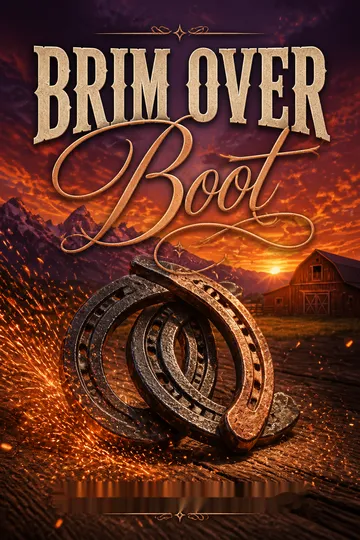
The Darling Brothers Series

About the Author





Download PDF
Download EPUB
.epub digital book format is ideal for reading ebooks on phones, tablets, and e-readers.








