

Plot Summary
Prologue
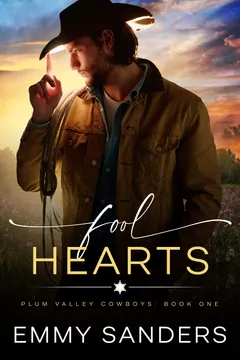
At thirty-four, Wyatt Montgomery1 has returned to Plum Valley, the small Texas ranch town he once escaped. He lives beside Easton Moore,2 his childhood best friend,2 and still loves him, though Easton2 has never returned that love.
Wyatt’s1 years of staying close have begun to feel less like devotion than a wound he keeps choosing to reopen. He is considering leaving again, this time to build a life with someone who can love him back. Before that decision, he turns to the beginning: two boys on a ranch, certain that friendship would last forever.
The prologue gives the romance its central paradox before the childhood scenes begin: Wyatt’s loyalty is both his shelter and his injury. His return to Plum Valley is not simply a homecoming, because the person who makes the town feel like home is also the person he cannot have. By framing the story around the possibility of leaving, the book makes every early memory carry two meanings. The boys’ promise of permanence sounds innocent at first, but Wyatt’s adult perspective reveals its cost: intimacy can endure long after desire becomes painful, especially when one person mistakes endurance for the only available form of love.
The Secret on the Fence
In 1991, eleven-year-old Wyatt1 sits with his closest friend,2 Easton Moore,2 eating ice pops beside the cattle fields. Wyatt1 tells Easton2 he does not think he likes girls, a confession he fears would anger his conservative father. Easton2 accepts him without hesitation and promises to keep the secret.
Later, at the Moores’ Fourth of July gathering, Wyatt1 stays for the fireworks after Easton’s2 mother persuades his father8 to allow it. The boys lie together beneath the colored bursts and imagine becoming stars in the same constellation. Wyatt1 leaves with more than a secret kept: Easton2 has made their friendship feel like a place where he can be fully himself.
Wyatt’s first act of self-definition occurs in private, and Easton’s response makes trust feel concrete rather than theoretical. He does not demand an explanation or treat Wyatt’s difference as a problem to solve; he protects the confidence. That simple choice becomes the emotional template for their adult bond. The fireworks image also introduces the book’s recurring language of lasting connection, but it contains a quieter tension: Wyatt’s hope is already shaped by a world that may not let him belong openly. His safety with Easton is real, yet it exists inside a town where safety cannot be assumed elsewhere.
Monty Finds His Rider
At fourteen, Easton2 spots a blind buckskin foal offered for free at the county fair. His father8 has always refused to let him have a horse, but Easton2 asks again, and his younger brother Hawthorne7 points out that the foal’s coloring resembles their late mother’s hair. Their father8 relents. Easton2 names the horse Monty and patiently teaches him to navigate by voice, touch, and repeated cues.
Wyatt1 helps with the training, watching as the foal learns to run around obstacles and trust his handler. Easton’s2 work with Monty gives him a purpose distinct from his father’s8 cattle business. It also shows Wyatt1 that Easton’s2 gentleness is not passivity: he wants the horse to move through the world with confidence.
Monty’s blindness does not make him a symbol of helplessness; Easton’s training is designed to increase the horse’s independence. That distinction reflects Easton’s own struggle to imagine a life beyond the role his father has assigned him. His father’s change of heart comes through grief, as Monty’s coloring recalls Easton’s mother, so the horse enters the family as both responsibility and remembrance. Wyatt supports Easton without competing for attention, and their shared care gives their friendship a practical language. They express closeness by showing up, listening, and helping another living being find its way.
Becca Enters the Picture
As teenagers, Wyatt1 works at Country Cones and hides his attraction to boys in a town where classmates mock his appearance and presume what a country boy should want. Easton2 remains his closest companion, but he has no interest in dating until Becca Thompson,3 their confident friend, asks him out.
At eighteen, Easton2 admits he is attracted to her and asks Wyatt1 for advice about sex, forcing Wyatt1 to help prepare the man he loves2 for intimacy with someone else. Easton2 later secures land and financial backing from his father8 to build a horse-training business, with Becca3 in his plans. Wyatt1 celebrates his friend’s2 ambition while privately recognizing that Easton’s2 future may no longer have room for him.
Wyatt’s affection becomes more painful precisely because he is trusted: Easton confides in him about Becca and relies on him for advice, unaware that this intimacy asks Wyatt to assist his own displacement. Wyatt responds with care rather than resentment, a choice that deepens both his loyalty and his silence. Becca is not an antagonist; she is a friend and a genuine romantic possibility for Easton. The contrast between Easton’s chosen work with horses and the conventional future expected of him also matters. He can imagine building a life on his own terms professionally, while his emotional life remains constrained by what he does not yet understand.
Rain Sends Wyatt Away
At twenty, Wyatt1 visits a Plum Valley bar after learning Easton2 plans to look at engagement rings with Becca.3 A man Wyatt1 once hooked up with recognizes him, and the encounter exposes Wyatt’s1 sexuality to the room. Rather than deny it, Wyatt1 leaves in the rain and decides he cannot keep watching Easton2 build a life with someone else.
Easton2 finds him on the ranch and learns that Wyatt1 is leaving, though he believes the outing is the reason. Wyatt’s1 parents offer no comfort; Easton2 embraces him instead. The next day, Wyatt1 packs his few belongings and drives away. Easton2 lets him go, devastated but unwilling to ask him to stay for selfish reasons.
The bar scene turns private longing into public vulnerability, but Wyatt’s decision to leave is not reducible to the town’s homophobia. He can endure gossip; he cannot endure the daily spectacle of loving Easton while Easton chooses someone else. The distinction matters because Wyatt acts not only to escape prejudice but to preserve the parts of Plum Valley he still loves from becoming associated with constant heartbreak. Easton’s restraint is compassionate and damaging at once. He respects Wyatt’s choice, yet his silence leaves Wyatt believing that departure is the only way to protect their friendship and his own future.
A Wedding Without Closure
Two years later, Wyatt1 returns from Illinois for Easton2 and Becca’s3 wedding. Seeing Easton2 in his tuxedo renews his grief, but he stands by his friend2 as best man and watches him marry. At the reception, Becca3 tells Wyatt1 she suspects Easton2 could have loved him, too, and apologizes for coming between them.
Wyatt1 rejects the possibility: Easton2 had years to choose him and never did. He leaves early for his flight, treating the wedding as a final goodbye. Becca3 remains kind to him, but her insight cannot undo the marriage or the years Wyatt1 has spent trying to move on. Easton2 watches him go, still unaware of what Wyatt1 has carried.
Becca’s observation introduces a possibility that neither man can use yet. She sees a pattern Easton cannot interpret, but Wyatt hears her words through the accumulated evidence of Easton’s choices: years of friendship, an engagement, and now a wedding. His refusal to hope is psychologically coherent, not stubbornness for its own sake. Easton’s wedding is also a genuine commitment, not a disguise or a mistake, which keeps the triangle from becoming a simple contest. Becca’s regret signals that care can coexist with complicated knowledge, while Wyatt’s departure shows how a truth offered too late can feel more like a fresh injury than a gift.
Wyatt Comes Home
Two years into Easton2 and Becca’s3 marriage, their son4 Will4 is born, but Becca3 dies from a rare complication soon after delivery. Easton’s2 brother Hawthorne7 calls Wyatt1 in Illinois with the news. Wyatt1 abandons his job, packs what he can, and drives back to Plum Valley. Easton2 has been refusing help from relatives, unable to face his grief or the care of a newborn alone.
When Wyatt1 arrives, Easton2 breaks down in his arms. Wyatt1 learns to prepare bottles and feed Will,4 then stays through the night. In the morning he cooks breakfast and takes on practical tasks Easton2 cannot manage. His return does not lessen Becca’s3 loss, but it gives Easton2 someone beside him as he begins to survive it.
Wyatt’s return is an act of love expressed as labor. He does not arrive with a plan to claim Easton or replace Becca; he comes because Easton is in crisis and Will needs care. The sequence makes grief bodily and domestic: shaking hands over a bottle, a sleepless night, food prepared while a newborn rests nearby. Easton’s willingness to accept Wyatt’s help marks a change in his habitual self-reliance. The emotional danger remains real, since Wyatt is again giving more than he receives, but the immediate bond is built around the child’s needs and Easton’s survival rather than romantic expectation.
A Fatherhood Shared
Wyatt stays in Texas, using his agricultural degree and ranch experience to work again for the Moores while helping Easton2 raise Will.4 He organizes Becca’s3 funeral arrangements when Easton2 cannot, and later helps soothe Will4 through weeks of crying by singing him to sleep.
Easton2 begins calling Wyatt1 the boy’s4 papa and insists that he is Will’s4 parent, not merely a helpful friend. Years pass. When ten-year-old Will4 is suspended for fighting classmates who insult his fathers, Wyatt1 comforts him without approving the violence.
Will4 understands that their family is real even when Plum Valley’s school does not. Wyatt1 and Easton2 continue raising him together, but their relationship remains officially friendship, leaving Wyatt’s1 romantic hope unresolved.
The family they build is emotionally genuine before it has a socially recognized name. Easton’s use of papa acknowledges Wyatt’s daily care, while Will’s understanding of family comes from attachment and protection rather than biology. That domestic reality challenges the school’s narrow authority: the principal can suspend Will, but cannot determine who has parented him. Wyatt’s position is nevertheless precarious. He is indispensable to Easton and Will, yet his unspoken love means the family’s closeness can comfort him and keep him waiting at the same time. The book treats caregiving as a form of kinship while refusing to pretend that it automatically resolves desire.
The Barn Changes Everything
When Will4 is ten, Easton2 confronts his father8 about treating Wyatt1 badly and learns that Hawthorne7 is gay, too. Hawthorne7 explains that growing up in Plum Valley made it difficult to understand himself.
Easton2 starts questioning his own lack of interest in casual sex and his attraction to Becca,3 wondering whether emotional connection shapes his desire. Soon after, Wyatt’s1 new acquaintance Harrison6 visits the ranch as a veterinary apprentice. Easton2 returns to the barn and finds Wyatt1 having sex with Harrison.6
Jealousy and physical arousal arrive together, forcing Easton2 to see his best friend1 as a man he wants. Wyatt1 and Harrison6 begin dating, while Easton2 hides his discovery and tries to understand why desire has surfaced after decades of friendship.
The barn scene is a revelation because Easton’s knowledge of Wyatt has always been intimate but desexualized. Seeing Wyatt with Harrison breaks that mental category; the jealousy is not proof of a settled identity, but it is evidence Easton can no longer dismiss. Hawthorne’s coming out has already shown him that self-understanding can arrive late, loosening the assumption that he should have known himself in adolescence. Easton’s questions about desire are rooted in experience: he loved Becca and does not crave sex without emotional attachment. The scene therefore opens inquiry rather than delivering a label, while Wyatt’s new relationship makes Easton’s awakening consequential rather than private.
The Key and the Letter
Wyatt dates Harrison6 for more than a year, though his love for Easton2 remains buried beneath the life they share with Will.4 When Harrison6 asks him to move in, Wyatt1 hesitates, worried about leaving Easton2 and the boy he helped raise.4 Easton2 encourages him to pursue a relationship and promises the household will manage, so Wyatt1 moves out.
Six months later, Easton2 finds an unopened letter addressed to Wyatt1 among old family papers. His father, Miller,8 had withheld it because he feared Becca’s message would encourage Wyatt’s1 feelings. Easton2 reads it and realizes Becca3 believed he loved Wyatt1 in a way he could not yet recognize. He keeps the letter, unsure whether giving it to Wyatt1 would help or hurt.
The key represents a possible future with Harrison, but accepting it requires Wyatt to loosen his place in the household that already feels like home. Easton’s encouragement is generous and painfully misdirected: he wants Wyatt to find love, yet does not admit that he has begun to want him himself. Miller’s concealment turns family prejudice into an active obstruction, depriving Wyatt of Becca’s insight and Easton of a chance to understand it sooner. The letter’s delay creates no magical certainty; it creates an ethical problem. Easton must decide whether to return a truth that could reopen Wyatt’s grief, while confronting the possibility that his father’s fear has shaped both men’s lives.
The Letter Reaches Wyatt
Harrison6 realizes Wyatt1 still loves Easton2 when Wyatt1 forgets their anniversary but remembers the date Easton2 found his horse, Monty. He ends their relationship, telling Wyatt1 he deserved honesty and a partner whose heart was fully present. Wyatt1 returns to Easton’s2 house with his bags.
Easton2 gives him Becca’s long-hidden letter, in which she had urged Wyatt1 to tell Easton2 the truth if he still loved him. Wyatt1 fears Easton2 will pity him, but Easton2 says Becca3 was right and admits his own feelings began after he saw Wyatt1 with Harrison.6 He kisses Wyatt1 before either can retreat into friendship again. Wyatt1 answers the kiss, and their long-delayed romance begins.
Harrison’s decision gives Wyatt an honest ending rather than a convenient obstacle removed by plot. He is hurt because Wyatt withheld the central fact of his emotional life, and he insists that love requires informed choice. The letter then connects Becca’s earlier perception to Easton’s present desire, but it does not make them inevitable; Easton still has to act. His kiss matters because it replaces interpretation with risk. Wyatt has spent years assuming Easton could never want him, so the new intimacy must overcome not only disbelief but a history of unequal longing. The relationship begins with uncertainty, yet this time neither man is pretending not to know what is at stake.
Will Calls Them Together
Easton2 and Wyatt1 begin their relationship with a kiss and, soon after, sex, discovering that their ease as friends carries into physical intimacy. Will4 catches them together and responds with delight, asking Wyatt1 whether he is staying. Easton2 and Wyatt1 have not yet discussed labels or what to tell him, so Will4 presses them until they admit they are a couple.
He is not embarrassed by their affection; he is relieved the family he already recognizes has become explicit. The three eat supper together and watch a movie, while Easton2 wakes later in Wyatt’s1 arms. Their new partnership does not replace Becca’s3 place in Will’s4 life. It gives the household a different shape, one built from friendship, parenting, and chosen love.
Will’s impatience punctures the adults’ tendency to postpone clarity. He is not asking them to perform romance for him; he wants to know whether the home he depends on will remain intact. His confidence exposes the gap between lived truth and named truth: Easton and Wyatt have already shared years of parenting, but still hesitate to describe what they are to one another. The scene grants the child emotional agency without making him responsible for their relationship. His approval reassures them, yet their bond must still develop beyond the family role. The story allows tenderness and desire to coexist with the continuing memory of Becca.
Plum Valley Makes Room
At a Moore family barbecue, Easton2 initially pulls back from Wyatt’s1 touch, afraid his relatives will notice their new relationship. Wyatt1 goes outside in the storm to help a stray dog, and Easton2 mistakes his absence for hurt.
He follows, confesses his love, and kisses Wyatt1 in the rain. Inside, he tells his father8 and brothers7 that he and Wyatt1 are together. Miller8 admits that grief and fear made him controlling, though his apology cannot erase years of hostility toward Wyatt1 and his sons.
The family welcomes the couple, and they name the rescued dog Daisy after Becca’s3 favorite flowers. Easton2 and Wyatt1 also begin planting the plum orchard Becca3 once wanted, turning remembrance into a shared task rather than a place they must remain stuck.
The storm repeats the weather of Wyatt’s departure, but Easton’s declaration reverses the earlier scene: this time he does not let Wyatt leave with the truth unspoken. Public recognition is important because secrecy has repeatedly protected Easton from discomfort while making Wyatt bear the cost. Miller’s apology is limited but meaningful as an acknowledgment of harm, not a complete repair. Daisy and the orchard give grief a practical future. Naming the dog after Becca and planting the trees she imagined allow her to remain part of the family without treating new love as betrayal. Memory becomes something they tend, not something that forbids change.
Two Fool Hearts Choose
After two years together, Easton2 asks Wyatt1 to marry him beneath the Fourth of July fireworks, at the ranch where their childhood friendship began. Wyatt1 accepts. Before the wedding, Easton2 rereads a letter Becca3 wrote him before Will’s4 birth, asking him not to close himself off if she died.
He understands that she had imagined a future in which he could love again, and that she may have recognized his bond with Wyatt.1 They marry in the High Hill pasture, surrounded by family and close friends.
Easton2 and Wyatt1 exchange gold rings and vows that connect their lifelong friendship with their chosen future. The marriage does not erase the years they lost or Becca’s3 importance; it makes their commitment visible in the place that holds their earliest memories.
The proposal returns to the fireworks that framed the boys’ early idea of permanence, but the promise has changed from childhood fantasy into a deliberate adult choice. Easton’s reading of Becca’s letter matters because he no longer treats love as a scarce resource that ended with her death. The wedding also resists a false opposition between honoring the past and choosing a future. Becca remains present through the letters, daisies, and the family’s memory, while Wyatt and Easton make a commitment of their own. The ranch is both their private history and a public setting: the place where their bond began becomes the place where they name it openly.
Will Builds a Pride Parade
Two years after the wedding, Will4 secretly gathers enough township support to organize Plum Valley’s first Pride parade. He tells Easton2 and Wyatt1 he is queer, then explains that the event is for him and the other people in town who deserve public celebration.
More than half the residents approved the parade, filling Main Street with rainbow decorations and neighbors who once seemed unlikely allies. Easton2 and Wyatt1 receive congratulations on their marriage, while Will4 stands among the community he helped bring into view.
The parade changes the scale of the story: the boys who once imagined safety only in private now walk openly through their hometown. Their son4 has made belonging visible, not just for their family but for people they may never have known were there.
Will’s parade is not simply a happy ending imposed on a conservative town; it is the result of organizing, persuasion, and a majority vote. The number matters because it reveals support that existed before anyone could see it, held back by the assumption that dissenting neighbors were alone. Will makes that hidden agreement public. His coming out is his own disclosure, separate from the event he arranges, and his fathers let him define its timing. The change does not imply prejudice has vanished, but it alters what is possible in the town square. Public belonging becomes a collective act rather than a private exception granted to Easton and Wyatt.
Epilogue
Two years later, Easton2 and Wyatt1 wake together as husbands, still playful and attentive to each other. Their son4 Will4 is eighteen and preparing to leave for college, a change that stirs both pride and sadness. Easton2 remembers Wyatt1 singing to Will4 as a newborn and recognizes how much of their family was built through ordinary acts of care.
Wyatt1 imagines decades of shared life ahead, and Easton2 assures him he has no intention of letting go. The closing image is not a dramatic new beginning but a morning in which the love they once postponed has become part of daily life.
The epilogue measures fulfillment through ordinary continuity. Easton and Wyatt are not cured of time, grief, or change; Will is about to leave home, and their family must adapt again. But the memory of Wyatt soothing the newborn links their present marriage to the care that first brought them back together. The intimacy between the husbands is playful, yet its emotional meaning is security: Easton can now answer Wyatt’s lifelong devotion with a promise made in the present. Their future is imagined not as a reward that cancels past pain, but as the accumulated result of choosing one another repeatedly.
Analysis
Fool Hearts builds its romance across decades to distinguish the length of love from the wisdom of understanding it. Wyatt1 knows what he feels early, but his certainty does not give him power over Easton’s2 choices. Easton’s2 realization arrives late, after friendship, marriage, fatherhood, grief, and the sight of Wyatt1 with another man6 force him to reconsider the categories he has used to explain himself. Their delayed relationship is therefore not simply a reward for patience. It raises the cost of silence: Wyatt1 leaves, returns, watches Easton2 marry, and spends years parenting beside someone who does not know he is waiting.
The book treats care as both an emotional language and a material practice. Easton2 trains Monty to navigate without sight; Wyatt1 cooks, prepares bottles, and takes over funeral arrangements when Easton2 cannot function. Their intimacy becomes visible through repeated acts long before either man names it. Will4 grows inside those acts and understands family through reliability, not formal definitions. His willingness to challenge the school’s treatment of his fathers1 shows how a child can inherit both a community’s prejudice and the tools to question it.
Becca’s3 role prevents the story from making one love cancel another. Her marriage to Easton2 is real, her death is devastating, and her letters encourage a future she cannot witness. The new relationship does not replace her; Daisy, the orchard, and Will’s4 memories keep her part of the household. That continuity gives the romance ethical weight: moving forward is not betrayal when grief remains acknowledged.
Plum Valley also changes through public action rather than sentiment alone. A town that once made Wyatt1 hide eventually hosts a Pride parade because Will4 organizes one and residents vote to support it. Prejudice persists, but so does the possibility of collective revision. The novel’s lasting claim is modest and demanding: belonging becomes real when people stop treating love as private evidence and begin making room for it in daily life.
Review Summary
Reviews for Fool Hearts are largely positive, averaging 4.1/5 stars, with many praising its slow-burn, friends-to-lovers romance spanning decades. Readers loved the deep emotional connection between Wyatt and Easton, the pining and unrequited love, and the heartwarming HEA. However, common criticisms include the dead wife trope feeling like a plot device, Wyatt's two-year relationship with Harrison being seen as cruel and unnecessary, Easton's sexual awakening feeling rushed, and the pacing feeling uneven, particularly after the characters finally get together.
People Also Read






Characters
Wyatt Montgomery
The devoted cowboyWyatt is a warm, quick-witted ranch hand who recognizes his attraction to men while still a child in a town that offers few models of acceptance. His lifelong bond with Easton2 gives him his deepest sense of home, but also leaves him vulnerable to mistaking patient loyalty for the only love he can have. He uses humor and generosity to make difficult situations easier for others, often at the expense of saying what he needs. Work with horses, family life, and friendship are not substitutes for intimacy to him; they are ways he builds belonging. Wyatt’s central tension is between the courage to remain devoted and the courage to imagine a life that does not depend on being chosen.
Easton Moore
The quiet horse trainerEaston is a steady, reserved rancher and horse trainer who measures himself through responsibility. He cares for Monty with patience, later builds an independent business, and takes fatherhood seriously. His closest attachment is Wyatt1, though he initially understands their intimacy as friendship and assumes his own sexuality is straightforward. Easton is not emotionally cold; he is slow to interpret himself, shaped by habit, family expectations, and a preference for concrete action over complicated conversations. He shows love by staying, helping, and protecting, but those strengths can become avoidance when he fails to name what he feels. His growth depends on recognizing that certainty about his identity is not required before he can act honestly.
Becca Thompson
The clear-eyed friendBecca is Easton’s2 friend and partner, a lively, practical woman whose confidence is matched by a generous curiosity about other people. She encourages Easton’s2 horse-training ambitions and takes her own interests seriously, including the possibility of EMT training. Becca is perceptive without being possessive; she notices the emotional bond between Easton2 and Wyatt1 and is willing to confront what others leave unspoken. Her warmth does not make her naïve, and her directness is often an act of care. She values family, but not at the cost of another person’s ability to become fully himself.
Will Moore
The outspoken sonWill is Easton2 and Becca’s3 son, raised with Wyatt1 as a deeply involved parent. Curious, principled, and irrepressibly direct, he asks questions adults might rather postpone and challenges prejudice when he encounters it. He learns about identity through books and conversation, rather than accepting the narrow lessons offered by his school. Will is affectionate but not passive: he pushes his fathers2 to speak plainly about their relationship and later organizes a public event for queer residents. His confidence comes from a home where he is loved, but he is still a young person learning when to stand up for others and when to protect himself.
Sadie
Wyatt’s Illinois anchorSadie befriends Wyatt1 at college and becomes his closest support during his years away from Texas. Funny, affectionate, and blunt, she makes room for his grief without pretending his devotion to Easton2 is healthy or easy. She offers him companionship through late-night movies, food, and practical help, and she worries that he will lose himself while caring for someone who may never love him back. Sadie represents the friendships Wyatt1 can build outside Plum Valley, even as she understands why he keeps returning.
Harrison
The candid new suitorHarrison is a veterinary apprentice who meets Wyatt1 through their shared attraction and later becomes his boyfriend. He is confident and direct, but also attentive to the emotional terms of a relationship. Harrison respects Wyatt’s1 bond with Easton2 and Will4, yet wants a future that includes more than being a convenient refuge. His insistence on honesty gives Wyatt1 a difficult but necessary choice, and his hurt is not treated as a flaw to overcome.
Hawthorne Moore
Easton’s candid brotherHawthorne is Easton’s2 younger brother, warm and outspoken beneath a family culture that prizes restraint. As a boy, he helps persuade their father8 to accept Monty by connecting the foal to their late mother. As an adult, Hawthorne speaks up against his father’s8 treatment of Wyatt1 and eventually names his own sexuality. His experience complicates the idea that everyone recognizes themselves early: for him, self-understanding arrives after years in a restrictive environment.
Miller Moore
The stern ranch patriarchMiller is Easton’s2 father, a demanding ranch owner who values hard work and conventional family expectations. His reserve partly comes from grief after his wife’s death, but that grief does not excuse the way he treats Wyatt1 or pressures his sons2. Miller wants to protect his family, yet often confuses protection with control. His relationship with his sons2 is marked by pride, unspoken standards, and the difficulty of admitting when those standards have caused harm.
Monty
Easton’s blind horseMonty is a blind buckskin horse Easton adopts as a foal after finding him at the county fair. He is curious and trusting once given time to learn his surroundings. Easton trains him through voice, touch, and consistent cues, hoping to give him confidence rather than dependence. Monty remains a living part of the ranch and a reminder of the patience that first drew Easton and Wyatt into shared work.
Clive Moore
Easton’s older brotherClive is Easton’s2 older brother and a practical member of the family ranch. He often takes responsibility when his siblings2 need help and is willing to challenge Miller8 when the older man speaks cruelly. Clive is less emotionally demonstrative than Wyatt1, but his support is dependable. He represents a version of family loyalty that does not require agreement with the patriarch8.
Aunt Perla
The family caretakerAunt Perla is Easton’s2 family elder, generous with food, affection, and practical help. She assists with family gatherings and supports Easton2 through major transitions without demanding that he explain every feeling. Her warmth contrasts with Miller’s8 reserve and gives the Moore family a source of care that is both ordinary and steady.
Christabell
The perceptive cousinChristabell is Easton’s2 cousin, close enough to have noticed the unusual devotion between Wyatt1 and Easton2. She asks Wyatt1 why he stays near someone he loves, then keeps his confidence. Her curiosity is sympathetic rather than prying.
Shane Merchant
The town’s homophobeShane is a classmate who targets Wyatt1 with insults and later remains openly hostile to queer people in Plum Valley. He gives the town’s prejudice a personal face, showing how casual harassment can shape a person’s sense of safety.
Nash
The local bar ownerNash owns Plum Valley’s pub and serves Wyatt1 despite knowing he is younger than the legal drinking age. He is part of the town’s social landscape and later offers a quiet sign of support through his public welcome.
Doctor Jake Hanson
The ranch veterinarianDoctor Hanson treats the Moore family’s horses and supervises Harrison’s6 veterinary apprenticeship. He is practical, wry, and focused on animal care, bringing professional help to the ranch when Easton’s2 own expertise is not enough.
Lou-Anna Smith-Travers
The accidental catalystLou-Anna is a Plum Valley resident whose public question exposes Wyatt’s1 sexuality at the local bar. Her action is careless and humiliating, though she later recognizes the harm and apologizes.
Cindy Davenport
The generous classmateCindy hosts the teenage bonfire where Wyatt1 faces Shane’s13 mockery. She is remembered as kind, and as an adult she raises her son to treat people fairly, offering a small but meaningful counterweight to Plum Valley’s prejudice.
Brady and the Thompson family
Becca’s supportive familyBecca’s parents and relatives help care for Will and remain connected to Easton after Becca’s death. Their support gives Will access to family history and practical help beyond the Moore ranch.
Plot Devices
Monty the blind horse
A lesson in patient trustMonty enters Easton’s2 life as a vulnerable foal whom the ranch community sees as difficult to care for. Easton2 responds by teaching him with verbal cues and patient repetition, helping him navigate without sight. The training develops Easton’s2 independent identity and gives Wyatt1 and Easton2 a shared language of care. Monty also remains a living presence in their adult lives, linking childhood affection to the work and home they build together. His role is not to mirror either man exactly, but to make their patience visible through specific daily actions.
Becca’s letters
Truth delayed by fearBecca3 writes separate letters to Wyatt1 and Easton2 while preparing for the birth of their child4. Her messages encourage them not to close themselves off from love, though neither understands their full significance at first. Miller8 withholds Wyatt’s1 letter, fearing it will encourage a relationship he disapproves of. When Easton2 discovers it years later, the letter gives him a reason to confront what he feels and gives Wyatt1 a truth he had been denied. The letters matter because they preserve Becca’s3 perspective without making her present to control what the men choose.
The plum orchard
Grief made into new growthPlum Valley has nearly lost the orchards that gave it its name, and Becca3 once wanted Easton2 to plant new trees near their home. After her death, the project remains unfinished. Easton2, Wyatt1, and Will4 eventually clear the old tree and plant a new orchard together. The work gives them a concrete way to remember Becca3 while making room for a changed family. The orchard’s slow growth suits the book’s view of grief: memory is not discarded, but tended as life continues around it.
The Fourth of July fireworks
A recurring measure of timeFireworks appear in the boys’ childhood and return when Easton2 proposes to Wyatt1. At first they accompany youthful ideas about friendship and becoming stars together. Decades later, the same holiday gives Easton2 a setting in which to make a conscious promise rather than rely on childhood certainty. The repeated image connects their earliest hopes with their adult commitment, while the ranch landscape makes clear how much has changed around them.
Plum Valley
Home under social pressureThe small ranch town offers Easton2 and Wyatt1 familiar landscapes, work, kinship, and long memory, but also gossip and homophobia. Wyatt1 leaves because the town cannot offer him an open romantic life, while Easton2 initially believes the same place is enough. When Wyatt1 returns, their relationship tests whether home can change rather than remain fixed by its old rules. Will’s4 Pride parade makes that change public, though the story does not claim that one event erases every prejudice.
About the Author



Download PDF
Download EPUB
.epub digital book format is ideal for reading ebooks on phones, tablets, and e-readers.








